

Choosing the right wood kitchen cabinets is probably the biggest decision you'll make during your kitchen renovation. It’s a choice that defines the room’s entire feel, its daily usefulness, and even your home's future value. This guide is here to give homeowners in Toronto and Markham the inside scoop, so you can choose with total confidence.
Why Wood Kitchen Cabinets Remain a Timeless Choice
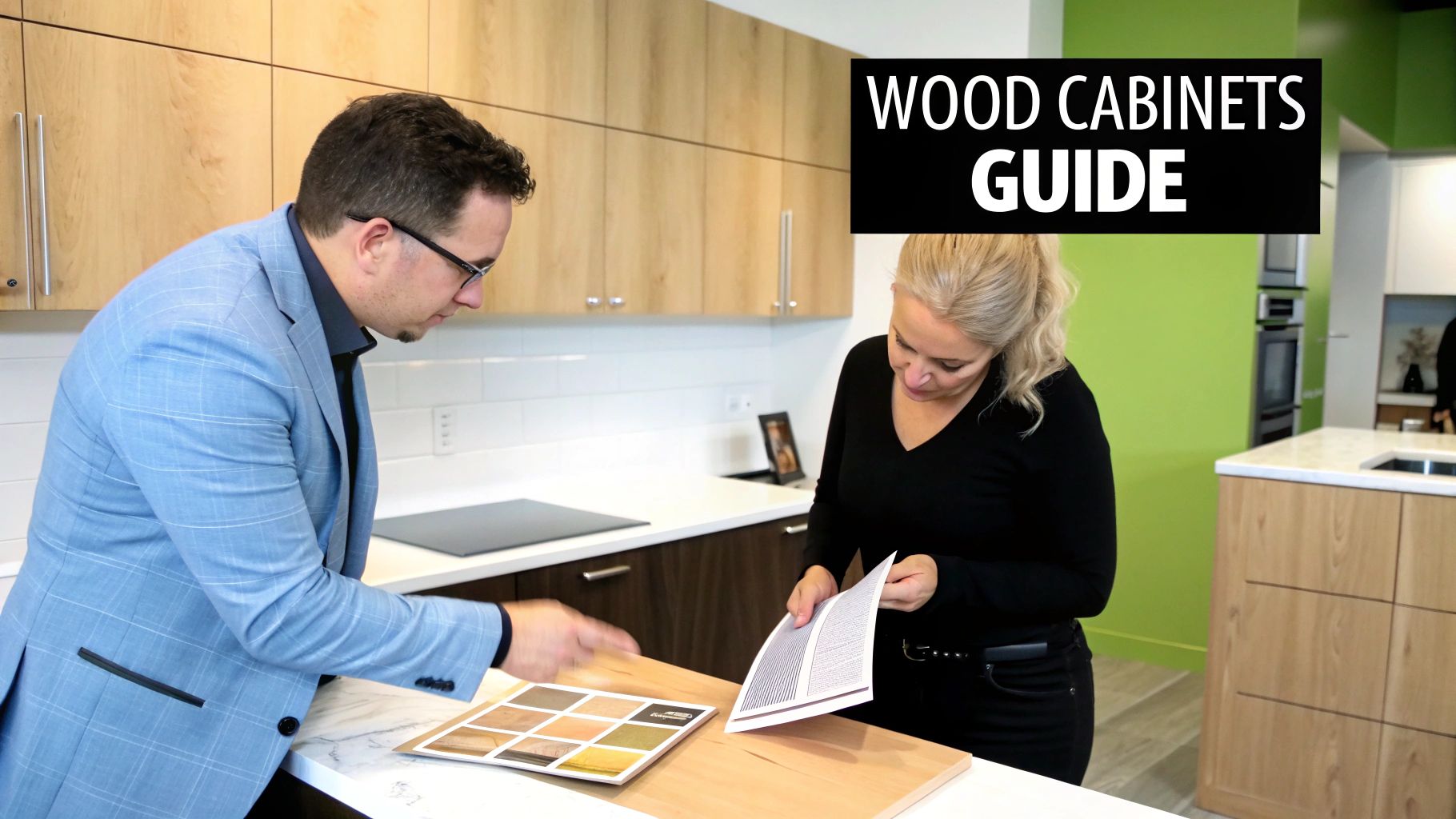
When you start planning a kitchen remodel, the sheer number of options can make your head spin. But even as trends come and go, wood remains the top contender for cabinetry, and for good reason. Nothing quite matches its natural beauty, solid feel, and incredible versatility.
Think of your cabinets as the very furniture of your kitchen. They’re much more than just boxes for your pots and pans; they’re the architectural backbone that sets the mood for the entire space. Wood brings a warmth and character that manufactured materials just can't seem to copy, turning a purely functional room into the true heart of your home.
The Unmatched Value of Real Wood
Going with wood is an investment in both looks and longevity. Cabinets built from solid wood or high-quality wood composites are sturdy enough to handle the chaos of daily life for decades. Unlike cheaper materials that can delaminate or show wear within a few years, well-made wood cabinets can often be refinished or repainted, giving them a whole new look for a fraction of the cost of a full replacement.
This adaptability is a huge plus. Imagine a classic oak cabinet from the 90s. With a modern stain or a fresh coat of paint, it can be completely transformed to fit today's styles without losing any of its original, solid construction.
Your Path to the Perfect Kitchen
We’ve designed this guide to walk you through everything you need to know, making sure you end up with a kitchen you’ll love for years to come. We’re going to cover all the essentials:
- Wood Species and Construction: Getting to know the materials that determine how your cabinets will perform.
- Finishes and Styles: From classic painted looks to sleek high-gloss surfaces.
- Durability and Maintenance: How to protect your investment for the long haul.
- Costs and Budgeting: Making smart financial decisions for your renovation in the Toronto area.
By the time you're done reading, you'll have a clear roadmap to a kitchen that’s not just beautiful but also perfectly suited to your life. For an even deeper look at navigating your options, this resource on how to choose kitchen cabinets like a pro is a fantastic starting point.
Getting to Know Your Wood and Cabinet Construction
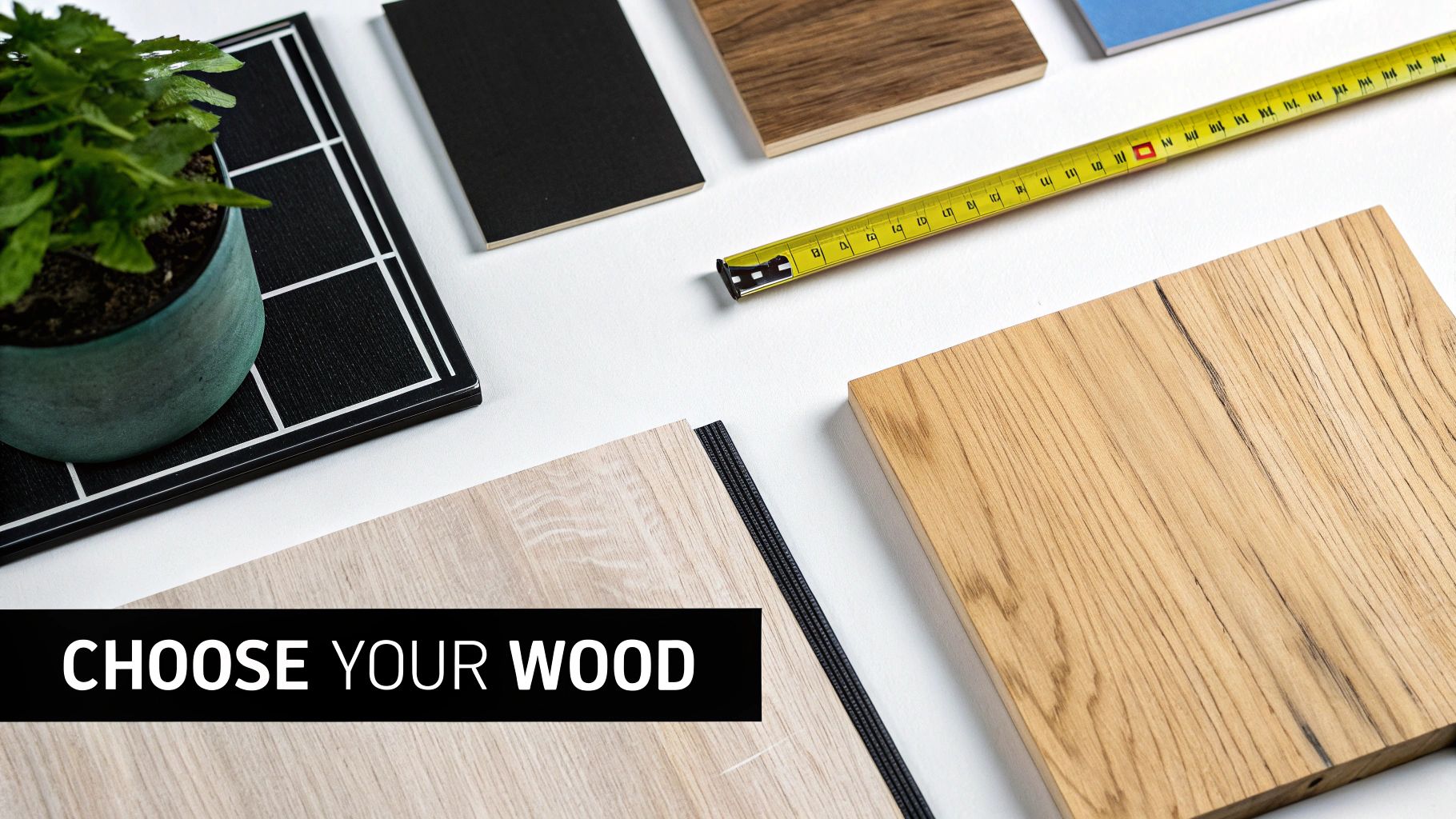
Before you fall in love with a cabinet style or finish, it helps to look "under the hood." The wood species you choose is like the engine in a car—it dictates the cabinet's performance, durability, and overall character for years to come.
Some woods, like the smooth, uniform grain of maple, create a perfect canvas for paint. Others, like the pronounced, textured grain of oak, bring an instant rustic charm. Your choice here is the very first step in defining your kitchen's personality, and it impacts everything from the final look to how your cabinets will handle the daily chaos of a busy home.
Decoding the Most Popular Wood Species
While the options might seem endless, most high-quality cabinets are built from a handful of tried-and-true hardwoods. Each has its own distinct personality, making it better suited for certain design goals. Getting to know them helps you find the perfect match for your vision and lifestyle.
Here are the heavy hitters in the world of wood kitchen cabinets:
- Maple: Known for its fine, consistent grain and creamy-white to light-brown colour. Maple is incredibly durable and gives you a flawless surface, making it the top choice for painted finishes.
- Oak (Red and White): A classic for good reason. Oak is tough as nails and has a prominent, open grain pattern that adds wonderful texture and visual interest. It’s a natural fit for traditional or farmhouse kitchens.
- Cherry: Prized for its rich, warm reddish-brown colour that deepens beautifully over time. Cherry has a smooth, closed grain and is a go-to for high-end, traditional designs.
- Walnut: A truly luxurious option with a striking grain and rich, dark brown tones. Walnut delivers a sophisticated, modern look that makes a bold statement. You can see just how stunning walnut cabinets can transform a kitchen in our detailed guide.
These reliable hardwoods aren't just popular by chance; they consistently deliver. While the North American wood cabinet market is a massive $17 billion industry, looking at what homeowners actually choose tells the real story. Hardwoods like maple and cherry continue to dominate the residential sector, capturing a significant 45% of the market and proving their trusted reputation.
Understanding How Your Cabinets Are Built
Beyond the wood itself, the way a cabinet is constructed is just as important. The integrity of your cabinetry comes down to the materials used for the "box"—the main body of the cabinet. This is where you’ll hear terms like solid wood, plywood, and MDF being thrown around.
Think of it this way: the cabinet door is the beautiful facade of a building, but the cabinet box is its structural frame. A weak frame will compromise the whole thing, no matter how gorgeous the exterior is.
Choosing the right construction ensures your cabinets can hold the weight of all your dishes and stand up to the temperature and humidity swings common in a kitchen, especially with the Greater Toronto Area's variable climate.
Comparing Core Cabinet Materials
Each material offers a different balance of performance, stability, and cost. The best manufacturers often use a smart combination of these materials to get the best of all worlds—strength, durability, and a beautiful finish.
- Solid Wood: Made from single, solid pieces of lumber. It's incredibly strong and naturally beautiful, but it can be prone to warping or cracking with major humidity shifts. It's typically used for cabinet doors and frames.
- Plywood: Created by gluing thin layers of wood veneer together, with the grain of each layer running perpendicular to the next. This cross-graining technique gives plywood fantastic strength and stability, making it highly resistant to moisture and shrinkage. It's an outstanding choice for cabinet boxes.
- MDF/HDF: Medium-Density and High-Density Fiberboard are engineered wood products made from compressed wood fibres and resin. Their biggest advantage is a perfectly smooth and stable surface that won't crack or warp, making HDF the ideal base for flawless painted, high-gloss, or matte finishes.
A commitment to high-grade, eco-friendly materials is what turns a purchase into a lasting investment. By understanding both the wood species and the construction behind your wood kitchen cabinets, you're ready to choose a product that delivers both enduring beauty and rock-solid performance for years to come.
Exploring Cabinet Finishes and Modern Styles
Once you've landed on the right wood and construction, the fun really begins: choosing the finish. Think of the finish as the personality of your kitchen—it's what everyone sees first. This decision is about more than just colour; it shapes the room's texture, sheen, and overall mood, and even impacts your daily cleaning routine.
Are you picturing a warm, classic kitchen where the wood's natural character shines through? Or maybe a sleek, modern hub with a flawless, contemporary gloss? Whatever your vision, there’s a finish to match. The trick is understanding how each one holds up in a real, busy kitchen, whether it’s in a Markham family home or a chic Toronto condo.
Real Wood Painted Finishes
There’s something timeless about a painted finish on solid wood cabinets. It offers a custom look that just doesn't fade from style. What I love about painting real wood is that the faint, natural grain can still peek through, adding a layer of texture and character that a perfectly flat surface just can't match. This creates an authentic warmth that feels both classic and upscale.
Picture a shaker-style maple door painted in a soft, elegant white. The finish is smooth, but look closely, and you’ll see the delicate whisper of the wood grain beneath. It’s a small detail that adds incredible depth, confirming you’re looking at quality material. It’s the perfect compromise for homeowners who want a personalized colour but still crave the undeniable charm of real wood. For more ideas on how paint can completely change your kitchen's vibe, you can explore our guide on choosing the right paints for kitchen cabinets.
The Flawless Appeal of HDF Finishes
For anyone chasing that crisp, uniform, and thoroughly modern aesthetic, High-Density Fiberboard (HDF) is the perfect canvas. As an engineered wood product, HDF is prized for its remarkable stability and dead-smooth surface, making it the ideal base for flawless painted, high-gloss, or matte finishes.
Because HDF has no grain, the final coat is completely consistent—no variations, no imperfections. This makes it the champion for contemporary and minimalist designs where clean lines and immaculate surfaces are the top priority.
A huge plus for HDF is how it handles the temperature and humidity swings common in kitchens. Unlike solid wood, it won’t expand, contract, or warp, which means your painted finish will stay free of those pesky joint cracks for years.
High-Gloss HDF for a Contemporary Sheen
High-gloss HDF cabinets are the very definition of modern luxury. This finish creates a brilliant, mirror-like surface that bounces light around the room, making any kitchen feel bigger, brighter, and more open. It’s a fantastic trick for smaller spaces or rooms that don't get a lot of natural light.
The sleek, seamless look of high-gloss pairs beautifully with handleless designs, creating a minimalist, almost futuristic, feel. Imagine a downtown Toronto condo with glossy white cabinets reflecting the city lights—it’s pure energy and sophistication.
Matte HDF for Understated Elegance
On the complete opposite end of the style spectrum, you have the matte HDF finish. With its soft, velvety texture, a matte surface absorbs light instead of reflecting it. The result is a calm, serene, and incredibly chic look. It's also celebrated for its ability to hide fingerprints and smudges, making it a surprisingly practical choice for busy households.
A kitchen with matte black or deep grey HDF cabinets just exudes quiet confidence. The non-reflective surface is forgiving, feels luxurious to the touch, and serves as a stunning backdrop for bold metallic hardware or warm wood accents.
Durable and Versatile Laminates
Laminates have come a long, long way. Today's options offer an impressive mix of durability, affordability, and serious style. They are made by bonding a decorative paper layer to a substrate like HDF and sealing it with a tough protective topcoat. This process makes them incredibly resistant to scratches, stains, and moisture.
You can find laminates in a massive array of colours, patterns, and even surprisingly realistic wood-grain textures. They give you endless design freedom without the upkeep that solid wood demands. They are true workhorses, perfect for high-traffic kitchens, rental properties, or any project where bulletproof durability is key. And to tie the whole look together, getting expert advice on choosing cabinet hardware will ensure your wood kitchen cabinets are as functional as they are beautiful.
Comparing Cabinet Finishes at a Glance
With so many fantastic options, it can be tough to decide which finish is right for your lifestyle and design vision. This table breaks down the key characteristics of each to help you make a more informed choice.
| Finish Type | Primary Aesthetic | Durability | Maintenance Level | Best For |
|---|---|---|---|---|
| Real Wood Painted | Classic, Warm, Textured | Good | Moderate (prone to dings) | Traditional, transitional, and farmhouse kitchens where natural character is valued. |
| High-Gloss HDF | Modern, Sleek, Reflective | Very Good | High (shows fingerprints) | Contemporary, minimalist spaces; smaller kitchens needing a sense of openness. |
| Matte HDF | Understated, Soft, Elegant | Excellent | Low (hides smudges) | Modern and sophisticated designs; busy family kitchens where practicality is key. |
| Laminate | Versatile, Consistent | Excellent | Low | High-traffic areas, budget-conscious renovations, and achieving specific wood looks. |
Ultimately, the best finish is the one that not only looks great on day one but also stands up to the demands of your daily life. Consider your family's habits, your cleaning tolerance, and the overall atmosphere you want to create in your kitchen.
Maximizing Durability and Protecting Your Investment
Picking out beautiful wood kitchen cabinets is the fun part. Making sure they stay beautiful for years to come? That’s the real trick. Your kitchen is the command centre of your home, and your cabinets are on the front lines, dealing with everything from spaghetti sauce splatters to the humid summers and dry winters we get here in Southern Ontario. Protecting your investment boils down to two things: understanding how different materials hold up and committing to a little bit of regular care.
Think of your cabinet finish as its armour. A good finish does more than just look pretty; it's a shield that protects the wood or HDF underneath from moisture, grease, and daily wear and tear. Each type of finish needs a slightly different maintenance plan to keep it in fighting shape, ensuring your kitchen looks just as good in ten years as it does today.
Simple Care for Lasting Beauty
Keeping your cabinets clean isn't just about appearances—it's about protecting the finish itself. Grabbing the wrong cleaner or scrubbing too hard can do some serious damage, like dulling a high-gloss surface or even stripping the paint right off. A gentle, consistent routine is really all you need.
Here’s a quick rundown on how to care for the most common cabinet finishes:
- Painted Wood and HDF: A soft cloth, a bit of mild soap, and some water is your best friend here. Always wipe everything completely dry right after cleaning, especially around the joints and seams. Moisture is the enemy and can lead to chipping down the road.
- High-Gloss Surfaces: To avoid streaks and tiny scratches, stick with a microfiber cloth and a gentle, non-abrasive cleaner. A splash of vinegar in water works wonders. The secret is to use a second, dry microfiber cloth to buff the surface to bring back that mirror-like shine.
- Matte Finishes: These are fantastic for hiding fingerprints, but greasy smudges can stand out. Just use a soft cloth with warm water and a single drop of dish soap to lift away oils without creating a shine.
- Laminates and Thermofoil: These are the tanks of the cabinet world. Most all-purpose, non-abrasive cleaners will do the job perfectly. Their non-porous surfaces are tough to stain and incredibly easy to wipe clean.
The image below gives you a simple visual breakdown of the main finish types and what makes them unique.
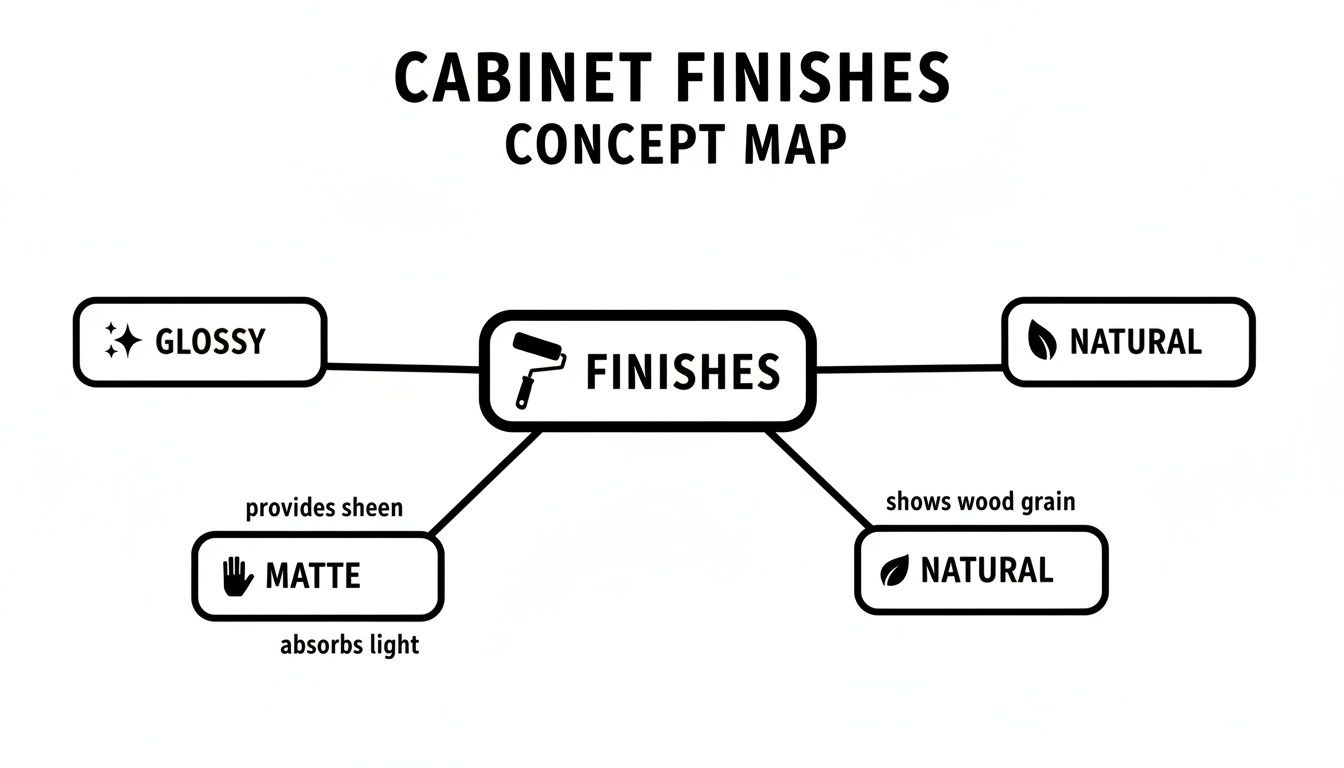
Seeing the distinct qualities of glossy, matte, and natural wood finishes side-by-side can really help you decide what look—and what level of upkeep—is right for your lifestyle.
The Value of Quality Craftsmanship
Long-term durability isn’t just about how you clean your cabinets; it’s about how they were built in the first place. It all starts with solid construction and high-quality, eco-friendly materials. This is where a factory-direct approach really shines, because it puts better-made cabinets within reach for more people.
When you cut out the retail middleman, you get direct access to higher construction standards without the inflated price. It means your cabinets are built from the ground up to handle daily life, giving you a much better return on your investment.
This desire for quality is a trend we're seeing everywhere. The cabinet manufacturing industry has been growing at an average clip of 3.6% per year between 2020 and 2025. What's driving that? Homeowners are realizing that timeless, durable options like solid wood—which makes up about 45% of the market—are worth the investment. For anyone in Toronto and Markham planning a renovation, this just reinforces why choosing a well-crafted product, like painted maple doors that offer both natural beauty and factory-direct value, is such a smart move. You can learn more about these industry trends and their impact to see the bigger picture.
Budgeting for Your Dream Kitchen Renovation
Let's talk about the first, and most important, step in any kitchen renovation: setting a realistic budget. This isn't just about picking a number; it's about creating a roadmap that will guide every single choice you make, from the wood you pick for your cabinets to the final layout. For anyone planning a project in Toronto and Markham, getting a handle on local costs for wood kitchen cabinets is essential to avoid surprises and get the most value for your money.
Think of your final cabinet cost like ordering a custom suit. The base fabric has a price, but the specific cut, the lining, the buttons—every detail adjusts the final cost. In the world of cabinetry, those details are the wood species, the finish you choose, and the hardware that pulls it all together.
What Really Drives the Cost of Cabinets?
Figuring out your budget is a lot easier when you know what makes the price tag tick up or down. Once you understand these core elements, you can decide where you want to splurge and where you can save. Maybe that stunning walnut grain is a must-have, or perhaps you'd rather invest in a super-durable, high-gloss finish.
Here’s a breakdown of the main factors that will shape your cabinet budget:
- Wood Species: It's no surprise that premium hardwoods like Walnut or Cherry cost more than common choices like Maple or Oak. Their rarity and distinctive grain patterns put them in a higher price bracket.
- Finish Type: A finish is much more than just a colour; it’s a protective layer that involves its own unique process. A multi-step, high-gloss HDF finish, for instance, requires a lot more labour and specialized material than a standard laminate.
- Level of Customization: Are you using standard cabinet sizes, or does your kitchen have unique angles and dimensions that require a custom fit? Bespoke cabinetry built to your room's exact specs will naturally cost more than off-the-shelf options.
- Hardware Selection: Don't forget the jewelry of your kitchen! Knobs, pulls, and hinges are the final touch, but their costs can add up. Designer hardware made from premium metals will have a bigger impact on your budget than simpler, standard options.
Here's a pro tip: working with a factory-direct supplier can make many of these premium features much more affordable. When you cut out the retail middleman, you can often get higher-quality materials and customization that might have been out of your budget otherwise.
Getting More Bang for Your Buck with Smart Design
A beautiful, functional kitchen isn't about throwing money at the problem—it's about smart design. A well-thought-out layout can make a kitchen feel bigger, dramatically improve storage, and streamline your workflow, all while staying within your budget. This is where leaning on timeless design principles really pays off.
One of the most tried-and-true concepts is the "kitchen work triangle." The idea is simple: create an efficient path between the three key work zones—the sink, the refrigerator, and the stove. When these three points form an easy-to-navigate triangle, you reduce foot traffic and make moving from one task to the next feel completely natural, no matter how big or small your kitchen is.
Smart Solutions for Layout and Storage
Beyond the work triangle, think about how you actually live and cook in your kitchen. Would a big island for homework and meal prep be the heart of your home, or would a peninsula work better in a smaller L-shaped space? A little thoughtful planning can unlock a ton of hidden potential.
Don't forget to incorporate clever storage to keep everything organized and clutter-free:
- Pull-out pantry shelves are a game-changer for seeing what's in the back of deep cabinets.
- Corner cabinet solutions like a Lazy Susan or pull-out trays reclaim that awkward, hard-to-reach space.
- Vertical dividers are perfect for keeping baking sheets, trays, and cutting boards tidy and accessible.
Features like these don't just make your daily life easier; they add real, tangible value to your home. A free design consultation can be a huge help here, allowing you to align your vision with your budget. An expert can show you creative ways to get that high-end look you want without the high-end price. For a more detailed breakdown, you can explore our comprehensive guide on kitchen cabinet costs to help plan your investment.
Working With a Local Cabinet Specialist
After sorting through wood species, finishes, and layouts, you've reached the final—and arguably most important—step in your journey: choosing the right partner to bring it all together. Working with a local, factory-direct cabinet specialist in the Toronto and Markham area can completely change the game. It turns what could be a stressful series of decisions into a collaborative, creative process.
This isn't like picking something off a shelf at a big-box store. A local partnership gives you a powerful mix of benefits, bridging the gap between the kitchen you've been dreaming of and the practical realities of your space and budget. The end result? A kitchen that feels like it was always meant to be there.
The Power of a Factory-Direct Partnership
Going factory-direct means you're cutting out the middleman, and that one decision has a ripple effect. It unlocks a whole host of advantages that make a high-end kitchen far more attainable than you might think. The most obvious benefit is the cost savings, which often frees up your budget for the premium materials or custom features you really want.
But it’s about more than just the price tag. This model offers a level of personalization that standard retailers just can't match. Your kitchen isn't a one-size-fits-all space, so why should your cabinets be?
- True Customization: Your cabinets are built to the precise dimensions of your room. That means no awkward filler strips or wasted corners—just seamless, wall-to-wall storage.
- Tailored Design: You have the freedom to mix materials, choose unique finishes, and select hardware that reflects your personal style. The look is entirely yours.
- Direct Communication: You’re talking directly to the people designing and building your wood kitchen cabinets. Your vision won’t get lost in translation.
Expertise and Personalized Service
A local specialist brings more to the table than just materials—they bring deep, practical expertise. They know the local housing stock inside and out, from the typical layouts in Markham's newer subdivisions to the quirky challenges of renovating an older Toronto home. That kind of on-the-ground knowledge is priceless for keeping a project on track.
Choosing a local expert means you get more than just a product; you get a dedicated partner. Their success is tied directly to your satisfaction, ensuring attentive service from the initial design consultation all the way through to the final installation.
This personalized guidance helps you feel confident in your choices. They'll help you land on the perfect painted finish for your real wood doors or a sleek, high-gloss HDF for a more modern vibe, ensuring you get the best possible balance of style, quality, and value.
A new kitchen is a significant investment. Partnering with a local, factory-direct expert ensures that investment is protected by quality craftsmanship, great materials, and a genuine commitment to bringing your vision to life. The best next step is to visit a local showroom or request a free quotation to see for yourself how expert guidance can transform your home.
Frequently Asked Questions About Wood Cabinets
Choosing new cabinets is a big part of any kitchen renovation, and it's normal to have a lot of questions. We get asked all the time about the practical side of selecting, installing, and living with new wood kitchen cabinets, especially by homeowners here in Toronto and Markham.
We've put together some straightforward answers to the most common questions we hear. The goal is to clear up any confusion so you can feel confident moving forward with a kitchen that's not just beautiful, but built to last.
How Long Do Wood Kitchen Cabinets Last?
This is a major consideration, and for good reason! When you invest in quality, you should expect it to stick around. Well-made wood kitchen cabinets can easily last 30 to 50 years, sometimes even longer, if you take care of them.
What makes them last so long? It really boils down to three things: the type of wood used, how the cabinet box is built, and the quality of the finish. Solid wood and top-tier plywood create an incredibly sturdy foundation. Then, modern finishes like durable laminates add a tough protective layer against spills, moisture, and daily wear and tear, keeping them looking great for decades.
What Is the Difference Between Custom and Semi-Custom Cabinets?
Knowing the difference here is key to getting the right fit for your kitchen and your budget. Think of semi-custom cabinets like buying a suit off the rack—it comes in standard sizes, and you can make a few small tweaks, like adjusting the hem. They offer a limited set of modifications for dimensions or finishes.
In contrast, true custom cabinets are like getting a suit made-to-measure. They are built from the ground up to your exact specifications. This means you get to design cabinets that fit your kitchen's unique layout perfectly, with no awkward gaps or wasted space. And with a factory-direct model, true custom work is often much more affordable than you might think.
Is Solid Wood Always Better Than Materials Like HDF?
That's a fantastic question, and the answer is: not necessarily. What's "better" really depends on the look you're going for and what your priorities are. Solid wood is loved for its natural beauty, strength, and the unique character of its grain. It's a stellar choice for classic or traditional kitchens where that authentic wood feel is a must.
However, High-Density Fiberboard (HDF) has its own superpowers. It’s more stable when it comes to changes in humidity, which can sometimes cause solid wood to expand or shrink. HDF also provides a perfectly smooth, uniform surface, making it the ideal base for a flawless painted, high-gloss, or matte finish. In the end, a high-quality version of either material will give you a durable, beautiful product that will stand the test of time.
Ready to create a kitchen that perfectly fits your style and budget? The experts at MapleKing Kitchen Cabinets are here to help. Explore our custom cabinetry options and get a free quotation by visiting us at https://maplekingkitchencabinets.com.



