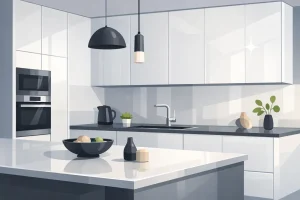

A white range hood is so much more than just a way to clear smoke from your kitchen—it's a powerful design choice that can completely define the space. It has the unique ability to enhance air quality while anchoring your kitchen's entire look with a bright, clean aesthetic. For anyone planning a renovation in the Toronto or Markham area, it's a detail that pulls a high-end, functional kitchen together.
The Role of White Range Hoods in Modern Kitchen Design
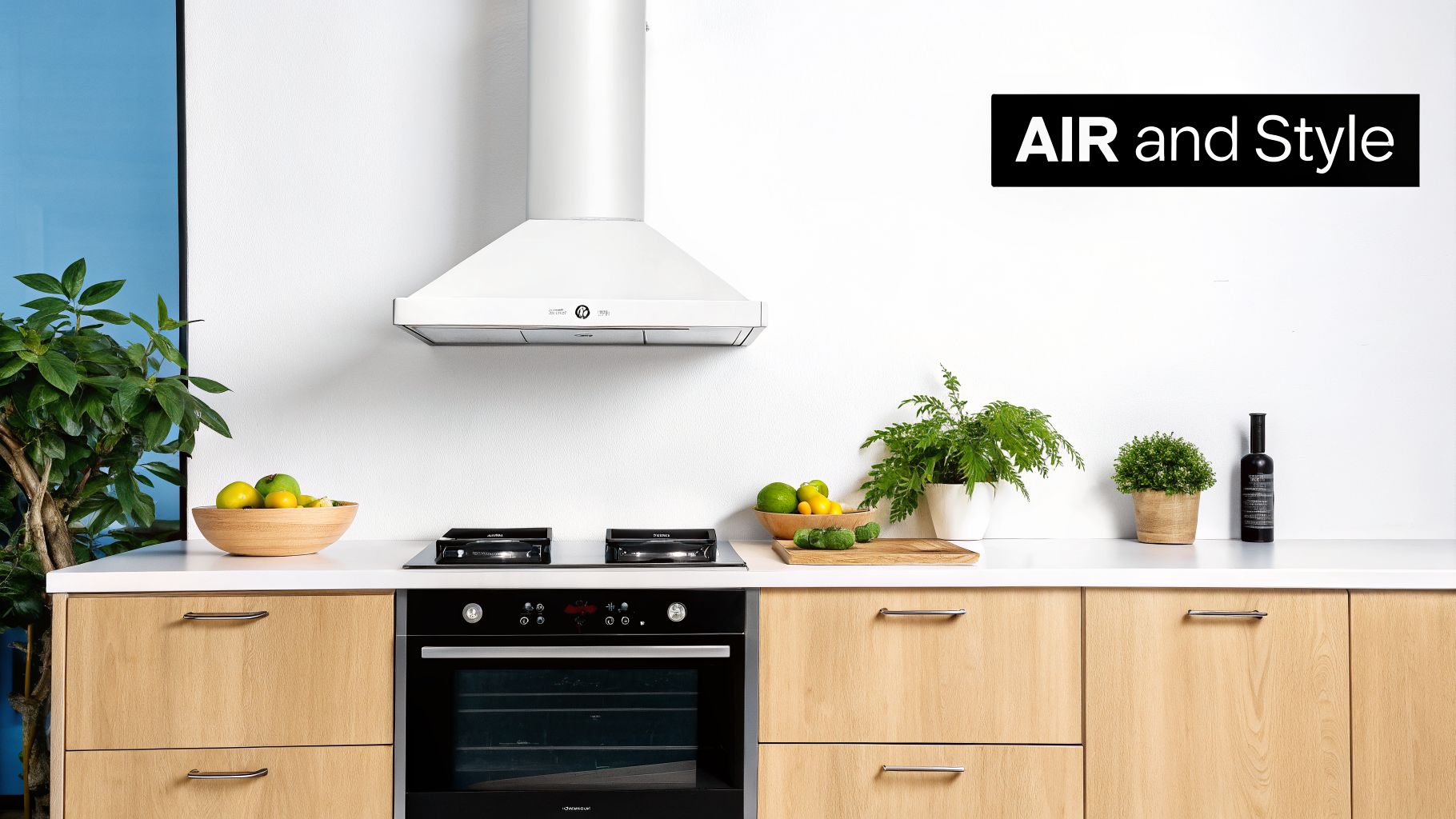
Think of a white range hood as your kitchen's personality piece. Depending on the style you choose, it can either command attention as a stunning focal point or blend in quietly for a seamless, minimalist look. It perfectly marries sophisticated form with hardworking function.
On the functional side, a quality range hood is essential for a healthy home. It pulls smoke, grease, steam, and cooking odours out of the air, which goes a long way toward improving indoor air quality. This ventilation doesn't just clear the air; it also protects your walls, ceiling, and beautiful new cabinetry from grime and moisture damage over time.
Creating an Open and Bright Atmosphere
One of the biggest wins with a white range hood is how it makes a kitchen feel larger and more open. While darker or stainless steel hoods can sometimes chop up a wall visually, a white model creates a fluid, uninterrupted look, especially when paired with light-coloured cabinets or tiles.
This simple choice helps draw the eye upward, creating the illusion of higher ceilings and a more spacious room. To see this effect in action, you can find tons of inspiration in our guide to white kitchen ideas. It works particularly well in:
- Smaller Kitchens: Where every trick to maximize the sense of space counts.
- Open-Concept Layouts: Helping the kitchen blend smoothly with the dining or living area.
- Kitchens with Low Natural Light: A white surface reflects light beautifully, brightening up the whole room.
The Bridge Between Style and Functionality
While the visual appeal is undeniable, a range hood is useless if you don't turn it on. Surprisingly, a California study found that even though most homes have one, it was only used during 36% of cooking events. The best designs encourage use, and a well-chosen white range hood with simple, intuitive controls does just that.
The Americas range hood market is now valued at a massive USD 5.05 billion in 2024, which shows just how much homeowners are prioritizing both style and performance.
When you choose a white range hood, you're making a conscious decision to unify your kitchen's design. It stops being just an appliance and becomes a true centrepiece that supports both the visual harmony of your space and the health of your home.
A Guide to the Different Types of White Range Hoods
Choosing the right white range hood is about more than just ventilation; it’s a design decision that will shape the entire look and feel of your kitchen. The perfect hood should feel like a natural extension of your space, whether it’s a quiet background player or a show-stopping focal point. Your kitchen’s layout, your personal style, and even your cabinetry will all point you toward the ideal choice.
Let's walk through the most common styles to figure out which one is the perfect match for your home.
Before we dive deep into each style, here’s a quick comparison to help you see how these different types stack up against one another. This can help you narrow down the options based on your kitchen's specific needs.
White Range Hood Types at a Glance
| Hood Type | Best For | Installation Style | MapleKing Cabinetry Pairing |
|---|---|---|---|
| Under-Cabinet | Maximizing storage in smaller kitchens or creating a seamless look. | Mounts directly beneath upper cabinets. | Excellent for creating an uninterrupted line of cabinets. |
| Wall-Mount | Creating a dramatic focal point on an open wall. | Attaches to the wall, with a chimney extending to the ceiling. | Frames the cooking area between two sets of wall cabinets. |
| Island | Kitchens with a cooktop located on a central island. | Suspends from the ceiling over the island. | Complements an open-concept design with island base cabinets. |
| Hood Insert | Achieving a fully custom, integrated look. | The mechanical unit is built into a custom hood surround. | Perfect for creating a matching wood surround from MapleKing materials. |
Each of these styles offers a unique way to integrate powerful ventilation into your kitchen design. Now, let’s get into the specifics of what makes each one tick.
The Under-Cabinet White Range Hood
Think of the under-cabinet model as the quiet, reliable workhorse of the kitchen. This is easily the most popular style, and for good reason—it’s practical, efficient, and great for saving space. True to its name, it mounts snugly underneath your upper cabinets, right over the stove.
This compact design is a perfect fit for smaller spaces, galley kitchens, or any layout where you want to keep your upper cabinet storage. It allows for a clean, uninterrupted line of cabinetry, which looks fantastic when paired with custom solutions from MapleKing.
Their popularity is backed by data. One major study on kitchen ventilation found that short hoods, which are almost always under-cabinet models, were found in 33% of homes surveyed. For homeowners in cities like Toronto, where maximizing space in a condo or townhouse is critical, this style is often the smartest choice. You can learn more about these trends in this insightful statistical breakdown.
The Wall-Mount White Range Hood
If you're looking for something with a bit more presence, the wall-mount hood is designed to be a focal point. These attach directly to the wall in a space where there are no upper cabinets, typically featuring a bold, chimney-like flue that reaches for the ceiling.
A crisp white wall-mount hood isn't just an appliance; it's a piece of architectural sculpture for your kitchen. It immediately draws the eye, anchoring the cooking zone and making a confident design statement. This style is ideal for anyone wanting to cultivate that high-end, professional "chef's kitchen" vibe.
A wall-mount hood is probably for you if:
- You have a dedicated open wall space above your range.
- You want to make the room feel taller by emphasizing vertical lines.
- Your goal is a modern, high-impact aesthetic.
The Island (or Ceiling-Mount) White Range Hood
When your cooktop is the star of a kitchen island, you need a hood that can hang with it—literally. Island hoods are mounted to the ceiling, suspending down over your cooking surface and becoming a natural centrepiece.
A sleek white island hood can almost feel like a modern light fixture. It's both a high-performance ventilator and a striking decorative element.
Because they’re seen from every angle, island hoods are designed with 360-degree appeal. A minimalist white model can enhance the open, airy feeling of a large kitchen, ensuring the hood feels like a feature, not an obstruction.
Other Integrated White Range Hood Styles
For those who crave the ultimate in seamless design, a few other styles focus on making the ventilation system disappear completely.
- Hood Inserts: These are just the guts of the operation—the fan, filters, and lights. You take this power pack and build a custom hood surround for it. This gives you the freedom to create a beautiful enclosure from wood, plaster, or metal that perfectly matches your MapleKing cabinets or other unique design elements.
- Downdraft Systems: This is the James Bond of ventilation. Installed beside or behind your cooktop, it stays hidden until you need it. With the touch of a button, it rises up to pull smoke and odours horizontally across your cooktop. When you're done, it retracts back down, leaving you with a perfectly flat and uncluttered countertop.
Matching Hood Finishes with Your Cabinet Style
Getting the details right is what separates a good kitchen from a truly stunning one. When it comes to your white range hood, the finish you choose is one of those crucial details. It dictates how the hood will work with your cabinets, either blending in seamlessly or standing out as a deliberate, eye-catching feature.
Think of the finish as more than just colour—it's about texture and how it plays with light. A glossy surface will bounce light all over, instantly making a kitchen feel brighter and more contemporary. A matte finish, on the other hand, absorbs light for a softer, more sophisticated vibe. Let's look at how to pair these finishes with popular cabinet styles to get that professionally designed look.
Before we dive into finishes, it helps to understand the basic types of range hoods and how they fit into a kitchen's layout.
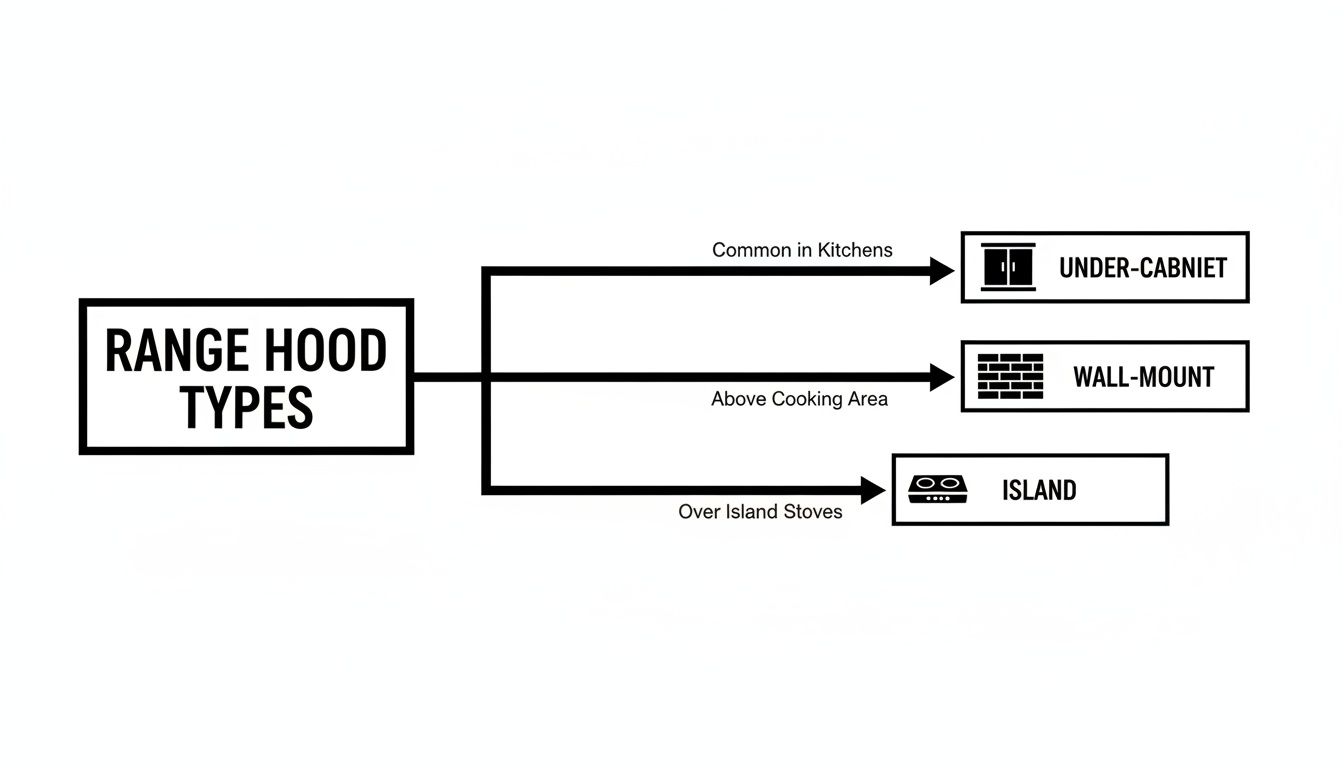
As you can see, the physical placement—whether it's under a cabinet, on a wall, or over an island—is the first decision. The finish is what comes next to tie it all together.
The High-Gloss and HDF Harmony
If you’re aiming for that ultra-sleek, modern kitchen, you can’t go wrong with a high-gloss white range hood paired with high-gloss HDF (High-Density Fibreboard) cabinets. The continuous reflective surface creates an uninterrupted flow of light, making the whole room feel bigger and brighter. It’s a signature look in clean, European-inspired design.
With this combination, the range hood practically melts into the cabinetry line. You get a unified, almost monolithic appearance. The mirror-like finish isn't just for show, either; it’s incredibly easy to wipe down, a huge plus in any busy kitchen. This look is a perfect match for MapleKing’s high-gloss HDF cabinets, ensuring the sheen and colour are perfectly consistent.
A high-gloss white hood and matching cabinets work like a visual amplifier. They reflect both natural and artificial light, which is an excellent strategy for making smaller Toronto kitchens or basement suites feel larger and more open.
The Soft Elegance of Matte Finishes
For a look that’s more subtle and soft, a matte white range hood brings a touch of understated elegance. When you pair it with painted wood or matte HDF cabinets, you create a velvety, non-reflective surface that feels both contemporary and inviting. One of the best things about a matte finish? It’s fantastic at hiding fingerprints and smudges, helping your kitchen stay looking flawless.
You can use a matte white hood to match your cabinets for a cohesive, uniform look, or you can use it to create a gentle contrast. For example, a crisp matte white hood set against soft grey or pale blue cabinets allows it to stand out as a clean, architectural piece without shouting for attention. If you're exploring different paint options, our guide to the best paints for kitchen cabinets is a great place to find inspiration.
Classic Painted Finishes for a Timeless Look
In a traditional, transitional, or modern farmhouse kitchen, a classic painted metal or wood hood often becomes the star of the show. These hoods are designed to be a focal point, frequently showcasing decorative moulding or a custom shape that echoes the details in your cabinetry.
When you're working with a custom wood hood, you generally have two routes you can take:
- Match the Cabinets: Painting the wood hood the exact same white as your cabinets creates a beautiful, built-in feel. This approach makes the whole kitchen look perfectly integrated, letting the hood's unique shape provide all the visual interest.
- Create a Gentle Contrast: You could also choose a slightly different shade of white or a complementary neutral. This can turn the hood into a gentle centrepiece. For instance, an off-white hood can add wonderful depth and warmth when set against bright white cabinets.
At the end of the day, your goal is to make sure your range hood’s finish supports your overall vision. Whether you go for a reflective sheen, a quiet matte, or a classic painted look, the right finish will pull your cabinets and appliances together into one cohesive, polished statement.
How to Size Your Hood for Peak Performance
A stunning white range hood can absolutely be the centrepiece of your kitchen, but if it's not the right size, it's just a pretty decoration. Sizing and power are everything. Getting them right means your hood will actually pull smoke, grease, and cooking odours out of the air, protecting your new MapleKing cabinets and keeping your home fresh.
Think of it this way: you’re giving your kitchen a set of lungs. You need to make sure they’re strong enough to do the job. Two things matter most: the hood's physical width and its fan power, which we measure in CFM. Let's dig into how to get both of those just right for your space.
Hood Width: The First Rule of Capture
Here’s the single most important rule I share with clients: your range hood must be at least as wide as your cooktop. It's a non-negotiable.
Why? Because smoke, steam, and grease don’t rise in a neat, straight column. They billow outwards in a V-shape. A wider hood creates a bigger "capture area," acting like a huge umbrella that catches all that grime before it has a chance to escape and settle on your cabinets and ceiling.
For a standard 30-inch cooktop, you’ll need a 30-inch hood at minimum. But if you really want to lock it down—especially if you have a powerful gas range or a griddle—the professional standard is to go six inches wider than your cooktop. That gives you three inches of overhang on each side for maximum capture.
- For a 30-inch cooktop: Choose a 30-inch or, ideally, a 36-inch hood.
- For a 36-inch cooktop: Choose a 36-inch or, ideally, a 42-inch hood.
This one decision is your best defence against a greasy, grimy kitchen. If you're working with a tighter footprint, making the most of a small kitchen has some great ideas for balancing aesthetics with this kind of practical requirement.
Decoding CFM: Your Kitchen’s Breathing Power
Next up is power. CFM stands for Cubic Feet per Minute, and it's simply a measurement of how much air a range hood's fan can move. It's the engine of the whole operation. The more heat and smoke your cooking style generates, the higher the CFM you'll need to clear the air.
Getting the CFM wrong is a common and frustrating mistake. A hood that's too weak will struggle constantly on its loudest setting and still not get the job done. On the other hand, one that’s properly powered can clear the air quickly and quietly on a lower, more comfortable setting.
Key Insight: I've seen it time and again: homeowners undersize their hood's power to save a little money upfront. A low-CFM hood that fails to clear the air is a constant annoyance, while a properly powered hood is a silent, effective workhorse you'll appreciate every day.
And don't forget height! Proper installation height is critical for the hood to capture fumes effectively. For a complete look at placement, be sure to check our detailed guide on the ideal range hood height to perfect your installation.
Calculating Your Ideal CFM
So, how much power do you actually need? The answer depends on your cooktop and your kitchen's size. You can use a couple of simple formulas to find your target number.
We’ve put together a quick cheat sheet to help you find the right CFM for your kitchen. Just run the calculations that apply to your setup.
CFM Calculation Cheat Sheet
This quick reference guide will help you determine the appropriate CFM for your kitchen based on your cooktop type and kitchen volume.
| Factor | Calculation Rule | Example |
|---|---|---|
| Electric Cooktop | Multiply the cooktop width in inches by 10. | For a 30-inch electric cooktop: 30 x 10 = 300 CFM (minimum) |
| Gas Cooktop | Divide the total BTUs of all burners by 100. | For a gas range with 50,000 total BTUs: 50,000 / 100 = 500 CFM (minimum) |
| Kitchen Volume | Calculate your kitchen's volume (Length x Width x Height in feet) and divide by 4. This reflects 15 air changes per hour. | For a 15' x 12' kitchen with 9' ceilings: (15 x 12 x 9) / 4 = 405 CFM (minimum) |
Once you have your numbers, always go with the highest one as your minimum target. For instance, if your kitchen volume calls for 405 CFM but your powerful gas range needs 500 CFM, you should be shopping for a hood with at least 500 CFM.
Trust me on this: it's always better to have a little more power in reserve than to wish you had it when the smoke alarm goes off.
Ducted or Ductless? Deciding Where the Air Goes
Alright, let's talk about the single most important decision you'll make for your new white range hood: ducted or ductless. This isn't just a technical detail; it's about how your hood will perform, how it gets installed, and what kind of upkeep you're signing up for.
Think of it this way. A ducted hood is a one-way ticket for kitchen air. It sucks up steam, smoke, and cooking smells and sends them straight outside. A ductless hood, on the other hand, is like a powerful filter. It pulls the air in, scrubs it clean, and then releases it right back into your kitchen.
Your home's layout might make this choice for you, especially if you're in a condo or a townhouse where punching a new hole in the wall just isn't an option. But if you do have a choice, understanding the difference is everything.
The Power of Ducted Systems
When it comes to pure, raw performance, nothing beats a ducted system. It physically removes everything you don't want—grease, steam from boiling pasta, smoke from a seared steak, and strong odours—and vents it completely out of your home. If you're a serious cook who loves high heat or aromatic ingredients, this is your best bet.
This method does more than just clear the air. It also expels heat and humidity. That makes your kitchen a more comfortable place to work and, just as importantly, protects your beautiful cabinetry. Finishes on cabinets, like those from MapleKing, can be damaged by long-term exposure to moisture, and a ducted hood is the best defence against that.
The catch? Installation. You need a clear path for the ductwork to run from your cooktop to an exterior wall or through the roof. In a new build, it's simple. In a renovation, it can mean extra cost and complexity, especially in apartments or homes where the kitchen isn't on an outside wall.
The Bottom Line: If you can install the ductwork, a ducted system is the clear winner for performance. It offers the best possible air quality and moisture control by completely removing pollutants from your kitchen.
The Flexibility of Ductless Systems
What if venting outside is off the table? That’s where a ductless (or recirculating) white range hood shines. These units are design marvels, offering a fantastic and stylish solution when ducting isn't practical.
The huge advantage here is installation flexibility. No ducts mean you can put one almost anywhere. This makes them the go-to choice for:
- Condos and apartments with rules against new exterior venting.
- Kitchens with an island cooktop or a range on an interior wall far from the outside.
- Renos where you want to avoid the cost and mess of cutting into walls and ceilings.
The trade-off for this convenience is twofold: performance and maintenance. While a good ductless hood is highly effective at cleaning the air, it can't remove heat or humidity. The secret to its success lies entirely in its filters.
- Grease Filters: These are your first line of defence. Usually made of metal mesh, they trap airborne grease particles. The good news is they're typically dishwasher-safe and just need a regular cleaning.
- Charcoal Filters: This is what tackles the smoke and smells. Activated charcoal inside these filters neutralizes odours as the air passes through. They can't be cleaned, so they need to be replaced every 3-6 months, depending on how often and what you cook.
For many homeowners, especially in dense areas like Toronto and Markham, building restrictions often make ductless the only choice. Thankfully, modern ductless white kitchen range hoods are a world away from the weak models of the past. Today's units offer surprisingly powerful filtration that does a fantastic job of keeping your kitchen air fresh and clean.
Keeping Your White Range Hood Looking Showroom-Fresh
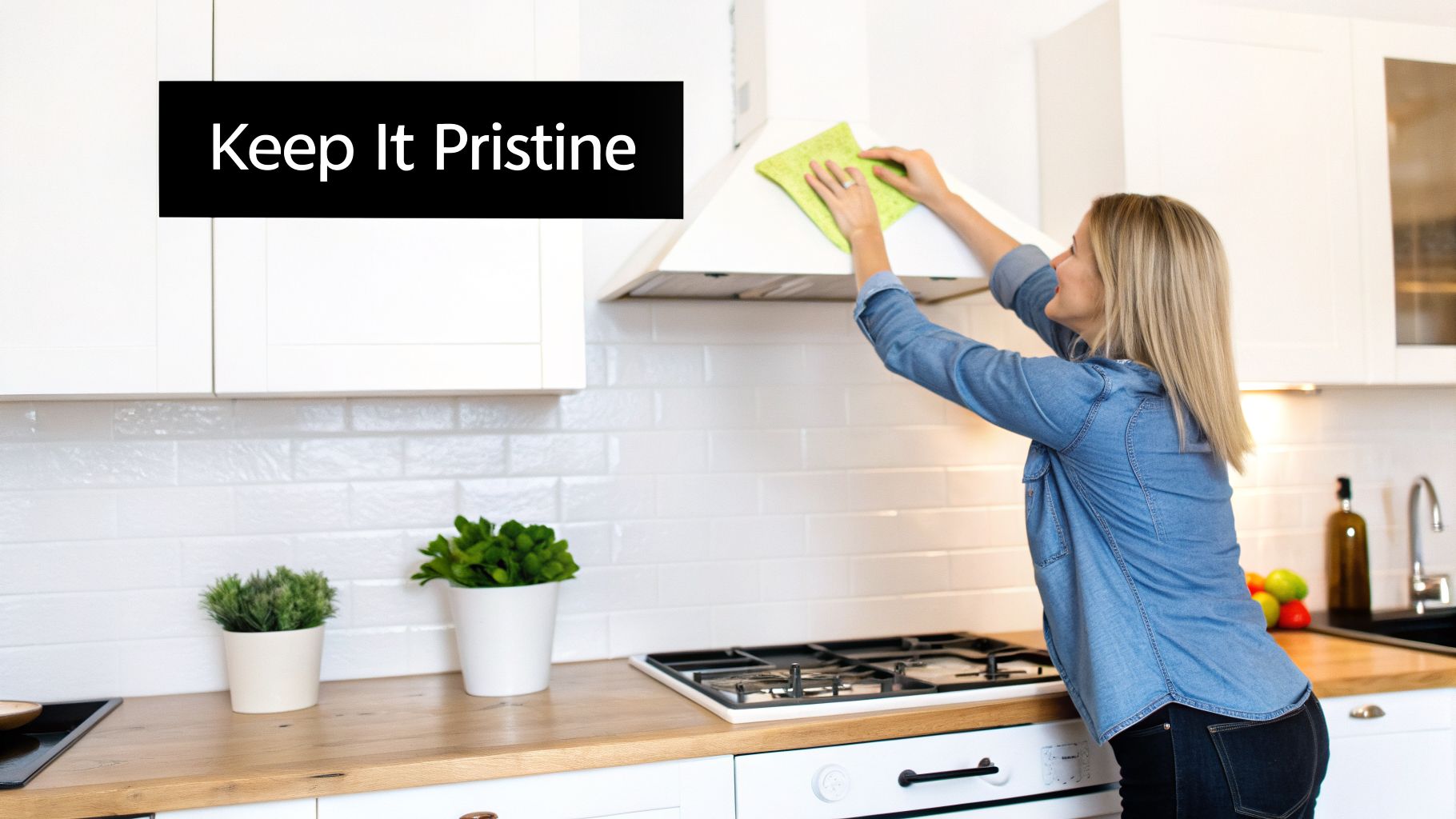
A white range hood can be a stunning centrepiece, but the fear of it turning yellow or getting permanently stained keeps some people away. The good news is, keeping it looking brand new is actually quite straightforward. It all boils down to a simple routine: regular cleaning of the outside surface and, just as importantly, the filters inside.
Think about it—everything you cook, from sizzling bacon to simmering sauces, releases tiny particles of grease into the air. That invisible film settles on your hood's exterior, acting like a magnet for dust and grime. A quick weekly wipe-down with a soft cloth and some warm, soapy water is usually all it takes to stop that buildup in its tracks.
Cleaning Different Finishes
The specific finish of your white range hood will determine the best way to clean it. Using the wrong product or cloth is an easy way to cause permanent scratches or dull the surface, so it’s worth getting it right.
- Matte Finishes: These finishes are fantastic for hiding fingerprints, but they don't like abrasive cleaners. The trick is to use a simple mix of mild dish soap and warm water with a microfibre cloth. Anything harsher can damage the delicate texture.
- High-Gloss Finishes: To protect that beautiful, reflective shine, always use a soft, non-abrasive cloth. After washing with soapy water, go over it with a second, dry microfibre cloth. This buffs the surface and gets rid of any water spots, restoring its brilliant lustre.
- Painted Wood or Metal: For these classic finishes, gentle is the name of the game. A few drops of dish soap in warm water is your best bet. If you're ever tempted to try a new cleaning product, always test it on a small, hidden spot first.
If you’re dealing with some really stubborn, caked-on grease, try making a simple paste from baking soda and water. Apply it gently, let it sit for a few minutes, and wipe it away. It’s a fantastic natural abrasive that’s tough on grease but safe for most finishes.
A common mistake we see is people reaching for all-purpose chemical sprays. Many of these contain harsh solvents that can eat away at the paint or coating on your hood, leading to permanent discolouration over time. Always start with the mildest cleaner first.
Keeping Your Filters Working Hard
The real workhorses of your range hood are the filters. Keeping them clean isn't just about appearances; it's absolutely critical for performance. When filters get clogged with grease, airflow plummets. This makes your fan less effective at clearing smoke and odours, and it forces the motor to work much harder than it should.
How you clean them depends entirely on what kind you have.
1. Baffle or Mesh Grease Filters (For Ducted Systems):
These metal filters are designed to catch grease before it enters your ductwork. The best part? Most are dishwasher-safe. Just pop them securely into the bottom rack and run a normal cycle. If you'd rather wash them by hand, let them soak in a sink of hot, soapy water for about 20 minutes, then give them a gentle scrub with a soft brush.
2. Charcoal Filters (For Ductless Systems):
These filters are completely different. Their job is to absorb and neutralize cooking odours, and they can't be washed or reused. They have to be replaced, typically every 3-6 months, depending on how often you cook. Sticking to this schedule is the single most important thing you can do to make sure your ductless range hood actually works well.
Your Top Questions About White Range Hoods, Answered
Thinking about a white range hood? You're not alone. It's a fantastic choice for a bright, clean-looking kitchen. But before you commit, a few common questions always seem to pop up with our clients across Toronto and Markham. Let's tackle them head-on so you can feel completely confident in your decision.
The number one concern we hear is, "Will a white range hood turn yellow over time?" That's a valid fear, one that comes straight from the days of older, less-durable appliances. Thankfully, things have changed. High-quality, modern finishes are built to last and are incredibly resistant to yellowing from UV light or cooking grease. A quick wipe-down once a week is usually all it takes to keep that brilliant white finish looking brand new for years.
Nailing the Style and Design
Next up is the big design question: should the hood match the cabinets? There are really two schools of thought here, and neither one is wrong. A matching look, especially with white cabinets, gives you that seamless, built-in feel. But going for a contrast can turn your range hood into a stunning focal point.
Imagine a kitchen with rich, coloured cabinets. A crisp white range hood can cut through the colour, brightening up the cooking space and creating a beautiful visual anchor. The trick is to tie the white in somewhere else—maybe with your countertops, backsplash, or a light fixture—to make the design feel intentional and balanced.
Ultimately, it comes down to personal taste. Do you want a calm, cohesive look or a design with a bit more dynamic energy? Both can be absolutely beautiful.
Function and Performance
Of course, a range hood needs to do more than just look good. We often get asked, "Is a ductless white range hood actually effective?" For many homes, especially condos or spaces where venting outside is a major headache, the answer is a definite yes—as long as you choose a quality model. The secret is in its dual-filter system.
- Grease Filters: These are your first line of defence, trapping airborne grease. Most are metal and can be washed easily.
- Charcoal Filters: This is where the magic happens for odours. These filters absorb smoke and cooking smells, but they don't last forever. Plan on replacing them every 3-6 months to keep things fresh.
While a ducted hood will always be the top performer for removing heat and steam, a good ductless model is a fantastic, powerful solution. It gives you that clean, bright aesthetic without the major renovation work of adding new ductwork.
Ready to create a kitchen that perfectly balances style and function? The experts at MapleKing Kitchen Cabinets can help you design a space with custom cabinetry that flawlessly integrates with your new white range hood. Explore our gallery and get a free quote today at https://maplekingkitchencabinets.com.