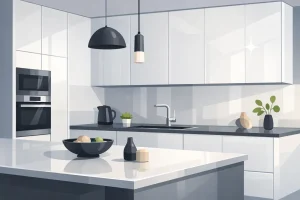

White kitchen ideas are all about creating a space that feels bright, clean, and open to anything. The trick is to stop thinking of white as just one colour. Instead, see it as the perfect starting point for layering in different textures, contrasting materials, and your own personal style. Whether you lean towards a warm, creamy off-white or a cool, crisp modern shade, a white kitchen can be moulded to fit any home, which is why it never really goes out of style.
Why the White Kitchen Remains a Timeless Choice
For decades, the white kitchen has been a go-to for homeowners, and for good reason. It’s more than just about looking clean. Think of a white kitchen as the ultimate blank canvas. It has this incredible ability to grab every bit of natural light and bounce it around, making even the tightest galley kitchen feel more spacious and airy. That light-reflecting magic creates an energy that just feels good, turning the busiest room in the house into a bright, uplifting space.
But the appeal of a modern white kitchen isn't about creating some sterile, lab-like environment. Far from it. The trend has grown up. Today’s best designs are all about warmth, texture, and personality.
The Evolution to Warmth and Texture
The all-white kitchen has definitely moved on from those stark, cold whites of the past. Now, it’s all about softer, more inviting shades that make you want to pull up a stool and stay awhile. You can see this shift everywhere in home design, where comfort is king. For example, a recent report on kitchen design trends in California's Bay Area showed a huge move away from cool greys and toward warm whites and creamy neutrals. Cabinet colours like Benjamin Moore Cloud White and Sherwin Williams Alabaster are huge right now because they create a lived-in feel, not an untouchable showroom vibe. You can dive deeper into these colour trends over at Greenberg Design.
This whole evolution is about building a layered, sophisticated look. It’s done by carefully picking elements that add depth and character without overwhelming the space.
A great white kitchen is rarely just one colour. It’s a thoughtful mix of textures, materials, and subtle shifts in tone that come together to create a room that feels complete and uniquely yours.
A Foundation for Any Style
One of the biggest wins for a white kitchen is just how adaptable it is. It acts as a neutral backdrop that lets other design choices pop, making it a perfect fit for almost any aesthetic you can dream up.
- Modern Farmhouse: Picture white shaker cabinets paired with a warm butcher block island, some open wood shelving, and matte black hardware. It’s cozy, rustic, and effortlessly charming.
- Sleek and Minimalist: For this, you’d go with flat-panel, high-gloss white cabinets—maybe with integrated handles—a simple quartz countertop, and zero clutter for that clean, contemporary edge.
- Coastal or Hamptons: Think crisp white walls and cabinets accented with soft blues or seafoam greens, maybe some beadboard details, and lots of natural light for a breezy, relaxed feel.
- Classic and Traditional: Here, you could match ornate white cabinetry featuring detailed mouldings with a timeless marble countertop and elegant fixtures in polished nickel or brass.
At the end of the day, choosing white isn’t about playing it safe. It’s about opening up a world of design possibilities.
Choosing the Perfect Finish for Your White Cabinets
Your kitchen cabinets do more than just hold your plates and pantry items—they set the entire tone for the room. When you decide to go with a white kitchen, the finish you choose for your cabinets is one of the most critical decisions you'll make. It’s about more than just aesthetics; it affects the durability, maintenance, and day-to-day feel of the most-used room in your house.
Think of it this way: are you after a surface that gleams like polished glass, or something with a soft, muted touch that absorbs light? This one choice will determine how easily fingerprints show and how well your cabinets stand up to the beautiful chaos of family life. Let’s walk through the most popular options to find the right fit for you.
The Classic Beauty of Painted Wood
For anyone who loves a bit of authentic character, nothing beats painted real wood cabinets. Using a solid base like maple gives you a sturdy, long-lasting cabinet, and when it’s coated with high-quality white paint, you can often still see the faint wood grain peeking through. This subtle texture adds a layer of warmth and keeps a white kitchen from feeling cold or sterile.
This is the go-to choice for a high-end feel in traditional, modern farmhouse, or transitional kitchens. Just keep in mind that real wood breathes—it expands and contracts with changes in temperature and humidity. Over time, this can lead to tiny, hairline cracks in the paint right at the joints. Many people actually love this detail, as it adds to the authentic, lived-in charm of the kitchen.
The Flawless Surface of Painted HDF
If your dream kitchen features perfectly smooth, uniform surfaces, then High-Density Fibreboard (HDF) is your best friend. HDF is an engineered product made from tightly compressed wood fibres, which creates an incredibly dense and stable canvas. It has no grain and, most importantly, it doesn’t react to humidity like solid wood.
When painted, HDF delivers a flawless, almost glass-like finish that you simply can't get with natural wood. This makes it the ideal foundation for modern, minimalist, and contemporary designs where clean lines are everything. It’s also typically more budget-friendly than solid wood, giving you that premium look without the premium price tag.
For more ideas on how different materials can shape your space, see how you can transform your kitchen with custom cabinets in Toronto.

This just goes to show how versatile a white palette really is—it’s a blank slate that you can easily adapt to almost any personal taste or architectural style.
High-Gloss vs. Matte: The Finish Showdown
Okay, so you’ve picked your base material. The next big question is the sheen. This choice dramatically changes the atmosphere of your kitchen and comes with its own practical pros and cons.
High-Gloss Finishes
A high-gloss finish is sleek, reflective, and adds a touch of glamour. It’s fantastic at bouncing light around, which can make smaller or darker kitchens feel much bigger and brighter. This mirror-like surface is a signature of ultra-modern and European-inspired designs. The best part? It's incredibly easy to clean. The non-porous surface is waterproof and wipes down in a second. The trade-off, however, is that its reflective nature puts fingerprints, smudges, and small scratches on full display.
Matte Finishes
On the other end of the spectrum, a matte finish has a soft, velvety look that absorbs light instead of reflecting it. This creates a more understated and sophisticated vibe. Matte surfaces are brilliant at hiding fingerprints and smudges, making them a very practical option for busy households. The lack of shine also means the colour looks perfectly consistent from every angle. It’s a calming, elegant choice that pairs beautifully with natural materials like wood and stone.
A Practical Guide to White Cabinet Finishes
Choosing the right finish involves balancing looks, lifestyle, and your budget. Here’s a quick comparison to help you weigh your options:
Comparing Popular White Cabinet Finishes
| Finish Type | Material | Pros | Cons | Best For |
|---|---|---|---|---|
| Painted Wood | Solid Wood (Maple, Oak) | Authentic character, visible grain adds warmth, high-end feel. | Can crack at joints due to expansion/contraction, higher cost. | Traditional, Farmhouse, and Transitional kitchens. |
| Painted HDF | High-Density Fibreboard | Flawless, smooth surface, stable (no cracking), more affordable. | Less "natural" feel than real wood, can be heavy. | Modern, Minimalist, and Contemporary designs. |
| High-Gloss | Laminate, HDF, Thermofoil | Reflects light (great for small spaces), easy to clean, modern look. | Shows fingerprints, smudges, and scratches easily. | Ultra-Modern and European-inspired kitchens. |
| Matte | Paint, Laminate, Thermofoil | Hides fingerprints, sophisticated and soft look, consistent colour. | Can be slightly harder to clean deep scuffs than gloss. | Contemporary homes and busy family kitchens. |
| Thermofoil | MDF Core + Vinyl (PVC) | Very durable, moisture-resistant, seamless, budget-friendly. | Can delaminate with extreme heat exposure (e.g., near ovens). | High-traffic kitchens needing a durable, affordable option. |
| Laminate | Particleboard/MDF Core | Extremely durable, scratch/stain resistant, consistent finish, cost-effective. | Can be difficult to repair if chipped or damaged. | Rental properties and anyone prioritizing durability and low cost. |
This table should give you a clearer picture of where each finish shines. It's all about finding the one that ticks the most boxes for your specific project.
Durable and Budget-Friendly Alternatives
If painted wood or HDF isn’t quite right for you, there are a couple of other workhorses in the kitchen world that deliver a beautiful white finish without breaking the bank.
- Thermofoil: This isn't a flimsy foil. It's a durable vinyl (PVC) layer that is heat-fused onto an MDF core. This process creates a seamless, smooth surface that stands up well to moisture and is a breeze to clean. Thermofoil is a fantastic, cost-effective choice that comes in all sorts of styles, from classic shaker to modern flat-panel doors.
- Laminate: Forget the laminates of the past. Today’s high-pressure laminates are incredibly tough, resisting scratches, stains, and heat. They offer a perfectly consistent white finish that’s built for high-traffic kitchens, giving you both style and peace of mind at a great price.
At the end of the day, the right finish for your white cabinets is a personal choice that balances your style, your family’s needs, and your budget.
Adding Depth with Contrast and Texture
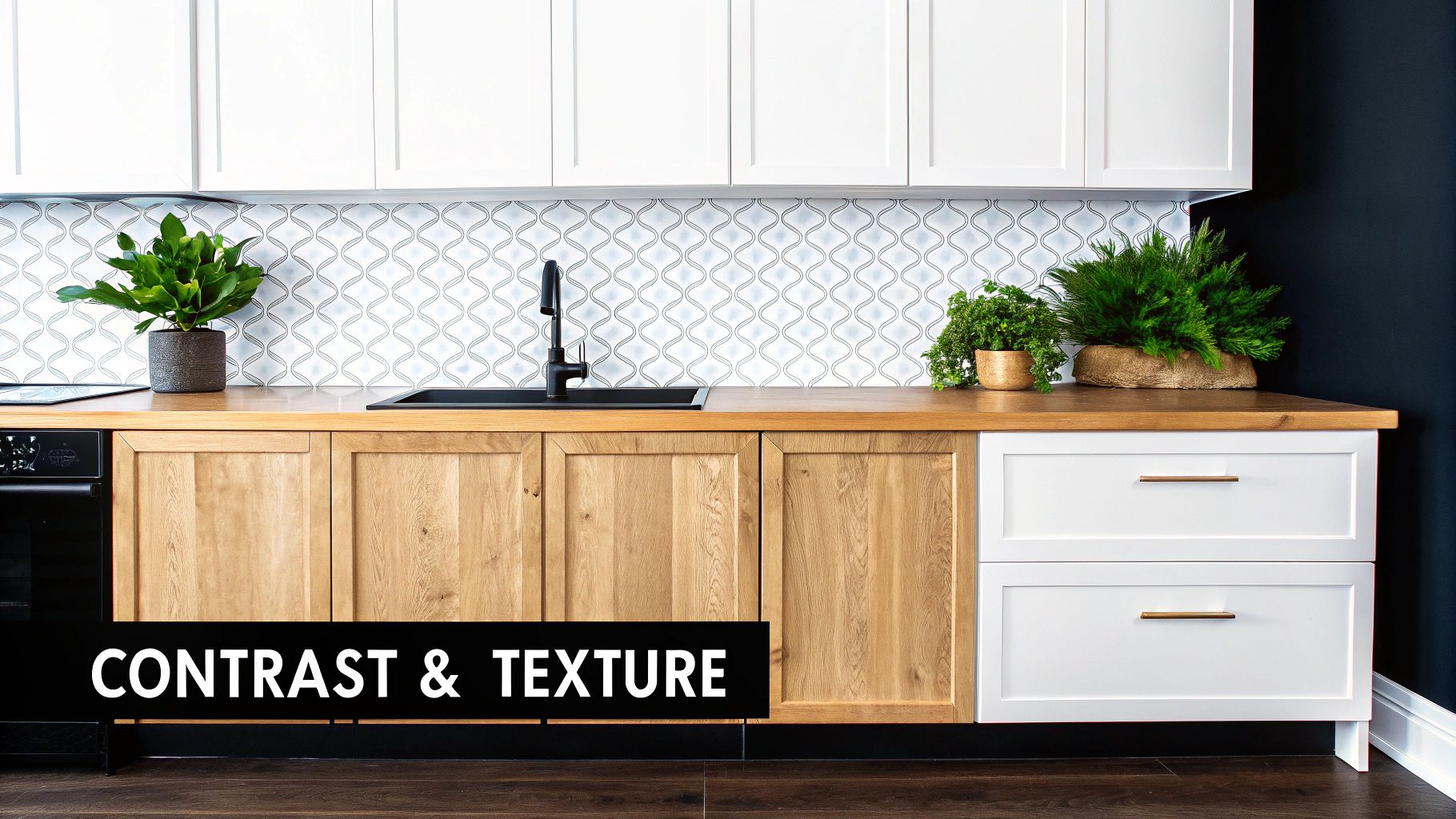
A great white kitchen is about so much more than just the colour. It’s about creating a feeling. The real magic happens when you start layering in contrast and texture, which is how you transform a space that could feel a bit sterile into the warm, inviting heart of your home.
Without these crucial layers, an all-white kitchen can fall flat. But once you start introducing different materials, finishes, and even a bit of colour, you build a story. This is where your design moves beyond a simple paint choice and becomes a rich, dynamic environment that feels both clean and incredibly cozy.
Ground Your Space with Countertops
Think of your countertops as the anchor for your entire kitchen. Your white cabinets provide a bright, airy backdrop, but the countertop is your chance to introduce some serious character and ground the whole room.
- Warm Butcher Block: A wood countertop brings in an immediate sense of warmth and an organic touch. It’s a perfect way to break up the white with natural texture, especially in modern farmhouse or Scandinavian designs.
- Veined Quartz or Marble: For a more classic or luxurious feel, a countertop with soft grey or gold veining adds beautiful, subtle movement. It creates a sophisticated focal point without shouting for attention.
- Dramatic Dark Stone: Want to make a statement? A black or dark grey granite or soapstone countertop creates a powerful, high-contrast look that feels incredibly chic and makes those white cabinets pop.
Add Personality with a Backsplash
If the countertops are your anchor, the backsplash is where your kitchen’s personality really gets to shine. It’s a smaller area, which makes it the perfect spot to get a little creative with pattern, texture, or a hint of colour you might not use elsewhere.
A classic white subway tile in a glossy finish can add a bit of shine and bounce light around the room. But why not lay it in a herringbone pattern for a dynamic twist? For a more rustic, handcrafted vibe, textured zellige tiles are a fantastic choice. Their beautiful imperfections and subtle colour variations add an artisanal quality that keeps the space from feeling too perfect.
Your backsplash is a canvas for self-expression. It’s the ideal spot to introduce a texture or pattern that ties the entire room together, adding a unique touch that is all your own.
Create a Focal Point with a Contrasting Island
A contrasting kitchen island is one of my favourite strategies for breaking up an all-white kitchen. It’s an incredibly effective way to create a stunning centrepiece and add visual interest, especially in an open-concept layout. This is one of those white kitchen ideas that delivers a huge impact.
Painting the island a different colour—like a deep navy, a sophisticated greige, or a bold forest green—instantly anchors the room. You could also use a different material entirely, like a warm oak or walnut, to add natural texture and an inviting feel. It becomes a beautiful and functional hub that naturally draws people in. You can see some gorgeous examples, including kitchens with contrasting islands, in our project gallery.
Finish with a Flourish Using Hardware
Finally, let's talk about the jewelry of your kitchen: the cabinet hardware. Don't underestimate these small details! They have a massive impact on the final look, tying everything together and putting the finishing touch on your design.
- Matte Black: Offers a crisp, modern contrast against white shaker doors. It’s a bold choice that feels clean and contemporary.
- Brushed Brass or Gold: Introduces warmth and a touch of glamour. This finish is a beautiful partner for warmer whites and natural wood accents.
- Polished Nickel or Chrome: Provides a timeless, classic shine that works perfectly in more traditional or transitional kitchens.
By carefully choosing your hardware, you add that final, essential layer of texture and contrast. It's the little detail that elevates a simple white kitchen into a truly sophisticated, thoughtfully designed space.
Optimizing Your Layout and Lighting Plan
Beyond the shimmering finish on your cabinets or the beautiful veining in your countertops lies the true heart of your kitchen: how it works and feels. That’s all down to your layout and lighting. Get these two right, and you don’t just have a pretty room—you have a space that works for you, day in and day out.
A smart layout is the secret sauce that makes cooking feel effortless. It’s about creating a natural flow between the most important spots in your kitchen. This brings us to the classic ‘work triangle,’ a time-tested concept that connects your fridge, sink, and stove to cut down on wasted steps and make meal prep a breeze.
Mastering the Kitchen Work Triangle
Think of the work triangle less as a strict rule and more as a helpful guide for an ergonomic kitchen. The main idea is simply to keep your three key work stations close enough to move between them easily, without anything getting in your way. What this looks like on the floor plan really depends on the shape of your room.
- L-Shape Layout: This is a fan favourite for a reason. It tucks the work triangle neatly into a corner, which opens up the rest of the floor. This makes it perfect for adding an island or a breakfast nook.
- U-Shape Layout: If you crave counter space and storage, the U-shape is your friend. It wraps around three walls, creating a super-efficient work zone where everything you need is just a quick pivot away.
- Galley Layout: Ideal for long, narrow spaces, a galley kitchen runs along two parallel walls. This setup can be incredibly practical, as long as you leave enough of a walkway to move around comfortably.
A well-placed island can take any of these layouts to the next level. It can become home to your sink or cooktop, tightening up the work triangle. Or, it can simply offer more prep space and a casual spot for guests to pull up a stool. The goal is always to make the flow better, not to create an obstacle.
The Art of Layered Lighting
In an all-white kitchen, lighting is about so much more than just being able to see. It’s what keeps the space from feeling cold or sterile and instead gives it warmth and character. One single light in the middle of the ceiling just isn’t going to cut it. The real magic happens when you layer different kinds of light, each with its own job to do.
Great lighting design is about creating balance. You need enough bright, focused light for tasks, but also softer, ambient light to make the kitchen feel like a welcoming part of your home, not just a utility space.
This layered approach brings together three key types of lighting that work in harmony.
- Ambient Lighting: This is your base layer—the general light that fills the room. Recessed pot lights are a fantastic choice because they provide even, widespread light without creating harsh shadows. They set the overall mood.
- Task Lighting: This is your workhorse light. It’s the bright, focused beam you need for chopping onions, reading a recipe, or checking if the chicken is cooked through. Under-cabinet LED strips are brilliant for this; they light up your countertops perfectly, getting rid of any shadows you might cast.
- Accent Lighting: This is the fun part—the jewelry of your kitchen. It’s the decorative layer that adds personality. Think of a pair of beautiful pendant lights hanging over your island or a chic sconce above some open shelves. This is what draws the eye and adds a touch of style.
When you combine these three layers, you get a lighting plan that’s both incredibly practical and visually stunning. It makes sure your white kitchen is bright where it needs to be, warm and inviting everywhere else, and shows off all your design choices perfectly.
Incorporating Natural and Biophilic Design
A white kitchen is the perfect blank canvas, making it an ideal setting for one of today’s most restorative design movements: biophilic design. At its heart, this philosophy is all about blurring the lines between your home and the outdoors, creating a space that feels deeply connected to the natural world. It’s the difference between a kitchen that feels sterile and one that feels like a sanctuary.
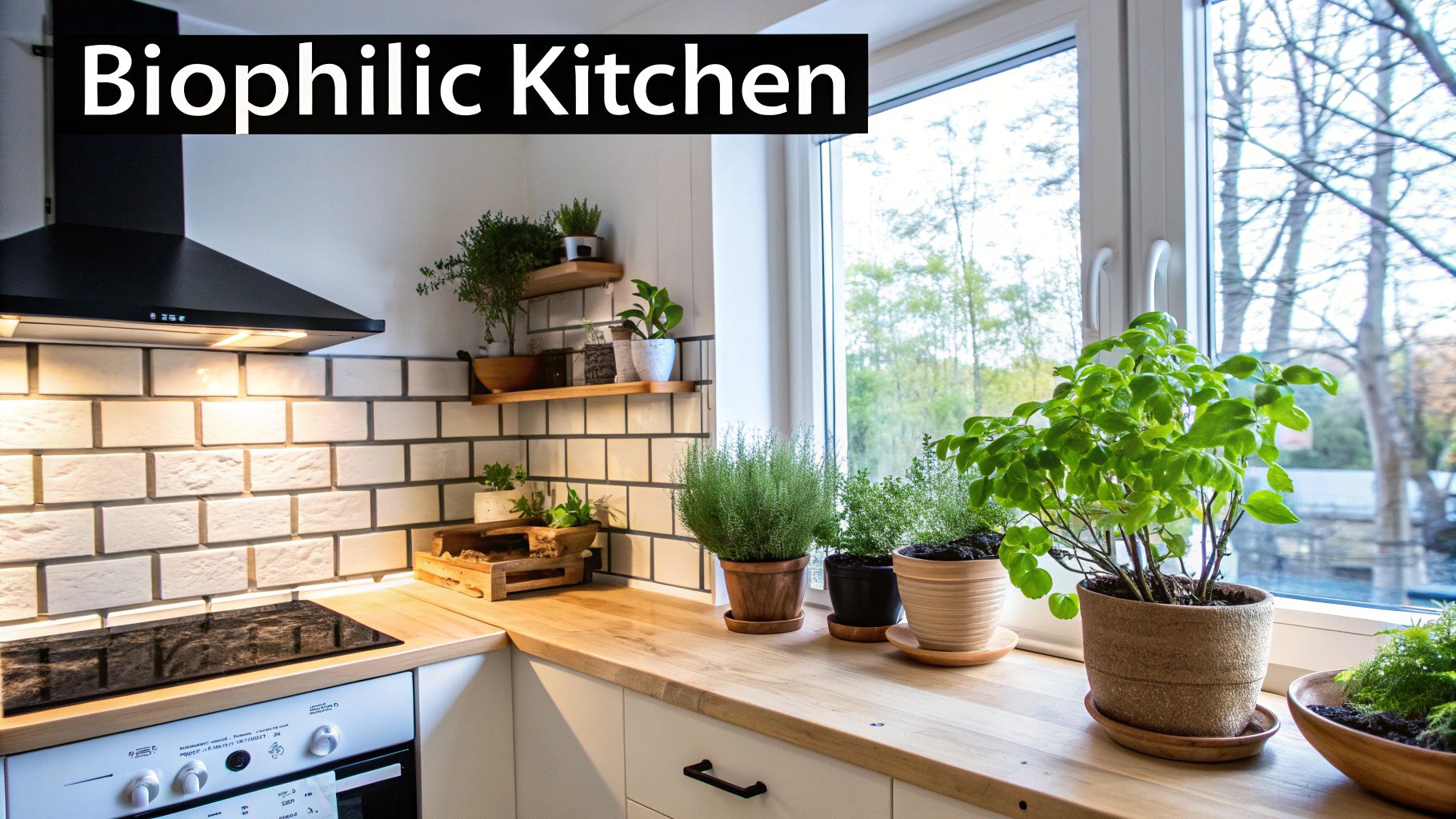
The idea is to weave in elements that echo nature's own colours, textures, and patterns. Against a crisp white backdrop, these organic details truly pop, transforming your kitchen from a purely functional room into a tranquil retreat. It’s a simple concept with a powerful impact, making your space feel genuinely alive.
This isn’t just a passing fad; it’s a response to our collective desire for homes that feel more grounded and peaceful. A recent report from the National Kitchen & Bath Association revealed that a massive 72% of homeowners are looking for kitchens with a stronger link to the outdoors. Things that were once luxuries, like large windows and indoor herb gardens, are quickly becoming must-haves. You can read more about these emerging kitchen trends and insights.
Bringing Organic Materials Inside
One of the most straightforward ways to get this look is through your choice of materials. These elements introduce a warmth and texture that beautifully offsets the coolness of white cabinetry, striking a perfect, inviting balance. They bring a tactile quality to the room that instantly makes it feel more real and grounded.
Here are a few natural white kitchen ideas to get you started:
- Wooden Open Shelving: Try swapping out a bank of upper cabinets for shelves made of natural wood. This creates a gorgeous, earthy contrast and gives you the perfect stage for showcasing plants, pottery, or your favourite dishware.
- Stone Backsplash: Think about materials like slate, travertine, or a marble with soft, organic veining. They bring in patterns and textures that feel like they were pulled directly from a natural landscape.
- Butcher Block Countertops: Using a warm wood for your island countertop is a fantastic way to break up an all-white scheme. It’s not just beautiful; it’s a functional, welcoming surface that invites everyone to gather around.
Maximizing Natural Light and Greenery
Light and life are the soul of biophilic design. Flooding your kitchen with natural light doesn't just make it look bigger and brighter; it genuinely boosts your mood and energy. If you're planning a renovation in your Toronto-area home, think about enlarging a window or even adding a skylight to let the sunshine pour in.
Biophilic design is more than just adding a few plants. It’s a holistic approach that uses natural light, authentic materials, and living elements to create a space that breathes life back into your daily routine.
Even small touches of greenery can make a world of difference. A little indoor herb garden on the counter is both beautiful and incredibly practical, keeping fresh ingredients right at your fingertips. A few strategically placed potted plants on shelves or a hanging vine trailing from a corner can help purify the air while adding a vibrant splash of colour. These simple additions bring the calming power of nature right into the heart of your home.
Planning Your Kitchen Renovation and Budget
Taking your white kitchen from a Pinterest board to your actual home is an incredible process, but it all starts with a smart plan and a realistic budget. Figuring out where your money is going is the first step—it's what lets you make confident decisions that bring your vision to life without any financial surprises.
A kitchen renovation is one of the most significant investments you can make in your home. Here in the Toronto area, a mid-range kitchen remodel typically lands somewhere between $25,000 and $75,000, though this can vary wildly based on the scale of your project and the materials you choose.
Let's break down the costs so you can see exactly where every dollar goes.
Where Does the Money Go?
Knowing how a typical renovation budget is divided up is key to planning effectively. While no two projects are identical, the expenses usually fall into a few major categories.
Here’s a rough idea of how the costs are distributed in a standard kitchen project:
- Cabinetry and Hardware: This is almost always the biggest ticket item, eating up 30-35% of the total budget.
- Labour and Installation: Covering everything from demolition to the final plumbing hookups, professional labour often accounts for 20-25%.
- Appliances: A new suite of appliances can easily take another 10-15%.
- Countertops: Depending on your material choice, expect to allocate 10-12% here.
- Flooring: New floors usually come in around 5-7% of the total cost.
- Lighting and Fixtures: This includes your sink, faucet, and all lighting, typically about 5%.
- Contingency Fund: This is non-negotiable. Always, always set aside an extra 10-15% for the unexpected things that pop up once you open up the walls.
Smart Savings vs. Worthy Splurges
Here’s a secret from the pros: not every single element in your kitchen needs to be the most expensive option available. A beautifully designed, budget-conscious kitchen is all about knowing where to save and where it truly pays to invest.
For example, you can get a stunning, durable finish with high-quality thermofoil or laminate cabinets, which often cost less than custom-painted solid wood. A simple, elegant ceramic tile for your backsplash can look just as incredible as pricey marble, saving you a bundle.
On the other hand, some things are absolutely worth splurging on. Your cabinetry, countertops, and professional installation are the workhorses of your kitchen. Investing in quality here pays you back every single day in durability, functionality, and pure enjoyment.
The Value of Professional Guidance
Pulling off a major renovation, especially in a busy area like Toronto or Markham, is about more than just picking pretty finishes. You have to navigate local building codes, find trustworthy suppliers, and schedule a whole team of skilled tradespeople. This is where leaning on an experienced professional makes all the difference.
A good team doesn't just build your kitchen; they guide you through the entire process, ensuring your design is practical, up to code, and built to last. They manage the logistics, from taking precise measurements to coordinating a flawless installation, which saves you a world of stress and helps you avoid expensive mistakes.
If you're starting to explore your options, getting familiar with the process of ordering and installing kitchen cabinets in Toronto is a great next step. Having a professional partner is what turns a well-thought-out budget into a stunning, functional reality, making sure your dream white kitchen is perfect.
Still Have Questions About White Kitchens?
Even with a gallery full of white kitchen ideas for inspiration, it’s completely normal to have a few questions before you commit. A kitchen renovation is a big decision, and you want to get it right. We get it.
To help you feel confident in your choice, we’ve put together answers to the questions we hear most often from homeowners right here in Toronto and Markham.
Are White Kitchens Really That Hard to Keep Clean?
This is easily the biggest myth we have to bust, but the truth might surprise you. Yes, a white surface will show that spaghetti sauce splatter more obviously than a dark one would. But isn't that a good thing? You see the mess right away and can wipe it clean before it has a chance to set and stain.
Modern cabinet finishes are built for busy lives. High-quality materials like painted HDF, thermofoil, or durable laminates are non-porous and incredibly easy to care for. Most of the time, a quick wipe with a damp cloth is all you need to take care of daily grime and fingerprints, keeping things looking sharp.
Will a White Kitchen Go Out of Style?
Not a chance. Think of a white kitchen less like a trend and more like a classic blue suit—it simply never goes out of style. Its incredible staying power comes from its chameleon-like ability to adapt. That bold, trendy colour you love today might feel tired in five years, but a white kitchen is a neutral canvas you can reinvent again and again.
A white kitchen is a smart, long-term investment in your home. It’s a timeless foundation that you can refresh endlessly with new hardware, a different wall colour, or updated lighting, ensuring it always feels current.
And the style continues to evolve. The move towards warmer off-whites, creams, and natural textures proves that the white kitchen is always adapting, keeping it sophisticated and fresh, not sterile.
How Can I Make My White Kitchen Feel Warm and Not So… White?
This is where the real design magic happens. The key to a warm, inviting white kitchen is all about layering—mixing in different textures and materials to create depth and personality. It's how you turn a potentially clinical space into the cozy heart of your home.
Here are a few of our go-to strategies:
- Bring in Wood: Nothing adds warmth like natural wood. Think about open shelving, a butcher block island top, or even just a beautiful set of wooden cutting boards on display.
- Warm Up Your Metals: Swap out chrome for hardware, faucets, and light fixtures in warmer finishes like brushed brass, champagne bronze, or even antique gold.
- Choose a Tactile Backsplash: A backsplash with texture, like handmade-look zellige tiles or a natural stone with soft veining, adds instant character.
- Soften the Edges: Add textiles! A colourful runner on the floor, upholstered counter stools, or a simple roman blind on the window can make a huge difference.
- Layer Your Lighting: Make sure all your lights are on dimmers. This lets you switch from bright task lighting for cooking to a soft, ambient glow for relaxing in the evening.
Ready to bring your own white kitchen ideas to life with a team that understands your vision? MapleKing Kitchen Cabinets offers professional design, custom craftsmanship, and factory-direct pricing to homeowners across Toronto and Markham. Explore our gallery and book your free consultation today at https://maplekingkitchencabinets.com.