

Walk into a kitchen with walnut cabinets, and you immediately feel it. There's a certain warmth, a quiet elegance that speaks of quality that lasts. That mix of deep, rich tones and graceful grain patterns is what has made walnut a go-to choice for homeowners for generations. It creates a space that feels both high-end and genuinely welcoming.
Why Walnut Cabinets Are Such a Timeless Choice
Looks are one thing, but walnut's appeal runs much deeper. Choosing walnut is an investment in a design that won't go out of style. While trendy finishes come and go, making a kitchen feel dated in just a few years, walnut has a classic beauty that feels right at home with almost any decor.
Whether you're building a sleek, modern kitchen or a cozy, traditional one, walnut provides a stunning foundation. Its versatility is really its superpower.
The real heart of walnut, though, is its grain. The patterns can be anything from straight and subtle to beautifully complex and wavy. This means no two cabinet doors will ever be identical. That natural variation gives your kitchen a unique personality, turning your storage into a feature wall. It's like having custom art that also happens to store your pots and pans.
It's More Than Just a Pretty Face
Let's be clear: walnut isn't just about good looks. This is a tough hardwood that holds its own in a busy kitchen, standing up to the daily grind without easily denting or scratching. That blend of beauty and brawn is precisely why it's been the wood of choice for fine furniture and cabinetry for centuries. When you choose walnut, you're not just picking a colour; you're picking a material with a proven track record of longevity.
Think of this guide as your complete game plan for bringing walnut cabinets into your own home. We'll break down everything you need to know, so you can make a choice you’ll be happy with for years.
- Wood Types and How They're Built: We’ll get into the real differences between solid walnut and top-notch veneers, helping you decide what makes sense for your kitchen and budget.
- Styles and Finishes: You'll see how different stains, paints, and even modern look-alikes can shape the final aesthetic to match your vision.
- Budgeting and Costs: We’ll give you a realistic look at the investment so you know what to expect and where you can find value.
- Durability and Upkeep: Learn the simple tips and tricks to keep your cabinets looking brand new for the long haul.
By the time you're done here, you’ll have the confidence to choose, design, and care for the perfect walnut kitchen—a space that will truly be the heart of your home for a lifetime.
Understanding Solid Wood vs. Walnut Veneer
When you start looking at walnut kitchen cabinets, one of the first big decisions you'll run into is solid wood versus walnut veneer. It's a bit like choosing between a solid gold watch and a gold-plated one. The solid gold piece is pure, heavy, and has a certain classic prestige. The gold-plated one looks just as stunning but is constructed differently inside. Both are fantastic, but they fit different needs and budgets.
Getting this distinction right is crucial. It’s what ensures your cabinets don’t just look amazing on day one, but that they perform beautifully in your home for years to come. One isn't automatically "better" than the other; the right choice really hinges on what you value most, from your design vision to practical things like humidity and cost.
The Character of Solid Walnut
Solid American Black Walnut cabinets are exactly what they sound like: crafted from thick, single pieces of hardwood. This gives them a substantial, weighty feel that signals quality and traditional craftsmanship. The real magic of solid wood is its authenticity—the beautiful grain you see on the surface is the same grain that runs all the way through the door.
Over decades, solid walnut cabinets can develop a rich patina, that gentle aging process that adds so much character. They can also be sanded down and refinished multiple times, which means a truly remarkable lifespan if you ever decide to change up the look. But keep in mind, solid wood is a natural material that "breathes." It expands and contracts with changes in temperature and humidity, which is something to consider in the Greater Toronto Area’s variable climate.
The Stability of Walnut Veneer
Walnut veneer is the modern solution, delivering that same luxurious look but with a major boost in structural stability. The process involves applying a thin, masterfully cut layer of real walnut wood over a super-stable core material, usually high-density fibreboard (HDF). This isn't a cheap knock-off; we’re talking about genuine walnut, just used in a smarter way that plays to its strengths.
Because the HDF core is an engineered product, it’s incredibly stable and much less likely to warp, crack, or expand than solid wood. This makes a high-quality veneer an excellent choice for kitchens, where steam, spills, and temperature swings are just part of daily life. Veneer also opens the door to creating perfectly consistent and book-matched grain patterns—a sleek, uniform look that’s absolutely perfect for contemporary and minimalist designs.
The Best of Both Worlds: Many of today's high-end cabinets actually use a hybrid approach. For example, the cabinet door frames might be solid walnut for strength and durability at the joints, while the large centre panels are walnut veneer over HDF to stop them from warping over time.
This clever combination gives you the authentic feel of solid wood where it counts and the superior stability of engineered materials where it’s needed most. It's how you get walnut kitchen cabinets that stay beautiful and functional for the long haul.
This flowchart can help you visualize how your style preferences might point you toward one construction over another.
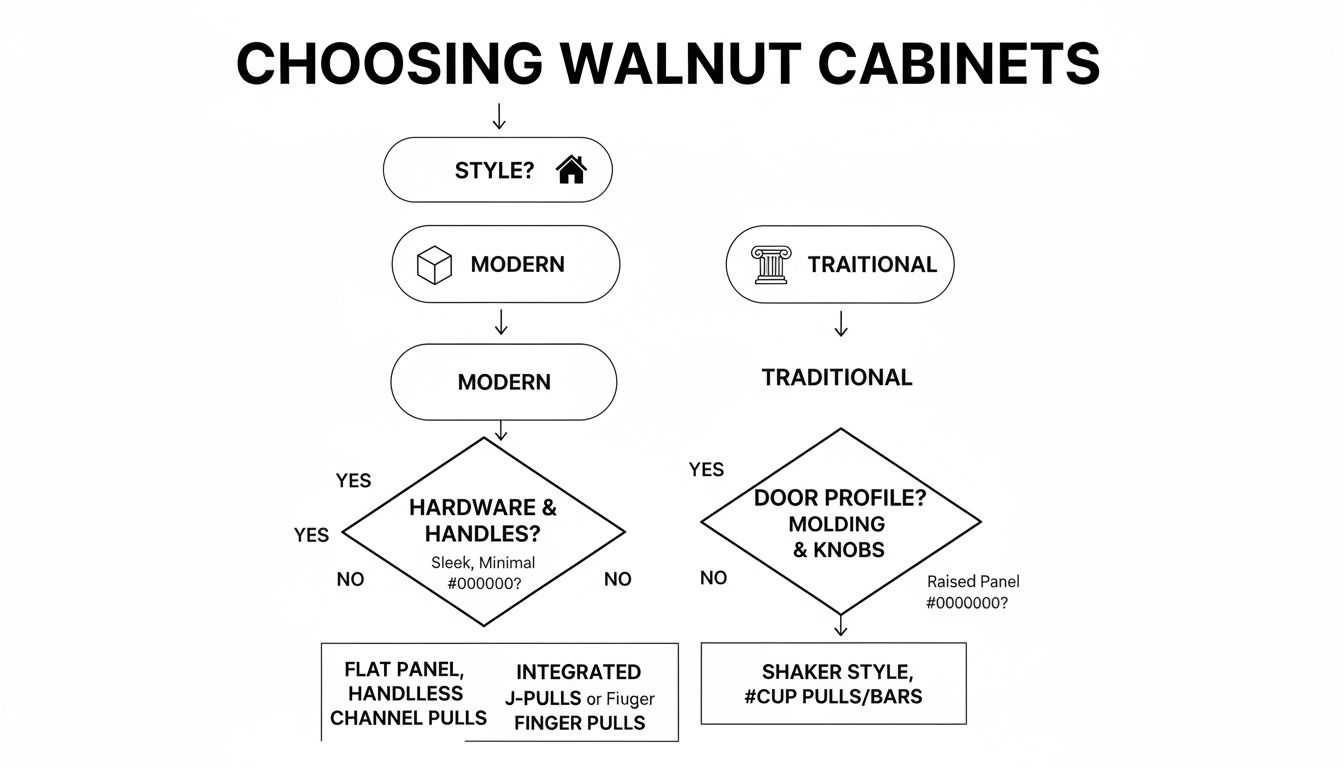
As you can see, whether you're dreaming of a modern masterpiece or a timeless traditional kitchen, there’s a walnut cabinet solution that fits your vision perfectly.
To make the decision a bit easier, here’s a quick side-by-side comparison.
Solid Walnut vs. Walnut Veneer At a Glance
Use this table to quickly compare the key differences between solid walnut and walnut veneer cabinets for your kitchen project.
| Feature | Solid Walnut Cabinets | Walnut Veneer Cabinets |
|---|---|---|
| Aesthetics | Natural, authentic grain variations. Ages with a rich patina over time. | Consistent, often book-matched grain. Ideal for sleek, modern looks. |
| Durability | Extremely durable but can be dented. Can be sanded and refinished many times. | Very durable HDF core resists dents. The thin veneer layer can be delicate. |
| Stability | Susceptible to warping or cracking with major humidity/temperature shifts. | Highly stable HDF core resists warping, making it great for kitchens. |
| Cost | Significantly more expensive due to material and labour costs. | More budget-friendly while still offering the look of real walnut. |
| Maintenance | Requires regular polishing; scratches can be repaired by sanding. | Easy to clean with a damp cloth; deep scratches are difficult to repair. |
Ultimately, both options can lead to a stunning kitchen when you start with high-quality materials.
Making the Right Choice for Your Home
So, which way should you go? It all comes down to balancing what you want your kitchen to look like, the environment it’s in, and your budget.
- Choose Solid Walnut if: You’re after the authentic character of pure hardwood, you see these cabinets as a generational investment, and you love the idea of being able to refinish them down the road.
- Choose Walnut Veneer if: Your main goals are stability in a potentially humid space, achieving a perfectly uniform grain pattern, and making your budget go further without giving up that premium walnut look.
Talking with custom kitchen cabinet experts in Toronto can make this decision so much easier. A factory-direct provider like MapleKing can walk you through both solid and high-quality veneer options, explaining the real-world pros and cons for your specific layout and lifestyle. By cutting out the retail middleman, they make premium materials more accessible, letting you get the quality you truly want for your home.
Finding the Perfect Style and Finish for Your Home
One of the best things about walnut is just how versatile it is. You might think of it as having one specific look, but walnut kitchen cabinets can anchor almost any design you can dream up—from sleek, minimalist spaces to cozy, traditional kitchens. The secret all comes down to the finish. It’s that final touch that really defines the wood's personality and sets the mood for your entire room.
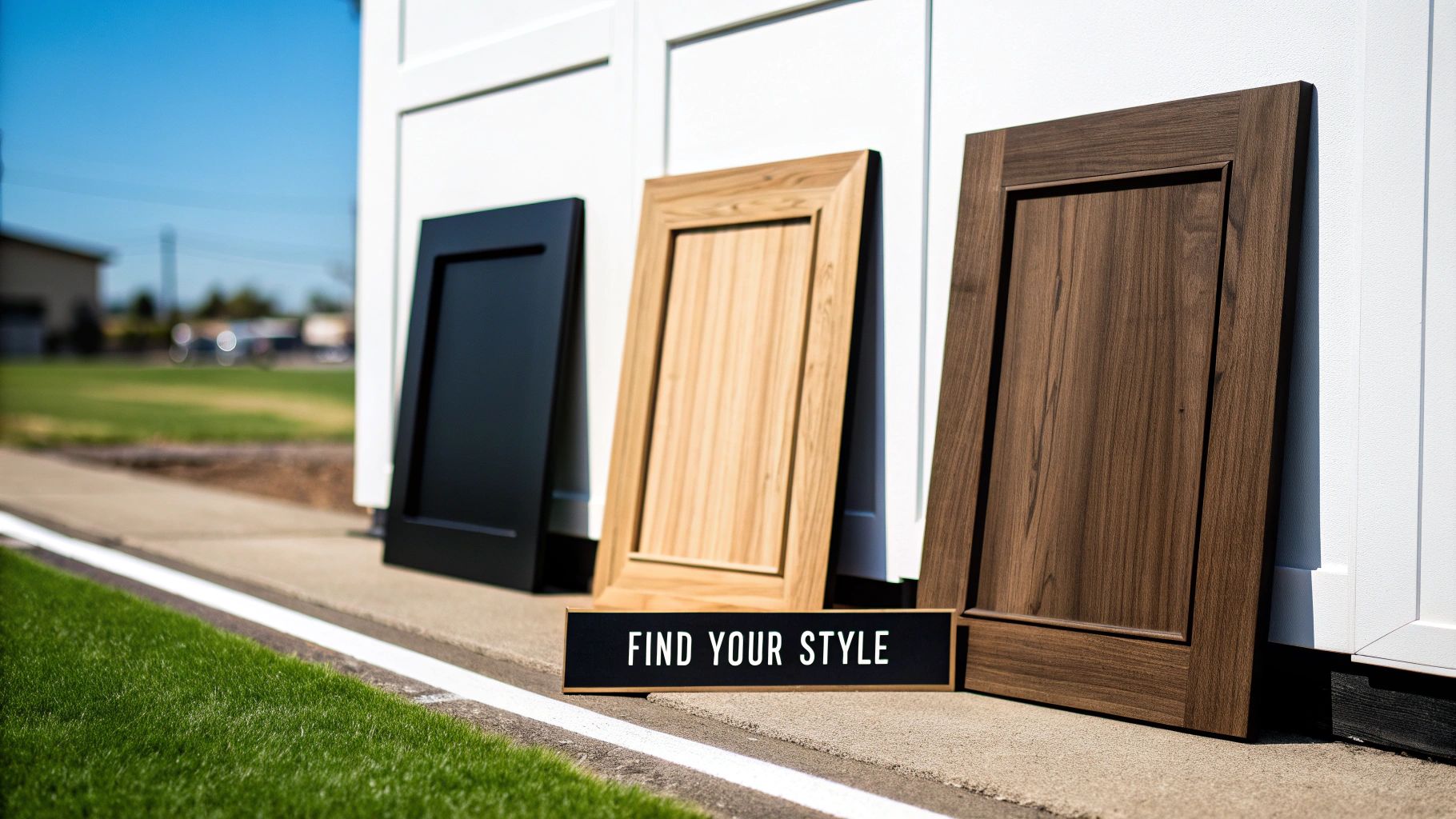
Think of the raw wood as your canvas. The finish is how you bring the art to life. A clear or lightly tinted stain is all about celebrating the walnut’s natural character, letting every single swirl and rich chocolatey streak shine. On the flip side, an opaque paint makes a completely different statement—bold and dramatic. It transforms the cabinet into a solid block of colour, but you still get that substantial, quality feel of real wood underneath.
Let's walk through these choices so you can figure out how to bring your own vision to life.
Embracing Natural Beauty with Stains
For a lot of people, the whole reason for choosing walnut is that incredible natural grain. Stains are made to enhance it, not cover it up. They work by soaking into the wood, which deepens its colour and adds a protective layer, making those beautiful grain patterns pop with amazing clarity.
A simple clear coat or a light natural stain gives you the purest expression of walnut. This is a go-to finish for mid-century modern or transitional kitchens, where the whole vibe is about clean lines and organic materials. If you want something a bit more formal or dramatic, a darker stain like an espresso or a deep Jacobean can give walnut an even more luxurious feel. It’s perfect for traditional designs or for creating a sharp contrast against light-coloured countertops.
A well-chosen stain doesn't just change the colour; it amplifies the wood's inherent character. It's the difference between simply seeing the grain and truly experiencing its texture and flow.
Making a Statement with Paint
While staining is the classic route, painting opens up a whole other universe of design options. Painting your walnut cabinets lets you introduce literally any colour you can think of, from timeless whites and greys to trendy, deep blues or earthy greens.
This is an especially sharp look for a two-toned kitchen. Picture this: lower cabinets in a rich, natural walnut stain to ground the space, paired with upper cabinets painted a crisp white to make the room feel brighter and more open. It’s a sophisticated style that gives you the best of both worlds.
Modern Alternatives for The Walnut Look
Beyond traditional wood finishes, some really compelling modern materials can capture that walnut look but with added performance benefits. These engineered options have become a huge hit in contemporary designs, where a clean, consistent look and serious durability are key.
Here are a few of the top choices we see:
- High-Pressure Laminate (HPL): Today's laminates are nothing like the ones you might remember. They use incredibly high-resolution printing to mimic walnut grain so realistically it’s hard to tell the difference, all while being super resistant to scratches, moisture, and stains.
- Thermofoil (RTF): This involves a vinyl film that’s vacuum-pressed onto an HDF core. The result is a perfectly seamless, smooth surface that’s a breeze to clean, making it a fantastic, practical choice for busy families who still want that beautiful walnut aesthetic.
- Textured Melamine: This option takes it a step further by adding a tactile element. It's designed to not only look like real wood grain but to feel like it, too.
These alternatives give you that consistent, uniform appearance that’s ideal for minimalist and modern kitchens. If you're thinking about a refresh, learning how to update wooden kitchen cabinets can also spark some fresh ideas.
Ultimately, choosing the right finish is a personal decision—it has to feel right for your home and the way you live. To get a better sense of how these styles play out in the real world, check out a gallery of completed projects for some great inspiration.
How Walnut Cabinets Stand Up to Real Life
A beautiful kitchen is one thing, but a kitchen that can handle the chaos of daily life? That’s the real goal. When you’re thinking about walnut kitchen cabinets, you’re not just choosing a look; you’re choosing a material that has to withstand everything from dropped pans to simmering sauces. The good news is that walnut is much more than just a pretty face—it’s a seriously durable hardwood built for the long haul.
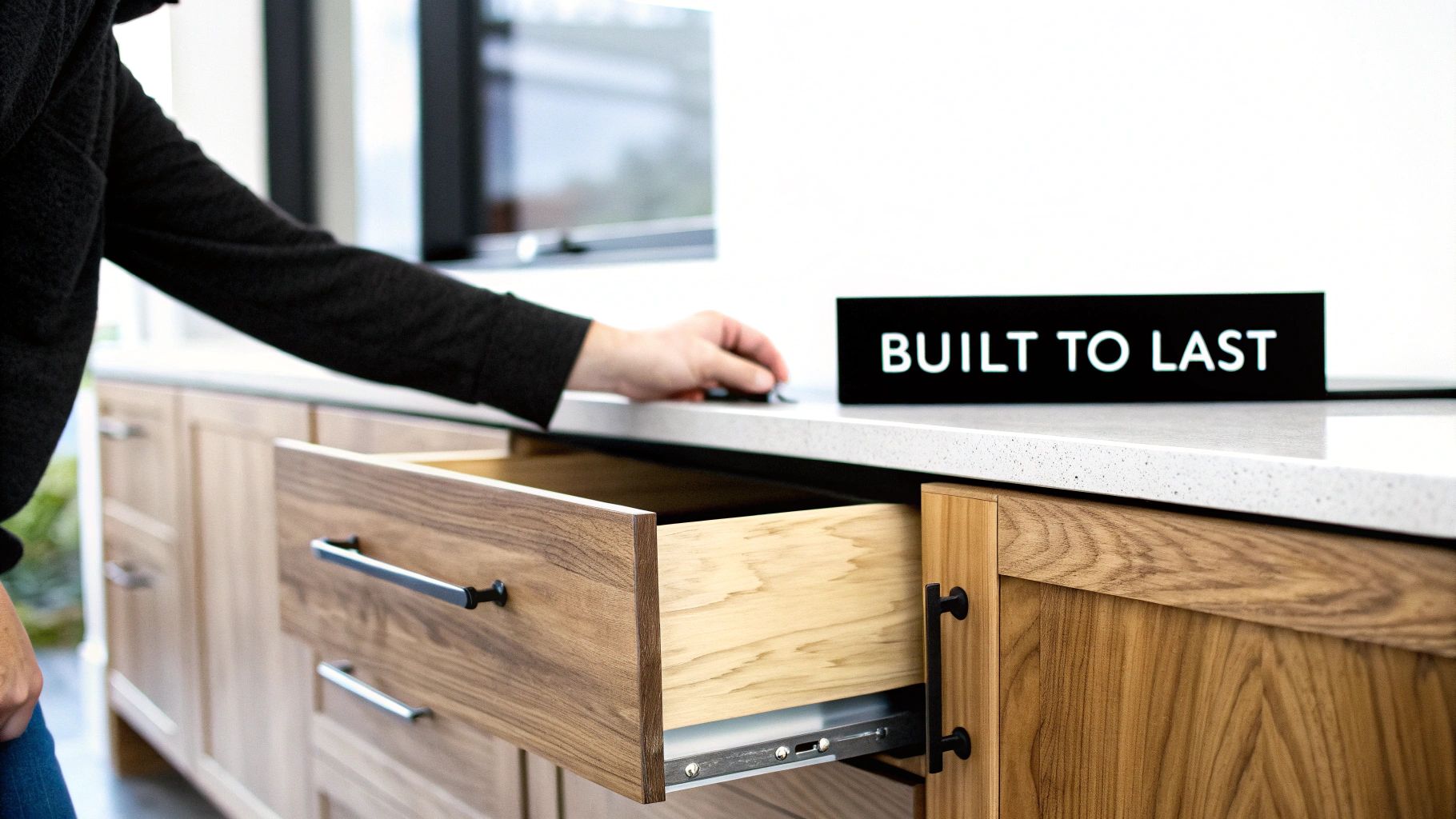
In the world of woodworking, we often talk about the Janka hardness scale, which is just a fancy way of measuring how well a wood resists dents and dings. Walnut scores a very respectable 1,010. While it’s not quite as tough as oak or maple, it hits a sweet spot, offering the perfect balance of strength and workability. This makes it ideal for cabinetry that needs to be both beautiful and resilient.
This natural durability is a big reason why walnut is seen as such a smart, long-term investment. In fact, choosing walnut can cut down on replacement needs by as much as 40% compared to cheaper laminates, making it a more sustainable and cost-effective choice in the long run.
Keeping Your Cabinets Looking Brand New
Even the toughest wood needs a little TLC. Luckily, maintaining the rich beauty of your walnut cabinets is surprisingly simple. You don’t need harsh chemicals or a lot of elbow grease—just a simple, consistent routine to protect your investment for years.
Here are a few easy steps for day-to-day care:
- Dust Regularly: A quick wipe-down with a soft, dry microfibre cloth once a week is all it takes. This keeps dust from building up and making the finish look dull.
- Clean Spills Gently: For fingerprints or food splatters, just dampen a cloth with a bit of water and a few drops of mild dish soap. Wipe the spot, then immediately dry it with a clean cloth. The key is to not let moisture sit on the wood.
- Avoid Harsh Chemicals: Stay far away from abrasive cleaners, anything with ammonia, or scouring pads. They can strip the protective finish and scratch the wood itself, causing damage that’s tough to fix.
For homeowners in the Greater Toronto Area, here’s a crucial tip: manage your indoor humidity. Like all solid woods, walnut can expand and contract with big swings in moisture. Just using your kitchen’s exhaust fan when you cook and keeping your home’s humidity stable will go a long way in preventing any potential warping down the road.
The Power of a Modern Factory Finish
While walnut is naturally strong, the finish applied to it is your true first line of defence. Today’s factory-applied finishes are a different beast entirely from what was available even a decade ago. These are multi-layer coatings cured under perfectly controlled conditions, creating an incredibly hard, durable barrier that seals the wood from the outside world.
This protective layer is engineered to resist:
- Scratches and Scuffs: It hardens the surface, making it much less likely to show minor dings from everyday use.
- Moisture and Stains: It acts as a shield, preventing spills from soaking into the wood and giving you plenty of time to clean up messes.
- UV Fading: It contains special inhibitors that protect the wood’s deep, rich colour from being bleached out by sunlight.
Beyond the natural strength of the wood, the quality of the topcoat has a huge impact on how well your cabinets will hold up. This is especially true when you start looking at durable, scratch-resistant finishes. A top-tier, factory-direct supplier will ensure your cabinets get a premium catalyzed conversion varnish or polyurethane topcoat, giving you maximum protection right from day one.
Budgeting for Your Walnut Cabinet Project
Let’s talk numbers. Planning a budget for walnut kitchen cabinets can feel like a guessing game, but it doesn't have to be. The final price tag isn't just one number; it's the sum of all the little choices you make along the way. Getting a handle on these factors is the secret to building a dream kitchen that doesn't break the bank.
Think of it like buying a car. The base model has a starting price, but the final cost depends on whether you choose the V6 engine, the leather interior, or the premium sound system. For cabinets, the type of walnut is your base, but the door style, hardware, and even where you buy them from will shape the final quote.
Instead of getting lost in vague price ranges, let's pull back the curtain on what actually drives the cost up or down. This way, you can put your money where it matters most to you and find clever ways to save elsewhere.
Key Factors That Shape Your Cabinet Budget
The biggest fork in the road for your budget is a choice we’ve already touched on: solid wood versus a top-notch walnut veneer. Solid walnut is the premium choice, and it costs more simply because it uses a lot more of that beautiful, expensive hardwood. A high-quality veneer on an HDF core, on the other hand, gives you that same stunning look and added stability, but at a price point that’s often much more approachable.
But the core material is just the beginning. A few other key decisions will have a big impact on your final quote:
- Door and Drawer Style: The simplest designs are the most budget-friendly. A clean, flat-panel (or slab) door is less labour-intensive to make than an intricate one. Classic Shaker styles or doors with detailed moulding require more skilled work, which adds to the cost.
- Cabinet Construction: The bones of your cabinets matter, too. Frameless (Euro-style) cabinets have a sleek, modern look and can offer a bit more interior space. Traditional framed cabinets have a different aesthetic and a construction process that can also influence the price.
- Finishes and Customization: A standard stain is usually part of the package, but if you want a custom colour match or a specialty glazed finish, expect that to add to the total. The same goes for all those great functional upgrades, like soft-close hinges, pull-out spice racks, or custom drawer organizers.
Your budget isn’t just a number; it’s a reflection of your priorities. Decide what's most important—is it the pure authenticity of solid wood, a specific door style, or advanced interior storage solutions?
Finding Value with a Factory-Direct Supplier
One of the smartest ways to get more for your money without sacrificing quality is to rethink where you buy your cabinets. The old way involved a long supply chain: manufacturer to distributor to a retail showroom. Every one of those stops adds a markup to the price you pay.
This is where a factory-direct supplier completely changes the equation.
When you work directly with the people who actually make the cabinets, you cut out all those middlemen. That streamlined path can bring the costs down significantly, often putting premium, customizable walnut kitchen cabinets within reach. It means your budget suddenly goes further, letting you spring for the higher-grade materials or those custom features you thought were out of your league.
For anyone planning a renovation, exploring the local market for kitchen cabinets in Toronto is the perfect first step to uncover these kinds of opportunities.
In the end, a well-planned budget gives you control and confidence. By understanding what things cost and why, and by choosing a smarter way to buy, you can build a breathtaking walnut kitchen that delivers incredible value and timeless style—without any nasty financial surprises.
Comparing Walnut to Other Popular Cabinet Woods
Choosing the right wood for your kitchen cabinets can feel a bit like speed dating. You see a lot of options, and they all have their good points. While the deep, luxurious look of walnut kitchen cabinets might have caught your eye, it’s always smart to see how it compares to the other popular kids on the block. We'll skip the dense textbook talk and get right to what matters for your home: the look, the resilience, and the overall feel each wood offers.
Getting a handle on these differences is what will give you that "aha!" moment, where you just know you've found the right fit. Every wood has its own personality, and the perfect one for you is a mix of your home's style, your lifestyle, and your budget.
Walnut vs. Oak: A Tale of Two Grains
Think of oak as the sturdy, reliable classic. It’s known for a very bold, prominent grain that gives off a traditional, sometimes rustic, vibe. Oak is tough—it often scores higher than walnut on the Janka hardness scale, meaning it can take a beating from stray pots and pans in a busy kitchen. The only catch? That heavy grain can sometimes feel a bit dated if you're aiming for a sleek, modern look.
Walnut, on the other hand, is all about subtle sophistication. Its grain is much smoother and more linear, sometimes straight and sometimes flowing in a gentle wave. This quiet elegance helps walnut cabinets feel right at home in just about any design, from ultra-modern to timeless traditional, without screaming for attention. While it's a touch softer than oak, its deep, rich colour does a fantastic job of hiding the little scuffs and scratches that are part of everyday life.
Walnut vs. Maple: The Colour Contrast
Maple is another fan favourite, and for good reason. It’s prized for its light, creamy colour and an incredibly fine, barely-there grain. This makes it a perfect blank canvas for designers and homeowners alike. It takes paint and light stains like a dream, making it the go-to for creating a bright, airy kitchen. Plus, maple is exceptionally hard and durable—a true workhorse.
The real difference here is all about mood and character. Where maple brings brightness and uniformity, walnut delivers depth, drama, and a one-of-a-kind natural pattern. The rich chocolate and coffee tones of walnut create an instant feeling of warmth and luxury that a light wood like maple just can't match. If you want your cabinets to be the star of the show, a bold and elegant statement, walnut is your answer.
When you choose walnut, you're not just picking a colour; you're inviting a material with its own story and personality into your home. The complex grain and rich tones are a built-in design element that instantly elevates the entire room.
Walnut vs. Cherry: A Study in Aging Gracefully
In the world of high-end cabinetry, cherry is probably walnut's closest competitor. People love it for its smooth, uniform grain and its famous party trick: it ages beautifully. Cherry starts out as a lighter, almost pinkish-red wood and, with time and light exposure, deepens into a stunning, rich reddish-brown.
Walnut starts dark and pretty much stays that way, though years of direct sunlight can lighten it just a touch. The decision between these two often boils down to a simple colour preference. Are you drawn to the warm, red undertones of aged cherry, or do you prefer the deep, cooler browns and subtle purple hues found in walnut? Both are premium choices that speak to quality, but walnut's unique colour palette gives it a distinctly modern and sophisticated edge right from day one.
Common Questions About Walnut Kitchen Cabinets
Even with all the details sorted, a few last-minute questions always seem to come up when you're about to make the final call on walnut kitchen cabinets. Let's tackle some of the most common ones we hear from homeowners, so you can feel completely confident in your decision.
Are Walnut Cabinets a Good Choice for Busy Families?
They’re a fantastic choice. Walnut is a tough hardwood, which means it stands up well to the inevitable bumps, dings, and scratches of a busy family kitchen. Life happens, and walnut is ready for it.
Plus, its naturally rich grain pattern is a real secret weapon—it does an incredible job of hiding minor wear and tear that would stick out like a sore thumb on a plain, solid-coloured cabinet. When you add a quality factory finish, you get a surface that can handle spills and daily chaos, looking great for years.
Do Walnut Cabinets Go Out of Style?
Hardly. Walnut is one of those materials that designers consider truly timeless. It has a natural elegance and warmth that just doesn't get old, sidestepping those here-today-gone-tomorrow trends. Whether you're aiming for a sleek modern look, a cozy traditional vibe, or something in between, walnut brings a level of sophistication that always feels right.
Think of it less like a trendy purchase and more like an investment in classic style. It’s so versatile that it continues to look great even as your other design tastes evolve.
How Do I Match Countertops and Flooring?
This is where the fun begins. Walnut’s deep, rich tones are a beautiful anchor for your kitchen's design, and they pair well with almost anything. The real question is: are you looking for contrast or harmony?
- For a Bold, High-Contrast Look: Go with light-coloured countertops. Think white quartz or marble with just a hint of veining. This creates a really crisp, contemporary feel that makes the walnut cabinets the star of the show.
- For a Cohesive, Warmer Feel: Lean into materials with earthy tones. Certain types of granite, soapstone, or even a classic butcher block countertop will blend seamlessly for a comfortable, organic look.
For flooring, you have great options, too. Lighter wood floors like white oak or maple can brighten up the whole room and create a beautiful counterpoint to the darker cabinets. On the other hand, natural stone or porcelain tiles can play up the wood’s natural elegance.
Ready to bring the timeless beauty of walnut into your kitchen? The experts at MapleKing Kitchen Cabinets are here to help you design a custom, factory-direct solution that fits your style and budget perfectly. Start your project with us today.



