
Let's get one thing straight: a walk-in pantry isn't just a big cupboard. It's a dedicated room, a space you can actually step into, designed from the ground up to store food, kitchen supplies, and even those clunky small appliances. Think of it as your own personal, perfectly curated grocery store, tucked away right in your home. It offers so much more storage and organization than standard kitchen cabinets ever could, decluttering your main kitchen and putting everything you need right at your fingertips.
Your Kitchen’s Secret Command Centre
Picture your kitchen counters, permanently clear. Imagine no more stand mixer, air fryer, and cereal boxes fighting for prime real estate. A walk-in pantry is so much more than a storage closet; it's a true extension of your kitchen—a command centre that makes daily life run smoother. It’s the difference between blindly rummaging in a deep, dark cupboard and instantly spotting exactly what you need.
This single space can honestly transform how you run your household. Those big hauls from Costco suddenly become a smart buy, not a storage nightmare. Meal planning gets a whole lot easier when you can see all your ingredients in one glance. It becomes a culinary workshop where baking supplies, specialty oils, and holiday platters are all organized and ready for action.
Beyond Just Stashing Your Stuff
A thoughtfully designed walk-in pantry solves some of the most common kitchen frustrations by creating dedicated zones for everything. This kind of organization saves you time, helps cut down on food waste, and brings a welcome sense of calm to the busiest room in the house. But the benefits go way beyond daily convenience:
- Smarter Organization: You can centralize all your non-perishables, small appliances, and bulk-buy items in one easy-to-access spot.
- A Better Kitchen Workflow: Keeping your main kitchen counters clear for prep and cooking makes for a more efficient and enjoyable place to be.
- Real Cost Savings: Go ahead and take advantage of sales and bulk deals without worrying about where you'll stash it all.
- A Boost in Home Value: Let's be honest, a functional, stylish pantry is a huge selling point for homebuyers, adding real value to your property.
To quickly see how a walk-in pantry stacks up against your average kitchen cabinets, here’s a simple breakdown.
Walk In Pantry Vs Standard Cabinets At a Glance
This table offers a quick comparison, highlighting the key differences in storage capacity, accessibility, organization potential, and overall kitchen functionality.
| Feature | Walk In Pantry | Standard Kitchen Cabinets |
|---|---|---|
| Storage Capacity | High-density; ideal for bulk items, appliances, and non-perishables. | Limited; best for everyday dishes, glasses, and smaller food items. |
| Accessibility | Excellent; you can walk in and see everything at a glance. | Fair to poor; items at the back are often hard to see and reach. |
| Organization | Highly customizable with deep shelving, drawers, and dedicated zones. | Restricted to standard cabinet depths and heights. |
| Counter Space | Frees up kitchen counters by storing appliances and dry goods elsewhere. | Often leads to cluttered counters as they become default storage. |
| Home Value | Considered a highly desirable feature that can significantly increase value. | A standard feature with minimal impact on resale value. |
As you can see, a walk-in pantry isn’t just about adding more space—it fundamentally changes how you use your kitchen for the better.
A thoughtfully designed pantry is a game-changer for home organization. It elevates the kitchen from a simple cooking area to a fully equipped culinary hub, making everyday tasks smoother and more efficient.
A Growing Trend with Real Returns
The desire for better storage solutions is definitely not just a passing fad. Here in the GTA and across North America, the walk-in pantry has become a genuine must-have for homeowners who want both practicality and a touch of everyday luxury.
The numbers back this up. According to the National Association of Home Builders (NAHB), an incredible 85% of homebuyers now consider a walk-in pantry an essential feature. This adds a significant amount of convenience, typically providing 25 to 100 square feet of extra storage for everything from bulk supplies to large serving ware.
Better yet, the investment really pays off. Some estimates suggest a return on investment between 50% and 70%, which just goes to show its impact on both your lifestyle and your property value. You can see how pantries are shaping modern home design by exploring more kitchen trends at Exploding Topics.
Planning Your Ideal Pantry Layout and Dimensions
The secret to a great walk in pantry isn't just about how much it can hold—it's about how it works. Think of it like a chef’s station; everything needs a logical home so you can move efficiently and find what you need without a second thought. Whether you're tucking it into a small corner or designing a whole new room, the right layout makes all the difference.
Before you even think about shelving styles or paint colours, you have to nail down the footprint. This is where we figure out how the pantry fits into the flow of your kitchen, what you’ll be storing, and how you’ll move around inside. A well-planned layout saves you from frustrating searches and turns a simple storage space into the command centre of your kitchen.
This is exactly why a thoughtfully designed pantry is so valuable—it’s the key to managing bulk buys, creating more functional space, and keeping your home beautifully organized.
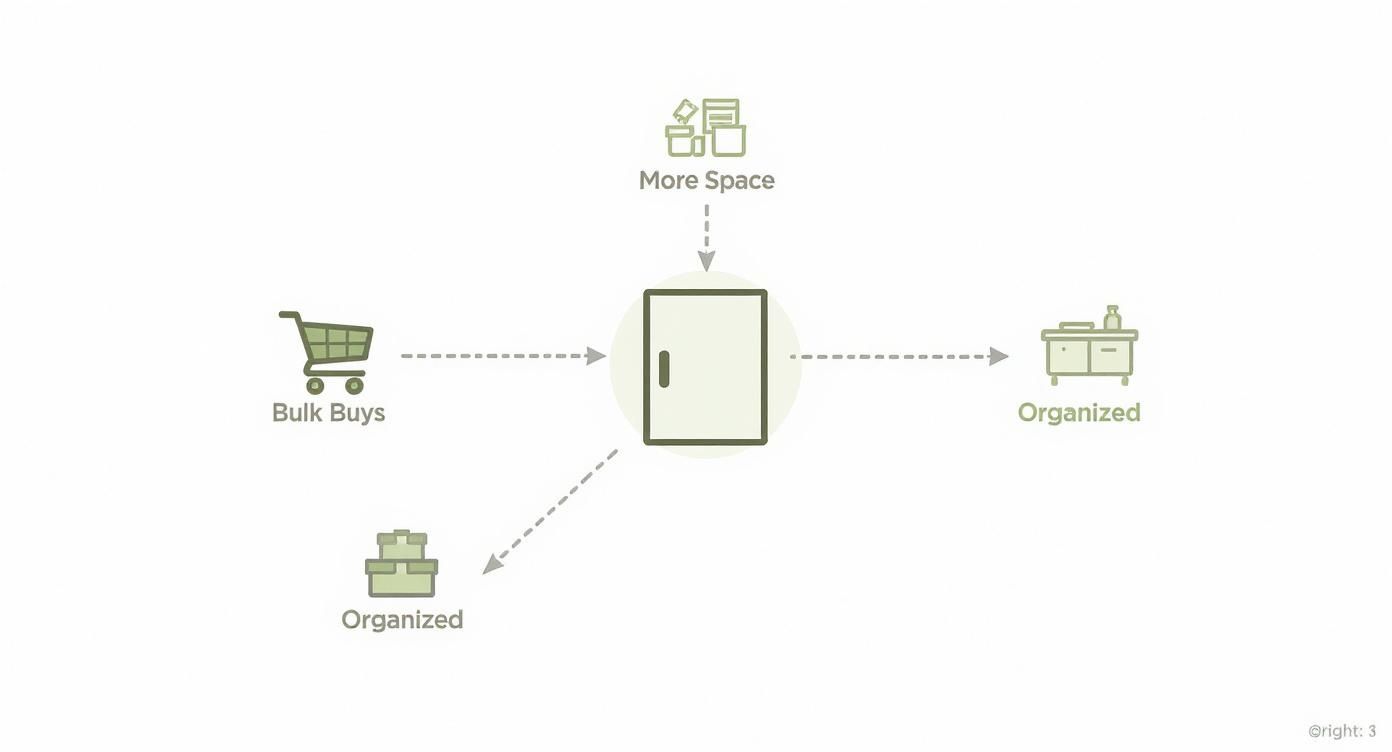
As you can see, a walk-in pantry becomes a hub that dramatically boosts your kitchen’s efficiency and makes managing your household supplies a breeze.
Mastering Pantry Dimensions
Getting the dimensions right is absolutely critical. You want a pantry that feels generous and easy to use, not a cramped closet you have to squeeze into. A few inches here or there can completely change the experience, so it’s all about striking that perfect balance between maximum storage and comfortable elbow room.
A good starting point for a walk-in pantry is a space that’s at least five feet by five feet. This gives you enough real estate for shelving on a few walls without feeling boxed in. But the single most important measurement? The aisle.
You need a clear walkway of at least 36 inches between your shelves. This ensures you have enough room to turn around, bend down to grab something from a bottom shelf, or haul in a big grocery run without bumping into everything.
Choosing the Right Pantry Layout
The shape of your room will naturally guide you toward the best layout. Each design has its own personality and perks, perfectly suited for different spaces and storage needs. Let’s break down the three most popular and practical options.
1. The U-Shaped Layout
This is the powerhouse of pantry layouts, using three full walls for maximum storage. If you have a dedicated, squarish room and a lot to store, the U-shape is your best friend. It lets you pack in an incredible amount of shelving and cabinetry.
- Best For: Larger, more rectangular or square rooms where you won't sacrifice that crucial 36-inch aisle.
- Pros: Absolutely unbeatable storage capacity. It's perfect for creating dedicated zones for things like baking supplies, canned goods, and small appliances.
- Cons: It needs a wider room to work. If the space is too narrow, it can feel tight, and the corners can become awkward "dead zones" if they aren't planned with smart storage solutions.
2. The L-Shaped Layout
Using two adjoining walls for storage, the L-shape feels wonderfully open and airy. It's a super versatile design that works just as well in square rooms as it does in longer ones, leaving plenty of open floor space for a small countertop, a rolling island, or just easy maneuvering.
- Best For: Medium-sized pantries or spaces that might pull double duty as a transition to a mudroom.
- Pros: Feels spacious and accessible. You also completely avoid those tricky corner storage problems.
- Cons: You get less storage than a U-shape, but what you lose in shelving you gain in user-friendliness.
3. The Galley Layout
A galley layout is all about efficiency. It runs shelving down two parallel walls with a straight walkway down the middle, just like a ship’s galley. This is the perfect solution for long, narrow rooms, as it puts everything within easy reach and eliminates any wasted corner space. When you're considering a galley, it's a great idea to talk with custom kitchen cabinets and renovation experts in Toronto to make sure the aisle width is optimized for your home.
- Best For: Converted closets or long, rectangular rooms.
- Pros: Extremely space-efficient with a fantastic workflow. Everything is in your direct line of sight.
- Cons: Its success is totally dependent on the room's width. A tight aisle can make it a one-person-only zone.
Ultimately, the best layout is the one that feels like it was made just for you—a design that respects your home’s architecture while supporting your family’s daily rhythm.
Choosing Your Shelving and Storage Systems
Alright, you’ve got the layout and dimensions figured out. Now comes the really fun part—choosing the storage that will bring your walk-in pantry to life. Think of this stage like outfitting a professional workshop; every shelf, drawer, and cabinet needs a purpose to make the whole system work smoothly. This is where you decide how your pantry will function day-to-day, striking that perfect balance between easy access and a clean, organized look.
Your first big decision is whether to go with open shelving, closed cabinetry, or (most likely) a mix of both. It really boils down to a simple question: what do you want to see, and what do you want to hide?
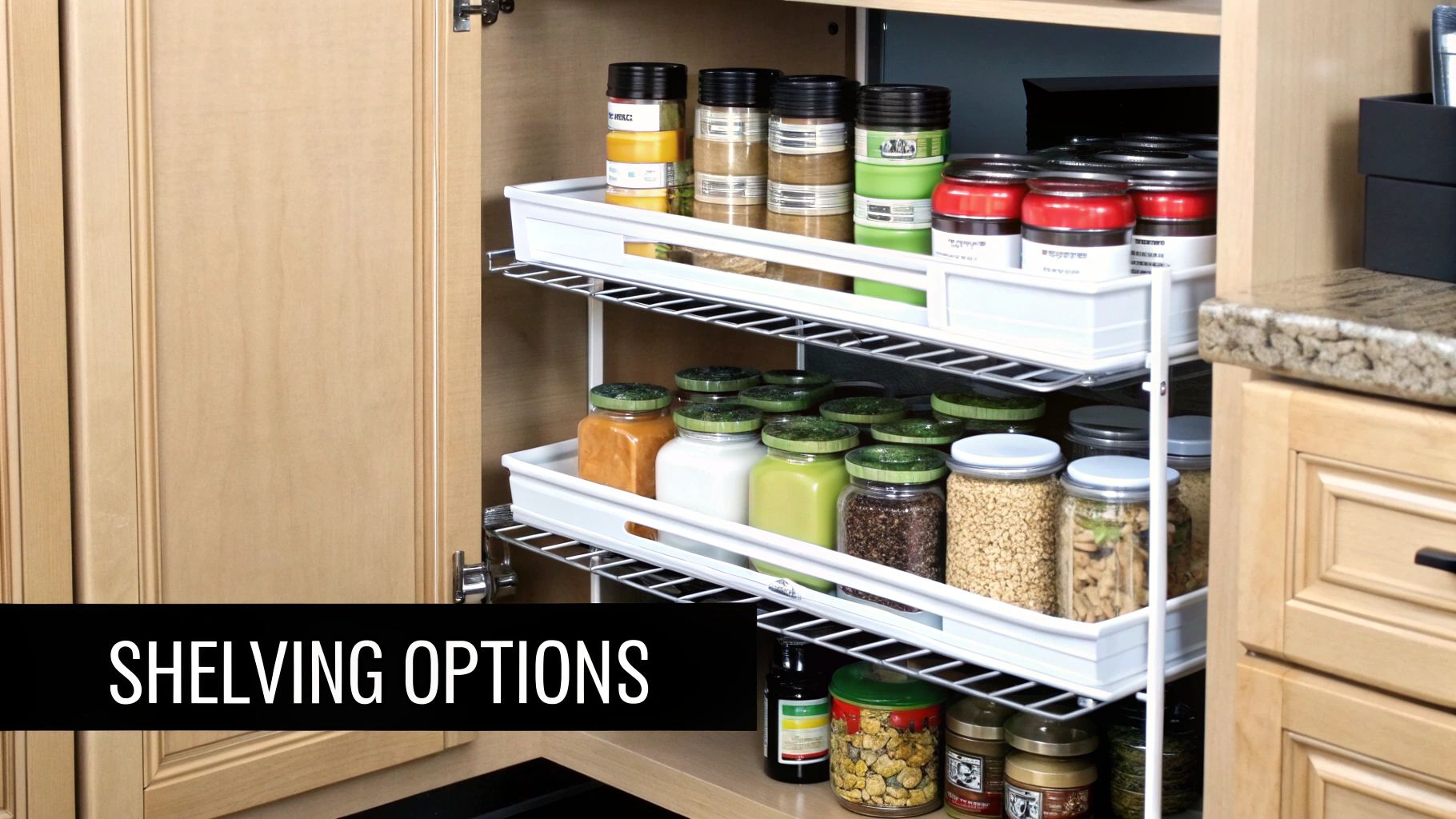
Open Shelving: The "At-a-Glance" Solution
Open shelving is the classic pantry look for a reason. It puts everything on display, letting you take stock of your inventory with a quick scan. This grab-and-go setup is perfect for things you use all the time, like cereal boxes, pasta, and canned goods.
- Unbeatable Visibility: No more digging around in dark cupboards. You can find exactly what you need, which helps cut down on food waste and stops you from buying a third jar of paprika you didn't know you had.
- Cost-Effective: Generally speaking, open shelves are kinder to your budget than full cabinetry because they use fewer materials and are simpler to install.
- Airy Feel: Shelves give the illusion of more space, making even a compact pantry feel less boxed-in and more open.
The catch, of course, is that you have to keep things tidy. With no doors to hide the mess, clutter can take over fast. It’s a fantastic option if you’re the type of person who loves decanting goods into uniform containers and keeping everything in its place.
Cabinetry and Drawers: The Sleek, Streamlined Choice
If you're aiming for a polished, seamless look that feels like an extension of your kitchen, cabinetry and deep drawers are your best bet. They keep everything neatly tucked away behind clean door fronts, creating a calm, uncluttered atmosphere. This is the perfect solution for stashing mismatched packaging, bulky countertop appliances, and other supplies you don't necessarily want on display.
Deep drawers are a game-changer, especially for heavy items like bags of flour, potatoes, or that stand mixer. Instead of crouching down to fish something out from the back of a low cabinet, you just pull the drawer out and grab it from above. Many of our clients in the Toronto area find that a combination of shallow drawers for spices and deep ones for bulk goods creates an incredibly functional pantry. To see how custom cabinetry can truly transform a space, take a look at our gallery of completed kitchen and pantry projects.
By combining the visibility of open shelving for daily-use items with the clean look of cabinetry for bulk storage, you create a pantry that is both highly functional and visually appealing.
Smart Storage for Awkward Spaces
Every pantry has them: those tricky spots like deep corners, high shelves, or narrow gaps that seem destined to become dead space. This is where a few clever storage solutions can turn a frustrating corner into a functional asset.
- Lazy Susans: A classic for a reason! These rotating trays bring items from the dark depths of a corner shelf right to the front with a simple spin. Nothing gets lost in the back ever again.
- Pull-Out Organizers: Those slim, slide-out racks are perfect for making the most of narrow vertical spaces between cabinets. They’re brilliant for organizing baking sheets, cutting boards, or rows of spice bottles.
- Door-Mounted Racks: Don't forget about the back of your pantry door! Lightweight racks can hold spices, jars, and other small items, freeing up precious shelf real estate.
These thoughtful additions make sure every square centimetre of your walk-in pantry is working for you, turning it into a model of efficiency.
What Are Your Pantry Shelves Made Of?
The material you choose for your shelving and cabinetry impacts not just the look but also the longevity and cost of your pantry. Here’s a quick breakdown to help you decide.
Pantry Storage Material Comparison
| Material | Durability | Average Cost | Best For |
|---|---|---|---|
| Solid Wood | Excellent | High | A premium, long-lasting look; great for heavy loads. |
| Plywood | Very Good | Moderate-High | Strong, stable shelves that resist sagging; versatile for custom builds. |
| MDF | Good | Moderate | Smooth, paintable surfaces for a clean, modern finish. |
| Melamine/Laminate | Good | Low-Moderate | Budget-friendly, easy to clean, and available in many colours and finishes. |
| Wire Shelving | Moderate | Low | Promotes air circulation; ideal for produce or utility-style pantries. |
From the timeless durability of solid maple or oak to the practical, budget-friendly appeal of melamine, there's a material that fits your vision. Plywood offers a fantastic middle ground, providing great strength and stability, while MDF is perfect for achieving that flawless painted finish. Ultimately, the best choice depends on your budget, your style, and how you plan to use the space.
Essential Pantry Lighting and Ventilation
https://www.youtube.com/embed/6TMCtHLQ6xQ
A perfectly organized walk-in pantry with the best shelving in the world is useless if you can't see what you're looking for or if the air feels stuffy. Think about it: a professional chef wouldn't work in a dimly lit, stagnant kitchen, and neither should you. Lighting and airflow aren't just afterthoughts; they're critical for preserving food quality and making the space one you actually enjoy using.
Good lighting is simply non-negotiable. It’s what turns a dark storage closet into a bright, functional extension of your kitchen. Nobody wants to be fumbling with their phone's flashlight just to find a can of tomatoes pushed to the back. The whole point is to banish shadows, light up every shelf, and make it easy to see what you have at a glance. You'll be amazed at how much money you save when you stop buying duplicate items you couldn't see.
Illuminating Your Pantry for Peak Functionality
Your lighting plan should be all about creating layers of light that work together to make every corner visible. A single, sad bulb hanging from the ceiling just won't cut it—it’s guaranteed to cast shadows on the lower shelves, which is exactly where things get lost. Thankfully, modern solutions offer some really smart and effective ways to brighten up the entire space.
Let's move beyond the basic and think in layers.
- Ambient Lighting: This is your primary, overall light. Recessed pot lights are a clean, popular choice, as are sleek flush-mount fixtures. They provide great general illumination without taking up any precious headspace.
- Task Lighting: This is the real game-changer. Running LED strip lighting under each shelf is one of the best things you can do for your pantry. It shines light directly onto the contents below, ensuring no can or box is ever left in the dark again.
- Accent Lighting: Have a small countertop for your coffee maker or a nice design feature like a shiplap wall? A small pendant light or a couple of wall sconces can add a wonderful design touch while providing focused light right where you need it.
One of the most practical upgrades we see Toronto homeowners choose is a motion-sensor switch. The lights flick on the second you walk in and turn off automatically after you leave. It’s a small luxury that feels huge when your arms are full of groceries, and it adds a touch of modern convenience to the room.
Why Pantry Ventilation Is So Important
Lighting helps you find your food, but ventilation helps you preserve it. Your pantry is home to all sorts of dry goods, from flour and spices to onions and potatoes. Without proper air circulation, that enclosed space can easily trap moisture, heat, and odours, creating the perfect storm for shortening the shelf life of your food.
Stale, stagnant air is the enemy of a fresh pantry. It leads to those musty smells and can create conditions that, unfortunately, pests love. The goal here is simple: encourage a gentle, constant exchange of air to keep the space cool, dry, and smelling fresh.
Proper ventilation does more than just prevent odours; it actively protects your food investment by creating a stable, dry environment that discourages spoilage and maintains the quality of your ingredients.
For most modern homes in the Markham area, you don’t need to install a complicated HVAC system. Simple, passive ventilation often works wonders. An easy fix is to install a vent in the pantry door—a classic louvered style looks great, but even a discreet grille at the top or bottom makes a huge difference. If the pantry shares a wall with another room, a transfer grille can also help get the air moving. The key is to simply give the air a path to travel in and out, preventing it from getting trapped.
Implementing Smart Pantry Organization Systems
An empty pantry is a blank slate, but a well-organized one? That’s where the real magic happens. Once your shelves are in, the lights are on, and the air is fresh, it's time to turn that space from a simple storage closet into the command centre of your kitchen.
The trick is to think beyond just putting things on shelves. You want to create a system—an intuitive flow that makes your daily routines smoother. Think of it like your own personal, perfectly stocked grocery store, where you always know exactly where to find everything.
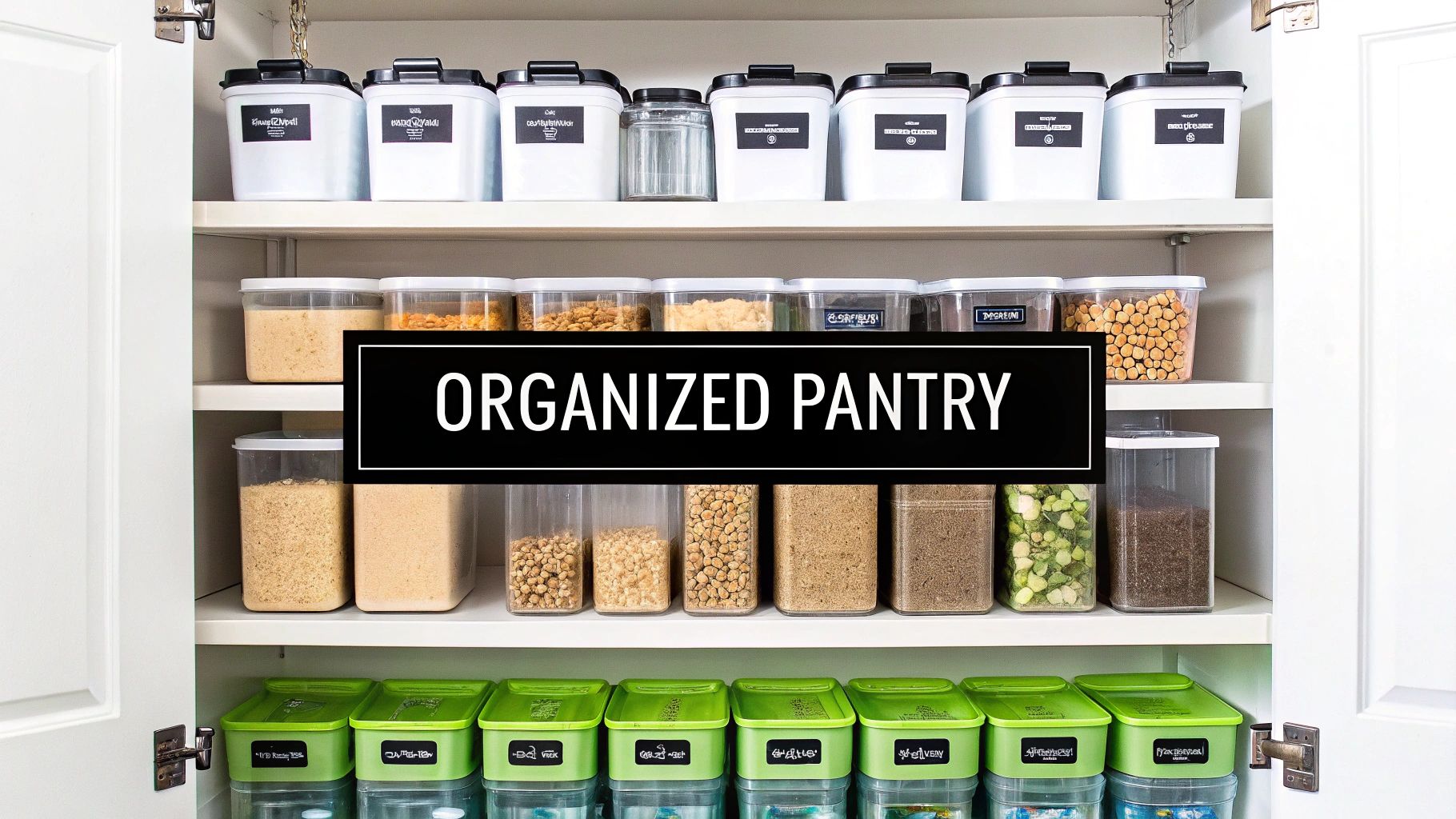
Creating Logical Pantry Zones
The absolute foundation of an organized pantry is grouping like with like. When you create dedicated zones, you’re essentially drawing a map that everyone in the family can follow. It puts an end to the "where did the pasta go?" scavenger hunt right before dinner.
Here are a few zone ideas that work for most households:
- Baking Station: This is for all your flour, sugar, baking soda, vanilla, and chocolate chips. If you’ve got a bit of counter space in the pantry, this is the perfect spot for your stand mixer too.
- Breakfast Hub: Get your mornings off to a smooth start by keeping cereals, oats, pancake mix, and maple syrup all in one easy-to-grab place.
- Dinner Prep Area: Group together pastas, rice, canned tomatoes, broths, and cooking sauces. When it’s time to cook, you can pull everything you need in seconds.
- Snack Central: Designate a lower shelf that’s easy for kids to reach. Stock it with granola bars, crackers, and fruit snacks to encourage a little independence.
Zoning isn't just about looking tidy; it's about pure function. Your pantry becomes an active part of your kitchen workflow, not just a place to stash boxes.
The Power of Containers and Labels
Taking your dry goods out of their messy bags and boxes and putting them into clear, uniform containers is a total game-changer. Not only does it instantly make your pantry look polished and intentional, but it’s also incredibly practical. You can see what you’re running low on at a glance, which cuts down on food waste and stops you from buying a third bag of lentils you didn’t need.
A consistent labeling system is the finishing touch that brings it all together. Whether you go for a sleek label maker, fancy vinyl decals, or simple chalkboard tags, clear labels give everything a permanent home.
This kind of smart organization is critical on a larger scale, too. In Los Angeles County, for example, food pantries have seen demand jump by 9% year-over-year. Their walk-in pantries rely on these same principles of zoning and clear labeling to manage massive amounts of supplies and serve hundreds of families efficiently. It just goes to show how powerful a good system can be. You can read more about how rising food costs are affecting communities from the LA Food Bank.
Game-Changing Pantry Accessories
To really get the most out of every last centimetre, you need to bring in the right tools. Smart accessories are designed to tap into all that overlooked or underused space, helping you finally conquer the clutter.
These simple additions can make a huge difference:
- Tiered Organizers: These little "stadium seating" shelves are brilliant for canned goods. You can see everything in a row without having to shuffle cans around to find the one you need.
- Door-Mounted Racks: Don't forget the back of your door! It’s prime real estate for storing spices, oils, and small jars, which frees up so much valuable shelf space.
- Under-Shelf Baskets: Instantly add another layer of storage by sliding a wire basket onto an existing shelf. They're perfect for things like bags of chips, loaves of bread, or even onions and potatoes.
- Lazy Susans: Pop one of these in a deep corner, and suddenly everything is easy to reach with a quick spin. Nothing gets lost in the back ever again.
Budgeting for Your Walk-In Pantry Project
Let's talk numbers. Bringing a beautiful, functional walk-in pantry to life is an exciting project, but it’s one that needs a solid financial roadmap. Getting a handle on the costs from the get-go means no sticker shock later on, and you can make sure your money goes exactly where you want it to. A smart budget is really the foundation of a stress-free renovation.
A full pantry build-out has a few key cost centres. I usually tell clients to think of it in three parts: the materials (your cabinets, shelves, etc.), the labour to install it all, and the final details that make it yours. If you're a skilled DIYer, you might be looking at an average cost of around $6,000 for a full remodel.
Breaking Down the Costs
Bringing in the pros, of course, will adjust the total. Depending on how complex the job is and the going rates here in the Toronto area, professional labour can add another $4,000 to $5,000. That puts a professionally managed project in the $10,000 to $11,000 ballpark.
So, where does that money actually go?
- Cabinetry and Shelving: This is almost always the biggest ticket item. For quality custom or semi-custom units, you could be looking at $4,000 to $5,000 or more, depending on the wood, style, and finish you choose.
- Countertops: If your design includes a work surface, a simple butcher block might run you about $400. If you're dreaming of quartz or granite, that number will climb.
- Finishing Materials: Think paint, a tile or shiplap backsplash, crown moulding, and baseboards. These details often add up to a few hundred dollars.
- Hardware and Electrical: Don't forget the little things! New pulls, knobs, light fixtures, and outlets can easily cost between $250 and $500.
When you invest in quality materials and professional installation, you're not just getting a beautiful pantry. You're adding real, lasting value to your home and creating a space you’ll love using every single day.
One last piece of advice I always give homeowners: build a cushion into your budget. A contingency fund of 10-15% of the total estimate is a smart move. It’s there to cover any surprises that pop up when walls are opened up, giving you complete peace of mind.
Working with a trusted supplier for your kitchen cabinets in Toronto is the best way to get a clear, detailed quote that covers all the bases from the start.
Got Questions About Your Walk-In Pantry Design?
As you start to iron out the details for your new walk-in pantry, you’ll likely find yourself mulling over some very specific questions. These are the practical, in-the-weeds details that really separate a good pantry from a great one. Let's dig into some of the most common questions we hear from homeowners around Toronto and Markham to help you get the answers you need.
What’s the Ideal Shelf Depth for a Pantry?
This is a fantastic question, and the answer isn't as simple as picking one number. The real secret to a functional pantry is using varied shelf depths to perfectly match what you’re storing. This simple strategy is the best way to keep items from getting lost in the back.
A great approach is to mix and match depths, maybe using shallower shelves on one wall and deeper ones on another, or even varying them on the same wall. This creates a hyper-organized system where everything has its perfect spot.
- 12-Inch Depth: This is your everyday workhorse. It’s absolutely perfect for single rows of canned goods, jars, spices, and standard cereal boxes. Everything stays visible, so you won’t have to dig around to find that can of tomatoes.
- 16-Inch Depth: When you need a bit more room, this depth is ideal. It’s great for bulkier items like paper towels, large bags of pet food, or even small appliances like your stand mixer or air fryer that you want to tuck away but keep accessible.
- 24-Inch Depth: Think of this as countertop depth. If you’re planning to include a proper work surface in your pantry—maybe for a coffee station or a food prep area—this is the dimension you'll want for your lower cabinets and counter.
Should I Really Put a Sink in My Pantry?
A small prep sink can feel like a real touch of luxury, but it's definitely not a must-have for every pantry. It makes the most sense if you envision using the space as a classic butler's pantry or as a dedicated station for making coffee, arranging flowers, or washing veggies away from the chaos of the main kitchen.
Before you jump in, just be sure to think about the extra costs involved. You'll need to factor in plumbing work, plus the cost of the sink and faucet. For some, it’s a game-changing feature, but for many others, that part of the budget might deliver more value if it's put towards better shelving or upgraded lighting.
A well-planned pantry is so much more than just storage; it’s an investment in a calmer, more organized life. Nailing these small but crucial details ensures every centimetre of your space is working hard for you, making your daily routine smoother and more enjoyable.
Ultimately, designing the perfect walk-in pantry comes down to how you live. By thinking through these details now, you’re setting yourself up for a space that isn't just beautiful, but incredibly practical for years to come.
Ready to design a walk-in pantry that perfectly fits your home and lifestyle? The team at MapleKing Kitchen Cabinets offers expert guidance and factory-direct pricing to bring your vision to life. Get your free quote today!