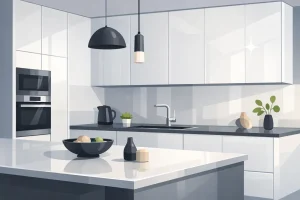

If you're planning a kitchen renovation in Toronto or Markham, there's a good chance the kitchen already does far more than cooking. It's where someone answers emails with coffee in hand, where kids spread homework across the island, and where dinner prep happens while a game, recipe video, or news update plays in the background. That shift is exactly why a well-designed tv in kitchen setup now feels less like a novelty and more like part of a complete layout.
The catch is that kitchen TVs are easy to get wrong. A screen can look awkward, block storage, collect grease, fight with glare, or trigger problems with condo rules and enclosure requirements if it isn't planned properly. The best results come from treating the TV as part of the cabinetry and electrical design from the start, not as an afterthought added after the backsplash is in.
The Modern Kitchen Hub Beyond Just Cooking
A Toronto kitchen rarely has the luxury of being single-purpose anymore. In many condos, townhouses, and compact detached homes, the kitchen is the room that carries the whole day. Breakfast starts there. School bags land there. Guests drift there even when the living room is empty.
That reality changes how people use walls, cabinets, and sightlines. A screen in the right place can support the way the room already works, especially when the island faces the prep wall or the dining nook blends directly into the kitchen.

Why the feature keeps showing up in GTA renovations
In practice, homeowners usually want one of three things from a kitchen TV. They want background entertainment during prep, a screen for recipes and streaming, or a way to keep the family connected in an open-plan space without adding another visual focal point in the living room.
In the GTA, that demand lines up with broader renovation behaviour. According to a verified market summary tied to Ontario urban remodel trends, integrated media zones became increasingly common in kitchen renovations, reflecting how multifunctional these rooms have become in dense urban homes. That matters in Toronto and Markham, where space planning has to work harder.
A kitchen TV also isn't just a lifestyle choice. It can influence resale positioning. A 2023 TRREB report found that properties with modernised kitchens featuring TV mounts or built-in screens sold for 12 to 15% above market average, with median sale prices reaching $1.1 million in Markham for renovated homes (reference).
Practical rule: A kitchen TV adds value when it looks intentional. If buyers see dangling wires, bulky brackets, or a screen jammed into the wrong cabinet run, the feature stops feeling premium.
What makes it work in daily life
The successful projects usually share a few traits:
- The screen supports a real routine: It faces the island seating, prep zone, or breakfast area instead of a random corner.
- Cabinet lines stay clean: The TV sits within the geometry of the kitchen rather than interrupting it.
- Storage isn't sacrificed badly: Giving up one useful wall cabinet for a giant screen often isn't worth it.
- The room still feels like a kitchen: The TV shouldn't dominate every sightline the way a living room media wall does.
One mistake I see often is treating the kitchen TV like a smaller living room TV. That approach rarely lands well. Kitchen use is more active. People move around, glance up briefly, and view the screen from several angles rather than sitting still for a full film.
A better approach is to think of the screen as a working companion feature. It should help the room perform better while remaining visually quiet when it's off.
Selecting the Right TV for a Kitchen Environment
A kitchen is hard on electronics. Steam rises fast. Grease becomes airborne. Temperature swings happen daily. That's why the right TV for a kitchen often isn't the same model you'd choose for a bedroom or den.
The first decision isn't size. It's durability.

Start with the environment, not the screen spec sheet
If the TV sits near a range, kettle zone, coffee station, or sink wall, moisture resistance matters. So does ease of cleaning. Slim consumer models can look attractive on paper, but some don't tolerate repeated humidity exposure well.
Verified local data points to the same issue. Searches for "kitchen TV humidity damage" in Toronto spiked 35% from Oct 2025 to Mar 2026, while Statistics Canada notes 28% higher kitchen humidity in Ontario homes due to Great Lakes weather, contributing to 22% of electronics failures in a 2025 CRTC report (reference).
That doesn't mean every kitchen needs a specialty waterproof unit. It means you should choose based on placement:
- Near heavy steam exposure: Look at moisture-resistant or waterproof models, including under-cabinet units designed for bathrooms or outdoor-style use.
- On a dry perimeter wall: A standard flat panel may work if ventilation, enclosure design, and cleaning access are handled properly.
- Inside custom cabinetry: Heat management matters as much as moisture. Tight enclosures without airflow shorten lifespan.
Screen size and viewing angle
Kitchen viewing is usually casual and off-axis. People watch while chopping, rinsing, unloading the dishwasher, or sitting at the island. That makes wide viewing angles more important than ultra-cinematic impact.
If you're unsure how to judge proportions, this guide on how to choose the right TV size is useful because it frames screen selection around viewing distance instead of guesswork. In a kitchen, I’d apply that advice with a second filter. Check the view not only from one standing point, but from the sink, prep run, island stool, and breakfast seat.
A TV that looks perfectly sized on the elevation drawing can feel oversized once upper cabinets, pendants, and a hood all compete for attention.
Features worth prioritising
Some specifications matter more in a kitchen than others.
- Matte or lower-glare screen behaviour: Glossy screens often struggle opposite windows or under pot lights.
- Reliable voice control: Helpful when hands are wet or occupied.
- Simple remote ecosystem: Nobody wants three remotes on the counter beside the toaster.
- Manageable weight: Easier on under-cabinet mounts and integrated panels.
- Front-facing speaker clarity: Side or rear speakers can sound weak once enclosed.
Skip features that add complexity without solving a kitchen problem. The goal isn't the most advanced television. It's the one most likely to perform cleanly in a demanding room.
Planning Placement Sightlines and Local Compliance
Most online advice about a tv in kitchen stops at style. Mount it under a cabinet. Hide it behind doors. Tuck it into a niche. Those ideas can be useful, but in Toronto and Markham, aesthetics are only part of the job.
The harder part is planning a location that people can watch comfortably and that won't create trouble with approvals, inspections, or condo management.
Sightlines first, then millwork
Before choosing a bracket or cabinet detail, stand in the room and map the actual viewing positions. In most kitchens, there are only a few that matter:
- The primary prep zone
- The sink
- Island seating
- A nearby breakfast nook or banquette
If the screen is too high, neck strain shows up quickly. If it's too low, mixers, fruit bowls, and small appliances block it. If it faces the wrong run, nobody uses it except the person sitting in one exact spot.
A good kitchen TV usually sits where the eyes land naturally during short glances. That often means slightly lower than people expect, especially for screens viewed from an island stool or from the main prep counter.
For island-centred layouts, it helps to sketch the viewing relationship early alongside the cabinet plan. This kind of layout thinking is easier when the island and work zones are already resolved. A kitchen design reference like this one on kitchen design layout with island shows why circulation, seating, and appliance placement all affect where a screen can live successfully.
The local rules many homeowners miss
Generic design articles often overlook these details. In the GTA, 65% of condo renovations require board approval, and non-compliant TV installations can lead to fines up to $5,000. The same verified source notes that Ontario Building Code Section 9.23 mandates fire-rated enclosures for wall-mounted electronics in kitchens, which complicates many off-the-shelf installations (reference).
That affects decisions in very practical ways.
Where projects run into trouble
- Shared walls in condos: Boards may restrict visible penetrations, wiring paths, or exterior-facing modifications.
- Upper cabinet alterations: A TV hung from or cut into existing cabinets may require review if it changes built-in millwork tied to the original unit finish package.
- In-wall recesses: These can trigger enclosure and fire-separation questions.
- Motorised lifts and swivels: They may conflict with clearance, enclosure, or concealment requirements depending on how they're installed.
Compliance check: If the TV plan involves opening a wall, modifying upper cabinetry in a condo, or burying power and wiring inside a niche, confirm approvals before fabrication starts.
What works better in Toronto and Markham homes
The safest route is usually the one that combines clear sightlines, contained wiring, and a purpose-built enclosure rather than an improvised bracket added on site. This is especially true in condos, where a “simple” wall mount can become a paperwork problem very quickly.
The cleanest installations aren't the flashiest. They're the ones that respect cabinet proportions, preserve function, and satisfy the people who approve the renovation in the first place.
Cabinetry Integration Options for a Seamless Look
Once the location is settled, the next decision is how the TV becomes part of the cabinetry. There isn't one best answer. The right method depends on the kitchen size, cabinet depth, budget tolerance, and how visible you want the screen to be when it's not in use.

The four approaches I evaluate most often
Some kitchens benefit from full concealment. Others perform better when the TV stays visible and instantly accessible. That's a design decision, not just a hardware decision.
Recessed niche
A recessed niche sets the TV back so it sits flush or near-flush with surrounding cabinetry. This often looks the most architectural.
It works well in custom builds and major renovations where wall depth, wiring, backing, and ventilation can all be planned in advance. It doesn't work as well in quick retrofits, because the wall assembly may not cooperate.
Best use case: clean-lined contemporary kitchens where the TV should feel built in, not attached.
Watch for: glare, ventilation gaps, and code-related enclosure requirements.
Under-cabinet flip-down mount
This is the practical solution people often overlook because it isn't as dramatic. For smaller kitchens, a flip-down unit can be one of the smartest answers.
The screen folds away under an upper cabinet and stays out of the main visual field when not in use. It suits recipe viewing, morning news, and compact condo kitchens especially well.
Best use case: limited wall space, smaller screens, casual viewing.
Watch for: door swing conflicts, cabinet depth, and the screen hanging too low over the counter.
Concealed behind custom doors
Pocket doors, lift-up panels, or paired cabinet doors can hide a TV completely. The finished result looks refined, especially in traditional or transitional kitchens where a black screen would otherwise interrupt the cabinetry rhythm.
The trade-off is depth and access. Doors need room to move, and the TV needs enough recess space to avoid feeling jammed in.
Best use case: homeowners who want the kitchen to read as cabinetry first.
Watch for: hinge clearances, ventilation, and whether open doors block the view.
Automated lift systems
Lift systems create a strong effect. The TV rises from a cabinet or drops into view through a motorised mechanism, then disappears completely.
They're impressive, but they're also the most demanding approach. They require careful millwork tolerances, service access, and realistic expectations about maintenance. I only recommend them when the kitchen has enough room and the owner values concealment enough to accept the complexity.
Best use case: high-end projects where the TV must vanish entirely.
Watch for: mechanical servicing, noise, lost storage, and long-term adjustment.
TV Integration Method Comparison
| Integration Method | Pros | Cons | Best For |
|---|---|---|---|
| Under-cabinet flip-down | Space-efficient, straightforward, easy to access | Limited screen size, can intrude into counter zone | Compact kitchens and condos |
| Recessed niche | Clean profile, built-in look, strong sightline control | More planning, permanent construction, enclosure detail required | Full renovations and custom kitchens |
| Behind custom doors | Fully concealed, visually quiet, strong furniture-like finish | Needs extra depth, doors can interfere with viewing | Traditional and transitional kitchens |
| Automated lift | Maximum concealment, dramatic effect | Highest complexity, service needs, more expensive build path | Premium bespoke projects |
A related millwork reference worth reviewing is this page on built-in cabinetry, because many of the same principles apply. The TV shouldn't be treated as a separate appliance floating inside the room. It should be resolved as part of the cabinet composition.
Hidden isn't always better. In busy family kitchens, a visible, well-framed screen often gets used more and causes fewer moving-part issues than a fully concealed mechanism.
What tends to age well
The installations that still look right years later usually share three traits:
- They preserve storage where it counts
- They avoid awkward protrusions
- They use cabinet details that belong to the kitchen style
An ornate shaker kitchen with a tech-heavy lift panel can feel forced. A sleek matte slab kitchen with a carefully framed recessed screen often feels natural. Good integration is less about novelty and more about fit.
Matching Finishes and Managing Technical Details
A kitchen TV only looks high-end when the finish decisions and the technical details support each other. Strong cabinetry can be undermined by a poor vent path, exposed wire, or an enclosure that looks patched together.
Here, material choice matters.

Matching the TV to the cabinet finish
Different finishes solve different design problems.
Real wood painted doors suit homes where warmth and visible grain are part of the look. A TV integrated into these kitchens usually works best when it's framed deliberately, not hidden awkwardly. The screen can sit within a painted surround or behind well-proportioned doors.
HDF painted finishes create a more uniform, controlled surface. They work well when the TV installation needs crisp reveals and consistent colour across panels, fillers, and surrounding fronts.
High-gloss HDF suits contemporary kitchens but needs careful positioning. Gloss surfaces already reflect light, so a glossy screen nearby can double the glare problem if the wall faces windows.
Matte HDF is forgiving. It softens fingerprints and tends to pair well with black screens because the cabinet surface doesn't fight for attention.
Laminate is useful in hard-working kitchens because it's durable and moisture-resistant. For owners who want a visible screen integrated into a practical family kitchen, laminate often gives the least fussy result.
HDF thermofoil is especially effective where you want smooth-fitting, easy-clean surfaces around the TV opening. In a humid kitchen, that clean edge treatment can make day-to-day maintenance much easier.
Wiring, power, and airflow are part of the design
This is the part homeowners rarely see on inspiration boards, but it's what separates a polished install from a future service call.
A proper plan should address:
- Cable paths: Wires need a concealed route that doesn't interfere with drawers, shelves, or appliance clearances.
- Access to power: The outlet location has to be reachable for service and placed so plugs don't force the TV outward.
- Ventilation: Any recess or cabinet housing needs room for heat to escape.
- Signal reliability: Remote control and voice control shouldn't fail once doors close or panels are added.
If you're comparing concealment methods, this guide on mastering cable management for wall-mounted TVs is useful because it highlights the discipline required to keep the installation looking intentional. In kitchen cabinetry, that same discipline applies, but with tighter tolerances and more environmental stress.
Details that are easy to miss
- Service panels matter: If the TV ever needs replacement, the cabinet shouldn't require demolition.
- Shelf placement affects airflow: A shelf directly above a warm screen can trap heat.
- Small appliances create clutter pressure: The cleaner the surrounding counter, the better the TV integration reads.
- Nearby appliance planning helps: A compact appliance setup, such as a built-in microwave solution, can free better wall space and improve the media layout. This example of a drawer microwave in Canada shows how appliance placement can influence the rest of the cabinetry composition.
Good integration means the finish carpenter, electrician, and designer solve the same problem together. If one of them works in isolation, the TV will usually reveal it.
The best-looking kitchen TV isn't just hidden well. It's ventilated well, wired neatly, easy to service, and matched to a finish that belongs in the room.
Post-Installation Checks and Long-Term Care
Once the TV is installed, don't assume the job is finished because the screen turns on. Final checks matter. Kitchens expose electronics and cabinetry to daily wear that a bedroom setup never sees.
What to verify before handover
Walk through the kitchen and test the setup from the actual working positions.
- Check viewing comfort: Stand at the sink, prep run, and island. Make sure the screen is visible without awkward head tilt.
- Test all functions: Confirm streaming, remote response, voice control, and any smart-home integration.
- Open and close everything: Cabinet doors, lift panels, and adjacent drawers should move freely without clipping the TV or cables.
- Look for heat build-up: Run the TV long enough to see whether the niche or cabinet traps warmth.
- Inspect the finish lines: Gaps, misaligned reveals, and visible fasteners are easier to correct immediately.
How to keep it looking good
Kitchen residue builds gradually. Most damage comes from aggressive cleaning, not neglect.
Use a soft microfibre cloth for the screen. Clean surrounding cabinetry with products appropriate to the finish and avoid harsh abrasives around painted surfaces, thermofoil seams, and laminate edges.
A few habits make a difference:
- Wipe grease early: Film is easier to remove before it hardens.
- Keep steam exposure in check: Use the hood fan consistently during cooking.
- Review moving parts periodically: Hinges, gas struts, and lift hardware should stay smooth and quiet.
- Don't block vents: Decorative items inside a TV cabinet often create heat problems.
A well-planned tv in kitchen installation should feel effortless to use. If it needs constant adjustment, awkward cleaning, or workarounds to function properly, the design likely asked the room to do too much.
If you're planning a kitchen renovation and want a TV integrated into the cabinetry without compromising function, finish quality, or local compliance, MapleKing Kitchen Cabinets can help you design a cleaner solution from the start. Their team works with Toronto and Markham homeowners on custom cabinetry that balances layout, technology, and durable finishes for a polished result.