

So, you’re thinking about renovating your kitchen in Toronto. It’s an exciting prospect! A great kitchen isn’t just about new cabinets and countertops; it’s about creating a space that works for your life. To get there, you need a solid plan that covers your budget, the city’s rules, and finding the right people for the job.
This guide is built to walk you through exactly that.
Your Blueprint for a Seamless Renovation
Let's be honest: a kitchen renovation is a major undertaking. It's the command centre of your home, where meals are made, homework gets done, and friends gather. But without a clear plan, especially in a market like Toronto, the whole process can go from exciting to exhausting in a heartbeat.
Think of this as your personal roadmap. We're skipping the vague, one-size-fits-all advice and getting straight to what matters for a Toronto renovation. We'll cover everything from dealing with the City of Toronto permit office to getting the green light from your condo board, making sure you have the confidence to make smart decisions from start to finish.
What You Will Learn in This Guide
We’ve structured this guide to take you from initial idea to finished kitchen, step by step. You'll get a clear picture of what to expect, how to prepare, and where to focus your energy.
Here's what we'll dig into:
- Budgeting Realistically: We'll break down the actual costs you can expect for different levels of renovation in Toronto, so there are no nasty surprises.
- Navigating Regulations: You'll learn when you absolutely need a building permit and the best way to approach your condo board for approvals.
- Choosing the Right Team: We'll share our insider tips on how to find, interview, and hire a contractor you can trust to bring your ideas to life.
- Maximizing Your Investment: Find out which upgrades give you the biggest bang for your buck and boost your home's value in the competitive Toronto real estate market.
Following this blueprint isn't just about avoiding headaches. It’s about making a smart investment in your home and your daily life, creating a functional, beautiful kitchen that you'll love for years to come.
Our mission is to give you a clear path forward, from the first sketch to the final backsplash tile. Let's get started on building the kitchen you've been dreaming of.
Decoding Kitchen Renovation Costs in Toronto
Let's talk about the most important part of any renovation: the budget. This is where your dream kitchen design bumps up against the reality of what it costs to get it done. Nailing down your budget is the single most important thing you can do for a successful Toronto kitchen renovation. It helps you avoid sticker shock, guides your choices, and most importantly, makes sure you don't run out of money halfway through.
I always tell clients to think of their budget in three main buckets: materials, labour, and a contingency fund. Materials are all the tangible things—cabinets, countertops, appliances. Labour is for the skilled pros—the electricians, plumbers, and installers who put it all together. And that contingency fund? That’s your secret weapon. Aim for 10-15% of your total budget set aside for the inevitable surprises that pop up.
This chart gives a great visual snapshot of the key things to juggle for any kitchen project in the city.
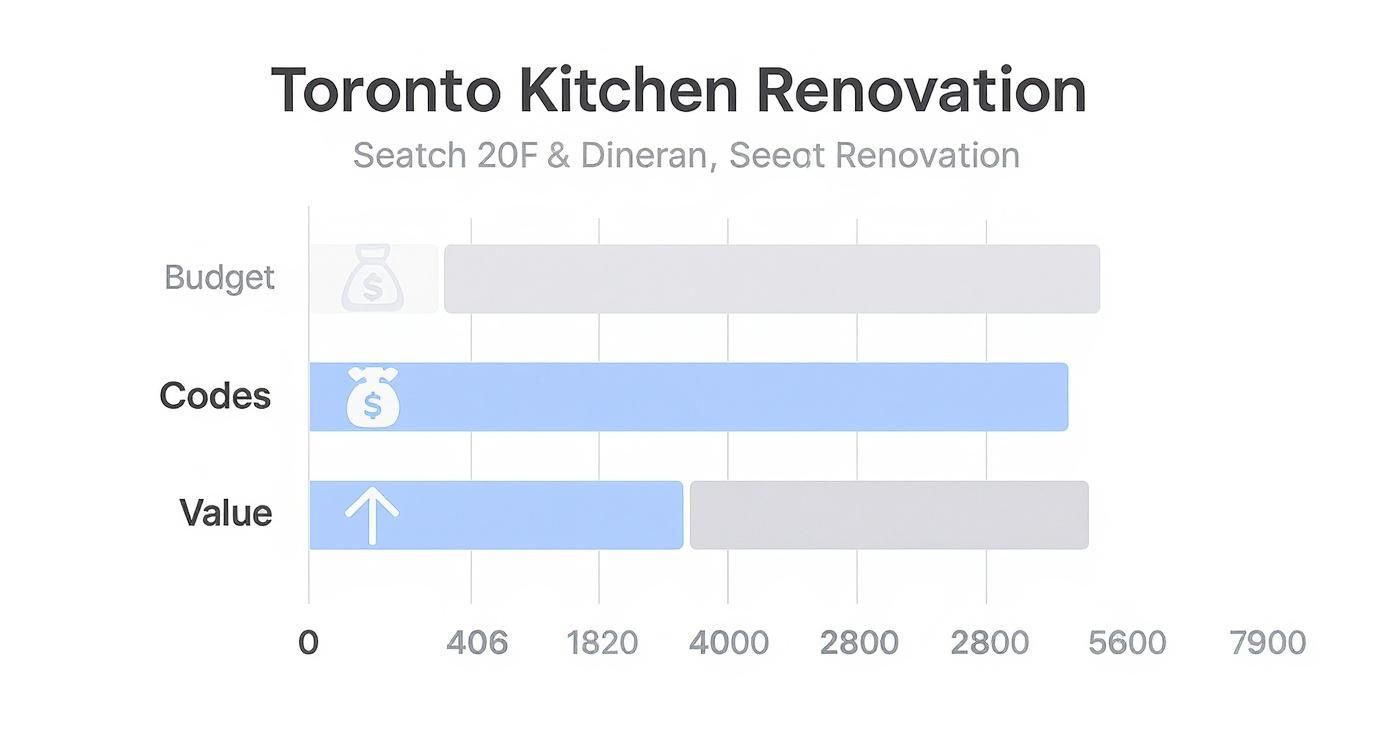
As you can see, a great renovation is a balancing act. You need to manage the budget and follow the rules to really boost your home's value.
What Tier is Your Renovation?
Not all renovations are built the same, and the costs can swing wildly depending on what you’re planning. In Toronto, we generally see projects fall into one of three categories.
A basic renovation is more of a cosmetic refresh. Think painting your existing cabinets, swapping out the hardware, and maybe putting in a new backsplash. It’s your most wallet-friendly route.
A mid-range renovation goes deeper. This usually involves brand-new cabinets, new countertops, and a new set of standard appliances, but you’re keeping the kitchen’s original layout.
Then you have a luxury renovation. This is the full meal deal: gutting the space, maybe moving walls, re-routing plumbing and electrical, and bringing in high-end custom materials and professional-grade appliances.
Be honest with yourself about what you want. Are you looking for a simple facelift, or is this a complete transformation? Knowing which tier your vision fits into is the foundation for building a realistic budget and will shape every decision you make from here on out.
Sample Toronto Kitchen Renovation Budgets
To give you a clearer idea of where your project might land, here’s a breakdown of what you can expect to spend in Toronto. Keep in mind that these are estimates, and your final costs will depend on your specific choices for materials and labour.
| Category | Basic Renovation ($15,000 – $25,000) | Mid-Range Renovation ($25,000 – $45,000) | Luxury Renovation ($45,000+) |
|---|---|---|---|
| Cabinetry | Refacing or painting existing cabinets; new standard RTA cabinets | New semi-custom cabinets (MDF, Thermofoil); added pantry unit | Fully custom cabinetry; premium materials (solid wood); complex features |
| Countertops | Laminate or entry-level solid surface | Quartz or mid-grade granite | High-end marble, quartzite, or custom concrete/butcher block |
| Appliances | Keeping existing or buying standard, budget-friendly models | New stainless steel appliance suite from reputable brands | Integrated, panel-ready, and high-end professional-grade appliances |
| Labour | Primarily DIY with some professional help (e.g., plumbing) | Professional installation for all major components | Full-service general contractor, designer, and specialized trades |
| Flooring | Vinyl or laminate | Engineered hardwood or quality porcelain tile | High-end hardwood, natural stone, or custom tile work |
| Fixtures/Finishes | Basic sink/faucet; standard lighting; budget backsplash tile | Undermount sink; upgraded faucet; new pot lights; quality tile | Designer sink/faucet; custom lighting plan; premium backsplash materials |
This table shows how quickly costs can climb as you upgrade materials and expand the scope of work. A basic refresh can deliver a big impact for a modest investment, while a luxury project allows for complete customization to create your ultimate dream kitchen.
So, Where Does All The Money Go?
It’s one thing to have a total budget, but it’s even more helpful to know how it gets divided up. Seeing where your dollars are allocated helps you figure out where to save and where it really pays to invest in quality.
For a typical mid-range kitchen renovation in Toronto, the breakdown usually looks something like this:
- Cabinetry and Hardware (30-35%): This is almost always the biggest chunk of the budget, and for good reason. Your cabinets are the backbone of the kitchen, and this is where quality craftsmanship truly pays off in the long run.
- Labour and Installation (15-20%): Don't underestimate the cost of skilled trades. This covers everything from demolition and installation to the crucial plumbing and electrical work. Good labour is what makes the difference between an amateur job and a professional finish.
- Appliances (10-15%): Your fridge, stove, and dishwasher are the workhorses of the kitchen. You can spend a few thousand dollars on a solid set or tens of thousands on high-end, pro-style models.
- Countertops (10-12%): Materials like quartz and granite are incredibly popular in Toronto. They’re a major investment that defines your kitchen's look and durability for years to come.
- Flooring, Lighting, and Finishes (10-15%): This last bucket includes everything that pulls the room together—flooring, paint, backsplash tile, and all the light fixtures.
Understanding this split helps you plan strategically. For instance, knowing cabinetry is your top expense means you can really dig into your options. Check out our guide to high-quality kitchen cabinets in Toronto to see how different materials and styles can fit your numbers. This kind of planning ensures you put your money where it matters most, creating a kitchen you'll love without breaking the bank.
Maximizing Your Renovation's Return on Investment
A beautiful new kitchen is so much more than a place to cook—it's a powerful financial asset, especially in a market like Toronto's. When you take on a Toronto kitchen renovation, you're not just spending money; you're actively investing in your home's equity. Figuring out the potential return on that investment (ROI) is the key to making smart choices that will actually pay off down the road.
Think of your renovation budget as capital. The real goal is to put that money into upgrades that add the most value, turning what you spend into a tangible increase in your home’s market price. This isn’t about guesswork. It’s about making strategic decisions that will appeal to future buyers while making your own life better in the meantime.
It's a common trap to think that a more expensive renovation automatically means a higher return. The numbers often tell a different story. Getting too personal with the design or splurging on ultra-luxury finishes that don't quite fit the character of your neighbourhood can actually hurt your potential ROI.
Finding the ROI Sweet Spot
The most successful renovations strike a perfect balance between quality, style, and cost. Here in Toronto, the mid-range kitchen renovation consistently proves to be the smartest financial move. This approach focuses on high-impact upgrades that create a modern, functional, and widely appealing space without the eye-watering expense of a full luxury gut job.
According to a RE/MAX study, this strategy yields some pretty impressive results. Kitchen renovations in Toronto typically generate an ROI between 75% and 100%, which puts them right at the top of the list for value-adding home improvements. Specifically, mid-range projects often see a return of 70% to 80%—a reliable investment in this city's competitive market. You can dig into more data on Canadian renovation value on Morningstar.
What this really means is that for every dollar you put into a well-planned, mid-range project, you can realistically expect to get a huge chunk of it back when it’s time to sell.
Upgrades That Deliver the Highest Returns
So, where should you put your money for the biggest impact? Certain upgrades consistently deliver more bang for your buck because they appeal to the widest range of potential Toronto homebuyers.
These are the elements that buyers value for their durability, timeless appeal, and sheer functionality:
- Quartz Countertops: This one’s a no-brainer. Quartz is tough, non-porous, and comes in a massive range of styles, making it a top pick for Toronto buyers. It gives you the high-end look of natural stone without the fussy maintenance. It's a safe and valuable bet.
- Quality Cabinetry: Your cabinets are the visual anchor of the entire kitchen. Sticking with clean, classic styles like Shaker doors in neutral colours—think white, grey, or even warm wood tones—ensures they won't look dated in a few years. Well-built cabinets send a signal of quality that echoes through the rest of the home.
- Energy-Efficient Appliances: A modern, stainless steel appliance package is pretty much a must-have for today's buyers. Investing in energy-efficient models isn't just good for your utility bills; it's a major selling point that adds immediate perceived value.
A smart renovation is less about chasing fleeting trends and more about creating a timeless, functional space. By focusing on core components like countertops, cabinets, and appliances, you build a foundation of value that will pay dividends for years to come.
Why Overspending Can Backfire
It’s easy to get tempted by the thought of a pro-grade gas range, exotic marble countertops, or highly specific custom features. And while those things can create a stunning kitchen for you, they may not translate into a higher sale price. The reality is, potential buyers might not share your specific taste or be willing to pay a premium for features they don't personally value.
For example, that $20,000 professional stove might be a dream come true for a passionate home chef, but for most families, a reliable $3,000 model does the job just fine. That extra $17,000 you spent rarely comes back when you sell the house.
The key is to renovate to the standard of your neighbourhood. Your goal should be to make your kitchen one of the best on the block, but avoid upgrading so much that you price your home right out of the local market. A thoughtfully executed project will not only help your home sell faster but will also ensure you see a healthy financial return on all your hard work.
In any Toronto kitchen renovation, the biggest headaches often come from paperwork, not power tools. It’s easy to get swept up in the excitement of choosing cabinets and countertops, but ignoring the city’s building codes or your condo’s internal rules can slam the brakes on your project. Think costly fines, frustrating work stoppages, and some very unhappy neighbours.
It's best to see permits and condo regulations as the official rulebook for your reno. They aren't just bureaucratic red tape; they exist to make sure your project is safe, structurally sound, and won't cause problems for the building or the people living next to you. Getting this part right from the get-go is the secret to a smooth, stress-free renovation.
When Do You Need a Building Permit in Toronto?
A lot of homeowners think that if the work is happening entirely inside their own four walls, a permit isn't necessary. In Toronto, that's a dangerous and potentially expensive assumption. The city requires a building permit for any project that involves structural changes or messes with your home’s core systems.
You will absolutely need a building permit if your kitchen plans include any of these tasks:
- Moving or Removing Walls: Touch a wall, and you likely need a permit. This applies whether you're taking down a major load-bearing wall or just a simple partition.
- Altering Plumbing: If you're dreaming of an island sink or moving the dishwasher, you'll be changing the plumbing drains and supply lines. That's a definite permit situation.
- Changing Electrical Systems: This isn't just about swapping a light fixture. Adding new circuits for heavy-duty appliances or installing new outlets requires a permit.
- Modifying HVAC Systems: Rerouting or adding new ductwork for your kitchen's ventilation also falls under the city's purview.
Simple cosmetic updates are usually in the clear. Things like painting your cabinets, swapping out a faucet in the same spot, or laying down a new countertop generally don't require a permit. But if your reno involves any of the major work listed above, you have to get that permit in hand before the first sledgehammer swings.
Tackling a renovation without a required permit can lead to a "stop work" order from the city, fines, and even being forced to tear out finished work for inspection. It’s a gamble that just isn’t worth taking.
The World of Condo Board Approvals
Living in a condo means you’re playing on a different field with a second set of rules: your condo corporation’s bylaws. Getting the green light from your condo board is a separate but equally critical step. Their main concern is how your renovation will affect the building's shared infrastructure—the plumbing, electrical, and structural elements—and, of course, your neighbours.
Before you even think about hiring a contractor, your first move should be to request your building's renovation package. This document is your bible; it will lay out every single rule and requirement.
You can almost always expect to provide:
- Detailed Scope of Work: A complete breakdown of everything you plan to do, often including architectural drawings if you're moving walls.
- Proof of Insurance: Your contractor will need to show a certificate of insurance and WSIB clearance, and they'll usually have to name the condo corporation as an additional insured party.
- Contractor Licensing: Many buildings have strict requirements for contractors, sometimes maintaining a list of pre-approved vendors you must use.
- Noise and Debris Plans: You'll need to agree to specific working hours (typically 9 a.m. to 5 p.m. on weekdays only) and outline a clear plan for how construction waste will be removed.
Don't underestimate the timeline here. The approval process can take anywhere from a few weeks to a couple of months. Submit your package well before your ideal start date. If you don't get that official board approval, your contractor could be denied access to the building, stopping your project dead in its tracks.
Choosing Materials That Define Your Kitchen
Think of your kitchen's materials as its personality. They're the surfaces you touch and use every single day, the visual backbone that sets the tone for the entire space. For any Toronto kitchen renovation, picking the right components—from the cabinets holding your dinnerware to the countertops where meals come to life—is a careful balancing act between style, durability, and your budget.
It’s a bit like choosing the perfect outfit. You want something that not only looks great but also feels right and can handle whatever the day throws at it. Your kitchen materials are no different. They have to match your personal taste while being tough enough for the realities of daily life, whether that’s a chaotic family breakfast or a quiet dinner for two.
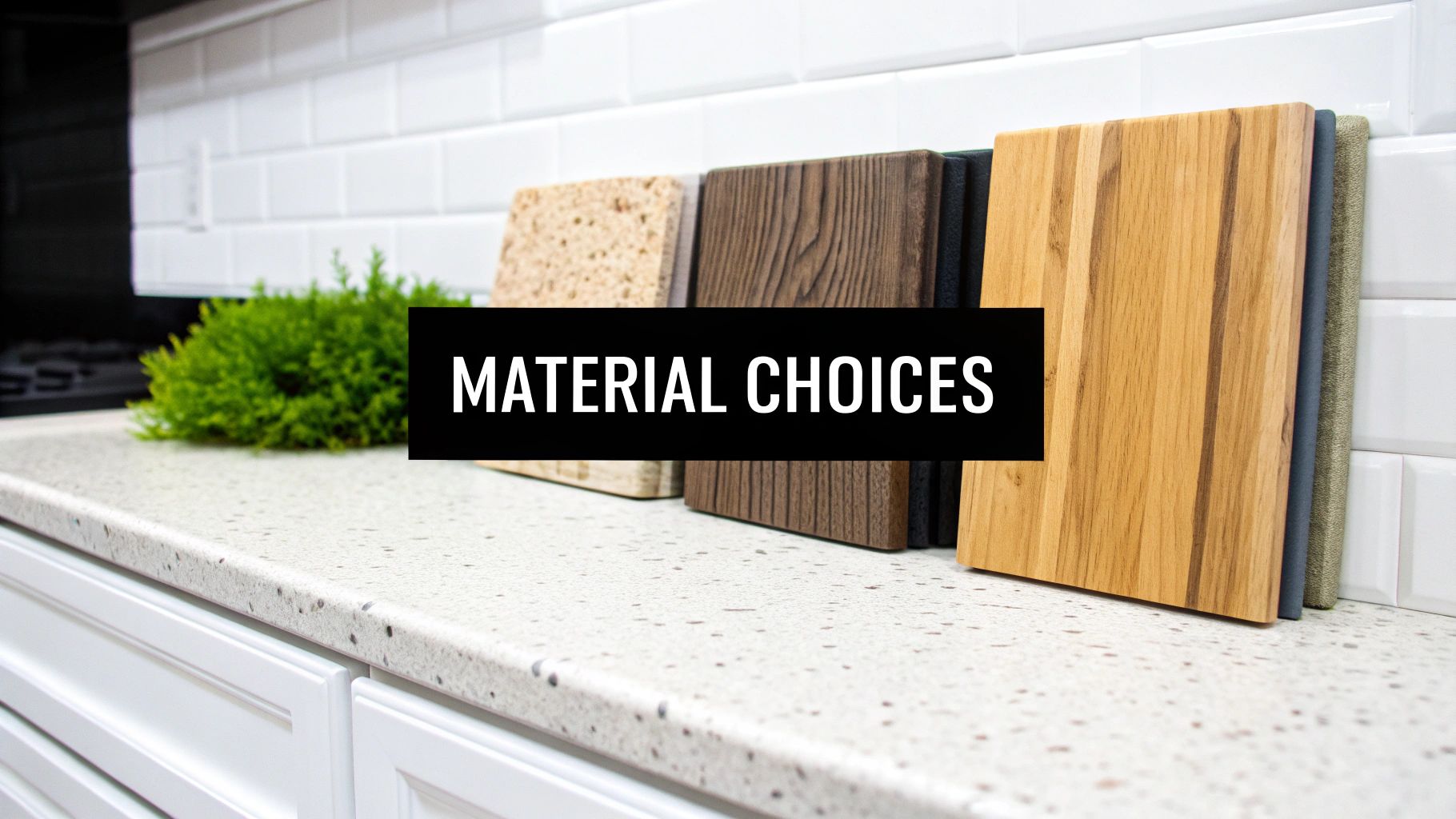
This decision goes way beyond just picking colours. It’s about understanding how different materials perform over time, making sure your investment not only looks good on day one but functions beautifully for years to come.
The Foundation: Your Cabinets
Your kitchen cabinets are, without a doubt, the main event. They take up the most visual real estate and are often the biggest line item in the renovation budget. The material you pick here sets the stage for everything else, influencing not just the look but also how well they hold up against daily wear and tear.
When you're looking at cabinetry, you're essentially choosing a material that becomes the "face" of your kitchen. It's the first thing people notice, so you want to get it right. To help you navigate the options, here’s a quick comparison of the most popular materials we see in Toronto homes.
Kitchen Cabinet Material Comparison
| Material | Average Cost | Durability | Best For |
|---|---|---|---|
| Solid Wood (e.g., Maple, Oak) | High | Excellent | Timeless, traditional, and luxury kitchens that can be refinished over time. |
| HDF/MDF | Moderate | Good-Excellent | Painted finishes and contemporary styles; very stable and resistant to warping. |
| Thermofoil | Low-Moderate | Good | Budget-conscious projects; offers a smooth, uniform, and easy-to-clean surface. |
| Laminate | Low | Good | Rental properties or secondary kitchens; durable and available in many styles. |
Each of these materials has its place. Solid wood offers that classic, can’t-be-beat character that ages gracefully, while a modern engineered product like HDF gives you that flawless, uniform finish perfect for sleek, contemporary designs. Ultimately, the best choice is the one that fits your aesthetic, your lifestyle, and your budget.
This focus on getting the core elements right is a major trend. A recent Houzz report found that a whopping 68% of Canadians prioritize custom countertops and cabinets in their renovations. It shows a clear desire for quality, personalized solutions that are built to last and perfectly tailored to their home.
Selecting Your Perfect Countertop
If the cabinets are the foundation, the countertops are the main stage. This is your primary workspace—it has to be tough enough to handle hot pans, accidental spills, chopping, and everything in between.
Let’s walk through the top contenders for Toronto kitchens:
- Quartz: This is the current champion, and for good reason. As an engineered stone, quartz gives you the high-end look of natural stone but without the maintenance. It's non-porous, meaning it fights off stains, scratches, and bacteria without ever needing to be sealed.
- Granite: The timeless classic. Every slab of granite is a unique piece of art from nature, with beautiful colours and patterns. It's incredibly durable and heat-resistant but does need to be sealed periodically to keep it from absorbing spills.
- Butcher Block: For a warmer, more organic vibe, you can't beat wood. Butcher block countertops bring a beautiful, natural texture to the kitchen and are a dream for food prep. Just know they require a bit of love—regular oiling is a must to prevent water damage and stains.
Think about how you really use your kitchen. A busy family with young kids might find the bulletproof, low-maintenance nature of quartz to be a lifesaver. On the other hand, a passionate home baker might fall in love with the rustic charm and practicality of a butcher block island.
Choosing the right materials is what elevates a kitchen from just a room to the true heart of your home. If you're ready to explore your options further, our team can help you transform your kitchen with custom cabinets in Toronto.
Finding and Hiring the Right Contractor
Let’s be honest: your contractor is the single most important person you’ll hire for your Toronto kitchen renovation. They're the one who takes your dream—all those saved images and carefully chosen samples—and makes it a physical reality.
Choosing the right partner makes the difference between a project that runs smoothly and one that becomes a source of endless stress, delays, and budget creep. Think of it less like hiring a tradesperson and more like bringing on a key business partner. You need someone with skill, but also someone you can trust and communicate with effectively.

Taking a methodical approach here isn’t just smart—it’s the best way to protect your investment and sanity.
Where to Find Reputable Toronto Contractors
The first step is building a solid list of potential candidates. Instead of a random Google search, start with sources that have a built-in level of trust.
- Word-of-Mouth: Nothing beats a glowing recommendation from a friend, neighbour, or family member who recently had a renovation done. If you love their kitchen, ask who built it.
- Design Professionals: Interior designers and architects work with contractors every day. They have firsthand knowledge of who is reliable, produces high-quality work, and respects a timeline.
- Vetted Online Platforms: Websites like HomeStars and Houzz are fantastic resources. They let you browse portfolios and, most importantly, read reviews from other Toronto homeowners who've been in your shoes.
Your goal should be a shortlist of three or four contractors. This is the sweet spot—enough to compare quotes and get a feel for different personalities, but not so many that you feel overwhelmed.
The Interview and Vetting Process
Once you have your shortlist, it's time for interviews. This isn't just about getting a price; it's about digging into their process, experience, and professionalism.
Go into each meeting prepared with some key questions:
- Can I see your portfolio and talk to a few recent clients? A pro will be proud of their work and happy to connect you with past customers. Getting that real-world feedback is non-negotiable.
- Are you licensed and insured? Ask to see their City of Toronto business licence, proof of liability insurance, and WSIB (Workplace Safety and Insurance Board) clearance. This is your protection against any liability if an accident happens on your property.
- Who will be my day-to-day contact? You need to know who you'll be talking to. Is it the owner, a dedicated project manager, or a site supervisor? Clear communication is everything.
- What is your payment schedule? A standard industry practice is a small deposit (no more than 10-15%) to secure the job, followed by progress payments that are tied to specific, completed milestones.
Pay close attention to how they respond. A professional will appreciate your thoroughness. If they seem annoyed, evasive, or dismissive of your questions, that’s a massive red flag. Walk away. A little due diligence now can save you a world of trouble later.
What Makes a Rock-Solid Contract
After you've selected your contractor, the final step before work begins is the contract. This document is your ultimate safety net, and it needs to be ironclad. Vague is bad. Detailed is good.
A proper contract must spell out everything, including:
- A Detailed Scope of Work: Every single task, from demolition and waste removal to the final light fixture installation, should be listed.
- A Clear Payment Schedule: Link every payment to a finished stage of work (e.g., "Payment #2 of $X due upon completion of drywall and priming").
- Specific Materials and Finishes: The contract should name brands, model numbers, and colours for everything—cabinets, countertops, tiles, even the grout colour.
- Project Timeline: It should have a proposed start date, a target completion date, and dates for key milestones along the way.
- Change Order Process: This defines the formal procedure for how any changes to the original plan are proposed, priced, approved in writing, and billed.
Getting this level of detail organized can be a lot to manage, which is why working with a company that provides end-to-end kitchen design and installation services can streamline the whole affair. Ultimately, a solid contract is the bedrock of a successful project, ensuring you and your contractor are on the exact same page from start to finish.
Your Toronto Kitchen Renovation Questions, Answered
A kitchen reno is a big undertaking, and it’s totally normal to have a ton of questions before you start. From how long you'll be without a sink to the best time to swing a sledgehammer, getting clear answers is the first step to a successful project.
Let's tackle some of the most common questions we hear from homeowners across Toronto.
How Long Does a Kitchen Renovation Take in Toronto?
This is the big one, and the honest answer is: it depends. The scope of your project is the single biggest factor in setting a realistic timeline. A quick cosmetic facelift—think painting cabinets and swapping out a countertop—could be wrapped up in as little as 1-2 weeks.
Stepping up to a more standard, mid-range renovation? If you’re replacing cabinets, appliances, and floors, you should probably budget for 4 to 8 weeks. For a full-gut renovation where walls are coming down, plumbing is being moved, or you're waiting on custom pieces, it's wise to plan for 8 to 12 weeks, or even longer. Don't forget, city permits and special orders can add significant time before a single tool is picked up.
What Is the Best Time of Year to Renovate My Kitchen?
You can technically renovate a kitchen any time, but there's a bit of an "inside track" secret. Many contractors find their schedules open up from late fall through the winter. The spring and summer rush is over, which can mean more crew availability and undivided attention on your project.
Choosing the off-season also gives you a nice long runway to get all your ducks in a row. You can finalize designs, secure permits, and have all your materials ordered and ready to go before the demolition begins. That kind of prep work is what makes a project run smoothly.
Key Takeaway: The season matters less than the preparation. A well-planned reno where every tile, cabinet, and permit is sorted out before the old kitchen is torn out will always be faster and less stressful, no matter what the weather is doing outside.
Can I Live in My House During the Renovation?
Absolutely, but you’ll need a solid game plan. The main hurdle, of course, is being without a kitchen. The trick is to create a makeshift kitchen elsewhere in your home, like the basement or dining room, before the work starts.
Think of it as setting up a functional little command centre with your essential small appliances:
- A microwave for quick meals
- A slow cooker or hot plate for real cooking
- Your trusty coffee maker (this is non-negotiable for most people!)
- A mini-fridge for milk, butter, and leftovers
- You'll be getting well-acquainted with your laundry or bathroom sink for dish duty.
A good contractor will also seal off the work area with plastic sheeting and clean up daily to keep the dust contained. It’s definitely an inconvenience, but with a bit of planning, countless Toronto homeowners get through it just fine.
Ready to stop asking questions and start building your dream kitchen? The expert team at MapleKing Kitchen Cabinets can guide you through every step, from custom design to professional installation. Explore our gallery and get a free quote today.



