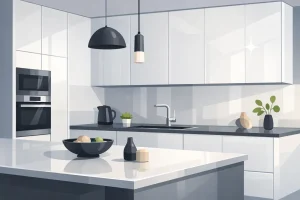

Thinking about a kitchen renovation in Toronto or Markham can feel overwhelming, but it all boils down to one crucial decision: your Toronto kitchen cabinets. These aren't just boxes for your dishes; they're the very foundation of your kitchen's design, dictating its style, flow, and atmosphere for years.
Your Essential Guide to Toronto Kitchen Cabinets
A kitchen remodel is easily one of the most valuable investments you can pour into your home. It’s a project filled with the promise of a fresh, functional space where life happens. But for homeowners across the GTA—from downtown condos to sprawling Markham houses—getting to that dream kitchen involves a maze of choices.
This guide is here to clear that path. We'll break down the complex decisions into a straightforward, actionable plan, so you can move forward with confidence. The best place to start? The cabinets. They set the visual tone, shape the layout, and represent a major slice of your budget. Nailing this choice is the key to a successful project.
It’s no surprise that home renovations are booming. The Canadian kitchen cabinet and countertop market is expected to jump from USD 4,019.04 million in 2025 to a massive USD 7,146.83 million by 2034. This trend is overwhelmingly powered by residential projects, which hold a commanding 84% market share. Families in cities like Toronto and Markham are updating their homes to better fit their lives and increase property value. You can read the full research about the Canadian kitchen cabinet market.
Think of your kitchen cabinets as the main character in your kitchen's story. Getting them right means creating a space that’s not just stunning but works perfectly for you and your family.
To help you make this critical decision, we’ll walk you through everything you need to know:
- Cabinet Materials and Finishes: We'll dive into the pros and cons of everything from classic real wood to modern, high-gloss HDF.
- Style and Design Choices: Discover the perfect aesthetic to match your home’s character and your own personal taste.
- Budgeting and Price Ranges: Get a clear picture of the costs so you can make smart decisions and maximize your investment.
- Timelines and Installation: We’ll map out the entire process, from the first design sketch to the final handle being installed.
Whether you're in the heart of the city or searching for kitchen cabinets in Markham, consider this your go-to resource. Let’s get started on building the kitchen you’ve always imagined.
Decoding Cabinet Materials for Toronto Homes
Choosing the right material for your Toronto kitchen cabinets is a lot like picking the fabric for a custom suit. It’s the single biggest decision that will define the look, the feel, and ultimately, how well your kitchen stands up to daily life. It's the foundation of your kitchen's entire personality.
Let's walk through the most popular options you'll find across the GTA, so you can find the perfect fit for your home, lifestyle, and budget.
As you can see, your choice of material is woven into every aspect of your project—it's not just about looks. It directly influences your style options and your overall budget.
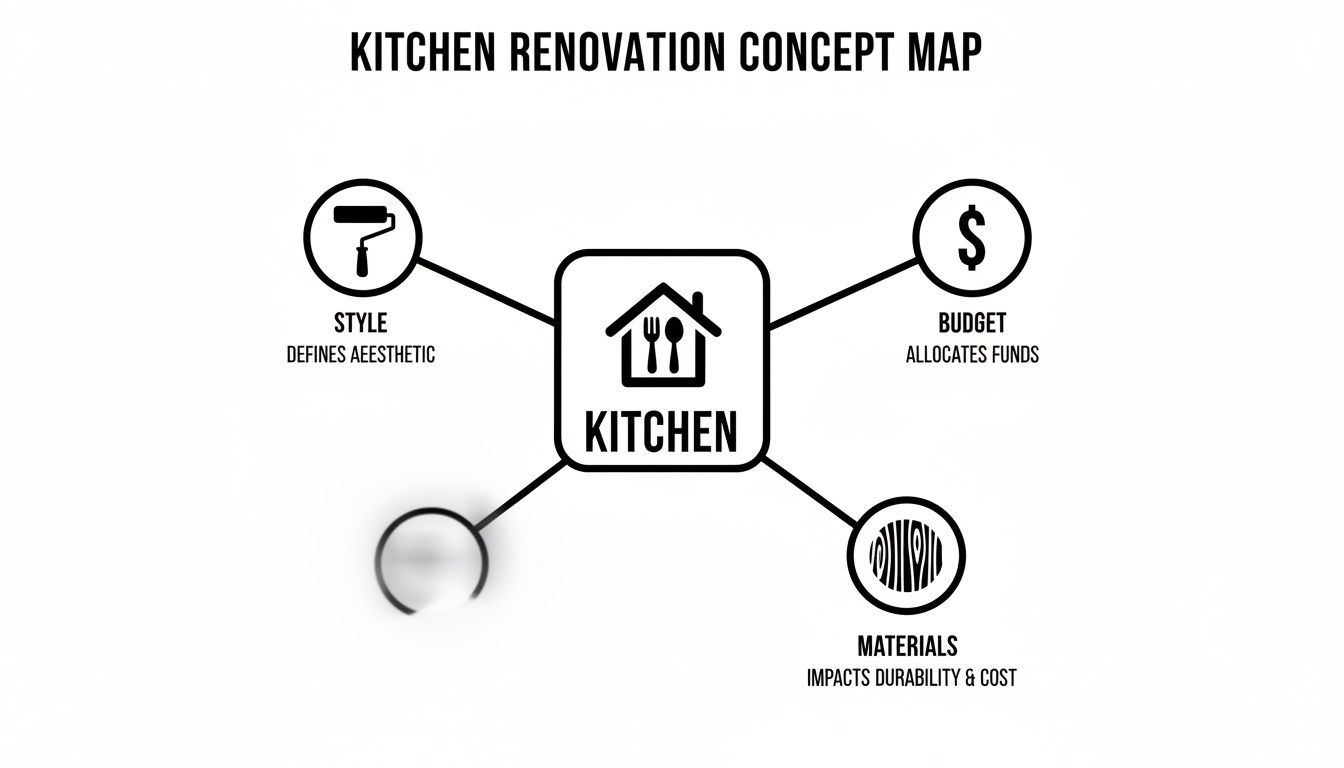
Thinking about how these three elements—Style, Budget, and Materials—connect is the key to a successful renovation.
The Timeless Appeal of Real Wood
There’s a reason real wood is a classic. Think of it as the leather jacket of the kitchen world: it's durable, timeless, and only gets better with age. Different species like maple, oak, and cherry bring their own unique grain patterns and tones to the table, adding an organic warmth that man-made materials just can't quite match.
From the Victorian homes in Cabbagetown to the classic builds in Markham, real wood offers a sense of authenticity that feels right at home. Now, it's true they can be more sensitive to humidity changes—a real factor in our climate—but their ability to be sanded, refinished, and repaired makes them a true long-term investment.
Interestingly, premium and sustainable materials are big drivers in the city's kitchen scene. Wood still holds the top spot, commanding a 42% market share. With a whopping 82.35% of local cabinet revenue coming from residential remodels, it’s clear homeowners are prioritizing durable, quality options. This is part of a larger North American trend, which itself makes up 34.55% of the global market. You can dive deeper into the kitchen cabinet market stats on Mordor Intelligence.
The Modern Workhorse: HDF
High-Density Fibreboard, or HDF, is an engineered wood product made by compressing wood fibres and resin under intense pressure. It's the stronger, more advanced cousin of MDF (Medium-Density Fibreboard). What you get is an incredibly dense and perfectly smooth surface, making it the ideal canvas for a flawless, modern finish.
Here are the main HDF flavours you’ll find:
- Painted HDF: This is your go-to for that perfectly uniform, crisp colour. With no wood grain to get in the way, you get a clean, seamless look that’s a favourite for modern and transitional kitchens.
- High-Gloss HDF: Imagine the clear coat on a luxury car—that's high-gloss. It's sleek, reflective, and undeniably chic. It’s a fantastic choice for smaller Toronto kitchens or condos because it bounces light around, making the space feel bigger and brighter.
- Matte HDF: The sophisticated, understated option. Matte finishes absorb light, giving you a soft, velvety texture that is brilliant at hiding fingerprints and smudges. This makes it a lifesaver for busy family homes.
HDF's stability is a huge plus in Toronto, where our homes deal with significant temperature and humidity swings from season to season. Unlike solid wood, HDF is far less likely to expand, contract, or warp, so your cabinet doors stay perfectly aligned year-round.
Laminates and Thermofoil: The Durability Champions
When your top priorities are durability and easy maintenance, laminates and thermofoil are the undisputed champs. These materials are built to handle the chaos of daily life, making them an incredibly practical choice for high-traffic kitchens.
Laminates are made by fusing layers of paper and resin onto a substrate (usually HDF or particleboard). Don't picture the laminates from your grandma's kitchen; modern versions have come a long way. They're now available in a massive range of colours, patterns, and even surprisingly realistic wood-grain textures. Best of all, they're highly resistant to scratches, stains, and moisture.
Thermofoil is a bit different. It’s a vinyl film that is heated and then vacuum-sealed directly onto an HDF core. This process creates a super smooth, seamless surface that's a breeze to clean. Because it's non-porous, it's also very hygienic, as there's nowhere for bacteria to hide. It's an excellent route for a consistent, uniform look across your entire kitchen.
To make things a little easier, here’s a quick-glance table comparing these popular materials.
Cabinet Material Comparison for Toronto Kitchens
| Material | Best For | Durability | Maintenance | Typical Cost |
|---|---|---|---|---|
| Real Wood | Timeless warmth, heritage homes, ability to be refinished. | Very Good | Moderate (can scratch/dent; sensitive to humidity). | $$$ – $$$$ |
| Painted HDF | A flawless, modern and clean look with unlimited colour choice. | Excellent | Low (easy to wipe clean, but chips can be hard to repair). | $$ – $$$ |
| High-Gloss HDF | Ultra-modern, light-reflective finish for smaller spaces. | Good | Moderate (shows fingerprints; requires soft cloth cleaning). | $$$ |
| Matte HDF | Sophisticated, soft look that hides smudges well. | Excellent | Very Low (fingerprint-resistant and easy to clean). | $$ – $$$ |
| Laminate | High-traffic areas, budget-conscious projects, wide style variety. | Excellent | Very Low (highly resistant to scratches, stains, and moisture). | $ – $$ |
| Thermofoil | Easy-to-clean, seamless look, budget-friendly modern styles. | Good | Very Low (non-porous and simple to wipe down). | $ – $$ |
Ultimately, the best material is the one that ticks the right boxes for you.
Choosing Your Material in the GTA
So, what's the right call? It all comes down to balancing how you want your kitchen to look, how you live your life, and what your budget is.
For a historic home in The Annex, the authentic charm of real wood might be the only option that feels right. In a sleek Yorkville condo, the light-bouncing magic of high-gloss HDF could be the star of the show. And for a bustling family kitchen out in Markham, the fingerprint-hiding power of matte HDF or the sheer toughness of laminate might just be the most practical choice you can make.
Getting a handle on these core materials is the first, and most important, step in creating a kitchen that not only looks stunning but truly works for you.
Finding Your Perfect Kitchen Style
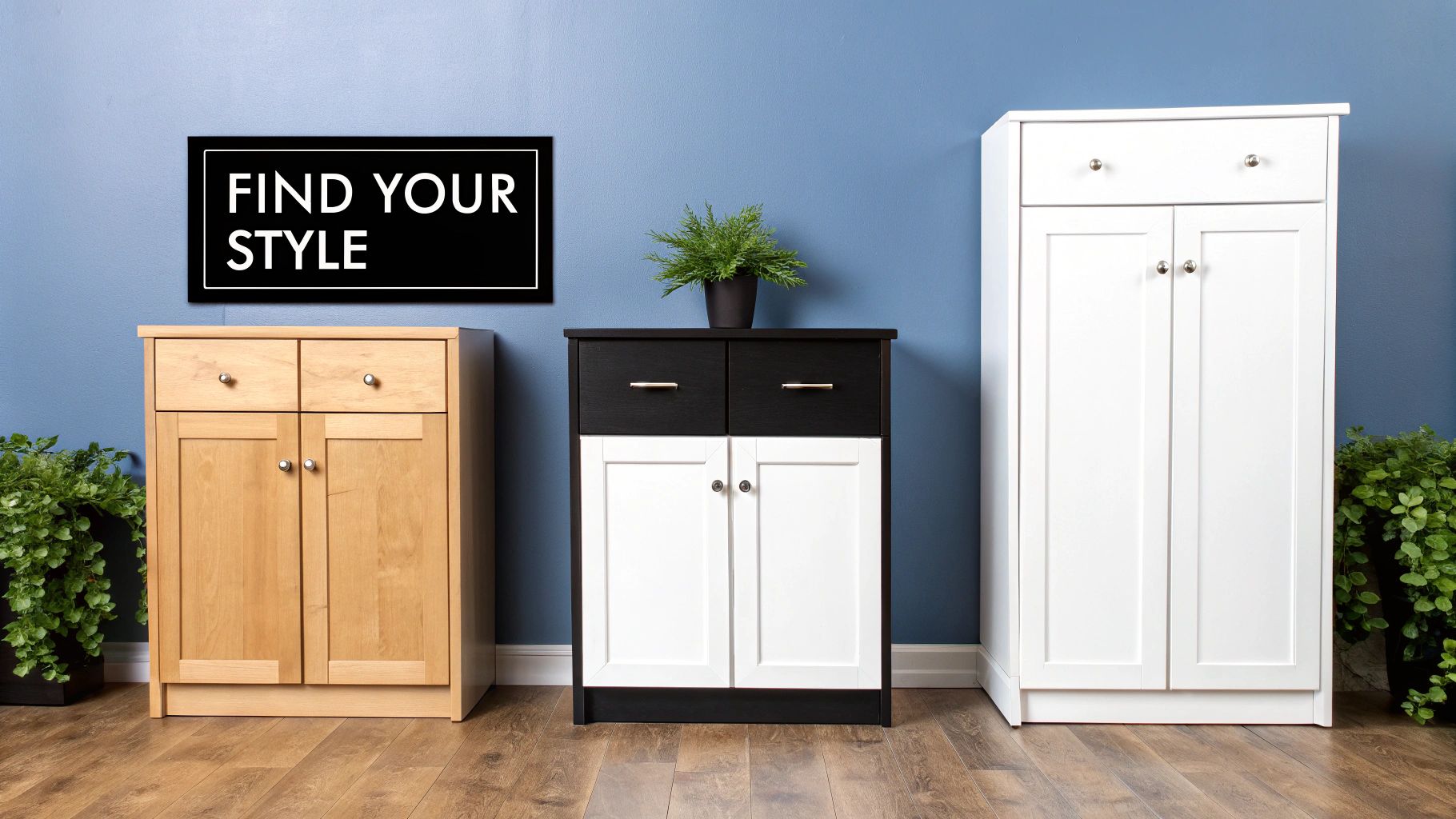
Alright, you've got the lowdown on the materials. Now for the fun part: seeing how those materials come together to create a specific look and feel. Your cabinet style is, without a doubt, the biggest decision you'll make in defining your kitchen's personality. It sets the tone for everything else.
Choosing a style isn’t just about flipping through a catalogue and pointing at a picture. It’s about finding a design that feels like an authentic extension of your home's character and your own personal taste. Let’s walk through the most common styles we see in Toronto and Markham homes and talk about which materials really make them sing.
The Enduring Charm of Traditional Kitchens
Traditional kitchens feel warm, elegant, and timeless. Picture the stately Victorian and Edwardian homes you see in neighbourhoods like Rosedale or The Annex—these spaces practically demand a kitchen with some history and soul. This look is all about the details: raised-panel doors, intricate crown moulding, and beautiful trim work, often showcased on classic real wood cabinets.
A painted real wood cabinet, maybe in a rich navy or a soft, creamy white, is the cornerstone of a beautiful traditional kitchen. It feels grand yet incredibly inviting. The subtle grain of the wood peeking through the paint adds a layer of texture and authenticity that you just can't fake. This is where true craftsmanship shines, making the kitchen feel like it has always been a part of the home.
The Clean Lines of Modern and Minimalist Design
Swinging to the other end of the design spectrum, modern and minimalist kitchens are all about celebrating simplicity. This aesthetic is a perfect match for downtown Toronto condos or the sleek new builds popping up across Markham, where open, uncluttered spaces are king. The signature of this style is the flat-panel or slab door, which creates a clean, uninterrupted surface.
This is where high-gloss HDF really gets to show off. Its reflective, almost mirror-like finish is fantastic for bouncing light around, which can make a smaller kitchen feel surprisingly spacious and bright. If high shine isn't your thing, matte HDF offers a softer, more subtle alternative. It has this incredible velvety texture that looks incredibly sophisticated and resists fingerprints—a huge plus.
Transitional Style: The Best of Both Worlds
Torn between the classic warmth of traditional and the crisp simplicity of modern? You're not alone. Transitional design cherry-picks the best elements from both worlds to create a look that's balanced, flexible, and has serious staying power. It's a hugely popular choice for good reason.
The Versatility of Transitional Style
Transitional kitchens are the ultimate peacemakers of the design world, and they've become a go-to for a reason. This style fits in beautifully everywhere, from renovated semis in Leslieville to spacious family homes in Unionville. It manages to feel both current and classic by pairing timeless shapes with clean, modern lines.
The undisputed hero of the transitional kitchen is the Shaker-style cabinet. Its simple, five-piece construction—a four-piece frame with a flat, recessed centre panel—makes it a true design chameleon.
- Painted HDF Shaker Doors: This is the most popular choice for a reason. You get that classic Shaker profile with a flawless, durable painted finish in literally any colour you can dream up.
- Slim Shaker Profile: For a slightly more contemporary twist, the "slim" or "skinny" Shaker uses a thinner frame, giving the door a sharper, more modern edge.
This incredible flexibility means you can push the style in either direction. Pair your Shaker cabinets with ornate hardware and a marble-look countertop for a more traditional feel, or go modern with sleek bar pulls and a simple glass backsplash. It's this adaptability that ensures your kitchen won't look dated in five years. At the end of the day, the best Toronto kitchen cabinets are the ones that perfectly blend your home's architecture with your unique story.
How to Budget for Your Cabinet Project
Let's talk numbers. Budgeting for a kitchen reno can feel overwhelming, but getting a handle on it is the most important first step you can take. When it comes to your Toronto kitchen cabinets, there isn't one magic number; the final cost is a direct result of your choices in materials, style, and how much custom work you need.
So, let's break it down into real-world figures you can actually work with.
The two biggest drivers of your cabinet budget are the material you choose and the level of customization. As we covered earlier, options like laminate and thermofoil are your wallet-friendly friends, while solid wood or premium HDF finishes will command a higher price. It’s the same story with customization—stock cabinets are always going to be less expensive than semi-custom or fully bespoke designs tailored perfectly to your space.
Breaking Down the Costs
To give you a realistic starting point, we'll use a standard 10×10 foot kitchen as our benchmark. It’s a common layout in many Toronto and Markham homes and usually means you're working with about 20 linear feet of cabinetry.
Here are some price ranges you can realistically expect for the cabinets themselves:
- Entry-Level (Laminate/Thermofoil): For a solid, no-fuss option, you’re looking at a budget between $5,000 and $9,000. These are perfect for rental units or for first-time homeowners who want something durable and stylish without breaking the bank.
- Mid-Range (Painted HDF/Mid-Grade Wood): This is the sweet spot for most homeowners, typically falling between $9,000 and $15,000. This is where you'll find those popular painted Shaker-style cabinets that deliver an amazing balance of longevity, aesthetic appeal, and customization.
- High-End (Premium Wood/High-Gloss/Custom): When you're after top-tier materials, intricate custom features, and luxury finishes, your budget will likely start at $15,000 and can easily climb past $25,000. This is the world of fully custom designs, premium wood species, and flawless, high-end finishes.
A key piece of advice from the inside: one of the best ways to get more for your money is to find a factory-direct supplier. When you cut out the retail middleman, you can often get higher-quality materials and better construction for what you'd pay for a lower-tier product at a big-box store.
Uncovering the Hidden Costs
Your cabinets might be the star of the show, but they don't perform alone. A truly realistic budget has to account for all the other costs that many homeowners forget about until it's too late. Trust me, you don't want those kinds of financial surprises popping up mid-project.
Make sure you factor these items into your overall kitchen renovation budget:
- Demolition and Removal: Before the beautiful new cabinets go in, the old ones have to come out. That means paying for the labour to remove them and the fees for disposing of the old materials, which can run anywhere from a few hundred to over a thousand dollars.
- Professional Installation: Installing cabinets is a skill that demands precision. A professional installer will typically charge between $100 to $300 per linear foot, and that price can vary based on how complex your kitchen layout is.
- Hardware: Knobs, pulls, and handles are the finishing touch—the jewelry for your cabinets. While one piece might not seem like much, the cost adds up fast. Expect to spend anywhere from $5 to $50+ per piece.
- Permits and Inspections: We'll get into this more later, but if your renovation involves moving walls or changing any plumbing or electrical, you'll almost certainly need a permit from the City. This can add several hundred dollars to your bottom line.
By planning for these extra costs right from the start, you build a budget that reflects the true scope of the project. This kind of foresight leads to a much smoother process and prevents you from having to compromise on your dream kitchen later on. If you're looking for more ways to keep these costs in check, our guide on affordable kitchen renovation services in North York has some great tips.
What to Expect: Your Kitchen Renovation Timeline
A kitchen renovation can feel like a huge, overwhelming project. The best way to tackle it? Break it down. When you understand the flow from one step to the next, the whole process becomes much less stressful and far more manageable.
Think of it as a roadmap. This guide will walk you through the entire journey of getting new Toronto kitchen cabinets installed, from that first spark of an idea to the final walkthrough of your dream kitchen.
Phase 1: Design and Measurement (1–2 weeks)
This is where the magic begins. You’ll sit down with a designer to hash out your vision—what style you love, how you need the kitchen to function, and what your budget looks like. From there, it’s all about precision. An expert will take detailed measurements of your space, which is absolutely critical, especially in Toronto’s older homes or tight condo layouts where every centimetre counts.
This phase usually takes 1 to 2 weeks, giving everyone enough time to create detailed drawings and make any tweaks. It’s the most collaborative part of the project, so speak up! The goal is to make sure the final blueprint is exactly what you’ve been imagining.
Phase 2: Manufacturing and Lead Times (4–12+ weeks)
Once you’ve given the final design the green light, your cabinet order heads to the factory. This is typically the longest waiting period in the entire renovation, but for good reason: your cabinets are being built from scratch, just for you.
Don’t rush the manufacturing stage. Good things take time, and a well-built cabinet is the foundation of your entire kitchen. Planning for this lead time is the secret to a smooth project.
So, how long will you be waiting? It really depends on what you've ordered:
- Standard Cabinets: For popular choices like painted HDF Shaker doors, you can generally expect a lead time of 4 to 8 weeks.
- Custom or Specialty Finishes: If you’ve opted for something more unique or a fully custom design, be prepared for a longer wait, often in the 8 to 12 week range, sometimes more.
The most important thing you can do is get a confirmed delivery window from your supplier early on. That date becomes the anchor for scheduling everything else, like demolition and prep work, so you aren't left with an empty kitchen and a long wait.
Phase 3: Site Prep and Installation (2–5 days for cabinet install)
As the delivery date for your cabinets gets closer, your home will start to look like a real work site. The first step is demolition—out with the old cabinets, countertops, and appliances. This is also the time for any behind-the-scenes work, like roughing in new plumbing or electrical lines.
Once the space is clear and your brand-new cabinets arrive, the installation pros get to work. This is a job of pure precision. For an average-sized kitchen, the cabinet installation itself usually takes 2 to 5 days. The crew will carefully level and secure every single box, ensuring they are perfectly aligned and ready for the countertop team to come in and take their measurements.
With the cabinets in place, you’re on the home stretch! This final phase is all about the details that pull the whole room together: installing the countertops, connecting the sink and appliances, putting up the backsplash, and getting a fresh coat of paint on the walls.
It’s also important to touch on local building codes. Here in Toronto and Markham, the rules are pretty straightforward. You generally do not need a permit for a simple cabinet swap-out where everything stays in the same place.
However, you’ll almost certainly need a permit if your renovation involves:
- Moving or taking down walls
- Changing the plumbing layout
- Making major alterations to the electrical wiring
When in doubt, always ask. A good contractor will handle this for you, but it’s smart to confirm with them or your city’s building department to ensure your project is 100% compliant. This final phase completes the transformation, giving you a kitchen that’s not just stunning but also safe and built to last.
How to Choose the Right Cabinet Partner in the GTA

Picking a company for your Toronto kitchen cabinets is a lot like choosing a general contractor for a major build. You’re not just buying a product; you're entering a partnership. You need trust, real-world expertise, and open communication to make sure your project lands safely and on budget.
A good cabinet supplier does more than just sell you boxes. They should act as your guide, helping translate your Pinterest boards and design ideas into a functional, beautiful reality. With so many options across the GTA, this is one of the most critical decisions you'll make.
The kitchen cabinet industry is a huge part of our local economy. The Canadian market is worth over $1.5 billion annually, with manufacturing centres right here in the Toronto-Markham area contributing a big slice of that pie. That means you have a ton of choice, which makes knowing what to look for even more important. You can find more details on the U.S. and Canada kitchen cabinet market on straitsresearch.com.
Look for a Physical Showroom
In a world full of online catalogues, nothing beats seeing and touching the real thing. A physical showroom is a sign that a company is serious about its craft and invested in the customer experience. It’s your chance to play detective and judge the quality for yourself.
When you visit a showroom, you can:
- Feel the finishes: Is that high-gloss really as smooth as glass? Does the painted finish feel durable or cheap?
- Test the hardware: Slide out the drawers. Do they glide effortlessly or feel rickety? Do the soft-close hinges work properly?
- Compare materials in person: See how different colours and textures look under professional lighting—not just on your phone screen where colours can be misleading.
Evaluate Their Portfolio and Local Experience
A slick marketing photo is one thing, but a portfolio of completed projects in your area is gold. Ask to see their work in homes just like yours, whether it's a condo in the city core or a single-family house in Markham. This proves they get the unique architectural styles and spatial quirks of our neighbourhoods.
Look for a company with a solid track record and genuine reviews from other homeowners in the GTA. This local knowledge is priceless when it comes to navigating tricky layouts and regional building codes. To get a sense of what to look for, check out our curated list of Toronto’s 10 best kitchen cabinet companies.
Demand Clarity on Warranties and Service
A trustworthy partner will always stand behind their work with a clear, comprehensive warranty. This isn't just a formality; it's your safety net against defects in materials or installation.
A strong warranty speaks volumes. It shows a company has total confidence in its products and craftsmanship. If the terms are fuzzy or the coverage is thin, that’s a major red flag.
Before you sign on the dotted line, get absolute clarity on what’s covered and for how long. Ask them to walk you through their process for handling service calls if an issue pops up down the road. A company that prioritizes after-sales support is a partner you can count on, ensuring your new kitchen remains a source of pride for years to come.
Your Toronto Kitchen Cabinet Questions Answered
As you get closer to kicking off your project, a few practical questions always come to mind. To help you move forward with confidence, we’ve put together answers to the most common queries we hear from homeowners in Toronto and Markham about their kitchen cabinet renovations.
How Long Does Cabinet Installation Take?
This is usually the first thing people ask. It makes sense—you want to know how long your kitchen will be a work zone. For a standard-sized kitchen, the actual hands-on installation of the cabinets themselves usually takes about 2 to 5 days.
Keep in mind, that’s just for setting the cabinets in place. It doesn't factor in demolition, countertop templating and installation, or any of the necessary plumbing and electrical work. A good, transparent partner will always lay out a detailed project schedule for you from the start. That way, you can see how all the pieces fit together and avoid any nasty surprises.
Are Custom Cabinets Worth It in a Toronto Condo?
In a word: absolutely. In the Toronto condo market, where every square inch of space is precious, custom cabinets aren't just a luxury—they're a smart investment. Unlike standard, off-the-shelf options, they’re designed and built to fit your specific, and often quirky, layout like a glove.
This means we can turn awkward corners, annoying bulkheads, and tight spots into functional, valuable storage. Not only does this make your kitchen way more usable every day, but it also gives your property’s appeal and resale value a serious boost when it’s time to sell.
What Is the Difference Between Factory-Direct and Big-Box Cabinets?
It really boils down to three things: getting more for your money, better quality, and the freedom to get exactly what you want.
- Value: Factory-direct suppliers like us make and sell our own cabinets. By cutting out the middleman, you sidestep the retail markup you’d pay at a big-box store. Simple as that.
- Quality: Because of that direct model, you often get access to higher-grade materials and more solid construction for what you’d pay for a lesser product elsewhere.
- Customization: A factory-direct provider can offer way more flexibility. We’re talking custom sizes, unique finishes, and personalized styles that perfectly match your vision and your space.
Think of it this way: going factory-direct means you're putting your money directly into a better product, not into a retailer's overhead. It's the savviest way to stretch your budget further.
Do I Need a Permit for New Kitchen Cabinets in Toronto?
This is a critical question, but the answer is usually straightforward. If you're simply swapping out old cabinets for new ones in the exact same footprint—without touching plumbing, electrical, or walls—you generally will not need a permit in Toronto or Markham.
However, the game changes if your renovation involves bigger moves. You'll almost certainly need a permit if you plan on:
- Moving or knocking down walls.
- Changing the kitchen layout enough to alter the plumbing.
- Making any major adjustments to the electrical wiring.
When in doubt, the best move is always to check with your contractor or the city's building department. It’s a quick step that ensures your project is safe, up to code, and a true asset to your home.
Ready to see what your kitchen is truly capable of? The team at MapleKing Kitchen Cabinets is here to guide you, from initial design to flawless installation. Explore our gallery and book your free design consultation today!