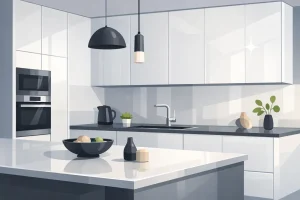

Your kitchen probably works, but it doesn’t feel good to use. The cabinet boxes are still standing. The drawers still open. Yet every time you walk in, you see dated doors, worn edges, swollen panels near the sink, and a style that makes the whole room feel older than the rest of the home.
That’s a common spot for homeowners in Toronto and Markham. They like the house, the school district, the street, the commute, and the neighbourhood. What they don’t like is the thought of tearing apart a functioning kitchen, living through a long renovation, and paying replacement prices just to fix what’s mostly a surface problem.
If the layout already suits your household, refacing is often the smarter move. It lets you reface kitchen cabinets instead of ripping everything out, which changes the look of the room far more than one might expect. Done properly, it doesn’t look like a patch job. It looks like a new kitchen built on a sound foundation.
Transform Your Kitchen Without a Full Demolition
A lot of GTA kitchens don’t need a full rebuild. They need a reset. That’s especially true in condos, townhouses, and detached homes where the cabinet boxes are still usable, but the door style, finish, and hardware are pulling the whole space down.
Cabinet refacing works because it targets what people see. Doors, drawer fronts, end panels, exposed face frames, trim, and hardware create the visual identity of the kitchen. Change those properly, and the room can shift from heavy and dated to clean and current without opening walls or rebuilding the entire footprint.

Why refacing makes sense in the GTA
In this market, kitchen appearance matters. Buyers notice it quickly, and homeowners feel it daily. That’s one reason refacing has become such a practical option for resale-minded renovations.
In the Greater Toronto Area, cabinet refacing offers one of the strongest renovation paybacks, with NAR reporting 97% to 100% cost recovery for refacing, compared with 51.0% ROI for midrange major kitchen remodels. That gap is hard to ignore if your cabinets are structurally solid and your main complaint is how they look.
Practical rule: If you hate the style of your kitchen more than the layout of your kitchen, refacing is often worth serious consideration.
There’s also a lifestyle argument for it. Full remodels affect everything. Dust control becomes a daily issue. Cooking routines get disrupted. Delivery schedules and trades stack up. Refacing is narrower in scope, which is exactly why many homeowners prefer it.
A good kitchen update isn’t only about cabinets
Once the cabinet fronts are updated, the room usually needs a few finishing decisions so it looks intentional. Wall colour, lighting, stools, decor, and counter styling all matter more once the cabinetry is clean and current.
If you’re preparing to sell or just want the room to photograph better, it’s worth looking at how staging can enhance your kitchen's appeal. A staged kitchen doesn’t hide poor cabinetry, but it does help a freshly refaced kitchen read as brighter, larger, and more polished.
Refacing isn’t the right answer for every kitchen. But in Toronto and Markham, where many homeowners want visible impact without a full demolition, it often hits the sweet spot.
What Exactly Is Kitchen Cabinet Refacing
Think of refacing as re-skinning the kitchen. The core structure stays if it’s sound. The visible surfaces get replaced or covered with new finished materials so the room looks new from the outside.
That’s why refacing is very different from painting. Paint changes colour. Refacing changes the visible components and the surface system itself. It also differs from full replacement, because the cabinet boxes remain in place.
What stays and what goes
The part that stays is the cabinet box. That means the basic carcass fixed to the wall or floor remains if it’s square, stable, and dry.
The parts that usually go include:
- Cabinet doors that define the style, whether shaker, slab, raised panel, or something more transitional
- Drawer fronts so the lower cabinetry matches the new doors
- Exposed end panels and visible face surfaces that would otherwise reveal the old finish
- Handles, knobs, hinges, and drawer hardware when the old pieces are dated or worn
Most homeowners are surprised by how much of the kitchen’s identity sits in those parts alone.
What the process actually looks like
Refacing is methodical when it’s done properly. It isn’t a matter of slapping on thin material and hoping the old kitchen disappears.
A typical process looks like this:
Inspect the boxes
The installer checks for water damage, loose joints, out-of-square openings, sagging bottoms, and swelling around sink bases or dishwasher panels.Remove the old fronts
Doors, drawer faces, hinges, and handles come off first.Prepare the exposed structure
Surfaces are cleaned, repaired where needed, and made ready to accept veneer, laminate, thermofoil-compatible panels, or finished end skins.Apply the new exterior surfaces
This step is where the old kitchen disappears. Face frames, end panels, fillers, and other visible areas get covered in the new matching finish.Install new doors and drawer fronts
The style change becomes obvious here. A heavy oak profile can become a slim shaker. A dated thermofoil look can become a matte slab finish.Fit new hardware and align everything
Gaps, reveals, hinge tension, and drawer action all get adjusted so the finished kitchen feels precise.
Refacing should look coordinated from every visible angle. If the doors are new but the end panels, fillers, soffits, and toe kicks still read as old, the job will never look complete.
What refacing does well
Refacing is best when the kitchen footprint already works. If the sink, stove, and storage zones are basically where you want them, there’s no need to tear out sturdy cabinet boxes just to get a new style.
It also gives homeowners room to make selective upgrades. Many projects include new soft-close hinges, updated pulls, fresh side panels, valance changes, or the addition of matching trim. In some kitchens, that’s enough to make the entire room feel rebuilt.
What refacing does not do
It doesn’t solve a bad layout. It won’t fix cabinet boxes that are rotted, badly warped, or poorly built. It also won’t make sense if you’re planning to move appliances, change the footprint dramatically, or open walls as part of the same renovation.
That’s where people get into trouble. They choose refacing when what they really want is redesign. The best outcomes happen when the structure is worth keeping and the goal is a major visual upgrade with less disruption.
Refacing vs Replacement vs Refinishing A Comparison
A lot of Toronto and Markham homeowners arrive at this decision after living with a kitchen that still functions, but no longer fits the house. In a Markham detached home from the 1990s, that often means solid cabinet boxes with heavy raised-panel doors. In a Toronto condo, it can mean a compact kitchen where demolition logistics, elevator bookings, and disposal costs make full replacement harder to justify.
Those are very different situations, and the right solution changes with them.

Kitchen Cabinet Upgrade Options Compared
| Factor | Cabinet Refacing | Full Replacement | Cabinet Refinishing (Painting) |
|---|---|---|---|
| Best for | Good boxes, outdated look | Poor layout or damaged cabinets | Cabinets that only need a colour refresh |
| Cost | Moderate | High | Low |
| Timeline | Days | Weeks | |
| Structural change | Minimal | Significant | None |
| Layout change | None | Full | None |
| Disruption level | Moderate | High | Lower |
| Style change | Strong visual change | Complete freedom | Limited by existing door style |
| Waste | Lower | Higher | Moderate |
Refacing suits kitchens that work as built
Refacing keeps the existing cabinet structure and changes the visible finish, doors, drawer fronts, panels, and hardware. It makes sense when the kitchen footprint already works and the boxes are still square, dry, and stable.
That describes a lot of GTA homes. I see it often in older North York and Markham kitchens where the cabinet shells were built well, but the door style dates the whole room. In those cases, refacing can deliver a major visual change without the mess, permit issues, and chain reaction of costs that come with removing everything.
Homeowners also choose refacing when they want a material and finish upgrade without rebuilding the room. Comparing cabinet material options for durability, moisture resistance, and long-term maintenance helps clarify whether refacing will hold up well in a busy GTA kitchen.
Refacing is usually the strongest fit when:
- The cabinet boxes are solid and level
- The layout already supports how the household cooks and moves
- The goal is a new style, not a new floor plan
- Less site disruption matters because you are living in the home during the work
Replacement is the better choice when the kitchen has deeper problems
Full replacement earns its cost when the existing kitchen is failing structurally or functionally. If boxes are swollen from leaks, shelves sag badly, or the room needs a new layout, keeping the old structure often turns into false economy.
Replacement also opens up design changes that refacing cannot provide. You can add deeper drawers, improve corner storage, change appliance locations, extend cabinets to the ceiling, or rework a cramped galley into something that fits current use. In many Toronto semis and older bungalows, that matters more than the door style because the original kitchen was built for a different era of cooking and storage.
Choose replacement if any of these are true:
- Water damage has affected multiple cabinets
- The boxes are poorly built or badly out of square
- You want to move plumbing, appliances, or walls
- You need better storage planning, not just a new appearance
The downside is straightforward. Replacement costs more, takes longer, creates more dust and disposal, and often pulls countertops, backsplash, flooring, and electrical work into the same project.
Refinishing works when the style is still acceptable
Refinishing usually means cleaning, sanding, priming, and painting the existing doors, drawer fronts, and exposed surfaces. It is the lightest-touch option of the three.
It works best when the cabinet profile is already acceptable and the main problem is colour or finish wear. A homeowner who likes their shaker doors but wants to move from yellowed cream to a softer white may get good value from refinishing. A homeowner trying to turn arched oak doors into a modern slab look will not.
That distinction matters. Paint can freshen cabinetry. It does not change the shape, proportions, or visual age of the doors.
A painted cabinet can look cleaner and brighter, but it still reads as the same door style.
How GTA homeowners usually make the call
The primary trade-off most homeowners consider is between scope and return.
Refacing often lands in the practical middle. It changes the look far more than painting, but avoids the cost and disruption of full replacement. That balance is especially attractive in the GTA, where renovation budgets are already under pressure from labour costs, condo rules, disposal fees, and the high cost of touching multiple parts of the kitchen at once. The Canada Mortgage and Housing Corporation notes that renovation spending remains strong across Canadian homes, which helps explain why many owners look for upgrades that improve appearance and function without a full gut job according to CMHC's renovation market findings.
For resale, the context matters too. In many Toronto and Markham neighbourhoods, a clean, updated kitchen photographs better, shows better, and supports value even when the footprint stays the same. Refacing will not carry the same upside as a well-planned full remodel in a high-end home. But in many mid-range properties, it can be the right level of investment.
Two questions usually settle the decision:
- Are the cabinet boxes in good condition?
- Are you keeping the current layout?
If the answer to both is yes, refacing is often the strongest option. If either answer is no, replacement or refinishing usually deserves a closer look.
Your Guide to Cabinet Refacing Materials and Finishes
Materials make or break a refacing project. Homeowners often focus on colour first, but colour is only part of the decision. The surface has to suit the way the kitchen gets used, how much moisture it sees, and what kind of maintenance you’re willing to live with.
Toronto and Markham kitchens deal with real seasonal shifts. Indoor humidity changes through the year, and cooking-heavy households put extra stress on finishes around sinks, kettles, dishwashers, and ranges. Material choice matters because some surfaces stay stable and easy to maintain under those conditions, while others show wear sooner.

Cabinet refacing guides often mention veneer, laminate, HDF, and thermofoil without saying much about climate performance. Yet Toronto and Markham experience humidity fluctuations of 40% to 80% year-round, which affects how cabinet materials behave over time. That’s why material selection shouldn’t be based on showroom appearance alone.
Real wood for warmth and character
Real wood appeals to homeowners who want grain, depth, and a more natural look. It’s a strong fit for transitional and classic kitchens, especially in detached homes where the design direction leans warm rather than ultra-minimal.
Wood gives you visual richness that manufactured surfaces don’t fully replicate. It also works well when matching other millwork in the home.
Still, wood asks more from the owner. It can show wear differently, and some households prefer a more uniform surface that’s easier to wipe and less sensitive to changing conditions. In kitchens with heavy steam or less consistent ventilation, many homeowners choose a more stable manufactured finish instead.
HDF painted finishes for a clean uniform look
High-density fibreboard, often used for painted cabinet doors, suits homeowners who want a smooth painted finish with crisp profiles and visual consistency. It’s popular for shaker styles, slim rails, and modern painted doors because the finish reads even and controlled.
HDF generally suits two audiences especially well:
- Homeowners who want painted colour without visible grain
- People updating older kitchens to a simpler, more current door style
Matte and satin painted HDF finishes work well in family kitchens because they soften glare and pair easily with stone counters, backsplash tile, and brushed hardware.
If you’re comparing surfaces in more depth, this guide on the best material for kitchen cabinets is useful for sorting through the trade-offs.
High-gloss and matte modern surfaces
Not every refacing project is trying to look traditional. In many Toronto condos and newer Markham homes, the goal is a sharper contemporary look.
High-gloss fronts reflect more light, which can help compact kitchens feel brighter and more open. They work best when the rest of the design is disciplined. Flat panels, simple hardware, and restrained colour choices keep gloss from looking busy.
Matte finishes take the opposite route. They absorb light more gently and often feel calmer, especially in open-concept spaces where the kitchen is visible from the living area. Many homeowners prefer matte because it looks current without feeling flashy.
A quick product walkthrough helps make those finish differences easier to picture:
Laminates and thermofoil for practical households
Laminates and thermofoil are often the most pragmatic options for busy kitchens. They’re chosen less for romance and more for performance.
These surfaces are worth considering if your priorities are:
- Easy cleaning after daily cooking
- Resistance to splashes and routine wear
- A consistent finish across doors, drawer fronts, and panels
- A style that suits condo, townhouse, or investment-property upgrades
Thermofoil gives a uniform surface that many homeowners like for slab doors and straightforward maintenance. Laminates offer a wide design range, from wood-look patterns to plain solid colours, and they’re often a strong choice where moisture resistance and wipeability matter.
In humid kitchens, I’d rather see a homeowner choose the right stable manufactured finish than force a material that doesn’t suit the room’s conditions.
Don’t overlook the finishing details
The door style gets attention, but the smaller components often determine whether the kitchen feels custom or merely updated.
Look closely at:
- Hinges that close cleanly and keep reveals even
- Drawer hardware that feels solid under daily use
- Pulls and knobs that match the scale of the doors
- End panels, fillers, toe kicks, and valances that tie the whole job together
A refacing project looks complete when all visible surfaces speak the same language. Good material selection does more than create a pretty sample door. It creates a kitchen that still feels right after daily use, cleaning, and changing seasons.
Cabinet Refacing Costs and Timelines in Toronto
A typical Toronto homeowner calls after getting one full kitchen renovation quote, then asks the question that usually decides the project. Can this kitchen be improved without turning the house upside down for weeks?
In many GTA homes, the answer is yes. Refacing keeps the cabinet boxes and layout in place, so the budget and schedule usually stay under better control than a full replacement. That matters in Toronto semis, Markham detached homes, and condo units where demolition, disposal, elevator bookings, parking, and trade coordination can add time and cost fast.
For a standard-size kitchen, refacing often lands in the mid-thousands to low five figures, depending on door count, finish, panel work, and how much correction the existing cabinets need before new materials go on. In my experience, most jobs are measured in days for installation, not weeks, but production time still has to be factored in. Custom doors, painted finishes, and non-standard panels can stretch the lead time before anyone arrives on site.
What pushes the price up in the GTA
The kitchen footprint matters, but it is rarely the full story. I have priced two kitchens with a similar layout where one cost noticeably more because it had extra drawer banks, exposed gables, a pantry run, and more finish-sensitive details around the fridge and crown area.
The biggest cost drivers are usually:
- Number of doors and drawer fronts, because each piece must be made, finished, and fitted
- Material and finish selection, especially if you want painted HDF, wood veneer, laminate, or thermofoil with matched panels
- Visible cabinet ends and trim work, including islands, valances, light rails, fillers, and toe kicks
- Condition of the existing boxes, particularly around the sink base where water damage is common in older Toronto kitchens
- Hardware upgrades, such as new hinges, drawer slides, organizers, and pull drilling
- Site conditions, including condo access rules, limited parking, narrow stair runs, and older homes with uneven walls and floors
If you want a clearer local budget range before calling contractors, this breakdown of cabinet refacing costs in Toronto is a useful starting point.
How long cabinet refacing usually takes
Homeowners often hear "three to five days" and assume the whole project starts and finishes inside that window. The on-site portion can be that short. The full process is longer because measuring, ordering, fabrication, and scheduling happen first.
A normal project usually follows this sequence:
Site measure and scope confirmation
Final sizes, hinge boring, panel requirements, fillers, and hardware choices are verified before anything is ordered.Shop production
Doors, drawer fronts, veneers, end panels, and trim components are made or ordered to match the selected finish.Prep and installation
Old fronts come off, cabinet surfaces are cleaned and prepared, and finished materials are applied to all exposed areas.Door hanging and adjustments
New doors and drawer fronts are installed, then adjusted so reveals are even and operation feels right.Final service items
Small touch-ups, hinge tuning, and punch-list corrections are handled before sign-off.
The shortest jobs are the ones that were measured properly and did not hide problems inside the existing cabinetry.
What can slow the schedule down
Toronto and Markham homeowners should expect a few local realities. Older houses often have walls that are out of square, which shows up the moment new panels and doors go on. Condo projects can lose a day to elevator reservations, loading restrictions, or limited work hours. Winter also matters. Adhesives, material acclimation, and delivery timing are easier to control when products are stored and installed under stable indoor conditions.
Painted finishes can also take longer than textured laminates or thermofoil, especially if you want a cleaner furniture-style look with less tolerance for flaws. That extra time can be worth it, but it should be priced and scheduled accurately.
What the disruption feels like at home
Refacing is easier to live through than a full tear-out, but it is still active construction. Installers need room to work. Your kitchen will be partially out of use during parts of the day. There will be dust, tool noise, and short periods when sink or counter access is awkward.
The upside is straightforward. Appliances usually stay where they are, countertops often remain in place, and the room does not turn into a full demolition site. For many GTA homeowners, especially families staying in the house during the job, that lower level of disruption is one of the strongest reasons to choose refacing.
There is also an ROI angle. In Toronto and Markham, where buyers pay attention to clean, updated kitchens but not every house needs a full custom renovation, a well-executed reface can improve day-to-day use and presentation without overbuilding for the neighbourhood. That works best when the existing layout is still functional and the cabinet boxes are worth keeping.
Is Your Kitchen a Candidate for Cabinet Refacing
Not every kitchen should be refaced. The right candidate has less to do with style and more to do with structure.
A kitchen qualifies when the cabinet boxes are in good enough condition to serve as the base for the new work. In the GTA, 90% of pre-2000 kitchens qualify for refacing if the boxes are level, warp-free, and able to bear weight, and suitable refacing can extend longevity by 15 to 20 years. That’s encouraging, but it still requires an honest inspection.
A simple homeowner checklist
You don’t need to be a cabinet maker to spot the obvious warning signs. Start with a practical walk-through.
Check for these conditions:
- The boxes feel solid when you pull doors open or lean lightly on the face frame
- The sink base isn’t swollen at the floor, side panels, or lower edges
- The cabinet sides look straight rather than bowed or twisted
- Shelves sit properly without obvious sagging from failed supports or weak panels
- Door openings look square and not visibly skewed from movement over time
If the kitchen passes those basic checks, it may be a good candidate. If not, refacing can become a cosmetic cover over a structural problem.
Kitchens that usually work well for refacing
Refacing tends to suit a specific kind of homeowner. The kitchen layout is acceptable. The cabinet positions make sense. The household wants the room to look current and function better, but doesn’t need a total redesign.
Good candidates often include:
- Condo kitchens where layout changes are limited and clean visual upgrades matter
- Townhouses with builder-grade cabinets that are dated but still stable
- Older detached homes where the footprint works, but the style is stuck in another decade
- Rental or resale properties where the goal is a strong appearance upgrade without rebuilding the entire kitchen
When to pause and reconsider
Some warning signs point away from refacing:
- Water damage near sinks or dishwashers
- Loose cabinet backs or separated joints
- Heavy warping
- A layout you already know you dislike
- Existing cabinets that were poorly built from the start
If you’re hoping refacing will fix a bad kitchen design, you’ll likely be disappointed. Refacing rewards good bones. It doesn’t create them.
One more practical point. Older Toronto homes often hide damage where homeowners don’t look first, especially in corner bases, sink cabinets, and lower gables near appliances. That’s why a proper inspection matters before any order gets placed. The best refacing jobs start with restraint, not optimism.
How to Choose the Right Refacing Contractor in the GTA
Hiring the right contractor matters as much as choosing the right finish. A poor refacing job can leave you with crooked reveals, mismatched panels, loose hardware, and visible old surfaces that should have been covered. A good one looks deliberate and clean from every angle.
Toronto and Markham homeowners should be especially careful with older homes, because cabinet condition can vary more than appearances suggest.

Homeowners should ask contractors how they assess cabinet condition before work begins. In older Toronto homes, a pre-refacing structural audit can uncover hidden water damage or warped frames before they cause cost overruns and delays. If a contractor wants to price the job without discussing box condition, that’s not a good sign.
Questions worth asking before you sign
A solid consultation should answer specific practical questions, not just style questions.
Ask things like:
- How do you determine whether my boxes are suitable for refacing
- What visible surfaces are included in the quote
- Will end panels, fillers, toe kicks, and trim be matched
- How are doors and drawer fronts manufactured and finished
- What hardware is included, and what can be upgraded
- How are alignment issues handled during installation
The quality of the answers tells you a lot. Skilled contractors talk comfortably about reveals, box condition, moisture risk, hinge placement, panel matching, and finish consistency.
What to look for in the quote and portfolio
Don’t settle for a vague number on a sheet of paper. The quote should describe scope clearly enough that you can tell what is and isn’t included.
Look for:
- Itemised detail rather than a single lump-sum line
- Project photos that show more than just pretty front views
- Close-up workmanship including panels, trim transitions, and hardware fit
- A local track record with kitchens similar to yours in age and style
If you’re comparing local firms, a directory-style starting point such as cabinet companies near me can help you narrow the field before you request site visits.
Good refacing contractors don’t rush to promise. They inspect first, specify carefully, and explain what won’t work as clearly as what will.
Red flags that deserve caution
Be careful if you hear any of the following:
- “We can reface anything.”
- “We’ll figure it out once we start.”
- “The quote doesn’t include panels, but we’ll see if you need them.”
- “You don’t need to worry about the sink cabinet.”
Refacing is a precise trade. The contractor should sound organised, not casual. That’s how you avoid surprises halfway through the job.
Frequently Asked Questions About Cabinet Refacing
Can refacing change my kitchen from traditional to modern
Yes, if the structure is suitable and the layout stays the same. Swapping an older raised or ornate look for slab or shaker-style fronts can change the whole feel of the room. The biggest shift usually comes from the new door profile, finish, and hardware selection.
Can I add anything new if I reface kitchen cabinets
Sometimes. Many kitchens benefit from a hybrid approach where the existing main cabinets are refaced and a few new matching pieces are added, such as a pantry unit, island panels, or additional uppers. The key is making sure the new components match the refaced finishes and proportions properly.
Is refacing a good option for condos
Often, yes. Condo kitchens usually benefit from lower disruption and a cleaner installation scope, especially when the existing layout is fixed by plumbing, walls, and building constraints. Material choice matters in smaller kitchens because every visible surface has more visual impact.
How do I care for newly refaced cabinets
Use a soft cloth, mild cleaner, and avoid abrasive pads or harsh chemicals. Wipe splashes near the sink, dishwasher, and kettle area instead of letting moisture sit on seams or edges. Hardware should also be checked occasionally so hinges and pulls stay tight.
Will refacing fix cabinets that are already failing
No. Refacing improves appearance and can extend the life of suitable cabinets, but it doesn’t replace damaged structure. If the boxes are swollen, loose, or badly warped, replacement is usually the more honest solution.
If you’re weighing whether to reface kitchen cabinets or replace them outright, MapleKing Kitchen Cabinets is a practical place to start. Their team works with Toronto and Markham homeowners on custom cabinetry, refacing, material selection, and factory-direct options that fit both the space and the budget.