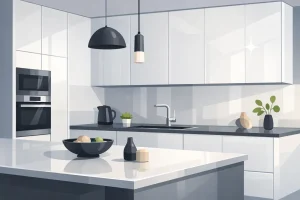

When it comes to finding the right quartz countertops Toronto homeowners love, the decision often comes down to balancing beauty with real-world practicality. This engineered stone gives you the high-end look of materials like marble, but with incredible durability and almost no maintenance—a smart investment for any kitchen update in the GTA.
Why Toronto Homeowners Choose Quartz Countertops
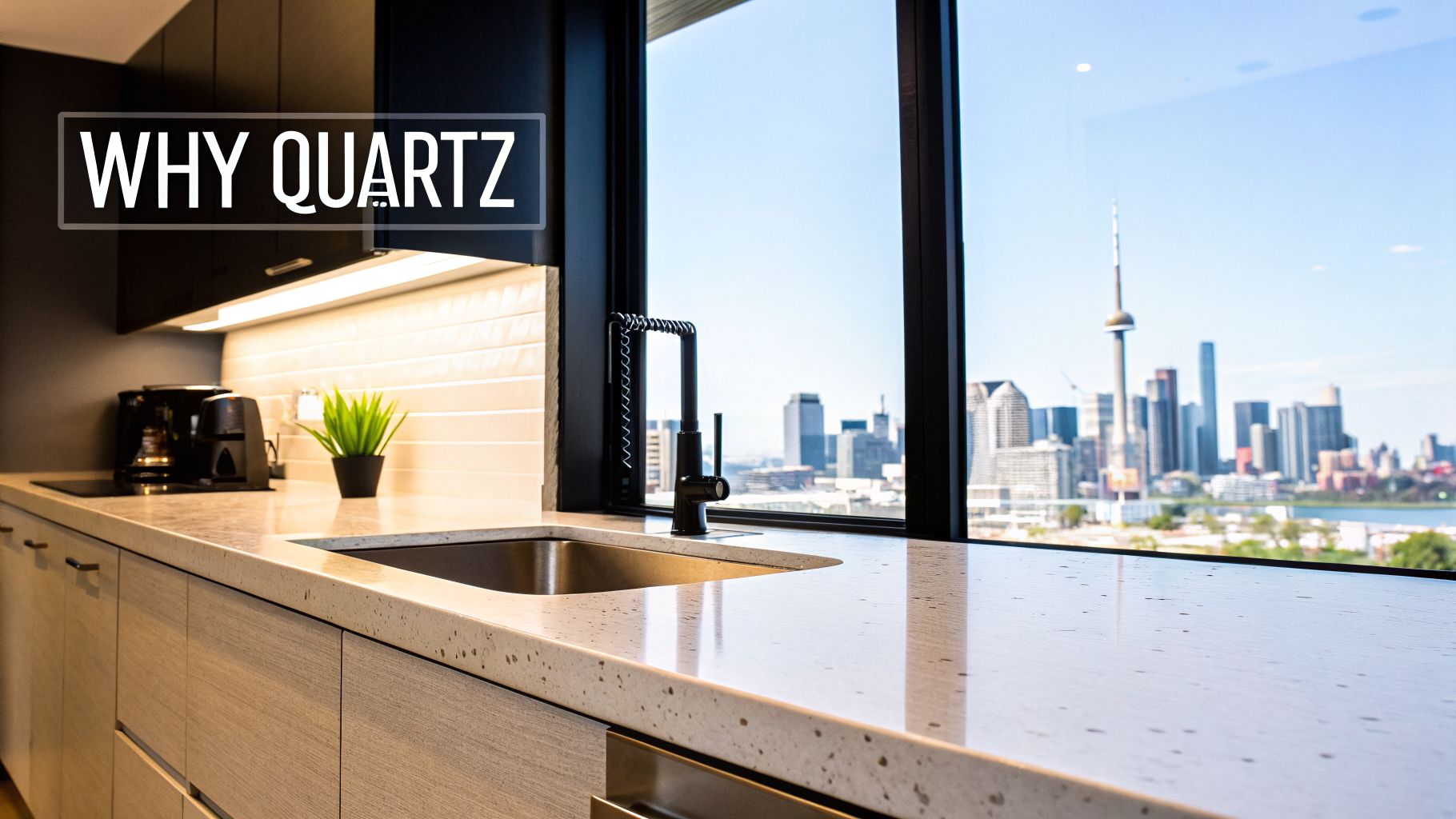
From sprawling houses in Markham to sleek downtown condos, Toronto homeowners are consistently turning to quartz for their kitchens and bathrooms. So, what’s behind the massive popularity? It really boils down to how it marries versatile aesthetics with everyday resilience, a combo that natural stones often can't quite match.
You could think of it like this: natural stone is stunning but can be finicky, like a beautiful classic car that needs constant attention. Quartz, on the other hand, is the luxury modern vehicle—it delivers incredible style and performance, just with a lot less worry.
The Ideal Blend of Style and Strength
Quartz really hits the mark for the design-savvy yet practical Toronto homeowner. Because it's an engineered product, you get a staggering range of colours and patterns. You can find everything from clean, solid whites that make a small condo kitchen feel brighter, to dramatic, flowing veins that mimic marble and create a show-stopping centrepiece in a large family home. That design freedom is a huge plus.
But beyond looks, the real magic of quartz is its toughness. Its non-porous surface is a game-changer for any busy household.
- Stain Resistance: Spilled coffee, a splash of red wine, or a bit of oil won't cause a panic. Quartz repels these common culprits without needing the frequent sealing that granite and marble demand.
- Hygienic Surface: Since there are no pores, there's nowhere for bacteria, mould, or mildew to grow. This makes it an incredibly safe and easy-to-clean surface for preparing food.
- Scratch and Chip Resistance: Made from about 90% natural quartz minerals—one of the hardest minerals on earth—it holds up beautifully against the scrapes, dings, and knocks of daily family life.
This unique mix of high-end design options and rock-solid performance explains why quartz isn't just a fleeting trend in Toronto. It has become the new standard for creating spaces that are both beautiful and built to last.
Understanding How Quartz Countertops Are Made
So, what really separates engineered quartz from natural stones like granite or marble? It all comes down to how they’re made. While granite is hewn from a quarry in massive, unpredictable blocks, quartz is born from a precise manufacturing process—a perfect blend of natural materials and modern engineering.
Think of it this way: buying natural stone is a bit of a treasure hunt. You might find a stunning piece, but it could have hidden fissures or variations you didn't expect. For anyone looking for quartz countertops in Toronto, the engineered approach offers something far more valuable: consistency. You get exactly the colour, pattern, and durability you signed up for, with no surprises.
The Core Ingredients: A Perfected Blend
At its heart, the recipe for a quartz slab is straightforward, but it demands absolute precision. The main ingredient is one of the toughest minerals on earth: natural quartz. We’re not talking about a sprinkle, either—it’s the star of the show.
Here’s a breakdown of what goes into the mix:
- Natural Quartz Crystals: This is the backbone of the slab, making up about 90% of its total weight. The quartz is finely ground, and this high mineral content is what gives the final product its incredible hardness and scratch resistance.
- Polymer Resins: The remaining 10% is a powerful polymer resin. This substance acts like a super-strong glue, binding the quartz crystals together and sealing any and all microscopic gaps.
- Pigments and Additives: This is where the artistry comes in. To get that huge range of looks—from brilliant whites to slabs with intricate, marble-like veins—manufacturers add specialized pigments. Some designs even feature small bits of recycled glass or metallic flecks to create more depth and character.
This controlled blend is exactly why quartz is non-porous. The resin fills every nook and cranny, leaving no space for spills or bacteria to seep in, which is a massive plus for any busy Toronto kitchen.
Because the surface is engineered, manufacturers have complete control. They can eliminate the flaws and unpredictability found in natural stone, ensuring every slab of a particular design has the same colour consistency and rock-solid integrity.
From Raw Mix to Finished Slab
Turning that raw, granular mix into a polished, tough-as-nails slab is a feat of engineering involving immense heat and pressure. The most popular method is called press-moulding, a technique prized for creating high-quality, uniform slabs that are still accessible for home renovations.
The journey from powder to countertop follows these key steps:
- Mixing: The ground quartz, resins, and pigments are blended in massive industrial mixers until they form a thick, consistent paste.
- Moulding: This mixture gets poured into a large, slab-shaped mould and is spread out evenly.
- Compression: Here’s where the magic happens. The mould is put under a vacuum and subjected to over 100 tons of pressure. This forces all the air out and compacts the material into a dense, solid block.
- Curing: Next, the slab is baked in a special oven at around 90°C. This heat treatment hardens the resin, permanently fusing it with the quartz crystals.
- Finishing: After cooling, the slab is polished to achieve the desired look, whether that’s a glossy shine, a contemporary matte, or a soft honed finish. It’s also calibrated to a precise thickness.
This kind of manufacturing excellence has made quartz a powerhouse in the Canadian market. Recent reports show that Canada's countertop sector hit USD 3,851.4 million in 2024, with engineered quartz leading the charge by capturing 67% of the market share in home remodels. In a city like Toronto, where the press-moulding technique holds a 61% market share as of 2024, it’s clear that homeowners value the consistent and hygienic surfaces that pair so well with custom cabinetry. You can explore more data on Canada's booming countertop industry trends and see what it means for renovators. The result of this process is a beautiful, low-maintenance surface truly built for modern living.
Budgeting for Quartz Countertops in the Toronto Area
Figuring out the true cost of new quartz countertops for your Toronto home isn't as simple as looking at a price per square foot. That number is just a starting point. The final invoice really depends on a series of decisions you'll make, from the exact slab you fall in love with to the tiny details that give your kitchen its polished look.
Quartz has absolutely exploded in popularity across the GTA, and for good reason. It's become the default choice for homeowners, especially when paired with beautiful custom cabinets. The numbers don't lie. Canada's countertop market hit a massive USD 3,851.4 million in 2024, and it's engineered quartz that's leading the charge as the fastest-growing material.
While granite still holds a respectable 30.8% market share, the entire industry is projected to swell to USD 7,102.5 million by 2033, thanks to a healthy 7.1% annual growth. Interestingly, the press-molding manufacturing method, which is a more cost-effective way to produce quartz, made up a whopping 61% of the market in 2024. This makes it a go-to for many custom projects. If you're a data geek, you can see the full countertop market research for Canada and dive into the trends yourself.
This chart really drives home how dominant quartz is in residential projects and how popular that press-molding technique has become.
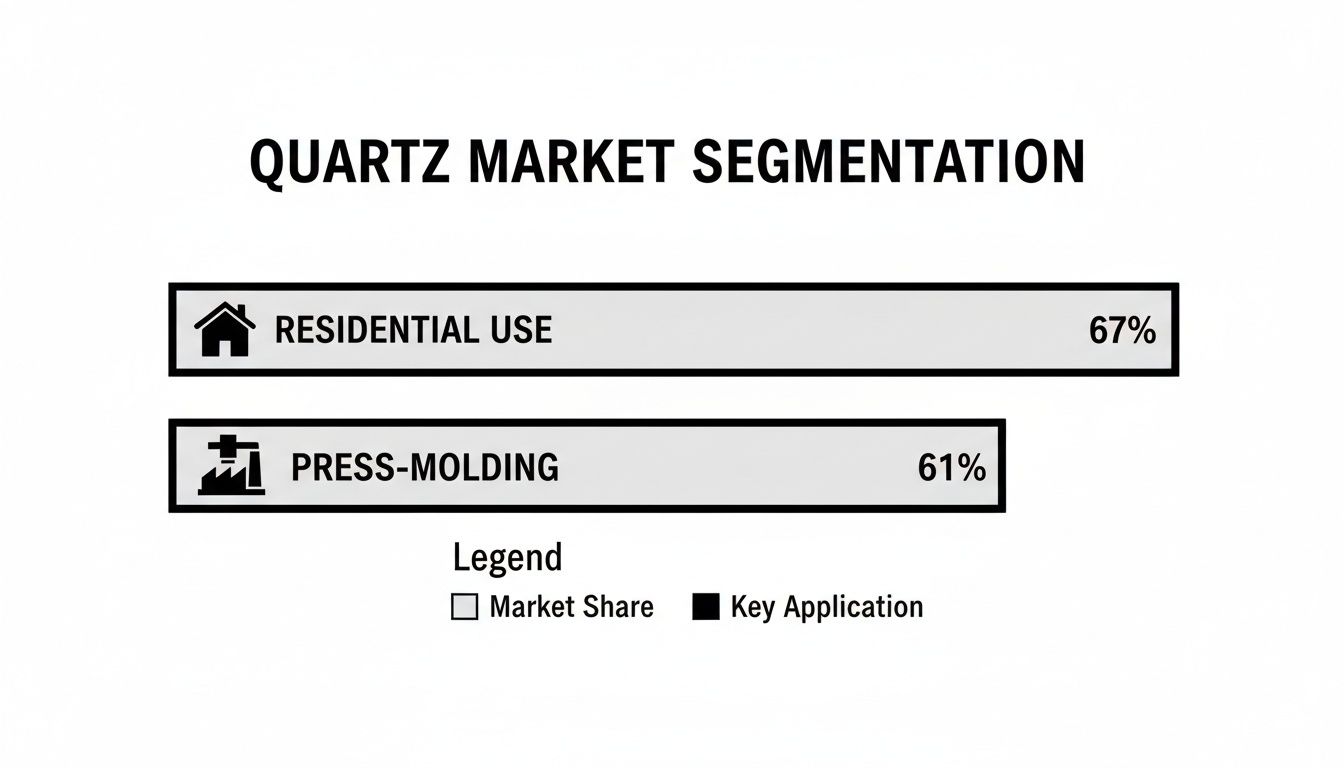
As you can see, it's home kitchen and bathroom renovations that are fuelling the quartz boom, proving just how much homeowners in our city value its blend of style and substance.
Key Factors That Influence Your Final Cost
So, let's get down to brass tacks. To build a realistic budget, you need to know what a fabricator is actually looking at when they prepare your quote. Each of these elements plays a part in the final price, and knowing about them ahead of time helps you find that sweet spot between your dream kitchen and your budget.
- Brand and Tier: Big names like Caesarstone or Silestone often come with a higher price tag, backed by a strong reputation and warranty. Even within a single brand, you'll find different price tiers. A simple, solid white quartz is going to be far more budget-friendly than a slab with complex, dramatic veining designed to look exactly like a rare piece of Calacatta marble.
- Slab Thickness: The industry standard for kitchens is a 3cm (1 1/4 inches) thick slab. It's sturdy, substantial, and looks the part. You can also find 2cm (3/4 inch) slabs, which can save you a bit of money, but we typically see those used for smaller jobs like bathroom vanities or backsplashes where they won't take as much of a beating.
- Edge Profile: How the edge of your countertop is finished makes a surprising difference to both the look and the cost. A standard "eased" edge—basically a clean, slightly softened square—is usually included in the base price. If you want something more decorative like a beveled, ogee, or full bullnose edge, expect to pay more because it requires extra craftsmanship.
- Number of Cutouts: Every hole matters. Your fabricator will charge for each cutout required for your sink (undermount sinks are more work than drop-in), cooktop, faucet, and even soap dispensers. The more cuts, the more the cost adds up.
Here's a pro tip: a lot of people forget that the "installed" price isn't just the stone. It bundles in the critical work of creating a perfect template of your cabinets, the precision fabrication, the careful transport, and the final, flawless installation. These services are what make or break the final result.
Estimated 2026 Cost of Quartz Countertops in Toronto
To give you a clearer picture for your own planning, we've put together a realistic breakdown of what you can expect to pay for quartz countertops in the Toronto area. These price ranges are "all-in," covering the material, fabrication, and professional installation.
| Quality Tier | Typical Price Range (Per Sq. Ft. Installed) | Common Characteristics |
|---|---|---|
| Budget-Friendly | $80 – $110 | Solid colours (white, grey, beige) or simple patterns with fine, uniform speckles. Great durability and function. |
| Mid-Range | $110 – $150 | Subtle veining, more colour depth, and designs mimicking natural stone like granite or softer marbles. The most popular choice. |
| Premium/Luxury | $150 – $250+ | Dramatic, book-matched veining, multi-tonal designs, and ultra-realistic marble looks (think Calacatta or Statuario). These are showstoppers. |
Knowing these cost drivers and price tiers gives you the power to plan your project strategically. To see how these countertop costs fit into the overall budget, take a look at our complete guide on kitchen renovation costs in Toronto. It will help you put all the pieces of the puzzle together.
Getting new quartz countertops is one of the most exciting parts of a kitchen remodel, but it’s easy to feel overwhelmed if you don't know what's involved. Knowing the step-by-step journey from the showroom floor to the final wipe-down will give you a clear roadmap and peace of mind.
From the moment you pick your slab to the day it's installed, you can generally expect the process to take two to four weeks in the Toronto area. This timeline can shift depending on your fabricator’s backlog and the specifics of your kitchen, but it's a solid timeframe to have in your project plan. Let's walk through exactly how it all comes together.
Stage 1: The Initial Consultation and Slab Selection
Everything starts in the showroom. This is your chance to see and touch the different brands, colours, and patterns up close—something a computer screen just can't replicate. Make sure to bring samples of your cabinet doors, flooring, and even a backsplash tile if you have one. Seeing all the elements together is the best way to feel confident in your choice.
Once you have a few favourites, you'll sit down with a consultant to get an initial estimate. They'll use your rough kitchen measurements to calculate the needed square footage and account for things like your preferred edge style and sink type. This first quote gives you a realistic budget to work with before you sign on the dotted line.
Stage 2: The Templating Appointment
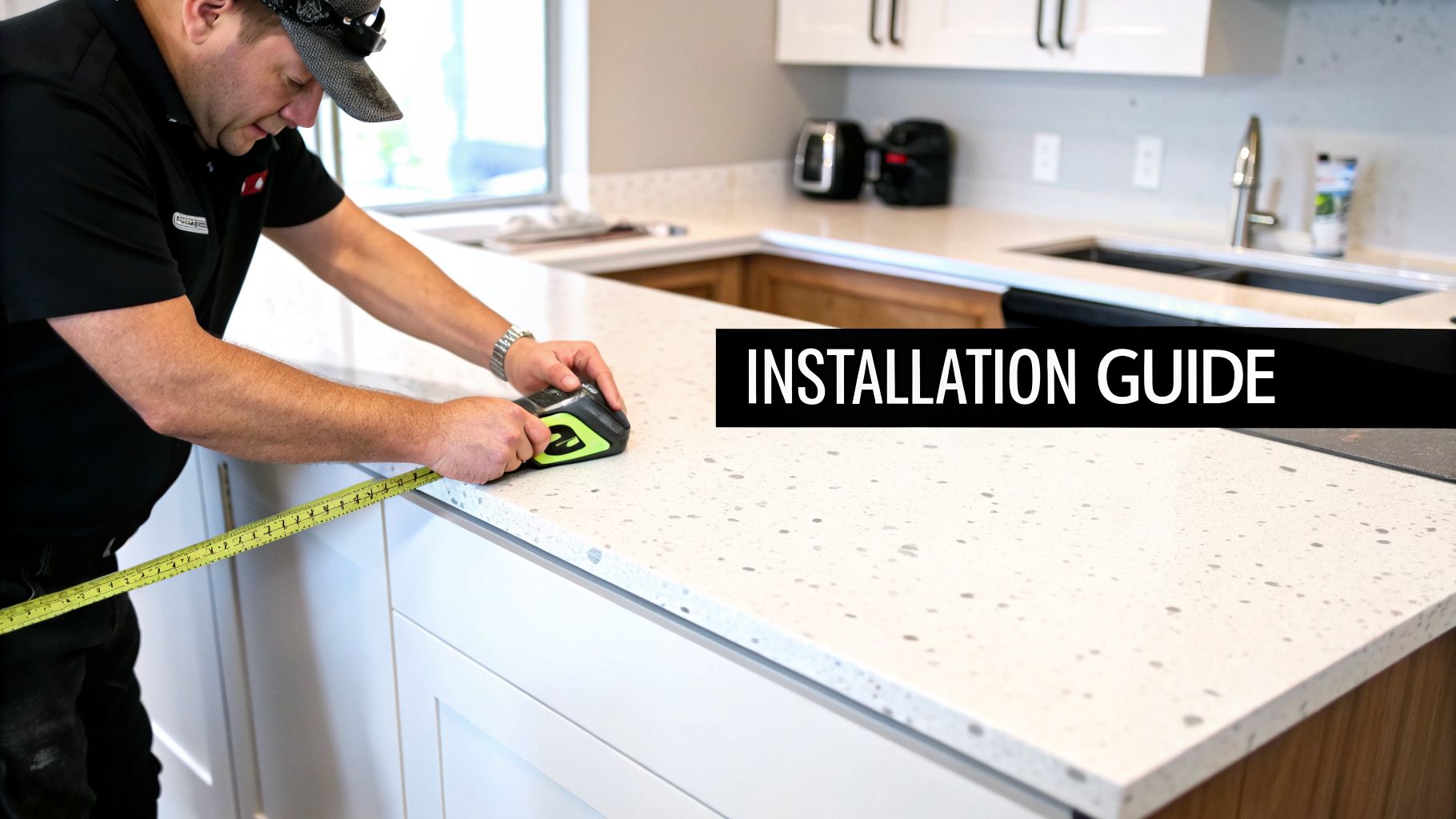
After you've approved the quote and officially selected your slab, it’s time for templating. Honestly, this is the most critical part of the whole process. A technician comes to your home to create a perfect digital pattern of your cabinets, which becomes the master blueprint for your new counters.
The templating pro uses high-tech laser measuring devices to map out every single angle and curve. This is how they guarantee your new countertop will fit snugly against walls that might not be perfectly straight and ensure seams are tight and nearly invisible.
To get ready for this visit, you'll need to have a few things sorted out:
- Cabinets Must Be Permanently Installed: All your base cabinets need to be fully installed, secured in their final position, and perfectly level.
- Sinks and Faucets On-Site: Your new sink, faucet, and cooktop must be physically present. The technician needs them to take precise measurements for the cutouts.
- Clear the Area: Your existing countertops (if any) have to be completely clear of all appliances and clutter.
Stage 3: Fabrication and Final Installation
With the digital template in hand, your project moves to the fabrication shop. This is where the real magic happens. Using the precise digital file, skilled craftspeople cut your chosen quartz slab, shape the edges, and polish everything to perfection. They’ll also handle the sink and cooktop cutouts, making sure every detail is flawless before the pieces even leave the shop.
Finally, installation day is here! A professional crew will carefully carry the finished countertop pieces into your kitchen. They'll set them in place, bond any seams with a specially colour-matched epoxy for a near-invisible join, and mount your undermount sink. They finish by drilling the faucet holes and doing a final check to ensure everything is level and secure. Remember, a great countertop fit relies on great cabinets; our guide to kitchen cabinets in Toronto dives into why that foundation is so important.
A typical installation only takes a few hours, and just like that, you have a stunning, durable new kitchen surface ready to go.
Bringing Your Kitchen Vision to Life with Quartz
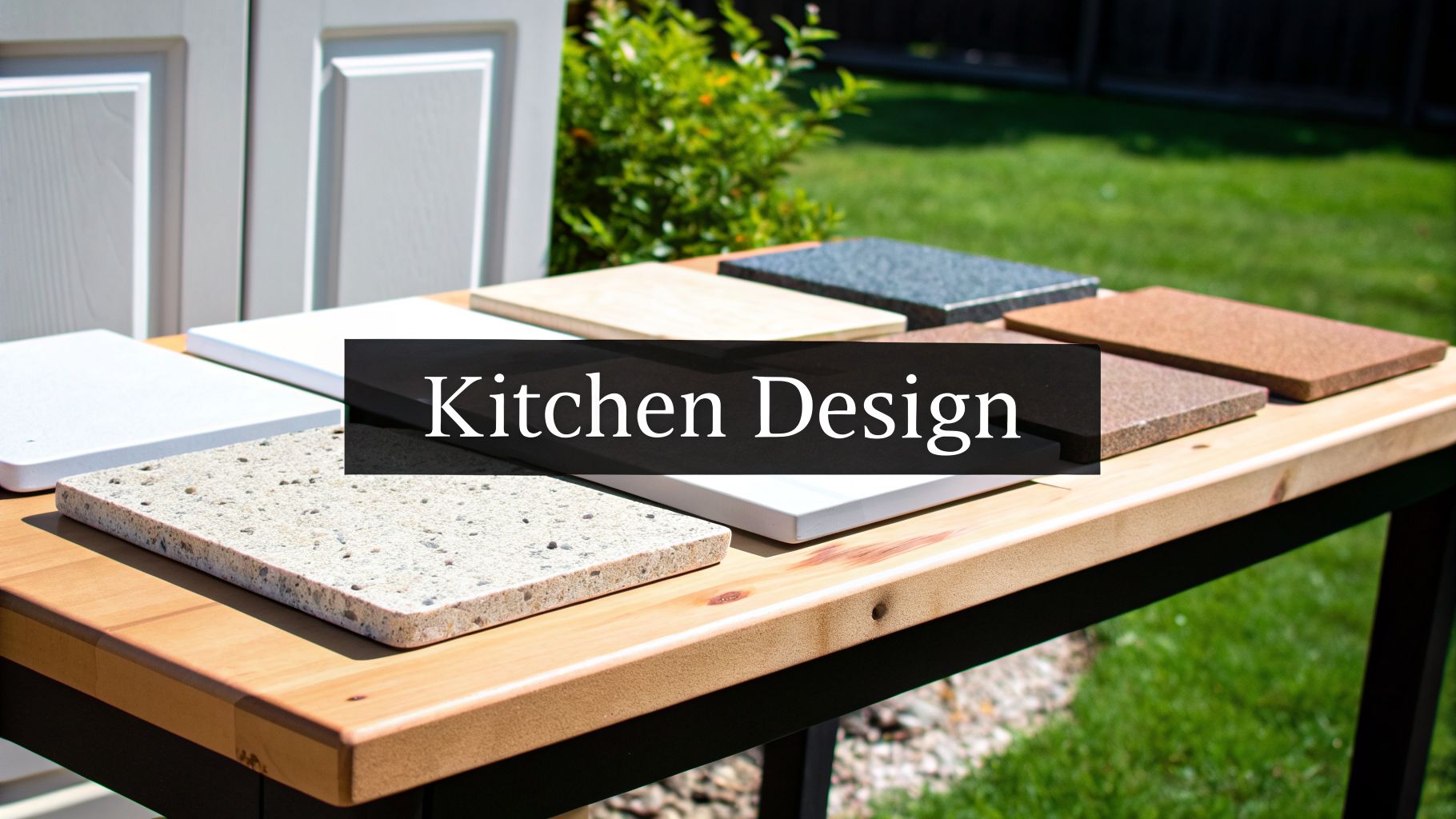
You’ve found the perfect quartz slab—congratulations! That’s a huge decision ticked off the list. But the job isn’t done just yet. The next step is where the magic really happens: pairing that beautiful countertop with your cabinets, backsplash, and hardware to create a kitchen that looks and feels professionally designed.
Your countertop isn’t just a surface; it’s the centerpiece of your kitchen’s entire aesthetic. Everything else should complement it. This is your chance to pull all the elements together and make a statement that’s uniquely you.
Pairing Quartz with Cabinet Colours and Styles
The relationship between your quartz countertops in Toronto and your cabinets sets the entire mood. This is the foundation of your kitchen’s colour palette, and it’s critical to get it right. The best designs are built on either smart contrast or seamless coordination.
For a classic, high-impact look, you can’t go wrong with high contrast. Picture pairing deep, moody cabinet colours—like a rich espresso or a sophisticated navy blue from MapleKing—with a light quartz that has bold, beautiful veining. The dramatic patterns in a Calacatta-style quartz absolutely sing against dark cabinetry, giving the room a real sense of depth and luxury.
If you’re after a completely different vibe, like a bright, modern, and airy space, a tone-on-tone approach is brilliant. Crisp white cabinets paired with a soft white or light grey quartz create a clean, expansive look that works wonders in smaller Toronto kitchens. A high-gloss cabinet finish will bounce light around the room, while a matte finish gives off a softer, more contemporary feel.
Here’s a little designer secret: let one element be the star of the show. If your quartz has dramatic veining, let it shine by choosing simpler, solid-coloured cabinets. If your quartz is more subtle, you have the freedom to get more adventurous with your cabinet colour or a statement backsplash.
It’s no surprise that quartz is everywhere right now, especially in homes. The boom in kitchen renovations across the GTA is a huge factor in its market dominance. Canada’s countertops market was valued at USD 3,851.4 million in 2024 and is on track to hit USD 7,102.5 million by 2033, with quartz leading that charge. Residential projects made up 67% of quartz demand in 2024, as homeowners pair it with custom cabinetry to create stunning, high-value kitchens.
Using Quartz Veining to Guide Your Backsplash Choice
Once your cabinets and countertops are locked in, look to the veining in your quartz for clues on what to do with your backsplash. This is how you create a design that feels connected and intentional, not just like a collection of random parts.
- Pull a Colour from the Veins: Get up close and personal with your slab. Do you see flecks of soft grey, threads of warm beige, or even a hint of gold? Choosing a backsplash tile in one of those secondary colours is a foolproof way to create a coordinated, polished look.
- Continue the Slab: For a truly seamless and luxurious statement, run the same quartz slab right up the wall. This creates a full-height backsplash that eliminates grout lines (making it a dream to clean) and serves as a breathtaking focal point.
- Create Subtle Contrast: If your quartz is on the simpler side, your backsplash is the perfect place to introduce some texture or a gentle pattern. A timeless subway tile, a chic herringbone layout, or a modern geometric design can add just enough visual interest without competing with your countertop. If you need more inspiration, our guide to tiles and backsplash ideas has plenty of options to get you started.
Of course, a beautiful kitchen also has to be a functional one. As you plan your layout, it's worth thinking about the overall workflow. To get more ideas on optimizing your space, you can explore ways to create a more efficient kitchen design. This ensures your new kitchen isn't just stunning to look at, but a genuine pleasure to cook and live in every single day.
Simple Care to Keep Your Quartz Countertops Flawless
Let’s be honest, one of the biggest draws of choosing quartz countertops in Toronto is the promise of easy upkeep. For busy households, it’s a huge relief. Unlike natural stones that can feel a bit needy with their sealing schedules, quartz is engineered for real life. But "low-maintenance" doesn’t quite mean "no-maintenance."
Don't worry, keeping your quartz looking brand new is incredibly simple. It’s all about building a few good habits and knowing what to sidestep. Before you know it, these small steps will become second nature.
Daily Cleaning and Spill Management
For your everyday wipe-down, you don't need a cabinet full of special products. A soft cloth, warm water, and a small drop of mild dish soap are your best friends. A quick wipe after you’re done cooking is usually all it takes to handle crumbs and smudges, keeping that beautiful lustre.
The single most important habit? Tackling spills right away. Quartz is incredibly non-porous and stain-resistant, but it’s not completely invincible. Highly pigmented liquids can leave their mark if they're left to linger for hours.
- Coffee & Wine: We all know these culprits. Just blot them up with a paper towel as soon as you can, then wipe the spot with a bit of soapy water.
- Oils & Grease: Get these cleaned up when you see them. It prevents a greasy, hazy film from building up over time.
- Tough Stains: If you find a dried-on blob of food, don't panic. Use a plastic putty knife to gently scrape it off the surface, then clean the area like you normally would.
Think of it this way: a 30-second wipe-down now is a whole lot easier than trying to scrub out a set-in stain next week. A little proactive care goes a very long way.
The Critical "Don'ts" of Quartz Care
Protecting your investment is less about what you do and more about what you don't do. Keeping just a few things away from your counters will prevent almost any potential for damage to the resin and finish. Your countertops will thank you.
Avoid Harsh Chemicals
The polymer resins that hold the quartz together are tough, but they can be damaged by aggressive chemicals. Never let these touch your countertops:
- Bleach or any cleaners that contain it
- Oven cleaners
- Nail polish remover (acetone)
- Drain cleaners
- Any products that are highly acidic or alkaline
If you do spill one of these by accident, rinse the spot immediately with plenty of plain water to neutralize it.
Prevent Thermal Shock and Scratches
Even though quartz is incredibly durable, it has its limits with extreme heat and sharp objects.
- Always Use Trivets: This is non-negotiable. Never put a hot pot, pan, or crockpot directly on the quartz. The sudden, intense change in temperature is called thermal shock, and it can cause a permanent crack.
- Use Cutting Boards: Yes, quartz is scratch-resistant, but it’s not scratch-proof. Chopping directly on it will absolutely ruin your knives and can eventually leave small scratches and marks.
- Avoid Abrasive Scrubbers: Ditch the steel wool and harsh scouring pads. They will scratch and dull the polished finish over time. A simple, non-abrasive sponge is all you'll ever need.
Follow these straightforward dos and don'ts, and your quartz countertops will easily handle the chaos of daily life, remaining a flawless centrepiece in your Toronto kitchen for years and years to come.
Frequently Asked Questions About Quartz Countertops
Even after covering the basics, it's natural to have a few more questions pop up. Choosing new countertops is a big deal for your home and your wallet, so let's clear up some of the common things Toronto homeowners wonder about.
Can You Put Hot Pots on Quartz?
This is a big one, and the answer is a straightforward no. While quartz is tough, it's not invincible against what's called thermal shock—a very sudden, extreme temperature change. Taking a scorching hot pan straight from the stovetop and placing it on your cool quartz surface can damage the resins or, in a worst-case scenario, even cause a crack.
The fix is simple: always use trivets or hot pads. It's a small habit that becomes second nature, and it's the single best way to protect your investment and keep your quartz countertops looking perfect for years to come.
Is Quartz Cheaper Than Granite in Toronto?
This is a classic "it depends" situation. In the Toronto market, you'll find that entry-level quartz and entry-level granite often run in a very similar price bracket, usually somewhere between $80 to $110 per square foot, installed. Where the paths really start to diverge is when you move up the design ladder.
- You can often find a mid-range granite that costs less than a mid-range quartz with intricate veining.
- On the other hand, high-end, exotic granite slabs with rare patterns can easily cost far more than even the most luxurious marble-look quartz.
The bottom line is that budgeting for quartz is often more predictable. The prices are set by the manufacturer and the complexity of the design, not by the rarity of a particular slab pulled from a mountain.
Key Takeaway: You can find both quartz and granite at similar starting points. But if you're looking for a consistent, high-end look without the wild price swings of rare natural stone, quartz often gives you more predictable value in the mid-to-high ranges.
How Do I Choose Between Honed and Polished Quartz?
The finish you select really comes down to the look you want and how it fits into your daily life.
A polished finish is the most common for a reason. It has that glossy, reflective surface that makes colours look deeper and makes the whole kitchen feel brighter. That shine isn't just for looks; it creates a super smooth, non-porous surface that’s fantastic at repelling stains and is a breeze to wipe clean.
A honed or matte finish gives you a soft, velvety look without any reflection. It’s very modern and does a great job of hiding crumbs or dust. The trade-off is that it can be a bit more prone to showing fingerprints or oily smudges. It's still incredibly low-maintenance, but you might find yourself wiping it down a bit more often to keep it looking flawless compared to a polished surface.
Ultimately, it’s an aesthetic choice. Are you after a brilliant shine that bounces light around the room, or a subtle, contemporary elegance? Both are fantastic, durable options for any busy Toronto home.
Ready to transform your kitchen with the perfect custom cabinetry to match your new quartz countertops? The design experts at MapleKing Kitchen Cabinets are here to help you create a beautiful, functional space with factory-direct savings. Explore our stunning cabinet collections and get your free quote today at https://maplekingkitchencabinets.com.