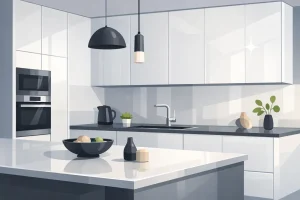

When it comes to the best paints for kitchen cabinets, you're generally looking at two top contenders: premium acrylic latex enamel or a classic alkyd (oil-based) enamel. Both give you that incredibly durable, smooth, hard finish you want in a kitchen. The real choice comes down to what you value more: the easy-to-work-with nature of acrylics or the bulletproof resilience of traditional alkyds.
A Homeowner's Guide to Choosing Cabinet Paint
Picking the right paint is easily the most important part of your cabinet refresh. It's what brings your vision to life and, more importantly, it's what protects your cabinets from the daily chaos of a busy kitchen. This guide will walk you through everything, from the basic paint types to the perfect finish for your family’s lifestyle.
We'll get into the nitty-gritty of what every Toronto homeowner needs to think about—durability, style, and making sure the paint actually sticks to your cabinet material. Consider this your friendly expert advice, cutting through the confusing terminology to help you get a stunning, professional-looking result that lasts.
Why This Decision Matters More Than Ever
Let's talk numbers for a moment. Kitchen renovations in the Greater Toronto Area have shot up by 28% since 2020, and what's leading the trend? Painted cabinets, which account for a whopping 62% of those projects. In a hot real estate market like ours, a smart cabinet upgrade can increase your home's resale value by as much as 15%. Suddenly, choosing the right paints for kitchen cabinets isn't just about aesthetics; it's a serious investment.
Choosing the right paint is less about the colour and more about the chemistry. The goal is a factory-like finish that can handle everything from greasy fingerprints to the occasional bump from a pot or pan, ensuring your investment looks pristine for years.
Once you have an idea of what you need, finding reputable paint suppliers is the next logical step to get your hands on quality products. This guide will give you the confidence to pick the perfect one for your job. And if you're curious to see just how big of a difference new cabinets can make, take a look at our work on kitchen cabinets in Toronto for some inspiration. Now, let’s dig into what makes a cabinet paint truly great.
Understanding the Core Paint Types
Picking the right paint for your kitchen cabinets is a lot like choosing the right engine for a car. It's not just about the shiny exterior—what's under the hood determines how it performs, how long it lasts, and whether it can handle the daily grind. The same goes for paint. The chemical formula, not just the brand name, is what gives you a flawless, durable finish that stands up to a busy kitchen.
So, let's look past the colour swatch and get into the real science behind what’s in the can. We’ll break down the most common options out there, each with its own pros and cons, to help you make a smart decision based on performance, not just looks.
Acrylic Latex: The User-Friendly All-Rounder
Think of acrylic latex paint as the modern, dependable sedan of the paint world. It’s water-based, which makes it incredibly easy to work with for both seasoned pros and weekend DIYers. Cleanup is a breeze—just soap and water—and its low volatile organic compound (VOC) content means fewer harsh fumes. That's a huge plus for any indoor project, especially in a family home.
Modern acrylics have seriously upped their game. Premium formulas, often sold as "enamels," are beefed up with urethane or other additives that help them cure into a hard, non-porous shell. This gives them impressive durability that can easily compete with some of the older, more traditional paints. They’re also flexible, which helps them resist the cracking that can happen with the temperature and humidity swings we see in Toronto kitchens.
One of its best features? It doesn't yellow. Unlike some oil-based paints that can develop a yellowish cast over time, a crisp white acrylic paint will stay true to its colour for years.
Alkyd and Oil-Based: The Classic Heavyweight
If acrylic is the reliable sedan, alkyd paint is the classic, old-school muscle car. This oil-based formula is famous for creating an exceptionally hard, almost glass-like finish that’s tough to beat. For decades, it was the undisputed champ for high-traffic surfaces like cabinets and trim because it sticks to anything and is legendarily durable. It also levels out beautifully as it dries, making brush strokes seem to melt away for a perfectly smooth surface.
But all that performance comes with a few trade-offs. Alkyd paints take a lot longer to dry and cure. Your cabinets could feel tacky for days, so you’ll need patience and a clean, dust-free space to let them set properly. They also have a strong smell and higher VOCs, meaning you'll need fantastic ventilation while you work.
The real draw of alkyd paint is its unmatched hardness once it’s fully cured. A properly applied alkyd finish can take hits from pots, pans, and daily abuse better than almost any other paint you can buy off the shelf, making it a top choice for kitchens that see a lot of action.
On top of that, cleaning up oil-based paint requires mineral spirits or turpentine, which adds another step to the project. While newer "waterborne alkyds" or "hybrid enamels" try to offer the best of both worlds—the toughness of oil with the easy cleanup of water—traditional alkyds are still the go-to for purists who want maximum resilience.
Professional-Grade Coatings for Ultimate Durability
Ever wonder how high-end cabinetry gets that flawless, rock-solid finish? You're likely looking at a specialized coating that's a step above anything you'll find at the local hardware store. These are the supercars of the paint world, engineered for extreme performance.
-
Conversion Varnish: This is a two-part, catalyzed product that cures through a chemical reaction. The result is one of the hardest, most chemically resistant finishes you can get. It stands up incredibly well to moisture, heat, and stains, but it’s not for DIYers. It demands professional spray equipment and strict safety measures because of its potent chemicals.
-
Polyurethane: While often used as a clear topcoat, polyurethane can also be pigmented. It creates a tough, plastic-like film that shields the surface from scratches, moisture, and UV light. It’s definitely more durable than a standard acrylic but takes a skilled hand to apply smoothly without ending up with bubbles or drips.
These professional-grade options are almost always sprayed on in a controlled factory setting. For homeowners who want the absolute best in durability, ordering factory-finished doors from a supplier like MapleKing is the way to go. It ensures these advanced coatings are applied perfectly for a finish that’s built to last for decades.
Choosing the Right Sheen: From Subtle to Striking
Once you've landed on the right type of paint for your kitchen cabinets, the next step is all about personality. This is where the paint's sheen, or finish, comes in. Think of it like choosing between a crisp cotton shirt and a sleek silk one—both are white, but they look, feel, and wear in completely different ways. The sheen you pick will define how your cabinets play with light and how they hold up to the chaos of daily life.
The level of sheen boils down to one thing: how much light the paint reflects. More reflection equals a higher gloss and, generally, a tougher surface. A lower sheen, on the other hand, absorbs light, giving you a softer, more muted look. The trick is to find that sweet spot between the style you want and the practicality you need.
Matte Finish: The Understated, Sophisticated Look
A matte finish has almost no gloss, offering a flat, non-reflective surface that feels very contemporary. This creates a deep, velvety colour saturation that’s become a huge trend in modern and minimalist kitchens across Toronto and Markham. Its biggest plus? It’s fantastic at hiding minor flaws like small dings or slight texture on the cabinet surface.
But that sophisticated look comes with a catch. Because the surface is more porous, matte paint is the trickiest to keep clean. It's more likely to scuff or hold onto stains from splattered sauce or greasy fingers, making it a bit risky for a busy family kitchen. It really shines in lower-traffic areas or in homes where careful maintenance is part of the routine.
Satin Finish: The Go-To for Good Reason
Satin is, without a doubt, the most popular sheen for kitchen cabinets, and it's easy to see why. It hits that perfect middle ground, offering a soft, subtle glow that’s not too shiny and not too flat. If you can picture the gentle lustre of an eggshell, you’ve got the essence of a satin finish.
It's a huge step up from matte in terms of durability and is much easier to clean. A quick wipe with a damp cloth is usually all it takes to deal with fingerprints and daily grime, which is a lifesaver in an active home. Its gentle sheen also reflects a bit of light, which can help brighten up the kitchen without creating an annoying glare. That all-around versatility makes satin a safe bet for almost any style, from classic to contemporary.
A satin finish is the reliable workhorse. It offers enough durability for a real-world family kitchen while still delivering that sophisticated, low-sheen look that feels modern and welcoming.
Semi-Gloss: The Durable Powerhouse
When durability is at the top of your list, semi-gloss is your champion. This finish has a noticeable shine that bounces a good amount of light around the room, making your kitchen feel brighter and more open. Its slick, hard-wearing surface is incredibly resistant to moisture, grease, and stains.
That built-in toughness makes semi-gloss a dream to clean. Messes tend to wipe away with zero fuss, a massive advantage in a space dedicated to cooking. The trade-off, however, is that its reflective nature puts every single imperfection on display. Any drips, bumps, or dings on your cabinet doors will be amplified, so your prep work needs to be absolutely perfect. It's a fantastic choice for traditional kitchens or any space that demands maximum durability and a crisp, bright aesthetic.
High-Gloss: The Bold, Modern Statement
For a dramatic, ultra-sleek look that commands attention, nothing comes close to a high-gloss finish. It creates an almost mirror-like surface that reflects a huge amount of light. This makes it a brilliant tool for making small or dark kitchens feel significantly larger and more luminous.
Much like semi-gloss, a high-gloss finish is exceptionally durable and incredibly easy to wipe down. But be warned: it’s the least forgiving sheen of them all. Every fingerprint, every speck of dust, and every tiny surface flaw will be immediately obvious. Getting that flawless, factory-perfect high-gloss finish is a real challenge and is usually a job best left to professionals with spray equipment. It’s the ultimate pick for high-end, contemporary designs where making a statement is the primary goal.
Paint Finish Comparison for Kitchen Cabinets
To make the decision a little easier, here's a quick rundown of how the different sheens stack up against each other when it comes to the demands of a kitchen environment.
| Finish | Durability Level | Ease of Cleaning | Best For |
|---|---|---|---|
| Matte | Low | Difficult | Low-traffic kitchens, accent cabinets, or for a sophisticated, modern aesthetic. |
| Satin | Medium | Easy | Most kitchens; offers a great balance of a stylish, low-sheen look with good durability. |
| Semi-Gloss | High | Very Easy | High-traffic family kitchens, traditional styles, and anyone prioritizing easy maintenance. |
| High-Gloss | Very High | Easiest | Small or dark kitchens, ultra-modern designs, and creating a bold, reflective statement. |
Ultimately, choosing a sheen is about balancing the look you love with the life you live. A satin finish is often the safest and most popular choice, but a semi-gloss might be better if you have a busy household, while a matte finish can provide that perfect touch in a less-used space.
Matching Paint to Your Cabinet Material
Picking the perfect paint colour is the fun part, but it's only half the story. The best paint in the world will fail spectacularly if it doesn't get along with the surface of your cabinets. Think of it like trying to write on glass with a pencil—without the right grip, the message just won’t stick. Your cabinet door material dictates everything that follows, from the prep work to the type of paint that will actually create a lasting bond.
This is where the rubber meets the road. Modern kitchens, especially those with high-quality materials from specialists like MapleKing, aren’t just made of one thing. They feature a whole range of surfaces, each with its own personality. From the classic feel of real wood to the sleek, modern vibe of high-gloss HDF, understanding what you’re working with is the key to a renovation that looks professional and holds up to daily life.
Real Wood and Painted HDF Doors
When it comes to painting, solid wood and high-density fibreboard (HDF) doors are the old guard. They are the most receptive surfaces to a new coat of paint. HDF, in particular, is a fantastic, stable alternative to solid wood. It’s prized for its perfectly smooth surface and its resistance to warping or cracking, even with the humidity swings we get here in Toronto. It’s the ideal canvas for a flawless, uniform colour.
For both of these materials, the game plan is pretty straightforward:
- Clean Like You Mean It: Get rid of all the grease and grime. Kitchens build up an invisible film of cooking oils that paint absolutely hates. A good degreaser is your best friend here.
- Give It a Scuff: Lightly sand the entire surface with fine-grit sandpaper—something in the 120 to 220-grit range is perfect. You’re not trying to strip the old finish off, just roughing it up a bit to give the primer something to grab onto.
- Prime Smart: Don't skip the primer! If you’re working with real wood like oak or cherry, a stain-blocking primer is non-negotiable. It stops the natural oils (tannins) in the wood from bleeding through and creating ugly yellow or pink splotches on your beautiful new paint job.
High-Gloss and Matte HDF Finishes
Now, factory-finished surfaces like high-gloss and matte HDF are a different beast altogether. These were engineered for maximum durability, which means they often have a slick, non-porous top layer. You can paint over them, but it demands meticulous prep work to prevent the new paint from peeling right off.
The secret weapon for these surfaces is an adhesion-promoting primer. These primers are chemically designed to bond to tricky, glossy materials where a normal primer would just sit on top and flake off. You absolutely must scuff-sand the surface first to break that glossy seal, then follow up with the bonding primer before you even think about your topcoat. This step is critical.
Think of a high-quality bonding primer as industrial-strength double-sided tape. It chemically latches onto the slick cabinet and creates a brand-new surface that your topcoat can finally stick to for good.
This decision tree can help you figure out the right sheen for your newly prepped cabinets, whether you’re aiming for a modern, family-friendly, or sleek look.
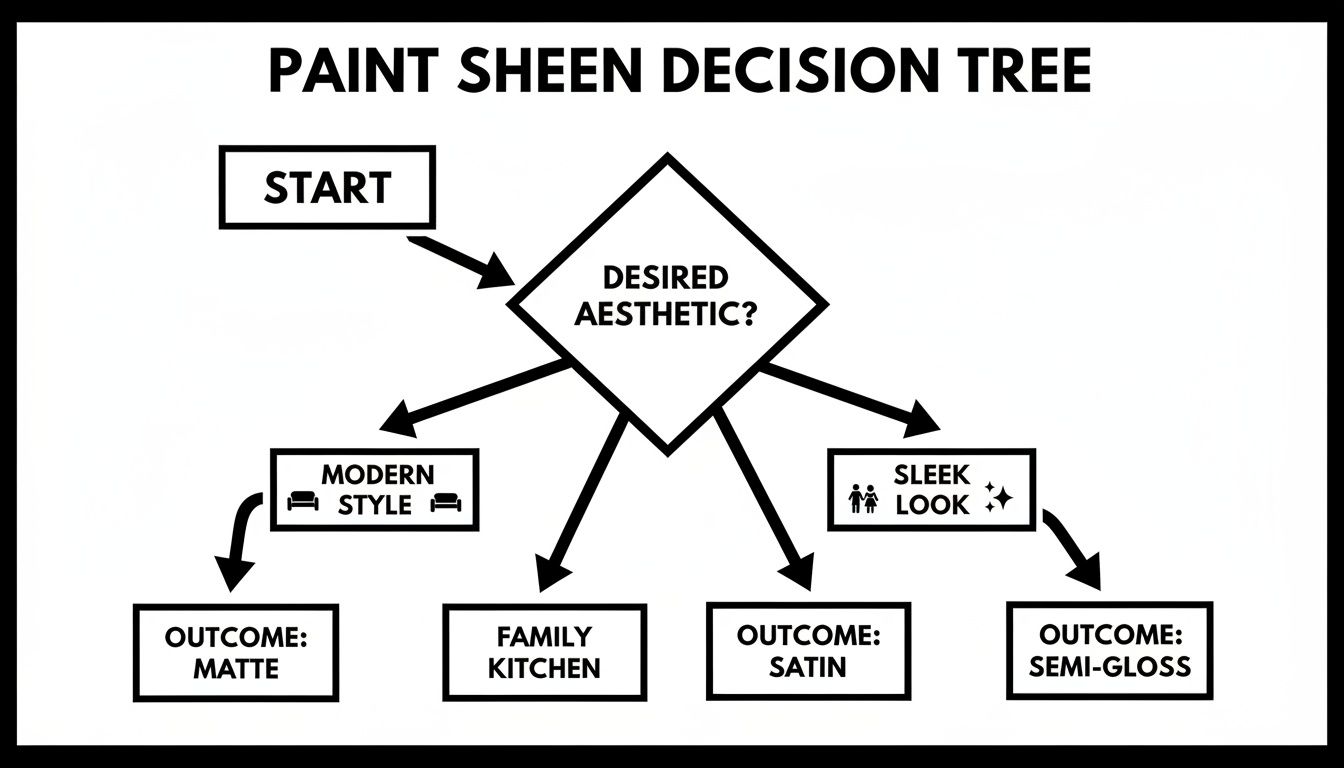
This visual breaks down the choice by connecting common kitchen styles directly to the most suitable paint finish, making sure your kitchen doesn't just look good, but works for your lifestyle too.
Laminate and Thermofoil Cabinets
Laminate and thermofoil are, for all intents and purposes, a thin layer of plastic veneer heat-sealed over a core of MDF or particleboard. They are notoriously difficult to paint because their surfaces are incredibly smooth and non-porous. So, can you do it? Yes. But just like with high-gloss HDF, your success lives or dies by the prep work.
Getting paint to stick here involves three non-negotiable steps:
- A Deep Clean: Even the slightest trace of dirt, grease, or old cleaning spray will stop the paint from adhering.
- An Aggressive Scuff: You’ll need to sand the surface thoroughly to kill every bit of shine and create a texture for the primer to grip.
- A Bonding Primer: This is not optional. A shellac-based or specialty adhesion primer is the only thing that will reliably stick to these slick surfaces.
Frankly, because the preparation is so intense, many homeowners find it’s a more dependable and often more cost-effective long-term solution to simply replace old laminate or thermofoil doors. If you're curious about how a full replacement can completely change your space, you might want to read our guide on transforming your kitchen with custom cabinets in Toronto.
Local trends in the GTA back this up. In Markham, data from the Home Builders' Association shows that a whopping 55% of new townhouse builds in 2025 opted for high-gloss HDF finishes due to their durability and sleek look. At the same time, painted real wood doors saw a 35% uptake in 2024 among custom builders, proving that classic quality never goes out of style.
Exploring Cabinet Colour Trends and Eco-Friendly Paints
Colour is the heart and soul of a kitchen. It’s what sets the mood for your morning coffee and frames the memories you make during family dinners. As you think about the best paints for your kitchen cabinets, remember that the colour you land on is what truly brings your entire vision to life.
These days, the trends in Toronto and Markham are all about creating a space that feels personal and current. While crisp whites and elegant greys will always have their place—they’re fantastic for making a room feel bright and spacious—we're seeing a real surge in confidence. Homeowners are getting braver, choosing atmospheric shades that turn cabinets from a simple backdrop into the star of the show.
Top Colour Palettes Shaping Toronto Kitchens
The shift toward personality-driven design means kitchens are finally embracing deeper, more expressive colours. More and more, we're drawn to shades that evoke a sense of calm, a touch of luxury, or a connection to the natural world.
Three key trends really stand out right now:
- Deep Navy and Midnight Blues: These shades bring an instant feeling of classic elegance and depth. They work beautifully with warm brass hardware for a luxe vibe or with modern chrome for a sharp, contemporary contrast.
- Earthy Greens: From soft, muted sage to rich forest green, these colours bring the outdoors in. They create a grounding atmosphere that feels both organic and incredibly sophisticated.
- Warm Greys and "Greige": Stepping away from cooler tones, these complex neutrals blend grey and beige to achieve a soft, inviting look. They offer far more warmth than a standard grey but won't overpower the space.
We’ve seen the influence of West Coast design make a huge splash locally. California's style has literally painted Ontario cabinets green, with forest green paints showing up in a remarkable 41% of Toronto-area installations in 2025. These low-VOC water-borne lacquers have also cut down on off-gassing by 72%, a perfect match for Markham's airtight new builds where indoor air quality is a top priority. For a deeper dive, check out these influential kitchen paint colour trends of 2026.
Breathing Easier with Eco-Friendly Paints
Beyond just the colour, there’s a critical conversation happening about what our paint is actually made of. The demand for healthier home environments has pushed eco-friendly paints from a niche product into the mainstream. This is especially vital for the kitchen—the very heart of your home.
The key term you’ll hear is VOCs, or Volatile Organic Compounds. These are chemicals that are released into the air as paint dries, causing that distinct "new paint smell" and potentially affecting your indoor air quality.
Choosing a low- or zero-VOC paint is one of the most effective ways to ensure your beautiful new kitchen is also a healthier space for your family. It’s a decision that prioritizes well-being without sacrificing a flawless, durable finish.
Paints labelled "low-VOC" or "zero-VOC" are specifically formulated to minimize these emissions, making them a responsible choice for your family’s health and the environment. The best part? Modern technology means you no longer have to compromise on quality. Today’s top-tier acrylic and hybrid enamel paints for kitchen cabinets offer incredible durability with a minimal environmental footprint.
You can see stunning examples of modern, eco-conscious designs in our gallery of completed projects. It’s proof that you can achieve a beautiful, lasting result that you can feel truly good about.
Your Cabinet Painting Questions, Answered
Even with the best plan in hand, questions always come up when you're choosing the right paint for your kitchen cabinets. This is where we tackle the common concerns we hear from homeowners across Toronto—from what to budget to how long that beautiful finish will actually last. Think of this as a straight-to-the-point chat with a seasoned pro.
We’ve pulled together the most frequent questions we get, cutting through the jargon to give you practical answers that will help you move forward with confidence.
How Much Should I Expect to Pay for Professional Cabinet Painting in Toronto?
For a professional job in the GTA, you're typically looking at an investment between $3,000 and $7,000. Of course, that number can shift depending on the size of your kitchen, the current state of your cabinets, and just how much prep work is needed to get things right.
A proper professional quote isn't just for a coat of paint. It’s for a complete, factory-quality refinishing process. This usually includes:
- Taking off all doors, drawers, and hardware.
- A deep clean and degrease of every single surface.
- Meticulous sanding, priming, and spraying multiple coats of a high-performance paint.
- Careful reinstallation and hardware re-attachment.
Sure, a DIY job saves you money on labour, but the professional price tag buys you expertise, specialized equipment, and a guarantee of that smooth, durable finish that's nearly impossible to get with a roller and brush.
How Long Does Cabinet Paint Really Last?
Honestly, it all comes down to three things: the quality of the prep work, the type of paint used, and how much daily abuse your kitchen takes.
When a professional uses a top-tier product like a catalyzed conversion varnish or a premium alkyd enamel, you can absolutely expect that finish to look great for 10 to 15 years, provided you take care of it.
On the flip side, a weekend DIY project using standard latex paint from a big-box store might start showing its age pretty quickly. Think chipping around the handles and worn-down edges within just 3 to 5 years. Here in Ontario, our fluctuating humidity also plays a big role, making a moisture-resistant paint a smart move for long-term peace of mind.
Can I Just Paint Over My Laminate or Thermofoil Cabinets?
The short answer is yes, you can. But—and this is a big but—it’s a job that demands absolute precision with zero shortcuts. Those slick, non-porous surfaces are notoriously tricky for paint to grab onto, which makes the prep phase the most critical part of the entire project.
For it to work, the process has to be perfect. The surface needs a rigorous cleaning and degreasing, followed by a thorough scuff-sanding to give the primer something to grip. The make-or-break step is using a high-adhesion bonding primer specifically made for glossy, stubborn surfaces.
Without a proper bonding primer, the paint is just sitting on top with nothing to hold onto. It will peel or chip, often within a few months. For a guaranteed seamless and durable finish, replacing old doors with new, factory-finished ones is often the more reliable and stress-free solution in the long run.
What's the Best Way to Clean Painted Kitchen Cabinets?
Gentle and consistent is the name of the game. For everyday cleaning, a soft microfibre cloth dampened with warm water and just a drop of mild dish soap is perfect. Stay away from abrasive sponges or harsh chemical cleaners with bleach or ammonia—they’ll dull the sheen and can break down the finish over time.
For stubborn grease spots, a simple 50/50 mix of white vinegar and water works wonders. After you clean, always wipe the cabinets dry with a separate clean cloth to prevent water spots. As a general rule, shinier finishes like semi-gloss and high-gloss are naturally more stain-resistant and easier to wipe down than their matte counterparts.
These choices are also being shaped by what's happening in the design world. For instance, designers are pairing high-gloss green islands with matte upper cabinets in 68% of their custom projects, which has been shown to boost light reflection in smaller townhouses by 25%. The durability stats are equally compelling: Markham factory data shows these modern paints hold up for 15 years against Ontario's humidity, compared to just 8 years for traditional stains. With commercial kitchen upgrades growing at a 7.65% CAGR and influencing home trends—like antimicrobial paints—a whopping 92% of homeowners report being highly satisfied with their new finishes. You can explore more about these emerging kitchen paint colour trends on Veranda.com.
Ready to transform your kitchen with a flawless, factory-perfect finish? At MapleKing Kitchen Cabinets, we specialize in providing stunning, durable, and customized cabinetry solutions for homeowners across Toronto and Markham. Explore our collection of premium finishes and get your free quote today at https://maplekingkitchencabinets.com.