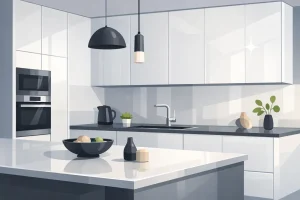

When you decide to paint your kitchen cabinets in Toronto, you're looking at one of the most transformative and budget-friendly upgrades possible. For a typical kitchen, this project usually lands somewhere between $3,000 and $7,000—a smart investment that gives you a massive return in style without the sticker shock of a full remodel.
Is Painting Your Kitchen Cabinets the Right Choice?
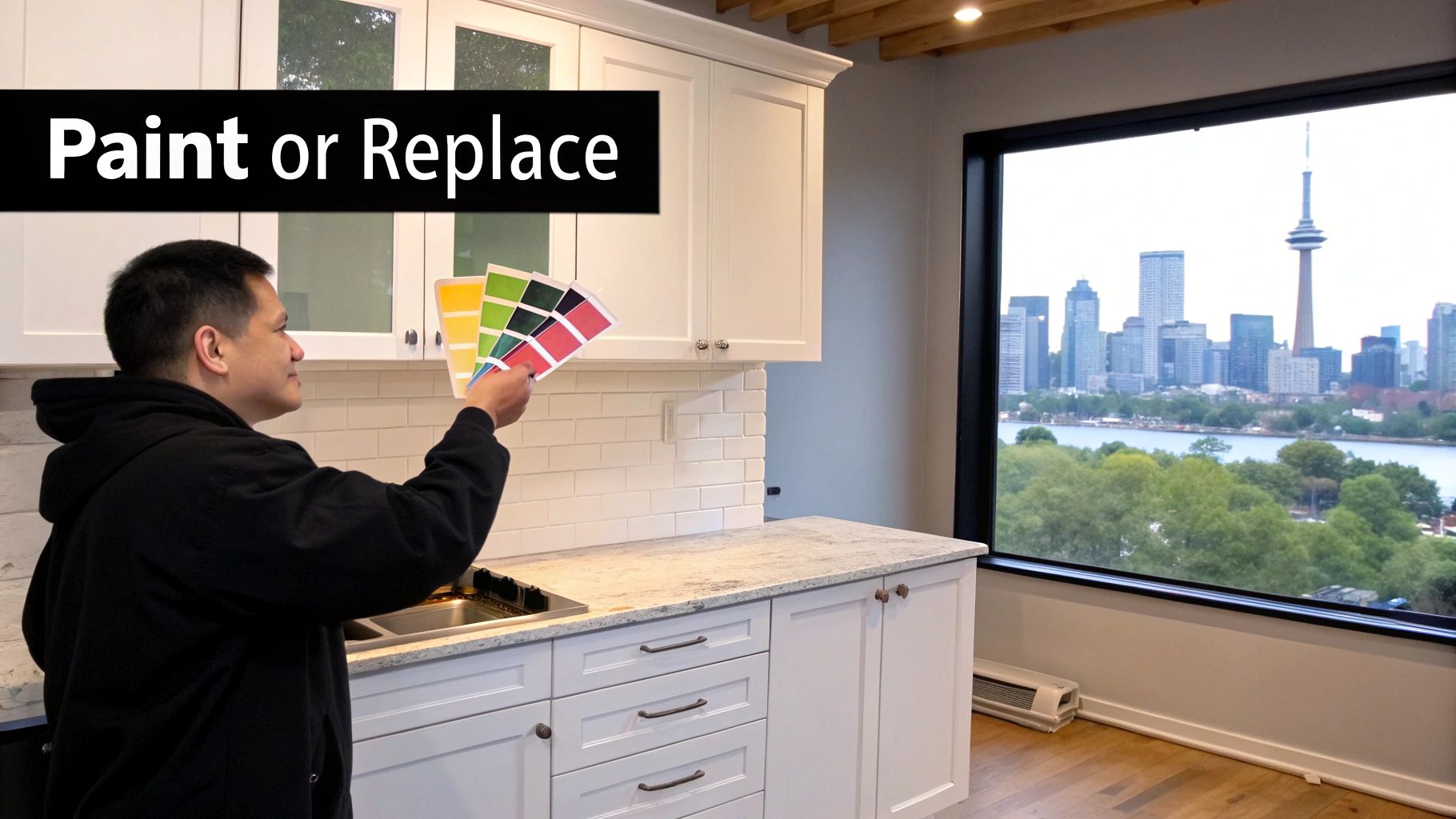
If you're a Toronto homeowner tired of looking at your dated or worn-out kitchen, the "paint versus replace" dilemma can feel like a huge decision. A full-blown kitchen renovation is a major project, draining both your bank account and your patience. This is where a professional paint job really shines, offering a brilliant way to breathe new life into the heart of your home.
Try to see your current cabinets not as a problem, but as a solid foundation. If your kitchen layout still works for you and the cabinet boxes are in good shape, a fresh coat of paint isn't just a touch-up; it's a complete transformation. It's the secret to taking your kitchen from dark and drab to bright and modern, and it happens in days, not the months a full gut-job would take.
Painting vs. Replacing Cabinets: A Quick Comparison
To make the decision a bit clearer, let's break down the main differences. This table gives you a snapshot of what to expect with each path.
| Factor | Painting Cabinets | Replacing Cabinets |
|---|---|---|
| Cost | Significantly lower (often 70-80% less) | High upfront investment |
| Timeline | 3-7 days on average | 4-8+ weeks (design, ordering, installation) |
| Disruption | Minimal; kitchen remains usable | Major; kitchen is a construction zone |
| Customization | Unlimited colour and finish options | Limited by manufacturer's catalogue |
| Sustainability | Eco-friendly; keeps waste from landfills | Creates significant construction waste |
| Best For | Sound cabinets, functional layout, budget-conscious updates | Outdated layout, damaged cabinets, major remodels |
Ultimately, painting is about getting that high-end, custom look without the high-end price tag or the headache. It’s a smarter, more sustainable choice that boosts your home’s value.
What This Guide Covers
This guide is your roadmap to making a smart decision. We'll walk you through all the crucial details you need to know:
- DIY vs. Professional Services: We’ll weigh the pros and cons, helping you see why a pro finish is often worth the investment for durability and appearance.
- Realistic Toronto Costs: Get a clear picture of what you should expect to pay and what a comprehensive quote from a painter should always include.
- Material Suitability: Not every cabinet is a good candidate for paint. We’ll cover which materials, like solid wood and HDF, give the best results.
- Choosing Finishes: From a sophisticated matte to a durable high-gloss, we’ll help you pick a sheen that fits your lifestyle and design vision.
By the time you're done reading, you'll have the confidence and knowledge to decide if painting your cabinets is the right move for your Toronto home. It’s all about making an upgrade that’s both beautiful and practical.
Understanding the Cost to Paint Kitchen Cabinets in Toronto

Let's cut right to the chase: what will it actually cost to paint your kitchen cabinets in Toronto? Getting a handle on the numbers is the first real step in planning your kitchen's new look and seeing just how much value this project can deliver.
Unlike a flooring or countertop job where square footage is king, cabinet painting is priced differently. Professional painters in the GTA almost always quote based on the number of individual pieces they need to refinish—every single cabinet door, drawer front, and removable panel gets counted. This method gives you a much more accurate estimate because it directly ties to the hours of meticulous labour needed for a flawless, long-lasting finish.
Think about it: a small condo kitchen with 15 doors and drawers is a completely different job than a sprawling family kitchen with 40, even if the rooms are the same size.
Breaking Down the Numbers in Toronto
So, what should you realistically budget for a professional paint job? In the Toronto market, cabinet painting has become one of the smartest, most cost-effective ways to renovate. For a small to medium-sized kitchen, you can typically expect professional services to land somewhere between $2,500 and $3,800.
When you stack that up against the cost of a full cabinet replacement, the savings are staggering. Homeowners often save anywhere from $5,000 to a whopping $40,000 by refinishing what they already have instead of tearing it all out.
Here’s a general guide to help you picture the costs:
- Small Kitchens (Condos): For a space with around 15-25 doors and drawers, you’re likely looking at a range of $2,500 – $4,500.
- Medium Kitchens (Townhouses, Semis): With 25-40 pieces, the cost typically falls between $4,500 – $6,500.
- Large Kitchens (Detached Homes): For kitchens with over 40 doors/drawers, maybe a large island, prices can start at $6,500 and go up to $9,000+.
These numbers are a realistic reflection of the Toronto and Markham market, where true craftsmanship and high-quality materials are worth the investment.
What’s Included in a Professional Quote?
A good quote is more than just a final number; it's a transparent roadmap of the entire project. You need to know exactly what you’re paying for so there are no surprises later on.
A comprehensive quote from a reputable pro should always include:
- Labour: All the hours for their team to carefully remove, transport, prep, paint, and reinstall everything.
- Materials: This means top-tier primers and industrial-grade paints (like durable acrylic-alkyd hybrids), plus all the supplies—sandpaper, masking materials, degreasers, and more.
- Preparation Work: This is the non-negotiable, most critical part of the job. It covers degreasing every surface, sanding, and filling any nicks or dings to create a perfect canvas.
- Off-Site Spraying: The cost of taking your doors and drawers to a professional, ventilated spray booth. This is how they achieve that smooth, factory-like finish you can't get with a brush.
- On-Site Work: The meticulous process of prepping and painting the fixed cabinet boxes and frames right inside your home.
- Reinstallation & Cleanup: The final, careful reassembly of your kitchen, leaving your space clean and ready to use.
A word of caution: a surprisingly low quote often means corners are being cut, and it's almost always in the prep stage. This will inevitably lead to a finish that peels, chips, or just doesn't last.
The value here is undeniable. Choosing to paint is a smart financial move that delivers a massive aesthetic return. Instead of draining your savings on a full replacement, you can reinvest a fraction of that and get a stunning, modern kitchen—especially if your current cabinets are structurally sound.
If you're still weighing your options, getting a sense of the price for new kitchen cabinets in Toronto can give you a helpful point of comparison. At the end of the day, investing in a professional paint job isn't just an expense; it's a direct way to add tangible value to your home.
DIY vs. Professional: Who Should Paint Your Cabinets?
So, you’ve decided that painting your cabinets is the way to go. Great! Now you’re at a crossroads: do you tackle this yourself, or do you call in the pros? This isn't just about saving a bit of cash; it’s about the quality, durability, and your own sanity when the dust settles.
Think of it like this: anyone can follow a recipe and bake a decent cake. But a professional pastry chef can create a flawless, multi-tiered wedding cake. Both are cakes, sure, but the skill, equipment, and final result are in completely different leagues. When you paint kitchen cabinets in Toronto, the same logic applies. The path you choose makes all the difference.
The Do-It-Yourself Approach
The idea of a DIY cabinet painting project is definitely appealing. You save on labour costs, and there's a real sense of pride in doing it yourself. But what you see on a 30-minute home renovation show doesn't quite capture the reality of getting a truly professional-looking finish.
A successful DIY job isn’t a weekend project; it’s more like a multi-weekend marathon. It demands a meticulous, step-by-step process where cutting corners will show up in the final product.
What to Really Consider Before You Start:
- The Time Sink: This is the biggest one. You're not just slapping on a coat of paint. You have to remove every door, drawer, and piece of hardware. Then comes the cleaning, degreasing, sanding, priming, and multiple coats of paint—with proper drying time in between. Rushing any of it guarantees a poor finish.
- The Right Gear: A brush and a can of paint won't cut it. For that smooth, factory-like look, you’ll want specialized tools like a high-volume, low-pressure (HVLP) sprayer, high-adhesion primers, and top-quality, self-levelling cabinet paint.
- The Steep Learning Curve: There's a real art to this. Common DIY mistakes include leaving brush strokes, dealing with drips, getting uneven coverage, and ending up with a "tacky" feel that never seems to fully cure. The most heartbreaking issue? Premature peeling and chipping because the prep work wasn't absolutely perfect.
The Professional Painting Advantage
Hiring a professional service to paint your kitchen cabinets in Toronto is an investment—an investment in quality, speed, and your peace of mind. These teams bring years of experience and specialized equipment that the average homeowner just doesn't have access to. They’ve perfected their process over hundreds of kitchens, so they know how to deliver a consistent, durable, factory-grade result every time.
Their secret weapon is a combination of a controlled environment and industrial-grade tools. Most pros will take your cabinet doors and drawer fronts off-site to a dedicated spray booth. This allows them to apply several thin, even coats of high-performance lacquer or acrylic-alkyd paint. The result is a rock-hard, perfectly smooth finish that’s built to withstand the daily grind of a busy kitchen.
The real difference between a DIY job and a professional one often shows up within the first year. A professionally sprayed finish is designed to last 8-15 years. A typical brush-and-roller DIY job might start showing wear, chipping, or peeling in as little as 1-2 years.
In Toronto, professional kitchen cabinet painting has proven to be a much smarter investment than going it alone, even with the higher initial cost. While a DIY attempt might only set you back $500 to $1,200 in materials, a professional job in the GTA typically starts around $2,500 to $3,500 for an average-sized kitchen. That price difference buys you expertise, warranties, and a flawless finish that’s nearly impossible to replicate on your own. You can get more details on local GTA cost breakdowns from trusted sources.
Ultimately, the choice comes down to what you value most. If you're a skilled and patient hobbyist with plenty of time on your hands, a DIY project can be incredibly rewarding. But for most Toronto homeowners who want a stunning, long-lasting kitchen transformation that adds real value to their home, calling in the pros is the most reliable way to get it done right.
How to Choose the Perfect Cabinet Paint and Finish
Picking the right paint and finish for your kitchen cabinets is a lot like choosing the perfect coat of wax for a classic car—it’s all about the final look, the feel, and how well it stands up to daily life. Get this part right, and your kitchen will look fantastic for years to come. But it's about more than just a colour chip; it's about matching the right products to your cabinet material and your family's lifestyle.
The Best Paint for the Job
The foundation of any great cabinet paint job is, well, the paint itself. Years ago, oil-based paints were the go-to, but we've come a long way since then. Today, any pro specializing in painting kitchen cabinets in Toronto will almost exclusively use acrylic-alkyd hybrid paints.
Think of these as the best of both worlds. They give you that smooth, rock-hard finish you’d expect from an old-school oil paint, but with the low odour and easy cleanup of a modern water-based acrylic. You end up with a tough surface that can handle the daily barrage of bumps, scuffs, and spills—all without the harsh fumes that used to send families packing for a few days.
Getting the Sheen Just Right
Once you've got the type of paint sorted, the next big decision is the sheen. This isn't just about aesthetics; the level of gloss you choose directly affects how easy your cabinets are to clean and how well they hide (or highlight) imperfections.
-
Matte Finish: With zero reflection, a matte finish has a very modern, sophisticated vibe. It’s fantastic at hiding minor dings and flaws on the surface. The trade-off? Its slightly porous texture can be a magnet for fingerprints and grime, making it a bit tougher to clean. It’s a great choice for a lower-traffic kitchen or a home without young kids.
-
Satin or Eggshell Finish: There’s a reason this is the crowd favourite. Satin offers a soft, subtle glow that strikes the perfect balance between looks and practicality. It's way more durable and wipeable than matte but doesn't have the high-shine look of semi-gloss, so it's still quite forgiving.
-
Semi-Gloss Finish: This sheen has a noticeable shine and is the toughest and easiest to clean of the bunch. The way it reflects light can really brighten up a kitchen space. But be warned: that same reflectivity will put every single dent, scratch, and imperfection on full display.
For most Toronto households, a satin finish is the sweet spot. It delivers the resilience you need for a busy kitchen while maintaining a classic, elegant look that works with just about any design.
Painting Different Cabinet Materials
What your cabinets are made of is a huge factor in how they should be painted. A true professional will adjust their entire process—from prep work to the final coat—based on the material they're working with to make sure the paint actually sticks and lasts.
Solid Wood & MDF (Medium-Density Fibreboard): These are prime candidates for painting. Their surfaces are stable and just porous enough to grab onto primer and paint, which is how you get that perfectly smooth, durable finish. The secret here is meticulous sanding and using a high-quality, high-adhesion primer.
Laminate & Thermofoil: Now, these are a different beast altogether. Because they're essentially a plastic-like, non-porous layer, they can be tricky. Painting them successfully hinges on using a specialized, super-tacky bonding primer made specifically for slick surfaces. If you skip this step or use the wrong product, the paint is guaranteed to start peeling and chipping off in no time. It's definitely a job for someone with the right experience.
In the end, nothing beats seeing the real thing. To get a better feel for how different finishes and colours actually look in a finished kitchen, it helps to explore a gallery of completed kitchen projects. Seeing real-world examples can give you the confidence to choose a look you’ll be happy with for the long haul.
What Really Goes Into a Professional Cabinet Painting Job?
Ever wondered what separates a professional cabinet paint job from a weekend DIY project? It's not just about the paint—it’s a systematic, multi-day process designed to give your cabinets a flawless, factory-like finish that lasts. Seeing how the pros do it helps you understand the value and why the results are so durable.
Think of it as a well-choreographed dance, moving from your kitchen to a specialized workshop and back again, all to turn your dated cabinets into something stunning. Let's peek behind the curtain.
Stage 1: The On-Site Prep Work
The whole thing kicks off right in your kitchen. A professional team doesn’t just throw down a few drop cloths; they create a fully protected, contained workspace to keep the rest of your home pristine.
- Careful Disassembly & Labelling: First, every cabinet door, drawer front, and piece of hardware comes off. Nothing is left to chance—each piece is labelled with a specific code that matches its original spot. This ensures everything goes back exactly where it belongs.
- Masking Everything Off: Next, your countertops, backsplash, appliances, and floors disappear under a sea of plastic sheeting and painter's tape. This bubble seals off the work area, trapping any dust or fumes from the work being done on the cabinet boxes.
Stage 2: The Off-Site Factory Finish
This is where the real transformation happens. While you can still use your kitchen (minus the doors and drawers), all the removable pieces are whisked away to a dedicated finishing facility. This controlled environment, with its professional spray booth, is the secret sauce for that perfectly smooth, rock-hard finish you just can't get by painting in your garage.
Inside the workshop, each piece gets the full treatment:
- A Serious Deep Clean: They start by stripping away years of built-up kitchen grease, oils, and cooking residue with a powerful degreaser. This is a non-negotiable step for getting the new paint to stick properly.
- Sanding and Flaw Repair: The surfaces are then scuff-sanded to create a microscopic texture for the primer to grab onto. Any nicks, dings, or imperfections are meticulously filled and smoothed out.
- The All-Important Primer: A high-adhesion bonding primer is sprayed on, creating a perfect, uniform base. This also blocks any wood tannins from bleeding through and staining the final paint colour.
- Building the Finish Coats: Finally, several thin coats of a top-tier, industrial-grade paint are professionally sprayed. Applying multiple thin coats, with proper curing time in between, is what builds up that resilient, even finish that looks and feels brand new.
The sheen you choose plays a big role in the final look and durability.
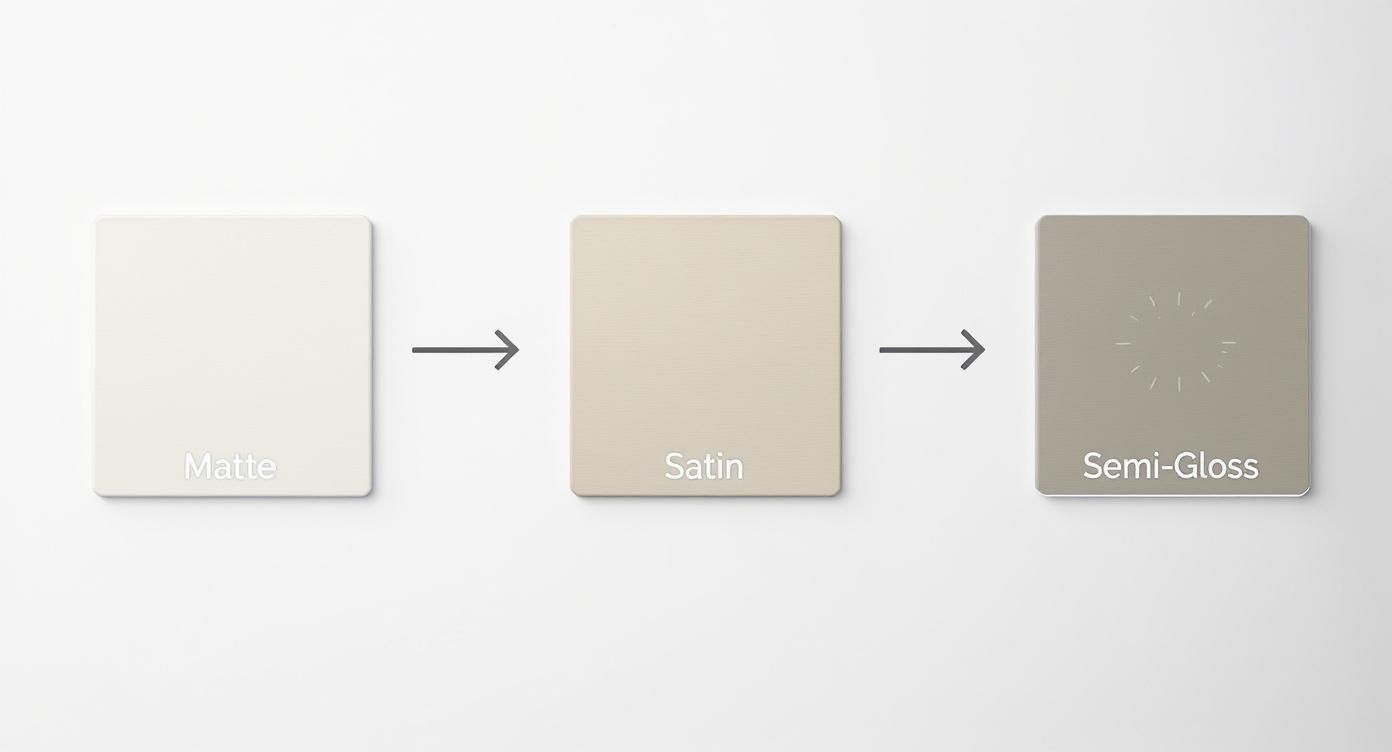
As you can see, the finishes range from a soft, non-reflective matte to a durable, light-bouncing semi-gloss, letting you tailor the look to your kitchen’s style and traffic levels.
Stage 3: Painting the Boxes and the Big Reveal
While your doors and drawers are getting their five-star treatment off-site, a smaller crew gets to work on the cabinet boxes and frames right in your home. They follow the exact same demanding prep process—cleaning, sanding, and priming—before carefully painting the frames to perfectly match the doors.
A professional cabinet painting project in the Toronto area typically takes 5 to 10 business days. Rushing isn't an option. This timeline is crucial for allowing each coat of primer and paint to cure properly, which is what guarantees a finish that will stand the test of time.
Once the doors and drawers are fully cured and the on-site work is complete, the team returns for the final reassembly. They carefully transport the finished pieces back, unwrap your kitchen, and meticulously reinstall every door, drawer, and handle. Everything is perfectly aligned, your kitchen is left spotless, and the transformation is complete.
Of course, painting is just one option. For homeowners weighing all the possibilities, understanding the full scope of professional cabinetry services can help you make the best decision for your home and budget.
Keeping Your Newly Painted Cabinets Looking Flawless
So, the transformation is complete and your kitchen looks incredible. Fantastic! Now, the goal is to keep that fresh, new finish looking its best for years. The good news is, it's not complicated—it’s all about simple, consistent care and knowing what to do (and what not to do).
The first few weeks are the most important. Your cabinets might feel dry just a few hours after the final coat, but the paint needs about 2 to 4 weeks to fully cure. Curing is a chemical process where the paint hardens into a durable, protective shell. Think of it like concrete setting—it looks solid long before it's actually reached full strength. Just be a little extra careful with your cabinets during this time.
Your Gentle Cleaning Toolkit
Once the paint is fully cured, routine cleaning is a breeze. The whole idea is to wipe away daily kitchen grime without harming the finish. Harsh chemicals and abrasive scouring pads are the absolute enemies of a long-lasting paint job.
For day-to-day cleaning, all you really need are the basics:
- Mild Soap and Water: A few drops of gentle dish soap in some warm water is your go-to solution. Seriously, that's it.
- Soft Microfibre Cloths: Use one cloth dampened with your soapy water to gently wipe the cabinets, and a second, dry one to immediately buff away any leftover moisture.
- Avoid Harsh Cleaners: Stay away from anything with ammonia, bleach, solvents, or even citrus oils. These can slowly eat away at the paint. And definitely no abrasive powders or scrubby sponges—they will leave scratches.
Your painter worked hard to give you that smooth, flawless surface. Gentle cleaning is all it takes to keep it that way. Scrubbing hard isn't just pointless; it can actually wear down the beautiful finish you invested in.
Handling Minor Scuffs and Chips
Look, life happens in a kitchen. A pot might slip, or a toy might get thrown, and you could end up with a tiny chip or scuff. It’s no big deal, and it's exactly why you should always ask your contractor for a small container of touch-up paint.
Dealing with these little imperfections right away stops them from getting worse. For a small chip, just dip a tiny artist's brush into your touch-up paint and carefully dab it onto the blemish. You’re just trying to fill the spot, not paint a big patch around it. This tiny step not only keeps your cabinets looking perfect but also seals the wood or HDF from any potential moisture.
By getting into these simple habits, you can easily keep your kitchen looking like it was just painted for well over a decade.
Common Questions About Cabinet Painting in Toronto
When you're thinking about a project like painting your kitchen cabinets in Toronto, it's totally normal to have a list of questions. Getting straight answers is the best way to feel good about your decision and kick off the project without any second-guessing. We’ve rounded up some of the most frequent questions we hear from homeowners across the GTA to help you get the clarity you need.
Let's dive into the big ones, starting with how long that beautiful new finish will actually last.
How Long Will Professionally Painted Cabinets Last?
This is usually the first thing people ask, and for good reason. When a professional painter uses the right stuff and doesn't cut corners on prep, you can realistically expect your painted cabinets to look great for 8 to 15 years.
The lifespan of the finish isn't an accident; it’s the result of a few crucial elements working together:
- The Prep Work: This is everything. Thorough degreasing, sanding, and priming are what create a rock-solid foundation for the paint to grab onto for good.
- The Quality of Paint: Pros don’t use wall paint. They use tough, industrial-grade lacquers or acrylic-alkyd hybrids built for high-touch surfaces, which cure into a much harder shell.
- Long-Term Care: Simple habits like using gentle cleaners and steering clear of harsh, abrasive chemicals will keep the finish looking new for years.
A good way to think about it is like a factory car finish. The final colour is just one part of a multi-layer system designed to protect and endure the bumps and scrapes of daily life.
Can Any Type of Kitchen Cabinet Be Painted?
Pretty much, yes. Most cabinet materials are fair game for painting, but the trick is knowing that each one needs a slightly different recipe for success. Solid wood and HDF (High-Density Fibreboard) are fantastic candidates because they give primers and paints a great surface to bond with.
But what about those trickier materials like laminate or thermofoil? They can definitely be painted, but it’s a job for someone who knows what they're doing. A professional will use a special, heavy-duty bonding primer made specifically for slick, non-porous surfaces. This is the non-negotiable step that stops the paint from peeling or chipping down the road.
Will My House Have a Strong Paint Odour?
Professional painters have this down to a science, and they've figured out how to keep the paint smell in your home to an absolute minimum. It comes down to two smart strategies.
First, they almost always remove your cabinet doors and drawer fronts and take them back to their workshop. There, they're sprayed in a controlled, properly ventilated spray booth, meaning the bulk of the off-gassing happens far away from your home.
Second, for the cabinet boxes and frames that stay put, they use low-VOC (Volatile Organic Compounds) paints and make sure your kitchen is well-ventilated and sealed off from the rest of the house. This two-pronged approach makes a huge difference, keeping your home comfortable while the work gets done.
At MapleKing Kitchen Cabinets, we believe a beautiful kitchen starts with high-quality materials and expert craftsmanship. Whether you're considering a new installation or looking for inspiration, our factory-direct offerings provide luxury finishes without the middleman markup. Explore our custom cabinetry solutions at https://maplekingkitchencabinets.com.