

If you’re staring at a dated kitchen or a cramped bathroom, you’re not alone. In 2026, a lot of Markham homeowners are deciding to stay put and reinvest in their properties. A smart Markham home renovation is the single best way to make your house truly feel like home. This guide is your complete playbook, designed to take you from that first spark of an idea to a finished space you'll love.
Getting Started on Your Markham Renovation
Taking on a renovation can feel huge, there's no doubt about it. But the payoff—both in how you live every day and in your home's long-term value—is absolutely worth it. Think of this guide as having an experienced pro in your corner, helping you navigate every choice with confidence. A well-planned renovation isn't just about a new coat of paint and modern floors; it’s a direct investment in your family’s happiness and your property’s future worth.
The urge to renovate usually starts with a practical need. Maybe the family is growing and you’re short on space, your kitchen layout is a daily frustration, or the main bathroom just feels tired and old. In a real estate market like Markham's, updating your home is one of the smartest financial moves you can make. You get to create a space that fits your life perfectly, all while making it more attractive to potential buyers down the road.
Why Renovate in Markham Now?
Choosing to start a Markham home renovation right now makes a lot of sense. By putting money back into your own property, you’re not just improving your daily life—you’re building real equity. A carefully planned and well-executed project can dramatically increase what your home is worth, giving you a solid return on investment when it’s time to sell.
The whole process breaks down into a few key stages, and getting each one right is what leads to a great result. We’re here to walk you through everything, turning what can seem like an overwhelming project into a series of clear, manageable steps.
Here’s a look at what we’ll cover:
- Navigating Local Rules: We'll demystify Markham’s specific permit and zoning requirements so you can avoid headaches and ensure your project is done by the book.
- Smart Budgeting: You’ll learn how to set a realistic budget, understand where the money actually goes, and how to plan for those "just-in-case" costs.
- Choosing Materials: We’ll explore how to pick the right designs and materials—like high-quality kitchen cabinets—that give you both lasting style and durability.
- Boosting Resale Value: Discover which upgrades provide the biggest bang for your buck in the competitive Markham housing market.
This guide will give you the confidence and the checklist you need to manage your renovation from start to finish. Let’s get started on creating a space you’ll be proud of.
Before you get carried away with design boards and material samples for your Markham home renovation, there’s some essential paperwork to sort out. It’s easy to think of the city’s permit process as just another hurdle, but it’s better to see it for what it is: a critical safety and quality check. This is how the City of Markham ensures your project is structurally sound and meets all the requirements of the Ontario Building Code.
This official sign-off protects your family, your investment, and the future value of your home. Trying to skip a required permit can backfire spectacularly, leading to stop-work orders, hefty fines, or major headaches when it’s time to sell. It's a gamble that just isn't worth the risk.
Understanding When You Need a Permit
So, when do you actually need a building permit? The rules are thankfully quite clear. They focus on any work that touches a building’s structure, its safety systems, or how the space is used. It’s less about cosmetic tweaks and more about fundamental changes.
You’ll almost certainly need a permit for big-ticket items like:
- Structural Changes: Any project that involves moving or taking out walls, beams, or support posts.
- New Additions: Building a new room, adding a second storey, or constructing an attached garage.
- Major System Upgrades: Installing new plumbing, relocating HVAC ductwork, or significant electrical work.
- Creating New Spaces: Finishing a basement to create living space or building a legal secondary suite.
- Outdoor Structures: Adding a deck above a certain height and size, or putting in a swimming pool.
On the other hand, you can breathe easy with minor cosmetic updates. Things like painting, laying down new flooring, or just swapping out your kitchen cabinet doors typically don't require a permit. A good rule of thumb is: if you're just changing the surface, you’re probably in the clear. If you’re changing what’s underneath, it’s time to call the city.
This decision tree can help you see how your initial renovation goals—whether for lifestyle or resale—fit into the bigger picture.
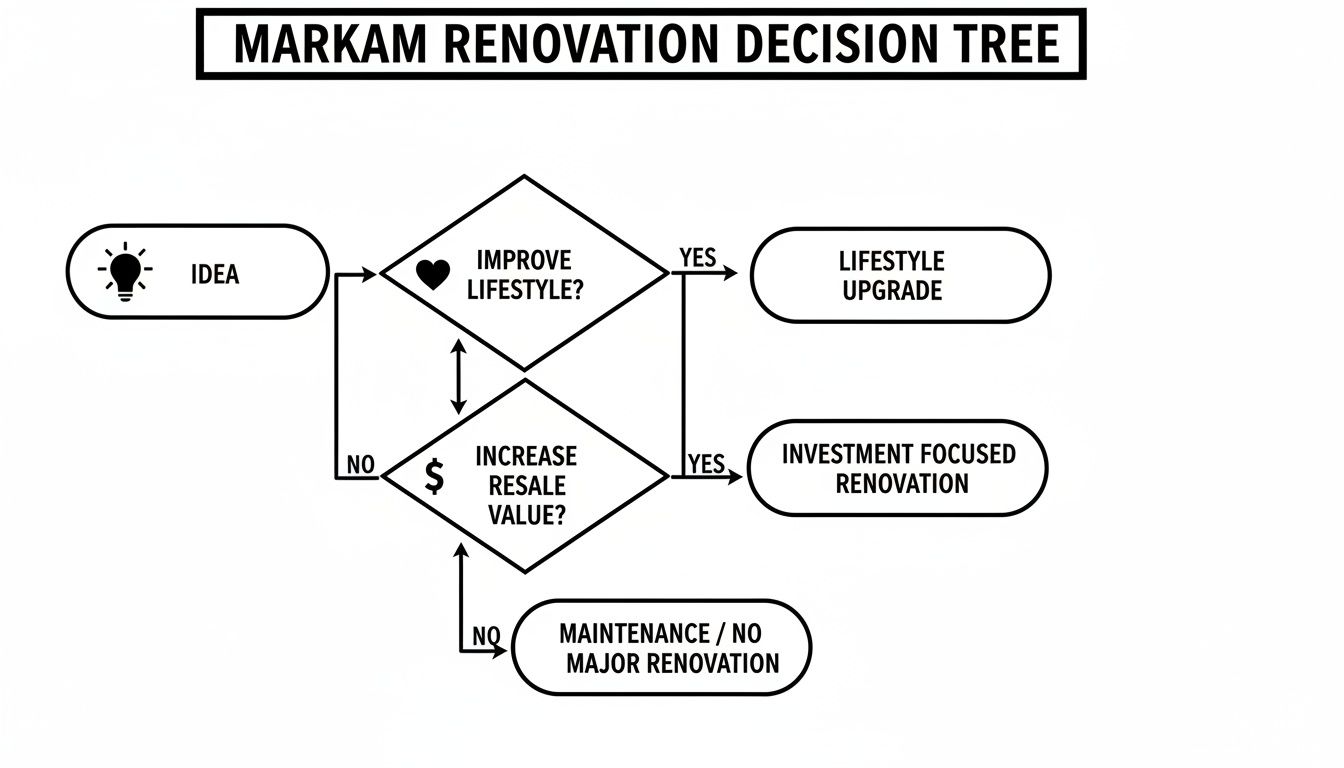
As you can see, no matter if your focus is on pure personal enjoyment or maximizing your return on investment, every successful renovation starts with a solid, well-thought-out plan.
The Application Process in Markham
Once you've figured out a permit is necessary, the process itself is quite logical. A good contractor will usually handle the submission for you, but knowing the steps is empowering. The City of Markham has made things much easier with its digital ePLAN portal for submissions.
To get the ball rolling, you’ll need to pull together a complete application package. This isn’t something you can do casually; it requires precision.
Think of the permit as your project’s blueprint for success. It’s the framework that holds your contractor accountable to safety and quality standards, giving you peace of mind and protecting your home’s value for years to come.
Your submission package will generally need to include:
- A completed application form.
- Detailed construction drawings from a qualified designer or architect.
- A site plan that shows exactly where the work will happen on your property.
- Payment for the permit fees, which are calculated based on your project's size and scope.
After you submit, your application goes into a queue for review. City staff will meticulously check your plans against the Building Code and local zoning by-laws. For a simple project, you might wait a few weeks; for a complex addition, it will take longer. Once you get the green light, your permit is issued, and construction can officially—and legally—begin. From there, your contractor is responsible for scheduling mandatory inspections at key milestones.
Budgeting for Your Renovation and Understanding Costs
Let's be honest: nothing derails the excitement of a renovation faster than money troubles. A well-thought-out budget isn't a restriction; it's your project's roadmap. It's the one thing that keeps your vision on track and prevents your dream Markham home renovation from becoming a financial nightmare.
Building that roadmap begins with one simple question: where does all the money actually go? A total cost is never just one lump sum. It’s a mix of several key expenses, and getting a firm grip on these categories is the first real step toward creating a budget you can trust.
Breaking Down Renovation Expenses
Every home renovation, whether it's a gut job in the kitchen or a basement finishing project, has a similar cost structure. The exact percentages will shift depending on what you're doing, but the main spending buckets stay the same.
Generally, here’s how your budget will break down:
- Labour: This is almost always the biggest piece of the pie, eating up 40-50% of your total budget. This covers the salaries of the skilled professionals—the carpenters, electricians, plumbers, and painters—who physically build your project.
- Materials: Expect this to be around 30-40% of the cost. This includes everything from the studs and drywall that form the structure to the beautiful finishes you see, like your cabinetry, countertops, flooring, and light fixtures.
- Permits and Fees: A smaller but non-negotiable slice at 1-3%. These are the costs paid to the City of Markham to ensure your project is safe, up to code, and legally approved.
- Design and Management: If you bring in an interior designer or a general contractor who charges a separate management fee, this can account for another 10-15% of the total.
Seeing it broken down like this helps you realize that the shiny new appliances are only one part of the equation. The skill and time of the tradespeople are a huge—and necessary—investment. For a deeper dive, our guide on home renovation costs offers a more granular look.
The most important line item in any renovation budget is the one you hope you never touch: the contingency fund. You absolutely must set aside an extra 15-20% of your total estimated cost. This is your safety net for the unknowns, like finding old, knob-and-tube wiring hiding in a wall or discovering a subfloor that needs to be completely levelled.
Your Investment and the Local Economy
When you renovate your home, you're not just improving your own space—you're fuelling the local Markham economy. Every dollar spent on materials and labour creates a ripple effect, supporting local suppliers, tradespeople, and small businesses in our community.
This isn't just a feel-good idea; the numbers back it up. A recent report shows just how much your project contributes.
This table illustrates the average distribution of spending associated with a home sale and renovation, showing how your investment stimulates various sectors of the economy.
| Spending Category | Average Amount |
|---|---|
| Renovations | $47,400 |
| Furniture and Appliances | $36,400 |
| General Household Purchases | $21,700 |
| Professional Services (Legal, Appraisal, etc.) | $11,100 |
| Total Spin-Off Spending | $124,200 |
Data from a 2024 economic impact report covering the period of 2022-2024.
So, when a Markham homeowner decides on a kitchen overhaul with a local supplier like MapleKing Kitchen Cabinets, it’s not just a private purchase. It’s a direct investment back into the community, from the cabinet makers to the delivery drivers and installers.
Smart Ways to Fund Your Project
Once you have a solid budget in place, the next step is figuring out how to pay for it all. Luckily, homeowners have a few great financing options, each with its own pros and cons.
Here are two of the most popular routes:
Home Equity Line of Credit (HELOC): Think of a HELOC as a flexible credit card secured by the equity in your home. You can draw money as you need it for different stages of the project and only pay interest on what you've used. This flexibility is perfect for renovations where surprise costs can pop up. The trade-off is that the interest rate is often variable, so your payments could rise or fall over time.
Renovation Loan or Personal Loan: This is a more traditional loan. You get a lump sum of cash upfront with a fixed interest rate and a predictable monthly payment. The stability is great for budgeting, as you know exactly what you owe each month. The downside is you start paying interest on the full amount right away, even if you haven't spent it all yet.
The right choice really comes down to your personal financial situation, the scope of your Markham home renovation, and your comfort with risk. It's always a good idea to chat with your bank or a financial advisor to explore the best path forward, ensuring your project is a sound investment from every angle.
Choosing Materials and Designs for Maximum Impact
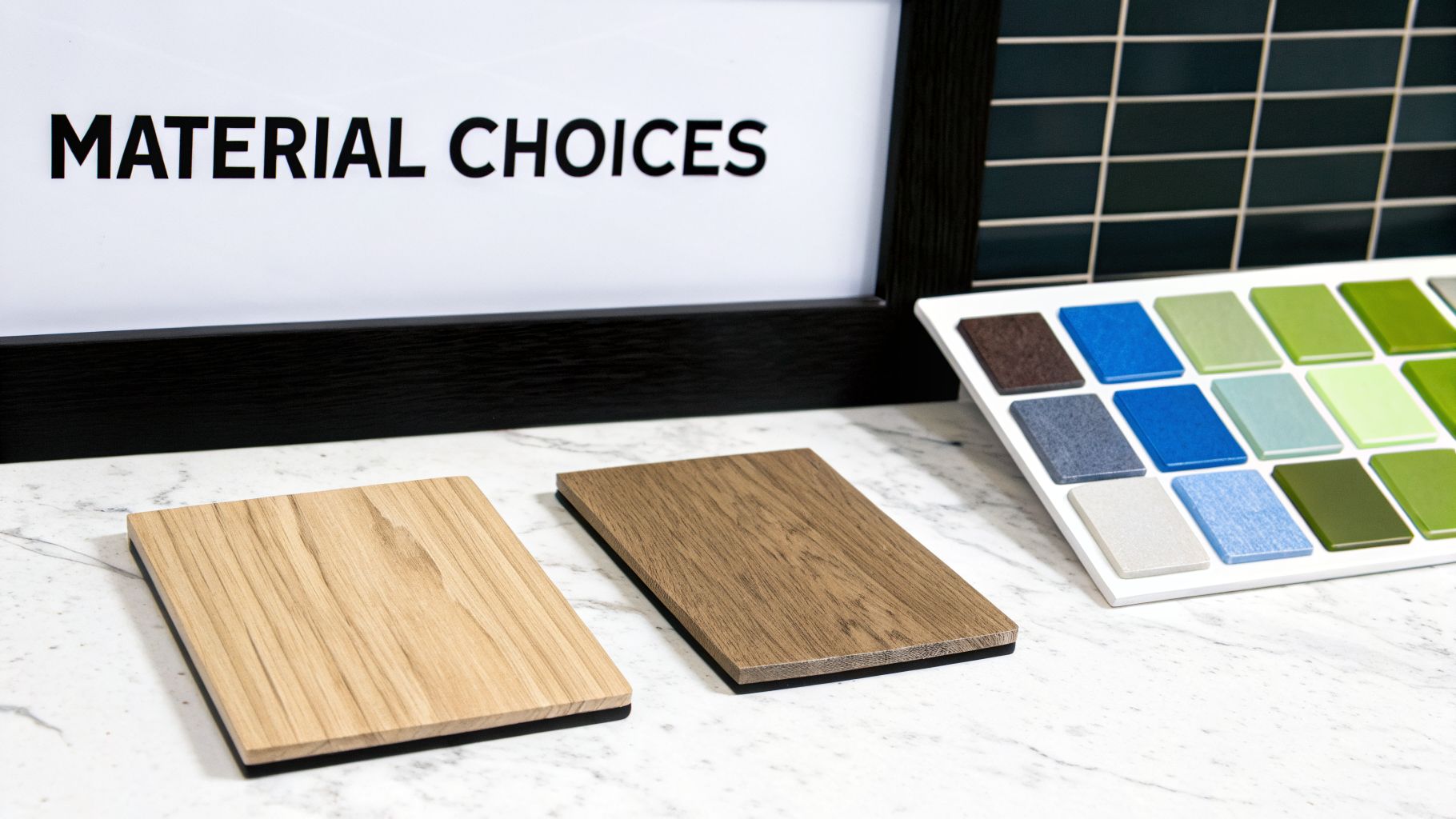
The materials you select are what bring a renovation to life. They're the difference between a construction site and a space that truly feels like your own, defining the final look, texture, and durability. For any Markham home renovation, the real art is in finding that sweet spot between timeless style, practical function, and a smart return on your investment.
These days, homeowners are zeroing in on upgrades that genuinely improve daily living. In fact, a recent report found that 53% of Canadians—especially in desirable areas like Markham—renovate to make their homes more functional. This practical approach pays off, as sustainable features and modern touches are also what drive up a home's value. These insights into 2026 trends, detailed on atera.ca, confirm what we see every day: choosing quality, beautiful materials isn't just an expense; it's a wise investment.
To make sure all your choices work together, you need a guiding vision. Think of it as a roadmap for your project. A clear design concept in interior design helps you make consistent decisions, from wall colours to cabinet hardware, creating a space that feels intentional and professionally put-together.
Focusing on the Heart of the Home: The Kitchen
Nowhere is this more important than in the kitchen. It’s the hub of the home, and your cabinets are its biggest visual feature. The right cabinetry doesn't just store your dishes; it sets the entire mood and style of the room.
Choosing kitchen cabinets is a long-term decision. It’s not just about picking a colour you like today. You’re selecting a material that has to stand up to everything life throws at it—spills, steam, and the constant rhythm of opening and closing doors. The goal is to find an option that matches your design vision, fits your budget, and is built to last.
A Guide to Popular Kitchen Cabinet Materials
The world of cabinet materials can seem overwhelming, but it really comes down to a few fantastic options, each with its own personality and strengths. By working with a local, factory-direct supplier for your Markham home renovation, you can often get premium materials without the big retail markup, making a high-end look surprisingly attainable.
Here’s a breakdown of the top choices I see homeowners making:
- Real Wood: You can't beat a classic. Materials like maple and oak bring a natural warmth and unique grain that no two kitchens will share. They're incredibly durable and have the major advantage of being refinishable years down the road.
- Painted HDF (High-Density Fibreboard): This is the go-to for anyone who wants a flawless, solid colour. HDF is an engineered wood product prized for its perfectly smooth surface, which means paint won't crack over time like it can on solid wood. It’s a stable, durable choice for a clean, contemporary, or even traditional style.
- High-Gloss & Matte Surfaces: Usually applied over HDF, these finishes are what define modern kitchen design. High-gloss gives you that sleek, almost mirror-like look that bounces light around and makes a space feel bigger. Matte, on the other hand, offers a sophisticated, velvety elegance that’s great at hiding fingerprints.
- Laminate & Thermofoil: These materials are the champions of durability and value. Today's laminates are exceptionally resistant to scratches, moisture, and stains, and they come in a huge array of colours and textures. Thermofoil is a vinyl laminate that’s heat-fused over an HDF core, creating a seamless and incredibly easy-to-clean surface perfect for busy families.
Think of your cabinet selection as a lifestyle choice. Are you drawn to the timeless character of real wood? The perfect, clean finish of painted HDF? Or the unbeatable durability of a modern laminate? Each one creates a beautiful kitchen—the best one is simply the one that fits how you actually live.
Ultimately, the right material is the one that clicks with your vision, lifestyle, and budget. To dig deeper and compare these options side-by-side, take a look at our detailed guide. Check out the best material for kitchen cabinets to help you make a decision you'll be happy with for years to come.
How Renovations Actually Boost Your Home's Selling Price
Let's be honest: a great renovation isn't just about making your house a nicer place to live. It's a strategic move. When you plan a Markham home renovation, you're not only creating a space you'll love, but you're also making a smart investment that can pay off big when it's time to sell.
The key is to start thinking like a homebuyer. In any market, but especially when buyers have the upper hand, a beautifully updated home has a serious competitive edge. It's the one that stops the scroll online, gets more foot traffic during open houses, and ultimately, sells faster and for more money. For a buyer, a move-in-ready home means no projects, no headaches, and no unexpected costs—and that's a convenience they are absolutely willing to pay for.
Standing Out in the Markham Real Estate Market
To see just how much this matters, you only need to look at what's happening in our local market right now. The latest numbers from the Toronto Regional Real Estate Board tell an interesting story. In February 2026, Markham saw a healthy 176 homes change hands. But with homes sitting on the market for an average of 43 days and a sales-to-new-listings ratio of only 41%, it's clear that buyers are in the driver's seat. You can get a deeper dive into these Markham market trends and what they mean for homeowners.
So, what does that really mean for you? It means that in a market flooded with options, your home can't just be another listing. It has to be memorable. That jaw-dropping kitchen or spa-like bathroom becomes the one thing buyers can't stop thinking about, pushing your property to the top of their list and helping you sell faster than the market average.
Where to Put Your Money for the Best Return
Not all renovations are created equal when it comes to return on investment (ROI). While a new home office might be perfect for your needs, you have to focus your budget on the upgrades that make the biggest impression on buyers.
These are the projects that consistently deliver the best bang for your buck:
- Kitchen Renovations: This is the undisputed champion of ROI. A modern, functional kitchen with quality cabinetry, new appliances, and great lighting is often the number one thing that makes a buyer fall in love with a home.
- Bathroom Updates: Turning a tired, dated bathroom into a clean, bright sanctuary is a close second. Even smaller touches like a new vanity, modern fixtures, or fresh tile can make a world of difference.
- Curb Appeal: Never underestimate the power of a first impression. Simple upgrades to your landscaping, a new front door, or a fresh coat of exterior paint create a welcoming vibe before anyone even walks inside.
Think of it this way: a strategic kitchen update does more than just look good. It sends a powerful message to buyers about the quality and care put into the home. It becomes the emotional centerpiece that justifies a higher offer and seals the deal.
Of course, making smart upgrades is only half the battle. To truly cash in on your investment, you also need to know how to price a home for sale accurately. Getting the price right ensures your hard work and financial outlay translate directly into a top-dollar sale. These targeted Markham home renovations don't just add a line item of value—they make your home the one that buyers remember, compete for, and can't wait to own.
Your Step-By-Step Renovation Project Checklist

Starting a Markham home renovation can feel like you're standing at the base of a mountain. It's a big job, but the key is to break it down into a series of smaller, more manageable steps. This checklist is your path forward, turning a massive project into a clear, logical sequence from start to finish.
Following these steps in order isn't just about being organized; it's about preventing costly mistakes and keeping everyone, from your designer to your trades, perfectly in sync. Let’s walk through the entire process, phase by phase.
Phase 1: Initial Planning and Design
This is your homework phase, and it’s arguably the most important. Before a single wall comes down, you need a rock-solid plan. This is where you define exactly what you want, how it will function, and what you can realistically spend. Rushing this stage is the number one cause of budget overruns and disappointment down the road.
- Define Your Goals: Get specific. Make a list of your "must-haves" versus your "nice-to-haves." Are you renovating to improve your family's lifestyle, to boost resale value, or a bit of both? Knowing your core motivation helps clarify decisions later.
- Set a Realistic Budget: Figure out your total number, then immediately set aside a contingency fund. We always recommend 15-20% of your total budget for those inevitable surprises that pop up behind a wall.
- Gather Inspiration: Start a mood board. Use Pinterest, magazines, or photos to collect styles, colours, and materials that speak to you. This visual guide is invaluable.
- Hire a Designer (Optional): If your reno involves moving walls, changing layouts, or requires a permit, a designer or architectural technologist is a must. They create the professional drawings you'll need for accurate contractor quotes and your permit application.
Phase 2: Assembling Your Team
With a solid plan in hand, it's time to find the right people to make it happen. This is the single most critical decision you will make for your renovation.
Your contractor is your project partner. Taking the time to thoroughly vet candidates is the best way to protect your investment and ensure a smooth, low-stress experience.
- Research and Shortlist: Ask friends and neighbours for recommendations and dig into online reviews. Focus on professionals with a strong, proven portfolio of work right here in Markham. A great starting point for specific trades is to look for local experts; for example, you can learn more about finding reputable cabinet companies near you to ensure you get quality craftsmanship.
- Get Three Detailed Quotes: Don't just ask for a bottom-line number. Give each potential contractor the exact same set of plans and material specs, and ask for a fully itemized quote that breaks down labour and material costs.
- Check References and Insurance: This is non-negotiable. Call their recent clients and ask about their experience. You also need to personally verify their liability insurance and WSIB coverage are current.
- Sign a Comprehensive Contract: A handshake won't cut it. Your contract must detail the full scope of work, a clear payment schedule tied to milestones, and a projected timeline.
Phase 3: Construction and Completion
Now the real work begins. Your home will temporarily become a construction zone, but with your planning and a good team, it will soon transform into the beautiful, finished space you envisioned.
- Permit Submission: Your contractor will take your approved drawings and documents and submit them to the City of Markham's building department. Work can't start until the permit is issued.
- Demolition and Construction: The old is torn out to make way for the new. This stage includes all the "behind-the-walls" work: framing, new electrical wiring, and plumbing rough-ins.
- Finishing Work: This is where the vision really comes to life. Drywall goes up, followed by painting, flooring installation, and of course, the installation of your beautiful new cabinets.
- Final Inspections: Throughout the process, the city inspector will visit to sign off on key stages (like framing and electrical) to ensure everything is built to code. A final inspection happens at the very end.
- Final Walkthrough: Before you make that last payment, you and your contractor will walk through the entire space together. You'll create a "punch list" of any small items that need a final touch-up. Once those are complete, the project is officially done
Common Questions About Markham Home Renovations
Embarking on a home renovation in Markham is exciting, but it almost always brings up a few big questions. Getting solid answers right from the start is the key to a smooth project, so let's tackle some of the most common concerns we hear from homeowners.
How Do I Find a Trustworthy Contractor in Markham?
This is probably the most important decision you'll make for your entire project. A great starting point is to ask for recommendations from friends, family, or neighbours who’ve had good experiences with recent renovations. You can also check out online reviews on platforms like HomeStars and Houzz, but treat these as a starting point—always follow up by speaking directly with recent references.
Your aim should be to collect at least three detailed, written quotes so you can compare the scope of work and pricing. A reputable contractor won't hesitate to prove they are:
- Properly licensed to operate in the City of Markham.
- In good standing with WSIB (Workplace Safety and Insurance Board).
- Carrying sufficient liability insurance (ask to see the certificate!).
- Prepared to provide a comprehensive, written contract detailing the work, schedule, and payment milestones.
Think of a detailed contract as the blueprint for your project's success. It’s not just a formality; it’s the single source of truth that protects both you and your contractor by setting clear expectations from day one.
When Is the Best Time of Year to Renovate?
While you can technically tackle an interior job like a bathroom or kitchen at any time, the season can definitely affect your timeline and budget. Spring and summer are the busiest times for construction, especially for any project with an exterior component, like an addition or a new deck. The best contractors get booked up months in advance for this peak season.
If your project is entirely indoors—like a basement finishing or a kitchen makeover—think about scheduling it for the late fall or winter. You'll likely find that contractors have more availability, and you might even get more competitive pricing during their slower months.
How Can I Save Money on My Kitchen Renovation?
Keeping your kitchen reno on budget doesn't mean you have to compromise on the final result. It's all about being strategic. One of the biggest ways to save is by choosing a factory-direct cabinet supplier, which lets you bypass the retail markup that big box stores and design showrooms add.
If your current kitchen layout is functional, stick with it. Moving plumbing, electrical, or gas lines is a major expense that can quickly add thousands to your bill. Finally, don't underestimate the power of "sweat equity"—if you're comfortable, handling tasks like demolition or painting yourself can chip away at the total labour cost.
Ready to create a kitchen that perfectly balances style, function, and value? At MapleKing Kitchen Cabinets, we offer factory-direct pricing on a stunning range of custom cabinets designed for Markham homeowners. Explore our gallery and get your free quote today.



