

So, you’re thinking about renovating your kitchen in Toronto. The first question on everyone's mind is always the same: "What's this going to cost me?"
The short answer is that a kitchen renovation in Toronto can run anywhere from $25,000 for a simple refresh to well over $90,000 for a complete, high-end overhaul. The final number really comes down to the size of your space, the quality of materials you fall in love with, and just how much you want to change.
Understanding Toronto Kitchen Renovation Budgets
Trying to pin down a budget for a kitchen reno can feel a bit like trying to hit a moving target. The final cost isn't one single number; it's a spectrum shaped by three big things: the scope of your project, the size of your kitchen, and your personal style.
I like to compare it to buying a car. You could get a reliable, no-frills model that does the job, a comfortable mid-range option with some nice-to-have features, or a luxury vehicle with every possible upgrade. They all get you from A to B, but the experience and the price tag are worlds apart. Your kitchen renovation is no different.
One of the most common mistakes I see is homeowners forgetting about the "soft costs." Things like design fees, city permits, and a contingency fund for those little surprises that always pop up can easily add another 15-20% to your total. Factoring these in from the start is the key to a project that doesn't spiral out of control.
Typical Cost Tiers for Toronto Kitchens
To give you a clearer picture, the average kitchen renovation in Toronto and the GTA typically falls somewhere between $25,000 and $90,000, depending on how ambitious your plans are. A basic remodel in a condo might land between $25,000 and $40,000. A more involved mid-range renovation in a detached home, with some custom touches, often falls in the $40,000 to $65,000 range.
For those dreaming of a full gut-job with high-end finishes and appliances, you’ll be looking at $65,000 and up, with some luxury projects easily surpassing $120,000. If you want to dig deeper into these figures, you can find more detailed insights on renovation costs in the GTA.
To make this even simpler, let's break down what you can generally expect at different budget levels.
Toronto Kitchen Renovation Cost At A Glance
This table gives you a snapshot of typical cost ranges for a kitchen renovation in a detached Toronto home, helping you see what’s possible at each tier.
| Renovation Tier | Average Cost Range (Detached Home) | Common Features |
|---|---|---|
| Basic | $25,000 – $40,000 | Retaining the existing layout, painting existing or installing standard cabinets, laminate countertops, and new mid-range appliances. |
| Mid-Range | $40,000 – $65,000 | Semi-custom cabinets, a quality quartz countertop, new backsplash and flooring, and a suite of upgraded appliances. |
| High-End | $65,000+ | Fully custom cabinetry, premium materials like natural stone, significant layout changes (e.g., moving walls), and high-end, integrated appliances. |
Think of this table as a starting point. It helps align your vision with a realistic budget before you get too far down the road. In the next sections, we'll break these numbers down even further to show you exactly where every dollar goes.
Breaking Down Your Kitchen Renovation Invoice
Ever looked at a renovation quote and felt like you were trying to decipher a secret code? You see that big, bold number at the bottom, but figuring out how it all adds up is a different story entirely.
Think of your total kitchen renovation cost in Toronto as a completed puzzle. Each line item on your quote is a different piece, and they all have to fit together to create the final picture. Let's pull that puzzle apart so you can see exactly where every dollar is going.
Knowing the breakdown isn’t just for curiosity's sake—it’s about taking control. When you understand what percentage of your budget each component usually takes up, you can make smarter decisions. You’ll know where to invest for the biggest impact and where you might be able to save a few dollars without sacrificing quality. This is how you stay on top of your budget, not the other way around.
The Big-Ticket Items: Cabinets, Countertops, and Labour
While a full kitchen reno has dozens of moving parts, your budget will largely be shaped by three key players: cabinets, countertops, and labour. These are the heavy hitters, and getting them right is the foundation of a successful renovation.
Labour, for instance, is the skilled craft that brings your vision to life, and it typically eats up 20% to 35% of the total cost. This isn't just one person; it's a whole team—the general contractor, cabinet installers, plumbers, electricians, and tilers. The more complex your project gets, like moving walls or re-routing plumbing, the more this part of your budget will grow.
Countertops are another major line item, often accounting for 10% to 20% of the total. The cost here is all about the material you choose. Laminate is the most budget-friendly option, while natural stones like granite and marble sit at the premium end. For many homeowners in Toronto, quartz hits the sweet spot, offering a fantastic balance of durability, style, and mid-range pricing.
Cabinetry: The Heart of Your Kitchen Budget
Make no mistake: your cabinets will almost certainly be the single largest expense in your kitchen renovation. They are the functional and aesthetic backbone of the entire space, and their cost reflects that role.
On average, you can expect your cabinetry to consume between 30% and 40% of your entire renovation budget. This makes choosing your cabinets the most critical financial decision you'll make for your kitchen project.
What drives the price? It mainly comes down to how they're made. You've got a few main choices:
- Stock Cabinets: These are pre-made and sold in standard sizes. They're the most affordable choice but offer very little room for customization.
- Semi-Custom Cabinets: A popular middle ground, these offer more flexibility in sizes, finishes, and styles than stock options.
- Custom Cabinets: Built from scratch just for your kitchen, these give you limitless design freedom but come with the highest price tag.
One way to get more for your money is to explore factory-direct options. Companies like MapleKing cut out the retail middleman, which often means you can get more premium features without blowing your budget.
A Typical Breakdown of Where Your Money Goes
To give you a clearer picture, let's look at how a typical kitchen renovation budget is allocated in Toronto. While every project is unique, this table shows the common percentages for each major component.
| Typical Kitchen Renovation Budget Allocation In Toronto |
| :— | :— | :— |
| Cost Component | Percentage of Total Budget | Key Cost Drivers |
| Cabinetry | 30% – 40% | Material (wood, MDF), construction (stock, semi-custom, custom), finish, hardware |
| Labour | 20% – 35% | Project complexity, structural changes, number of trades required |
| Countertops | 10% – 20% | Material (laminate, quartz, granite), edge profile, fabrication complexity |
| Appliances | 10% – 15% | Brand (standard vs. luxury), features, integrated vs. freestanding |
| Plumbing & Electrical | 5% – 10% | Moving fixtures, adding lighting, updating wiring to meet code |
| Flooring | 5% – 7% | Material (vinyl, hardwood, tile), subfloor preparation |
| Demolition & Disposal | 1% – 3% | Scope of removal, accessibility, disposal fees |
| Backsplash | 1% – 3% | Material (ceramic, glass, stone), complexity of the installation pattern |
| Permits & Design Fees | 1% – 5% (Variable) | Structural work requirements, hiring an interior designer or architect |
This table helps illustrate why a simple cosmetic update costs so much less than a full gut renovation. Once you start moving plumbing or taking down walls, the labour percentage climbs fast.
Unpacking the Other Essential Costs
Beyond the "big three," several other crucial elements round out your kitchen renovation. They may represent smaller individual percentages, but they add up quickly and are absolutely essential for a finished, functional kitchen.
The chart below gives you a great visual for how these costs come together across different budget levels for a Toronto kitchen renovation.
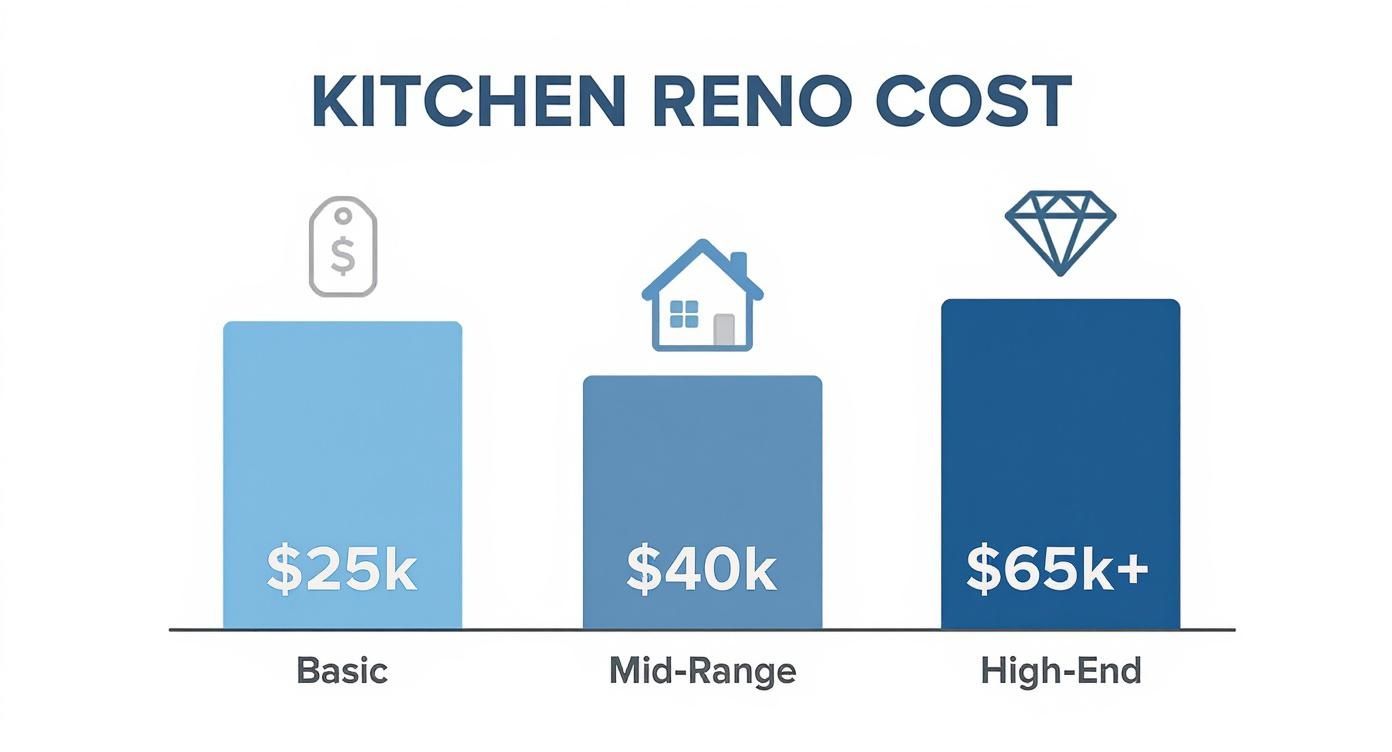
As you can see, a high-end project can easily cost more than double a basic one, driven by premium materials, custom work, and more extensive labour.
Here are the other line items you should expect to see on your quote:
- Appliances (10-15%): This covers your fridge, stove, dishwasher, and microwave. A basic package might cost a few thousand dollars, while high-end, integrated models can run into the tens of thousands.
- Plumbing and Electrical (5-10%): Any time you move a sink, add pot lights, or have to upgrade wiring to meet current building codes, it falls into this category. This is a big one in older Toronto homes where systems are often outdated.
- Flooring (5-7%): The cost here is tied to your material, from affordable luxury vinyl plank to timeless hardwood or porcelain tile.
- Backsplash (1-3%): It's a smaller piece of the budget, but the right backsplash can make a huge design statement.
- Demolition and Disposal (1-3%): This is the cost of carefully tearing out the old kitchen and hauling away the debris.
- Permits and Design Fees (Variable): If your renovation involves structural changes, you’ll need a permit from the city. If you hire an interior designer, their fees also fit here. It’s smart to budget at least a few hundred to several thousand dollars for these administrative costs.
How Local Toronto Factors Influence Your Budget
The numbers on a renovation quote tell you more than just the cost of materials and labour—they tell a story about the city itself. A kitchen remodel in Toronto simply costs more than it would in a smaller town, and understanding the "why" is the first step to building a realistic budget.
Think of it like this: renovating here is like dining at a popular restaurant in the heart of downtown versus a quiet suburban cafe. The ingredients might be similar, but the rent, demand, and overall cost of doing business are worlds apart. Those local pressures are baked right into every quote you’ll get.
The High Demand for Skilled Trades
Toronto is always building, always renovating. That constant buzz means there's fierce competition for the best tradespeople, from licensed electricians and plumbers to meticulous cabinet installers.
This high demand naturally drives up the cost of skilled labour. There’s a finite pool of experienced, insured, and reliable professionals, and their time comes at a premium. It’s not about contractors trying to gouge you; it's a simple, classic case of supply and demand in one of Canada’s most active markets.
So many of Toronto’s most sought-after neighbourhoods, from The Annex to Riverdale, are lined with beautiful, character-filled older homes. But behind that charm often lurks surprises that can throw a budget for a loop.
A huge chunk of unexpected renovation costs in Toronto comes from updating older homes to meet today's building codes. What you thought was a simple cabinet swap can quickly turn into a project that includes tearing out old knob-and-tube wiring or replacing galvanized plumbing.
These aren't optional "nice-to-haves." They're essential upgrades required for safety and to get your project permits approved. Some of the usual suspects we find in older Toronto houses include:
- Outdated Electrical: Old systems that can't handle the power draw of modern appliances and need a full rewire.
- Aging Plumbing: Galvanized or copper pipes that are at the end of their life and need to be replaced to prevent leaks.
- Uneven Surfaces: Floors and walls that have settled over decades and require significant prep work to get cabinets and countertops installed perfectly level.
- Hidden Structural Problems: Issues you only discover once the walls are opened up, which have to be addressed immediately.
Each of these issues adds time, complexity, and cost to the job, impacting the final kitchen renovation cost Toronto.
Permits and Property Values
The paperwork side of renovating in Toronto also brings its own costs. Any project that involves moving walls or altering plumbing and electrical systems will require a permit from the city. The fees for these permits, plus the time and effort needed to get them, should absolutely be factored into your budget.
On top of that, the real estate market itself plays a role. In neighbourhoods with high property values, there's often an expectation to invest in premium finishes and high-end appliances to maintain or increase the home's value. This can raise the baseline for what's considered a "standard" renovation in that area.
To get a better sense of what a full project involves, you can dive into our detailed guide on a complete Toronto kitchen renovation. Knowing these local forces are at play will help you understand your quotes and plan a budget that's grounded in the reality of renovating in this amazing city.
What Different Budgets Can Actually Buy In Toronto
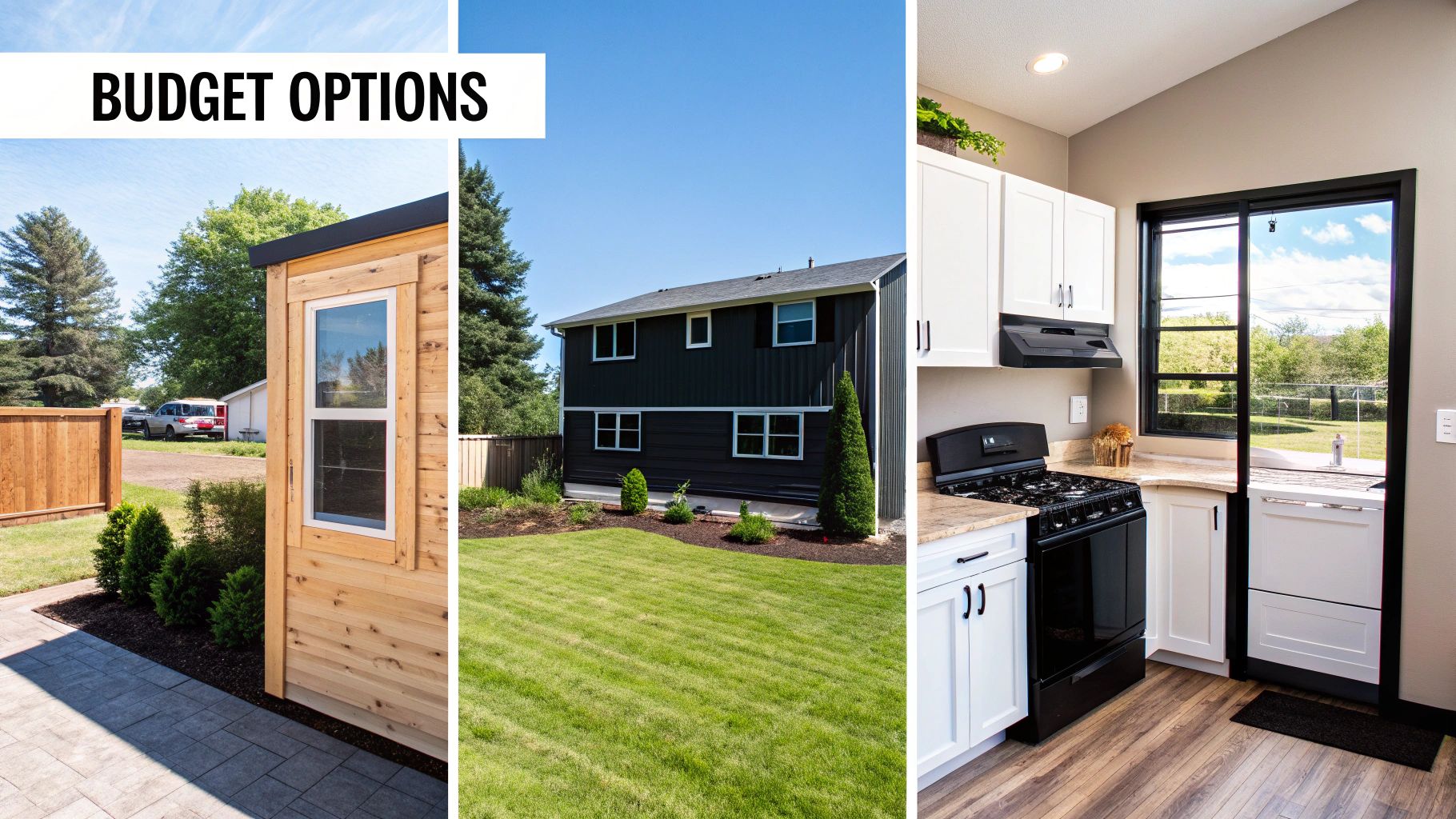
It’s helpful to know the average kitchen renovation cost in Toronto, but let's be honest—what really matters is seeing what that money gets you. To bridge that gap between numbers on a spreadsheet and a kitchen you can actually picture yourself in, let’s walk through three realistic budget scenarios.
These examples are based on real-world projects, showing the kinds of trade-offs and decisions homeowners face at different price points. From a savvy condo update to a full-blown luxury transformation, you'll see exactly how the scope, materials, and overall vision shape the final bill.
Scenario 1: The Smart Condo Refresh
In Toronto’s high-rises, you're working with less space and have building rules to contend with. A smart condo refresh is all about making high-impact upgrades without touching the layout—which is almost always the most expensive part of a reno.
- The Goal: Modernize a dated, small condo kitchen to boost its resale value and make it a more enjoyable space to live in. The main focus here is on aesthetics and replacing tired, worn-out finishes.
- The Scope: We’re keeping the existing cabinet boxes but swapping out the doors for a fresh look. We'll install a new quartz countertop, a modern undermount sink, a sleek faucet, and a new backsplash. Finishing it off with a fresh coat of paint and some new under-cabinet LED lighting makes a world of difference. All the major appliances and flooring stay put.
A light kitchen refresh in a small condo—think new quartz countertops, a better sink and faucet, a backsplash, fresh paint, and minor electrical work—will typically land somewhere between $10,000 to $20,000. If you're going a step further with new cabinets and a few appliance replacements, you're more likely looking at the $25,000 to $45,000 range.
This strategy gives you a huge visual payoff for a relatively modest investment, which is why it's such a popular choice for condo owners across the city.
Scenario 2: The Mid-Range Family Kitchen
This is the kind of project we see most often in Toronto's suburban homes. It’s about creating a hardworking, beautiful kitchen that can stand up to the chaos of family life, striking a balance between durable materials and timeless style.
- The Goal: A complete gut and replacement of a 20-year-old kitchen. The homeowners are looking to improve the workflow, get more storage, and create a welcoming hub for the family to gather.
- The Scope: The entire kitchen is demolished down to the studs. To keep costs in check, the layout stays the same, avoiding expensive plumbing and electrical relocation. The project includes new semi-custom Shaker-style cabinets, a durable quartz countertop with a large island for seating, a classic subway tile backsplash, and new luxury vinyl plank flooring. A full suite of new mid-range stainless steel appliances is installed, along with new pot lights and a couple of pendant lights over the island.
The investment here is all about balance. You're putting high-quality materials where they count most—like the countertops and cabinets—but saving a significant chunk of change by keeping the original footprint.
Scenario 3: The High-End Luxury Remodel
For this type of project, the kitchen isn't just a place to cook; it's a showpiece and the heart of the home's entertainment space. The budget is there for premium materials, custom-built solutions, and a total reimagining of how the space functions. Compromise isn't in the vocabulary.
- The Goal: To design a chef-inspired kitchen with a seamless, bespoke aesthetic. This involves reconfiguring the entire main floor to create a sprawling, open-concept kitchen and living area.
- The Scope: This is a full-gut renovation that starts with removing a load-bearing wall, which means bringing in an engineer for stamps and approvals, plus significant structural work. Every single element is top-of-the-line.
- Custom Cabinetry: Think floor-to-ceiling custom cabinets, featuring a sophisticated mix of painted finishes and rich natural wood veneers.
- Premium Surfaces: A stunning quartzite countertop with a waterfall edge on the island and a matching full-height backsplash create a dramatic, cohesive look.
- Professional-Grade Appliances: A suite of high-end, integrated appliances—like a Sub-Zero fridge and a Wolf range—are built seamlessly into the cabinetry.
- Extensive Systems Work: All plumbing and electrical systems are re-routed and upgraded to support the new layout. This often includes smart home integration for lighting and appliances.
- Flooring and Finishes: New wide-plank hardwood flooring is laid throughout the main level to tie the entire open-concept space together.
A renovation of this scale requires a full design-build team, including an interior designer and an architect, to manage all the moving parts. To get this custom look, materials are often sourced directly, and learning about the smart way to buy luxury kitchen cabinets in Toronto shows how factory-direct options can bring high-end finishes within reach.
Smart Ways to Reduce Your Renovation Costs

A beautiful kitchen transformation doesn't have to break the bank. While the average kitchen renovation cost in Toronto can seem steep, a little strategic thinking can lead to big savings without sacrificing the final result.
Think of your budget as a pie. Every decision you make—from the countertops to the cabinet handles—takes a slice. The trick is to know where you can take a smaller sliver without anyone noticing, so you have more to dedicate to the features you really care about.
This is all about making smart, budget-conscious choices that add up. Let's dig into some proven strategies to help you get the most out of every dollar.
Keep Your Existing Layout
By far, the single best way to keep your budget in check is to work with the layout you've already got. It can be tempting to knock down walls for that wide-open-concept feel, but moving plumbing, electrical, and gas lines is where costs can explode.
Once you start changing the kitchen's footprint, you're not just paying for construction; you're bringing in a whole team of expensive specialists. You’ll need a plumber to reroute pipes, an electrician to move outlets, and maybe even a structural engineer. Each of these trades adds thousands to your labour bill.
Sticking with the current locations for your sink, dishwasher, and stove can easily save you $5,000 to $15,000 (or more). It's probably the biggest cost-saving move you can make.
Be Smart With Your Material Choices
You don't need the most expensive materials to get a high-end look. It’s all about choosing wisely. Many modern alternatives look just as stunning as their luxury counterparts but are far more durable and affordable.
-
Countertops: Everyone loves the look of marble, but it’s pricey and high-maintenance. A good-quality quartz or even a modern laminate can give you that same natural stone aesthetic with better durability and a much smaller price tag.
-
Backsplash: Intricate mosaic tiles can get expensive, fast. You can’t go wrong with classic subway tiles—they’re timeless, affordable, and can be laid in a creative pattern like a herringbone to get a custom look without the custom cost.
-
Flooring: Hardwood is a classic, but luxury vinyl plank (LVP) is the savvy renovator's secret weapon. It’s waterproof, incredibly tough, and the wood and stone looks are shockingly realistic.
Tackle Some Demo and Finishing Yourself
If you’re not afraid to get your hands dirty, rolling up your sleeves for a few key tasks can shave a nice amount off your labour costs. This is what we call "sweat equity," and it can free up cash for that faucet or hardware you’ve been eyeing.
Demolition is a great place to start. Tearing out old cabinets, countertops, and flooring is physically demanding but doesn't usually require highly specialized skills. Just make sure you know how to do it safely without damaging anything you plan to keep.
Painting is another perfect DIY job. Once the pros handle the drywall and priming, you can save hundreds, if not thousands, by painting the walls and trim yourself. Plus, you get total control over the final look. And if your existing cabinet boxes are still in good shape, a professional paint job can be a fantastic alternative to a full replacement. You can learn more about getting a factory-fresh finish by exploring how to paint kitchen cabinets in Toronto.
Be a Savvy Appliance Shopper
A brand-new set of appliances can easily eat up 10-15% of your total budget, but you can cut that down with some smart shopping. Don't just walk into the first store you see and buy a pre-packaged bundle.
Keep an eye out for sales during major holidays like Black Friday and Boxing Day, when retailers offer deep discounts. Ask about floor models or "scratch and dent" appliances—a small scuff on the side of a fridge won't matter once it's installed, but it could save you hundreds. Buying all your appliances from one place can also give you leverage to negotiate a better package deal.
Your Toronto Kitchen Renovation Questions Answered
So, you're thinking about renovating your kitchen. It's an exciting prospect, but it can also feel like a huge puzzle with a million moving pieces—especially when it comes to budgeting and timelines. To help cut through the noise, we’ve put together some straight-up answers to the questions we hear most from Toronto homeowners.
How Long Does a Kitchen Renovation Typically Take in Toronto?
One of the biggest myths is that you can get a new kitchen over a long weekend. The reality? It depends entirely on what you’re planning to do. It’s much more helpful to think about the project in stages.
A simple cosmetic refresh—we’re talking painting cabinets, swapping out hardware, and putting in a new backsplash—could be done in about 1 to 2 weeks. But for a standard gut job where everything comes out (cabinets, countertops, appliances), you're realistically looking at 4 to 8 weeks from the first day of demolition to the final coat of paint.
Now, if you're dreaming big with a high-end, custom remodel that involves moving walls, rerouting plumbing, or a major electrical overhaul, you’ll want to brace yourself for a timeline of 12 weeks or more.
And remember, that’s just the construction time. The planning phase is a whole separate chapter. Sourcing materials, especially custom cabinets or specific imported tiles, can add weeks or even months of lead time before a single hammer is swung. Smart homeowners always add a 15-20% time buffer to their schedule for those inevitable, unexpected hiccups.
What Are the Most Common Unexpected Costs in a Kitchen Renovation?
Ah, the dreaded "unexpected costs"—the one thing that keeps homeowners up at night. In Toronto, particularly with its older homes, the biggest surprises almost always lurk behind the drywall.
Once the demolition starts, you might uncover problems that were completely invisible before. The usual suspects include:
- Outdated Electrical Systems: Finding old knob-and-tube wiring that isn't up to code and can't safely power your new appliances.
- Hidden Plumbing Problems: Discovering leaky, corroded pipes that absolutely have to be replaced to avoid a future disaster.
- Structural Deficiencies: Uncovering weak spots in walls or floors that require immediate reinforcement.
- Hazardous Materials: The unwelcome discovery of asbestos or mould, which demands professional (and pricey) remediation.
To avoid having these issues derail your entire budget, you absolutely need a contingency fund. Plan on setting aside at least 15-20% of your total project cost. Don't touch it unless you have to, but you'll be glad it's there when you do.
What Is the ROI on a Kitchen Renovation in Toronto?
A kitchen renovation is, hands down, one of the smartest investments you can make in your home, especially in a hot real estate market like Toronto's. It's a project that pays you back, not just in daily enjoyment but also when it's time to sell.
While the exact figures fluctuate with the market, Toronto homeowners can generally expect to recoup anywhere from 60% to 80% of what they spend. A modern, functional, and well-designed kitchen is a massive selling feature that can seriously boost your property's value and help it sell faster. Interestingly, it's often the mid-range renovations that deliver the best return on investment because they hit that sweet spot that appeals to the widest range of buyers.
Should I Hire a Designer or Just a General Contractor?
This really boils down to the scale of your project and how confident you are in your own design sensibilities. If you're doing a straightforward, like-for-like replacement where the layout stays the same, a great General Contractor (GC) is probably all you need to manage the project and coordinate the trades.
However, if your vision involves more than just a simple swap-out, bringing an interior designer on board is an investment that can pay for itself.
You should seriously consider hiring a designer if you are:
- Reconfiguring the kitchen layout to create a better workflow.
- Feeling overwhelmed by the endless choices for materials, finishes, and fixtures and need help creating a cohesive look.
- Wanting to avoid expensive mistakes by getting detailed plans and 3D renderings before construction starts.
A good designer can actually save you money by preventing costly errors and giving you access to their trade discounts on materials, which can often offset their fees. For really big projects, a design-build firm that offers both services under one roof can make the whole process incredibly smooth.
Ready to create the kitchen of your dreams with cabinetry that combines luxury and affordability? At MapleKing Kitchen Cabinets, we offer factory-direct pricing that cuts out the middleman, delivering bespoke designs tailored to your style and budget. Explore our stunning finishes and start your journey with a free quotation.



