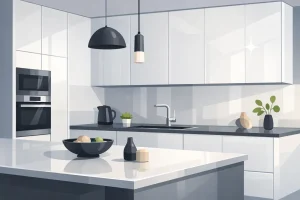

You’re probably at the stage where the old kitchen has finally stopped being “fine.” The cabinet doors feel tired, the layout wastes steps, and every sample you bring home looks different under your lighting than it did in the showroom. Then white cabinets enter the conversation. They still feel like the safest choice, but also the one with the most room for expensive mistakes if you pick the wrong style, the wrong finish, or the wrong material for a Toronto or Markham home.
That’s where most kitchen renovations become harder than people expect. White isn’t one decision. It’s a chain of decisions. Door profile, undertone, sheen, substrate, hardware, countertop, lighting, and installation quality all change how the kitchen looks on day one and how it performs years later.
The good news is that kitchen design white cabinets can still be one of the most reliable ways to build a kitchen that feels current now and doesn’t date quickly. The key is to stop thinking about “white cabinets” as a single look. A glossy slab door in a downtown condo, a painted shaker in a family home, and a white-and-wood two-tone kitchen are all completely different solutions.
Embarking on Your White Kitchen Transformation
A lot of homeowners start with a saved photo and a simple goal. They want a brighter kitchen. Then the critical questions emerge. Should the white be crisp or warm? Will high-gloss look too sharp? Will painted wood hold up near the stove? Is an all-white kitchen still the right move, or will it feel flat in six months?
In the GTA, those questions matter because kitchens do hard work. Condos need every visual trick available to feel open. Family homes need cabinets that can take daily wear. Renovation projects in older neighbourhoods often need a design that respects the character of the house without trapping it in the past.
I’ve seen the best outcomes happen when homeowners slow down and make decisions in the right order. Start with function, then style, then material, then finish. If your kitchen workflow is clumsy, even beautiful cabinetry won’t fix it. If you’re still refining how the room should work, this guide to ways to make your kitchen more efficient is useful because it shifts the conversation from looks alone to movement, storage, and daily use.
A white kitchen succeeds when it solves practical problems first. Brightness and resale appeal are bonuses, not substitutes for a workable plan.
The right white kitchen doesn’t look generic. It looks calm, organised, and well judged. That usually comes from disciplined choices, not more choices.
Why White Cabinets Remain a Timeless Choice
A white kitchen keeps working long after the first reveal because it gives the room flexibility. Door style, hardware, countertop pattern, flooring, and wall colour can all shift over time without forcing the cabinets to feel dated. That matters in Toronto and Markham homes, where owners often renovate in phases rather than replacing everything at once.
White also solves a practical problem. Many GTA kitchens deal with limited daylight for part of the year, especially in narrow semis, older homes with divided rooms, and condo layouts with a single window wall. Lighter cabinetry reflects available light better than dark finishes, so the room reads cleaner and more open with less effort from artificial lighting.

White changes how a room feels
The effect is easy to see in small kitchens. In a compact condo or galley layout, white upper and lower cabinets reduce visual weight. Sightlines feel less crowded. Corners read more clearly. If the kitchen already has a low ceiling, limited natural light, or bulky soffits, white usually helps the room feel calmer instead of boxed in.
That said, white is not a shortcut to a better design. A poor layout still feels poor. Flat lighting still looks flat. Cheap materials still show their age. White gives you a cleaner backdrop, which can be a major advantage if the proportions of the room are working against you.
White supports resale because it stays adaptable
White cabinets continue to appeal to buyers for a simple reason. They are easy to understand and easy to live with. A buyer can picture black hardware, brass pendants, warm wood stools, or a different backsplash without mentally rebuilding the whole kitchen.
That broad appeal is useful, but resale should not be the only reason to choose white. The stronger argument is day-to-day practicality. White lets you update the personality of the kitchen through easier changes such as paint, lighting, runners, or counter stools, while keeping the expensive millwork in place.
A well-planned white kitchen usually helps by:
- making the room feel brighter and visually lighter
- pairing easily with warm woods, stone, metal finishes, and changing decor
- keeping future updates simpler because the cabinet colour does not fight new selections
- appealing to a wide range of buyers if you sell later
In my work, the best white kitchens are rarely the starkest ones. They use the right white for the house, the light, and the cabinet material. A crisp bright white can look sharp in a contemporary condo, but it may feel cold in an older Markham home with north light. A softer white often ages better there, and it is usually more forgiving of dust, fingerprints, and small paint touch-ups.
That is part of why white has lasted. It is not a single look. It is a durable starting point that can be adapted to the room, the homeowner, and the way kitchens in the GTA get used.
Choosing Your Perfect White Cabinet Style
Style is where many white kitchens either gain character or become forgettable. The cabinet door profile does most of that work. Before you decide on material or finish sheen, decide what visual language you want the room to speak.

Modern
Modern white cabinets are defined by flat fronts, clean edges, and minimal visual interruption. High-gloss and matte slab doors often embody these characteristics. In a condo or newer home, that restraint can make the whole kitchen feel sharper and more architectural.
What works:
- slab doors
- restrained hardware, or integrated pulls
- fewer decorative elements
- larger-format backsplash tile or slab backsplash
What doesn’t work:
- overly ornate light fixtures mixed with stark flat-front cabinetry
- too many competing finishes
- warm rustic flooring that clashes with a very crisp modern palette
Modern kitchens ask for discipline. If you go this route, every detail becomes more visible, including reveal lines, filler pieces, handle placement, and appliance integration.
Shaker
Shaker is still the most dependable cabinet style for white kitchens. It has enough detail to feel finished, but not so much that it becomes period-specific. That’s why it works in detached homes, semis, townhouses, and even many condos.
Shaker suits homeowners who want the kitchen to feel current without chasing a fashion cycle. It also handles transition well. You can make it lean classic with polished nickel and marble-look counters, or more contemporary with black hardware and simpler lighting.
White shaker cabinets have moved beyond trend status and settled into staple status because the profile is straightforward, balanced, and easy to build around.
Transitional
Transitional kitchens sit between traditional and contemporary. This is often the right answer for Toronto homes that aren’t brand new but also aren’t suited to a highly decorative classic kitchen. A transitional white cabinet may use a slimmer shaker profile, softer edges, and a warmer white tone.
These kitchens usually feel best when the mix is controlled. Try combining:
- Simple door detailing with a soft white or off-white finish
- Quartz or stone-look surfaces that don’t over-pattern the room
- Warm metals or mixed materials so the kitchen doesn’t read as flat
This style is forgiving. It lets you mix old and new without making the room feel undecided.
For a quick visual reference on style direction, this video helps clarify how different cabinet looks change the feel of a kitchen:
Farmhouse
Farmhouse white cabinets still appeal to homeowners who want warmth and familiarity, but the best versions are edited. The mistake is leaning too hard into themed details. You don’t need every rustic signal in one room.
A better approach is selective use of farmhouse cues:
| Style element | Better choice | Risky choice |
|---|---|---|
| Door profile | simple shaker | heavily detailed routed doors |
| Wood accents | one or two natural wood features | too many distressed finishes |
| Hardware | classic cup pulls or understated knobs | novelty hardware |
| Colour balance | warm white with texture | bright white with forced rustic décor |
Farmhouse works best when it feels lived-in, not staged. White cabinets help keep that look from becoming visually heavy.
White cabinets only perform as well as the material and finish behind them. In Toronto and Markham homes, I see the same pattern every year. A kitchen can look excellent on install day, then start showing hairline paint cracks, swelling near the sink, or yellowing around heat sources because the door construction did not match the room, the cooking habits, or our seasonal humidity swings.
In the GTA, winter air gets dry from forced heating. Summer brings moisture back fast. That cycle puts stress on cabinet doors, especially painted ones, and white makes every flaw easier to see.

Real wood painted doors
Painted wood doors still make sense for many classic and transitional kitchens. They have weight, texture, and a material honesty that some homeowners care about more than absolute surface perfection. If the kitchen is part of an older Toronto home with traditional trim details, real wood often feels more grounded than a very uniform engineered panel.
The trade-off is movement. Wood expands and contracts with humidity changes, so joints and panel lines can become more visible over time. That is normal. It is not a defect in itself.
Best fit:
- classic and transitional kitchens
- homeowners who accept some seasonal movement
- projects where natural material character matters
Less ideal for:
- ultra-clean modern kitchens
- clients expecting a perfectly even painted surface year after year
- layouts with heavy moisture exposure around windows, sinks, or poor ventilation
HDF painted finishes
For many GTA households, painted HDF is the safer choice. It gives a smoother, more consistent finish than solid wood, and it reduces the chance of grain pattern or panel movement showing through the paint film. White cabinetry benefits from that consistency because surface irregularities stand out quickly under daylight, pot lights, and under-cabinet lighting.
I often recommend HDF painted doors to families who want a painted kitchen look without the maintenance expectations that come with wood. It suits detached homes, townhouses, and condos where owners want a clean finish that stays visually controlled through seasonal changes.
HDF painted finishes work well when you want:
- a smooth painted surface
- less visual movement at joints and profiles
- better stability in changing indoor conditions
High-gloss HDF and matte HDF
These finishes can start with a similar core, but they live very differently once the kitchen is in use.
High-gloss HDF reflects light and can help a smaller condo kitchen feel brighter. It suits contemporary layouts with flat fronts, restrained hardware, and clean lines. It also shows fingerprints, smudges, and installation flaws faster than almost any other white finish. In a family kitchen with children, pets, and constant traffic, that matters.
Matte HDF feels quieter and usually ages better visually in busy homes. It still looks current, but it does not call attention to every touch mark or reflection. For many Markham and Toronto homeowners, matte is the better long-term compromise between style and day-to-day tolerance.
| Option | Visual effect | Daily reality | Best use case |
|---|---|---|---|
| High-gloss HDF | bright, sleek, reflective | shows fingerprints and alignment issues more clearly | contemporary condos and minimalist kitchens |
| Matte HDF | soft, understated, contemporary | easier to live with in active homes | family kitchens and transitional modern spaces |
Choose gloss for a specific design reason, not because it sounds more premium on a quote.
Laminates
Laminate has improved a lot, and I would not dismiss it based on older examples. In practical kitchens, especially rental properties, starter homes, and high-use family spaces, laminate can be one of the smartest white cabinet options. It resists everyday wear well, wipes clean easily, and stays visually stable.
The compromise is feel. Laminate does not usually deliver the same depth or refinishing potential as a painted door. If the goal is a custom, furniture-style kitchen, painted HDF or painted wood will usually look richer. If the goal is durability with less fuss, laminate earns a serious look.
Laminate is a strong fit when you need:
- easy cleaning
- better resistance to routine wear
- a finish that holds up well in active households
HDF thermofoil
Thermofoil deserves a fairer assessment than it often gets. It offers a smooth, wrapped finish with no paint layer to crack, and many homeowners like how easy it is to wipe down. For some budget-conscious remodels, it can be a practical middle ground.
Heat is the main caution. Near ovens, ranges, and some dishwashers, lower-quality thermofoil or poor installation can lead to peeling over time. If you want a plain-language primer before comparing samples, this explanation of what Thermofoil cabinets are is helpful.
A simple way to choose
Homeowners usually get better results by matching the cabinet construction to their habits, not to a showroom label.
- Choose painted real wood if you want natural material character and accept some seasonal movement.
- Choose painted HDF if you want the most balanced painted option for consistency and everyday use.
- Choose high-gloss HDF if the kitchen is clearly modern and you are comfortable wiping surfaces often.
- Choose matte HDF if you want a current look with less visual upkeep.
- Choose laminate if durability, cleanup, and value matter more than a custom painted feel.
- Choose thermofoil if budget and easy cleaning are priorities, and the layout keeps doors away from concentrated heat.
For a broader breakdown of cabinet box construction, door materials, and long-term performance, our guide to the best material for kitchen cabinets helps narrow the options.
Cost pressure points that actually change the decision
Material choice affects price, but finish quality, edge detailing, hardware, and installation quality often decide whether the project feels solid five years later. A lower quote can hide weaker hinges, thinner finishes, less careful prep, or fillers that stand out once the white cabinets are installed.
That is why I tell clients to compare kitchens, not just cabinet boxes. In the GTA, durability comes from the full package: the right substrate, the right finish, proper sealing around wet zones, and installation that accounts for how the home behaves through winter and summer.
Perfect Pairings for a Cohesive Design
A Toronto kitchen can look balanced on install day and feel off six months later if the pairings were chosen only from a showroom sample. White cabinets reflect everything around them. Winter light, warm LED bulbs, grey February skies, and honey oak flooring all change how that white reads in the room. Good pairings keep the kitchen consistent under those shifts instead of chasing a perfect look in one lighting condition.

Countertops that change the tone
Countertops do the heaviest visual work after the cabinets. In practice, I usually start here once the cabinet white is set.
Quartz gives the most control. It is consistent from slab to slab, easier to maintain than marble, and it suits how busy many GTA households use their kitchens. A soft marble-look quartz works well if you want some movement without adding another maintenance task. A cleaner white, greige, or light taupe quartz keeps slab and slim shaker kitchens disciplined and quiet.
Natural stone brings more variation, which can be the right move if the cabinet door style is simple. The trade-off is visual weight. Strong veining adds character, but it can also make a compact Markham kitchen feel crowded once you add a backsplash, pendant lighting, and bar stools. Marble also asks for more care around acids and staining, which matters in family kitchens that see constant prep.
Wood counters change the feel fastest. They warm up white cabinetry and help a cooler north-facing kitchen feel less stark. I rarely suggest wood everywhere. On an island, beverage station, or small prep zone, it adds warmth without creating a full kitchen of surfaces that need more regular sealing and watchful cleanup near sinks.
If you want to compare stone options in real kitchens, these examples of white kitchen cabinets with granite countertops show how subtle speckling reads very differently from bold movement.
Backsplashes that support rather than compete
A backsplash should support the cabinet and countertop pairing, not rescue it.
That matters with white kitchens because homeowners often feel pressure to add personality through tile. The better approach is to decide where the eye should land first. If the countertop has strong movement, keep the backsplash quiet. If the counter is restrained, the backsplash can carry a bit more texture.
Three directions tend to age well:
- Classic subway tile when you want a clean background that will not date the kitchen quickly
- Handmade-look or lightly textured tile when the room needs softness and a little surface variation
- Full slab backsplash when the goal is a cleaner, more architectural look with fewer grout lines to maintain
In GTA homes, maintenance matters here too. More grout lines mean more cleaning, especially behind ranges and near coffee stations. That does not rule out smaller tile, but it should be a deliberate choice, not a Pinterest habit.
Warm whites and two-tone combinations
Pure white can still work, but it needs the right supporting finishes. If the floor is cool grey, the wall paint is cool, and the countertop is bright white, the kitchen can start to feel flat under winter light. A warmer cabinet white, or even a soft off-white, usually gives you more flexibility with flooring, wall colour, and metals.
Two-tone layouts solve another common problem. They break up long runs of cabinetry and make the room feel more grounded. White uppers with wood lowers bring warmth without darkening the space too much. A white perimeter with a darker island adds contrast and hides some of the wear an island sees from stools, shoes, and constant traffic.
The goal is balance, not novelty.
One combination I return to often is a soft white perimeter, medium wood accents, and one darker note at the island or hood detail. It keeps the room bright, but it does not feel washed out.
The best white kitchens usually include one quiet surface, one warm material, and one darker or richer contrast. That mix gives the eye a place to rest.
Quick pairing guide by mood
| Desired mood | Cabinet white | Countertop | Accent move |
|---|---|---|---|
| Crisp and contemporary | bright white | clean quartz | black or chrome hardware |
| Soft and welcoming | cream or ivory | warm stone or subtle quartz | wood stools or shelving |
| Balanced transitional | soft white | marble-look surface | brushed nickel or brass |
| Layered and current | white with two-tone elements | restrained stone | wood lowers or dark island |
Cohesion comes from restraint. Pick the finish that leads, then let the other materials support it. In most white kitchens, that approach holds up better than trying to make every surface stand out at once.
Essential Finishing Touches Hardware and Lighting
Hardware and lighting do more than accessorise white cabinets. They set the cabinet style into a specific direction. The same white shaker door can read classic, modern, or transitional depending on the pull, knob, and fixture choices around it.
Hardware that changes the cabinet personality
If you want a cleaner, more current look, use longer pulls with simple geometry. Matte black gives contrast and sharpness. Brushed brass adds warmth and works especially well with creamier whites, wood accents, and softer stone patterns. Polished nickel and chrome keep things bright and suit more classic or refined kitchens.
A few practical pairings tend to hold up well:
- Matte black pulls with slab or slim shaker doors for a modern edge
- Brushed brass knobs and pulls with warm whites and wood accents
- Polished nickel hardware in transitional kitchens where you want a quieter metal finish
- Cup pulls and round knobs when the style leans more traditional or farmhouse
Don’t overmix. Two hardware styles can work. Four usually looks accidental.
Lighting that makes white look right
White cabinetry is sensitive to lighting. A cabinet sample that looks soft in daylight can read stark at night under poor overhead lighting. That’s why layered lighting matters.
You need three types working together:
- Ambient lighting for overall brightness, often through recessed fixtures
- Task lighting under upper cabinets for prep areas
- Accent lighting from pendants, sconces, or interior cabinet lighting where appropriate
The biggest miss I see is relying on ceiling lighting alone. That flattens the room and leaves the work surfaces under-lit.
Good under-cabinet lighting doesn’t just help with chopping and clean-up. It also gives white cabinetry depth at night, when daylight is gone and the kitchen would otherwise feel harsher.
Small details that improve the result
Premium hardware also affects budget and feel. Soft-close hinges and better pulls cost more, but they change how the kitchen functions every day. That’s usually a smarter upgrade than spending heavily on a decorative feature that doesn’t improve use.
When you’re choosing the finishing layer, keep this shortlist in mind:
- Match the metal finish to the kitchen’s warmth level.
- Scale pulls to the cabinet size, not just to a trend photo.
- Add under-cabinet lighting before adding decorative fixtures that don’t help the work zone.
- Use dimmers so the same white kitchen can feel bright in the morning and softer in the evening.
The right finishing touches make white cabinets feel intentional. The wrong ones make them feel unfinished.
Designing for Durability in the GTA Climate
A Toronto homeowner sees the same white kitchen in two houses and assumes both will age the same way. They will not. In the GTA, durability comes down to substrate, finish, edge treatment, installation quality, and how the kitchen handles moisture and heat through winter and summer.
The local climate puts real stress on cabinetry. Dry indoor air during heating season can shrink natural wood components. Humid summer air, heavy cooking, and weak ventilation can swell lower-grade materials, loosen edges, and shorten the life of a poor finish. White makes those failures easier to notice, which is why specification matters more here than in the showroom.
What the GTA climate actually does to cabinets
Seasonal movement is the issue I plan around most. Painted wood can look excellent, but wood expands and contracts. Over time, that can telegraph joints, show fine hairline cracks at stile-and-rail connections, or need touch-ups sooner than homeowners expect.
Engineered products usually handle those swings more consistently. Moisture-resistant laminate is one of the safest choices for busy family kitchens because the surface is easy to wipe, stable, and less prone to visible finish wear around sinks and prep zones. Thermofoil can also perform well, but only if it is kept away from repeated direct heat exposure near ranges, toaster stations, and some wall ovens. HDF with a factory-applied finish often gives a cleaner, more uniform result than lower-grade painted doors, especially if low maintenance is a priority.
If you are comparing factory direct kitchen cabinets, ask what the door core is, how the finish is applied, and where each material should or should not be used. Those answers matter more than a generic label like “white shaker.”
Practical trade-offs by material
Each white cabinet option asks for a different compromise:
- Painted wood gives the most traditional look and can be refinished, but it shows natural movement over time and usually needs the most care.
- Painted MDF or HDF offers a smoother painted finish with fewer grain and joint issues than wood, but edge damage from hard impact is harder to disguise.
- Moisture-resistant laminate is one of the easiest surfaces to live with day to day. It resists staining well and suits households that cook often, but it does not have the same repairability as a painted door.
- Thermofoil can be cost-effective and easy to clean, but heat management is not optional. A poorly planned layout can shorten its lifespan.
There is no single best material for every kitchen. A house with strong range ventilation and careful use can carry painted cabinetry well. A family kitchen with constant traffic, kids, and frequent cooking often benefits from more forgiving surfaces.
Maintenance that actually makes a difference
White cabinets stay presentable with routine care, not constant care. The pattern is simple. Keep moisture from sitting on seams, keep grease from building up, and use cleaners that do not strip or dull the finish.
A good maintenance routine includes:
- Wiping splashes quickly around the sink, dishwasher, and coffee area
- Using a soft cloth with a mild cleaner instead of abrasive pads or harsh degreasers
- Running the range hood during cooking to reduce grease film and moisture buildup
- Cleaning pulls and drawer fronts regularly because hand oils show there first
- Watching heat zones closely near small appliances, ovens, and the range
High-gloss white shows fingerprints faster. Matte and satin finishes usually hide daily wear better. In most GTA homes, the smartest white cabinet is the one that fits the household’s cleaning habits and the room’s humidity conditions, not the one that looks perfect under showroom lights.
Budgeting Your Project and The MapleKing Advantage
A white kitchen budget usually shifts in the same places. The first quote looks reasonable, then finish upgrades, drawer accessories, better hardware, panel-ready details, and installation adjustments start adding up. In Toronto and Markham homes, I also tell clients to budget for the practical items that protect longevity, such as better ventilation, moisture-resistant cabinet construction in busy sink zones, and installation that accounts for older walls and uneven floors.
The cleanest way to control cost is to rank spending in three tiers. Put the first dollars into cabinet box construction, door material, and finish quality. Put the second tier into drawers, hinges, organizers, and hardware because those parts get used every day. Put the third tier into statement features such as decorative end panels, glass inserts, and highly customized storage. If the budget needs to come down, trimming decorative upgrades usually causes less regret than downgrading the cabinet system itself.
That matters even more with white cabinetry. White shows gaps, uneven reveals, brush marks, and lower-grade finishing work faster than darker colours do. A cheaper white kitchen can look tired early, especially in GTA homes that deal with winter dryness, summer humidity, and heavy daily cooking.
For homeowners comparing price paths, factory direct kitchen cabinets often make better use of the budget because more of the spend goes into materials and construction instead of layered showroom markups. That can be the difference between settling for a basic thermofoil package and getting a stronger painted MDF or plywood-based cabinet program that fits the space better and holds up longer.
MapleKing’s advantage is straightforward. We help homeowners cost the kitchen by performance, not by appearance alone. That means weighing painted finishes against more forgiving surfaces, checking where heat and moisture will stress the cabinetry, and matching the build level to how the household cooks and cleans. The result is a white kitchen that looks right on day one and still feels like a good decision years later.