

Thinking about a kitchen renovation in Toronto? It’s an exciting project, but let's be honest, the first question that pops into everyone's head is: "How much is this going to cost?" When it comes to your budget, the kitchen cabinets are the main event. They’re not just boxes on a wall; they set the entire tone and style of your space, making them the biggest and most important investment you'll make.
In the Toronto area, the price for kitchen cabinets can swing wildly, from around $150 per linear foot for something simple and budget-friendly, all the way up to $600 per linear foot or more for high-end, custom work. For a standard 10'x10' kitchen, that translates to a total cost anywhere between $3,000 and $12,000—and that’s before you even think about installation.
Decoding Kitchen Cabinet Costs in Toronto
So, what drives that final number? It's not just one thing. Think of it like buying a car: the base model has a sticker price, but as soon as you start adding leather seats, a sunroof, or a better sound system, the price climbs. Kitchen cabinets are exactly the same.
Several key factors will influence your final quote:
- The Materials: Are you looking at affordable laminates, durable painted HDF, or classic solid wood? Each comes with a different price point.
- Style and Finish: A sleek, flat-panel door is less complex (and less expensive) to make than a door with intricate detailing. Similarly, a high-gloss, factory-sprayed finish takes more work than a standard matte one.
- Construction Quality: The details matter. How are the drawers joined together? What kind of hardware is used? Better construction means a longer-lasting kitchen.
- Installation: The cost of labour to get those cabinets perfectly fitted and installed in your home is a significant part of the budget.
Finding Your Starting Point
To get your head around the numbers, the industry uses a handy little metric: cost per linear foot. It’s the most common way to get a quick, ballpark estimate for your project.
It's a simple idea. If you have 10 feet of wall space for your lower cabinets and another 10 feet for your uppers, you have a total of 20 linear feet. This measurement gives you a baseline number to work with, making it much easier to compare quotes from different suppliers without getting lost in the details right away.
Key Takeaway: Start with the "cost per linear foot." It’s the best tool for initial budgeting. It cuts through the complexity and gives you a straightforward number to build your plan around, so you can start your renovation journey on solid financial ground.
To give you a clearer picture, here’s a quick breakdown of what you can expect to spend in the Toronto market.
Estimated Kitchen Cabinet Costs At A Glance
This table offers a quick summary of typical cost ranges for kitchen cabinets, which should help you ballpark an initial budget for your project.
| Cabinet Quality | Average Cost Per Linear Foot | Typical 10'x10' Kitchen Cost |
|---|---|---|
| Entry-Level | $150 – $250 | $3,000 – $5,000 |
| Mid-Range | $250 – $450 | $5,000 – $9,000 |
| High-End | $450 – $600+ | $9,000 – $12,000+ |
Keep in mind, these numbers are a starting point. Your final cost will depend on the specific choices you make for materials, finishes, and any custom features you add.
How Your Choice of Cabinet Materials Shapes the Price
When you're figuring out the budget for your kitchen renovation, the single biggest driver of cost is almost always the material you choose for your cabinets. It's a lot like buying a car—a basic sedan will get you from A to B just fine, but a luxury SUV offers a completely different experience in terms of performance, comfort, and, of course, price.
Cabinet materials are no different. They each bring a unique blend of aesthetics, durability, and cost to the table. Getting a handle on these differences is the first real step to creating a budget that actually matches the kitchen you're dreaming of. This choice doesn't just set the price; it defines how your kitchen will look, feel, and hold up to the chaos of daily life for years to come.
This diagram helps visualize how all the pieces of the puzzle fit together to form your total project cost.
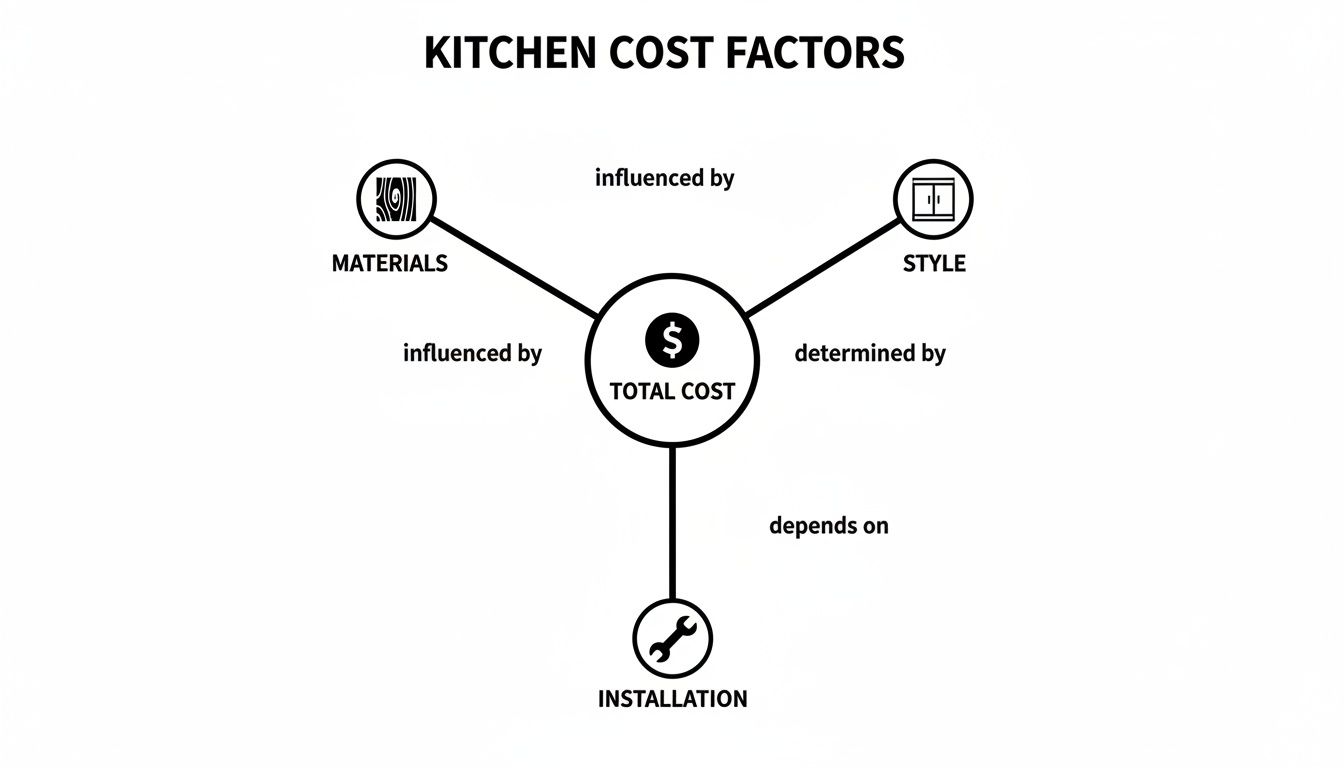
As you can see, materials are a huge component, but they work hand-in-hand with the cabinet style and the cost of installation to determine your final investment.
A Closer Look at Popular Cabinet Materials
Let's walk through the common options you'll find on the market and see where they land on the price spectrum. Each one has its own ideal use case, depending on what you value most—be it looks, longevity, or your bottom line.
Cabinet Material Cost And Feature Comparison
To make sense of the options, it helps to see them side-by-side. This table breaks down the most common materials, giving you a quick snapshot of how they stack up against each other.
| Material Type | Relative Cost | Durability | Best For |
|---|---|---|---|
| Laminate | Low | High | Budget-conscious projects, rentals, and high-traffic kitchens. |
| Thermofoil | Low-Mid | Moderate | Achieving a smooth, painted look without the high cost; easy to clean. |
| Matte HDF | Mid-High | High | Modern, sophisticated kitchens; great for hiding fingerprints. |
| High-Gloss HDF | High | High | Ultra-modern, high-impact designs; making small spaces feel larger. |
| Real Wood | High | Very High | Timeless, traditional aesthetics and long-term investment value. |
Ultimately, the right material is a balance between your budget, your style, and how you use your kitchen every day.
The Workhorses: Laminate and Thermofoil
Laminate is the undisputed champion of practicality and value. It's made by fusing layers of paper and resin onto a particleboard or MDF core. Don't let the simple construction fool you—today's laminates are incredibly resilient, standing up well to scratches, stains, and moisture. They're a fantastic choice for busy families or rental properties where easy maintenance and durability are key.
Thermofoil is another smart, budget-friendly option. It’s a thin layer of vinyl that's heat-fused onto an engineered wood core, typically High-Density Fibreboard (HDF). The real magic of this process is that it creates a perfectly smooth, seamless surface that's a breeze to wipe down. It gives you the clean, consistent look of a painted door but at a much more accessible price.
The Modern Powerhouse: High-Density Fibreboard (HDF)
High-Density Fibreboard, or HDF, has become a go-to base material for some of the most popular modern cabinet finishes. It's engineered for incredible strength and stability. Critically, especially with Toronto's fluctuating humidity, HDF won't warp, expand, or crack like solid wood can.
HDF is the secret behind those flawless, high-end modern kitchens. Its perfectly smooth and stable surface creates an ideal canvas for finishes that demand perfection, from mirror-like gloss to silky matte.
The two most sought-after HDF finishes are:
- High-Gloss Painted HDF: This is your ticket to a stunning, contemporary kitchen. We're talking multiple layers of high-gloss paint, polished to a reflective sheen that bounces light all over the room. It’s a brilliant strategy for making smaller or darker kitchens feel brighter and more spacious.
- Matte Painted HDF: For an understated and sophisticated vibe, matte HDF is a beautiful choice. It has a soft, velvety texture that’s excellent at resisting fingerprints and smudges—a huge plus for anyone with kids. It brings a refined, modern elegance to a space without the high-shine factor.
The Timeless Classic: Real Wood
For many homeowners, nothing can replace the authentic warmth and character of real wood. Every species, from the subtle grain of maple to the bold patterns of oak, brings a unique, organic feel into the heart of the home.
While it's at the higher end of the cost spectrum, solid wood is a true long-term investment. It's incredibly durable, and its classic appeal never goes out of style. Best of all, wood cabinets can be refinished or repainted years down the road, giving you the freedom to evolve your kitchen's look without starting from scratch. For a deeper dive into the pros and cons, our guide on the best materials for kitchen cabinets is a great resource.
The scale of manufacturing plays a huge role in what you end up paying. For instance, the cabinet and vanity manufacturing industry in California is a massive $1.7 billion market. This kind of scale allows a factory-direct supplier like MapleKing to source premium materials and offer luxury finishes to homeowners in Toronto and Markham at a fraction of what you’d pay through traditional retail channels that have expensive middlemen.
Budgeting for Cabinet Installation in the GTA
You’ve picked out your dream cabinets, and that’s a huge step. But those beautiful boxes don't jump onto the walls by themselves. The installation is where the real transformation happens, turning a pile of materials into the seamless, functional heart of your kitchen. It’s absolutely critical to remember that your total kitchen cabinet cost isn't just the price of the cabinets—it’s the product plus the skilled labour to bring it all together.
In a market like the Greater Toronto Area (GTA), professional installation is a true craft. It’s so much more than just hanging cabinets on a wall; it’s an exercise in precision. Every door needs to be perfectly level, each piece of crown moulding has to be cut with surgical accuracy, and every handle must be fitted just right. This is the stuff that separates a nice kitchen from a truly stunning one.
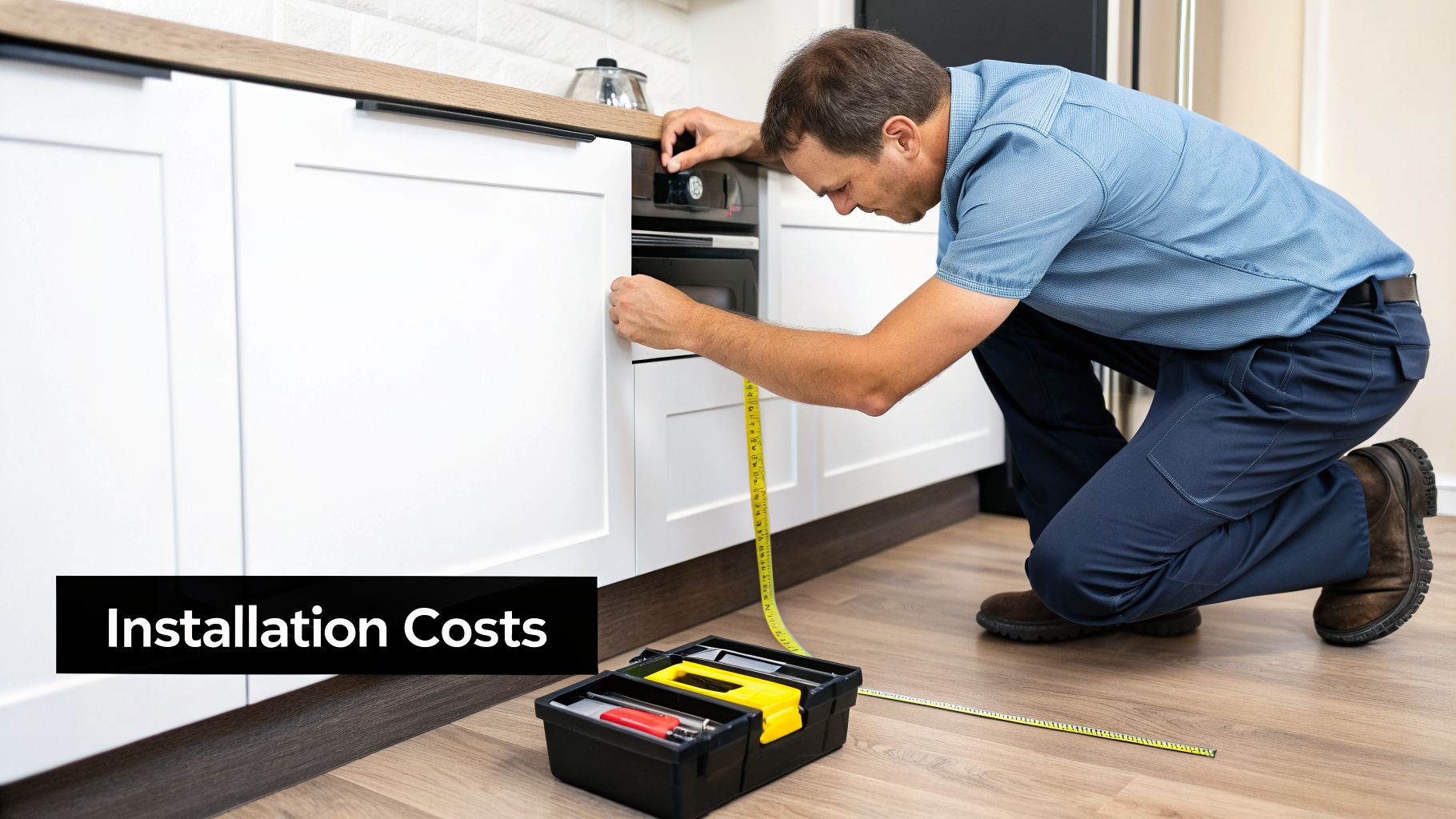
This level of detail requires experience, specialized tools, and a real understanding of how to work with the quirks of different homes.
What Drives Up Installation Costs
Just like cabinet materials have different price points, installation quotes can vary wildly. A few key factors can take a job from straightforward to complex, and you’ll see that reflected in the final labour bill. Knowing what these are ahead of time will help you budget realistically and ask the right questions.
Here’s what can bump up the price:
- Complex Kitchen Layouts: A simple L-shaped kitchen is a much quicker install than a U-shaped one with a big island, a peninsula, and tricky corner cabinets. More moving parts simply mean more time and meticulous work.
- On-Site Customizations: If your installer has to start cutting cabinets on-site to fit around plumbing, bulkheads, or wavy walls, the clock starts ticking. These adjustments demand a high level of skill and add to the labour hours.
- Demolition and Prep Work: Does the quote include tearing out and hauling away your old cabinets? What about patching up the walls before the new ones go in? Always clarify what’s covered.
- Unexpected Surprises: Older homes in Toronto and the surrounding areas are notorious for hiding secrets. Think floors that aren't quite level, walls that aren't perfectly square, or old plumbing that gets in the way. Tackling these issues on the fly will add to the final cost.
A Good Rule of Thumb: Plan to set aside 20% to 40% of your total cabinet cost for professional installation. So, if you spend $10,000 on cabinets, your labour budget should be between $2,000 and $4,000.
This range gives you a solid buffer and ensures you can afford the expertise needed for a flawless finish.
Asking the Right Questions to Avoid Hidden Fees
To keep your budget from spiraling, clear communication with your installer is non-negotiable. A detailed, written quote is your best friend when it comes to avoiding surprise charges down the line. Before you sign anything, get clear answers to a few key questions.
A true professional will gladly walk you through their process. To get a better feel for what a top-to-bottom service looks like, it helps to understand what's involved in a full-service approach to kitchen cabinets with installation.
Make sure you ask any potential installer:
- What, exactly, is included in this quote? Does it cover tearing out the old cabinets, site prep, hardware installation, and final cleanup?
- How do you handle surprises? What’s the plan—and the hourly rate—for dealing with issues like uneven walls or unexpected plumbing?
- What’s the timeline? A clear start and end date is crucial for managing the entire renovation project and your own sanity.
- Can I see your work? Ask for a portfolio or references from recent clients in the GTA. Seeing their past projects is the best way to verify the quality of their work.
By treating labour as a distinct and vital part of your kitchen cabinet costs, you’re not just hiring someone to hang boxes. You’re investing in a craftsperson who will make sure your new kitchen looks incredible on day one and functions perfectly for years to come.
Creating Your Kitchen Cabinet Budget with Real Examples
All those numbers and material options are great, but how do they actually come together in a real-world kitchen? This is where the abstract concepts start to feel concrete. Building a realistic budget for your kitchen cabinet costs isn't some complex financial puzzle; it's a straightforward, three-step process that takes you from a rough idea to a solid financial plan.
This method helps you build a reliable foundation. It makes sure you've accounted for the big-ticket items right from the start, so you don't get sidetracked by minor details too early. Think of it as creating a trustworthy framework for your entire renovation.
A Simple Three-Step Budgeting Process
Before we jump into specific examples, let's walk through the basic method. This approach works for any kitchen, whether you're working with a tiny galley or a sprawling open-concept space.
- Measure Your Space: Grab a tape measure and figure out the total length of wall space where your cabinets will be installed. Add up the lengths for both your uppers and lowers to get your total linear footage. This single number is the most crucial starting point for any estimate.
- Select a Material Tier: Based on what we've already covered, decide which material category aligns with your vision and wallet. Are you leaning toward entry-level (like laminate), mid-range (like painted HDF), or high-end (like real wood or a high-gloss finish)?
- Add a Smart Buffer: Every successful renovation plans for the unexpected. A good rule of thumb is to add an extra 20% to 40% on top of your cabinet material cost. This buffer is for installation and a contingency fund, covering labour, any surprises behind your old cabinets, and small last-minute add-ons.
With that simple process in mind, let's see how it works in three common renovation scenarios you might find across Markham and Toronto.
Real-World Budget Scenarios
To show you how these factors play out, we’ll look at three very different projects. Each one highlights different priorities, from getting the most bang for your buck in a small condo to crafting a luxurious, custom kitchen from scratch.
Scenario 1: The Markham Condo Refresh
A young professional in Markham is looking to update their small 8'x8' galley kitchen. The goal is a clean, modern look on a firm budget, with a focus on durability and easy maintenance for a busy lifestyle.
- Linear Footage: The kitchen has 8 feet of cabinets on both walls, adding up to 16 linear feet total.
- Material Choice: They've chosen a stylish and tough Thermofoil finish on an HDF core. This lands perfectly in the entry-level to mid-range tier, which we'll estimate at $220 per linear foot.
- The Math:
- Cabinet Cost: 16 linear feet x $220/foot = $3,520
- Installation & Buffer (30%): $3,520 x 0.30 = $1,056
- Total Estimated Project Cost: $4,576
For this price, they get a massive visual upgrade and better functionality without a huge financial commitment—a perfect move for boosting a condo's resale value.
Scenario 2: The Toronto Family Kitchen Renovation
A family in a semi-detached Toronto home is finally gutting their heavily used 10'x12' L-shaped kitchen. They need something that looks fantastic but can also handle the daily reality of life with kids. They're aiming for a mid-range material that perfectly balances style and strength.
- Linear Footage: With a 10-foot wall and a 12-foot wall, they have 22 linear feet of cabinet space.
- Material Choice: Fingerprint-resistant matte HDF is the ideal solution. It gives them a sophisticated look but is incredibly durable and easy to clean. Let's peg this at $350 per linear foot.
- The Math:
- Cabinet Cost: 22 linear feet x $350/foot = $7,700
- Installation & Buffer (35%): $7,700 x 0.35 = $2,695
- Total Estimated Project Cost: $10,395
This mid-range budget allows the family to invest in a high-performance finish that will hold up and look great for years, making it a very smart long-term decision.
Budgeting Insight: Did you notice the installation buffer went up? For a more complex renovation in an older home, where you might find quirky plumbing or walls that aren't perfectly straight, setting aside a larger percentage for labour and contingencies is always a wise move.
Scenario 3: The High-End Custom Project
A homeowner is finally building their dream kitchen in a large detached house. They want a premium, show-stopping space with custom features, including a big island that will be the heart of the home. The kitchen is a spacious 15'x15' layout.
- Linear Footage: The perimeter walls have 30 feet of cabinets, and the large central island adds another 12 feet, bringing the total to 42 linear feet.
- Material Choice: They've settled on a mix: classic solid wood for the perimeter and a stunning high-gloss HDF for the island to serve as a modern focal point. This is a high-end combination, averaging around $500 per linear foot.
- The Math:
- Cabinet Cost: 42 linear feet x $500/foot = $21,000
- Installation & Buffer (40%): $21,000 x 0.40 = $8,400
- Total Estimated Project Cost: $29,400
In a high-end project like this, the larger buffer is essential. It accounts for the meticulous installation that luxury materials demand and the extra labour needed to integrate custom features, ensuring the final result is absolutely flawless.
Smart Strategies to Save on Your New Kitchen Cabinets

Getting a handle on the numbers is the first step, but the real magic is finding ways to lower that final cost without sacrificing the quality you want. With a few practical strategies, you can make your budget go a lot further. This isn't about cutting corners; it's about making smart, informed choices that deliver the best possible value for your home.
The most effective tool you have for saving money is a rock-solid plan. Indecision is expensive. Every change made after orders are placed or work has started introduces delays and adds to your bill. Nail down your layout, materials, and hardware before anyone picks up a tool.
Plan Smartly to Avoid Unnecessary Costs
One of the best ways to keep your project on budget is to work within your kitchen's existing footprint. As tempting as it can be to relocate the sink or move the stove to a different wall, these changes can set off a chain reaction of hidden expenses.
Sticking with your current layout helps you sidestep:
- Costly Plumbing Work: Moving a sink or dishwasher means calling in a plumber to reroute supply and drain lines.
- Complex Electrical Adjustments: Shifting major appliances often requires an electrician to move dedicated circuits and outlets.
- Flooring and Wall Repairs: A new layout almost always leaves gaps in the floor or demands significant drywall patching where the old cabinets once stood.
Of course, if your current layout just doesn't work for you, then making a change is a worthwhile investment. But if it's functional, keeping it as-is is the single biggest move you can make to control costs.
The Power of Buying Factory-Direct
Even with the perfect plan, the real secret to saving money often comes down to where you buy your cabinets. The typical retail path has several layers of markups built in. Cabinets often travel from the manufacturer to a distributor, then to a retail showroom, and finally to your home. Each middleman adds their own profit margin, which inflates the final price you pay.
This is where a factory-direct supplier like MapleKing completely changes the equation. By cutting out those intermediaries, you're buying straight from the source.
The Factory-Direct Advantage: Going factory-direct can often slash your kitchen cabinet costs by up to 50% compared to what you’d pay at big-box stores or traditional showrooms. This isn't a temporary sale; it’s the natural result of a smarter, more efficient business model.
This direct approach suddenly makes premium materials—like durable painted HDF or timeless real wood—much more affordable. You get the look and quality of a high-end kitchen without the luxury price tag.
More Ways to Maximize Your Budget
Beyond smart planning and sourcing, a few other tactics can help. For instance, if your cabinet boxes are still in good structural shape, learning how to upcycle kitchen cabinets can be a creative and budget-friendly project.
And while refacing might seem like an obvious money-saver, it's crucial to look at its long-term value. Our detailed guide on the cost of refacing kitchen cabinets can help you determine if it’s the right path for your renovation. By combining these strategies, you’ll be in a fantastic position to create a beautiful, durable kitchen that truly respects your budget.
Your Pre-Purchase Checklist: Questions to Ask Before Buying Kitchen Cabinets
Alright, you've crunched the numbers, explored the materials, and have a vision for your new kitchen. Before you sign on the dotted line, it's time for the most critical step: asking the right questions. This isn't just about getting a price; it's about making sure you’re partnering with a company that delivers on its promises.
Think of this as your final due diligence. A reputable supplier will be happy to answer everything in detail, while any hesitation or vague responses should be seen as a serious red flag. Use this checklist to confidently vet any cabinet company and protect your investment.
Questions About Cabinet Quality and Construction
The real value of your kitchen isn't just in the beautiful door finish—it's in the unseen details that determine how your cabinets will hold up over years of daily use. You need to dig into the structural integrity.
- What are the cabinet boxes made of? Is it solid, furniture-grade plywood or cheaper particleboard (MDF)? Plywood is far more durable and resistant to moisture.
- How are the drawers built? Insist on seeing a sample. Look for solid wood construction and dovetail joinery, a hallmark of quality that’s vastly superior to flimsy stapled or glued joints.
- What kind of hardware do you use? Be specific. Ask about the brand of soft-close hinges and whether the drawer glides are full-extension, which lets you access the entire drawer.
Clarifying Your Quote and the Project Timeline
Your quote is more than just a price—it’s the roadmap for your project. Ambiguity here is the number one cause of budget overruns and frustration.
A good quote is a clear contract. It should spell out exactly what's included and, just as crucially, what isn't. Vague terms almost always hide extra costs that will pop up later.
Before you commit, make sure you have solid answers to these questions:
- Is this quote truly all-inclusive? Does the final price cover delivery, handles and knobs, tear-out of the old cabinets, complete installation, and site cleanup?
- What’s the payment schedule? Know exactly how much the deposit is and when the remaining payments are due.
- What's the realistic timeline? Get an estimated lead time from the day you order to delivery, and then a separate, clear timeline for the full installation process.
Verifying the Company’s Reputation and Reliability
Finally, you need to feel confident that you’re working with a team of professionals who stand behind their work. A company’s past performance is the best predictor of your future experience. A trustworthy supplier like MapleKing is proud of its track record for precision and great customer service.
Ask for proof of their expertise and reliability:
- Do you offer a warranty? What exactly does it cover, and for how many years? Always get the warranty details in writing.
- Can I see a portfolio of your recent work in the Toronto area? Photos are good, but seeing the real thing in their showroom is even better.
- Can you put me in touch with a few recent clients? Speaking to past customers is one of the best ways to gauge what the experience will actually be like.
Walking in with these questions changes the dynamic. You're no longer just a buyer; you're an informed client who knows what to look for. This approach empowers you to compare your options fairly and choose a partner who will deliver the quality and value your home deserves.
Tying Up the Loose Ends: Your Cabinet Cost Questions Answered
Even with all the numbers laid out, a few key questions always pop up when you're getting down to the wire on your kitchen plans. Let's tackle some of the most common ones head-on so you can move forward with confidence.
How Much of My Renovation Budget Should Actually Go to Cabinets?
A good rule of thumb is to set aside 30% to 50% of your total kitchen renovation budget just for the cabinets. It sounds like a lot, but think about it—they’re the backbone of your kitchen, both visually and functionally. They take up the most real estate and you interact with them every single day.
If you're planning a high-end, custom kitchen with all the bells and whistles, you'll likely lean towards the 50% mark or even a bit higher. For a more straightforward project where you're just refreshing the look without changing the layout, you can probably stick closer to 30%.
Is It Cheaper to Reface or Just Replace My Kitchen Cabinets?
Refacing can look tempting on paper because the initial quote is often lower. It involves putting new "skin"—doors and drawer fronts—on your old cabinet boxes. This can be a decent option if, and only if, your existing layout is flawless and the cabinet boxes are in rock-solid condition.
But here’s the reality: if you want to fix an awkward corner, add more drawers, or if the boxes themselves are showing their age, a full replacement is almost always the smarter investment. And with factory-direct suppliers, the cost difference for a complete replacement can be surprisingly small, while the improvement in quality and function is massive.
Key Insight: Replacement is a true fresh start. It lets you solve core problems with your kitchen's flow, storage, and structure. Refacing is just a cosmetic touch-up; it can't fix a fundamentally flawed kitchen.
What’s the Best Bang-for-Your-Buck Material for Durability?
For that perfect sweet spot of durability, modern style, and great value, it’s hard to beat High-Density Fibreboard (HDF) with a top-notch finish. Whether it's a sleek thermofoil or a professional-grade paint, HDF is an absolute workhorse. It's incredibly stable, so it won't warp or crack with the humidity swings we get here in Toronto—a real problem for some solid woods.
When you finish HDF with a quality thermofoil or a sprayed lacquer, it becomes tough as nails against scratches, stains, and moisture. This gives you that coveted high-end look that can stand up to a busy family kitchen, all without the hefty price tag of solid wood.
Ready to get a clear, no-obligation quote for your dream kitchen? The team at MapleKing Kitchen Cabinets provides factory-direct pricing that makes luxury affordable. Explore our collection and get your free estimate today!



