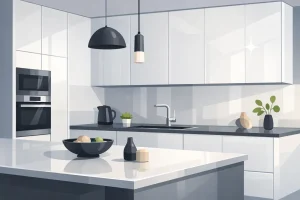

Sticker shock usually happens before the first cabinet door is even picked. A homeowner gets one quote that seems reasonable, another that is double the price, and suddenly the whole project feels harder than it should. If you are trying to figure out how to price kitchen cabinets, the key is knowing what you are actually paying for. Cabinet pricing is never just about boxes on a wall. It is about layout, materials, construction, finish, storage features, and how custom you want the final kitchen to feel.
How to price kitchen cabinets without guessing
The fastest way to get closer to a real number is to stop thinking in terms of one average price for an entire kitchen. Cabinet costs are built from several layers, and each layer can move your budget up or down. A small L-shaped kitchen with standard finishes will price very differently from a large open-concept kitchen with tall pantry cabinets, an island, and custom storage accessories.
Start with your kitchen footprint. Count how many base cabinets, wall cabinets, tall cabinets, and specialty pieces you need. Then look at the material and finish level you want. From there, factor in construction quality, door style, hardware, and installation. When homeowners compare quotes without lining up those details, they often think one company is overpriced when the real difference is product level.
Start with layout and cabinet quantity
Kitchen cabinet pricing begins with volume. More cabinets mean more material, more doors, more hardware, and more labor. That sounds obvious, but the details matter. Two kitchens can have the same room size and still land in very different price ranges because one uses simple base and wall cabinets while the other adds a full-height pantry, built-in microwave housing, decorative panels, and an island with storage on both sides.
A practical way to estimate cost is to group the kitchen by cabinet type. Base cabinets usually cost more than wall cabinets because they are larger and often carry more weight. Tall cabinets and pantry units can push the price higher quickly because they use more material and often require more precise installation. Corner cabinets, lazy Susans, pull-out storage, and appliance panels also add cost beyond a simple box-and-door setup.
This is why a kitchen that looks clean and minimal can still be expensive. Hidden storage features and custom-sized units often raise the budget more than decorative trim does.
Material choice has a major impact
One of the biggest parts of how to price kitchen cabinets is understanding the material category. Homeowners often compare cabinet prices without realizing they are comparing completely different products.
Real wood painted cabinetry usually sits at a higher price point because of the material itself and the craftsmanship involved. It delivers a premium look and strong long-term appeal, especially for classic or transitional kitchens. HDF painted cabinets can offer a smooth painted finish at a more budget-conscious price, which makes them attractive for homeowners who want a clean custom look without paying for solid wood construction throughout.
High-gloss HDF, matte HDF, laminate, and thermofoil all have their own price positions as well. Laminate can be a smart value choice for modern kitchens because it gives you consistent finishes and good durability. Thermofoil often appeals to budget-conscious renovations, but it is important to weigh appearance, heat exposure, and long-term wear. Matte and glossy HDF finishes can deliver a sleek, upscale aesthetic, but the final price depends on the finish quality and door construction.
There is no universal best material. The right choice depends on the look you want, how hard your kitchen works every day, and how long you plan to stay in the home.
Construction quality changes the number quickly
Cabinet pricing is not only about what you see on the outside. The internal construction matters just as much. Box thickness, joinery, drawer box material, soft-close hardware, shelf strength, and back panel quality all affect price.
Lower-cost cabinets may use thinner materials, basic hardware, and fewer finish options. That can work for some projects, especially rentals or light-use spaces. But for a primary kitchen renovation, many homeowners want better drawer glides, stronger box construction, and finishes that hold up to years of opening, closing, cooking, and cleaning.
This is often where factory-direct value makes a real difference. You can put more of your budget into better materials and construction instead of paying traditional showroom markups. For many homeowners, that is the difference between settling for stock-looking cabinetry and getting a more custom result at a manageable price.
Door style and finish affect labor and cost
Simple cabinet styles are usually less expensive than detailed ones. A flat-panel slab door tends to be more budget-friendly than a raised-panel or heavily profiled shaker variation. The more detail in the door and finish process, the more labor goes into manufacturing it.
Painted finishes often cost more than some laminate or thermofoil options because the finishing process is more involved. Specialty paint colors, super-matte finishes, or ultra-gloss surfaces may also raise the total. If you are matching a broader kitchen design with specific flooring, countertops, or wall colors, custom finish work can be worth it, but it should be priced as an upgrade rather than assumed to be standard.
For homeowners trying to balance style and budget, this is a smart place to simplify. You can often choose a timeless door profile and let the kitchen feel elevated through layout, finish, and hardware instead of paying for extra ornamentation.
Custom sizing vs. standard sizing
This is where many budgets shift from good to stretched. Standard cabinet sizes are more cost-efficient because they follow established production dimensions. Once you start changing widths, heights, depths, filler details, or appliance integrations, pricing moves upward.
That does not mean custom is a bad idea. In fact, custom-oriented cabinetry often creates better function, cleaner lines, and less wasted space. It can also make a modest kitchen feel more expensive because everything fits the room properly. But if you are trying to control costs, ask where standard sizing can work and where custom sizing will deliver the biggest return.
A common middle-ground approach is to use standard cabinet dimensions for most of the kitchen and reserve custom work for problem areas, such as awkward corners, ceiling-height runs, or a built-in pantry wall.
Do not forget the cost of upgrades
When homeowners ask how to price kitchen cabinets, they often picture the visible doors and drawers but forget the practical upgrades that make the kitchen easier to use. Pull-out garbage systems, spice pull-outs, tray dividers, cutlery inserts, glass doors, under-cabinet lighting details, crown molding, finished end panels, and appliance garage solutions all affect price.
These upgrades are not just add-ons for luxury homes. Many are functional choices that improve daily use. The question is not whether upgrades are good or bad. The question is which ones matter enough to justify the spend.
If your budget is tight, invest in features that improve the way you actually cook and store items. A pull-out pantry or better drawer organization may deliver more value than purely decorative extras.
Installation and project conditions matter too
Cabinet pricing should never be separated from installation realities. An easy, level room with straightforward delivery access will cost less to install than a condo project with elevator scheduling, tight hallways, uneven walls, and appliance coordination.
Older homes can also create surprises. Crooked floors, out-of-square corners, bulkheads, plumbing conflicts, and electrical adjustments all affect labor. If your quote seems higher than expected, it may reflect site conditions rather than cabinet quality alone.
This is why transparent pricing matters. A good quote should separate product cost from installation and make clear what is included. If one quote includes design support, measuring, delivery, trim, fillers, and installation while another only covers cabinet boxes, the lower number is not really lower.
A realistic pricing mindset for homeowners
The best way to price cabinets is to set a range, not chase one magic number. Think in tiers. Start with your ideal investment level, then identify where you are willing to flex. Maybe premium painted cabinetry is your priority, but decorative glass cabinets are not. Maybe you want a custom island, but standard perimeter cabinets. That is how smart budgeting happens.
It also helps to think about cabinets as a long-term purchase. They are one of the most visible and most heavily used parts of the kitchen. Cutting too far can lead to short-term savings and long-term frustration. On the other hand, spending on every upgrade available does not automatically create better value. The right price is the one that matches your kitchen goals, your home, and the way your household actually lives.
For homeowners who want affordable luxury, the sweet spot is usually a well-designed cabinet plan with quality materials, a durable finish, and selective customization where it counts most. That approach gives you a kitchen that looks tailored and performs well without letting the budget drift.
If you are comparing options, ask for a detailed quote that breaks down cabinet type, material, finish, upgrades, and installation scope. That one step can save you from the most expensive mistake of all – choosing based on a number that was never truly comparable in the first place. And when the pricing is clear, the design decisions get a lot easier.