

Choosing glass for kitchen cabinet doors is one of those design decisions that can completely change the feel of a room. It's a move that brings in light, creates a sense of space, and adds a personal touch that solid doors just can't match. More than a simple window, a glass insert can break up a long run of cabinetry, add a bit of elegance, and let you show off your favourite pieces.
Why Choose Glass for Your Kitchen Cabinet Doors
Putting glass in your kitchen cabinets is hands-down one of the most effective ways to elevate the whole design. A solid wall of cabinets gets the job done, but it can make a space feel heavy and closed-in, which is a real problem in many smaller Toronto or Markham homes. Glass doors break things up, introducing light and a sense of depth that can totally transform the room's atmosphere.
Think of it as the perfect middle ground between closed-off storage and completely open shelves. You get that airy, curated vibe of an open display but without the pressure of keeping everything perfectly styled all the time. For homeowners who are leaning towards a more open look, it's worth exploring the pros and cons of open kitchen cabinetry to see how glass doors offer a practical alternative.
The Impact on Your Kitchen Space
The right glass can solve a lot of common design headaches. In a tight kitchen, the reflective surface bounces light around, creating an illusion of a much bigger space. It's a simple trick that can make a narrow galley kitchen or a condo layout feel way less cramped.
On top of that, glass doors are a fantastic way to inject your own personality into the kitchen. They turn what would be standard storage into a real decorative feature.
When you display your colourful pottery, elegant stemware, or treasured family heirlooms, your cabinets stop being just functional boxes. They become a genuine reflection of your style.
Key Benefits of Glass Cabinet Doors
Bringing glass inserts into your kitchen design offers a few key advantages that affect both how your kitchen looks and how it works:
- Enhanced Light and Space: Glass catches and reflects both natural and artificial light, making the entire kitchen feel brighter and more open.
- Aesthetic Variety: It breaks up the visual monotony of solid wood or HDF, adding texture, depth, and a focal point to the design.
- Showcase Your Style: Glass gives you the perfect stage to display beautiful dishes, glassware, or decorative items, adding that personal touch.
- Improved Organization: Let's be honest—knowing your cabinet contents are on display is a great motivator to keep things tidy, which makes your whole kitchen run more smoothly.
This guide will walk you through everything you need to know, from the specific character of different glass types to the non-negotiable safety details. We'll make sure your renovation is as beautiful as it is practical.
Exploring the Different Types of Cabinet Glass
Choosing the right glass for kitchen cabinet doors isn't just a practical decision; it’s about setting the personality for your entire kitchen. Every type of glass has its own character, offering a unique blend of style, privacy, and visual texture that can completely change the feel of the room. Think of it less like a window and more like a design feature that controls light and decides what you want to show off—or artfully conceal.
This one choice has a huge impact on your kitchen's daily vibe. Will you go for crystal-clear glass that turns your favourite dishware into a curated display? Or perhaps the soft glow of frosted glass that hints at what’s inside without revealing everything? Let's walk through the most popular options to find the perfect match for your home.
This quick visual breaks down how adding glass can completely refresh your kitchen, making it feel brighter, bigger, and much more you.
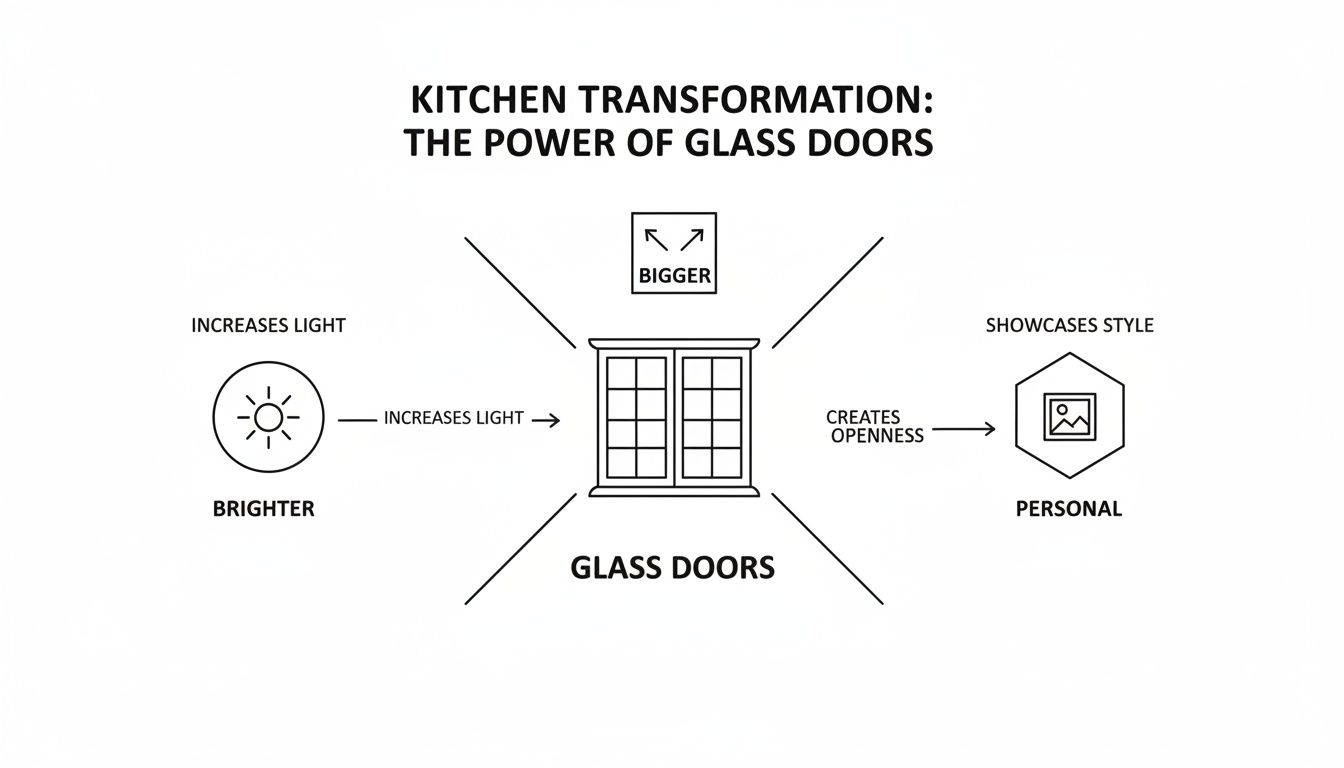
As you can see, glass doors are a fantastic tool for opening up a space, boosting natural light, and turning simple storage into a personalized style statement.
Clear and Low-Iron Glass
Clear glass is the go-to classic. It’s simple, clean, and acts like a picture frame for what’s inside your cabinets. This is the perfect choice if you're proud of your neatly stacked dishware, colourful glassware, or cookbook collection and want to put it on display. It demands a bit of organization, but the payoff is a beautiful, open look.
For a step up in clarity, there’s low-iron glass. You might not have noticed, but standard clear glass has a subtle green tint, which you can usually spot along the edges. Low-iron glass has that iron content removed, making it exceptionally clear and letting the true colours of your cabinets and their contents shine through. It’s a brilliant choice for crisp white or light-coloured kitchens where you want absolute colour purity.
Frosted Glass
What if you love the airy feel of glass but aren’t so keen on keeping your cabinets perfectly tidy all the time? Frosted glass is your best friend. Created by sandblasting or acid-etching, it beautifully diffuses light and blurs the shapes behind it.
You get a soft, luminous effect that keeps the space feeling open, but you don't have to worry about the jumble of mismatched mugs. It’s a wonderfully practical and modern option that strikes a perfect balance between openness and privacy.
Frosted glass gives you the best of both worlds. It keeps things bright by letting light pass through but cleverly hides any potential clutter. This makes it a forgiving yet stylish option, especially for busy family kitchens.
Textured and Patterned Glass
If you’re looking to inject a bit more personality and depth, textured glass is where the fun really begins. Each pattern plays with light in its own way, creating a distinct visual effect.
- Seeded Glass: Full of tiny, trapped air bubbles, this glass has a charming, handcrafted feel. It’s perfect for adding a touch of vintage character, gently distorting the view while partially hiding what's inside. It fits right in with farmhouse, rustic, or traditional styles.
- Ribbed Glass: Also known as reeded or fluted glass, this type features clean vertical grooves that create an elegant, linear pattern. It's a fantastic way to add sophisticated texture and can even make your cabinets feel a little taller. This style is incredibly popular right now in both modern and transitional designs.
- Wired Glass: Originally developed as a safety feature, wired glass has a distinctive wire mesh embedded within it. Today, it’s all about the industrial or retro aesthetic. It brings a cool, utilitarian vibe to a kitchen while offering a bit of visual camouflage.
Leaded and V-Grooved Glass
For a truly custom and timeless look, you can't go wrong with decorative options that highlight true craftsmanship. These are the kinds of details that turn a set of cabinets into a stunning focal point.
Leaded glass is the classic choice, where smaller pieces of glass are joined together with metal strips (traditionally lead). This technique allows for beautiful, intricate patterns—from simple diamond grids to elaborate, one-of-a-kind designs. It lends an authentic, handcrafted feel that’s hard to replicate.
V-grooved glass, on the other hand, offers a more understated kind of elegance. A V-shaped channel is carefully ground into the surface of the glass, often creating chic borders or classic patterns like diamonds or stripes. It catches the light beautifully without feeling overly ornate.
The table below offers a quick comparison to help you weigh your options at a glance.
Comparing Cabinet Glass Types at a Glance
| Glass Type | Transparency Level | Best For (Style) | Maintenance Level | Relative Cost |
|---|---|---|---|---|
| Clear | High (Fully Transparent) | Modern, Minimalist, Traditional (for display) | High (Shows smudges) | $ |
| Low-Iron | Highest (Ultra-Clear) | High-End Modern, White Kitchens, Colour Accuracy | High (Shows smudges) | $$ |
| Frosted | Low (Translucent) | Contemporary, Transitional, Scandinavian | Low (Hides marks) | $$ |
| Seeded | Low-Medium (Obscured) | Farmhouse, Rustic, Vintage, Traditional | Low (Hides marks) | $$$ |
| Ribbed/Fluted | Low-Medium (Distorted) | Art Deco, Mid-Century Modern, Contemporary | Medium (Grooves) | $$$ |
| Wired | Low-Medium (Obscured) | Industrial, Retro, Loft-Style | Medium | $$$$ |
| Leaded | Varies (Pattern-based) | Traditional, Craftsman, Victorian, Custom | High (Cleaning) | $$$$$ |
| V-Grooved | High (With Detail) | Traditional, Transitional, Elegant Modern | High (Shows smudges) | $$$$ |
Ultimately, the right glass comes down to matching its look and feel with the overall vision you have for your kitchen. Whether you’re aiming for modern minimalism, cozy rustic charm, or timeless elegance, your glass choice will play a starring role in bringing that vision to life.
Understanding Glass Safety and Durability
When you're picking out glass for your kitchen cabinets, it's easy to get caught up in the look. But how it looks is only half the story. The other, more critical part, is making sure it can stand up to the hustle and bustle of a real family kitchen—safely.
This means we need to talk about what happens if the glass breaks.
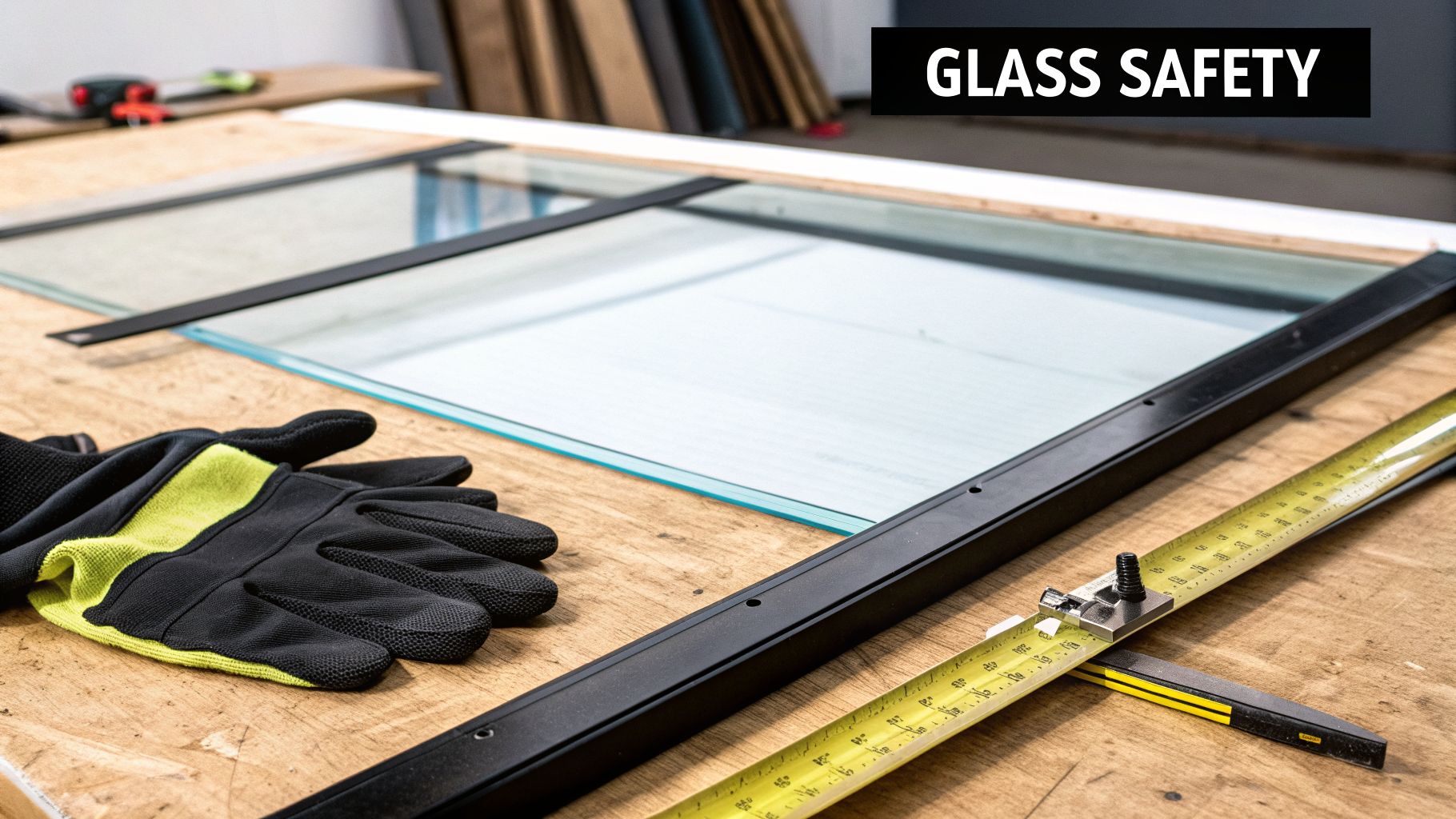
Regular glass, what we call "annealed" glass, shatters into big, jagged daggers. That’s a serious hazard in the heart of your home. This is precisely why safety glass isn't just a nice-to-have; it's a must-have upgrade for any kitchen renovation.
The Strength of Tempered Glass
The go-to choice for safety in kitchens is, without a doubt, tempered glass. The easiest way to think of it is as glass that’s been put through a strength-training program. It's heated to a scorching temperature and then cooled down very quickly.
This intense process creates a huge amount of compression on the surface and tension in the core. The result? Glass that's about four times stronger than the standard stuff. And here’s the best part: if it does break, it crumbles into small, dull, almost pebble-like pieces, which are far less likely to cause a serious injury. It's become the industry standard for a reason, especially for cabinets near a stove or at a lower height where a bump is more likely.
Choosing tempered glass is really about buying peace of mind. It's a small upfront investment that protects your family from the dangers of sharp, broken glass, keeping your kitchen beautiful and secure.
Advanced Safety with Laminated Glass
If you're looking for the next level of protection, you'll want to consider laminated glass. This is essentially a glass sandwich: two layers of glass with a tough, clear plastic interlayer (usually PVB) fused between them.
When laminated glass breaks, that interlayer works like a safety net, holding all the broken pieces together. They crack, but they don't scatter. It's the same technology used in your car's windshield. For the ultimate in strength and safety, especially in a busy kitchen, it’s worth looking into options like laminated tempered glass.
The demand for high-quality, safe materials is growing. The North American kitchen cabinets market is projected to grow at a 5.36% CAGR from 2026-2031, and premium features like glass doors are a big part of that. Here in the Toronto and Markham areas, where residential construction value grew up to 10% annually through 2025, homeowners are increasingly choosing glass for both its look and its easy-to-clean, hygienic surface.
Choosing the Right Glass Thickness
Thickness plays a role in durability, too. For most kitchen cabinet doors, a glass thickness between 4mm (5/32”) and 5mm (3/16”) is the sweet spot. This offers a great balance of strength without being so heavy that it puts extra stress on the door hinges.
Of course, for larger or frameless cabinet doors, you might need something a bit thicker, but that’s a conversation to have with your cabinet professional.
Getting a handle on these safety features is key to making a choice you'll be happy with for years. It also helps to understand how these glass options fit into the bigger picture of cabinet design. To learn more, check out our in-depth guide on the https://maplekingkitchencabinets.com/best-materials-for-kitchen-cabinets/.
Pairing Glass Doors with Cabinet Finishes
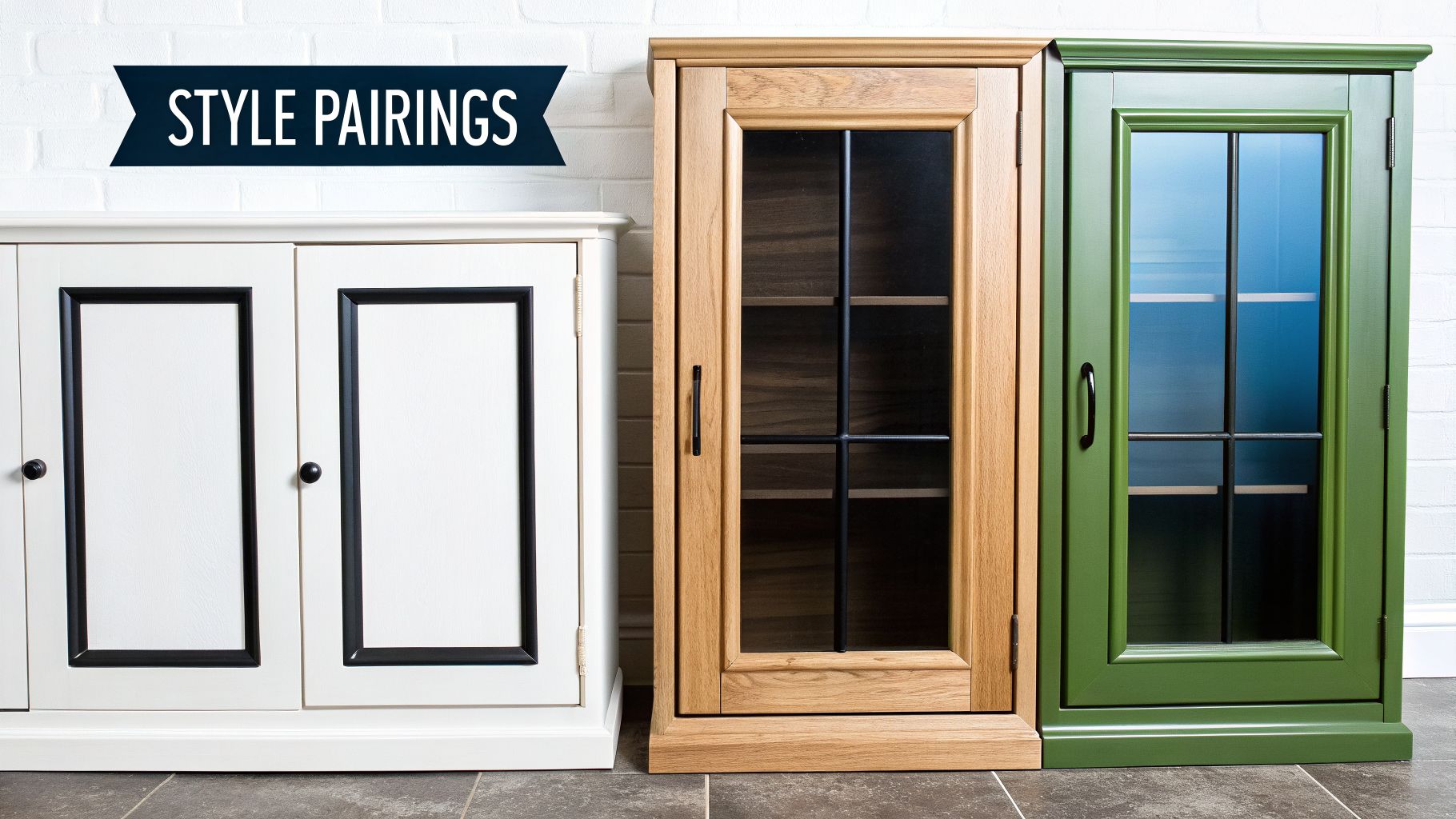
Creating a truly beautiful kitchen is all about harmony. The right pairing of glass for kitchen cabinet doors with your chosen cabinet finish can elevate the entire room from functional to stunning. This is where you connect the texture of the glass to the colour and sheen of the door, making sure every element works together.
Think of it like pairing wine with food—some combinations just naturally bring out the best in each other. A sleek, modern finish calls for a different glass style than a warm, traditional wood grain. Let's walk through how to create these perfect pairings for a professionally curated look.
Real Wood Painted Finishes
Real wood painted cabinets have a timeless, custom-built feel. They often let subtle grain textures show through a layer of rich colour, giving them an inherent warmth and character. The best glass for this style is one that shares a similar handcrafted quality.
Seeded glass is a wonderful match here. Its tiny, imperfect bubbles echo the natural variations in the wood, creating a cohesive, organic look. This combination feels artisanal and welcoming, and it’s perfect for modern farmhouse or transitional kitchens.
Another fantastic option is leaded glass. A simple diamond or square pattern can add a touch of classic elegance that complements the traditional feel of painted wood cabinets, turning them into a genuine focal point.
High-Gloss and Matte HDF Finishes
High-Density Fibreboard (HDF) gives you a flawless, uniform surface, making it an ideal canvas for modern finishes. High-gloss and matte options sit at opposite ends of the spectrum, and each needs a thoughtful glass pairing to maximize its effect.
High-gloss finishes are all about clean lines and reflective surfaces. The goal here is to amplify that sleek, contemporary vibe.
For this style, nothing works better than clear or low-iron glass. It keeps the look sharp and uninterrupted, turning your cabinet interiors into a polished display case. If you want a bit of privacy without losing the modern aesthetic, frosted glass offers a soft, ethereal glow that diffuses light beautifully against the shiny surface.
Matte HDF finishes, on the other hand, are prized for their soft, velvety appearance and resistance to fingerprints. This understated elegance calls for glass with some texture and personality.
- Ribbed or Fluted Glass: The strong vertical lines of ribbed glass create a stunning contrast with the flat, smooth matte surface. This pairing adds depth and a subtle Art Deco or mid-century flair.
- Wired Glass: For a more industrial or edgy look, the embedded wire mesh offers a textural counterpoint to the soft matte finish, creating a dynamic and interesting visual.
The demand for premium, customized cabinetry is a major driver in the home renovation market. In fact, the cabinet and vanity manufacturing industry in California, a leader in high-end design trends, reached a market size of $1.7 billion in 2026. This growth is fuelled by homeowners seeking luxury materials like tempered glass doors to create light, open, and organized kitchens.
Laminate and Thermofoil Finishes
Laminate and thermofoil are the workhorses of the modern kitchen, known for their incredible durability and easy maintenance. They come in a massive range of colours and patterns, from realistic wood grains to solid contemporary hues. The key here is to choose a glass that complements the specific look of the finish.
If you have a wood-grain laminate, treat it like real wood—consider seeded or clear glass to enhance its traditional or transitional feel. For solid-coloured laminates or thermofoil, especially in a modern setting, frosted glass is an excellent choice. It provides a clean, uniform look that aligns with the practicality and simplicity of these materials.
Ultimately, the goal is to create a balanced look where texture, sheen, and style feel intentional. By carefully considering how your glass and cabinet finish interact, you can achieve a sophisticated design that feels both personal and timeless. For a deeper dive into the finishes themselves, our guide on different kitchen cabinet door styles offers some valuable insights.
Getting Practical: Cost, Care, and Installation
Alright, we’ve covered the fun part—picking out the perfect look for your glass cabinet doors. Now it's time to bring those ideas back down to earth and talk about the practical side of things: the budget, the upkeep, and how it all comes together during installation.
Getting these details right is what separates a dream kitchen from a kitchen you actually love living in. It’s about making sure your beautiful new cabinets are as sensible as they are stunning, without any surprise costs or cleaning headaches down the road.
What to Budget for Glass Cabinet Doors
Like any custom element in a kitchen, the cost of adding glass can swing quite a bit. It really comes down to a few key choices you make along the way. Think of the final price as a sum of its parts—the glass itself, any special treatments, and the skilled hands needed to put it all together.
Your biggest cost driver will be the type of glass you select. A simple, clear tempered glass panel is always the most wallet-friendly starting point. From there, the price tends to climb as you get into more decorative options like frosted, seeded, or ribbed glass. The top tier is usually reserved for artisan styles like leaded glass or pieces with custom V-grooved designs, which require a lot more hands-on work.
A few other things will nudge the price up or down:
- Glass Thickness: While there are standard options, going for a thicker or custom-sized panel will naturally cost more.
- Safety Tempering: This is a non-negotiable safety step for any kitchen application, and it adds a small premium to the cost. It's worth every penny.
- Custom Cuts: Need an arched top or a unique shape? That specialized work will add to the final bill.
- Framing and Labour: Don't forget to factor in the cost of the door frame and the professional installation.
As a rule of thumb, it’s a good idea to budget 20% to 50% more for a glass-front cabinet door compared to its solid counterpart. To manage this, many homeowners in Toronto and Markham will use glass doors as a highlight on just a few upper cabinets instead of outfitting the entire kitchen. If you're mapping out your numbers, our guide on kitchen cabinet cost is a great place to start.
Keeping Your Glass Looking Spotless
One of the best things about glass is how simple it is to clean. Still, a few different textures call for slightly different techniques to keep them looking brand new.
For smooth surfaces like clear, low-iron, or even frosted glass, you can't beat the classic 50/50 mix of white vinegar and water. Just spritz it on and wipe with a clean, lint-free microfibre cloth. It works better than most commercial cleaners and leaves a perfect, streak-free shine.
Textured glass, such as ribbed or seeded styles, needs a little more finesse to get into all those nooks and crannies where dust loves to hide.
- For a quick dusting: A dry microfibre cloth is all you need to grab surface dust.
- For a deeper clean: Grab your vinegar spray and a soft-bristled brush (an old toothbrush is perfect for this). Gently scrub the textured spots to lift away any grime.
- To finish: Wipe it all down with a clean, dry microfibre cloth to soak up any leftover moisture.
Nailing the Installation and Framing
This is where it all comes together. A proper installation is what ensures your doors not only look fantastic but also hang straight and close perfectly for years to come. While it might seem tempting for a savvy DIYer, we almost always recommend letting a professional handle this. It’s a job where precision really matters.
Your installer will also help you finalize the framing. The glass can be set into a traditional wood frame that matches your cabinetry, which is perfect for creating that classic mullioned or "divided lite" look. For a sleeker, more contemporary vibe, you might opt for a door with minimal framing to really let the glass take centre stage.
Before any work starts, be sure to run through this checklist with your contractor:
- Can you confirm the glass will be tempered for safety?
- How will the glass be secured in the door? (e.g., silicone, retaining clips?)
- What kind of warranty do you offer on the glass and the installation?
- What steps will you take to protect my countertops and floors during the install?
Common Questions About Glass Cabinet Doors
A kitchen reno always brings up a ton of questions. When it comes to picking glass for kitchen cabinet doors, homeowners and contractors around here in Toronto often run into the same practical concerns about trends, cost, and everyday use. Here are some straight-up answers to help you feel confident in your final choice.
Are Glass Cabinet Doors a Timeless Trend?
Absolutely. Think of glass cabinet doors as a classic design staple, not a fleeting trend. They stick around because they adapt so well. In modern kitchens, we use them to break up a long run of solid cabinets, bounce light around the room, and create a perfect spot to display your best dinnerware.
They add a touch of sophistication that keeps a kitchen from feeling too heavy or boxy. Whether you go for crystal-clear, frosted, or a cool ribbed glass, you’re making a smart design choice that will look great for years.
How Does the Cost Compare to Solid Doors?
In most cases, you can expect cabinet doors with glass inserts to cost more than solid ones—usually in the ballpark of 20% to 50% higher. The final number really depends on the type of glass you choose (fancier options like seeded or leaded glass will cost more), its thickness, and whether you upgrade to tempered glass for safety.
But here’s how most people handle the cost: they use glass strategically. Popping them on just a few upper cabinets gives you that high-end, custom feel without the expense of doing the whole kitchen. It's a great way to create a beautiful focal point and stay on budget.
Pro Tip: Using glass selectively is a designer-approved trick. It draws the eye, adds a touch of elegance, and makes the whole kitchen feel more open and thoughtfully planned—all while being cost-effective.
Does Glass Reduce My Kitchen Storage?
Glass doors don’t physically take away any storage space, but they definitely change how you use it. When you know the contents are on display (even partially), it naturally nudges you to keep those cabinets a bit tidier.
For a lot of people, that’s actually a huge plus! If you’d rather keep your less-than-perfectly-stacked mugs under wraps, just choose a more opaque glass. Frosted, textured, or seeded glass styles give you that light, airy look while blurring what’s inside.
What Is the Best Way to Clean Frosted or Textured Glass?
Easy. The best tool for the job is a lint-free microfibre cloth and a simple 50/50 mix of white vinegar and water. This classic combo cuts through grease without leaving streaks or the chemical film that can make glass look dull.
If you have glass with a deeper texture or grooves, a soft-bristled brush can help you gently get any dust out of the crevices. Just be sure to steer clear of abrasive scrub pads or harsh chemical cleaners, as they can scratch or permanently damage the finish.
Ready to bring clarity and style to your kitchen? At MapleKing Kitchen Cabinets, we offer a stunning selection of glass options perfectly paired with our custom cabinet finishes. Explore our gallery and get your free quote today!



