

So, what exactly are factory direct kitchen cabinets? It’s a pretty straightforward concept: you’re buying your cabinets straight from the people who actually make them. This simple shift cuts out the traditional middlemen, like distributors and retailers, who normally stand between the factory and your home.
The result? You often see significant cost savings and get a much more direct line of communication for customizations and quality control.
Understanding the Direct Cabinet Supply Chain
To really get why buying factory-direct is such a game-changer, you have to look at how cabinets traditionally make their way to your kitchen. Think of it like buying fresh apples. You could go to a big supermarket where the apples have passed through a distributor and a regional warehouse, with each stop adding a little more to the price tag. Or, you could drive out to the farm and buy them directly from the grower—fresher, and for a lot less money.
The old-school cabinet supply chain is exactly like that supermarket model. It’s built with multiple layers, and every single layer adds its own markup to the final cost you pay. For years, this was just how it was done, but it often inflates the price without adding any real value for you, the homeowner.
The Old Way: Traditional Retail
In a typical retail setup, the journey from the factory floor to your kitchen is a long one:
- Manufacturer: The factory builds the cabinets.
- Distributor: A large wholesale company buys them in bulk and warehouses them.
- Retailer: Your local big-box store or kitchen showroom buys the cabinets from the distributor.
- You: You finally purchase the cabinets from that retailer, paying for all the markups added at each step.
The New Way: Factory Direct
The factory-direct model completely flips that script. It gets rid of the intermediaries, creating a much cleaner and more efficient path from production to purchase.
By cutting out the distributor and the retailer, the factory-direct model can slash the final cost of kitchen cabinets by up to 40%. This isn't just about saving money; it means you can afford higher-quality materials or those extra features you thought were out of reach, all within the same budget.
This diagram shows the difference in black and white.
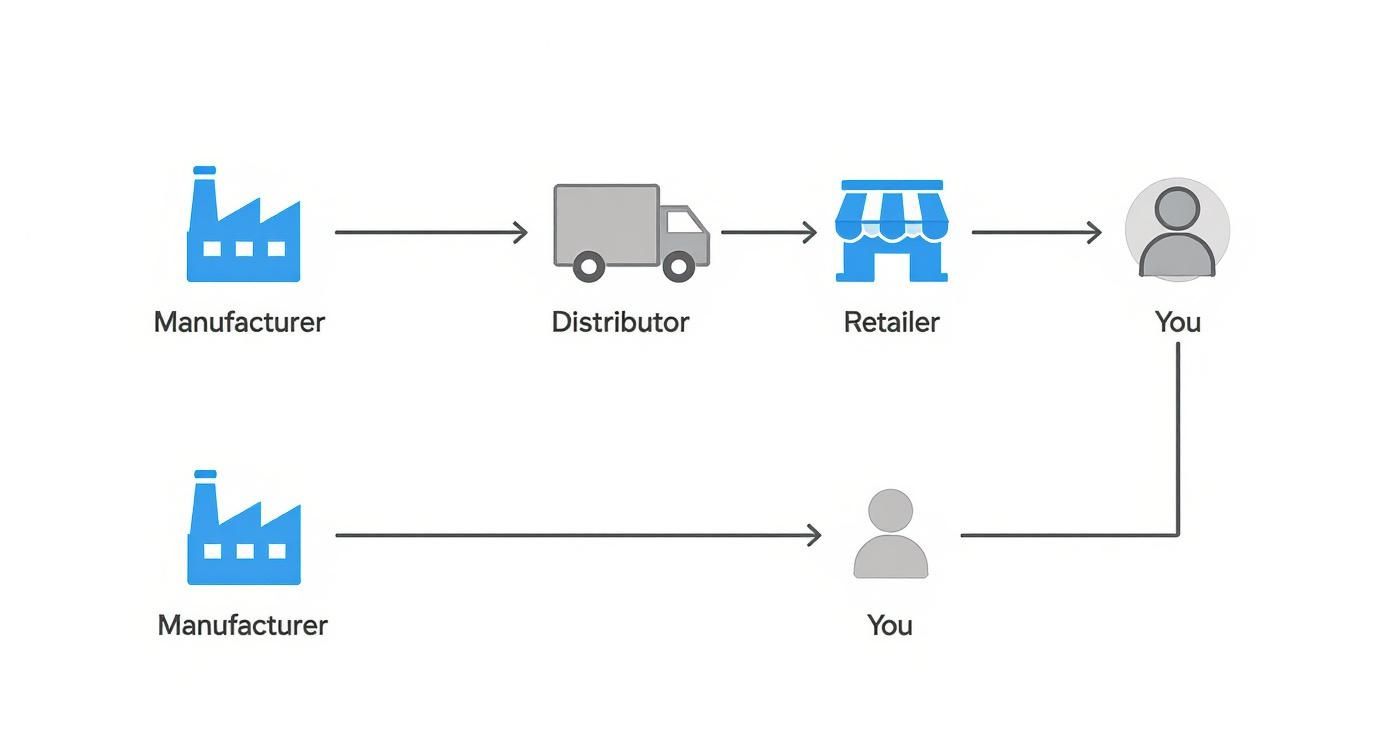
As you can see, removing those extra steps creates a straight line from the factory to you. It’s simpler, faster, and much more cost-effective.
This streamlined approach is fundamentally changing how people tackle their renovations. If you're planning a project, understanding your options for sourcing kitchen cabinets in Toronto is the first step toward creating your dream kitchen without breaking the bank. The direct model puts you in the driver's seat, giving you more control, better communication, and a clear view of where your money is going—right into the quality and craftsmanship of your new kitchen.
To make it even clearer, here’s a quick side-by-side comparison of the two models.
Factory Direct vs Traditional Retail Cabinets
| Attribute | Factory Direct Cabinets | Traditional Retail Cabinets |
|---|---|---|
| Pricing | Lower costs due to fewer markups. | Higher costs from multiple middlemen (distributor, retailer). |
| Supply Chain | Manufacturer → You | Manufacturer → Distributor → Retailer → You |
| Communication | Direct contact with the manufacturer for support and customization. | Communication is filtered through the retailer or salesperson. |
| Customization | Greater flexibility and more options available directly. | Limited to what the retailer stocks or can special order. |
| Lead Times | Often faster since cabinets are made-to-order and shipped directly. | Can be longer due to logistics between multiple parties. |
Ultimately, the choice comes down to what you value most. The direct path offers undeniable advantages in cost, communication, and control, making it a compelling option for any modern kitchen renovation.
The Real Advantages of Buying Cabinets Direct
Opting for factory-direct kitchen cabinets isn't just about chasing a lower price tag. It's a completely different way of thinking about your renovation, one that puts you in the driver's seat. You get direct access to three major benefits that get watered down—or lost entirely—when you go the traditional retail route. These perks—cost, quality, and customization—work together to give you a level of control over your project and budget that's hard to find elsewhere.
When you cut out the middlemen, you immediately tap into the most straightforward advantage: saving a serious amount of money. And we're not talking about a small discount here; this can fundamentally change what’s possible for your entire renovation budget.
Unlock Significant Cost Savings
The typical journey for a kitchen cabinet involves a lot of hands, and every hand takes a cut. A manufacturer sells to a distributor, who sells to a retail showroom, who finally sells to you. Each step adds its own markup for profit, overhead, and administration, and you're the one who ultimately pays for it.
Think about it like this: for every dollar you spend at a big-box store, a good chunk of it is paying for their fancy showroom, their marketing budget, and the profit margins for everyone in that supply chain. When you buy direct, that same dollar is going almost entirely into the wood, hardware, and labour that make up your actual cabinets.
On average, this direct-to-consumer model can mean saving 30% to 40% compared to what you’d pay at a retail store. For a kitchen project, that can easily free up thousands of dollars. Suddenly, you have the budget for those high-end appliances you were dreaming of, that beautiful quartz countertop, or top-notch professional installation.
That kind of financial flexibility is what turns a good kitchen renovation into a great one, all without blowing up your total spend.
Gain Superior Quality and Control
It's natural to think a lower price means a dip in quality, but with factory-direct cabinets, the opposite is often true. By cutting out the intermediaries, you also get rid of the communication gaps that cause confusion and costly mistakes. You're talking directly with the people who are actually building your order.
That direct line is priceless. Have a specific question about the type of joinery used or the exact chemical makeup of a finish? You get a straight answer from an expert, not a salesperson just reading from a brochure. This transparency means no unpleasant surprises when your cabinets show up on delivery day.
What's more, manufacturers who sell direct have their reputation on the line with every single order. They can't hide behind a retailer if something goes wrong. This direct accountability usually leads to much tighter quality control, from how they select their raw lumber to the final inspection before anything gets boxed up. It means you're far less likely to deal with defects and can expect a higher standard of craftsmanship from the get-go.
Enjoy Unmatched Customization
Maybe the most empowering reason to go factory-direct is the incredible freedom you have to customize everything. Big-box stores operate on volume, stocking a limited menu of standard sizes, colours, and styles that appeal to the masses. If your kitchen has a weird angle or you have a very specific design in mind, you're usually forced to compromise.
Working directly with the source opens up a world of possibilities that retail stores just can't offer.
- Precise Dimensions: Got an awkward nook or ceilings that aren't a standard height? The factory can build cabinets to your exact measurements. The result is a seamless, truly built-in look without any of those clunky filler strips.
- Unique Finishes: You're no longer stuck with the five paint colours on the display wall. You can request custom colours to perfectly match your design palette or choose from a much wider selection of wood stains and specialty finishes.
- Tailored Features: Need a custom-sized spice pull-out, a specific drawer organization system, or unique cabinet pulls? A direct supplier can integrate these features right into the design from the very beginning.
This level of control ensures your kitchen isn't just an assembly of standard boxes. It becomes a bespoke space, thoughtfully designed to fit your home and your life perfectly.
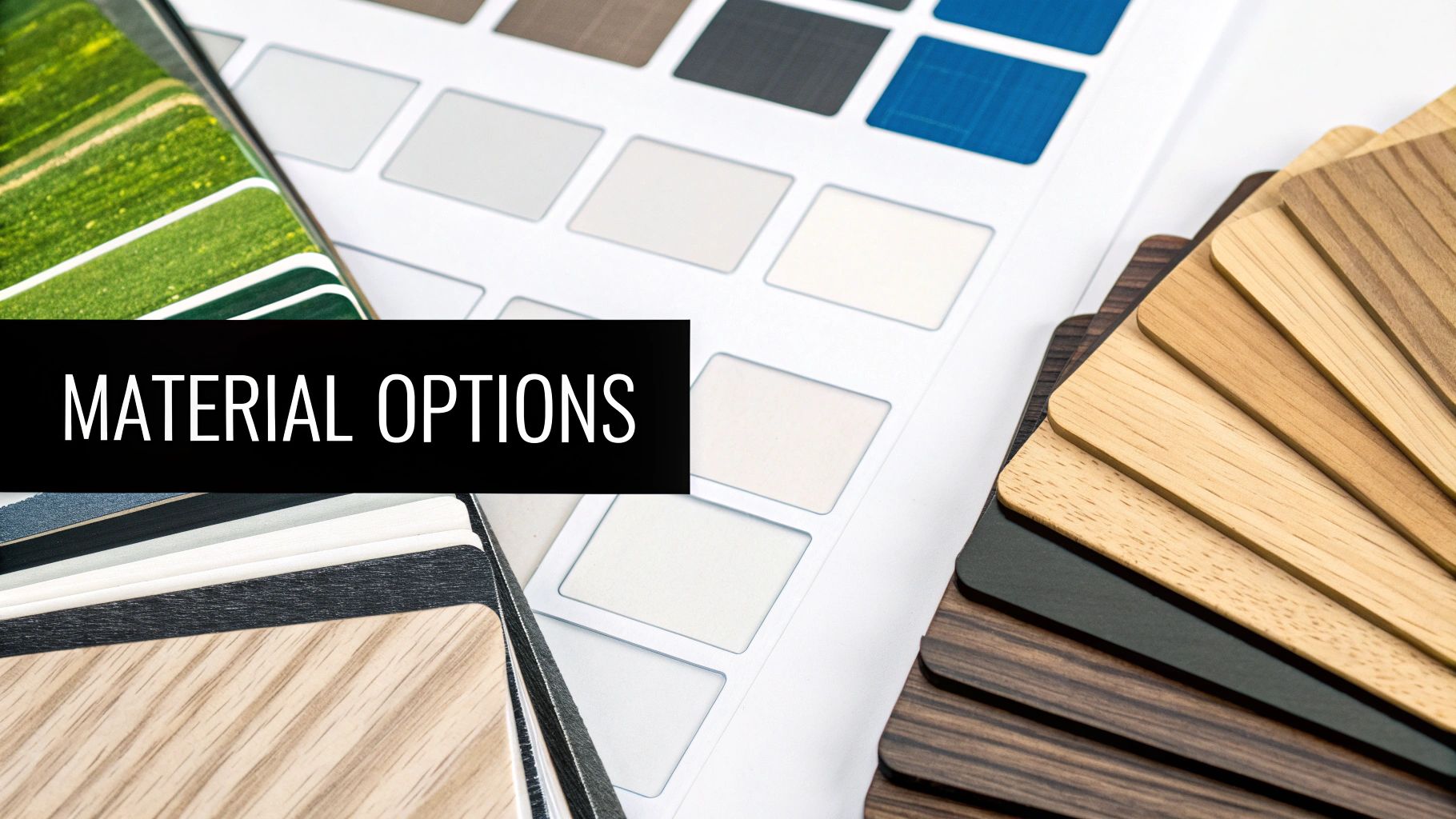
Alright, so you’ve settled on factory direct kitchen cabinets for your renovation. Now for the fun part: bringing your kitchen vision to life by picking the materials, finishes, and door styles.
This is where going direct to the source really pays off. Instead of being stuck with the handful of standard options you'd find at a big-box store, you get access to a much wider world of textures, colours, and materials. Think of it as being handed the keys to the workshop.
You can explore everything from the timeless warmth of solid wood to the flawless, modern appeal of engineered materials. Each choice has a real impact on your kitchen's final look, its durability, and how much cleaning it'll need, so it’s worth understanding what you’re working with.
Exploring Core Cabinet Materials
The material you choose is the foundation of your cabinets—it dictates their strength, their look, and how they stand up to the chaos of daily life.
- Solid Wood: Classics like maple and oak bring a natural warmth and sturdiness that’s hard to beat. The unique grain means no two cabinet doors are ever identical, giving your kitchen an authentic, one-of-a-kind character.
- Medium-Density Fibreboard (HDF/MDF): This is an engineered wood product made by compressing wood fibres with resin. The result is a perfectly smooth and stable surface that’s ideal for painted finishes. It won't warp or crack with humidity changes like solid wood sometimes can, ensuring a lasting, flawless look.
- Thermofoil: Here, a thin layer of vinyl is heat-sealed over an MDF core. This process creates a seamless, non-porous surface that’s a breeze to clean and stands up incredibly well to moisture. It’s a smart, budget-friendly option for busy family kitchens.
Ultimately, your decision will be a balance between the look you want, your budget, and your lifestyle. To get into the nitty-gritty, check out our guide on the best materials for kitchen cabinets to help you weigh the pros and cons.
Selecting the Perfect Finish
The finish is what gives your cabinets their personality. It’s that final layer that determines if your kitchen feels bright and airy, warm and inviting, or sharp and contemporary. A factory-applied finish is almost always more durable than one painted on-site, giving you a smooth, professional look that’s built to last.
A high-quality, factory-applied finish is more than just a colour; it's a protective shield. These multi-step processes often involve sealants, primers, and topcoats that are cured in a controlled environment, resulting in a harder, more resilient surface that resists chipping, fading, and staining far better than a standard paint job.
Here are some popular finishes you'll come across:
- Stains: Used on solid wood, stains are designed to enhance the natural grain, not cover it up. They can range from light, subtle tones to deep, rich colours like espresso or cherry.
- Paints: A painted finish delivers a clean, consistent look with an almost unlimited spectrum of colours. HDF is the perfect base for paint, providing a flawless canvas for everything from crisp whites to bold, moody greys.
- High-Gloss and Matte Lacquers: For a seriously modern vibe, a high-gloss lacquer gives you a reflective, mirror-like surface that bounces light around the room. On the other end of the spectrum, a matte finish provides a soft, sophisticated look that hides fingerprints and feels understatedly luxe.
Matching Cabinet Styles to Your Home
The final piece of the puzzle is the cabinet door style. This is what truly sets the design tone for the entire kitchen.
Common Cabinet Door Styles
| Style Name | Description | Best For |
|---|---|---|
| Shaker | A timeless five-piece door with a simple frame and a recessed centre panel. Its clean lines work almost anywhere. | Transitional, modern farmhouse, and contemporary kitchens. Its versatility is legendary. |
| Slab (Flat-Panel) | A single, solid piece of material with no frills or ornamentation. The look is clean, sleek, and uncluttered. | Modern, minimalist, and Scandinavian-inspired spaces. |
| Raised Panel | Features a raised centre panel with a decorative profile around the edge, adding depth and traditional detailing. | Traditional, classic, and more formal kitchen designs. |
By carefully choosing your material, finish, and style, you create a kitchen that is cohesive and perfectly suited to you. The great advantage of the factory-direct route is having both the expert guidance and the broad selection needed to make sure every single element works together seamlessly.
How to Choose the Right Factory Direct Supplier
Going the factory-direct route for your kitchen cabinets can unlock amazing value and design possibilities. But with that opportunity comes one critical responsibility: picking the right supplier. Unlike browsing a big-box store where the brand name feels like a safety net, you’re forming a direct partnership with the people who actually make your cabinets. The success of your entire project rests on their reliability, craftsmanship, and customer service.
Finding a partner you can trust isn't about luck—it's about doing your homework. You need to put on your detective hat. Your mission is to look past the slick websites and glossy brochures to find real proof that a company can deliver on its promises. This is especially true in a busy market like the Greater Toronto Area, where every supplier claims to be the best.
Verify Their Manufacturing Process
A genuine factory-direct supplier actually manufactures what they sell. It sounds obvious, but you’d be surprised. Don't be afraid to ask where their factory is and what their production process involves. A legitimate manufacturer will be proud to tell you about their operations.
Here’s what to look into:
- Quality Certifications: Ask if their materials meet industry standards. For instance, CARB (California Air Resources Board) compliance is a huge one. It ensures that wood products like HDF have low formaldehyde emissions, which is much safer for your home's air quality.
- On-Site Operations: Do they have a physical presence in or near Toronto? A local factory often translates to better accountability, easier communication, and quicker turnarounds if issues pop up.
Dig Into Authentic Customer Reviews
Reviews give you a peek behind the curtain at the real customer experience. But you have to know where to look. Skip the hand-picked testimonials on the company’s homepage and head to third-party platforms like Google, HomeStars, or Houzz for unfiltered feedback.
As you read, look for patterns. Are people consistently happy with the cabinet quality and customer service? Or do you see recurring complaints about shipping delays, damaged items, or communication blackouts? A couple of negative reviews aren't a deal-breaker, but a consistent theme of problems is a massive red flag.
A supplier’s response to negative feedback is just as telling as the feedback itself. A company that replies professionally and tries to make things right shows they care about their reputation and stand behind their products.
Order Samples Before You Commit
This is, without a doubt, the most important step in the process. It’s completely non-negotiable. Website photos can be misleading, but holding a cabinet door sample in your hands tells you the whole story.
When your samples arrive, inspect them carefully:
- Feel the Finish: Is it perfectly smooth, or can you feel little bumps and imperfections? A quality factory finish should feel like silk.
- Check the Joints: Look closely at the corners where the frame pieces connect. They should be tight and seamless, with no gaps.
- Assess the Weight: Does the door feel solid and substantial, or is it light and flimsy? A heavier door is usually a sign of denser, better-quality materials.
This simple test gives you a real, tangible sense of the craftsmanship you'll be getting for your entire kitchen. If a supplier is hesitant to send samples or wants to charge a fortune for them, walk away.
The factory-direct model is definitely catching on. In markets like California, the demand has exploded, with sales projected to hit $1.7 billion by 2025. It’s not hard to see why—homeowners are finding they can save a lot of money, sometimes up to 32% per kitchen, just by cutting out the retail middleman. You can discover more about this market growth and see what's driving this shift.
Understanding the Order and Installation Process
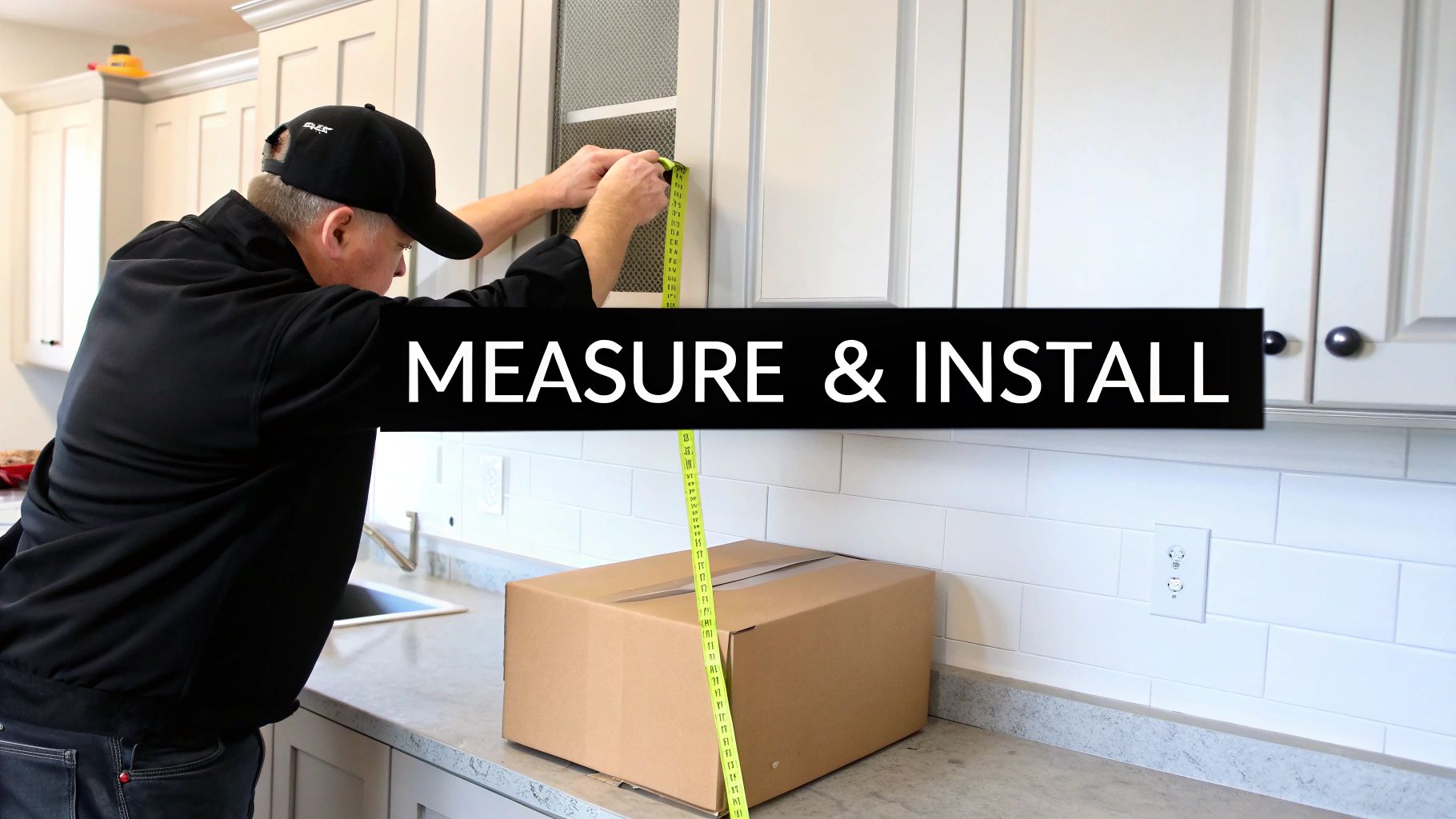
Turning your design ideas into a finished kitchen is an exciting journey. When you buy factory direct kitchen cabinets, you’re plugging into a well-oiled process that connects your vision straight to the people who build it. Understanding how it all works, from taking the first measurements to tightening the last screw, helps take the guesswork out of the project and puts you in control.
It all starts not with a hammer, but with a simple tape measure. Honestly, this first step is probably the most important one, since everything that follows depends on getting these numbers right.
Nailing Your Kitchen Measurements
There's no room for error when it comes to measuring your kitchen. Being off by even half an inch can cause major headaches later on—think cabinets that won't quite fit or appliances left sticking out. Your measurements are the foundation for the entire renovation.
Here’s how to do it methodically to ensure you get it right:
- Measure Everything Twice: It’s an old rule for a reason. Measure the length of each wall at the bottom, middle, and top, because walls are almost never perfectly straight.
- Locate All Obstructions: Mark the exact location and size of every window, door, outlet, pipe, and vent. Don't forget to note how far they are from the corners.
- Map Out Appliances: Get the precise width, height, and depth for your fridge, stove, and dishwasher. This guarantees they'll slot in perfectly with the new cabinets.
With your measurements locked in, it's time for the fun part: turning those numbers into a real, functional kitchen layout.
Designing Your Layout and Placing the Order
Armed with accurate measurements, you can start designing your dream kitchen. Many factory-direct suppliers have in-house designers or easy-to-use online tools to help you see how it will all come together. You'll work with an expert to place every cabinet, making sure the flow and look are just right.
Before you give the final go-ahead, be meticulous. Go over the final quote and design drawings with a fine-tooth comb. Double-check the cabinet style, colour, finish, dimensions—everything. This is your last chance to spot a mistake before your cabinets go into production. Once you sign off, the factory gets to work.
This is where the factory-direct model really shines. If a question comes up during the design phase, you get a straight answer directly from the source. No more playing telephone through multiple middlemen, which is where mistakes often happen.
Delivery, Inspection, and Installation
The day your cabinets arrive is a big one. Before you sign for the delivery, give everything a thorough look. Check each box for any dings or damage that might have happened in transit. Then, carefully compare the items to your order invoice to make sure everything you paid for is there.
Now for the installation. You really have two routes: do it yourself or hire a professional. A DIY install can definitely save you some money if you're handy and have the right tools. But a professional installer brings years of experience to the job, guaranteeing a perfect finish where everything is level, secure, and perfectly aligned.
The precision of factory-direct manufacturing actually makes both options easier. Industry data shows that pre-assembled cabinets can reduce on-site defects by 5–8% and slash installation time by an average of 18%. That's because all the pre-drilling and joinery are done with precision machinery at the factory, minimizing the need for fiddly adjustments on site.
If you’re planning a major renovation and need a bit more guidance, our overview of custom kitchen cabinets and renovation experts in Toronto is a great resource. In the end, a well-planned process from start to finish is the key to getting the beautiful new kitchen you’ve been dreaming of.
Common Questions About Factory-Direct Cabinets
Diving into the world of factory-direct cabinets can feel like a big step, but it's a smart one that more and more homeowners and trade pros are taking. When you cut out the middleman, it's only natural to have a few questions. Let's tackle some of the most common concerns right here, so you can feel completely confident about your decision.
We'll clear the air on the biggest myths and most frequent questions that pop up.
Are Factory-Direct Cabinets Lower in Quality?
This is probably the biggest misconception out there, and the short answer is a definite no. In many cases, the quality is actually better.
Think about it: a factory selling directly to you puts its reputation on the line with every single cabinet. There's no retail showroom to act as a buffer or absorb blame if something isn't right. That direct accountability is a powerful motivator. Manufacturers invest heavily in precision machinery, controlled finishing environments, and strict quality checks because their name is literally on the box. You're buying from people who have a direct stake in making you happy.
It's like buying a piece of furniture directly from the woodworker's shop instead of a big department store. The maker's pride is built into every joint and finish because their work is a direct reflection of their skill. A factory-direct supplier works on the same principle.
What's a Realistic Timeline for Getting My Cabinets?
Any renovation requires a bit of patience, but you'll find that factory-direct timelines are often much more predictable. Unlike a big-box store that might be waiting on a shipment from an overseas supplier, a direct manufacturer can give you a much clearer delivery window.
- Production Time: Once your design is locked in and the order is placed, production usually takes about 4 to 8 weeks. This can shift a bit depending on how custom your order is and the materials you've selected.
- Shipping Time: After your cabinets are built, shipping generally adds another 1 to 2 weeks, depending on how far you are from the factory. Working with a local Toronto-area supplier can really cut this time down.
The real benefit here is transparency. A good supplier will give you a solid estimate from the get-go and keep you in the loop while they build your kitchen.
What Happens If My Measurements Are Wrong?
That's a completely valid fear! Getting the measurements right is the bedrock of a smooth installation. But a reputable factory-direct supplier has your back and builds safeguards into their process to prevent those costly mistakes.
They won't just take your numbers and run with them. Most have a team of professional designers who review your layout and measurements with a trained eye. They're skilled at spotting potential red flags—like a cabinet door that might smack into your fridge or a measurement that just seems off for a standard space. They’ll work with you to double-check and confirm every last dimension before a single piece of wood is cut. Think of this collaborative check as your safety net.
Do Factory-Direct Cabinets Come with a Warranty?
They absolutely should, and you should walk away from any supplier that doesn't offer one. A strong warranty is the manufacturer's vote of confidence in their own product. It’s your proof that they stand behind their craftsmanship long after the installation crew has packed up.
When you're looking at a warranty, here’s what to check for:
- Length of Coverage: The best manufacturers often provide lifetime or limited lifetime warranties.
- What’s Covered: A good warranty should cover any defects in materials and workmanship, which includes the joinery, finish, and hardware.
- Clear Terms: The policy should be easy to read and understand, with a straightforward process for making a claim if you ever need to.
A solid warranty gives you peace of mind and protects your investment, ensuring your beautiful new kitchen is truly built to last.
Ready to see what's possible for your own kitchen? At MapleKing Kitchen Cabinets, we give you the cost savings of factory-direct pricing with the hands-on service of a dedicated design partner. Discover our range of custom styles and get a free quote today.



