

Ever seen a classic kitchen and admired the sturdy, built-in look of the cabinets? Chances are, you were looking at face frame cabinets. It’s a timeless North American style that’s been the backbone of kitchens for generations, and for good reason. Think of it like a picture frame, but for your cabinet doors and drawers.
This design isn't just about looks; it adds serious strength, creating that traditional, seamless feel that so many homeowners in Toronto and Markham are after.
So, What Exactly Are Face Frame Cabinets?
Let's get down to basics. A cabinet is essentially a box with a front. With a face frame cabinet, a solid wood frame is built right onto the front opening of that box. This frame does more than just look pretty—it’s a key structural element.
The frame itself is made of vertical pieces called stiles and horizontal pieces called rails. They’re joined together to form a solid, rigid front. Your cabinet doors are then mounted directly onto this sturdy frame, not just onto the sides of the cabinet box.
This is a world away from frameless cabinets (often called European-style), where the doors are attached right to the cabinet box. Frameless offers a sleek, modern aesthetic, but all its strength comes from the box itself. The face frame, on the other hand, adds an extra layer of structural integrity.
Here's a simple way to picture it: a frameless cabinet is like a basic bookshelf box. A face frame cabinet is that same bookshelf, but with a solid wood frame attached to the front. That frame makes the whole thing stronger and keeps it from wobbling.
The Anatomy of a Face Frame
Once you understand the parts, you see why this style is so incredibly durable. It’s not just one slab of wood; it's a smartly assembled structure that provides support exactly where it's needed most—right at the front.
Let's break it down:
- Cabinet Box: This is the main part where you store your stuff, usually made from plywood or a similar engineered wood.
- Face Frame: This is the star of the show. It’s a solid wood frame, typically 1.5 to 2 inches wide, that's fixed to the front of the cabinet box.
- Stiles: These are the vertical pieces of the frame, running up and down the sides.
- Rails: These are the horizontal pieces, running across the top and bottom.
This construction method gives the cabinet box a serious boost in reinforcement. The solid wood stiles and rails stop the box from twisting or "racking" over time, especially under the pressure of heavy countertops like granite or quartz—a popular choice in many Toronto homes. This built-in rigidity means your doors and drawers will stay perfectly aligned for years to come, avoiding the dreaded sag that can plague less robust designs. It’s this foundational strength that provides a reliable base for a wide array of door styles and beautiful finishes.
Face Frame Vs Frameless Cabinet Construction
When you’re planning a kitchen remodel, one of the first big decisions you'll face is choosing between face frame and frameless cabinets. It sounds technical, but it’s a choice that fundamentally shapes the look, feel, and durability of your new space. While they both hold your dishes, the way they're built creates some very real differences, especially for homeowners here in Toronto.
Let's use a simple analogy. Think of a face frame cabinet like a classic hardcover book. It has a rigid cover that extends beyond the pages, creating a strong, protective border. That solid wood frame is like the hardcover—it gives the cabinet box a sturdy perimeter for the doors and drawers to mount onto.
On the other hand, a frameless cabinet is more like a modern paperback. The cover sits perfectly flush with the edges of the pages. This gives you a sleek, continuous surface with no visible front frame. The doors attach right to the sides of the cabinet box, which is how you get that minimalist, contemporary look often seen in European design.
To really see what’s going on, this diagram shows the basic anatomy of a face frame cabinet.
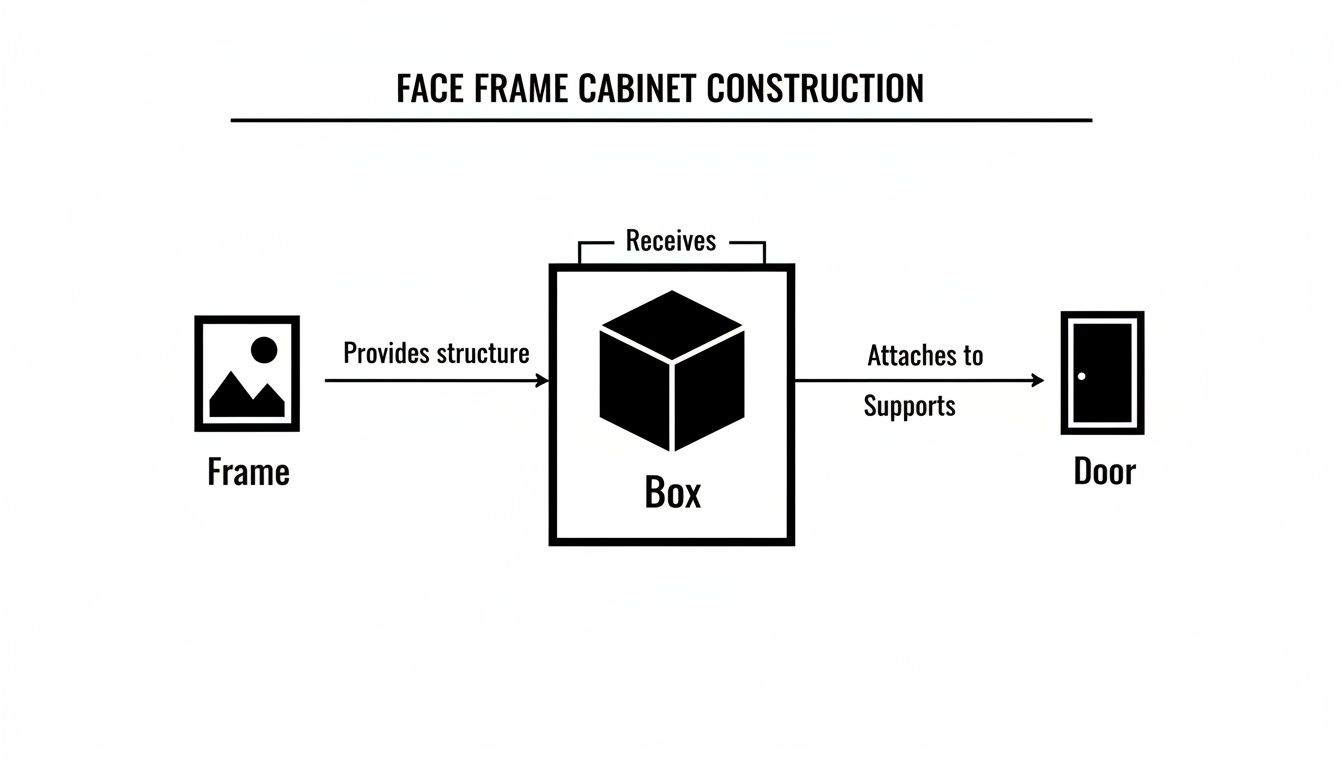
You can see how that frame adds an extra layer of structural support between the cabinet box and the door. That's the key difference.
Durability and Structural Strength
The biggest selling point for face frame cabinets is their rock-solid rigidity. That solid wood frame acts like a skeleton, keeping the cabinet box from twisting or "racking," especially under the immense weight of heavy stone countertops like granite or quartz. This built-in strength is what keeps your doors and drawers perfectly aligned for years to come.
Frameless cabinets get all their strength from the cabinet box panels themselves. They're still well-built, but they demand a perfectly level and precise installation to maintain their integrity. If your home settles or the floors aren't perfectly even, it can put stress on the box and lead to alignment problems down the road.
The face frame essentially locks the cabinet box into a square, rigid shape. This makes it more forgiving during installation in older Toronto homes where floors and walls may not be perfectly plumb.
Aesthetic Flexibility and Design
Both styles give you plenty of design options, but they get there in different ways. Face frame construction creates that classic, substantial, built-in look and gives you a few different ways to mount the doors.
- Partial Overlay: The door covers some of the face frame but leaves a portion of it visible all around. This is a very common, cost-effective, and traditional style.
- Full Overlay: Here, the door covers almost the entire face frame. This gives you a look that’s very close to frameless but with the added strength of the frame behind it.
- Inset: The door sits perfectly flush inside the face frame opening. This is a beautiful, high-end look that really shows off detailed craftsmanship.
Frameless cabinets, by their very nature, only use a full overlay. The doors are mounted directly to the cabinet box with just a tiny gap between them. This is what creates that seamless, modern appearance with clean, uninterrupted lines—perfect for contemporary kitchens. Your choice of hardware, especially the hinges, will also depend on the construction style you pick.
This combination of traditional sturdiness and design flexibility is why face frame cabinets are still so popular. In fact, they held a 56% market share in the stock cabinet category back in 2021, easily beating out frameless styles. Here in renovation-heavy areas like Toronto and Markham, that trend is even stronger; their durability is a huge plus for single-family homes, which make up over 80% of cabinet replacements. You can dig deeper into these cabinetry market trends on Principia Consulting's website.
To make it even clearer, here’s a quick side-by-side comparison.
Key Differences Face Frame Vs Frameless Cabinets
| Feature | Face Frame Cabinets | Frameless Cabinets |
|---|---|---|
| Construction | Solid wood frame attached to the front of the cabinet box. | No front frame; doors attach directly to the side panels. |
| Strength | Very strong and rigid; resistant to racking and twisting. | Strength comes from the box itself; requires precise installation. |
| Aesthetics | Traditional, classic, and substantial look. | Modern, sleek, minimalist appearance with clean lines. |
| Door Styles | Supports inset, partial overlay, and full overlay doors. | Exclusively uses full overlay doors for a seamless look. |
| Accessibility | The frame slightly reduces the opening and drawer size. | Full, unobstructed access to the interior of the cabinet. |
| Installation | More forgiving on uneven walls and floors. | Requires perfectly plumb and level installation. |
| Cost | Can be slightly more expensive due to additional materials. | Often slightly more budget-friendly. |
Ultimately, both are great options, but understanding these core differences helps you decide which one is the right foundation for your dream kitchen.
Why Face Frame Cabinets Are Built to Last
There's a good reason face frame cabinets have been a staple in North American homes, and especially in a competitive market like Toronto. It's not just about looks; it’s about rock-solid construction. This method builds a cabinet with unmatched strength and long-term value, creating a reliable backbone for any kitchen that has to put up with the hustle and bustle of daily life.
Picture the face frame as a reinforcing skeleton for your cabinetry. It's a solid wood framework attached to the very front of the cabinet box, and it's what gives the whole structure its rigidity. This is a huge deal when you’re talking about supporting the serious weight of a granite, quartz, or marble countertop. The frame takes that load and distributes it evenly, which stops the cabinet box from sagging or bowing down the road.
This built-in strength is also the cabinet's best defence against a common problem we call racking.
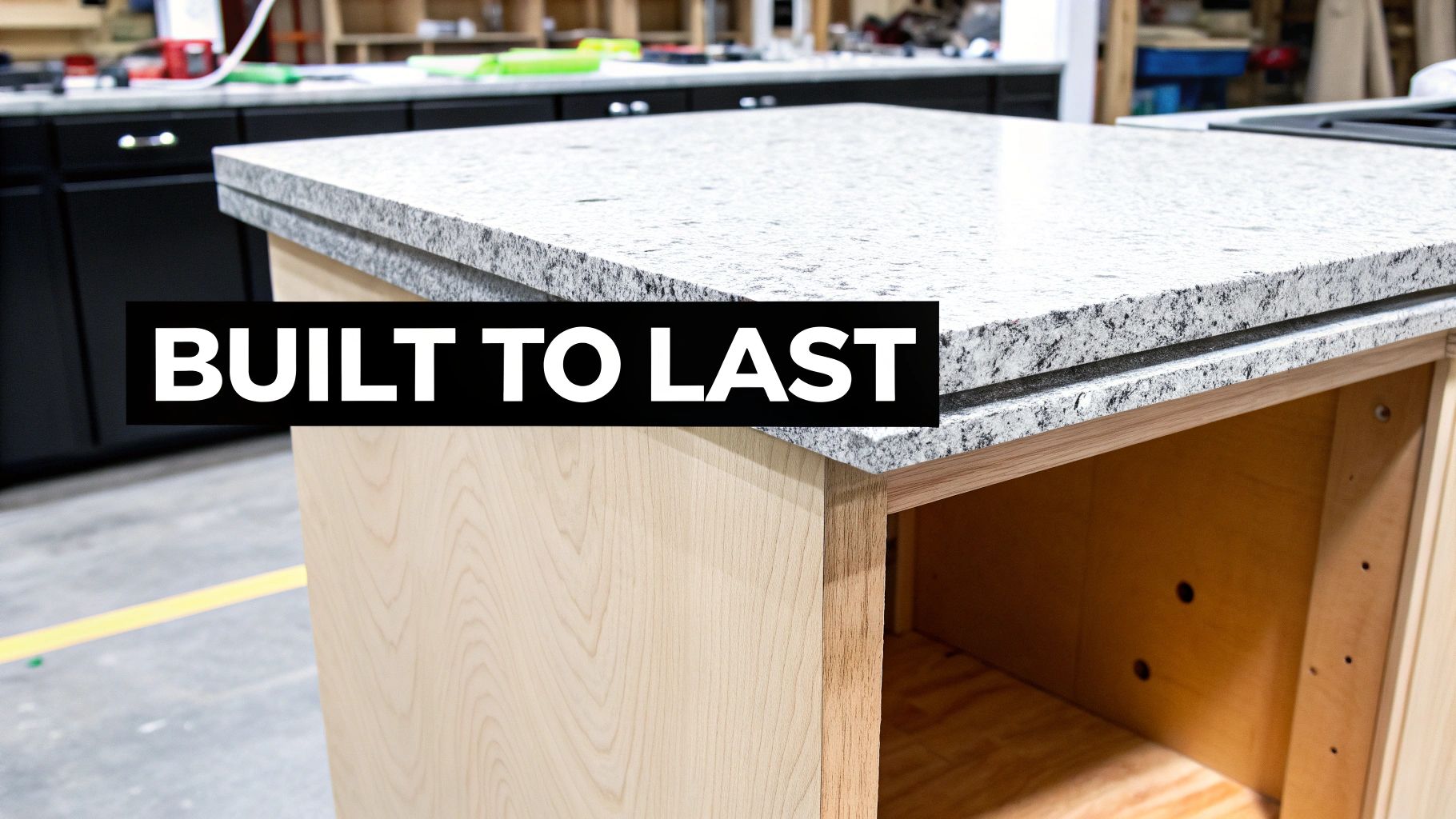
Preventing Racking for a Lifetime of Use
So, what is racking? It’s when a cabinet box gets twisted out of its perfect square shape. This can happen from the stress of a heavy load, a house settling over time, or just years of use. When a cabinet racks, you'll notice doors hanging crooked, drawers that stick or jam, and ugly gaps forming between them. It’s a sure sign of structural failure that can be a real headache—and an expensive one—to fix.
The solid wood stiles (vertical pieces) and rails (horizontal pieces) of a face frame act like cross-braces. They essentially lock the cabinet box into a rigid, square form, making the entire unit far more resistant to the forces that cause racking.
Think of a face frame cabinet like a well-built bridge. The frame is the essential support system that allows it to carry heavy loads and withstand outside pressures, making sure it stays stable and functional for decades.
This built-in sturdiness means your kitchen won't just look amazing on day one; it'll keep working flawlessly for years to come. Your doors will always open smoothly and drawers will glide without a fight, keeping your kitchen beautiful and functional long after the installation crew has packed up. This durability is exactly what homeowners are looking for when they want to make a sound investment.
A Smart Play in the Toronto Real Estate Market
In a fast-moving property market like the one in Toronto and the GTA, every renovation you make is an investment in your home's value. A well-built kitchen is one of the biggest factors that can influence a home's appeal and its final selling price. This is where the durability of face frame cabinets really pays off in a tangible way.
Potential buyers and home inspectors know quality when they see it. A kitchen with strong, perfectly aligned cabinets sends a powerful message of quality and care. That attention to detail can make your home stand out in a crowded market and help justify a higher valuation. The long life of face frame construction means the kitchen will look just as good for the next owner as it did for you.
The demand for durable, high-quality cabinetry is a major market trend. The custom cabinet market, where the structural integrity of face frames is a top priority, is expected to grow from USD 12.3 billion in 2024 to an impressive USD 18.5 billion by 2033. This growth is fuelled by homeowners and developers who are prioritizing personalized, long-lasting designs. Here at MapleKing, our commitment to using eco-friendly materials that meet strict air quality standards adds even more value, giving you a healthier home on top of lasting structural integrity. You can read more about the custom cabinet market's projected growth on Verified Market Reports.
Ultimately, choosing face frame cabinets is more than just a style choice; it’s a strategic investment in your property’s future worth. By putting structural integrity first, you ensure your kitchen remains a beautiful, functional, and valuable asset for years to come.
Bringing Your Cabinets to Life: Materials and Finishes
You’ve decided on the solid, time-tested structure of face frame cabinets. Now for the fun part: choosing the materials and finishes that will give your kitchen its unique personality. This isn't just about looks; it's about how your kitchen feels every day and how it holds up over the years.
Think of the cabinet box and frame as the skeleton—strong and essential. The doors and finishes are the skin. They’re what everyone sees, touches, and remembers. Whether you're dreaming of a cozy, traditional space or a sharp, contemporary hub, getting this combination right is key to making your vision a reality.
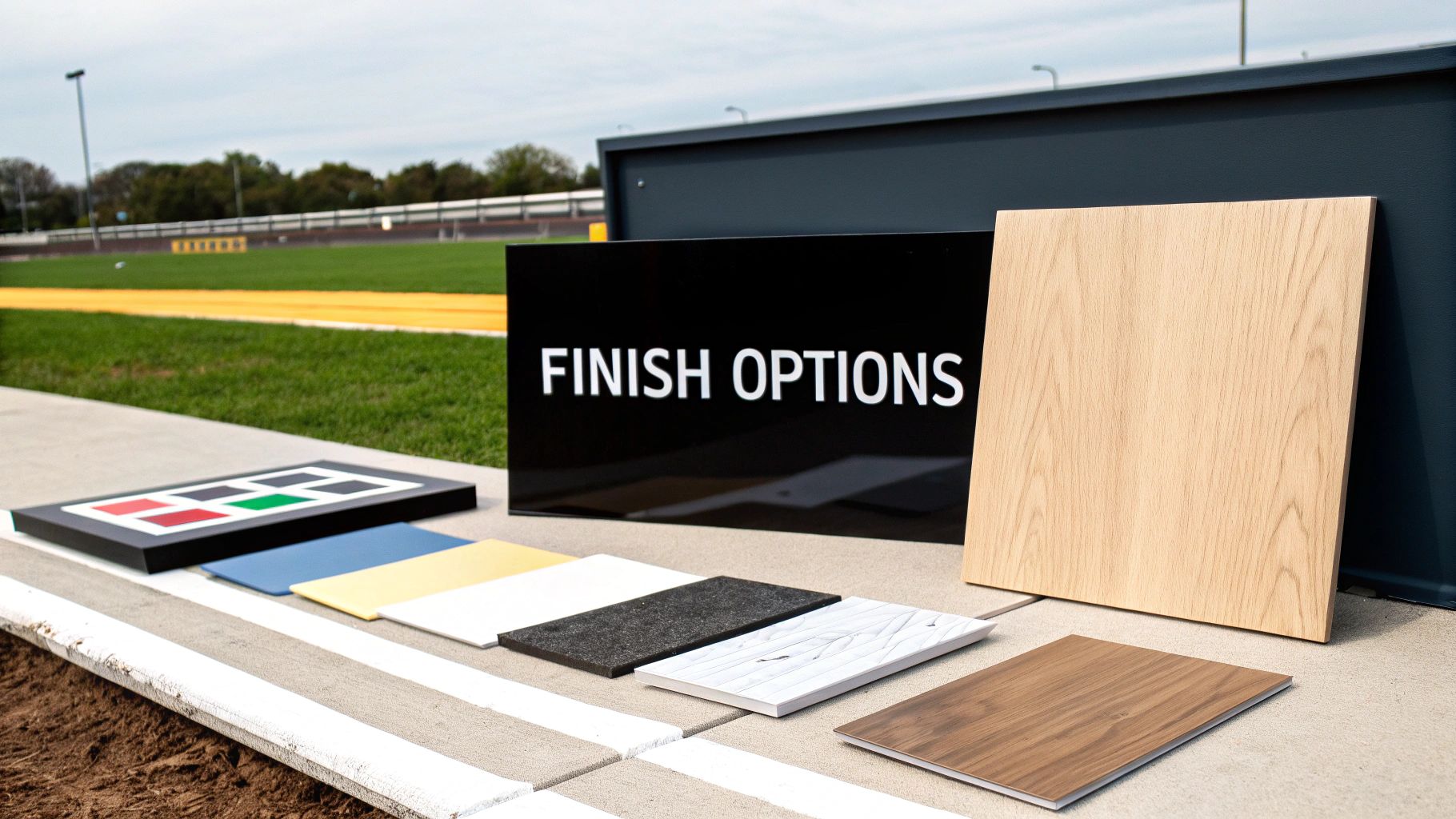
Real Wood vs. Flawless HDF
Today’s material options give you a fantastic playbook to work from. You can go for the classic beauty of natural wood or the clean perfection of engineered materials—there’s a perfect fit for every style of home in Toronto.
- Real Wood Painted Doors: There's an authentic charm to real wood that's hard to replicate. You get those subtle variations in the grain that bring an organic warmth into the room. A quality paint job doesn't hide this character; it enhances it while adding a tough, protective layer.
- HDF Painted Finishes: If you're after a perfectly smooth, uniform look, High-Density Fibreboard (HDF) is the way to go. It's an engineered material prized for its stability. It won’t expand, contract, or warp like wood can, which means your painted finish stays flawless without cracking at the joints over time.
For a solid, unblemished colour that looks crisp and modern, HDF is the superior choice. It provides a pristine, consistent surface that’s simply impossible to get with natural wood grain.
The Modern Edge: High-Gloss and Matte
HDF is also the ideal canvas for contemporary finishes that can completely change the vibe of your face frame cabinets. These are especially popular in modern condos and minimalist home designs across the city.
High-Gloss HDF is all about sleek, reflective style. Its mirror-like surface bounces light around, making the kitchen feel bigger, brighter, and incredibly sophisticated. It's the perfect choice if you want that clean, ultra-modern aesthetic.
Matte HDF delivers the opposite: a quiet, understated elegance. The finish is soft and non-reflective, feeling almost velvety to the touch. A huge plus with today’s matte finishes is their resistance to fingerprints and smudges, making them a surprisingly practical choice for busy households.
To see how these styles could work in your space, check out our complete guide to selecting kitchen cabinets in Toronto and find the perfect match for your home.
Hardworking Choices: Laminates and Thermofoil
If your kitchen is the busy hub of your home, you need materials built for real life. These options are engineered for incredible resilience and easy maintenance, offering great style without the high-end price tag.
Laminate has shaken off its old-school reputation. Modern laminates are tough as nails and come in a massive range of colours and patterns, including some very convincing wood grains. They stand up to scratches, moisture, and stains, making them a smart choice for active families.
HDF Thermofoil is created by heat-fusing a thin layer of vinyl to an HDF core. This process results in a seamless, non-porous surface that is a breeze to wipe clean. With no joints or seams to trap grime, it’s a hygienic and durable option that can handle the daily chaos of a well-used kitchen.
Design Strategies for Toronto Kitchens
One of the best things about face frame cabinets is just how versatile they are. This adaptability makes them a fantastic choice for the mishmash of home styles you see all across Toronto and Markham. Whether you're working with a sprawling suburban house or a tight downtown condo, the right design strategy can turn your kitchen into a space that's both beautiful and incredibly practical. It really just comes down to knowing how to tweak the cabinet’s features to match your space and your vision.
The first big decision you'll make is the door style and overlay. For instance, if you love a warm, traditional vibe, a classic Shaker door with a partial overlay is a no-brainer. But what if you're aiming for something that blends old and new? A full overlay door on a face frame cabinet gives you those sleek, clean lines of a modern kitchen but with the solid, built-in feeling that only a frame can provide. It's the perfect compromise: a contemporary look backed by old-school strength.
Maximizing Space in Any Footprint
Let’s be honest, finding enough storage is a challenge in almost any kitchen, but it’s a real headache in smaller urban homes. This is where the sturdy build of face frame cabinets really starts to shine. That solid wood frame isn't just for looks; it provides a super-strong foundation for all sorts of clever storage solutions that help you squeeze a purpose out of every last centimetre.
Here are a few game-changing ideas for integrating smart storage:
- Pull-Out Pantries: These are tall, skinny units that slide right out, letting you see all your spices and cans at a glance. No more lost-in-the-back-of-the-cupboard mysteries.
- Corner Carousels (Lazy Susans): We all know that awkward corner cabinet—the black hole where Tupperware lids go to die. A carousel or a blind corner optimizer swings everything out into the light, making it all easy to grab.
- Deep Drawer Organizers: Forget stacking pots and pans. Deep drawers with customizable dividers are a much better way to store cookware, keeping everything organized and accessible right below your countertop.
Because these solutions are built right into the cabinet’s sturdy frame, you know they'll work smoothly for years. Planning for these features right from the start can make even a small kitchen feel incredibly organized and spacious. You can dive deeper into this process in our guide on how to transform your kitchen with custom cabinets in Toronto.
Aligning with Market Trends
Picking the right cabinets is more than just a style choice; it’s a smart investment. The cabinet and vanity manufacturing industry, where face frame cabinets are a pillar of traditional design, has been growing steadily at an average annual rate of 3.6% between 2020 and 2025. That growth lines up perfectly with the renovation boom we're seeing in the GTA, as homeowners increasingly look for custom, long-lasting solutions from suppliers like MapleKing. It’s all driven by a surge in home improvement spending and new construction, where the easy installation and repair of face frame cabinets make them a popular pick.
A well-designed kitchen doesn't just make your day-to-day life better—it can seriously boost your home's resale value. The timeless look and rock-solid durability of face frame cabinets are qualities that potential buyers notice and value.
At the end of the day, a great kitchen design is a perfect blend of personal style and everyday practicality. And if you're thinking about selling down the road, taking the time to explore some effective kitchen staging ideas can make a huge difference in how buyers see the heart of your home. By choosing your door styles carefully, working in smart storage, and keeping an eye on market trends, you can create a kitchen that truly is one of your home’s greatest assets.
Keeping Your Cabinets Looking Brand New
You’ve invested in beautiful, high-quality face frame cabinets—that’s the big first step. Now, a little bit of care will go a long way in making sure they remain a stunning feature in your Toronto kitchen for years, even decades, to come. Good maintenance is surprisingly simple, but it’s the secret to protecting that flawless finish and keeping everything working smoothly.
When it comes to cleaning, the golden rule is to be gentle. For most finishes, all you'll ever need is a soft, lint-free cloth lightly dampened with a mild soap and water solution. The most important part? Always wipe the surface completely dry right after cleaning to stop any moisture from getting into the joints.
Cleaning Different Finishes the Right Way
Every cabinet finish has its own personality and its own needs. Using the wrong cleaner can cause real damage, so it's smart to know what your specific cabinets require.
-
Real Wood & HDF Painted Finishes: Steer clear of harsh chemicals like bleach or ammonia-based cleaners. A simple pH-neutral cleaner is your best friend here. Always wipe with the grain of the wood—it helps prevent streaks and keeps the finish looking perfect.
-
High-Gloss Surfaces: That mirror-like shine is gorgeous, but it can show micro-scratches. Stick with a clean microfibre cloth and a special non-abrasive cleaner. Never, ever use paper towels or scrubby sponges, as they will dull that beautiful reflective surface over time.
-
Laminates & Thermofoil: These are tough materials, built for the daily grind. Even so, avoid abrasive scouring pads or gritty cleaners. A good all-purpose cleaner is usually more than enough to handle everyday spills and grime.
Here's a pro tip we always share: before you try a new cleaning product, test it on a small, hidden spot first, like the back of a door. This one simple step can save you from a major headache later.
A Quick Hardware Tune-Up
A cabinet's beauty isn't just in its looks; it's also in how well it works. With all the opening and closing they go through, it's natural for hinges and handles to loosen up over time.
Just set aside a few minutes twice a year for a quick check. Grab a screwdriver and gently tighten any screws on your hinges and drawer pulls that feel a bit loose. It’s a tiny task that prevents doors from starting to sag and keeps drawers closing just right. This maintains the perfect alignment of your face frame cabinets and makes the hardware last so much longer.
Of course, if you run into bigger issues or just want a professional to take a look, exploring our full range of cabinetry services and support can give you total peace of mind.
Frequently Asked Questions
When you're planning a kitchen renovation, picking the right cabinets is a huge part of the puzzle. To help you feel confident about choosing face frame cabinets for your Toronto home, we’ve put together answers to the questions we get asked most often.
Are Face Frame Cabinets More Expensive Than Frameless?
That’s a common misconception, but not necessarily. The real cost drivers are the materials you choose, the finish you love, and how much custom work is involved—not just the cabinet style itself. A high-end, fully custom face frame kitchen will be an investment, but many of our semi-custom options are priced very similarly to their frameless counterparts.
Plus, when you consider how incredibly sturdy and long-lasting they are, face frame cabinets often deliver far better value over the years.
Can I Get a Modern Look with Face Frame Cabinets?
You absolutely can. While people often associate them with traditional kitchens, getting a sleek, modern look is all about the door style. The trick is to choose a full overlay door, which covers almost the entire frame.
This creates the clean, seamless lines everyone wants in a contemporary space. Pair that with a minimalist flat-panel door, simple hardware, and a modern finish like a high-gloss or matte HDF, and you've got a sharp, modern kitchen with the unbeatable strength of face frame construction.
Pro Tip: Combining a full overlay door with a minimalist finish gives you the best of both worlds. You get the clean, uninterrupted look of a frameless cabinet and the rock-solid durability of a face frame. It’s a modern look without any compromise.
How Much Storage Space Do I Lose with a Face Frame?
It's true that the frame creates a small lip at the front of the cabinet, making the opening and the drawers just a touch smaller than in a frameless cabinet of the same size.
But in reality, the difference is usually tiny—we're talking a couple of centimetres at most. For the vast majority of homeowners, giving up that sliver of space is a worthwhile trade-off for the massive gain in strength and cabinet longevity.
Are Face Frame Cabinets Easier to Install?
Ask any seasoned installer, and they'll likely tell you that face frame cabinets are more forgiving. That solid wood frame gives you a little bit of wiggle room when you're adjusting doors and trying to get everything perfectly aligned. This is a lifesaver, especially in older Toronto homes where walls and floors are rarely perfectly straight.
This forgiving nature can make for a much smoother and faster installation compared to frameless cabinets, which require near-perfect precision to look right.
Ready to see how face frame cabinets could transform your kitchen? The team at MapleKing Kitchen Cabinets is here to help you design a space that’s beautiful, functional, and built to last—all at factory-direct prices. Contact us today for a free consultation and quote.



