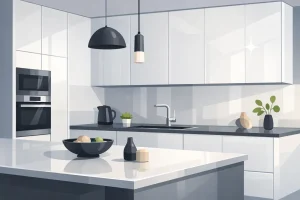

You’ve picked the cabinet style. You’ve settled the island size. You may even have your countertop slab on hold. Then the range decision stalls the whole project.
That’s normal in Toronto and Markham kitchens. A range isn’t just an appliance choice. It affects cabinet widths, hood sizing, electrical planning, gas routing, and how the kitchen feels to cook in every day. A lot of homeowners want the control of gas on the cooktop, but they don’t want to give up the steadier oven performance that comes with electric baking and roasting.
That’s where dual fuel kitchen ranges tend to enter the conversation. They’re often the appliance clients gravitate toward when they want a kitchen that looks polished but also works hard. The attraction is simple. You get a gas cooktop for fast flame response and an electric oven for more even heat.
In the GTA, that choice also fits the way many homes are already serviced. About 65% of GTA households rely on natural gas for heating and cooking, according to the data cited in this overview of why chefs love dual fuel ranges. That same source notes dual fuel appliances can deliver up to 25% better energy efficiency than all-gas ranges, with average annual energy savings of $120 to $150 for GTA families.
The Centrepiece of Your Dream Kitchen
A common renovation scenario looks like this. A homeowner wants clean custom cabinetry, a better workflow around the prep zone, and a range that won’t feel dated in a few years. They cook often enough to care about burner control, but they also bake, roast, and entertain enough to notice when an oven runs unevenly.
That’s why dual fuel often becomes the shortlist option instead of an impulse upgrade. It solves a specific frustration. Gas cooktops feel intuitive and immediate. Electric ovens usually offer the kind of steadier heat that makes cookies, breads, casseroles, and sheet-pan dinners easier to manage without constant rotation and guesswork.
The catch is that the range has to be planned as part of the kitchen, not dropped in at the end. Cabinet openings, finish selection, hood placement, and service capacity all need to line up early. If you’re still refining the broader renovation scope, these kitchen remodeling tips are useful for organising decisions in the right order before appliance specs start locking in the layout.
A range can anchor the room visually, but on a real project it also dictates clearance, venting, and service requirements long before the finishing details go in.
In a well-designed kitchen, the dual fuel range doesn’t just sit between cabinets. It becomes the working centre of the room.
Dual Fuel Ranges vs Other Cooking Technologies
A dual fuel range is a split specialist. The cooktop runs on gas. The oven runs on electricity. That combination is the whole point.
Gas on top gives you visible flame control for sautéing, searing, simmering, and quick heat changes. Electric in the oven gives you a more stable baking and roasting environment. According to Consumer Reports’ 2024 testing cited in this article on what a dual fuel range is, electric ovens in dual fuel ranges reduced baking inconsistencies by 40%, while high-power gas burners can deliver up to 18,000 BTUs.

Range Type Comparison at a Glance
| Feature | Dual Fuel | All-Gas | All-Electric (Radiant/Ceramic) | Induction |
|---|---|---|---|---|
| Cooktop | Gas burners | Gas burners | Electric surface | Induction surface |
| Oven | Electric convection | Gas oven | Electric oven | Electric convection |
| Heat control | Strong flame response on top, steadier oven performance | Fast cooktop response, oven heat can feel less even | Consistent oven, slower cooktop response | Very fast and precise on the cooktop |
| Best fit | Home cooks who want gas cooking and better baking results | People who prioritise gas throughout | Homes without gas service or simpler appliance swaps | Cooks who want speed, efficiency, and compatible cookware |
| Installation | Most complex, needs gas and heavy electrical | Simpler if gas is already in place | Simpler if electrical is already in place | Heavy electrical, no gas line needed |
| Main trade-off | Higher planning and install demands | Oven performance can be less precise for baking | Cooktop can feel less responsive | Cookware compatibility and a different cooking feel |
What works best for different cooking habits
If you cook mostly on the stovetop, an all-gas range can still make a lot of sense. It’s straightforward, familiar, and often easier to install where the gas line already exists.
If you bake often, dual fuel usually earns its keep. The oven side is where people notice the biggest practical difference.
Induction deserves serious consideration too. It’s quick, clean, and efficient. But some homeowners still prefer the visual feedback of a flame, especially if they cook with pans and techniques that rely on that immediate gas feel.
Where people choose the wrong option
The wrong range is usually the one that was selected for appearance alone.
A pro-style front with heavy grates looks impressive, but performance and infrastructure need to match the household. If someone rarely bakes and has limited electrical capacity, dual fuel can become an expensive detour. If someone bakes every weekend and hates slow cooktop response, a standard all-electric model may irritate them for years.
Practical rule: Match the appliance to how you cook on a Tuesday night, not just how you want the kitchen to look in listing photos or showroom lighting.
Planning Your Installation in Toronto and Markham
Coordinated planning across electrical, gas, cabinetry, and ventilation determines whether many projects stay smooth or go sideways. A dual fuel range is not a casual swap in most GTA homes. It needs coordinated planning across electrical, gas, cabinetry, and ventilation.

Electrical requirements first
A typical 36-inch dual fuel range requires a dedicated 240V, 40A electrical circuit and a natural gas line with a 1/2" NPT inlet, according to the Dacor specification page for its 36-inch dual fuel range. That same specification notes the electric oven’s four-part convection can reduce cooking times by up to 25% compared with gas ovens.
In practice, the dedicated circuit matters as much as the appliance itself. Older kitchens often weren’t set up for this load. If the panel, wiring path, or condo service capacity is tight, you need to know before cabinetry is finalised.
Key checks to make early:
- Dedicated circuit confirmation: Ask your electrician to confirm whether a dedicated 240V line already exists or needs to be run.
- Panel capacity review: Don’t assume the service can handle another major appliance just because the current range works.
- Receptacle and location planning: The electrical rough-in has to suit the exact appliance depth and rear clearance.
Gas line and certification
The cooktop still needs proper gas service. That means confirming line location, shutoff access, and whether the appliance is being set up for natural gas or propane.
In Ontario, this isn’t a handyman task. Electrical work should be handled by an ESA-licensed electrician, and gas work should be completed by a properly qualified gas fitter. If either side is handled loosely, the project can hit inspection issues or force rework after cabinets and counters are already in place.
Venting and hood coordination
Powerful burners create heat, grease, and moisture that need to be managed well. The hood shouldn’t be treated as a decorative afterthought.
A good starting point is to coordinate the range and hood together, not as separate purchases. If you’re comparing styles and ventilation approaches, this overview of range hoods in Canada helps frame the choices.
If the appliance order goes in before the venting route is confirmed, the installer usually isn’t the one who pays for the correction. The homeowner does.
On GTA projects, the best installations are the boring ones. No surprises, no last-minute panel discoveries, and no cabinet modifications after delivery.
Designing Your Cabinetry Around a Pro-Style Range
A dual fuel range should look built in, even when it’s technically freestanding. That only happens when the cabinetry is designed around heat, access, and proportions rather than around a catalogue photo.

Clearances aren’t a styling suggestion
For pro-style ranges with 18-22K BTU burners, you need a minimum of 30-36 inches of clearance to combustible materials above, based on the guidance cited in this article on dual fuel ranges and surrounding materials. That same source also stresses the value of cabinet finishes such as high-quality HDF thermofoil or laminates that resist warping from radiant heat.
This matters a lot in tight urban kitchens. Decorative wood trim, shallow upper cabinets, or undersized feature hoods can all create problems when they sit too close to a high-output cooktop.
The cabinet materials beside the range matter
The doors and panels next to the range take abuse. Heat, grease, repeated wiping, and steam all concentrate in that zone.
Materials that tend to hold up better beside a pro-style range include:
- High-quality HDF thermofoil: Easy to clean and less prone to surface irregularities in hard-working kitchen zones.
- Durable laminates: A practical choice where moisture, splatter, and frequent cleaning are expected.
- Well-finished painted surfaces: They can look excellent, but they need to be specified carefully around heat and venting.
Lower-grade materials often show the problem first at the edges. You’ll see swelling, finish movement, or subtle distortion near the cooking area long before the rest of the kitchen shows wear.
Proportion changes the whole wall
A 30-inch range can disappear if the hood surround and adjacent cabinets are oversized. A 36-inch or 48-inch pro-style model can overwhelm the room if the rest of the elevation isn’t balanced.
That’s why I usually look at the full cooking wall as one composition:
- Range width and depth
- Hood scale and mounting height
- Filler requirements and side clearances
- The cabinet finish immediately adjacent to heat
If you’re exploring sleeker city-friendly layouts, these urban kitchen cabinets examples are useful for seeing how cleaner lines can still support a serious cooking setup.
A strong appliance wall feels intentional when the hood, fillers, and cabinet reveals all look like they were designed together. Because they should be.
Budgeting Your Renovation for a Dual Fuel Range
The appliance price is only part of the decision. Budget discussions begin with infrastructure.
In Toronto and Markham, dual fuel ranges can fit beautifully into a renovation budget, but they punish assumptions. A homeowner may compare appliance tags and think they’re choosing between one premium model and another. Then the quote expands once the electrician, gas fitter, and venting changes enter the picture.
The biggest surprise is often electrical capacity. Many pre-2000s condos have 60-amp service, while dual fuel ranges require 30-50 amps alone, as noted in this article on reasons not to buy a dual fuel range." That same source says a panel upgrade to the 100-amp minimum can cost between $5,000 and $15,000.
That’s why condo owners need feasibility checked early. In some buildings, the unit panel isn’t the only issue. Building rules, service limitations, and approval processes can all affect whether the upgrade is practical.
Budget categories to account for
Instead of asking only “What does the range cost?”, break the project into cost groups.
- Appliance purchase: This is the visible number everyone starts with.
- Electrical work: New circuit, wiring path, receptacle location, and possible panel changes.
- Gas work: Line extension, relocation, shutoff access, and appliance connection.
- Ventilation changes: Hood, ducting route, bulkhead changes, or exterior vent modifications.
- Cabinet adjustments: Filler panels, heat-resistant end panels, and appliance opening revisions.
A broader budgeting mindset helps. Even though it’s from a different market, this guide on how much a kitchen remodel costs is a good reminder that labour, infrastructure, and scope changes drive renovation budgets more than fixture wish lists do.
What a realistic GTA budget conversation sounds like
If the home already has suitable gas and electrical service, dual fuel is easier to justify. If it’s an older condo or townhouse, the budget needs breathing room from day one.
For local planning, this breakdown of kitchen renovation cost in Toronto is a useful starting point for framing the full project, not just the appliance line item.
The smartest budget approach is simple. Price the range you want, then price the kitchen it requires.
Evaluating the Pros Cons and Maintenance Needs
A dual fuel range pays off when the cooking habits match the appliance.
For a Toronto or Markham family that uses the oven several nights a week, the appeal is easy to understand. Gas gives quick visual control on the cooktop. Electric heat gives steadier oven performance for baking, roasting, and longer cooks. In a custom kitchen, that combination often makes sense for clients who cook regularly, not just for clients who like the look of a pro-style range.
Where dual fuel earns its place
The biggest advantage is balance. The cooktop responds the way many homeowners expect from gas, especially for sautéing, simmer control, and high-heat searing. The oven side usually feels more predictable than an all-gas model, which matters if the household bakes, roasts vegetables, or cooks multiple dishes that need consistent temperature.
That said, the value depends on use.
If the range is mainly used to boil water, reheat food, and cook simple weekday meals on the burners, the premium can be hard to justify. If the oven is a real working tool, dual fuel starts to make more sense.
In older GTA homes, there is another practical benefit. Many clients want gas performance without committing to a fully gas cooking setup. Dual fuel gives them that middle ground, though only if the home can support both services properly.
The trade-offs clients should weigh
The purchase price is only one part of the decision. Dual fuel ranges usually bring more complexity than standard electric or all-gas models, and that shows up later in service calls, parts, and troubleshooting.
A few trade-offs come up often on real projects:
- More systems to maintain: Burners, igniters, control boards, oven elements, and electronics all need to stay in working order.
- Service can be less straightforward: Repairs may require an appliance technician comfortable with both gas and electric components.
- Downtime matters more: If one unit handles both everyday cooktop use and baking, any repair is more disruptive.
- Installation mistakes are less forgiving: In GTA renovations, I see problems start with rough-ins that were treated casually, especially in older houses where previous work was never cleaned up to current standards.
Condo owners need to be even more practical. Building rules, limited service access, and tighter venting conditions can make a premium range harder to live with than expected, even if it fits on paper.
Buy dual fuel because your cooking habits justify it and your renovation plan supports it.
Maintenance that protects performance and nearby cabinetry
Maintenance is not complicated, but it does need consistency.
Burner caps and ports should be cleaned before residue hardens. Ignition problems often start with simple buildup, not a failed part. Grates also need regular cleaning, especially on heavier pro-style units where grease collects around the burner base.
The oven needs attention too. Letting food spillovers bake in month after month affects performance and makes service work harder later. Self-clean cycles also need some caution. On certain models, repeated high-heat cleaning can be harder on components than homeowners expect.
Cabinetry beside the range takes abuse long before the rest of the kitchen shows wear. Grease film, heat exposure, and cleaning chemicals all hit those end panels first. In custom kitchens, I tell clients to treat that zone like a working surface, not a decorative one.
For GTA homeowners, one maintenance point gets missed regularly. If the appliance is pulled for floor work, service, or delivery corrections, have the gas connection, anti-tip device, and electrical connection checked before it goes back into use. That is not just good practice. It helps avoid safety issues and callback costs, especially in older homes where clearances and hookups are already tight.
Your Contractor and Homeowner Project Checklist
The easiest way to avoid expensive changes is to ask the hard questions before the range is ordered. Once cabinetry is in production, flexibility drops fast.

Pre-purchase checks
- Confirm service capacity: Ask the electrician whether the home or condo unit can support the range without a major upgrade.
- Verify gas type and location: Natural gas and propane planning should be settled before rough-ins are final.
- Request final appliance specs: Don’t design from a generic brand brochure when the exact model is known.
Cabinet and layout checks
- Measure the opening from finished surfaces: Include side panels, countertop overhangs, and any filler strategy.
- Review hood placement with the range model in hand: The vent path should be practical, not just attractive on paper.
- Choose heat-tolerant finishes near the cooking zone: This is one of the easiest places to make a costly material mistake.
Contractor coordination checks
Ask your project team these questions in writing if possible:
| Who | What to confirm |
|---|---|
| Electrician | Dedicated circuit requirement, panel capacity, and rough-in location |
| Gas fitter | Shutoff placement, line routing, and final connection method |
| Cabinet designer | Appliance opening, side clearances, filler panels, and finish suitability |
| General contractor | Sequence of rough-ins, inspections, delivery timing, and final appliance set-in |
A clean project usually comes down to sequencing. The right people need the right model details early, not after the drywall is closed.
Frequently Asked Questions from GTA Homeowners
Some of the most important questions come up after the showroom visit, when the homeowner starts comparing the dream appliance to the actual home they live in.
Homeowner FAQ
| Question | Answer |
|---|---|
| Is a dual fuel range worth it if I’m not a serious baker? | Sometimes, but not automatically. If you care more about cooktop performance than oven precision, all-gas may serve you just as well with less installation complexity. |
| Can I install one in an older Toronto condo? | Maybe. The constraint is usually electrical capacity, not cabinet space. Older condos often need deeper feasibility checks before the appliance is ordered. |
| Does a dual fuel range need a special hood? | It needs a hood that suits the burner output and the kitchen layout. A decorative hood alone isn’t enough if capture and ducting are weak. |
| Are these ranges harder to fit into custom cabinets? | Not harder if the design starts with the exact appliance specs. Problems happen when cabinet plans are finalised before the model is confirmed. |
| What cabinet finish works best beside the range? | Durable, easy-clean finishes tend to perform best in the immediate cooking zone, especially where heat and grease are concentrated. |
| Should I choose dual fuel over induction? | That depends on how you cook. If you want flame control and already have gas service, dual fuel may feel more natural. If you want speed, easy cleanup, and no gas line, induction can be a strong alternative. |
| Will it help resale? | A well-planned pro-style cooking setup can strengthen the overall impression of the kitchen, but resale value depends on the whole renovation, not the range alone. |
| When should I buy the appliance during the renovation? | Early enough to lock in exact specs before electrical rough-in and cabinet production, but not so early that it sits unprotected on-site. |
The best range decision usually comes down to fit. Fit with your cooking habits, fit with your home’s infrastructure, and fit with the cabinet plan around it. When those three line up, dual fuel is a strong choice. When one of them doesn’t, it’s better to know before the deposit is paid.
If you’re planning a kitchen renovation in Toronto or Markham and want cabinetry designed around your exact appliance, layout, and budget, MapleKing Kitchen Cabinets can help you build a kitchen that looks refined and works properly in real daily use.