

Walk into a kitchen with dark kitchen cabinets, and you'll immediately feel the difference. There's a certain drama, a sophistication and a grounded feeling that you just don't get with lighter colours. Far from being some fleeting fad, these bold choices create a timeless foundation for almost any style, from sleek and modern to comfortably classic.
Why Dark Kitchen Cabinets Are a Timeless Choice
Dark cabinets in shades like charcoal, espresso, navy, or even a deep forest green act as a powerful anchor in what is arguably the most important room in your home. They instantly create a sense of depth and luxury, turning a purely functional space into a real statement.
Think of them as the "little black dress" of interior design—they're classic, incredibly versatile, and can be styled up or down to fit any occasion.
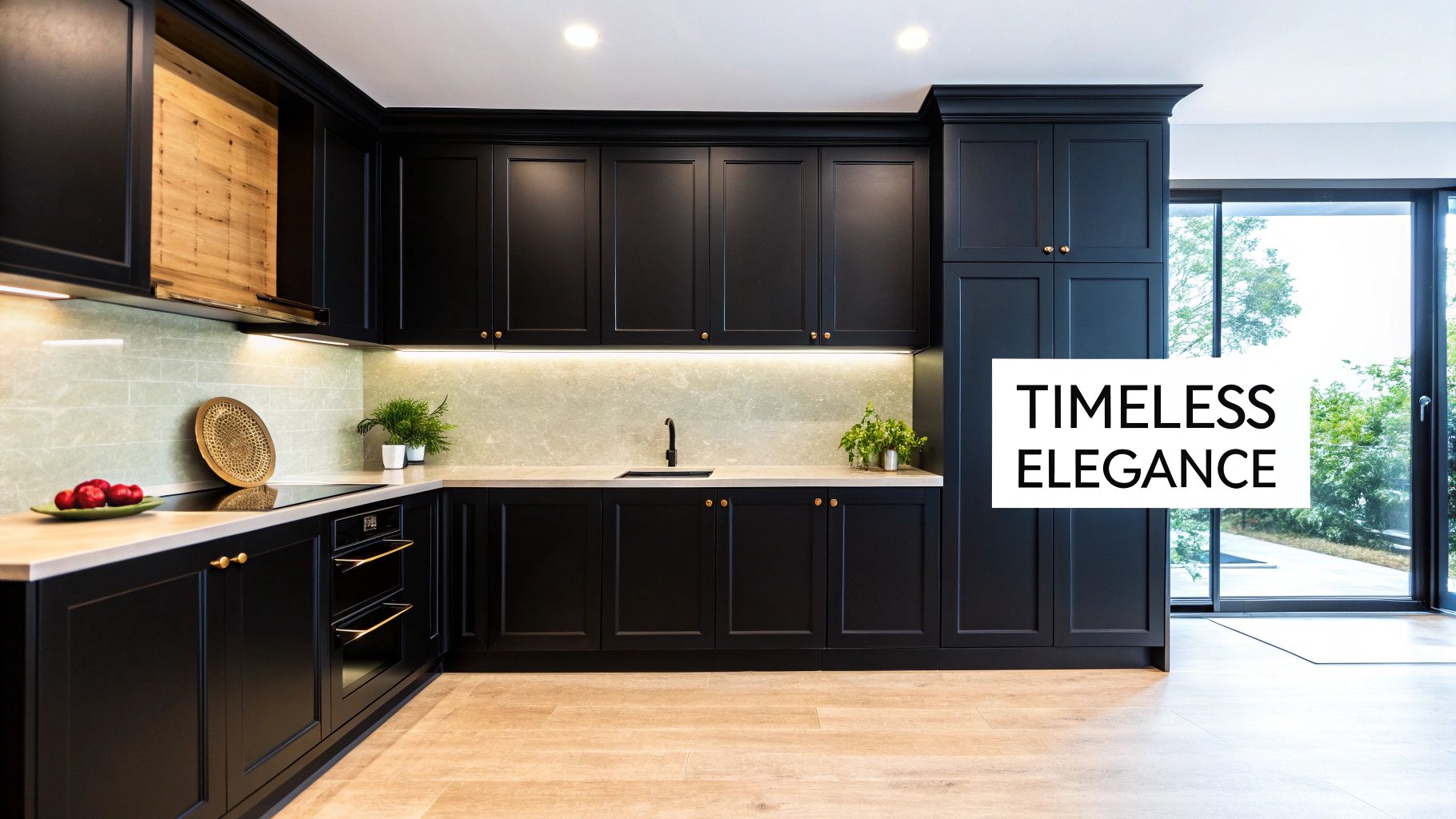
This lasting appeal is about more than just the colour; it's about the mood they set. Dark cabinetry can make a large, open-concept kitchen feel more intimate and cozy, or it can add a layer of polished sophistication to a smaller condo kitchen.
More Than Just a Passing Trend
Unlike some of those niche colour choices that scream "this kitchen was renovated in 2018," dark tones have been a staple in high-end design for decades. While you won't always see specific colour data in major market reports, their constant presence in design showcases and their popularity within modern and transitional styles prove their staying power. If you're curious, you can explore more about kitchen cabinet market trends to see where they fit in the bigger picture.
The real secret to their longevity is just how adaptable they are. You can pair dark cabinets with a huge range of materials and finishes to create completely different looks:
- For a Modern Look: Think flat-panel dark cabinets with sleek, minimalist hardware. A bright white quartz countertop creates that stunning, high-contrast look.
- For a Traditional Feel: Pair classic dark shaker-style cabinets with warm brass handles and a timeless marble backsplash for a sense of enduring elegance.
- For an Industrial Vibe: Match dark cabinets with things like concrete countertops, open shelving, and plenty of stainless steel accents.
By choosing dark kitchen cabinets, you aren't just selecting a colour. You're investing in a versatile design element that provides a strong, elegant foundation for your kitchen for years to come.
This guide will walk you through everything you need to know about bringing this look into your own home. We'll get into the pros and cons, the best materials for the job, and how to design a balanced, well-lit space that you'll absolutely love.
The Real Pros and Cons of Dark Cabinetry
Deciding to go with dark kitchen cabinets is a bold move. It’s a commitment to an aesthetic that brings a certain drama and sophistication to the heart of your home. But like any major design choice, it’s not without its trade-offs. To make sure you’ll love your kitchen for years to come, we need to have an honest chat about what it’s really like to live with dark cabinetry.
The biggest draw, without a doubt, is the high-end, luxurious vibe they create. Dark cabinets have a way of grounding a space, making a large, open-concept kitchen feel more intimate and a smaller one feel intentionally cozy and chic. They also have a practical superpower: they’re incredibly forgiving. Everyday splatters from cooking or minor scuffs from a busy family life tend to disappear, unlike on stark white cabinets where every single mark is on full display. This alone makes them a fantastic choice for active households.
The Upside of Going Dark
The appeal of dark kitchen cabinets is about more than just hiding a few splashes of last night's dinner. Their impact on a room’s atmosphere is profound.
- Creates Visual Depth: It might sound counterintuitive, but dark surfaces often recede visually. This can actually make a space feel deeper and more expansive, especially when you contrast them with lighter elements.
- Timeless Sophistication: Rich colours like charcoal, deep navy, and espresso are powerful neutrals. They provide a classic, confident backdrop that stands the test of time and trends.
- Hides Minor Wear and Tear: As mentioned, those daily bumps and stains are far less noticeable. This means less stress about constant wipe-downs and maintaining a picture-perfect look 24/7.
To help you weigh your options, here’s a quick summary of what to expect.
Dark Kitchen Cabinets At a Glance
| Attribute | Advantages | Potential Drawbacks & Solutions |
|---|---|---|
| Aesthetics | Creates a luxurious, high-end, and dramatic feel. Grounds the space, making it feel more intentional and sophisticated. | Can feel heavy or overwhelming in small spaces. Solution: Balance with light countertops, backsplashes, and flooring to create contrast and reflect light. |
| Maintenance | Excellent at hiding splatters, stains, and minor scuffs from daily use. Less frequent "deep cleaning" is needed for common kitchen messes. | Can show dust, flour, and fingerprints more easily, especially on certain finishes. Solution: Opt for a matte or textured finish, which is excellent at concealing smudges. Regular dusting with a microfibre cloth is key. |
| Lighting | Enhances layered lighting schemes, creating a warm, moody, and inviting ambiance. | Can make a kitchen with poor natural light feel dark or cavernous. Solution: A robust lighting plan is non-negotiable. Combine ambient, task (like under-cabinet lighting), and accent lighting. |
| Durability | Darker paints and stains can be very effective at concealing small dings or scratches over the long term. | Deeper scratches that penetrate the finish can be more noticeable against the dark colour. Solution: Keep a touch-up kit from your supplier handy for quick and easy repairs. |
Looking at a table like this makes one thing clear: the "cons" are really just design challenges waiting for a smart solution.
Of course, it's not all about hiding messes and looking chic. The number one concern I hear from homeowners is how dark cabinets handle daily life, specifically when it comes to dust and light. Yes, it's true—they can show dust, flour, or fingerprints more readily than, say, a mid-tone wood.
The other big consideration is their visual weight. If you have a kitchen with very little natural light or a tiny footprint, a wall of dark cabinets can feel a bit imposing if you don't plan for it. Without a thoughtful design strategy, you risk making the room feel smaller or heavier than you want.
The key isn't to fear the drawbacks of dark cabinets, but to plan for them. By selecting the right finish and implementing a smart lighting plan, you can easily mitigate these challenges and enjoy all the benefits.
Let's take fingerprints, for example. This issue is almost entirely dependent on the finish you pick. A high-gloss, slab-door cabinet will broadcast every single smudge. A matte or textured finish, on the other hand, is brilliant at hiding them. This is where options from our MapleKing collection, like the matte HDF or durable laminates, become fantastic, practical solutions that deliver the bold look without the high-maintenance headache.
Similarly, you can solve the "dark kitchen" problem entirely with good lighting. A layered approach is your best friend here. You need a mix of ambient (overall), task (functional), and accent lighting to make the space feel bright and inviting. Strategic under-cabinet lighting isn't just a nice-to-have; it's essential for illuminating your countertops and making the whole kitchen feel more open. Pair that with a light-coloured countertop and backsplash, and you've got a beautiful, balanced contrast that bounces light all around the room.
When you get right down to it, the "cons" of dark cabinetry aren't deal-breakers at all. They're just design puzzles, and with a little foresight, they're easily solved.
Choosing the Right Material and Finish
The final look, feel, and long-term durability of your dark kitchen cabinets all come down to two key decisions: the material you choose and the finish that protects it. This goes way beyond just picking a colour. It’s about how your cabinets will stand up to daily life, how they play with the light in your room, and how much time you’ll spend cleaning them.
Getting this right is the secret to a kitchen that doesn’t just look incredible on day one but stays that way for years. Think of the material as the canvas for your kitchen’s design—the foundation that everything else is built on.
Wood vs. HDF: A Core Decision
The classic, premium choice has always been painted solid wood. When you use a material like maple, the subtle texture of the natural wood grain often peeks through the dark paint. This creates a depth and character that feels authentic and high-end—a perfect match for traditional or transitional kitchens.
On the flip side, we have High-Density Fibreboard (HDF). Since it's an engineered product with no grain, HDF offers a perfectly smooth, uniform surface for paint. The result is an incredibly crisp and flawless finish, making it the go-to for modern, minimalist designs where clean lines are everything.
At its heart, choosing between wood and HDF is a choice between character and consistency. Wood gives you that organic, one-of-a-kind texture, while HDF delivers a flawlessly smooth surface that’s tailor-made for contemporary style.
HDF also brings another major benefit to the table: stability. It's far less likely to warp or crack with the swings in humidity we get in the Greater Toronto Area, ensuring your cabinet doors stay straight and true.
This quick decision guide can help you narrow it down based on your space and how much you enjoy (or dislike) cleaning.
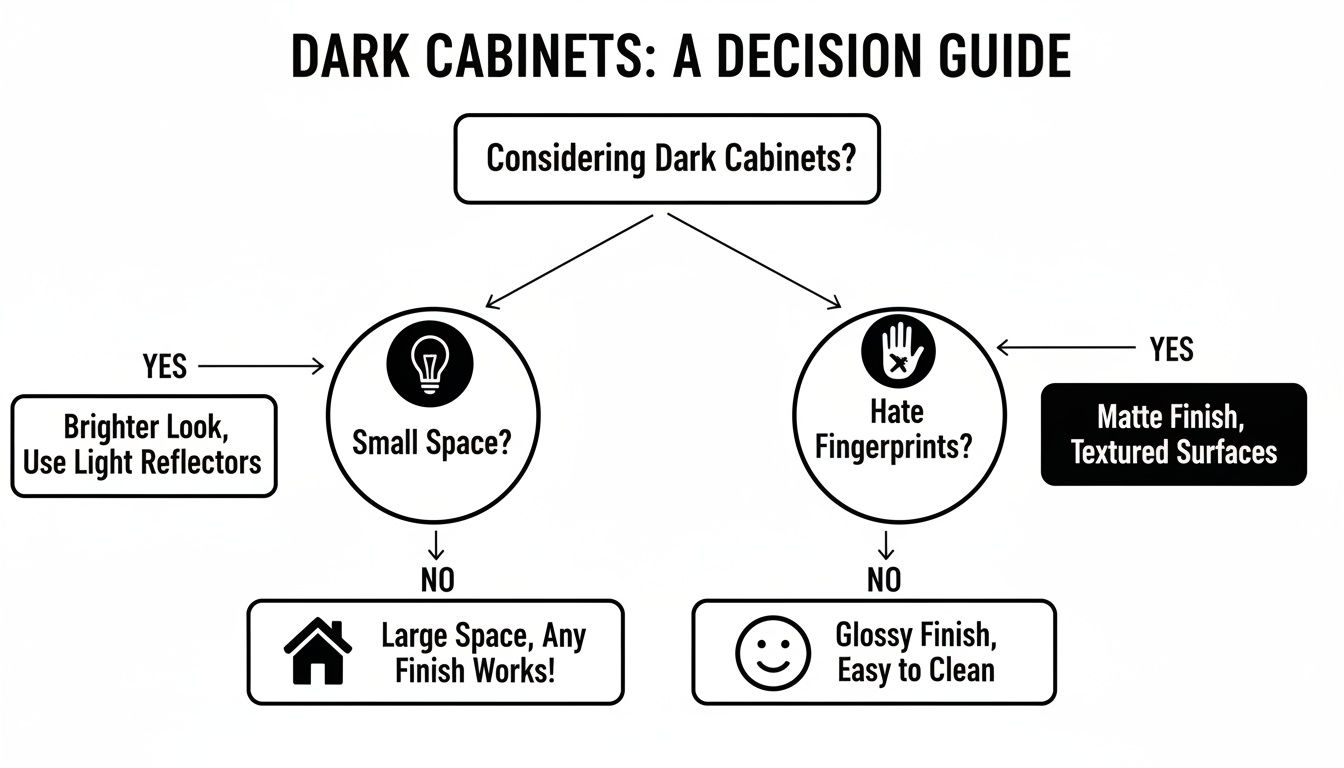
As you can see, the priority in a smaller kitchen is maximizing light, while a fingerprint-resistant finish is a lifesaver for anyone who wants to avoid constant wiping.
The Impact of Sheen: High-Gloss vs. Matte
Once you've landed on a material, the next step is choosing the finish. This is where you really set the mood. The two most popular camps are high-gloss and matte, and they couldn’t be more different.
High-gloss finishes are all about light and drama. Their sleek, reflective surface bounces light all over the room, which is a fantastic trick for making a space feel bigger and brighter. If you have a smaller kitchen or one that’s a bit starved for natural light, high-gloss dark cabinets can work wonders, creating a luxurious, almost mirror-like effect.
In contrast, a matte finish absorbs light, creating a soft, velvety look that feels incredibly sophisticated and modern. It’s understated, calm, and has one massive practical advantage: it's fantastic at hiding fingerprints and smudges. For a busy family, this low-maintenance quality is a game-changer. For homeowners weighing their options, seeing a full range of kitchen cabinets in Toronto can help clarify which finish best suits their lifestyle.
Exploring Other Durable and Stylish Materials
Beyond painted wood and HDF, a few other materials strike a great balance between style, durability, and budget.
-
Laminates: Forget what you think you know about laminate. Today's options are incredibly durable, with fantastic resistance to scratches, moisture, and stains. They come in a huge variety of dark colours and textures, offering a consistent and tough-as-nails surface for a high-traffic kitchen.
-
Thermofoil: This is a very budget-friendly option where a vinyl layer is heat-fused over an HDF core. The process creates a seamless, non-porous surface that’s a breeze to clean. You can get thermofoil in various sheens and dark colours, achieving a sleek look without the premium price tag.
Ultimately, your choice should be a thoughtful mix of your personal aesthetic, your household's needs, and your budget. Each combination offers a unique path to bringing the bold elegance of dark kitchen cabinets into your home.
Designing a Balanced Kitchen with Dark Cabinets
Think of dark kitchen cabinets as the anchor of your kitchen's design. They provide a powerful, grounding foundation, but they need a strong supporting cast to truly shine. The secret to a space that feels intentional and inviting—rather than heavy or oppressive—is all about achieving the right balance.
It's a lot like putting together a great outfit. Your dark cabinets are the classic black blazer: timeless and chic on their own, but they really come alive when you pair them with the right shirt, accessories, and shoes. This section is your style guide for dressing your kitchen to perfection.
Creating Contrast with Countertops
Your countertops are the single largest surface that will sit alongside your dark cabinetry, making this pairing your most critical design decision. The goal here is to create a contrast that feels deliberate and balanced.
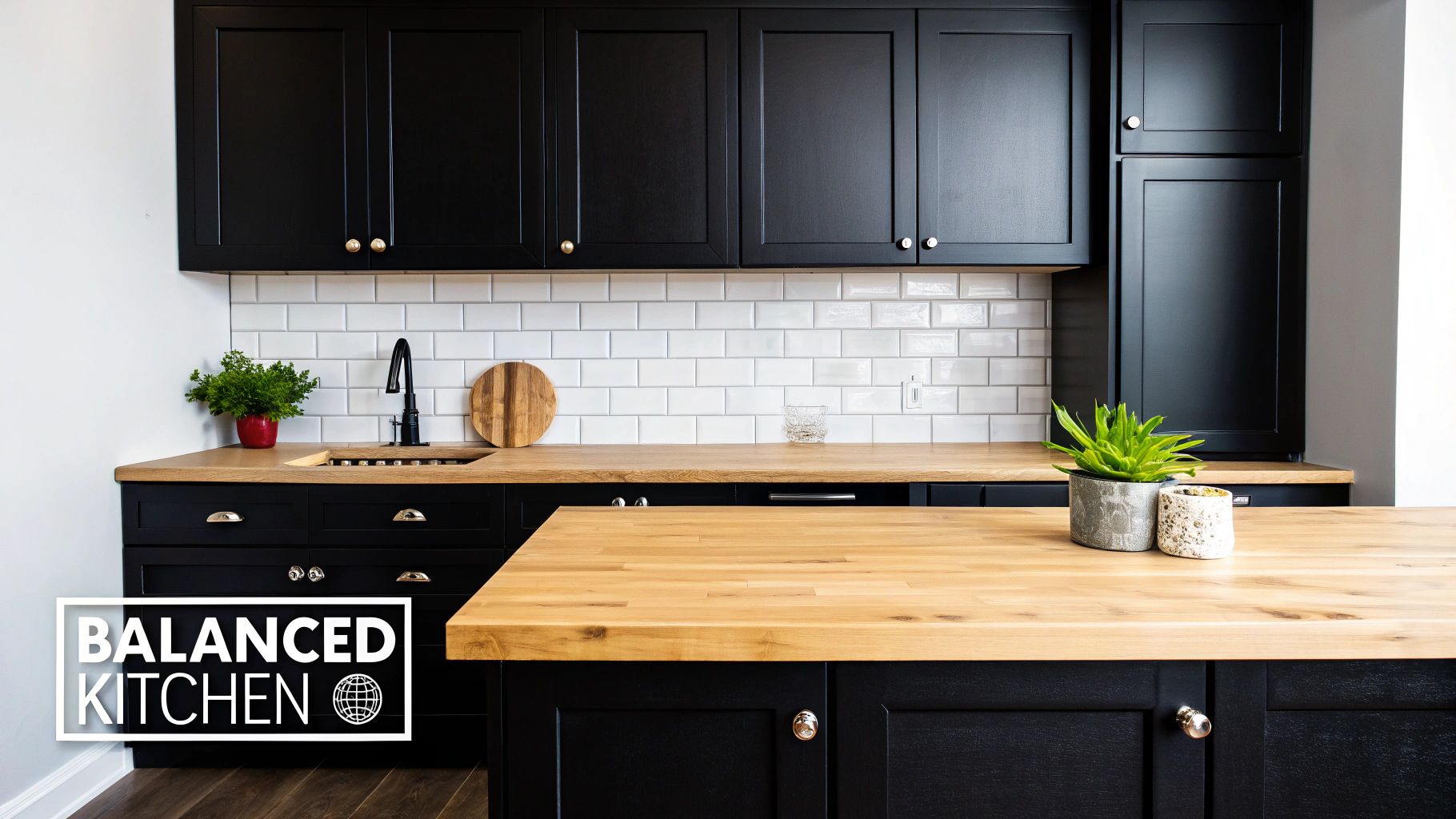
For a dramatic, high-contrast look that feels both timeless and modern, white quartz countertops are an unbeatable choice. The crisp white surface bounces light around the room, instantly brightening the space and making those dark cabinets pop. If you choose a quartz with some veining, whether subtle or bold, you get a layer of visual interest that mimics natural marble—without all the upkeep.
On the other hand, if you want to introduce warmth and a more organic texture, a butcher block countertop is a fantastic option. The natural wood tones create a much softer contrast than a stark white, lending a cozy, slightly rustic, or even industrial charm, depending on the other elements in the room.
Making a Statement with Your Backsplash
The backsplash acts as the visual bridge connecting your countertops and cabinets. It’s the perfect spot to inject personality and tie the whole look together.
Here are a few combinations that always work with dark cabinets:
- Classic White Subway Tile: You simply can't go wrong with this one. It's clean, budget-friendly, and provides a bright, simple backdrop that lets your cabinets be the star of the show.
- Dramatic Marble Slab: For a seamless and luxurious statement, try running your countertop material right up the wall. A full-height marble or quartz slab gets rid of grout lines and creates an incredibly polished, high-end feel.
- Textured Tile: Consider Zellige or other handmade-look tiles. Their beautiful imperfections and subtle variations in colour and texture add a layer of warmth and character, preventing the design from feeling too sterile or one-note.
The most effective kitchen designs are a study in balance. Every element—countertops, backsplash, hardware, and flooring—should work in concert with your dark kitchen cabinets, creating a harmonious push-and-pull of light and shadow, texture and smoothness.
To get a better feel for how these combinations will look in your own space, specialized kitchen design software can be a huge help. These tools let you test out different materials and colours before you commit, ensuring every choice you make contributes to a cohesive final vision.
Selecting Hardware to Define the Mood
Cabinet hardware is the jewelry of your kitchen. It's a small detail, but it has a massive impact on the overall style. The finish you choose can completely transform the mood of the space.
- Brass or Gold: These warm metals create a stunning, luxurious contrast against dark cabinets, especially navy, black, or deep green. They add an immediate touch of glamour and sophistication.
- Chrome or Polished Nickel: For a sleek, modern, or transitional look, these cool-toned metals offer a clean and crisp accent. They work beautifully with charcoal or deep grey cabinets.
- Matte Black: If you're aiming for a seamless, minimalist, or industrial vibe, matte black hardware on dark cabinets creates a subtle, tone-on-tone effect that is incredibly chic and understated.
Choosing Complementary Floors and Paint
Finally, the flooring and wall colour complete the picture. You'll want to choose shades that complement the cabinets without competing with them or making the room feel closed-in.
For flooring, light-toned options are your best bet. Natural oak, maple, or light grey tile provide a bright base that reflects light upwards, helping to balance the visual weight of the cabinets.
When it comes to wall paint, opt for a soft, light neutral. Colours like a warm off-white, a light greige, or a very pale grey create a gentle contrast and ensure the room feels open and airy. Try to avoid stark, cold whites, which can sometimes feel too jarring next to rich, dark cabinetry.
Getting the Lighting Right in a Dark Kitchen
Lighting is the make-or-break element when you have dark kitchen cabinets. It’s what takes a space from feeling like a cave to being a warm, dramatic, and perfectly usable heart of the home. Dark colours naturally swallow light instead of bouncing it back, so that single ceiling fixture just isn't going to cut it. The real secret is to think like a designer and layer your lighting.
This isn't as complex as it sounds. It simply means using different kinds of light for different jobs. By combining ambient, task, and accent lighting, you get rid of annoying shadows, make your gorgeous dark cabinets pop, and ensure every part of your kitchen is lit just right. It’s the difference between a kitchen that feels moody in a bad way and one that feels dynamic and inviting.
The Three Layers of Light Every Kitchen Needs
Think of your lighting plan like building a house: you start with the foundation and then add the important details and finishing touches. Each layer has a specific job, and when they work together, they create a beautifully balanced and bright room.
-
Ambient Lighting: This is your room's main light source—the general glow that lets you see and move around safely. For most kitchens, this will be a set of recessed pot lights or perhaps a great-looking central fixture that spreads light evenly everywhere.
-
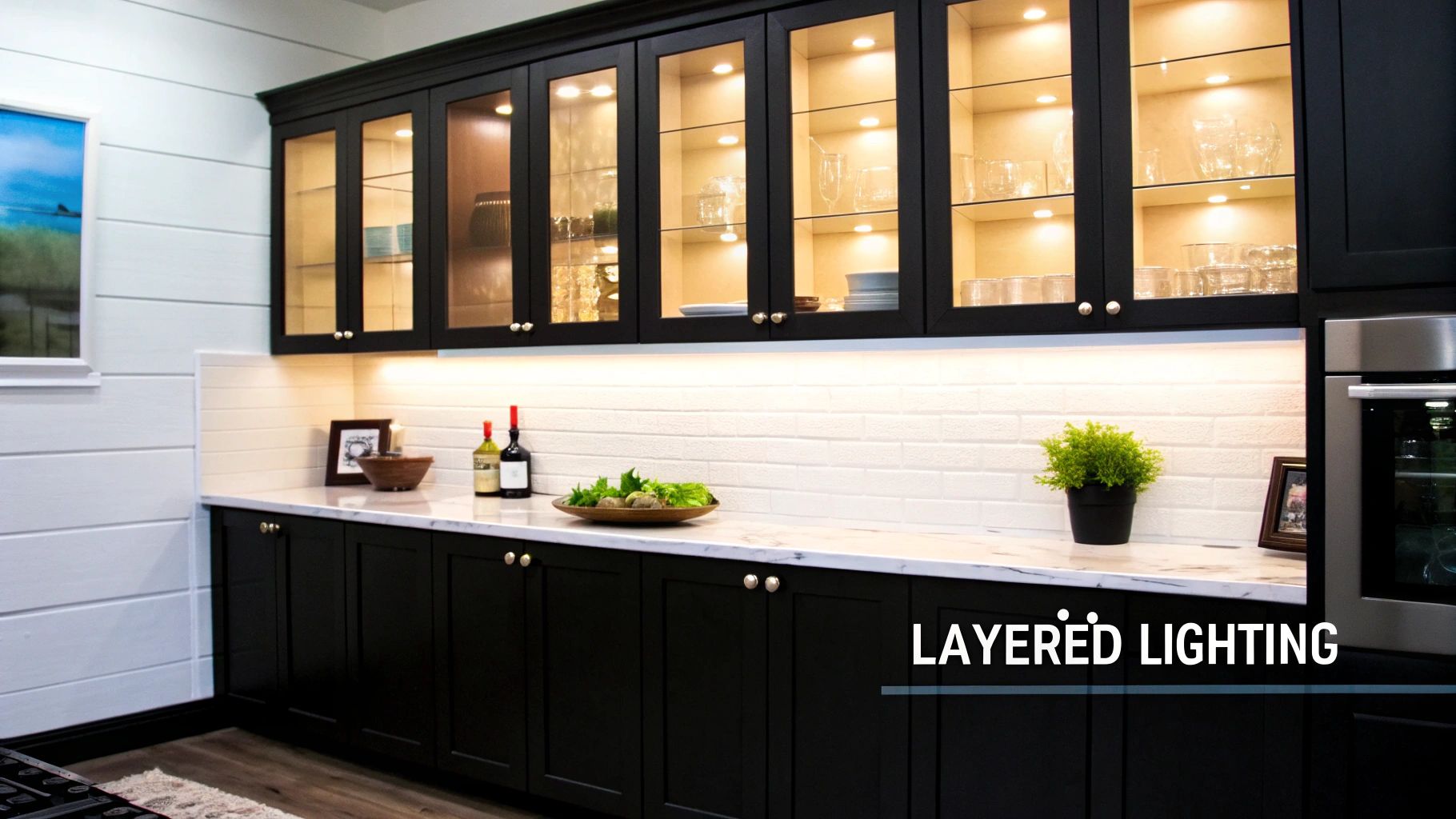
Task Lighting: This is where function really comes into play. Task lights are focused beams aimed directly at your work zones, like the countertops where you're chopping, mixing, or reading a recipe. The absolute hero here is under-cabinet lighting. It’s non-negotiable because it completely cancels out the dark shadows your upper cabinets would otherwise create.
-
Accent Lighting: Now for the fun part! This is the layer that adds personality and visual interest. Accent lights are all about highlighting specific features you love, like the texture of a tile backsplash or the beautiful dishes you have displayed in glass-front cabinets. It adds depth and a real touch of class.
A well-lit kitchen doesn't happen by accident; it's a carefully planned harmony of different light sources. For dark kitchen cabinets, this layered approach isn't just a suggestion—it's essential for the room to look and work its best.
Smart Choices and Natural Light
Don’t forget about the most powerful light source of all: the sun. If you’re lucky enough to have windows, keep the coverings simple and light to let as much daylight stream in as possible. For a serious upgrade, you could even explore how kitchen skylight solutions can completely transform a space by flooding it with natural light from above.
When it comes to picking out bulbs, look at the colour temperature, which is measured in Kelvins (K). For kitchens, a warm white around 3000K usually hits the sweet spot—it’s bright and clean without feeling cold like an office or overly yellow. To see how different lighting setups bring our cabinet styles to life, take a look through our MapleKing project gallery.
It’s worth noting that while we can all see style trends, hard data on cabinet colour popularity is surprisingly scarce. Most general market reports don't break things down by colour, making it tough to pinpoint exact numbers for dark cabinets. This really just goes to show that choosing a dark, sophisticated kitchen is more about timeless style than chasing a fleeting trend.
Looking After Your Dark Cabinets
Dark kitchen cabinets are a beautiful investment, often becoming the dramatic centrepiece of the room. To keep them looking their best, all it takes is a simple and consistent cleaning routine.
It's an interesting trade-off: unlike lighter colours that hide dust but show every single splatter, dark surfaces are the opposite. They're fantastic at concealing food smudges but can make dust and fingerprints stand out if you're not on top of it.
The great news? Keeping them looking brand new is actually quite simple. The best way to do it depends on the specific material and finish of your cabinetry. A gentle touch and the right supplies will protect the beauty and integrity of your investment for years to come.
Daily and Weekly Cleaning Routines
The best way to stop buildup is to give your cabinets a quick, regular wipe-down. This simple habit prevents grease and grime from setting in, which can become a real headache to remove later on.
For a quick daily or weekly clean:
- Mix a gentle cleaning solution. All you really need is a few drops of mild dish soap in a bowl of warm water. Steer clear of harsh, abrasive cleaners or anything with ammonia or bleach, as they can strip or damage the finish over time.
- Use a soft cloth. Dampen a clean microfibre cloth in the soapy water, then wring it out until it’s just damp, not dripping. Too much water can seep into the seams of wooden doors and cause problems down the road.
- Wipe and dry. Gently wipe down the cabinet fronts, focusing on the high-traffic spots like around handles and pulls. Right after, use a separate, dry microfibre cloth to buff away any moisture and stop streaks from forming.
When it comes to dark cabinets, proper care is less about intense scrubbing and more about consistent, gentle cleaning. Using the right tools, like a microfibre cloth, and avoiding harsh chemicals is the most important thing you can do to preserve their rich, deep colour and flawless finish.
Finish-Specific Care Tips
Different finishes have their own little quirks. A high-gloss surface needs a different approach than a matte one to really shine.
For Matte and Painted Finishes (HDF or Wood):
Matte finishes are great at hiding smudges, but they can get streaky if you don't clean them correctly. The trick is to always dry the surface completely after wiping to keep that smooth, velvety look. For any stubborn spots on painted wood, stick with your mild soap solution and resist the urge to scrub, which could chip the paint.
For High-Gloss and Thermofoil Finishes:
These slick, reflective surfaces will show every fingerprint and water spot. The secret here is using a super soft, non-abrasive microfibre cloth to avoid tiny micro-scratches that can dull the shine over time. Buffing with a dry cloth after you clean is absolutely essential to bring back that perfect, mirror-like gleam.
Interestingly, while homeowners are focused on the best care for their chosen finish, broader market intelligence reports don't usually break down the cabinet industry by colour. They tend to analyze materials and construction methods, so specific sales data for dark kitchen cabinets isn't readily available. You can learn more about kitchen cabinet market analysis to see how these wider trends are tracked. This industry focus on material over colour just goes to show how vital it is to pick a durable, high-quality finish for your dark kitchen cabinets in the first place.
Common Questions About Dark Kitchen Cabinets
Choosing dark cabinets is a big, exciting decision, but it's natural to have a few questions swirling around. Will they still look great in five years? Will they make my small kitchen feel like a cave? People want to know they're making a choice they'll love for the long haul. Let's tackle the most common questions we hear from homeowners.
Getting clear, honest answers is the best way to feel confident in your design. My goal here is to help you feel fully informed and genuinely excited about the incredible impact dark cabinetry can have on your home.
Will Dark Kitchen Cabinets Go Out of Style?
This is probably the number one question we get, and the short answer is no. While super-specific shades might trend up or down, dark kitchen cabinets are a true classic. Deep, rich colours like charcoal, navy, and espresso act more like powerful neutrals than fleeting trends. Think of them as the perfect little black dress for your kitchen—a timeless foundation you can easily dress up or down over the years with new hardware, countertops, or a fresh coat of paint on the walls.
Their real strength is their versatility. Dark cabinets can feel right at home in a sleek, ultra-modern kitchen or a cozy, traditional one. It's this chameleon-like quality that ensures they outlast any passing fad and keep their sophisticated feel for years to come.
Are Dark Cabinets a Good Choice for a Small Kitchen?
Yes, absolutely—as long as you have a smart design plan. The fear is that dark colours will shrink the space, but it’s all about balance and preventing the room from feeling closed in. This is where strategic lighting and contrast become your best friends.
To make dark cabinets sing in a smaller kitchen, just follow a few key principles:
- Light It Up: Great lighting is non-negotiable. A layered plan that includes bright under-cabinet task lighting is essential for illuminating your countertops and chasing away shadows.
- Create Powerful Contrast: Pair those dark cabinets with light-coloured countertops and a bright, reflective backsplash. This visual push-and-pull bounces light around the room, instantly making it feel bigger.
- Use Reflective Surfaces: A high-gloss finish on the cabinets themselves, or even just a few upper cabinets with glass fronts, can make the space feel more open and airy.
The success of dark kitchen cabinets in a compact area isn't about the colour itself, but about the thoughtful design elements that surround it. With the right pairings, they add incredible depth and character without ever feeling overwhelming.
What Is the Best Material to Avoid Fingerprints?
If you're worried about constantly wiping down smudges, the finish you choose is far more important than the core material. Your best bet for hiding fingerprints is a matte or textured finish. The non-reflective surface doesn't catch the light in the same way a glossy one does, making those everyday marks practically invisible.
Dark matte HDF and modern laminates are fantastic for this, as they’re designed to hide daily wear and tear. If your heart is set on painted wood, just ask for a lower-sheen paint, like a satin. It will perform worlds better than a semi-gloss or high-gloss option. These simple choices dramatically reduce the time you'll spend cleaning, letting you just enjoy how great your cabinets look. Our team of custom kitchen renovation experts in Toronto can walk you through how different finishes work within a full renovation plan.
Ready to bring sophisticated, high-quality dark kitchen cabinets into your home? Contact MapleKing Kitchen Cabinets today for a free consultation and discover our factory-direct pricing on custom designs. Visit us at https://maplekingkitchencabinets.com to get started.



