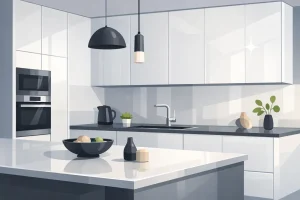

When you're trying to make the most of every square foot in your Toronto home, standard, off-the-shelf cabinets often just don't make sense. Custom cabinetry, on the other hand, is built from the ground up to fit your space—and your life—perfectly. It’s the difference between a solution that works and a solution that feels like it was always meant to be there, whether you're in a downtown condo or a family home in Markham.
Why Toronto Homeowners Choose Custom Cabinetry
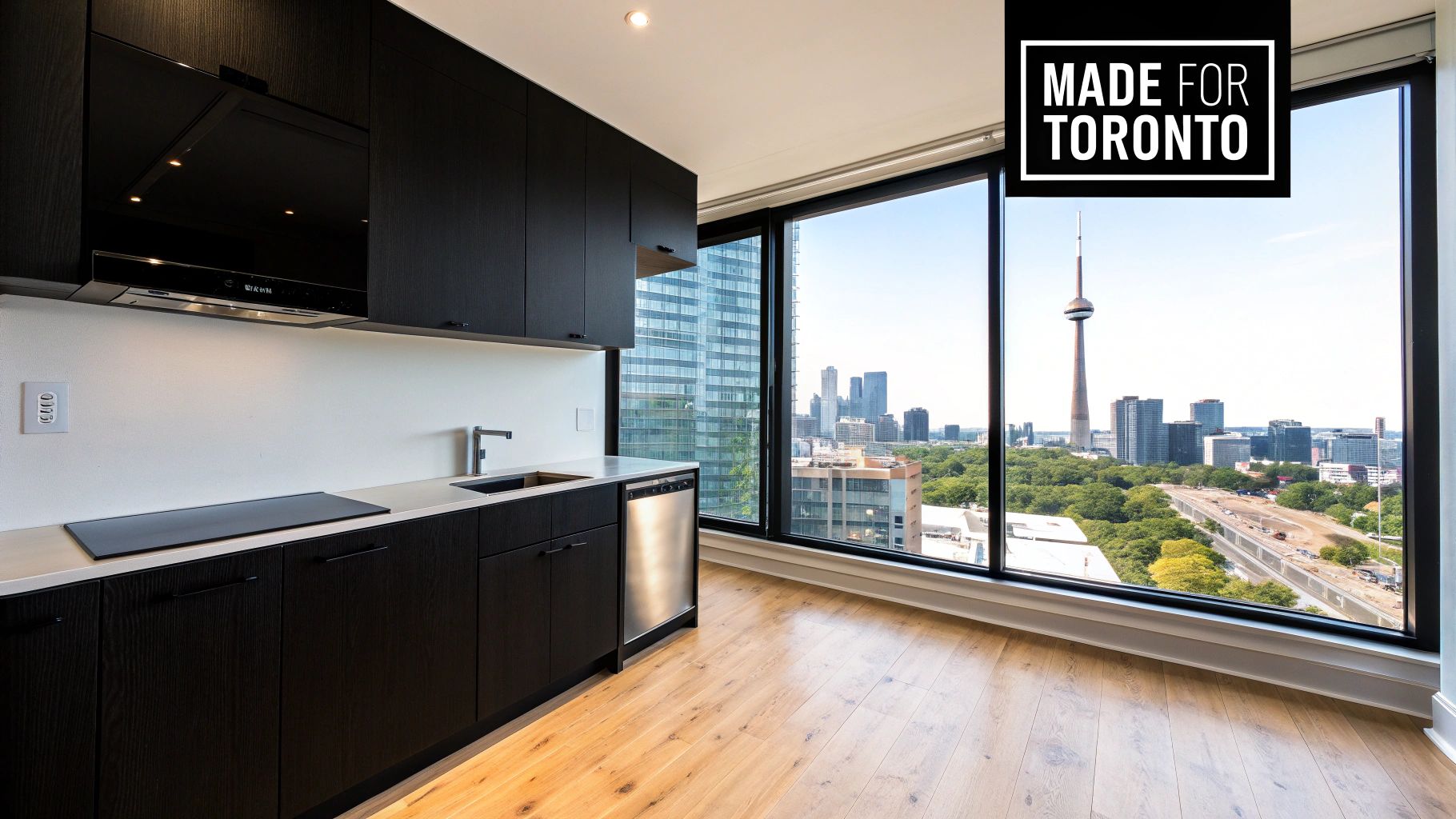
In a city with such a mix of architecture—from Victorian semis with quirky layouts to modern condos with tight corners—a one-size-fits-all approach to storage is bound to fail. That’s why so many homeowners across the GTA are working with custom cabinetry Toronto specialists. They’re looking for something that’s not just functional, but also a true reflection of their personal style.
Think of it like getting a bespoke suit versus buying one off the rack. A stock cabinet might mostly fit, but a custom design is made for your home’s exact dimensions. Every inch of space gets used, nothing looks out of place, and the final result feels seamless. This is especially true in city homes where you can't afford to waste an inch.
The Value of a Perfect Fit
The biggest reason people go custom is the incredible space optimization. Standard cabinets are sold in fixed sizes, which almost always results in awkward gaps next to appliances or wasted space above. Custom solutions solve these problems from the start.
Here’s what that actually looks like in your home:
- Total Space Utilization: Imagine cabinets that stretch right to the ceiling, eliminating that useless, dust-collecting gap. Or a cabinet built precisely for that odd little nook you never knew what to do with.
- Personalized Functionality: You decide exactly how the inside of your cabinets work. Want a pull-out spice rack right next to the stove, a hidden recycling centre, or drawers with dividers made for your specific pots and pans? You got it.
- Enhanced Home Value: In the competitive Toronto real estate market, a thoughtfully designed, high-quality kitchen is a huge draw. It’s an investment that often pays for itself when it’s time to sell.
This isn't just a niche trend. Custom work is a major player in the home improvement scene. In the GTA, custom cabinetry now makes up a commanding 29% share of the Canada kitchen cabinet and countertop market as of 2025. It speaks volumes about how much Toronto homeowners value solutions that truly fit their unique spaces. Companies like MapleKing Kitchen Cabinets are a great example, offering these kinds of bespoke designs. If you're curious, you can explore more data on the Canadian market to see just how significant this shift is.
Getting to Know Your Cabinet Materials
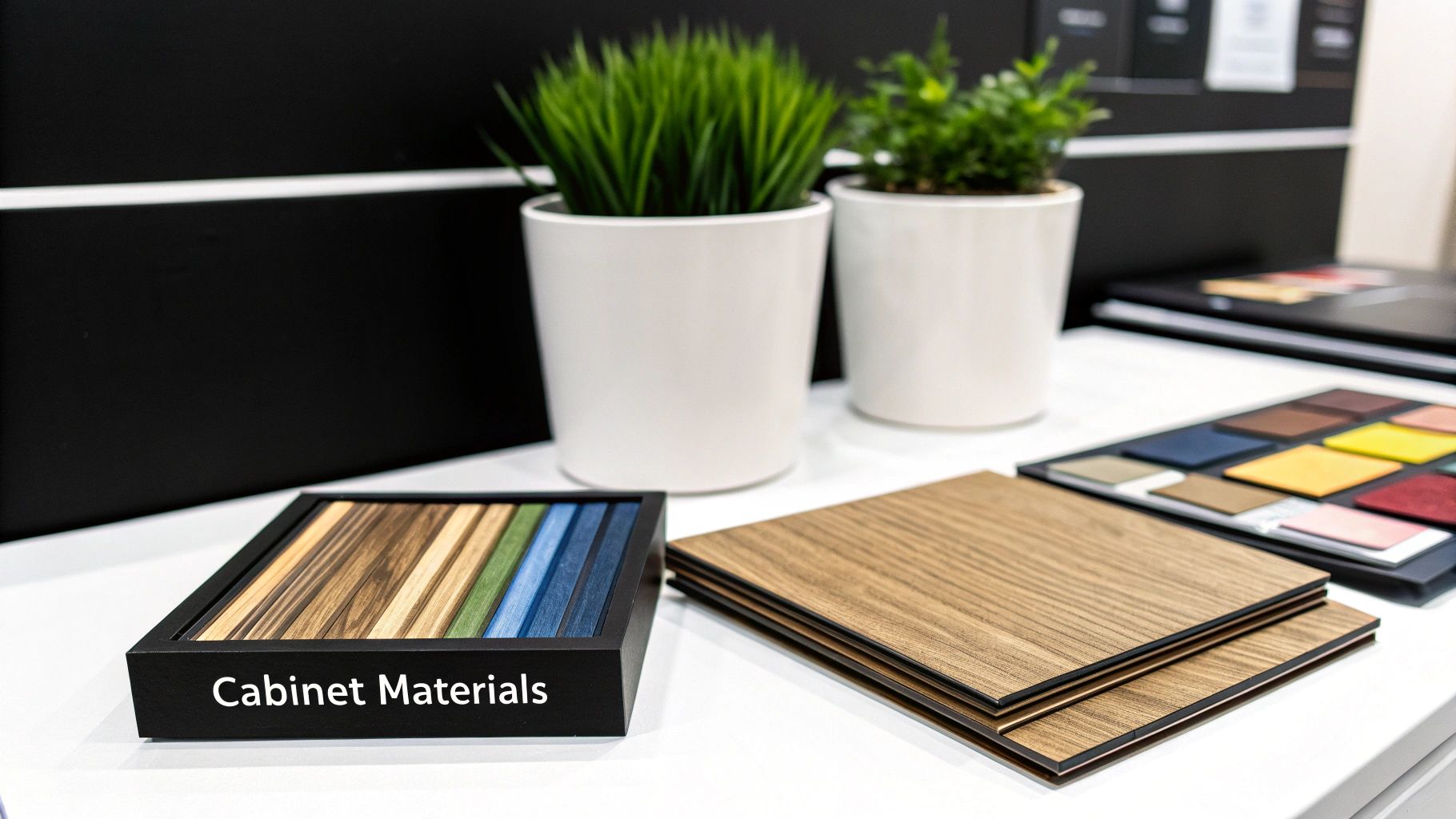
If you get one thing right in your custom cabinetry project, make it the material. This is your starting point—the decision that influences everything else, from the colour on the doors to the hardware you choose. It dictates the look, the feel, and, most importantly, how your kitchen will stand up to daily life.
As you plan your custom cabinetry Toronto project, think about the unique personality of each option. Are you after the classic, organic warmth of real wood, or does the flawless, uniform look of a painted finish feel more at home in your modern downtown condo? Each material brings its own unique mix of style, durability, and cost to the table.
Let’s walk through the most common materials we see used in homes across Toronto and Markham, from timeless real wood to high-performance engineered options.
The Timeless Appeal of Real Wood
There’s a reason real wood has been the go-to for generations. It brings a warmth and character to a room that’s simply unmatched. Every piece has its own grain pattern and subtle imperfections, which means no two cabinet doors will ever be identical. In our area, popular choices like maple, oak, and walnut each offer a distinct look, from subtle grains to bold, dramatic patterns.
It's important to remember that wood is a "living" material. It breathes, expanding and contracting with Toronto’s humid summers and dry winters. While this is part of its natural charm, it’s something to be aware of—a little care goes a long way in preserving its beauty for decades.
The Modern Uniformity of HDF Painted Finishes
If your vision calls for a perfect, consistent colour and an ultra-smooth surface, then High-Density Fibreboard (HDF) is your best bet. HDF is an engineered wood product, created by compressing wood fibres with resin under intense pressure. The result is an incredibly dense and stable panel that won’t warp or shift.
This rock-solid stability makes HDF the perfect canvas for a painted finish. Unlike solid wood, it doesn't move, so you’ll never see those hairline cracks that can sometimes appear in the paint at the joints. What you get is a crisp, seamless look that’s ideal for contemporary, transitional, and minimalist kitchens.
When you choose a painted HDF finish, you are essentially getting the best of both worlds: a durable, stable core and an unlimited palette of colours for a perfectly uniform appearance that stands the test of time.
Of course, the material is only half the story. Taking the time to explore kitchen cabinet color ideas will help you pin down the exact mood you want to create, whether that’s a bold statement or a subtle, calming backdrop.
High-Gloss and Matte Finishes
Once you've settled on HDF, you can refine the look even further with the finish. These two options create very different effects but are equally sophisticated.
- High-Gloss HDF: This finish delivers a sleek, mirror-like sheen that bounces light around the room. It’s a fantastic choice for smaller Toronto kitchens or basement bars because it creates an illusion of space and adds a touch of modern glamour.
- Matte HDF: With its soft, velvety feel, a matte finish absorbs light for a more subtle and elegant look. It’s also incredibly forgiving, doing a great job of hiding fingerprints and smudges, which makes it a smart and stylish option for busy households.
To help you sort through these choices, here’s a quick comparison of the materials we've discussed.
Comparing Cabinet Material Options for Your Toronto Home
This quick-reference table compares the primary custom cabinet materials, highlighting their best features, ideal applications, and maintenance considerations to help you choose the right fit.
| Material Type | Key Benefit | Best For | Durability & Care |
|---|---|---|---|
| Real Wood | Timeless warmth & unique grain | Traditional, transitional, and farmhouse-style kitchens; homeowners who appreciate natural character. | Durable, but can expand/contract with humidity. Requires gentle cleaning and occasional polishing. |
| Painted HDF | Flawless, uniform colour & stability | Modern, minimalist, and contemporary designs. Perfect for achieving a specific colour palette. | Very durable and stable; no cracking at joints. Easy to wipe clean with a soft, damp cloth. |
| Laminates | High durability & budget-friendly | High-traffic areas like laundry rooms, rental units, or busy family kitchens. | Extremely resistant to scratches, moisture, and stains. Very low maintenance; easy to clean. |
| Thermofoil | Seamless surface & easy to clean | Kitchens and bathrooms needing a non-porous, moisture-resistant, and easy-to-maintain surface. | Resists moisture well and is exceptionally easy to clean. Avoid high heat from appliances. |
Each material has its place, and the right one for you depends entirely on your project's specific needs and your personal style.
Durable Laminates and Thermofoil
For projects where durability and budget are top priorities, don't overlook modern laminates and thermofoil. These materials have come a long way and now offer stunningly realistic wood grains, textures, and solid colours.
Laminates are made by fusing layers of paper and resin into a tough, resilient surface. They are absolute workhorses—highly resistant to scratches, moisture, and stains, making them perfect for laundry rooms, rental properties, or kitchens that see a lot of action.
Thermofoil is a vinyl film that’s heat-fused to an HDF core. This process wraps the door seamlessly, creating a non-porous surface that is incredibly easy to clean and maintain. It's another fantastic choice for spaces that need to stand up to heavy use.
The demand for these practical and stylish finishes is on the rise. In North America's kitchen cabinet market, the custom segment is booming, especially in major hubs like Toronto.
If you’d like to see how these materials look in real-world applications, our guide on kitchen cabinets in Toronto is a great place to start.
Getting Real About Your Custom Cabinet Budget in the GTA
Before you even start dreaming about door styles and finishes, the first and most critical step is figuring out your budget. Let's be honest, custom cabinetry is an investment. But understanding what actually goes into the final price tag will help you make smart choices that fit your wallet and your vision for a beautiful, functional space.
Think of it this way: your budget is built on four pillars—materials, finishes, hardware, and the sheer size of the job. A sprawling kitchen in a North York home is going to have a different price point than a sleek condo kitchen downtown. Likewise, choosing solid walnut doors versus painted HDF will have a big impact.
Remember, this isn't just a purchase. In a market like the GTA, a thoughtfully designed custom kitchen can seriously boost your home's value, making it a wise investment that you get to enjoy every day.
What Am I Actually Paying For?
When you get a quote for custom cabinetry Toronto work, you're paying for a combination of raw materials and skilled labour. To really understand your estimate, you need to know what drives the cost.
- Your Choice of Material: This is a big one. As we've covered, solid woods like maple and walnut sit at the higher end. High-quality HDF is a fantastic, durable alternative that’s perfect for painted finishes and often more budget-friendly.
- The Complexity of the Finish: A standard, single-colour paint job is your baseline. If you start looking at high-gloss finishes, intricate glazes, or hand-wiped stains, the cost goes up. These require more time, more steps, and more specialized skill from the craftspeople.
- Hardware and Accessories: This is where the details add up. Knobs, pulls, and hinges come in a huge range of styles and prices. Beyond that, all the cool interior features—like pull-out pantries, "magic corner" solutions, and custom-divided drawers—add both incredible functionality and cost.
- The Scope of the Project: This one’s pretty straightforward. The more cabinets you need, the more material and labour are involved. We typically measure this in linear feet, so more feet means a higher price.
Knowing these key factors will help you have a much more productive chat with your cabinet maker. You can pinpoint where you want to splurge and where you’d rather save.
The Factory-Direct Advantage
If you're looking for the best way to manage your budget without compromising on quality, working directly with the manufacturer is a game-changer. This is what we call factory-direct pricing.
By cutting out the middleman—the retail showroom or big-box store—you skip an entire layer of price markups. For homeowners, this often means saving 30-50%. Suddenly, that higher-grade material or premium finish that seemed out of reach might be back on the table.
This model doesn't just save you money. It puts you in direct contact with the people who are actually building your cabinets. Communication is clearer, the process is smoother, and the final result is a perfect match for what you envisioned.
What Does This Look Like in the Real World?
To help you get a better sense of what to expect, here are a few common project scenarios around the GTA. Keep in mind, these are just ballpark figures—your specific choices will determine the final cost of your custom cabinetry Toronto project.
- The Compact Condo Kitchen (Downtown Toronto): In a smaller, galley-style kitchen, the focus is on maximizing every inch. A project using painted HDF with good-quality standard hardware could land in the $8,000 to $15,000 range.
- The Family Townhouse Kitchen (Markham): For a typical family home, you're likely looking at more storage and an island. Using a mix of painted HDF cabinets and durable laminate interiors, plus a few hardware upgrades, you might budget between $15,000 and $25,000.
- The Major Renovation in a Detached Home (North York): This is the dream kitchen scenario. A large, open-concept space with premium touches like solid wood accents, lots of custom drawer inserts, and high-end hardware could range from $25,000 to $40,000+.
Seeing these numbers helps you place your own project on the map. It’s all about finding that sweet spot where your dream kitchen meets a budget that makes sense for you.
The Custom Cabinetry Process from Concept to Completion
Taking on a custom cabinetry project in your Toronto home can feel like a massive undertaking, but it’s really a journey that unfolds in a few clear, straightforward stages. When you know the roadmap from start to finish, the uncertainty melts away, and you can plan with real confidence. Think of it less like a messy construction zone and more like a carefully orchestrated performance, moving smoothly from initial ideas to a stunning finished product.
The whole process, from the first hello to the final walkthrough, is designed to be a partnership. You're not just a client; you're the co-creator, helping shape a space that is one-hundred-percent you. This collaborative journey ensures every single detail, from the height of a shelf to the sheen on a door, is exactly what you dreamed of.
Stage 1: The Initial Consultation and Discovery
It all starts with a conversation. This first step is a chance to sit down with a design expert and just talk—about your vision, what you need the space to do, and the look you're going for. Bring your inspiration! Photos from Pinterest, rough sketches, and wish lists are all gold.
During this chat, the designer will also get practical, asking about your lifestyle. Do you host big family dinners? Are you a serious home chef who needs a spot for every gadget? These details are the secret ingredient to creating cabinetry that actually makes your life easier. The goal here is to set a clear direction and a preliminary budget for your custom cabinetry Toronto project.
Stage 2: Design Development and Material Selection
This is where your vision starts becoming real. Using all the info from your consultation, the design team will create detailed 3D renderings of your space. This is a game-changer; you get to see precisely how your new cabinets will look and feel in your home long before a single piece of wood is cut.
You can play with different layouts, test out colours, and swap door styles until everything feels just right. This is also when you’ll lock in your material and finish choices. You’ll get to see and touch physical samples, making sure the texture and colour are perfect in person, not just on a screen.
The design phase is, without a doubt, the most important part of the whole process. Taking your time here to get every detail right means no surprises later on and guarantees the final result is a perfect match for your initial dream.
Stage 3: Precision Manufacturing
Once you’ve signed off on the final designs, the project moves to the workshop. This is where skilled craftspeople take those detailed plans and bring them to life, creating tangible, high-quality cabinetry. Using a blend of state-of-the-art machinery and classic woodworking techniques, each piece is cut, built, and finished with an incredible amount of care.
This infographic breaks down the key factors that were finalized during the design stage—material, finish, and size—and how they influence the budget.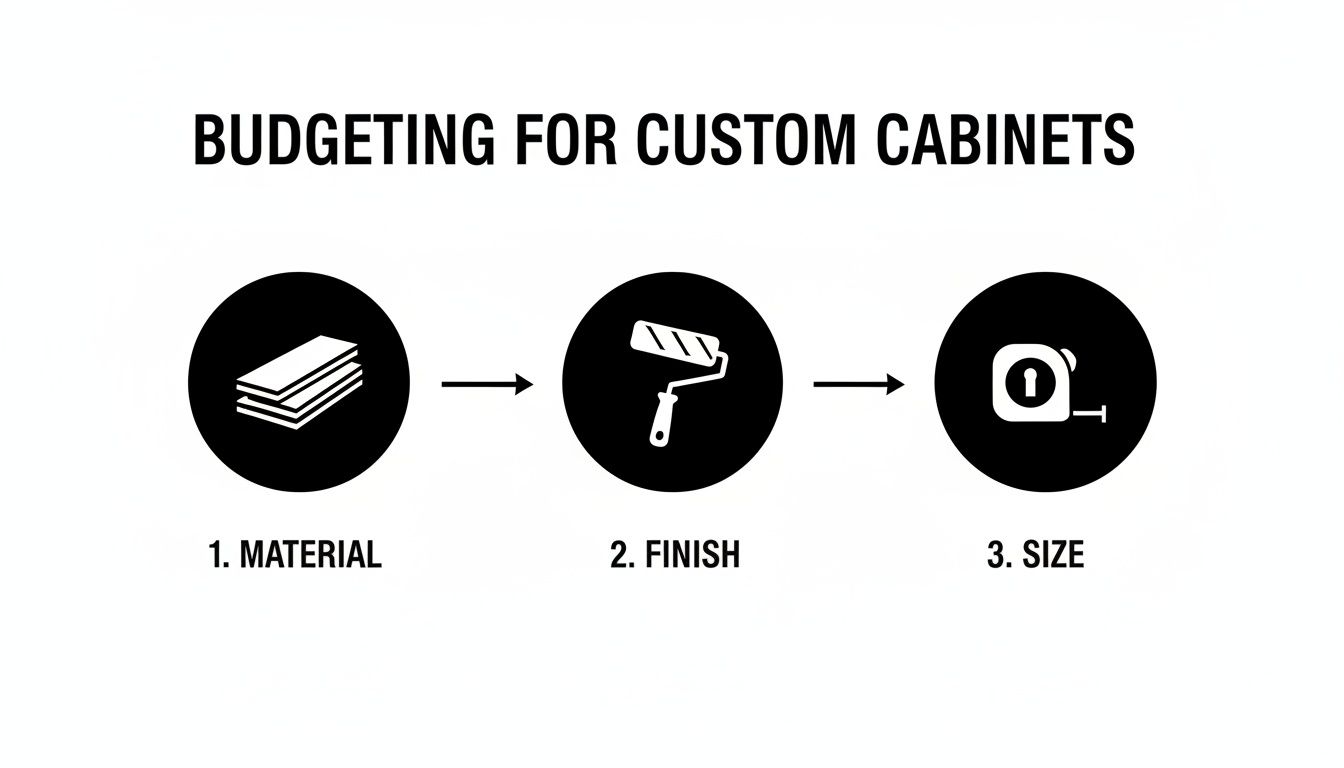
Each one of these decisions is a crucial piece of the puzzle, shaping both the final cost and the overall look of your custom cabinetry.
Companies that work on a factory-direct model have a real leg up here. By controlling the entire production process from start to finish, they can maintain a much higher standard of quality and keep the lines of communication wide open between the design and production teams.
Stage 4: Professional Installation
The final piece of the puzzle is the installation, when your custom-built cabinets are expertly fitted into your home. This is handled by a dedicated team of installers who know the ins and outs of working in all kinds of Toronto-area homes, from century-old houses to modern condos.
They work cleanly and efficiently to bring the design to life, making sure every door hangs perfectly, every drawer glides smoothly, and every piece of hardware is installed flawlessly. This is the moment where all the planning and craftsmanship come together in the stunning transformation of your space. To get a feel for what’s possible, you can view a gallery of completed custom cabinetry projects for some inspiration.
So, how long does it all take? A typical timeline for a complete custom cabinetry project in the GTA, from the first chat to the final installation, usually lands somewhere between 8 to 12 weeks. This can shift a bit based on how complex the design is and the materials you choose, but it’s a solid timeframe for planning your renovation.
How to Choose a Custom Cabinetry Partner in Toronto
Picking the right company for your custom cabinetry is probably the single most important decision you'll make in the entire project. This isn't just about hiring a builder; you're looking for a partner who can be your guide, your craftsperson, and your project manager, all rolled into one. Whether you're working directly with a dedicated cabinetry firm or your project is part of a larger renovation managed by skilled general contractors and remodelers, the right team is everything.
A great partnership is built on a foundation of trust, clear communication, and a shared vision. They need to understand what you're trying to achieve. After all, they’re not just building boxes; they’re creating functional art that will become the heart of your home for years to come.
See and Touch the Quality for Yourself
Online galleries and reviews are a fantastic place to start your research, but they don't tell the whole story. You absolutely have to visit a showroom. There is simply no substitute for seeing and touching the products in person. It’s your chance to really kick the tires and assess the quality up close.
When you're there, become a detective and pay attention to the little things.
- Feel the finishes. Are they buttery smooth? Run your hands over different painted and stained wood surfaces. You’ll feel the quality.
- Work the hardware. Open every drawer and door you can. Do they glide effortlessly? Do they close with a satisfying, soft click?
- Check the construction. Peek inside the cabinets. Look at how the pieces are joined together. Does it all feel sturdy, solid, and built to last?
This physical interaction turns an idea from a picture on your screen into something real you can properly evaluate.
Review a Portfolio of Local Projects
A cabinet maker’s portfolio is their resume, and you want to see proof of their work right here in the GTA. Look for a healthy mix of projects in Toronto and Markham. This demonstrates they know how to work with the unique character—and challenges—of local homes, from tight Victorian kitchens downtown to sprawling new builds in the suburbs.
A strong local portfolio is more than just pretty pictures. It’s proof that a company understands our city's architecture and can deliver a style and quality that Toronto homeowners expect.
Don't just get wowed by the "after" shots. Ask to see testimonials or case studies that walk you through the entire process. This gives you a peek behind the curtain at how they solve problems and communicate with clients. To give you a head start, we've put together a list of the 10 best kitchen cabinet companies in Toronto.
Prioritize a Start-to-Finish Service
The best projects are almost always the ones handled by a single, accountable team from the first sketch to the final knob installation. Finding a partner who offers a complete, end-to-end service is a game-changer. This integrated approach dramatically cuts down on the chances for miscommunication between designers, builders, and installers, leading to a much smoother, more efficient project.
This is especially important in our busy market. Canada’s cabinet and vanity manufacturing sector—a cornerstone of Toronto's renovation boom—has grown at a 5.5% CAGR over the last five years. This boom reinforces the value of specialized local makers who can compete with big-box stores by offering premium, beautifully crafted pieces. By choosing a partner who manages every step, you get one point of contact and one team whose sole focus is bringing your vision to life perfectly.
Long-Term Care for Your Custom Cabinets
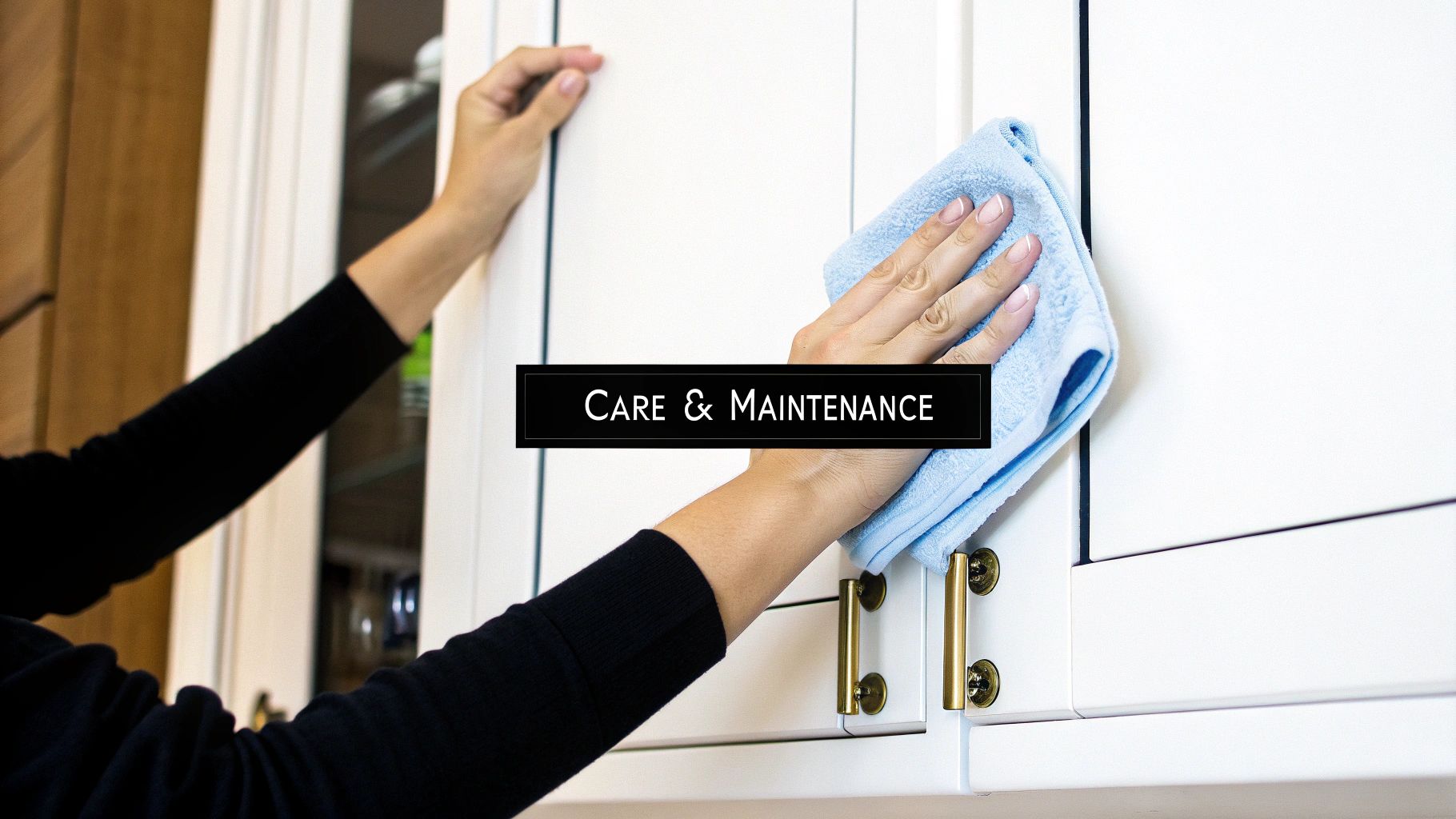
Your custom cabinets represent both style and function in your home. Keeping them in showroom condition doesn’t require heavy-duty work—just a few minutes of mindful upkeep each week. With the right approach for each material, you’ll preserve their beauty and keep them operating smoothly.
Think of your cabinetry like a fine piece of furniture: regular, gentle care prevents damage and maintains that fresh-from-the-shop feel. By following some straightforward guidelines, you’ll protect the finish, ensure hardware longevity, and enjoy your custom cabinetry Toronto installation for years to come.
Cleaning Different Cabinet Finishes
Surfaces vary, so match your cleaning method to each finish:
- Painted And Matte HDF: Use a soft, lint-free microfibre cloth dampened with water. For grease or tough spots, add one drop of mild dish soap, wipe gently, then dry immediately to avoid streaks.
- High-Gloss Surfaces: Fingerprints show up fast, but they wipe away just as easily. Grab a plush, non-abrasive cloth and a water-and-white-vinegar mix. This lifts smudges and brings back that mirror-like gleam.
- Real Wood And Laminates: Always go with the grain. A damp cloth is usually all you need. Steer clear of scouring pads or harsh chemicals that can scar the texture.
Remember: excess moisture is the enemy of both wood and engineered materials. Always use a damp—not dripping—cloth, then dry the surface right away.
Routine Hardware Adjustments
Even the sturdiest cabinets settle with daily use. It’s normal to find doors or drawers that need a quick tweak to stay perfectly aligned.
Most hinges adjust in three directions: up/down, left/right, and in/out. A standard Phillips screwdriver is all it takes to keep everything closing smoothly. While you’re at it, give knobs and pulls a gentle twist to make sure nothing’s loose. These small checks fend off wear and keep your kitchen feeling brand new.
Frequently Asked Questions About Custom Cabinetry in Toronto
Even with a solid plan, a few questions always pop up before you dive into a big project. Homeowners I talk to across Toronto and Markham often have the same things on their minds—timelines, permits, and what really makes custom work different from the other options out there. Getting straight answers is the best way to feel good about moving forward.
Think of this as your quick-hit guide to those final, practical details. I've rounded up the most common questions we hear and laid out the answers to help you get your custom cabinetry Toronto project over the finish line.
How Long Will My Project Actually Take?
This is probably the number one question on everyone's mind: "What's the real timeline, from our first chat to the final reveal?" While every job has its own unique quirks, a typical custom cabinetry project in the GTA will take somewhere between 8 to 12 weeks.
Let's break that down into the main stages:
- Design & Finalization (2-3 weeks): This is where we talk, you see 3D models of your space, we tweak things, and you lock in your final choices for materials and hardware.
- Manufacturing (4-6 weeks): Once you give the green light, we head to the workshop. Your cabinets are built from scratch, and this is where all the precision craftsmanship happens.
- Installation (1-2 weeks): Our professional crew comes to your home to fit and secure everything, making sure it all looks and functions perfectly.
The biggest thing that keeps a project on track? Being decisive during the design stage. Once you've settled on your choices, the rest of the process can flow smoothly from concept to completion.
Do I Need a Permit for New Kitchen Cabinets in Toronto?
Here’s some good news. For most projects that just involve swapping out old cabinets for new ones in Toronto or Markham, a building permit is not required. That's because you aren't changing the fundamental structure, plumbing, or electrical layout of your home.
However, you'll probably need to pull a permit if your renovation involves bigger changes, like:
- Moving or knocking down walls to get that open-concept feel.
- Relocating your sink, dishwasher, or other major appliances that need new wiring or pipes.
- Making changes to your home's heating or ventilation system.
It’s always a smart move to chat about the full scope of your plans with your cabinetry partner. They’ll be able to spot anything that might require a permit and can help guide you through that process if it’s needed.
What Is the Main Difference Between Custom and Semi-Custom Cabinets?
The real difference boils down to two things: flexibility and precision.
Semi-custom cabinets are a step up from off-the-shelf options. They’re built with standard-sized parts but give you more choices for finishes, door styles, and small modifications. They're a decent middle ground, but you're still working within a system of fixed sizes.
Fully custom cabinets, on the other hand, start as raw materials. There are practically zero limits on size, shape, style, or finish. This means every single cabinet is designed and built to fit the exact dimensions of your room, making the most of every inch and bringing your unique vision to life without compromise.
Ready to transform your space with cabinetry that’s designed just for you? At MapleKing Kitchen Cabinets, we specialize in creating beautiful, functional, and affordable custom solutions for Toronto and Markham homeowners.