

So, you’re ready to find a cabinet maker. In a market as vibrant as Toronto and Markham, a quick search for "custom cabinet makers near me" is just the beginning. The real challenge is finding a true artisan—a partner who can translate your vision into a flawlessly installed reality. This is your guide to doing just that, moving from a rough idea to a finished project you'll love for years.
Your Path to Finding the Perfect Cabinetry Partner
Choosing custom cabinetry is a huge investment in your home, and it’s about so much more than just adding storage. It’s about creating a space that works perfectly for your life. You’re not alone in wanting this, either. The demand for personalized home solutions is booming, with over 65% of homeowners now opting for bespoke cabinets designed specifically for their needs. You can dig deeper into this trend in custom cabinetry design if you're curious.
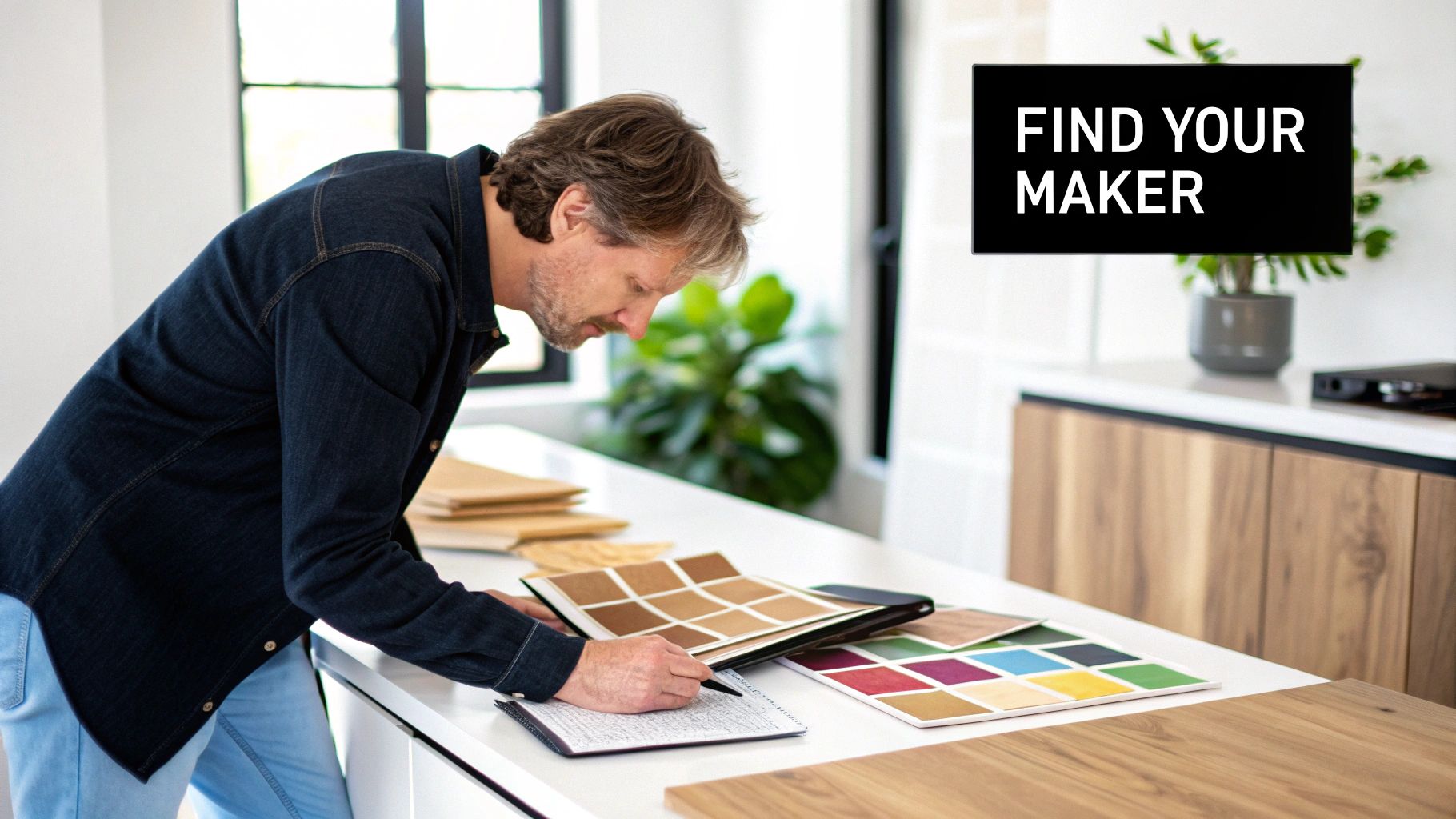
Finding the right person for the job is a mix of vetting their technical skills, making sure their design eye aligns with yours, and confirming they’re a reliable professional. A little homework now will save you a world of headaches later.
Defining Your Project Scope First
Before you even think about picking up the phone, take some time to nail down what you actually want. A clear vision makes your first conversations with potential cabinet makers infinitely more productive.
Think through these key elements:
- Your Aesthetic: What’s the vibe? Are you picturing a sleek, modern kitchen with flat-panel doors, or a classic, traditional space with ornate details? Start a mood board with inspiration from Pinterest, Houzz, or your favourite design magazines.
- Functional Needs: How do you really use the space? Maybe you need deep pot-and-pan drawers, a slick pull-out spice rack next to the stove, or panels to seamlessly hide your dishwasher. Make a list of your must-haves.
- Ballpark Budget: You won't know the final cost yet, but having a realistic budget range is crucial. It helps you zero in on makers who are a good fit and sets a practical foundation for your first chat.
A well-defined vision is your most powerful tool. It allows you to communicate effectively with cabinet makers, ensuring they understand your goals and can provide an accurate and relevant quote for the project.
Finding Your Cabinetry Artisan: A Smarter Search Strategy

When you’re ready to find a custom cabinet maker, the first instinct for most people in Toronto and Markham is to type "custom cabinets near me" into Google. That's a start, but the best local artisans—the true craftspeople—often aren't the ones with the flashiest ads or the top search result.
To find those hidden gems, you need to think a little differently. This is about casting a wider, smarter net to find a professional who truly gets your vision. It's no surprise the demand for bespoke cabinetry has skyrocketed; homeowners want spaces that are uniquely theirs, and that's driving serious growth in the custom manufacturing industry.
Go Beyond a Basic Google Search
The first trick is to get specific. Vague searches will give you vague results. Instead of just "kitchen cabinets Markham," try thinking like a designer and use keywords that reflect the actual look you're after.
Here are a few examples to get you started:
- "Bespoke walnut millwork Toronto" if you're picturing something rich and modern.
- "Traditional inset cabinetry maker GTA" for that classic, high-end feel.
- "Minimalist flat-panel cabinet shop" to find specialists in sleek, contemporary design.
Using precise language like this cuts through the noise. It signals that you’re not just a casual browser, helping you find the specialists who excel at the style you want right from the get-go.
Tap into the Pros’ Networks
Honestly, some of the best cabinet makers I’ve found came through word-of-mouth recommendations, especially from others in the design and build community. These are people whose reputations are on the line with every referral, so their advice is gold.
Reach out to these key contacts:
- Interior Designers & Architects: This is your number one resource. They work with cabinet makers day in and day out. Even if you're not hiring a designer for the whole project, a one-time consultation can yield a priceless list of trusted contacts.
- General Contractors: A good GC has a roster of skilled tradespeople they rely on. If you know a contractor whose work you admire, ask them who they call for top-quality cabinetry.
- Real Estate Agents: Agents who specialize in high-end or newly renovated homes in your neighbourhood know exactly which makers deliver quality that adds real value.
Tapping into a designer's or contractor's network is like getting a backstage pass. They've already vetted dozens of makers and can point you to the ones who consistently deliver exceptional results on time and on budget.
Use Visual Platforms for Vetting
Before you even pick up the phone, you can get a powerful sense of a maker's style and quality through visual-heavy platforms. It's a fantastic way to see their work in real homes.
- Houzz and Pinterest: These are great for searching local projects. A cabinet maker with a well-maintained, professional profile is usually proud of their work and understands current design trends.
- Instagram: This is where you find the real hidden talent. Search hashtags like #torontocustomcabinets or #markhammillwork. You'll often discover smaller, independent shops doing incredible work that you might have otherwise missed.
- Local Design Blogs: Many Toronto interior design bloggers feature local projects and always credit the craftspeople involved. It’s a direct line to proven, vetted talent.
If you want a head start, you can also look at curated lists. We’ve put together our own guide to Toronto's 10 best kitchen cabinet companies to help you build your shortlist.
Getting to the Bottom of Your Shortlist
Alright, you've done the initial legwork and have a shortlist of a few cabinet makers in the Toronto area. Now comes the crucial part: digging deeper to find out who really has the chops to bring your vision to life. This isn't just about picking the one with the prettiest Instagram feed; it's about separating the true artisans from the rest.
Your investigation starts with their portfolio. This is their visual resume, and you need to look at it with a designer's eye, not just as a casual browser.
What to Look for in a Cabinet Maker’s Portfolio
When you're clicking through photos of past projects, you're looking for evidence of skill and precision. A portfolio that only features one style of simple, white shaker kitchens might mean they’re a one-trick pony—not ideal if you're dreaming of a detailed, traditional space with complex mouldings.
Here's what I always zoom in on:
- Tight Joints and Seams: Look closely where two pieces of wood meet, like at the corners of a cabinet box or where the face frame connects. The lines should be razor-thin and perfectly aligned. Gaps or misalignments are a dead giveaway of sloppy work.
- A Flawless Finish: Scan the surface of painted or stained cabinets. Is the colour and sheen perfectly even? You're looking for a smooth, almost factory-like finish with no drips, blotches, or tiny bumps (what we call 'dust nibs'). A great finish isn't just about looks; it's essential for long-term durability.
- Masterful Grain Matching: This is a subtle detail that screams high-end craftsmanship. For natural wood cabinets, a top-tier maker will intentionally align the grain pattern across adjacent doors and drawers. It creates a beautiful, flowing look that less experienced shops often skip.
- A Range of Styles: Does their portfolio show a variety of work? Seeing different materials, styles, and complex jobs—like kitchens with fully integrated appliances or tricky built-ins—proves they're versatile and skilled problem-solvers. If you want to see what this level of quality looks like across different designs, browsing a diverse gallery of custom cabinetry is a great way to set your benchmark.
To help you keep track as you evaluate each candidate, a simple checklist can be a lifesaver. It forces you to compare everyone using the same criteria.
Cabinet Maker Vetting Checklist
| Evaluation Criteria | Maker A Notes | Maker B Notes | Maker C Notes |
|---|---|---|---|
| Portfolio Quality | |||
| Joinery & Seams | |||
| Finish Consistency | |||
| Grain Matching | |||
| Project Variety | |||
| Positive Reviews | |||
| Detailed Testimonials | |||
| Communication Mentions | |||
| Timeline Mentions |
Using a table like this makes it easy to spot the front-runners after you've done your research.
Reading Between the Lines of Online Reviews
Once you’ve scrutinized their work, it’s time to see what past clients are saying. For homeowners in Toronto and Markham, platforms like Houzz, HomeStars, and Google Reviews are gold mines of information. But you can't just count the five-star ratings.
A generic "they did a great job!" is nice, but it doesn't tell you much. You're looking for the reviews that get into the specifics of the experience.
"I was so impressed with their communication throughout the project. The team kept me updated on timelines and were incredibly respectful of my home during the installation."
This is the kind of detail that matters. It tells you about the process, not just the final product. Look for patterns in the comments. Are people consistently praising their communication, punctuality, and how they handled the inevitable hiccup? That's a huge green flag.
On the flip side, if you see multiple complaints about missed deadlines, unreturned calls, or a messy installation, consider that a major red flag, no matter how beautiful their portfolio is. By pairing a critical eye on their past work with a careful reading of client feedback, you'll get a well-rounded picture of who you're dealing with.
Turning Your First Meeting Into a Real Interview
You've done the research and now you have a few consultations booked. This is where you move from basic vetting to a real interview. Whether you’re meeting in your home or at their workshop, this conversation is your single best chance to see if a cabinet maker truly gets your vision and has the chops to bring it to life.
A good consultation is a two-way street. A skilled maker should be asking you just as many questions as you’re asking them. They'll want to know how you use your kitchen, what drives you crazy about your current setup, and what your absolute must-haves are. If they dive straight into quoting prices without understanding how you live, they're probably more focused on churning out boxes than creating a solution that works for you.
Getting a Feel for Their Process and Timeline
You need to get a crystal-clear picture of their workflow, from that first handshake to the final installed cabinet. How they explain their process tells you a lot about their organization and helps set realistic expectations for everyone involved. If their answers are vague or confusing, that’s a major red flag.
Focus on getting solid answers to these core operational questions:
- “Can you walk me through your entire process, from our meeting today to the final installation?” A pro will easily outline every stage: site measure, design drafts, revisions, material selection, fabrication, finishing, and the install itself.
- “Once we finalize the design, what’s your current lead time?” The best shops in the GTA are always busy. A good cabinet maker will have a queue. Be skeptical of anyone who can start tomorrow—it might mean they’re desperate for work or they cut corners.
- “Who will be my main point of contact?” Will you be dealing directly with the owner, a project manager, or a designer? Knowing this upfront makes communication so much easier down the road.
A seasoned cabinet maker won't just have a process; they'll have a refined, repeatable system they can explain with total confidence. The clarity they provide here is a direct reflection of their experience and a great indicator that your project will stay on track.
Talking Materials and Craftsmanship
This is where you can really tell the difference between a true artisan and a standard production shop. When you go custom, you’re paying for two things: superior materials and exceptional skill. Their answers here should prove they have both.
Don't be shy about getting into the nitty-gritty:
- “Where do you get your wood and hardware?” The best makers have trusted relationships with specific local suppliers. They should be able to tell you exactly where their materials come from and why they choose them.
- “What kind of joinery do you use for your cabinet boxes and drawers?” You don’t need to be a woodworking expert, but listen for terms like dovetail joints for drawers or dadoes and rebates for cabinet construction. These are signs of quality and durability that you won't find in big-box cabinets.
- “Can you walk me through your finishing process?” A flawless, long-lasting finish isn’t a one-step job. It involves meticulous sanding, priming, and multiple coats of lacquer or paint, usually sprayed in a dedicated, dust-free booth. A detailed explanation is exactly what you want to hear.
It’s also interesting to see the people behind the craft. Cabinet making has traditionally been a male-dominated trade—in 2020, about 95.4% of cabinet makers were men—but more and more talented women are building incredible businesses in this space. You can learn more about the evolving demographics of cabinet makers online. Don't hesitate to ask about their team; it can give you a great sense of the shop's culture and the diverse expertise they bring to the table.
Breaking Down the Costs of Custom Cabinetry
Figuring out the cost of custom cabinetry can feel a bit like hitting a moving target. Unlike grabbing a flat-pack box from a big-box store, there's no single price tag. The final number is a mix of the materials you choose, the complexity of the design, and the skill of the craftsperson building it. Let's break down where your money really goes.
Think of it in layers. The first layer is the cabinet box itself—the unseen workhorse of your kitchen.
- Paint-Grade MDF (Medium-Density Fibreboard): This is a common, cost-effective choice, especially for painted cabinets. Its perfectly smooth surface means you won't see any wood grain telegraphing through the paint. The trade-off? It doesn't love water, so it's not ideal for areas around the sink or dishwasher.
- High-Quality Plywood: This is the gold standard for custom work. Good quality plywood offers far better structural integrity and moisture resistance. When a cabinet maker tells you they use furniture-grade plywood, it’s a good sign they’re focused on building something that will last for decades.
Next up are the doors and drawer fronts—the "face" of your kitchen. This is where your design vision comes to life and where the budget can really shift. Solid woods like maple, oak, and cherry are perennial favourites for their sturdiness and beautiful grain. If you're aiming for a more high-end, dramatic look, woods like walnut bring a warmth and richness that's hard to beat, but they definitely come with a premium price tag.
From Finishes to Hardware: The Details That Matter
The finish you choose is just as important as the wood itself. A factory-sprayed lacquer is what most pros use; it creates a seamless, highly durable surface that's a breeze to keep clean. A hand-painted finish can look beautiful and artisanal, but it's usually more labour-intensive (and therefore more expensive) and often less durable in a high-traffic kitchen.
This visual breaks down the three core pillars you'll be discussing with your cabinet maker: their process, the materials, and the project timeline. Each one directly impacts the final cost.
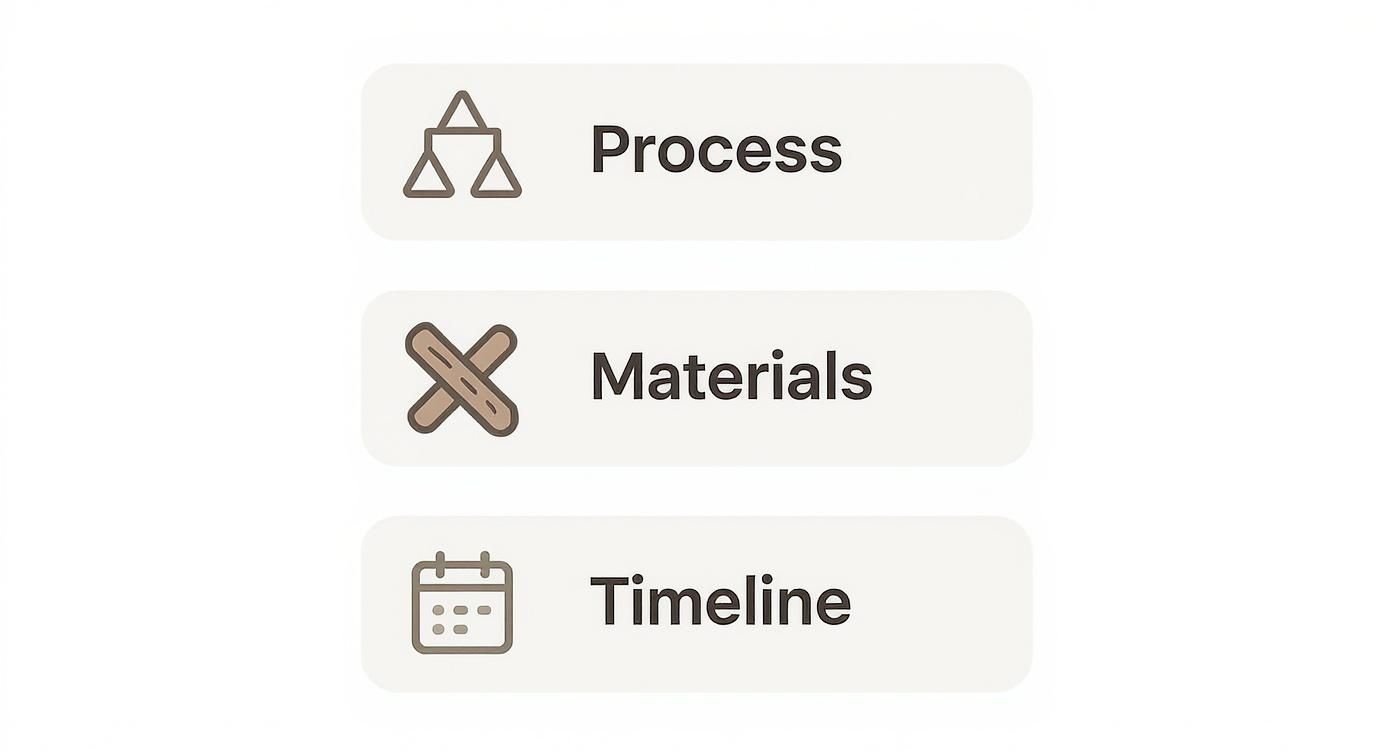
As you can see, every decision is connected. A more complex design will require more labour, extending the timeline and increasing the cost.
Finally, let's talk about the "jewellery"—the hardware. Soft-close hinges and drawer slides are pretty much standard now, but the world of pulls and knobs is endless. You can find simple, functional hardware for a few dollars apiece or splurge on designer or custom-forged pieces that run into the hundreds. It’s an easy place to save money or to make a real statement.
Expert Tip: Think of your total cabinet cost as a balancing act. It's smart to invest in high-quality plywood boxes and durable drawer hardware for a solid foundation. You can then balance that investment by choosing a more cost-effective door style or standard pulls to keep the project on budget.
To help you navigate these choices, here's a quick comparison of common materials and finishes.
Cabinet Material and Finish Comparison
This table gives you a snapshot of how different options stack up in terms of cost, durability, and where they work best.
| Material/Finish | Relative Cost | Durability | Best For |
|---|---|---|---|
| MDF | Low | Moderate | Painted finishes, dry areas, budget-conscious projects |
| Plywood | Moderate | High | Cabinet boxes, high-moisture areas, long-term durability |
| Maple/Oak | Moderate-High | Very High | Stained or painted doors, traditional and modern styles |
| Walnut/Cherry | High | Very High | High-end stained finishes, creating a warm, luxurious look |
| Factory Lacquer | Moderate | High | All applications; provides a smooth, easy-to-clean surface |
| Hand-Painted | High | Moderate | Achieving a specific artisanal look, but requires more care |
Understanding these components allows you to have a much more productive conversation when you start getting quotes.
Armed with this knowledge, you can work with your chosen professional to create a detailed quote that makes sense. It empowers you to make informed trade-offs, ensuring you get the best possible value and a final result you'll love for years to come. For a deeper look at the styles and options available, this guide to kitchen cabinets in Toronto is a great resource to explore before you meet with potential makers.
Answering Your Top Questions About Custom Cabinetry
As you narrow down your choices, a few final questions always seem to pop up. And that's a good thing. Investing in custom cabinetry is a big decision, and you should have total clarity before you commit to anything.
Let's tackle some of the most common questions we hear from homeowners across Toronto and Markham. Getting these details ironed out now will save you a lot of headaches later on.
What Should I Expect to Pay for Custom Kitchen Cabinets in Toronto?
This is the big one, isn't it? The honest answer is: it varies wildly. The final cost depends on the size of your kitchen, the materials you fall in love with, and how complex the design gets.
For a standard, medium-sized kitchen in the GTA, a realistic budget starts around $15,000 and can easily go up to $50,000 or more. If you're looking at paint-grade MDF with a simple Shaker door, you’ll be on the lower end. But if your heart is set on solid walnut, premium hardware, and all the clever custom inserts, you'll be heading toward the higher end of that range.
My best advice? Always get at least three detailed quotes. It’s the only way to make sure you're comparing apples to apples.
How Long Will This Actually Take?
Patience is key here. For any reputable custom shop in a busy market like Toronto, you should plan for a lead time of 8 to 16 weeks from the moment you sign off on the final designs.
That might sound like a long time, but it accounts for everything that goes into true custom work: sourcing the right materials, precision fabrication, a meticulous multi-step finishing process, and finally, scheduling the installation team.
A word of caution: be wary of anyone promising an unbelievably fast turnaround. Rushing a custom job often leads to corners being cut, whether it’s in the build quality, the durability of the finish, or the care taken during installation.
What’s the Difference Between a Cabinet Maker and a Millworker?
You’ll hear these terms thrown around, and while they're often used interchangeably, there's a slight difference in focus.
A cabinet maker is a specialist. They live and breathe cabinetry for kitchens, bathrooms, laundry rooms, and closets. Their expertise is deep and narrow, which is exactly what you want for a kitchen project.
An architectural millworker tends to have a broader scope. They might do cabinetry, but they also tackle custom wall panelling, intricate mouldings, built-in shelving units, and even one-off furniture pieces. For a kitchen renovation, a dedicated cabinet maker is usually your best bet, though a high-end millwork shop can certainly produce stunning results.
Should I Hire an Interior Designer First?
You don't have to, but it often helps. Many talented cabinet makers have in-house designers who are brilliant at creating functional, beautiful layouts. They know their product inside and out.
However, an independent interior designer brings a bird's-eye view to your entire renovation. They're thinking about how your cabinets will work with the countertops, backsplash, flooring, lighting, and paint colours. They ensure the whole space feels cohesive. For a large-scale project, bringing a designer on board is a smart move that almost always pays off in the final result.
Ready to bring your vision to life with cabinetry that is both beautiful and built to last? At MapleKing Kitchen Cabinets, we offer factory-direct pricing and expert craftsmanship to create a space that is uniquely yours. Explore our custom cabinetry solutions and get your free quote today.



