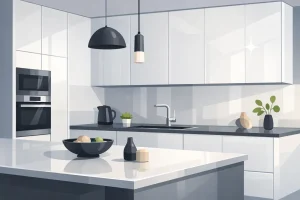

Should every kitchen corner become a cabinet? In many Toronto and Markham kitchens, the better answer depends on layout size, storage habits, and how much budget you want tied up in specialty hardware.
Corners take more planning than the straight runs around them. A corner unit can eat up valuable cabinet frontage, limit drawer banks on the adjacent walls, and create awkward dead space if the wrong mechanism is chosen. In a compact condo or townhouse kitchen, that trade-off shows up fast.
Good corner planning starts with function, not hardware. I look at what needs to live there, how often it gets used, who is cooking in the space, and whether a custom corner improves the room or just adds cost. In some kitchens, a specialty cabinet is the right move. In others, leaving the corner partially voided and using wider drawers beside it gives better daily storage.
Material choice affects this decision too. MapleKing's custom options, including HDF, thermofoil, and real wood, each suit different priorities. HDF gives a clean painted look at a more controlled price point. Thermofoil works well for easy-clean surfaces and many modern door styles. Real wood costs more, but it holds up well and makes sense when the kitchen design is centered on natural grain and long-term resale appeal.
For smaller layouts, these small kitchen cabinet ideas from MapleKing can help you judge whether a corner cabinet should store more, hide more, or stay simpler.
In practical budget terms, corner solutions in the Toronto area can range from a fairly standard cabinet with basic shelving to a custom build with premium pull-out hardware, finished panels, and labor-heavy installation. That is why corner planning should happen early with your cabinet maker or contractor, before appliance placement, filler widths, and drawer runs are finalized.
1. Lazy Susan Corner Cabinet
The Lazy Susan is still one of the most practical corner cabinet ideas when the goal is simple daily access. It works best for items you touch often and don't want buried behind fixed shelving. Think oils, spices, baking supplies, mixing bowls, or smaller countertop appliances.
I usually recommend it when a homeowner wants a familiar solution that doesn't require complex hardware servicing later. A good carousel is predictable. Open the door, spin the shelf, grab what you need.
Where it works best
Lower corner bases are the sweet spot. Upper rotating systems can work, but the base cabinet version earns its keep because that's where deep reaching is most annoying. Brands like Häfele and Rev-A-Shelf have reliable rotating systems, and many Toronto condo kitchens use this approach because it gives easy access without changing the overall cabinet style.
If you're working in a tight footprint, it's also worth looking at small kitchen cabinet ideas from MapleKing so the corner solution supports the whole plan instead of solving one problem and creating another.
Practical rule: A Lazy Susan is strongest when you store medium-size items with regular shapes. It gets less efficient when homeowners try to cram in oversized pans, tall bottles, and awkward appliance parts.
A common mistake is choosing the lightest mechanism available and then loading it with canned goods or cast iron. If the shelf sags or the centre post loosens, the corner becomes irritating fast. Weighted systems and proper installation matter more than the concept itself.
What to watch before ordering
- Measure the opening carefully: Door opening size matters as much as cabinet size. A big interior doesn't help if bulky items can't pass the face frame cleanly.
- Match the door finish to the use level: Matte HDF and thermofoil are practical choices for high-touch corners because fingerprints and wipe-downs are part of everyday life.
- Add basic visibility upgrades: Non-slip liners and cabinet lighting make a rotating shelf more usable than many people expect.
The downside is that a carousel doesn't fully square off the storage area, so some volume remains awkward by nature. But for homeowners who want dependable function without moving into premium pull-out hardware, it still deserves its place.
2. Pull-Out Blind Corner Cabinet System
The best upgrade for a frustrating blind corner is usually a pull-out system. This is the hardware category that changes people's minds about corner cabinets because it brings the contents out to you instead of forcing you to crawl into the cabinet opening.

Systems such as Häfele Magic Corner, Blum-style articulated pull-outs, and Rev-A-Shelf blind-corner units suit homeowners who store heavier cookware, serving platters, or pantry overflow. In custom Markham kitchens, this option often lands in the “worth it” category because it improves both access and perceived quality every single day.
Why this category changed corner storage
One cabinet design discussion notes that a simple rotating shelf in a blind corner only recovers about 33% of the available space, while the magic corner is described as the best way to utilize a blind corner because the rectangular cabinet box and rectangular pull-out shelves capture more of the interior. That's its primary appeal. You're no longer relying on a circular insert inside a square problem.
The experience is different too. Instead of reaching deep and lifting items over each other, the front baskets move first and the rear storage follows into reach. That makes a blind corner feel intentional rather than compromised.
If a client cooks often and uses the corner for pots and appliances, I'd pick a quality blind-corner pull-out before I'd specify fixed shelves.
Contractor details that matter
This isn't the place to save on installation skill. The mechanism needs proper alignment, correct swing clearance, and enough room in front of the cabinet for full travel. If the adjacent handle placement, appliance projection, or island clearance is off, the hardware can feel clumsy even when the product itself is good.
A video helps show the motion before you commit to it:
Soft-close hardware is worth specifying here because these systems carry weight and move through multiple joints. In finish terms, I like pairing them with slab or shaker fronts in matte HDF or thermofoil so the upgraded mechanism sits behind a clean, easy-care exterior.
3. Open Corner Shelving with Floating Shelves
Not every corner should be enclosed. Open floating shelves can be the right answer when the kitchen already has enough lower storage and the goal is to lighten the room visually. In small urban kitchens, that can make the whole plan feel less boxed in.

This is one of the corner cabinet ideas that works by refusing to be a cabinet. I like it in contemporary condos, Scandinavian-style remodels, and kitchens where the corner sits near a window and benefits from daylight.
When open shelving looks good and stays useful
Open shelves only work if the homeowner is realistic about what will live there. Everyday bowls, mugs, glassware, and a few cookbooks are fine. Random plastics, oversized cereal boxes, and mismatched travel cups are not.
For a more modern direction, urban kitchen cabinet styles from MapleKing pair well with simple corner shelving because the visual language stays clean and uncluttered.
A few practical styling rules help:
- Use objects you often touch: Frequently used dishes justify the open exposure and cut down on dust buildup.
- Keep visual weight low: Heavier crockery belongs on lower shelves, lighter pieces higher up.
- Stay disciplined with spacing: Shelves look better when they aren't packed edge to edge.
If you want shelf inspiration for compact homes, DIY shelves for small apartments shows how open storage can stay light instead of messy.
The trade-off nobody should ignore
Open shelving asks for maintenance. Grease, dust, and cooking residue don't care that the display looked great on install day. In busy family kitchens, I only recommend open corner shelves when the homeowner is naturally tidy or the shelves are placed a little away from the main cooking zone.
This option also gives up concealed storage. That's why I see it as a design move first and a capacity move second. Used in the right room, it looks intentional and modern. Used in the wrong room, it becomes a clutter shelf with good PR.
4. L-Shaped Pull-Out Drawers
If a homeowner wants the cleanest contemporary look, L-shaped corner drawers are hard to beat. They avoid the “dig to the back” problem and keep the face of the kitchen looking sleek and premium.
These systems are especially good for pots, pans, lids, mixing bowls, and food containers that benefit from being sorted in zones. Unlike a rotating system, a drawer lets you look straight down into storage and grab the item without moving everything around first.
Why drawers feel better than deep shelves
Traditional corner cabinets often underperform because their usability is estimated at roughly 60 to 70% of the space they occupy unless they include a high-function insert such as pullout shelves, corner drawers, or other access solutions. That aligns with what many installers see on real projects. Drawers win because they make storage visible.
For homeowners planning the full room, kitchen cabinet layout ideas from MapleKing are worth reviewing before locking in a corner drawer unit. These drawers affect neighbouring cabinet widths, hardware placement, and traffic clearance.
Best use cases
- Store grouped cookware: Keep frying pans in one drawer zone, lids in another, and bakeware in a separate section.
- Choose the right box type: Wire versions improve visibility. Solid-sided drawers better contain smaller items and heavier cookware.
- Specify full extension: Corner drawers should come out far enough that you aren't still reaching into a shadowed angle.
I like matte HDF fronts here because drawer-heavy kitchens get touched constantly. The surface tends to be forgiving in busy family homes, and the sharp lines suit modern cabinetry well.
The caution is cost and precision. These aren't a casual add-on. They require accurate cabinet fabrication and careful hardware setup. When they're done properly, though, they feel more like furniture than storage hardware.
5. Diagonal or Angled Corner Cabinet Design
Some kitchens need an architectural answer, not an accessory. A diagonal corner cabinet cuts across the 90-degree junction and turns the corner into a deliberate design feature. This is often the right move in larger kitchens where you have enough room to let the angle breathe.
Instead of fighting the geometry, you reshape it. The cabinet face sits on an angle, often with an angled door or a more custom front treatment, and the corner stops feeling like leftover space.
Why larger kitchens handle this well
Diagonal cabinets consume room, so they need enough surrounding square footage to justify themselves. In a spacious detached home or an upscale Markham renovation, they can create a polished custom look that simpler corner solutions can't match.
This is also where material choice becomes part of the design statement. Real wood painted doors can give the angled section more presence and warmth. High-gloss HDF can push it toward a sharper contemporary style. If the angled cabinet is meant to read as a focal point, the finish should support that.
A diagonal corner works best when the whole kitchen acknowledges it. Countertop lines, nearby uppers, and hardware placement should all be resolved together, not patched around it later.
The practical trade-offs
The angled front improves access compared with some traditional deep-corner boxes, but it isn't automatically the most efficient storage per square inch. Its value is the balance between access, aesthetics, and layout flow. Homeowners who want every cabinet to be judged strictly by storage density may prefer a pull-out blind corner instead.
This is also a detail-heavy cabinet for fabricators and installers. Fillers, door swing, countertop templating, and appliance spacing all need early coordination. I strongly prefer a rendering or shop drawing review before production, because small geometry mistakes in angled cabinetry are visible immediately.
6. Corner Appliance Garage
What if the busiest appliances in your kitchen had a home that kept the counter usable without burying them in a dead corner?

A corner appliance garage works best for coffee stations, toasters, blenders, and similar items used several times a week. In Toronto condos and Markham family kitchens, that can be a better use of the corner than chasing maximum storage volume, especially when homeowners want the kitchen to look tidy day to day.
The key is access. If the appliance has to be lifted out, shifted forward, or unplugged every morning, the garage becomes expensive clutter control instead of useful cabinetry. Pocket doors, tambour doors, or a well-planned lift-up front usually perform better than standard swing doors when aisle space is tight. I also like to pair these cabinets with a pull-out shelf so the appliance can work closer to the front edge.
Get the electrical and clearances right
This cabinet needs coordination before fabrication. Interior outlets, appliance height, door swing, countertop depth, and heat clearance all have to be resolved on the drawing, not during installation. A garage for a coffee maker is straightforward. A garage for an espresso machine, toaster oven, or microwave needs more thought because steam and heat can shorten the life of both finishes and hardware.
That is one reason I price this as a mid-detail upgrade rather than a basic corner cabinet. In the Toronto and Markham market, a custom corner appliance garage often lands around the mid hundreds on the low end for a simple upper configuration, and can move into the low thousands once you add custom doors, pull-out hardware, interior power, and matching finish work. MapleKing's HDF and thermofoil options usually keep this idea more budget-friendly, while real wood makes more sense when the appliance garage is part of a higher-end painted or stained kitchen and the location stays relatively dry.
Choose finishes for the location, not just the look
Material selection matters more here than many homeowners expect. Corners near sinks, dishwashers, and prep zones collect moisture and grime, and those spots are harder to inspect and wipe down regularly. The Planner 5D guide on corner kitchen cabinet ideas notes that moisture exposure and maintenance demands should influence cabinet material choices in these harder-to-reach areas.
For that reason, I usually recommend thermofoil, durable laminate, or properly sealed HDF for appliance garages in wet or high-touch zones. They are easier to clean, more forgiving around splashes, and well suited to a cabinet that works hard behind closed doors. Real wood still has a place, but I reserve it for drier sections of the kitchen or for projects where matching the rest of the millwork matters more than shaving maintenance.
7. Corner Wine or Beverage Rack System
Not every corner has to solve cookware storage. A beverage corner can add function and give the kitchen a more finished, custom feel, especially in entertaining-focused homes. Wine bottles, stemware, coffee supplies, sparkling water, and bar accessories all fit this category.
This idea works best when the kitchen already has enough core storage elsewhere. In other words, don't turn your only useful corner into a display zone if you're still short on pot and pantry space.
When a beverage corner is worth it
I like this solution in open-concept homes where the kitchen connects to dining or living space. A corner wine or beverage setup can act as a soft transition instead of just another run of standard cabinets. Glass-front uppers, angled bottle storage, and integrated lighting can make the area feel furniture-like.
Canadian cabinetry guidance notes that blind-corner systems can recover up to about 80% of available storage volume when using pull-out or rotating tray mechanisms such as Magic Corner style hardware. That matters here for one reason: if you don't need that much efficient recovery for cookware, then using the corner for a more decorative beverage function may be the better fit for how you live.
Keep the design honest
- Protect the contents: Put wine away from direct sunlight and obvious heat sources.
- Balance display with storage: Open racks look good, but enclosed glassware storage usually ages better in a working kitchen.
- Coordinate the finish: Real wood painted doors bring warmth, while high-gloss HDF creates a sleeker bar-style look.
This option tends to succeed when it feels integrated, not bolted on. The best versions relate to nearby cabinetry, backsplash, and lighting rather than shouting for attention.
8. Pie-Cut or Wedge Corner Cabinet
Could a simpler corner cabinet give you enough function without paying for premium hardware? In many Toronto and Markham kitchens, the answer is yes. A pie-cut or wedge corner cabinet keeps the familiar base-cabinet layout, but the angled front gives better entry than a hard 90-degree corner with a standard door.
I use this option for homeowners who want a cleaner look than an old builder-grade corner, but do not want the cost, adjustment requirements, or clearance demands of a blind-corner pull-out system. It is a practical middle tier. You get better access than a dead corner, lower hardware cost than a mechanical system, and a front profile that can look more intentional in transitional or traditional kitchens.
Where a pie-cut cabinet makes sense
A pie-cut cabinet earns its place when the corner will hold medium-use items, not your heaviest pots and not the small items that get lost in the back. Mixing bowls, food-storage containers, small appliances, and backup pantry stock are usually a good fit.
The trade-off is straightforward. This cabinet improves reach, but it still does not use every inch as efficiently as wider drawer bases or a well-designed pull-out corner system. In tighter condo kitchens around downtown Toronto, I often compare the gain in corner access against what the homeowner gives up in neighbouring cabinet width. Sometimes the better plan is still to simplify the corner and put storage where it is easier to use every day, as noted earlier.
A pie-cut corner works best when the cabinet contents match its limits.
Design and finish choices that hold up
The angled door gets more contact than many homeowners expect. People brush past it, bump it with hips, and wipe it often because it sits right in the traffic line. That makes finish choice more important than it looks on paper.
For MapleKing-style finish options, HDF painted doors are a strong fit if the goal is a crisp profile and a custom look that suits painted transitional kitchens. Thermofoil is often the budget-friendly choice for rental units, starter homes, or quick remodels because the surface is smooth and easy to clean. Real wood still has a place, especially in warmer, furniture-style kitchens, but it usually makes more sense when the rest of the cabinetry already justifies the higher material cost.
In the Toronto and Markham market, this type of corner cabinet usually lands in a moderate price range. Custom sizing, door style, and finish will move the number, but it generally costs less than a premium blind-corner mechanism and more than voiding the corner. If a contractor is pricing this unusually high, ask whether the premium is coming from custom door fabrication, upgraded hinges, or added labour from an uneven existing layout.
Contractor notes before you approve it
Pie-cut cabinets are only worth doing if the geometry is right. Check door swing, handle clearance, and how the cabinet meets the runs on both sides. In older GTA homes, walls are often out of square, and that can turn a decent corner plan into a fussy install.
I also recommend confirming one practical detail early. What exactly is going inside? If the answer is heavy Dutch ovens or daily cookware, spend more on a different corner solution. If the answer is occasional-use kitchen gear and the homeowner wants a traditional cabinet face with controlled cost, the pie-cut remains a solid, sensible option.
8-Option Corner Cabinet Comparison
No corner cabinet works best in every Toronto kitchen. The right choice depends on three things. How much access you want, how much hardware complexity you are willing to pay for, and what finish will hold up best in your home.
This comparison is most useful at pricing stage. In Markham and Toronto, labour, site conditions, and custom sizing can shift costs quickly, especially in older homes where corners are rarely square. MapleKing's finish options also matter here. HDF usually suits painted custom fronts, thermofoil keeps costs tighter on easy-care projects, and real wood makes the most sense when the whole kitchen is already in that higher material tier.
| Item | Implementation Complexity | Resource Requirements, materials / cost / installation | Expected Outcomes / Impact | Ideal Use Cases | Key Advantages / Notes |
|---|---|---|---|---|---|
| Lazy Susan Corner Cabinet (Carousel/Rotating Corner) | Low | Lower-cost hardware, straightforward cabinet setup, often possible in basic remodels | Good everyday access and better use of the corner than a fixed shelf | Daily-use pantry goods, lighter cookware, upper or lower corners | Practical and familiar. Best value for many family kitchens. HDF or thermofoil fronts usually keep this option budget-friendly. |
| Pull-Out Blind Corner Cabinet System | High | Premium hardware, more installation time, careful clearance planning. Commonly one of the pricier corner upgrades in the GTA. | Very strong access for deep corners and better retrieval of heavy items | Pots, pans, small appliances, homeowners who will use the full cabinet regularly | Excellent function, but hardware quality matters. Cheap mechanisms tend to feel loose after a few years. |
| Open Corner Shelving with Floating Shelves | Low | Shelving material, wall support, simpler install than most specialty cabinets | Full visibility and easy grab-and-go access, but no concealed storage | Display kitchens, smaller condos, coffee corners, everyday dishes | Lowest complexity. Works well if the homeowner is disciplined about clutter. Real wood shelves can add warmth without committing the whole kitchen to wood cabinetry. |
| L-Shaped Pull-Out Drawers (Sliding Corner Baskets) | Moderate | Custom drawer construction, good slides, more fitting time than a standard base cabinet | Strong access for cookware with a cleaner look than rotating systems | Contemporary kitchens, organized storage for pots and lids | A smart middle ground between standard cabinetry and premium blind-corner hardware. Worth paying for better slides. |
| Diagonal or Angled Corner Cabinet Design | Very High | Custom cabinet fabrication, countertop coordination, more layout planning, usually higher labour cost | Strong usability with a more intentional built-in look | Larger renovations, custom kitchens, open-concept layouts | Visually polished, but it consumes frontage that might otherwise become wider drawers. Best chosen early in the design phase. |
| Corner Appliance Garage (Appliance Cabinet) | Moderate | Specialty door hardware, interior outlet planning, possible electrician involvement | Cleaner counters and hidden appliances, though storage efficiency is only fair | Condo kitchens, coffee stations, toaster and blender storage | Good for clients who hate visual clutter. Thermofoil and HDF interiors are practical here because they clean up easily. |
| Corner Wine or Beverage Rack System | Low to Moderate | Rack fabrication, possible lighting, reinforcement depending on bottle load | Attractive display and dedicated beverage storage, but limited flexibility for general kitchen use | Entertaining zones, beverage centres, feature corners | Best in homes that will actually use it. Otherwise, the corner often serves better as closed storage. |
| Pie-Cut or Wedge Corner Cabinet | Moderate | Custom door and cabinet fitting, moderate labour, simpler than some advanced pull-out systems | Better access than a fixed dead corner, though not the most efficient use of volume | Transitional kitchens, cost-conscious custom projects, traditional cabinet faces | Familiar appearance and controlled cost. Often a reasonable compromise when budget does not support premium pull-out hardware. |
A quick rule from practice. If the homeowner stores heavy cookware, spend the money on access hardware or drawer-based solutions. If the corner is for occasional items, a simpler cabinet often delivers the better return.
Choosing the Right Corner for Your Toronto Home
The best corner solution isn't the most expensive one. It's the one that fits your layout, your storage habits, and the amount of complexity you're willing to live with after installation.
In Toronto and Markham, that decision often starts with space pressure. Many kitchens are compact, especially in condos, townhouses, and infill homes. In those rooms, I usually look at the corner as a planning decision first and a hardware decision second. If a specialty corner cabinet narrows adjacent drawers too much or interrupts traffic, it can solve one problem while creating two more.
There's also a contractor reality that homeowners should think about early. Simple solutions such as open shelves, a standard Lazy Susan, or even a deliberate blocked corner are easier to fabricate and install cleanly. More advanced systems such as blind-corner pull-outs, corner drawers, and angled cabinetry demand tighter measurements, better hardware alignment, and more coordination with countertop templating, plumbing, and appliance placement. The product might be excellent, but poor installation will still make it feel cheap.
Material choice matters just as much as the storage mechanism. For a hard-working lower corner, matte HDF, thermofoil, and durable laminate usually make sense because they handle cleaning and repeated contact well. If the corner sits near a dishwasher, sink, or spill-prone prep area, prioritise easy-care finishes over purely decorative ones. Real wood still has a place, especially in drier uppers or larger feature cabinets where warmth and grain matter, but it should be chosen with the cabinet's actual working conditions in mind.
Budget should follow use. If the corner stores heavy cookware every day, premium pull-out hardware can be worth it. If the corner will hold seasonal platters twice a year, you may be better off simplifying the cabinet and spending elsewhere. That's why the most successful corner cabinet ideas are rarely chosen in isolation. They're tied to the whole kitchen plan.
For homeowners in Toronto and Markham, working with a local specialist like MapleKing makes that process easier. Their team can help you test whether a corner should be rotating, pulling out, opening up, or disappearing altogether. They can also match the solution to the right finish, from easy-clean thermofoil and HDF to more furniture-like real wood, so the cabinet looks right and lasts in real use. Start with the corner that frustrates you most. That's usually where the smartest upgrade begins.
If you're planning a kitchen renovation in Toronto or Markham, MapleKing Kitchen Cabinets can help you turn awkward corners into practical storage that fits your layout, finish preferences, and budget. Their team offers custom cabinetry, factory-direct value, and finish options including HDF, thermofoil, laminate, and real wood, so you can choose a corner solution that looks sharp and works hard every day.