

So, you're thinking about renovating your Toronto condo. It's an exciting prospect, but it’s a whole different ball game compared to renovating a house. You're not just dealing with your own four walls; you're working within a larger community with its own set of rules.
This guide is your roadmap. We’ll walk you through the entire process, helping you sidestep the common headaches and turn your vision into a reality that's not only beautiful but also fully compliant with your building's standards.
Why Bother Renovating a Toronto Condo?
Let's be honest, a condo reno is about more than just a fresh coat of paint. It's a serious investment in your lifestyle and your finances, especially in a market as hot as Toronto's. The biggest reason people take the plunge is to simply make their space better to live in. Transforming a dated, awkward kitchen into a sleek, open-concept space or turning a dingy bathroom into a spa-like retreat can completely change how you feel about coming home.
But beyond the day-to-day enjoyment, the numbers don't lie. A smart renovation can significantly boost your condo's resale value. In Toronto, updated kitchens and bathrooms are huge selling points that can give you a major edge and a solid return on your investment when you decide to sell.
It's a City-Wide Movement
This isn't just a niche idea; upgrading existing condos is a massive trend across Toronto. More and more owners are realizing it makes sense to improve their current space rather than face the daunting task of moving. The data backs this up: the City of Toronto saw a whopping 43% increase in renovation permits for condo units between 2015 and 2022.
It’s a clear sign of shifting priorities. A 2022 report found that 78% of condo owners who renovated did so to increase their property value. At the same time, 52% said their main goal was simply to improve their quality of life. You can dig deeper into these trends over at Toronto Realty Blog.
Getting to Grips with the Unique Challenges
Here's the crucial part: renovating a condo comes with a unique rulebook. You have to get familiar with these limitations right from the get-go, or you're in for a rough ride.
Think about these key differences:
- Condo Board is King: Every building has its own set of bylaws and specific renovation rules. These documents control everything—from the hours your crew can work (usually just 9 AM to 5 PM on weekdays) to the exact type of acoustic underlay you must install under new flooring to keep your downstairs neighbours happy.
- Logistical Puzzles: Living in a high-rise means simple tasks become complex. You can't just have a truck dump materials on the lawn. You'll need to book the service elevator, often weeks ahead, for every delivery and for hauling out demolition debris. You're also responsible for protecting common areas like hallways and lobbies from damage.
- Shared Systems: You don't own the plumbing in the walls or the main electrical panel. Any work that touches shared infrastructure—like moving a drainpipe, relocating a sprinkler head, or altering the HVAC system—is a major undertaking that requires special permission and licensed, insured professionals who know how to work in multi-unit buildings.
So, you’ve got your vision and a rough budget in mind. Now comes the part that trips up so many Toronto condo renovations before they even begin: the paperwork. Before you can even think about swinging a hammer, you need to get the green light from two key players: your building's condo corporation and the City of Toronto.
Getting this stage right is non-negotiable. One misstep can lead to work-stoppage orders, hefty fines, and frustrating delays that throw your entire project off course. Think of it as a two-gate system—you can't even approach the city until you’ve got the key from your condo board.
First Hurdle: Mastering Your Condo Board’s Rules
Your condo corporation is your first and most important gatekeeper. Their job is to protect the building's structural integrity, ensure everyone's safety, and keep the peace between residents. To get their approval, you need to prove you’ve done your homework and will play by their rules.
Start by getting your hands on the building’s official renovation guidelines. This document is your roadmap. It will spell out everything from approved working hours (usually 9 AM to 5 PM on weekdays only) to specific material requirements, like the exact type of acoustic underlayment you need for new floors to keep your downstairs neighbours happy.
When you submit your package to the board, make sure it’s airtight. A sloppy or incomplete application is the fastest way to get a rejection, forcing you to revise and resubmit, losing weeks in the process.
Your package should typically include:
- A Detailed Scope of Work: Don't be vague. Clearly outline every single thing you plan to do, from taking down a non-structural wall to installing new kitchen cabinets.
- Drawings and Plans: If you're changing the layout in any way, professional architectural drawings are almost always mandatory.
- Contractor Credentials: The board will want to see proof that your contractor is legit. This means their business license, valid WSIB clearance, and proof of insurance—usually requiring a minimum of $2 million in liability coverage.
- Material Specs: Provide a list of the materials you’ll be using, paying close attention to flooring, plumbing fixtures, and anything that connects to the building's systems.
My Two Cents: Don't ever assume a job is "too small" to need the board's okay. I've seen owners get into hot water for something as simple as changing a faucet without asking. When in doubt, a quick email to your property manager can save you a world of trouble.
Keep in mind that approval times can vary wildly from one building to another, ranging from a week to over a month. Build this buffer time into your project timeline from the very start.
The process below breaks down these initial steps, showing how budgeting, understanding the rules, and finalizing your plan all fit together.

As you can see, getting a handle on the rules laid out by both your board and the city is a critical step that has to happen before you can lock in your final design.
Next Up: Tackling City of Toronto Permits
Once you have that coveted approval letter from your condo board, it's time to deal with the City of Toronto. A building permit is the city's official stamp, confirming your renovation plans meet the standards of the Ontario Building Code, local bylaws, and other safety regulations.
Many people are surprised by what actually requires a permit. It's not just for knocking down major walls. In Toronto, you'll almost certainly need a city permit if you're planning on:
- Any Structural Changes: This includes removing or altering any wall or partition—yes, even if it’s not load-bearing.
- Plumbing Work: Moving a sink, changing the location of a toilet, or re-routing shower lines all require a plumbing permit.
- Electrical Modifications: Adding new circuits, relocating light fixtures, or making any significant wiring changes needs an electrical permit, which is typically handled by a licensed electrician.
- HVAC Alterations: You can't just move vents around. Any changes to your unit’s heating, ventilation, or air conditioning systems require a permit.
So what doesn't need a permit? Generally, purely cosmetic updates like painting, replacing old cabinets with new ones in the exact same footprint, or laying new flooring are exempt. But remember, your condo board might still have specific rules about these tasks.
Applying for a permit is a technical process that involves submitting detailed drawings and documents for review. This is really a job for your contractor or designer; they know the lingo and what the city reviewers are looking for. An application with errors or missing info will get kicked back, setting your project back by weeks, sometimes even months. Be sure to budget for these administrative costs, too—a plumbing permit alone can sometimes run up to $5,000.
Getting through both the condo board and the city permitting process is a huge milestone. It means your project is well-planned, fully compliant, and officially ready for the exciting part to begin.
Smart Design and Materials for Condo Spaces
In any Toronto condo, space is the ultimate luxury. Every square foot is precious, so making the most of your layout isn't just a nice-to-have; it's the core of a successful renovation. This is where your vision meets the real-world constraints of high-rise living, turning a compact unit into a home that feels both functional and expansive.
The goal is always to create an illusion of space while packing in as much smart storage as possible. This means thinking vertically and making every piece of furniture work harder. Why have a simple coffee table when you could use a storage ottoman? That empty wall could become a full-height library with custom shelving, adding character without eating up your floor plan.
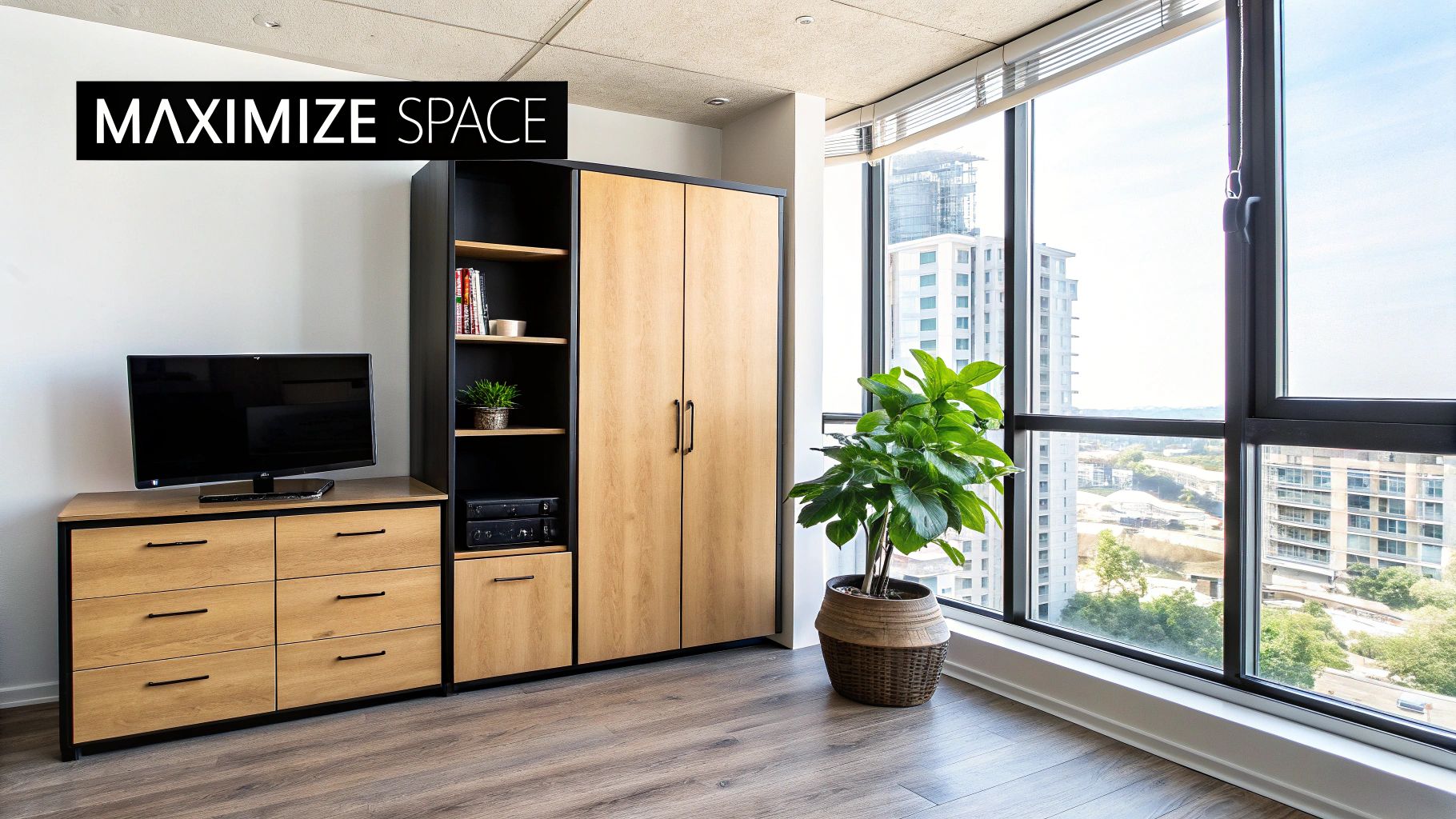
Mirrors are your best friend here. A large, well-placed mirror can genuinely make a room feel twice as big by bouncing light around and creating a sense of depth. Pair that with a light, cohesive colour palette for your walls, floors, and cabinetry, and the whole space will feel more open and airy.
The Central Role of High-Performing Cabinetry
Nowhere is smart design more important than with your cabinetry. In a condo kitchen or bathroom, your cabinets are true workhorses—they set the tone for the entire room and provide the lion's share of your storage. In a high-rise, however, your selection criteria need to go way beyond just looks.
Durability is everything. Your materials have to stand up to the daily grind of a busy lifestyle, and the finishes need to be easy to clean and tough enough to handle the inevitable bumps and scuffs of a smaller space. For a detailed breakdown of your options, it's worth taking the time to explore the best materials for kitchen cabinets to really understand what you're investing in.
When you're choosing cabinets for a condo, a few materials consistently come out on top for their blend of style and resilience.
Comparing Common Cabinetry Materials for Condos
Choosing the right material for your condo cabinets involves balancing looks, longevity, and budget. Given the unique challenges of condo living, like humidity fluctuations and high-traffic areas, some materials simply perform better than others. This table breaks down the most popular options to help you decide.
| Material | Durability & Lifespan | Moisture Resistance | Typical Cost | Best For |
|---|---|---|---|---|
| High-Density Fibreboard (HDF) | Very stable; resists warping from temperature and humidity changes. | Good, especially when properly sealed or finished. | $$ | A versatile, stable core for painted, thermofoil, or laminate cabinet doors. |
| Thermofoil | Excellent; seamless vinyl surface is tough and easy to clean. | Excellent; non-porous surface repels water well. | $$ | High-use kitchens and bathrooms where moisture and easy cleanup are top priorities. |
| Laminates | High; very resistant to scratches, stains, and daily wear. | Very good; modern laminates are built to handle moisture. | $$$ | Achieving a specific look (like wood grain or bold colour) with maximum durability. |
Ultimately, the best choice depends on your specific needs, but materials like Thermofoil and HDF are often fantastic, hard-wearing choices that don't break the bank and stand up well to the condo environment.
Pro Tip: Focus on function-driven features. Full-extension drawers are a game-changer compared to deep, dark base cabinets where things get lost. Smart additions like pull-out pantries, lazy Susans for corners, and integrated organizers squeeze maximum utility out of every inch.
Selecting Materials for Durability and Compliance
Beyond your cabinets, every material you bring into your condo has to pull double duty: it needs to look fantastic and perform flawlessly. It also has to meet your condo board’s specific rules, which can be surprisingly strict—especially when it comes to flooring.
Nearly every condo corporation in Toronto will require you to use a specific type of high-quality acoustic underlayment for any new hard-surface flooring. This is a big one, and it's absolutely non-negotiable. It's all about minimizing noise transfer to your neighbours below. The required Sound Transmission Class (STC) rating will be clearly stated in your building’s reno package.
For the flooring itself, you’ll want something that’s both stylish and tough.
- Engineered Hardwood: Gives you that timeless wood look but is built in layers, making it far more stable and resistant to the humidity swings common in high-rises.
- Luxury Vinyl Plank (LVP): An amazing all-around choice for condos. LVP is 100% waterproof, incredibly scratch-resistant, and comes in some seriously convincing wood and stone designs. It also feels great underfoot and pairs perfectly with acoustic underlays.
When it comes to countertops, think low-maintenance. Non-porous materials like quartz are a top pick for a reason. They don't stain or etch easily and require virtually zero upkeep, which is a huge bonus for a busy city lifestyle. Every little choice, right down to the faucet finish and backsplash tile, adds up to create a cohesive design that transforms your unit into a home that truly works for you.
Hiring the Right Renovation Team in Toronto
Let’s be honest: the success of your entire condo renovation comes down to one thing—who you hire. The right team will navigate Toronto’s maze of condo rules like it's second nature. The wrong one? They can turn your dream project into a nightmare of delays, surprise costs, and shoddy work. Finding a great pro is about more than just a good quote; it’s about finding a partner who genuinely specializes in the unique world of high-rise construction.

First, you need to know who does what. A general contractor (GC) is your project quarterback. They're the one wrangling all the trades—plumbers, electricians, painters—and making sure the whole job runs on time and on budget. An interior designer, on the other hand, is the creative visionary. They craft the layout, select the materials, and ensure the finished space is both stunning and functional. For a full-gut reno, you’ll probably need both.
Vetting Contractors with Proven Condo Experience
When you start looking, your number one filter should be "condo experience." I can't stress this enough. A fantastic contractor who only works on detached houses in the suburbs, no matter how skilled, is not ready for the logistical chaos of a downtown Toronto high-rise. You absolutely need a team that already knows the drill with booking service elevators, adhering to strict noise bylaws, and protecting common areas.
The demand for this niche skill set has exploded. As more people decide to renovate instead of move, the share of Toronto condo units getting major overhauls has leaped from 22% to 31% between 2018 and 2023. This has, in turn, fueled a 38% increase in renovation contractors who focus specifically on condos. For a deeper dive into these market trends, the CMHC analysis is an excellent resource.
Here’s a checklist of non-negotiable questions to ask every single contractor you consider:
- Can you show me proof of WSIB coverage and at least $2 million in liability insurance? Your condo board will demand this anyway, so it’s an immediate deal-breaker if they hesitate.
- How many condo renovations have you completed in the past year? You’re looking for recent, relevant experience, not a project they did five years ago.
- Can I speak to a few of your recent condo clients? Don't just get the list—actually call them. Ask about communication, timelines, and how problems were handled.
- Are you familiar with the approval process for my building or property management company? A seasoned pro may have even worked in your exact building before, which is a huge advantage.
Pay close attention to how they answer. Are they confident and specific, or are they vague and dismissive? A contractor who brushes off your concerns about condo board rules is a massive red flag.
Decoding Quotes and Contracts
Never, ever accept a quote scribbled on a piece of paper. A true professional will give you a detailed, itemized quote that breaks down every single cost: labour, materials, permits, waste disposal, you name it. This transparency is your best tool for managing your budget and avoiding nasty surprises down the road.
When you're comparing quotes, resist the urge to just pick the lowest number. Dig into the details. One contractor's price might include high-quality cabinetry and durable fixtures, while a cheaper quote might be based on builder-grade basics that won't last. This is particularly important for the heart of your home; our guide on how to choose the best kitchen cabinets contractor in Toronto is full of insider tips on what to look for.
Once you’ve made your choice, insist on a comprehensive contract. This legal document is your single most important piece of protection.
Your contract must clearly spell out:
- A Detailed Scope of Work: Every task, from demolition to the final coat of paint, must be listed. If it’s not in writing, it doesn’t exist.
- A Clear Payment Schedule: Payments should be tied to project milestones (e.g., completion of framing, installation of cabinets), not arbitrary dates. Never pay the full amount upfront.
- Project Timeline: Lock in a start date and an estimated completion date. The contract should also outline what happens if there are delays.
- Change Order Process: Changes are inevitable. Define a formal process for how any alterations to the plan will be documented, priced, and approved in writing by both parties.
Taking the time to hire the right people is the best investment you can make in your condo renovation toronto. It sets the foundation for a professional, transparent, and successful project from day one.
Budgeting for Your Condo Renovation Costs
https://www.youtube.com/embed/1syGXcnPsP4
Let’s talk numbers. Before you even think about picking out tile or paint colours, you need a realistic budget. This is hands-down the most critical piece of a successful condo renovation in Toronto. It’s easy to get carried away by Pinterest boards and design magazines, but without a solid financial plan, a dream project can quickly become a nightmare.
First things first: set aside a contingency fund. I always tell my clients to budget an extra 15% to 20% on top of their total estimate. This isn't for splurging on upgrades; it's your safety net. In older Toronto buildings, you never know what you'll find behind a wall—outdated wiring, a hidden plumbing leak—and this buffer ensures those surprises don't derail your entire renovation.
Breaking Down the Major Costs
In any renovation, your costs boil down to three main categories: materials, labour, and all the administrative bits and pieces. Here in Toronto, labour is a significant chunk of the budget. That’s because you're paying for expertise. A contractor who specializes in high-rise work knows how to navigate the unique challenges, from booking service elevators and respecting building work hours to dealing with concrete walls and ceilings. Their experience is worth every penny.
The impact of these projects on our city is huge. In 2023 alone, residential renovations in the GTA accounted for a staggering $4.8 billion, with condo projects making up about $1.68 billion of that figure. Every renovation supports local tradespeople and suppliers. You can find more details about the local market in this Toronto condo market trends on Deeded.ca.
Your budget shouldn't just be one big number. A smart budget is itemized. Break it down into contractor fees, materials (like cabinetry and flooring), fixtures, appliances, permits, and that all-important contingency fund. This level of detail gives you control and helps you make informed decisions when you need to.
Estimated Cost Breakdown for Toronto Condo Renovations
To give you a clearer idea of what to expect, here’s a look at some typical cost ranges for condo renovations in the city. Keep in mind these are for mid-range projects; your final price will vary based on the scope of work and the quality of finishes you choose.
| Renovation Project | Typical Cost Range (Mid-Range) | Key Cost Drivers |
|---|---|---|
| Kitchen Overhaul | $25,000 – $45,000+ | Custom cabinetry, quartz or natural stone countertops, appliance quality, and any changes to plumbing or electrical layouts. |
| Bathroom Remodel | $15,000 – $30,000+ | Tiling complexity (e.g., floor-to-ceiling), walk-in shower conversion, vanity quality, and moving plumbing fixtures. |
| New Flooring (1,000 sq. ft.) | $8,000 – $15,000 | Material choice (LVP vs. engineered hardwood), the cost of mandatory acoustic underlayment, and labour for removal of old flooring. |
| Full Condo Gut (1,000 sq. ft.) | $100,000 – $200,000+ | The scope of structural changes, the quality of all finishes, and the extent of electrical and plumbing work required. |
These numbers provide a solid starting point for your planning. If you want to dive deeper into the specifics of one of the biggest ticket items, have a look at our complete guide to kitchen renovation costs in Toronto.
Mapping Out a Realistic Timeline
Money is just one part of the puzzle; time is the other. One of the biggest mistakes people make is underestimating how long the pre-construction phase takes. The noisy, dusty part of the renovation might only be six to eight weeks, but getting there can easily take two, three, or even four months.
This is where the real work happens before a single hammer is swung:
- Design & Planning: This is where you finalize every detail, from the layout down to the cabinet handles.
- Contractor Vetting: You’ll be interviewing contractors, checking their references, and comparing detailed quotes.
- Condo Board Approval: This involves submitting a detailed package to your board and waiting for their go-ahead, which can take weeks.
- City Permitting: If your project needs them, applying for and receiving permits from the City of Toronto adds more time.
- Material Procurement: Some items have long lead times. Custom cabinetry or specific tiles, for example, can take 8-12 weeks to arrive.
Not planning for this upfront work is the single biggest cause of delays. Factor it in from the very beginning. Your patience during these initial stages will pay off tenfold with a smoother, less stressful condo renovation toronto once the work actually begins.
Got Questions About Your Toronto Condo Renovation? We've Got Answers.
Thinking about renovating your Toronto condo? It's a big project, and you probably have a million questions running through your mind. From how long it'll take and what it'll cost, to navigating the maze of building rules, getting straight answers is the first step. Let's dive into some of the most common questions we hear from homeowners every day.
How Long Does a Condo Kitchen Renovation Take in Toronto?
This is the big one, and the answer isn't as simple as you'd think. It's easy to focus just on the construction part—the dust and the noise. That phase, from demolition to the final touches, typically runs between four to eight weeks.
But that's only part of the equation. The real timeline starts long before a single hammer is swung. You have to factor in the pre-construction phase, which can easily add another four to twelve weeks. This is where the critical groundwork happens:
- Designs & Selections: Nailing down the layout and picking out all your materials, from cabinets and countertops to appliances and tiles.
- Getting Quotes: Vetting contractors and getting detailed proposals you can actually compare.
- Approvals: Submitting your plans to your condo board and, if needed, the City of Toronto, then waiting for the go-ahead.
That condo board approval is often the biggest wildcard. A thorough, well-organized submission package is your best defence against frustrating delays right out of the gate.
Can I Manage My Own Condo Renovation to Save Money?
The temptation to play general contractor and pocket the savings is real, but in a Toronto condo, it's a massive gamble. Sure, if you're just painting a room or swapping out a light fixture, by all means, go for it.
But the moment your project involves licensed trades—think plumbing or electrical work—the complexity multiplies. An experienced contractor knows the ins and outs of condo regulations, from protecting common areas to scheduling noisy work.
When you manage the project yourself, you're the one on the hook for booking elevators, dealing with security, and making sure every single rule is followed. One fine from the condo board or a single mistake that needs to be redone can obliterate any potential savings. It’s a high-risk, high-stress proposition.
What Are the Common Restrictions from Toronto Condo Boards?
While every building has its own quirks, there's a pretty standard playbook of rules that most Toronto condo corporations follow to keep things running smoothly. The very first thing you should do is request the official renovation package from your property management office. Don't even think about planning until you've read it.
Here’s a taste of what you can expect to find:
- Strict Work Hours: Noise-making activities are usually limited to weekdays, often from 9 AM to 5 PM. Forget about weekend or holiday work.
- Elevator Logistics: You'll need to book—and pay for—the service elevator for every delivery and all garbage removal. This almost always involves installing protective padding, too.
- Contractor Credentials: Any contractor working in your unit will have to show proof of active WSIB coverage and at least $2 million in liability insurance.
- Flooring Soundproofing: If you're installing new hard surface floors, the board will have specific requirements for the acoustic underlayment to keep noise from travelling to your neighbours below.
- Structural No-Go's: Moving structural walls, core plumbing stacks, or sprinkler lines is almost universally forbidden.
How Do I Maximize ROI on My Condo Renovation?
If you want the best bang for your buck, you need to think like a future buyer. The goal is to make smart upgrades that have broad appeal, not to over-personalize the space. For the highest return on investment, put your money where it counts the most: the kitchen and the bathrooms.
A beautiful, functional kitchen is the single biggest value-add in a condo. This is where you invest in quality, durable materials that feel solid and look timeless. Think quartz countertops and well-built cabinetry that will stand up to years of use.
Focus on classic appeal. A neutral colour scheme of whites, greys, and warm wood tones creates a bright, inviting atmosphere that allows potential buyers to picture themselves living there. Small, smart upgrades like improved lighting and clever storage solutions can also make a huge difference in a compact condo footprint. At the end of the day, high-quality workmanship is what truly cements that value, ensuring your renovation looks great for years to come.
Ready to create a kitchen that perfectly balances style, function, and value? At MapleKing Kitchen Cabinets, we specialize in providing factory-direct, custom cabinetry that elevates Toronto homes. Explore our collection and get a free quote today.



