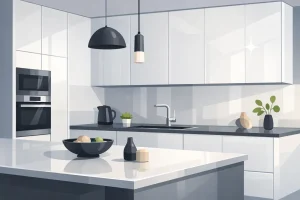

A kitchen can look dated because of worn doors, an awkward layout, or cabinets that simply no longer work for the way your household lives. The cabinet refacing vs replacement decision comes down to identifying the real problem before spending your renovation budget. Refacing can deliver a dramatic visual upgrade when the cabinet boxes are sound. Replacement gives you a chance to improve storage, layout, materials, and long-term performance.
Neither option is automatically the better value. The right choice depends on what is behind the doors, what you want to change, and how much flexibility your kitchen needs.
Cabinet Refacing vs Replacement: The Core Difference
Cabinet refacing keeps the existing cabinet boxes in place. A contractor covers the visible face frames and sides with a new surface, then installs new doors, drawer fronts, hardware, and often new moldings. The kitchen receives a fresh style without removing the basic structure.
Cabinet replacement removes the existing cabinets and installs new ones. This allows you to change cabinet sizes, add drawers, adjust appliance locations, create a pantry wall, improve corner storage, or redesign the full kitchen footprint. It is a more involved project, but it solves problems that new doors alone cannot fix.
For a homeowner who likes the current layout and wants a faster cosmetic change, refacing may be a practical choice. For a homeowner frustrated by cramped storage, damaged boxes, or poor workflow, replacement is usually the stronger investment.
When Cabinet Refacing Makes Sense
Refacing works best when your cabinet boxes are structurally solid, level, and well-built. Open a few cabinets and look beyond the doors. The interiors should be dry, stable, and free of sagging shelves, swollen particleboard, peeling surfaces, or signs of pest damage. Doors that rub or hang unevenly can sometimes be corrected, but widespread box damage is a warning sign.
It also makes sense when your kitchen layout already works. If the sink, range, refrigerator, and prep areas are where you want them, keeping the cabinet boxes can avoid the expense of moving plumbing, electrical work, flooring, or countertops. A new door profile, updated paint color, modern pulls, and better lighting can make a familiar layout feel much more current.
Refacing is often less disruptive than full replacement because cabinets stay in place. That can be helpful in homes where the kitchen needs to remain partially usable during renovation. Still, it is not a quick weekend refresh. Quality refacing requires careful measurements, durable materials, professional installation, and a finish that blends cleanly around panels, trim, and exposed ends.
The Limits of Refacing
Refacing does not give you new cabinet construction. You keep the original shelf configuration, cabinet depth, drawer capacity, and basic layout. You may be able to add a few upgrades, such as roll-out trays or new organizers, but there are limits to what an existing box can accommodate.
It can also become less cost-effective when many repairs are needed. If boxes require rebuilding, panels need extensive patching, or the kitchen needs new countertops and major layout changes anyway, putting money into refacing may delay the replacement you truly need.
Refacing is also not ideal for cabinets made from low-quality materials that have reached the end of their useful life. A beautiful new door cannot correct weak cabinet boxes or moisture damage beneath the sink.
When Cabinet Replacement Is Worth It
Replacement is the better path when the kitchen needs to work differently, not just look different. Perhaps you need deeper drawers for cookware, a dedicated pantry, a larger island, or cabinets that make better use of a condo kitchen’s limited wall space. New cabinetry lets you plan around your actual routines rather than accepting old constraints.
It is also the sensible choice when cabinet boxes are damaged or poorly constructed. Water damage, warped material, cracked frames, failing shelves, and loose joints affect both appearance and function. Replacing those cabinets provides a cleaner foundation for the rest of the renovation.
A full replacement gives you more material and finish options as well. Homeowners can choose real wood painted cabinetry for a classic, tailored look; painted HDF for a smooth modern finish; high-gloss or matte HDF for contemporary spaces; or laminate and thermofoil options that balance style, maintenance, and budget. The best material is not simply the most expensive one. It should fit your household’s use, desired look, and long-term expectations.
Better Storage Can Change Daily Life
The most valuable benefit of replacement is often hidden behind the cabinet fronts. New cabinets can include full-extension drawers, soft-close hardware, pull-out waste bins, tray dividers, pantry pull-outs, corner solutions, and customized drawer layouts. These details reduce clutter and make cooking easier every day.
A replacement project also lets you correct sizing issues. Standard cabinets may leave wasted gaps or fail to fit an unusual wall, ceiling height, or appliance plan. Custom-oriented cabinetry can use the space more efficiently while giving the room a finished, intentional appearance.
How Cost Really Compares
Refacing generally costs less than replacing cabinets because it uses the existing boxes and requires less demolition. The gap can be meaningful, especially when the current layout stays intact. But a lower starting price is not always the lowest total cost.
Consider what the project includes. If refacing is paired with countertop removal, backsplash work, electrical changes, repairs to old cabinet boxes, and new storage accessories, the savings may narrow. On the other hand, if your cabinets are solid and you only want a visual update, paying for full replacement may add expense without delivering proportional benefit.
Replacement has a larger upfront cost, but factory-direct pricing can make premium-looking, tailored cabinetry more attainable than many homeowners expect. Working without traditional showroom markups can leave more room in the budget for details that matter, such as durable hardware, better drawer organization, and a finish that suits the rest of the home.
Avoid comparing projects by one number alone. Ask what is included in the cabinet price, installation, modifications, hardware, panels, molding, delivery, disposal, and design support. A clear scope helps prevent the surprise costs that make renovations feel overwhelming.
Questions to Ask Before You Decide
Before committing to cabinet refacing vs replacement, start with your future needs rather than the current cabinet color. Will the kitchen serve a growing family, frequent entertaining, aging-in-place needs, or a rental property? A cosmetic update may be enough for a short-term plan, while a long-term home often benefits from better storage and durable construction.
Look carefully at the layout. If you constantly run out of prep space, struggle to reach corner cabinets, or cannot store everyday cookware efficiently, replacement can solve a functional problem that refacing will preserve. If the layout flows well and the boxes are strong, refacing may offer the affordable luxury look you want with less disruption.
Finally, consider the countertop. If you plan to keep it, verify whether refacing can be completed without risking damage to existing surfaces. If you are replacing countertops, take the opportunity to assess whether new cabinet heights, depths, or storage features would improve the full design.
Choose the Upgrade That Fits Your Home
A well-planned kitchen should feel good to use as well as good to show. MapleKing Kitchen Cabinets helps homeowners evaluate cabinet construction, finish options, storage needs, and design goals before selecting a solution. That clarity matters because the most attractive kitchen upgrade is not always the one with the biggest scope. It is the one that gives you the right balance of style, durability, function, and value for the years ahead.
If your existing boxes are dependable and your layout already supports your routine, refacing can be a smart reset. If your kitchen is asking for more space, better organization, or a completely new look and flow, replacement gives you the freedom to build a kitchen that finally works the way you do.