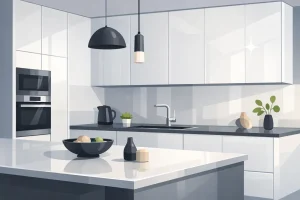

In Toronto, cabinet refacing usually costs $4,500 to $12,000 for a standard kitchen, and it's often 40% to 50% less expensive than full cabinet replacement. That's why many homeowners choose it when they want a major visual upgrade without paying for a full tear-out.
You might be staring at oak doors from the early 2000s, worn thermofoil edges, or a kitchen that still works fine but looks tired every morning. That's a common Toronto problem. The layout may still suit your home, the cabinet boxes may still be solid, but the room feels dated enough that you've started pricing full renovations and immediately felt your shoulders tense up.
That sticker shock is real. So is the worry about dust, trades moving through the house, and losing your kitchen for longer than expected.
Cabinet refacing sits in that practical middle ground. It gives you the “new kitchen” look homeowners desire, while keeping the parts of the cabinetry that are still doing their job. If you're in Toronto or Markham and trying to balance style, budget, and common sense, that's where this option starts to make a lot of sense.
Your Dream Kitchen Without the Demolition
A lot of homeowners reach the same point the same way. They don't hate their kitchen all at once. It happens slowly. The doors start looking heavy and old. The colour no longer fits the rest of the house. The hinges loosen. The room feels darker than it should.
In older Toronto houses, I often see sturdy cabinet boxes paired with finishes that haven't aged well. In Markham homes, the issue is sometimes different. The kitchen isn't worn out structurally, but the style now feels disconnected from the rest of a renovated main floor. Either way, people start assuming their only serious option is a full replacement.
That assumption stops a lot of good projects before they start.
Practical rule: If the cabinet boxes are solid, level, and still functional, you may not need demolition to get a dramatic change.
The biggest emotional hurdle isn't always money. It's disruption. Families worry about meals, dust, noise, and the general fatigue that comes with a bigger renovation than they planned for. Refacing appeals to people who want a cleaner path forward. The room can look substantially different without rebuilding the whole kitchen from scratch.
There's also a second layer people often overlook. Once you update the doors and fronts, storage starts to matter more because the room finally feels worth organising properly. If that sounds familiar, these tips for organized kitchen storage are useful for planning drawer inserts, zones, and day-to-day function before the new fronts go on.
Why this option feels modern
Refacing fits how many GTA homeowners renovate today. They don't always need a brand-new footprint. They need a smarter use of what's already there.
That's especially true when:
- The layout already works: Your sink, stove, and fridge positions are fine.
- The cabinet interiors are still serviceable: Shelves and boxes do their job.
- You want a style reset: Shaker, slab, matte, wood grain, or a brighter painted finish can change the entire feel.
- You'd rather upgrade selectively: New hardware, panels, fillers, and doors can refresh the room without turning the whole main floor into a construction site.
For many homeowners, that's the sweet spot. Less chaos. Better appearance. More control.
What Exactly Is Cabinet Refacing
Cabinet refacing is not the same thing as painting old doors and hoping for the best. It's closer to giving a kitchen a new exterior while keeping the cabinet structure that still performs well.
This process is akin to keeping a car's frame and engine because they're reliable, but replacing the visible parts that define the look and feel. In a kitchen, the “engine” is the cabinet box. The visible parts are the doors, drawer fronts, end panels, hardware, and exposed surfaces.

What gets replaced
In a proper refacing job, the parts you touch and see most often are typically updated. That usually includes:
- New cabinet doors: They provide the most visible style changes.
- New drawer fronts: These need to match the door profile and finish.
- New hardware: Handles, knobs, and often hinges are changed to suit the new design.
- Panels and fillers: End gables, valances, and visible trim pieces may also be refreshed.
What gets kept
The existing cabinet boxes stay in place if they're in good condition. Their exposed exterior surfaces are then covered or refinished to match the new fronts so the kitchen reads as one finished system rather than a mix of old and new.
That point matters because many homeowners get confused here. They hear “refacing” and think it means a cosmetic shortcut. Done well, it isn't a shortcut. It's a targeted renovation method.
Refacing works best when the bones of the kitchen are still sound, but the face of the kitchen needs to change.
What refacing is not
It doesn't usually solve every kitchen problem. If your boxes are damaged by moisture, badly sagging, or awkwardly laid out for the way you cook, replacing cabinetry may be the better route.
It also doesn't automatically mean every interior accessory gets rebuilt. If you want pull-outs, recycling centres, tray dividers, or deeper drawer conversions, those need to be discussed as part of the design plan rather than assumed.
Here's the simplest way to separate the options:
| Option | Best description |
|---|---|
| Refinishing | Keeping the same doors and changing their finish |
| Refacing | Replacing doors and drawer fronts, updating visible surfaces |
| Replacement | Removing old cabinets and installing entirely new units |
That distinction helps homeowners ask better questions when comparing quotes. If two companies use similar language but one is repainting doors and another is supplying new doors and matching panels, those aren't the same job.
Refacing vs Full Replacement The Value Equation
A lot of Toronto kitchen decisions come down to one honest question: are you trying to rebuild the room, or improve a layout that already works?
That distinction saves people from spending replacement money on a refacing problem, or choosing refacing when the kitchen really needs a fresh start.

Budget usually decides the first round
Full replacement means removing cabinets, adjusting surrounding finishes, and building the kitchen back up from the boxes outward. Refacing keeps the cabinet structure and changes the visible surfaces, so the scope is smaller from the start.
According to The Door Maker's cabinet refacing cost breakdown, cabinet refacing is approximately 40% to 50% less than a full cabinet replacement. The same source notes that labour makes up about 50% to 70% of total refacing cost, which helps explain why door style, panel count, and installation details affect the final quote.
That cost gap matters in Toronto because cabinet budgets rarely stay isolated. Homeowners often discover that once they replace cabinets, they also need to address flooring edges, backsplash patches, countertop fit, and touch-up work around the room. Refacing often avoids much of that chain reaction.
For a closer look at local price ranges, door types, and what changes the final number, MapleKing has a useful guide to kitchen cabinet costs in Toronto. It helps frame what factory-direct pricing can mean compared with a retail showroom path.
Timeline changes the whole renovation experience
Replacement gives you more design freedom. You can change the layout, add islands, shift appliance locations, or create storage that the current kitchen never had.
Refacing fits a different situation. It works well for households that say, “The kitchen functions fine. It just looks dated.”
That is a practical category, not a compromise. If your cabinet boxes are solid and the room already works for how you cook, refacing can deliver the visual change people want without the longer construction window that comes with tearing everything out.
Daily disruption matters more than many homeowners expect
A kitchen renovation is a bit like roadwork on the Gardiner. The final improvement may be worth it, but the question is how much disruption you want to live with getting there.
Full replacement often sets off other decisions. Countertops may need to be removed and templated again. Plumbing and electrical timing can become part of the schedule. Walls may need repairs. Flooring transitions may suddenly matter. Refacing usually keeps the work more contained because the cabinet footprint stays in place.
Families feel that difference right away. A project is judged by the finished kitchen, but also by how hard it was to get through the week while the work was happening.
If you are also weighing the bigger question of renovating versus leaving your current home, this broader Pinnacle Property Media renovation guide gives helpful context.
Value is not only about resale
Resale matters, especially in Toronto and Markham, where buyers pay attention to kitchens. But practical value matters too. A refaced kitchen can give you a cleaner style, better hardware, and a more current finish without paying for a full rebuild you may not need.
As noted earlier from The Door Maker's cost guide, homeowners often recover a meaningful share of refacing costs at resale. More important for many households, though, is avoiding overbuilding for the neighbourhood while still getting a high-end look.
That is where a factory-direct provider like MapleKing changes the math. Instead of paying showroom markups on every door and panel, homeowners can often put more of the budget into the materials they see and touch. In plain terms, that can mean getting a better finish package for the same spend.
When full replacement is the better choice
Refacing is the value option only when the existing kitchen has good bones. Replacement usually makes more sense if any of these are true:
- The cabinet boxes are damaged. Water swelling, loose joints, or failing construction make reuse a poor bet.
- The layout works badly. If the sink, stove, and storage are in the wrong places, new doors will not fix the daily frustration.
- You want major structural changes. Adding new cabinet runs, changing heights, or redesigning the room calls for replacement.
- The kitchen was built cheaply to begin with. A fresh face on weak cabinet boxes can limit how good the final result feels.
For many GTA homeowners, the best value equation is simple. If the structure is sound and the layout already serves the household, refacing often delivers the smartest balance of cost, appearance, and disruption. If the bones are poor, replacement is the better investment.
Decoding Cabinet Refacing Costs in Toronto and Markham
A typical Toronto kitchen quote can feel confusing at first because two neighbours with kitchens that look similar can receive very different prices. The reason is simple. Refacing is priced more like tailoring a suit than buying one off the rack. The cabinet boxes may stay, but the visible surfaces, finish level, and installation details can shift the total quite a bit.
For most homeowners in Toronto and Markham, cabinet refacing usually lands somewhere in the mid-thousands and can climb into the low five figures, depending on size, material, and how custom the finish looks. A small, straightforward shaker update costs far less than a larger kitchen with extra panels, upgraded hardware, and a sleek European-style door program.
Factory-direct supply matters here. With a company like MapleKing, more of your budget can go into the doors, drawer fronts, panels, and finish you see every day, instead of into layered retail markup. That is one reason GTA homeowners can often reach a more polished look without crossing into full replacement pricing.
What actually changes the price
Three factors do most of the work.
1. How many pieces need to be made and installed
Every door, drawer front, exposed end panel, valance, filler, and fridge gable adds material, labour, and finishing time. Homeowners sometimes count only doors and forget the supporting pieces that make the kitchen look complete.
2. The material and finish level
A painted shaker door is usually more budget-friendly than a high-gloss acrylic slab or a specialty textured finish. The difference is similar to flooring. Basic laminate and premium hardwood both cover the floor, but they do not cost the same or deliver the same visual effect.
3. How far the project goes beyond the basics
Quotes vary significantly based on project scope. One proposal may include doors and drawer fronts only. Another may also include matching side panels, crown moulding, light rail, soft-close hinge upgrades, and final touch-ups so the kitchen reads as one finished system.
That last point trips up many first-time renovators.
A short quote can look attractive until you realize the add-ons were never included.
Estimated Cabinet Refacing Costs in the GTA 2026
| Material Type | Average Cost Range | Best For |
|---|---|---|
| Solid-colour MDF shaker | $4,500 to $6,000 | Classic painted kitchens, clean transitional style |
| Larger kitchens with crown or ceiling-fill panels | $6,000 to $8,500 | Homes that need more coverage and a built-in look |
| Wood-grain laminate with matching gable replacements | $7,500 to $10,500 | Durable, contemporary finishes with visible texture |
| High-gloss acrylic or specialty European doors | $9,500 to $14,000 or more | Modern kitchens aiming for a sleek, upscale appearance |
Use ranges like these as planning numbers, not final promises. The same kitchen footprint can price differently if one home has more drawers, taller uppers, awkward filler spaces, or a request for full-height finishing panels to close gaps at the ceiling.
How to compare quotes without getting misled
Ask each company to spell out the same checklist. Are the new doors included? Drawer fronts too? What about exposed ends, fillers, crown, handles, hinge upgrades, delivery, installation, and final adjustments?
This matters in older Toronto homes and many Markham family kitchens, where walls are often a little out of square and clean finishing takes more care than the showroom sample suggests. Condo projects can also cost more to install because of elevator booking, access rules, parking limits, and tighter work windows.
If you want a broader budget reference before requesting estimates, MapleKing's guide to kitchen cabinet costs in the GTA gives a useful local baseline across cabinet materials and project types.
One practical rule helps. Compare quotes line by line, not just by total price. That is how you tell whether one company is cheaper, or omitting the parts that make the finished kitchen look complete.
Choosing Your New Look Cabinet Materials and Finishes
Once the budget range makes sense, the fun part starts. Material choice isn't just about appearance. It affects cleaning, durability, how the light hits your kitchen, and how “custom” the finished room feels.
The Canadian benchmark many homeowners use for material comparisons appears in RenoQuotes' 2026 cabinet refacing cost guide, which notes that high-quality laminate averages $80 to $160 per linear foot, thermofoil runs $110 to $220 per linear foot, and solid wood can reach $220 to $450+ per linear foot, with Toronto prices often higher because labour in urban markets ranges from $60 to $110 per hour.
That doesn't tell you what to pick. It tells you where each category tends to sit.

Painted HDF and MDF looks
If you want a smooth painted kitchen in white, greige, taupe, sage, or deep charcoal, engineered painted doors are often the practical starting point. They suit shaker profiles well and give a clean, consistent finish.
These are popular in Toronto semis, detached family homes, and condo kitchens because they bridge classic and modern styling well. They don't try too hard. They make the room look current.
High-gloss and matte modern finishes
For a more contemporary kitchen, slab-style fronts in high-gloss or matte finishes create a very different effect.
- High-gloss finishes: Best for sleek, reflective modern spaces. They bounce light well and can make smaller kitchens feel brighter.
- Matte finishes: Better for homeowners who want a quieter, softer luxury look. They tend to feel more architectural and understated.
- Flat slab profiles: These keep the design clean and reduce visual busyness.
A glossy white condo kitchen and a matte charcoal Markham family kitchen can both be modern, but they create very different moods. One feels polished and bright. The other feels calm and grounded.
Laminate, thermofoil, and wood grain options
Laminate and thermofoil often appeal to homeowners who prioritise easy care and a wide range of looks. Wood-grain laminates can be especially useful when someone likes the warmth of wood but wants a more controlled, consistent appearance.
Solid wood and wood-look options speak to a different taste. They tend to suit homeowners who want more texture, more character, and a more natural visual depth.
For a deeper planning read on this choice, this guide on the best material for kitchen cabinets is useful because it compares finishes by lifestyle, cleaning habits, and design style rather than by trends alone.
How to choose without getting overwhelmed
Start with the house, not the sample door.
Ask yourself:
- Does the rest of the home lean traditional or modern
- Do I want grain, or do I want a painted solid colour
- Will fingerprints bother me
- Am I trying to brighten the room, soften it, or sharpen it
- Do I need durability first, or is appearance driving the decision
When homeowners skip those questions, they often choose a finish they admire in a showroom but don't want in their own home.
The Refacing Process from Consultation to Completion
You book a consultation on Monday, and by the next weekend you are already wondering what your kitchen will look like while the work is happening, whether you will lose use of the room, and how much disruption is normal. That uncertainty is what makes refacing feel bigger than it usually is.
A well-run refacing job is a staged process. The kitchen is measured first, choices are locked in, the new parts are made, and installation happens after that. Because much of the work is prepared in advance, Toronto homeowners often find the project easier to live with than a full tear-out.

The consultation and measuring stage
The first visit is part measuring appointment, part planning session.
A good installer is not just checking widths and heights. They are looking at whether the cabinet boxes are square, where the visible ends are, how fillers meet the walls, and whether details like crown, light valances, or side panels need to be replaced or wrapped to match. In older Toronto kitchens, especially in postwar homes and some condos with builder-grade cabinetry, those details matter because walls are not always perfectly straight and original cabinets may have shifted slightly over time.
This is also the stage where style decisions need to become practical decisions. A shaker door, a slab door, a warm wood-look finish, and matte black pulls may all look good on samples. The real question is whether they work together in your room, with your lighting, floor colour, and countertop.
If you are comparing suppliers, review how they handle both product and labour. A provider that offers kitchen cabinets with professional installation usually gives you a clearer picture of scheduling, responsibility, and finish consistency than a buy-here-install-elsewhere setup. That matters in the GTA, where delays often come from coordination gaps, not from the refacing work itself.
What happens before installers return
After measurements are confirmed, the new doors, drawer fronts, panels, and matching materials go into production. During that period, your existing kitchen stays largely usable.
That is one of the biggest practical advantages of refacing. It works like re-skinning the visible parts of the kitchen rather than rebuilding the whole body. You are not usually living through the dust, disposal bins, and long periods without storage that come with replacement.
Homeowners often assume installation starts right after the first visit. Usually, it does not. There is a quiet middle stage where ordering, fabrication, colour matching, and hardware prep happen behind the scenes. Factory-direct suppliers such as MapleKing can make this stage easier to understand because the path from order to production is shorter than the typical retail chain, and there are fewer handoffs adding markup or confusion.
What happens on installation days
Once the new components are ready, the visible transformation moves quickly. Installers remove old doors and drawer fronts, prep the cabinet boxes, apply matching material to exposed surfaces, and install the new fronts, hinges, and hardware.
Here's a helpful video overview before you book your own project:
The details matter here. Good refacing is not just hanging new doors. It includes consistent grain direction where applicable, clean edges on panels, aligned hardware, even reveals, and trim that looks intentional rather than added afterward. The difference between an average job and a polished one usually shows up in those finishing details.
Questions worth asking before work starts
A smooth project depends on clear expectations before the first tool comes in.
What exactly is included on every visible surface
Ask cabinet by cabinet. Confirm side panels, exposed ends, toe kicks, fillers, mouldings, valances, and trim.How should the kitchen be prepared
Clear counters, empty the drawers being changed, and ask where tools and new parts will be staged. In tight Toronto kitchens, that can affect how disruptive the work feels.When do hardware choices need to be finalised
Pull sizes and hole spacing affect drilling and installation. Last-minute changes can slow the job or create patching issues.How are small problems handled
Ask what happens if an old hinge area is damaged, a box is slightly out of square, or an exposed panel needs a custom adjustment.
Before installation begins, ask for a cabinet-by-cabinet review of what stays, what gets replaced, and what gets covered in matching material.
The final walkthrough
The last step is inspection and adjustment. Doors are lined up, gaps are checked, drawers are tested, and any small touch-ups are noted before sign-off.
This part is easy to underestimate. Cabinet refacing can look expensive or economical for reasons that have nothing to do with the door style itself. Tight alignment, clean panel edges, and careful trim fitting create the high-end look homeowners want. That is also where factory-direct value becomes visible. If the materials are chosen well and installed properly, you can get a kitchen that looks custom without paying the usual retail layers built into many Toronto renovation projects.
Toronto Cabinet Refacing FAQs and Next Steps
Do you usually need a permit for cabinet refacing in Toronto
In most cases, cabinet refacing itself doesn't involve the kind of structural, plumbing, or electrical changes that trigger a permit. If the project expands into layout changes or related construction work, that's a different conversation and should be confirmed before work begins.
Can you change the kitchen layout during refacing
Usually not in a meaningful way. Refacing is best when you want to keep the cabinet footprint and upgrade the appearance. Small add-ons may be possible, but a true redesign points more toward replacement.
How durable are refaced cabinets
That depends on the condition of the original boxes and the quality of the new materials and installation. Good boxes paired with well-made doors, properly matched panels, and careful installation can hold up very well in normal family use.
Is refacing a good fit for resale prep
Often, yes. It suits homeowners and investors who want the kitchen to look current without stepping into a longer, larger project. Buyers notice doors, colour, hardware, and overall finish quality quickly. A dated kitchen can drag the whole main floor down visually, even when the layout is fine.
What should you bring to a consultation
Bring a few practical things, not just inspiration photos:
- Your must-haves: Better style, brighter colour, easier cleaning, improved resale appeal.
- A rough wish list: Door profile, hardware style, and any trim details you like.
- Your deal-breakers: Gloss level, maintenance concerns, visible wood grain, or budget limits.
A good refacing project is less about chasing a trend and more about choosing a finish package that suits your home, your routine, and the level of investment that feels sensible.
If you're ready to explore a cleaner, more cost-conscious kitchen upgrade, MapleKing Kitchen Cabinets is a strong local next step for Toronto and Markham homeowners. Their factory-direct approach helps you pursue a high-end look without the usual retail middleman markup, and their catalogue covers everything from painted shaker styles to sleek modern finishes. Review their gallery, compare material options, and book a free consultation to see what your current kitchen can become without a full demolition.