

If you're looking at giving your kitchen a facelift in the Greater Toronto Area, cabinet refacing is a smart move. For a standard-sized kitchen, you can expect the cost to land somewhere between $5,500 and $12,000. It's a hugely popular option for homeowners who want that brand-new look without the brand-new price tag.
Your Guide to Cabinet Refacing Costs in Toronto
Dreaming of a modern kitchen but balking at the potential cost and chaos of a full gut job? You're in good company. Many homeowners in Toronto and Markham want an update but are understandably hesitant to dive into a long, messy, and expensive renovation. Cabinet refacing is the perfect middle ground—it gives you a stunning transformation without tearing everything out.
Think of it like this: your cabinet boxes are the solid frame and engine of a car. They're built to last. Refacing is like getting a professional, high-end vinyl wrap, new doors, and sleek new rims. The core structure stays, but the entire look is completely fresh and modern. You end up with a kitchen that feels brand new, and it's all done in a matter of days, not weeks.
This approach brings some serious advantages:
- Big Savings: You keep your existing cabinet boxes, which are often the most expensive component of new cabinetry.
- Less Mess, Less Stress: A typical refacing job is wrapped up in just 3-5 days, so your kitchen isn't out of commission for long.
- A Greener Choice: By reusing your cabinet frames, you're keeping a whole lot of material out of the landfill.
- A High-End Look: With today's materials and finishes, the final result is often indistinguishable from expensive custom cabinets.
Breaking Down the Numbers in the GTA
For anyone living in the Greater Toronto Area, refacing has become the go-to for a reason. Looking at local projects, an average refacing job for a standard 10×10 kitchen will run you between $5,500 and $12,000 CAD.
Now, compare that to the $25,000 to $35,000 you might spend on a full cabinet replacement. The savings are huge—often up to 60%. You can get a deeper dive into these numbers in our complete guide to Toronto kitchen renovation costs.
The real genius of refacing is its efficiency. You free up a significant chunk of your budget that can be put toward other impactful upgrades—think new countertops, a beautiful backsplash, or the modern appliances you've been eyeing.
By choosing to reface, you're not just saving money. You're making a smart, strategic investment that boosts your home's value and makes your kitchen a space you truly love to be in. It’s the ideal way to get that high-end look without the high-end cost.
Decoding Your Quote: The Core Cost Components
When a cabinet refacing quote lands in your inbox, it can feel a bit like trying to read a foreign language. It's just a jumble of numbers and line items. But getting a handle on what it all means is the first step toward making a smart, confident decision.
Think of it like a recipe for your new kitchen. Every ingredient—from the doors to the hinges to the labour—has a specific purpose and price. Breaking it all down lets you see exactly where your money is going, helps you spot places to save, and gives you a real appreciation for the value packed into a professional job.
This flowchart puts the cost of refacing into perspective, showing how it stacks up against a full-scale replacement in a typical kitchen renovation.
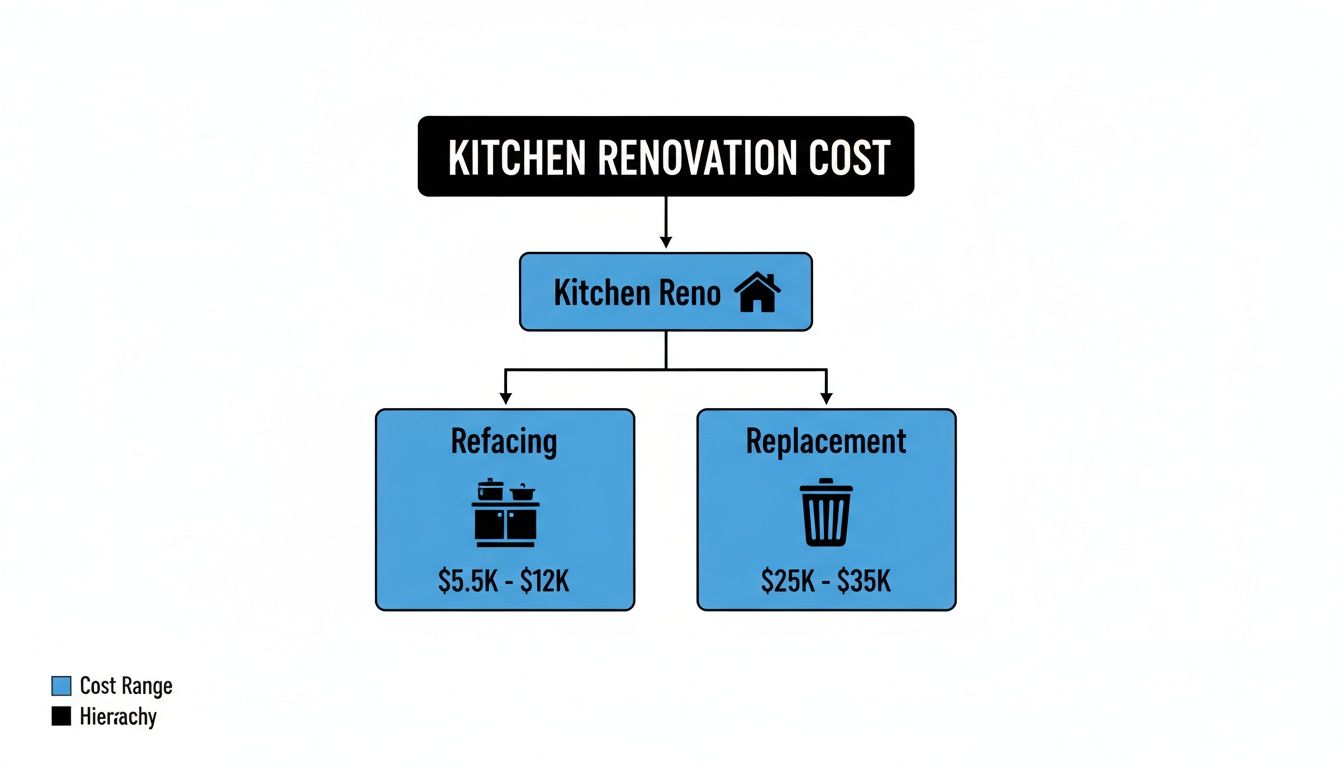
As you can see, choosing to reface your cabinets can literally save you more than half the cost of a full tear-out. That makes it a seriously powerful financial choice.
The Big Three: Materials, Labour, and Hardware
When you look at your quote, you’ll notice that the total is mostly driven by three things: the materials for the new doors and veneers, the skilled hands needed to install everything perfectly, and the finishing touches like knobs and pulls.
1. Materials: The Doors, Drawers, and Veneers
This is almost always the biggest chunk of the invoice. It’s the cost of the actual stuff being installed, including:
- New Cabinet Doors and Drawer Fronts: The style you pick, the material (like real wood, HDF, or laminate), and the finish all play a huge role here.
- Veneer or Laminate: This is the "new skin" that gets applied to your existing cabinet boxes so they're a perfect match for the new doors.
2. Labour: The Cost of a Flawless Finish
This isn't just about screwing on some new doors. Professional installation is a meticulous process that demands precision. This part of the cost covers the installer's time and expertise for every step, from carefully removing the old stuff to making sure every new door hangs perfectly straight. It's a big part of the total, but it's what ensures a durable, beautiful result that DIY projects can rarely replicate.
3. Hardware: The Functional Jewellery
New hinges, handles, and pulls are what pull the whole look together. While they seem like small details, the cost can add up, especially if you go for high-end designer hardware or upgrade to soft-close hinges.
Understanding Different Pricing Models
Contractors usually price jobs in a couple of ways. You might see a price per linear foot or a price based on the number of openings (each door and drawer). Looking at past projects in the Greater Toronto Area, we see that jobs typically break down to about $150-$450 per linear foot.
So, a small kitchen refresh might start in the $1,000-$3,000 range, while most standard projects land somewhere between $4,000-$5,500. If you're looking at premium materials like real wood veneers, that price can climb to $200-$500 per foot.
Key Takeaway: Don't be surprised to see that labour makes up about 50% of the total project cost. This investment pays for the painstaking prep work, precise veneer application, and perfect door installation—the very skills that prevent the peeling, bubbling, and crooked doors that can plague a poorly done job.
Potential Extras and Add-Ons
Beyond the core costs, a few other things might pop up on your quote. It's good to know what these are ahead of time.
- Cabinet Box Repairs: If any of your existing cabinet frames are warped or damaged, they'll need to be fixed before they can be refaced.
- Modifications: Want to add a pantry cabinet, a wine rack, or convert a cabinet into a set of drawers? These modifications will add to the material and labour costs.
- Removal and Disposal: The cost to haul away your old doors and drawer fronts is usually included, but it never hurts to double-check.
- Custom Features: Beautiful extras like glass-front doors, crown moulding, or a light valance to hide under-cabinet lighting will each have their own price tag.
By understanding these moving parts, you can look at any quote with confidence. You'll know the right questions to ask and can make smart decisions about where to spend and where to save. For more insight into how different renovation costs break down, this Hardwood Floor Refinishing Cost Guide offers a great comparison. With this knowledge, you can really grasp the incredible value of transforming your kitchen with refacing.
How Your Choice of Materials Shapes the Final Price
When you're mapping out your cabinet refacing project, the single biggest factor driving the final cost is the material you choose. Think of it as the main event—it sets the tone for everything else. Making the right call is all about finding that sweet spot between the look you want, what your lifestyle demands, and what your budget can handle.
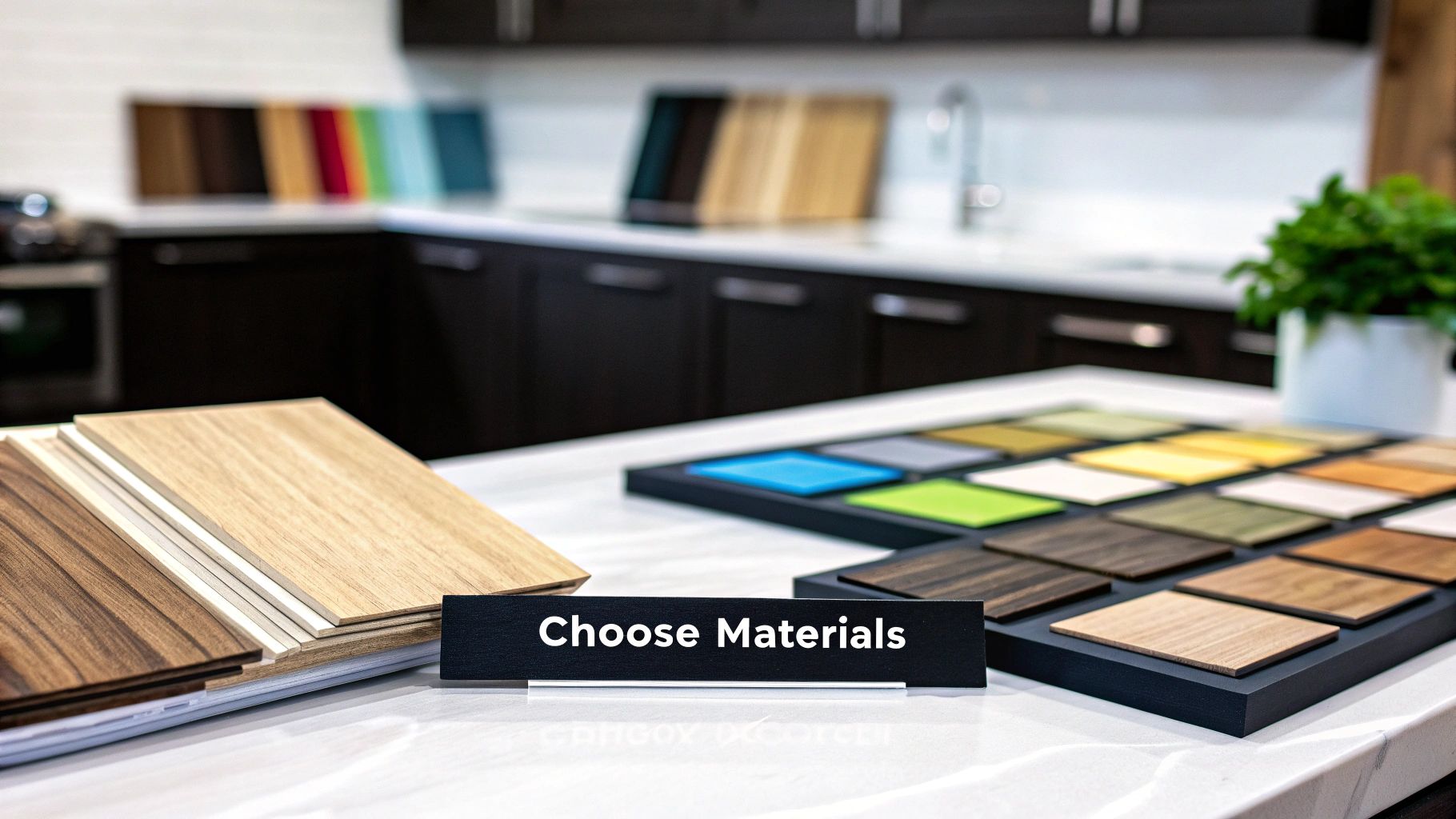
From hard-wearing laminates built to withstand the chaos of a busy family kitchen to the classic, undeniable warmth of real wood, every option has its own price tag and unique set of benefits. Getting to know these differences is the key to making a smart decision you’ll love seeing every day.
Laminate and Thermofoil Options
If you’re looking for a wallet-friendly option that doesn’t compromise on durability, laminate and thermofoil are excellent places to start. These aren't your grandmother's materials; modern versions offer a huge range of colours and surprisingly realistic wood-grain patterns that can easily pass for the real thing.
- Laminate: This stuff is tough. Made from multiple layers fused together, it’s built to resist scratches, stains, and moisture. That makes it a no-brainer for high-traffic kitchens and one of the most cost-effective materials out there.
- Thermofoil (RTF): This involves heat-fusing a vinyl film over an HDF (High-Density Fibreboard) core, which creates a perfectly smooth and seamless finish. It’s a dream to clean, making it a go-to for sleek, minimalist designs.
These options are especially popular here in the Greater Toronto Area. For homeowners in Toronto and Markham, choosing a durable laminate that can handle daily wear and tear can keep the cost of refacing a smaller kitchen in the $1,000 to $3,000 range. In fact, a recent regional analysis found that 65% of GTA refacing projects use thermofoil for its easy-to-clean surface—a clear favourite for busy condo owners.
Painted HDF Finishes
Dreaming of that classic, sophisticated painted cabinet look? HDF is, hands down, the best material for the job. Solid wood has a tendency to expand and contract with changes in humidity, which can lead to ugly cracks in the paint at the joints. HDF, on the other hand, is completely stable.
That stability means your painted finish will stay smooth and flawless for years. HDF doors can be shaped into all sorts of styles, from the ever-popular Shaker to more detailed raised panels, and can be finished in literally any colour you can imagine.
Why HDF is the Perfect Canvas for Paint: HDF is smooth, dense, and won't warp or shift. This allows the paint to go on evenly and create a durable, beautiful finish that looks high-end and is truly built to last. It’s the ideal mid-range material for achieving a premium aesthetic.
The Premium Choice: Real Wood
For anyone who truly appreciates the natural warmth and character of organic materials, nothing quite beats real wood. Every species, whether it's maple, oak, or cherry, has a unique grain, texture, and personality. You can stain wood doors to let that natural beauty shine through or paint them for a timeless, classic feel.
While real wood is definitely at the higher end of the cost spectrum, it's an investment that adds serious value and a touch of luxury to your kitchen. It does require a little more TLC, as it can react to humidity. Opting for real wood veneers on your cabinet boxes can push project costs over $6,000, but the authentic, high-end result is simply unmatched. To dive deeper into the pros and cons, check out our guide on the best materials for your kitchen cabinets.
To help you visualize the trade-offs, here’s a quick comparison of the most popular material choices.
Cost and Feature Comparison of Cabinet Materials
| Material Type | Typical Cost Range (Per Project) | Key Benefits | Best For |
|---|---|---|---|
| Laminate | $1,500 – $4,500 | Extremely durable, scratch/stain resistant, huge variety of colours and patterns | Busy families, rental properties, and budget-conscious modern makeovers. |
| Thermofoil (RTF) | $2,000 – $5,000 | Seamless, easy-to-clean surface, moisture resistant, crisp and uniform look. | Modern and minimalist kitchens, bathrooms, and anyone prioritizing easy maintenance. |
| Painted HDF | $3,500 – $7,000 | Flawless, stable surface for paint, won't crack, endless colour options. | Achieving a high-end painted look (like classic Shaker) without wood's instability. |
| Real Wood | $6,000 – $12,000+ | Natural beauty, timeless appeal, adds significant home value, can be restained. | Homeowners seeking authentic character, warmth, and a long-term investment. |
Ultimately, selecting the right material is a personal decision. By understanding what each option brings to the table in terms of look, performance, and price, you can confidently choose the perfect foundation for your kitchen renovation.
Uncovering the Hidden Factors That Drive Up Your Budget
When you get a quote for cabinet refacing, it’s easy to focus on the big-ticket items like materials and labour. But just like any home renovation, there are a handful of less obvious details that can quietly inflate your final bill if you aren't paying attention. Getting a handle on these variables is the key to setting a realistic budget and avoiding any last-minute surprises.
Think of it this way: you're planning a road trip. You've budgeted for gas and hotels, but what about the unexpected tolls, the scenic detour that adds an hour to your drive, or that amazing roadside diner you just have to stop at? These things add up. In the same way, the unique condition and layout of your kitchen can introduce complexities that tack on extra costs.
By knowing what to look for before the first contractor even steps through your door, you can anticipate these costs and walk into the process with a much clearer picture of your total investment.
The Health of Your Existing Cabinet Boxes
The entire refacing project hinges on one thing: the structural integrity of your existing cabinet boxes. If they're solid and sturdy, the job is pretty straightforward. But if there are underlying problems, they absolutely have to be fixed before any new doors or veneers go on, and that will impact your cabinet refacing costs.
Here are some of the most common culprits we see:
- Water Damage: This is a big one. Any swollen, warped, or peeling particleboard from a previous leak is a major red flag. Those sections often need to be cut out, repaired, or reinforced, which adds both labour and material costs to the job.
- Structural Sagging: If your shelves are bowing or you can see cabinets pulling away from the wall, it's a sign of structural weakness. This has to be corrected to ensure your new doors will hang straight and true for years to come.
- Interior Wear and Tear: While the outside is getting a major facelift, what about the inside? If the interiors are badly stained or damaged, you might want to add on services like interior painting or new liners, which aren't typically part of a standard refacing package.
A reputable installer will always start with a thorough inspection. Their job is to make sure the "bones" of your kitchen are strong enough to support a beautiful new finish that's built to last.
Your Kitchen's Unique Layout and Complexity
Let's be honest, not all kitchens are created equal. A simple, straight galley kitchen is far easier and faster to reface than a U-shaped layout packed with tricky corners and custom nooks. The more intricate your kitchen's design, the more time, skill, and precision it demands from the installation team.
Keep an eye out for these layout-specific factors:
- Corner Cabinets: Those awkward corners, especially lazy Susans or blind corner cabinets, are notoriously tricky. They require much more detailed veneer work and specialized hardware to get right.
- Kitchen Islands and Peninsulas: These are fantastic features, but they also add a ton of surface area. Veneering has to be applied to multiple exposed sides, which means more materials and a significant increase in labour time.
- Appliance Garages and Special Features: Custom-built features like appliance garages, wine racks, or open shelving require meticulous, time-consuming work to ensure the finish is absolutely seamless.
Upgrades and Customizations
Finally, it’s the finishing touches and optional upgrades that can really shift the final price tag. Your base quote will almost always include standard hardware, but if you start opting for premium or specialized items, the costs will climb.
Be mindful of these popular add-ons:
- Intricate Door Styles: There's a big difference in manufacturing complexity between a simple, flat-panel Shaker door and a door with detailed moulding, raised panels, or an inset design. The simpler the door, the more budget-friendly it is.
- Soft-Close Hardware: This is probably the most popular upgrade we see. Swapping out standard hinges and drawer slides for soft-close mechanisms adds a touch of modern luxury, but it does come at a premium.
- Glass Inserts and Moulding: Adding decorative elements is a great way to personalize your kitchen. Things like glass-front doors, under-cabinet light valances, or crown moulding create a high-end, custom look, but they will be itemized as additional costs on your quote.
Taking a few minutes to evaluate these factors in your own kitchen will put you in a much better position. You’ll be able to have a more informed conversation with contractors and, ultimately, get a far more comprehensive and accurate quote.
Professional Installation vs. DIY: A Realistic Cost Breakdown
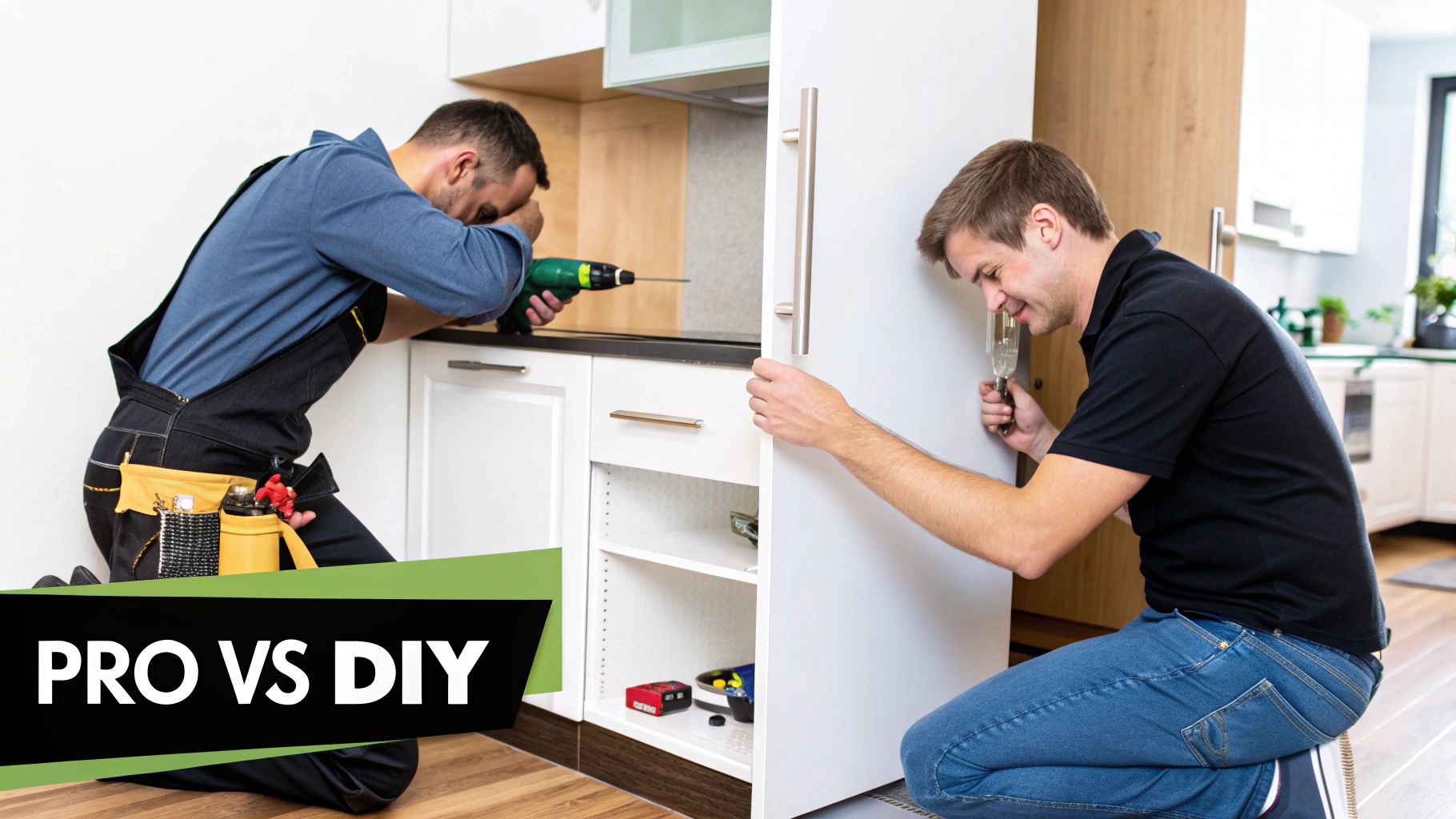
It’s always tempting to roll up your sleeves and tackle a home project yourself. You see the tutorials, you picture the savings, and you think, "How hard can it be?" When it comes to cabinet refacing, the lure of saving on labour costs is strong, but it's crucial to look at the whole picture before deciding.
Let's use an analogy. It’s like getting your car professionally detailed versus just running it through a car wash. Both clean the car, but the professional detailer gets into every nook and cranny, restores the finish, and leaves it looking brand new. A DIY job might look fine from ten feet away, but up close, you start to see the missed spots, the crooked lines, and the less-than-perfect finish. Cabinet refacing is a craft where that level of precision really matters.
The Hidden Costs of a DIY Project
Going the DIY route means you won't have a line item for professional labour, but that doesn't mean it's free. A whole new set of costs—both in money and time—pops up, and they're the kind of details tutorials often skim over.
First off, you need the right tools. We're not talking about a basic screwdriver and a hammer. For a quality job, you'll need specialized equipment like a veneer trimmer for clean edges, a J-roller to ensure the veneer adheres perfectly without bubbles, and a precision saw for accurate cuts. Renting or buying these tools can easily add up to several hundred dollars right out of the gate.
Then there’s the very real risk of making mistakes. One mis-measured cut on a new cabinet door or a botched veneer application can’t just be patched up. You’ll have to buy brand new materials, and a single costly error could completely wipe out the savings you were hoping for. There's a world of difference between slapping on a coat of paint and doing a full refacing. To get a sense of the detail involved, homeowners curious about what a flawless finish requires should check out guides on how to paint kitchen cabinets for a flawless DIY finish; it’s a real eye-opener.
The Value of Professional Installation
Hiring a professional is about more than just paying someone to do the work; it’s an investment in getting the job done right. You’re paying for years of experience, for someone who knows how to handle every quirk and unexpected issue that comes up.
The real value of professional installation isn’t just the perfect finish—it’s the warranty and peace of mind that come with it. That guarantee protects you from common DIY nightmares like peeling veneers, bubbling laminate, or misaligned doors.
A pro team also works efficiently. They can transform your kitchen in just 3 to 5 days, minimizing the disruption to your daily life. A DIY project, on the other hand, can easily drag on for weeks or even months, with your kitchen looking like a construction zone the entire time. That extended chaos is a hidden cost that definitely impacts your quality of life. Achieving that smooth, durable, factory-like coating is a skill in itself, which our guide on spray painting cabinets explores in greater detail.
In the end, while the upfront number for professional installation is higher, it often provides a better return. It eliminates the risk of expensive mistakes, saves you a ton of stress and time, and delivers a beautiful, durable result that genuinely adds value to your home. For most people, that guaranteed quality makes hiring a pro the smarter long-term decision.
Your Top Questions About Cabinet Refacing Answered
When you're getting close to a decision, the practical questions start to surface. We get it. Homeowners across Toronto and Markham often ask the same things, so we've put together some straight answers to help you feel confident about your next steps.
How Long Does Refacing Take?
One of the best things about refacing is how fast it is. A full-gut kitchen renovation can turn your life upside down for weeks, but a professional refacing job is usually wrapped up in just 3 to 5 days. That's it. You get a stunning new kitchen with minimal disruption, which is a massive win for any busy family.
Can I Change My Kitchen’s Layout?
For the most part, refacing works with your existing cabinet boxes. But that doesn't mean you can't make improvements! This is the perfect time to add a matching pantry, install a new kitchen island, or swap out a clunky cabinet for a set of modern drawers.
These kinds of additions will adjust the final cost, of course. But integrating them into a refacing project is a much smarter and more affordable way to get the layout you want compared to starting a full remodel from scratch.
Will Refacing Actually Increase My Home’s Value?
It absolutely will. Especially in a hot real estate market like Toronto's, a clean, modern kitchen can make or break a sale. Refacing gives you that "brand-new kitchen" look for a much lower investment, which translates to a fantastic return. A fresh, appealing kitchen not only helps your home sell quicker but can seriously bump up its final selling price.
How Does Factory-Direct Pricing Actually Save Me Money?
Think of it this way: factory-direct pricing cuts out the middlemen. When you buy from a typical retailer, the price you pay includes markups from the distributor and the showroom. Each one adds their own percentage along the way.
By buying straight from the source, you skip all those extra costs. This means a factory-direct supplier can offer you high-end materials—we're talking solid wood doors or sleek high-gloss finishes—for a price that traditional retailers just can't match. You either pocket the savings or get to upgrade to a better-quality finish you thought was out of your budget.
Ready to see how much you could save on a stunning kitchen transformation? The team at MapleKing Kitchen Cabinets provides premium, factory-direct materials for a high-end look without the painful price tag. Get your free, no-obligation quote today!



