
When you look at a set of kitchen cabinets, you're looking at more than just boxes with doors. The very first thing that defines their style and structure is the cabinet face frame. This is the solid wood frame fixed to the front of the cabinet box, and it's the bedrock of traditional North American cabinet design.
Think of it as the skeleton. It gives the cabinet its strength, its shape, and a solid foundation for mounting the doors and hardware. It's a classic approach you'll see in countless homes, and for very good reason.
What a Cabinet Face Frame Actually Does
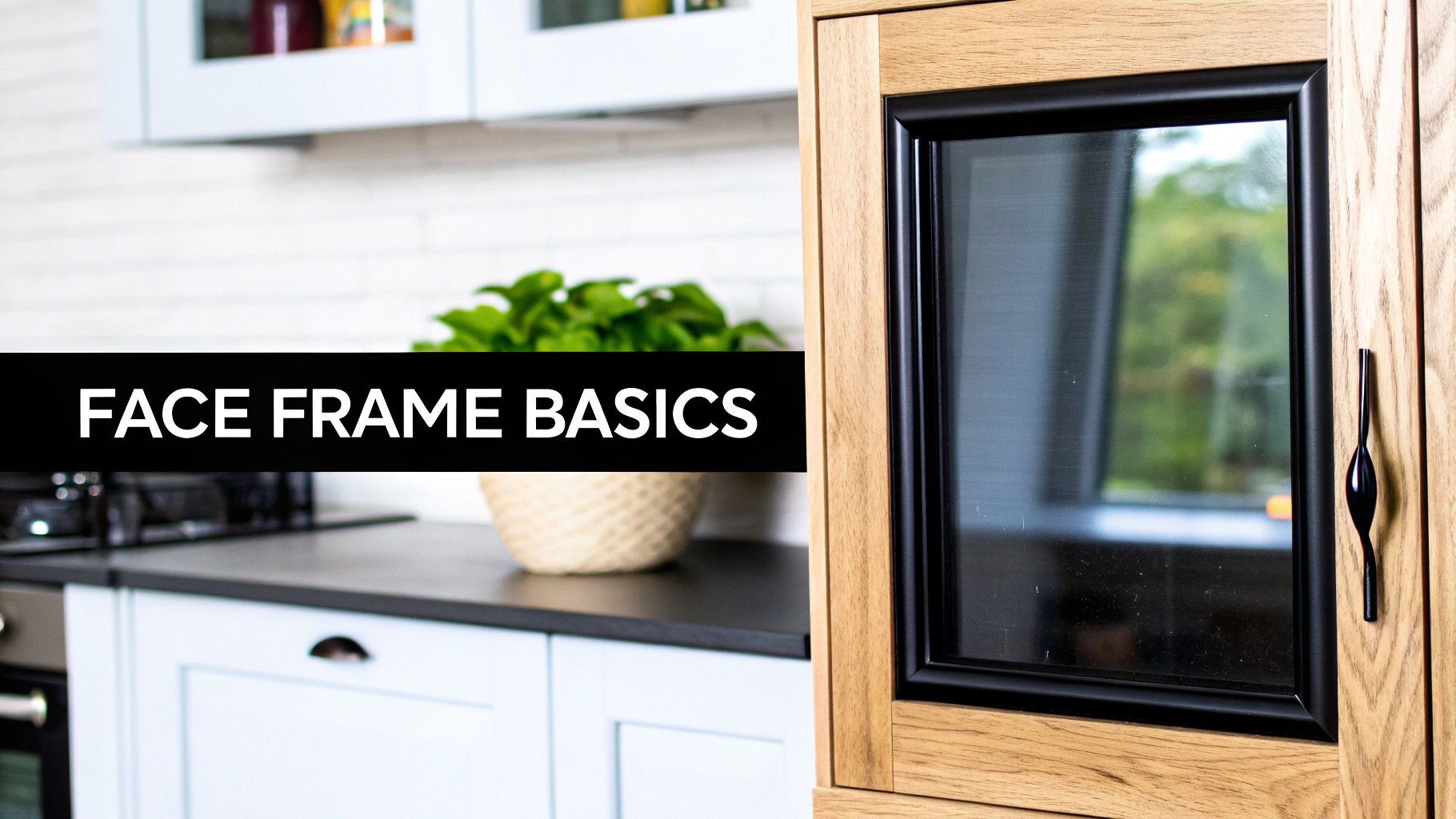
It's easy to dismiss the face frame as just a decorative border, but it's a real workhorse. Imagine a picture frame—it does more than just look nice. It holds the glass and artwork together, giving the entire piece rigidity. A cabinet face frame works in much the same way for your cabinetry.
Built from solid wood components, this framework is attached directly to the front edges of the cabinet carcass. Its job is both aesthetic and structural, and it’s crucial to the cabinet's long-term performance.
Core Functions and Benefits
So, what makes this frame so important? It's more than trim; it serves a few fundamental purposes that directly impact how your cabinets look and how well they hold up over the years. For anyone in Toronto planning a renovation, understanding this is key to choosing the right style.
The face frame is responsible for:
- Structural Reinforcement: The solid wood frame adds a huge amount of strength to the cabinet box. This helps it resist warping and twisting (known as "racking") over time, keeping everything square and solid.
- A Solid Foundation for Hardware: It creates the perfect mounting surface for door hinges. Screws get a much better grip in solid wood than in the thinner cabinet box material, which means your doors are less likely to sag or go out of alignment.
- Defining the Look: The face frame is the defining feature of the traditional North American cabinet style. Its presence allows for different door styles, like a classic overlay where you see part of the frame, or a high-end inset door that sits perfectly flush.
Essentially, the face frame is the backbone of the cabinet front. It's what ensures your doors hang straight and your cabinets withstand the daily grind, looking great for years to come.
This classic construction is the main point of difference from the other major style you'll see: frameless cabinets. Often called "European-style," frameless cabinets do away with the face frame entirely, and the doors mount directly onto the cabinet box itself for a clean, modern look.
Framed vs. Frameless Cabinets at a Glance
Choosing between framed and frameless construction is one of the first major decisions you'll make. Each has a distinct look and functional differences that suit different design goals and practical needs.
This table breaks down the core distinctions to help you see the differences clearly.
| Feature | Framed Cabinets (Traditional Style) | Frameless Cabinets (European Style) |
|---|---|---|
| Construction | A solid wood frame is attached to the front of the cabinet box. | No face frame; the cabinet is a simple box with finished edges. |
| Appearance | Classic, traditional look. Reveals of the frame are visible between doors. | Sleek, modern, and seamless. Doors and drawers fit flush with minimal gaps. |
| Door Mounting & Options | Doors mount to the face frame. Allows for inset, partial, and full overlay. | Doors mount directly to the cabinet box sides. Only full overlay is possible. |
| Strength & Rigidity | Very strong and rigid due to the solid wood frame reinforcement. | Strong, but relies on thicker box material for stability. |
| Accessibility & Storage | Frame slightly reduces the opening size and interior access. | Full, unobstructed access to the interior. Slightly more storage space. |
| Installation | More forgiving to install, as the frame can hide minor wall imperfections. | Requires precise, level installation for a clean, aligned look. |
In short, if you're after a timeless, sturdy design with more stylistic flexibility for your doors, framed cabinets are a fantastic choice. If your taste leans modern and you want to maximize every centimetre of storage space, frameless might be the way to go.
The Anatomy of a Well-Built Cabinet Face Frame
When you look at a beautifully made cabinet, you’re seeing more than just a box with a door. To really get what makes a cabinet last, you have to look at its bones—specifically, the cabinet face frame. Think of it as the skeleton on the front of the cabinet. It’s not just for looks; it provides the core strength that everything else relies on.
The face frame is a simple-sounding assembly, but the details matter. It's built from two key parts:
- Stiles: These are the vertical members of the frame. They’re the two long pieces that run up and down on either side of a cabinet opening.
- Rails: These are the horizontal pieces. You'll always find them at the top and bottom of the frame, and often in between drawers, connecting the stiles.
These stiles and rails join together to create a rigid "picture frame" that gets attached to the front of the cabinet box. The precision of those joints is one of the first things a pro looks for to gauge the quality of the craftsmanship.
The Importance of Strong Joinery
How those stiles and rails are actually connected is what separates a cabinet that lasts a decade from one that starts to sag and wobble after just a few years. Just slapping them together with a bit of glue and a few nails isn't going to cut it against the daily grind of opening and closing doors.
A truly well-built cabinet relies on much stronger joinery. One of the best and most common methods you'll see is the pocket-hole joint. This technique involves drilling a precise, angled hole in one piece and then driving a screw through it into the other. It creates a powerful mechanical lock that pulls the two pieces of wood together, forming an incredibly strong and stable joint that resists twisting. When you're shopping around, it’s a great question to ask. A quality provider, like a dedicated kitchen cabinet factory in the GTA, will be proud to show you how they build their frames for maximum durability.
How Frame Width Shapes Your Kitchen Style
Beyond the structural integrity, the actual dimensions of the stiles and rails play a huge role in the final look and feel of your kitchen. It might seem like a minor detail, but the width of that frame can completely change the character of your space.
A wider face frame, usually around 1.75 to 2 inches, gives cabinets a heavy, substantial presence. This is the classic look you see in traditional, farmhouse, or rustic kitchens—it feels solid, grounded, and almost like custom furniture.
On the other hand, if you’re aiming for something a bit more modern, a slimmer frame is the way to go.
Slimmer Frames for a Transitional Look
By narrowing the stiles and rails to around 1.5 inches, you get a much cleaner, more refined look. This style, often called "slim shaker," exposes more of the cabinet door and creates less visual bulk. It’s the perfect middle ground between traditional warmth and modern minimalism, which is why it’s so popular in transitional designs. Knowing the difference between a standard and a slim frame helps you have a much more productive conversation with your designer, ensuring you get the exact style you’ve been picturing.
Framed vs. Frameless Cabinets: A Practical Comparison
When you're planning a kitchen renovation, one of the biggest forks in the road is the choice between framed and frameless cabinets. This decision goes way beyond looks; it fundamentally changes your kitchen's everyday usability, how much you can store, and the overall vibe of the space.
Let's get straight to the practical differences and figure out which style is the right call for your home.
The Case for Classic Framed Cabinets
Framed cabinets are what most of us in North America picture when we think of kitchen cabinetry. They’re built with a solid wood frame—the cabinet face frame—attached to the front of the cabinet box. Think of it as a sturdy picture frame for each cabinet.
This design has been the gold standard for generations for a good reason: strength. The face frame adds incredible rigidity, making the whole cabinet more resistant to twisting or going out of square over the years. It’s built like a tank.
This extra strength also makes installation a bit more forgiving. If your walls aren't perfectly straight—a common surprise in older Toronto and Markham homes—the frame can help hide those minor imperfections. For installers, this often means a smoother, faster job.
Beyond its brawn, the frame offers a ton of stylistic flexibility, especially in how the doors are mounted.
- Full Overlay: Here, the doors cover almost the entire face frame. You get a clean, modern look with just a sliver of frame showing between each door.
- Partial Overlay: This is a more traditional look where the door only covers part of the frame, leaving noticeable gaps that create a classic, detailed appearance.
- Inset Doors: For a high-end, custom-furniture feel, inset doors sit perfectly flush inside the frame's opening, showing off impeccable craftsmanship.
The main drawback? That sturdy frame creates a small lip around the cabinet opening, slightly reducing accessibility. You lose a bit of clear opening space, which can mean tilting a large serving platter to get it in or out.
The Modern Appeal of Frameless Cabinets
Frameless, or "European-style," cabinets do away with the face frame entirely. The doors and drawers mount directly onto the sides of the cabinet box, resulting in a sleek, minimalist look. With only a tiny, consistent gap between each door, you get a seamless wall of cabinetry that’s perfect for modern and contemporary designs.
The number one advantage here is maximum storage and accessibility. Without a frame in the way, you get wide-open access to every square inch of the interior. Pulling out bulky pots, pans, or your stand mixer is a breeze. In a smaller kitchen where every centimetre counts, this can be a game-changer.
There's a catch, though. The clean, seamless look of frameless cabinets requires absolute precision during installation. The cabinet boxes have to be perfectly level and plumb, because any tiny error will be glaringly obvious in the door alignment. There’s no frame to hide behind.
This decision tree gives you a quick visual on how even the frame's width can steer the design.
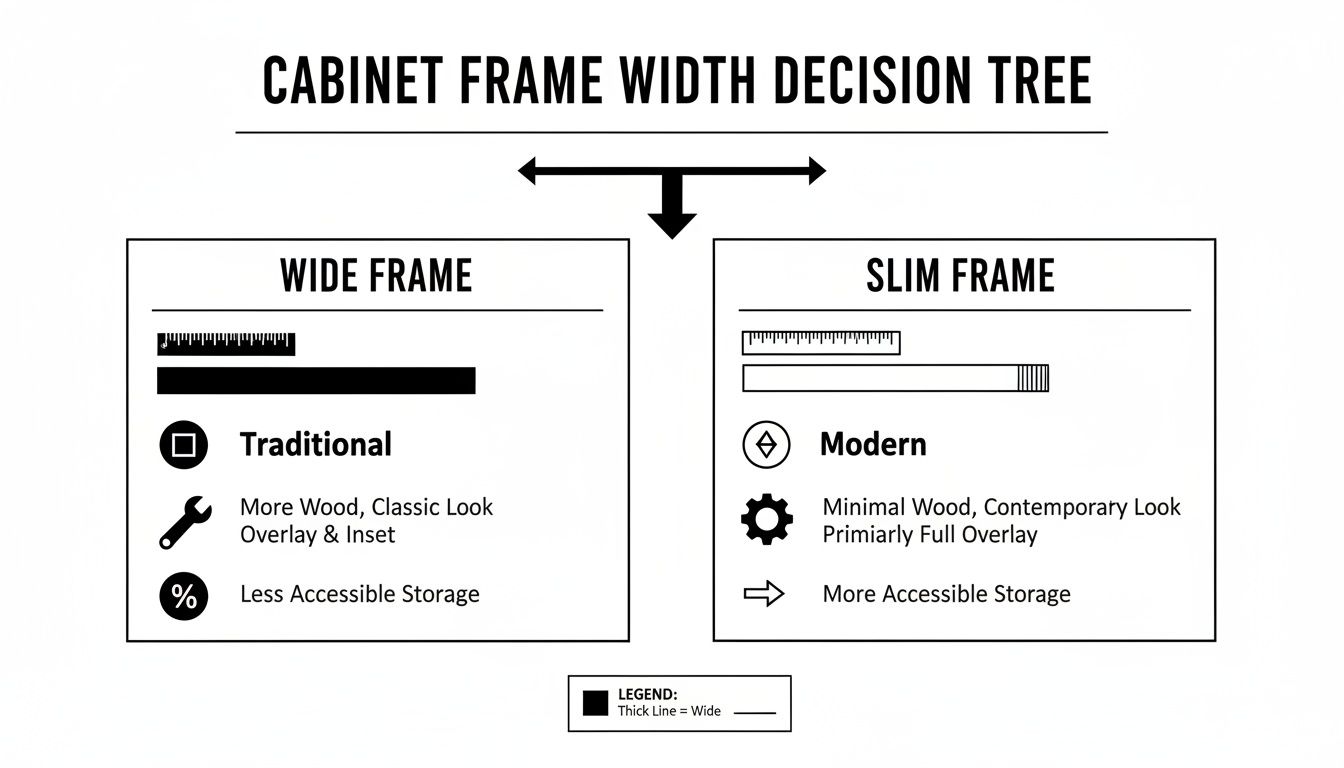
As you can see, a wider, traditional frame creates a very different feel from a slimmer, more transitional one. It’s a small detail with a big impact on the final aesthetic.
So, what's the verdict? It’s not about which style is better, but which one is better for you. If you're renovating a classic brick home in Markham, the timeless, furniture-like quality of framed cabinets might be the perfect fit. But if you’re designing a sleek condo in downtown Toronto, the clean lines and space-saving efficiency of a frameless design probably makes more sense.
It all comes down to your personal style, your storage priorities, and the character of your home.
How Materials and Finishes Define Your Kitchen's Style
Once you’ve locked in the cabinet structure, the real fun begins: choosing the materials and finishes for your cabinet face frame and doors. This is the part where your kitchen's personality truly comes to life, turning a functional space into a statement about your style.
The material you choose is a big deal. It sets the tone for everything, from the overall look and feel to how much upkeep will be needed down the road. If you're weighing your options, getting a handle on how to choose kitchen cabinets is the first step toward a decision you’ll be happy with for years to come.
From the timeless warmth of real wood to the flawless finish of modern engineered materials, each option brings its own unique character to the table. Let’s break them down.
The Timeless Appeal of Real Wood
For many homeowners in Toronto, nothing beats the authentic charm and warmth of real wood. A solid wood face frame introduces a natural texture and depth that’s impossible to fake. Classic choices like maple and oak are perennial favourites, celebrated for their strength and beautiful, distinctive grain patterns.
Wood is also a chameleon when it comes to style. You can stain it to let that gorgeous natural grain shine through or paint it for a clean, classic look. This versatility makes it a perfect match for anything from a rustic farmhouse kitchen to a more traditional or transitional space.
The Rise of High-Density Fibreboard (HDF)
While real wood has its undeniable charm, High-Density Fibreboard (HDF) has quickly become the go-to material for modern cabinetry, especially for painted finishes. HDF is an engineered product, created by compressing wood fibres and resin under intense pressure. The result is an incredibly dense, stable, and smooth panel.
HDF's biggest superpower is its stability. It doesn't expand and contract with humidity changes like solid wood does, which makes it the ideal canvas for paint. That means no more worrying about hairline cracks at the joints—just a flawless, durable finish that stays looking perfect.
Because HDF is so stable, it opens up a world of pristine finishes that are as practical as they are stylish.
- Painted HDF: This gives you a perfectly smooth, uniform colour that's tough and easy to clean. It’s your best bet for achieving that crisp, modern look, whether in a classic white or a bold custom shade.
- High-Gloss HDF: Looking for drama? A high-gloss finish creates a sleek, mirror-like surface that bounces light around the room, making your kitchen feel bigger and brighter. It's a staple in ultra-modern designs.
- Matte HDF: For a more understated and sophisticated vibe, a matte finish delivers a soft, velvety look that absorbs light. The best part? It’s incredibly resistant to fingerprints and smudges, a true lifesaver in a busy family kitchen.
If you’re trying to decide between these, our detailed guide on the best materials for kitchen cabinets offers a deeper dive to help you make the right call.
Durable and Modern Alternatives: Laminate and Thermofoil
Beyond wood and HDF, other engineered materials offer fantastic performance and distinct aesthetic appeal, often at a great value. Laminate and thermofoil are true workhorses in the kitchen cabinet world.
The popularity of these materials is no surprise. The North American kitchen cabinet industry was valued at $18.1 billion in 2023, and this growth is fueled by innovations in durable and stylish materials.
These options are built for the reality of daily life.
Laminates are famous for their exceptional resistance to scratches, stains, and heat. This makes them a smart, practical choice for high-traffic kitchens. They come in a massive range of colours and patterns, including some surprisingly realistic wood-grain textures.
Thermofoil, on the other hand, is a vinyl film that’s heat-fused to an HDF core. This process creates a seamless, non-porous surface that is incredibly easy to wipe down, making it one of the most hygienic and low-maintenance options you can find.
Bringing Your Vision to Life with Door Overlays and Hardware
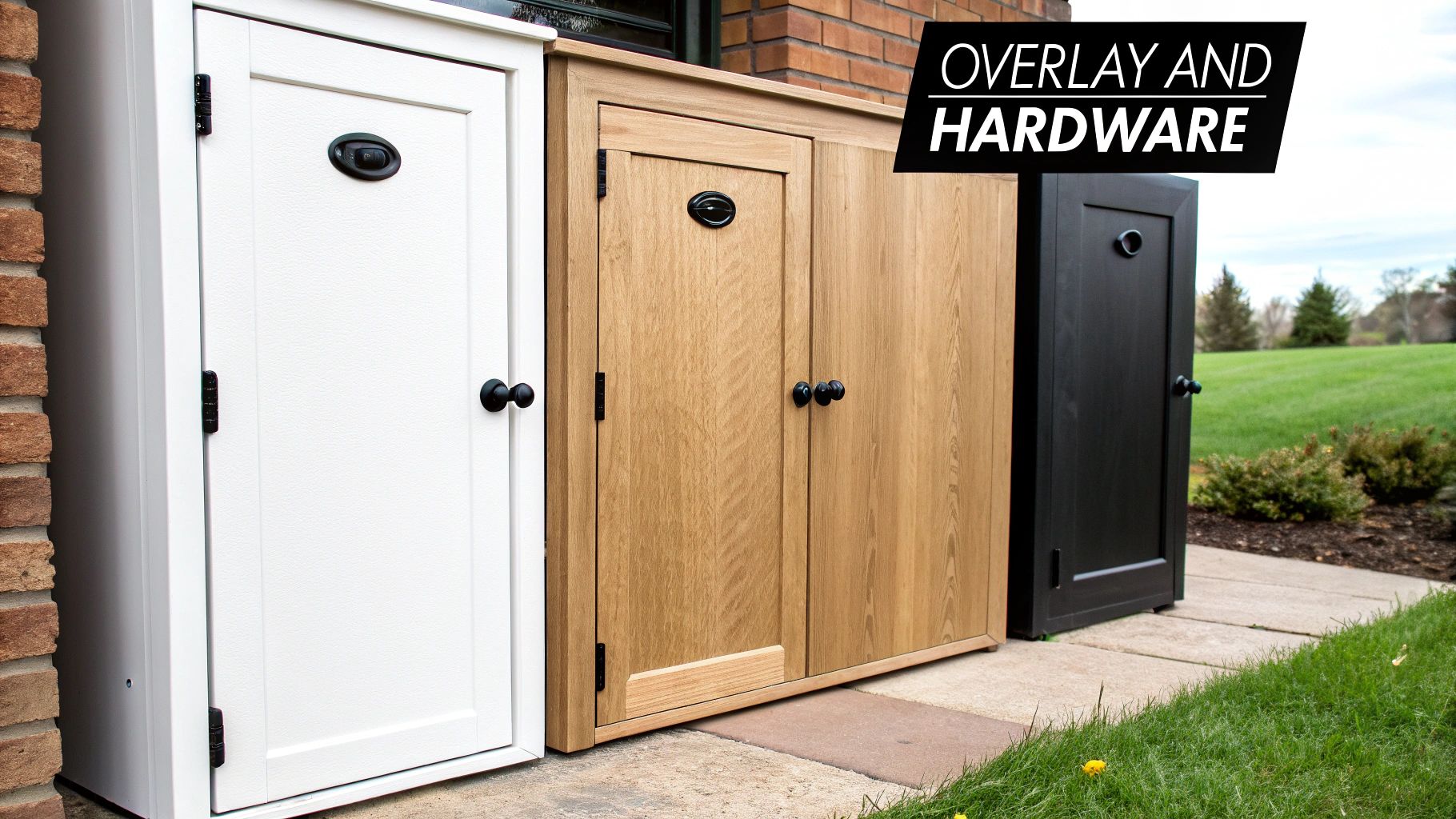
Once you've sorted out the basic cabinet structure and materials, it's time for the fun part: adding character. This is where the details really shine, specifically how your cabinet doors sit on the cabinet face frame (the "overlay") and the hardware you choose.
These are the finishing touches that truly define your kitchen's personality. Whether you're chasing a sleek, modern vibe or a cozy, traditional feel, getting these elements right is what pulls the entire design together.
Finding the Perfect Door Overlay
Simply put, the door overlay describes how much of the face frame the cabinet door covers. It's a seemingly small detail with a massive impact on the overall look. There are three main approaches, and each one creates a distinctly different feel.
Full Overlay: This is the go-to for a clean, contemporary look. Full overlay doors cover almost the entire face frame, leaving just a sliver of space between each door and drawer. The result is a smooth, continuous surface that feels modern and minimalist.
Partial Overlay: Think of this as the classic, traditional choice. The doors are smaller, leaving a good portion of the face frame exposed around the edges. This creates a more detailed, layered appearance that feels right at home in farmhouse or country-style kitchens.
Inset Doors: Inset doors are a true sign of custom craftsmanship. Instead of sitting on top of the frame, they sit perfectly flush inside it. This technique exposes the entire face frame, highlighting the precision of the joinery and giving the cabinets a beautiful, high-end, furniture-like quality.
Picking the right overlay is the first step to achieving your design goals. If you're looking for more ideas, browsing through different kitchen cabinet door styles can help you picture how each one works in a real kitchen.
Selecting Hardware: The Jewellery of Your Cabinets
If cabinet doors are the outfit, then hardware—knobs, pulls, and hinges—is the jewellery. These small functional pieces are surprisingly powerful. They can subtly complement your design or completely change its direction, acting as the final punctuation mark on your kitchen's style statement.
When you're choosing hardware, think about both its look and its feel. How does a pull feel in your hand compared to a knob? You'll be using them every single day. Most importantly, make sure the hardware's style works with your door overlay and the overall aesthetic you're building.
Think of hardware as a reflection of your kitchen's personality. Sleek, minimalist bar pulls in a matte black finish will perfectly complement modern full overlay doors, while ornate brass knobs might be the ideal choice for classic inset cabinets.
Tying It All Together
The ultimate goal is harmony. You want every element to feel like it belongs. A common pitfall is falling in love with a piece of hardware without thinking about the cabinets it's going on. For example, a heavy, rustic iron handle will likely look out of place on a sleek, high-gloss cabinet.
Here’s a quick guide to help you pair styles effectively:
- For a Modern Look: Stick with full overlay doors and pair them with simple, clean hardware. Think long bar pulls, discreet tab pulls, or geometric knobs in finishes like chrome, nickel, or matte black.
- For a Traditional Look: Partial overlay or inset doors are your foundation. Complement them with more detailed hardware like classic round knobs, cup pulls, or elegant handles in warm finishes like brass, bronze, or polished nickel.
- For a Transitional Look: This is where you get to play. This flexible style lets you mix elements. You could pair a simple shaker door with modern pulls for a clean, updated look or use classic knobs to make it feel a bit warmer and cozier.
Common Questions About Cabinet Face Frames
As you get closer to finalizing your kitchen plans, it's natural for a few last-minute questions about cabinet face frames to pop up. Getting straight answers helps you move forward with confidence, making sure the cabinets you choose are a perfect match for your style, your home, and how you live. Here are some of the most common queries we hear from homeowners and contractors around Toronto and Markham.
Are Framed Cabinets Better Than Frameless?
This is probably the most frequent question we get, and the honest answer is that one isn't inherently "better" than the other. The real measure of quality comes down to the materials used and the skill of the builder, not the style itself.
A well-built framed cabinet is a true workhorse. That solid wood face frame gives it incredible structural strength, helping the box stay square and keeping doors perfectly aligned for years on end. It’s a classic, time-tested construction method known for its rugged durability.
On the other hand, a high-quality frameless cabinet built with premium-grade HDF and precision joinery can be just as sturdy. The choice really boils down to what you value most. Framed cabinets are champs for traditional looks and sheer toughness, while frameless cabinets deliver a clean, modern aesthetic with slightly more storage space.
Can I Put Frameless Doors on Framed Cabinets?
It might seem like an easy way to get a new look, but putting frameless-style doors on existing framed cabinets usually isn't a great idea. The two systems are engineered completely differently. Doors on framed cabinets are mounted onto the face frame itself. Frameless doors, however, are designed to attach to the inside walls of the cabinet box.
Trying to force a mismatch often results in awkward workarounds and just doesn't achieve that clean, seamless look you're after. If you're set on a true frameless aesthetic with those signature tight gaps and sleek lines, replacing the whole cabinet is the most reliable path to getting it right.
What Is the Most Durable Face Frame Material?
When it comes to pure, brute strength and the ability to hold screws securely for a lifetime, you can't go wrong with solid hardwood. A material like maple provides a dense, tough foundation that handles the bumps and knocks of daily life beautifully.
That said, high-density fibreboard (HDF) has become an exceptionally popular and durable alternative, especially for any cabinet that will be painted. Its biggest advantage is stability. HDF is far less likely to expand and contract with the humidity swings we see in Ontario, which means a painted finish is much less prone to developing hairline cracks at the joints.
This stability is key to keeping your painted cabinets looking smooth and flawless. It also holds up well against dings and dents, making HDF a top-tier choice for a busy kitchen that needs to be both beautiful and tough.
How Does a Face Frame Affect Farmhouse Sink Installation?
The face frame is a make-or-break element when installing a farmhouse or apron-front sink. These sinks have that iconic deep front panel that requires a custom-modified cabinet base to fit properly.
Typically, a cabinet maker will shorten or completely remove the top horizontal rail of the face frame to create the perfect opening for the sink to slide into. While this is standard practice for experienced pros, it absolutely has to be planned from the get-go. Be sure to tell your cabinet supplier about your farmhouse sink during the design stage so they can build the base with the precise modifications needed for a seamless, integrated fit.
Ready to explore the perfect cabinet face frame options for your home? The experts at MapleKing Kitchen Cabinets are here to help you navigate every choice, from materials to style. Discover factory-direct pricing and custom solutions at our main site.