
Painting your cabinet doors can completely change the look and feel of your kitchen. But getting it right is about more than just picking a colour—it's about understanding the materials, the finishes, and the process to get a result that lasts. A truly professional finish isn't just about a brush and a can of paint; it’s about making smart choices from the start.
Your Blueprint for a Perfect Cabinet Door Makeover
Welcome to your complete guide on cabinet door painting, specifically for homeowners here in the Toronto area. A fresh coat of paint has the power to give your kitchen a radical facelift, but the details are what separate a stunning, long-lasting refresh from a DIY project you'll regret in a year.
Think of this guide as your roadmap. We'll walk you through everything you need to know, from the ground-level basics of different materials to the final design choices that pull it all together. It’s your personal consultation, giving you the expert knowledge to make decisions you’ll be happy with for years.
What You Will Learn
We’re going to cut through the jargon and focus on what really matters for a beautiful, durable finish. Here’s a look at what we’ll cover:
- Material and Finish Options: We'll dive into the real-world differences between painting on real wood, High-Density Fiberboard (HDF), and tackling tricky surfaces like laminate and thermofoil. We’ll also compare popular finishes like high-gloss and matte.
- Durability and Maintenance: You’ll learn which paint jobs can handle the wear and tear of a busy kitchen and get practical tips on how to keep them looking brand new.
- True Project Costs: We'll give you a realistic breakdown of costs and timelines. You'll see how the disruption of painting at home stacks up against the speed and precision of a professional factory finish.
- DIY vs. Professional: We’ll lay out the critical differences between a weekend paint job and a flawless, factory-applied coating so you can decide which route is right for you.
And as you map out your cabinet makeover, don't forget how much good lighting can elevate the final result. Exploring modern under cabinet lighting options can make your freshly painted kitchen not just more beautiful, but more functional too.
At MapleKing, we believe every homeowner deserves a high-end, durable kitchen renovation without the hefty price tag. Our factory-direct model for homeowners in Toronto and Markham cuts out the middleman, delivering superior quality for less. Let’s get started on your journey to a kitchen you love.
Exploring the Spectrum of Cabinet Paint Finishes
Choosing the right finish goes far beyond colour. It shapes your kitchen’s character, affects everyday upkeep, and determines how well your cabinets age. In other words, it’s where your design vision turns into a lived reality.
Think of your cabinet doors as an artist’s canvas. The material sets the stage, and the finish is your brushstroke. Together, they create a look that’s uniquely yours.
The Foundation Materials For Painting
Every great finish starts with a solid base. In the world of painted cabinets, two materials stand out: real wood and High-Density Fiberboard (HDF).
Real Wood Painted Doors
The natural grain peeks through paint, adding depth and warmth. Ideal for farmhouse, transitional, or classic kitchen styles craving organic charm.HDF (High-Density Fiberboard) Painted Doors
Engineered for stability, HDF won’t swell or shrink with humidity. Its silky-smooth surface delivers a flawless finish—perfect for sleek, modern designs.
Professional cabinet makers often choose HDF for painted doors. Its stable core and pristine surface ensure a finish that resists cracking and stays true over time.
The appetite for quality shows in market trends. The wood paints sector is on track to hit USD 10.76 billion by 2025 and soar to USD 16.18 billion by 2032. Homeowners demand durable, eco-friendly solutions—exactly what MapleKing champions. For more on the broader coatings industry, see Paint.org.
The Sheen And Style Spectrum
Once you’ve picked your material, the next move is nail down the sheen. This choice affects light reflection, cleaning routines, and the overall vibe of your kitchen.
High-Gloss Finish
Imagine a mirror-like surface that kicks daylight into every corner. That’s the hallmark of a high-gloss finish, perfect for contemporary spaces craving a polished, vibrant feel.
Pros:
• Amplifies light
• Feels luxuriousCons:
• Shows fingerprints
• Requires frequent wiping
Matte Finish
On the opposite end lies the matte finish, which soaks up light for a soft, velvety look. It hides smudges and imperfections, making it a standout choice for bustling households.
Pros:
• Conceals marks and scratches
• Creates a calm, understated moodCons:
• Slightly harder to clean stains
• Less reflective in dim spaces
Laminate Doors
If durability is your top priority, laminate deserves a close look. Layers of paper and resin fused under heat create an ultra-resilient surface that stands up to spills, stains, and daily bumps.
- Ultra-low maintenance
- Wide selection of colours and patterns
- Consistent, easy-clean finish
Thermofoil Doors
Thermofoil pairs an HDF core with a heat-fused vinyl wrap, producing a seamless, non-porous surface. No seams mean fewer hiding spots for grime—and a simple wipe is all it takes to stay spotless.
- Seamless design
- Budget-friendly
- Quick to clean
For more information on different paint options, you might be interested in our detailed guide on paints for kitchen cabinets.
Comparing Your Cabinet Door Finish Options
Choosing the right finish for your cabinet doors is one of the most critical decisions you'll make for your kitchen's long-term look and feel. It’s not just about colour; it’s about durability, maintenance, and the overall vibe you want to create. Let's walk through the most popular options so you can see how they really stack up against each other.
Think of it like this: we’re putting the timeless character of painted wood in the ring with the flawless surface of HDF. Then, we’ll compare the sleek, light-reflecting power of a high-gloss finish against the understated elegance of matte.
This breakdown will help you see the key differences at a glance, making it easier to match the right material to your kitchen's unique needs.
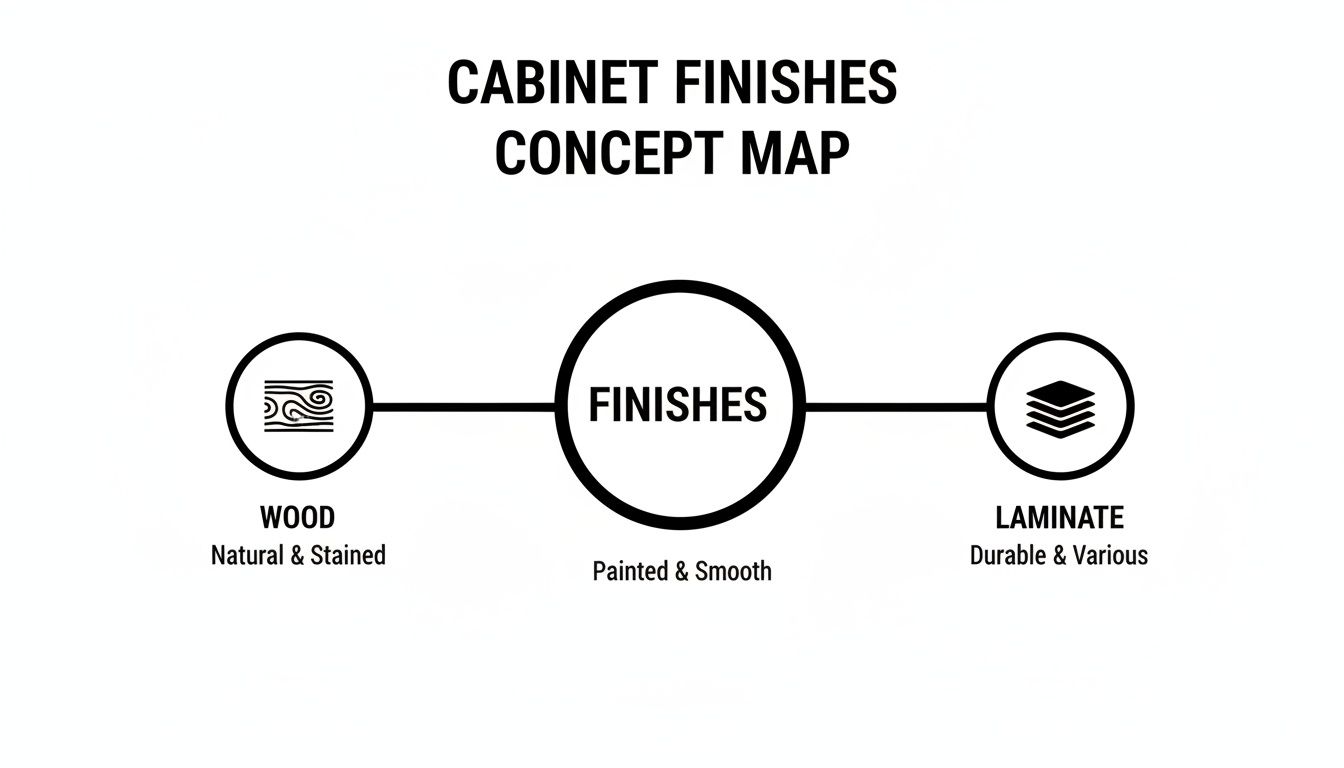
As you can see, your foundational choice—whether it's wood, HDF, or another material—sets the stage for both how your cabinets will look on day one and how they'll perform years down the road.
Painted Wood Versus Painted HDF
This is the classic debate for anyone considering painted cabinets. Painted wood has an undeniable, authentic character. The natural grain of the wood often shows through the paint just enough to add warmth and texture, making it a perfect fit for traditional or farmhouse-style kitchens.
But wood is a natural material, and that means it "breathes"—it expands and contracts with the GTA's changing humidity.
Over time, this movement can cause tiny, hairline cracks in the paint, especially where the door panels meet the frame. This isn't a defect, but a natural characteristic of wood. It's something to keep in mind if you're aiming for a perfectly uniform look.
On the other hand, painted HDF (High-Density Fibreboard) is an engineered product created specifically for stability. It has no grain and doesn’t react to humidity changes, providing a completely smooth, stable canvas for paint. The result is a flawless, almost monolithic finish that’s ideal for modern and contemporary designs. It’s why so many professionals, including us, recommend HDF for painted shaker doors—it keeps those crisp lines looking perfect for years.
High-Gloss Versus Matte Finishes
The sheen you choose dramatically affects both the atmosphere of your kitchen and how much time you'll spend cleaning.
A high-gloss finish is like a mirror for your kitchen. It bounces light all over the place, which can make a smaller or darker space feel significantly brighter and more open. It delivers that sleek, luxurious look you see in high-end European designs. The catch? That stunningly reflective surface highlights every single fingerprint, smudge, and water spot. It demands regular wiping to stay pristine.
A matte finish, in contrast, absorbs light. This creates a soft, velvety appearance that feels both sophisticated and inviting. Because it isn’t reflective, it’s brilliant at hiding minor smudges and fingerprints, making it a wonderfully practical choice for busy families. While it’s forgiving on a daily basis, tougher stains might take a little more elbow grease to remove compared to a slick, glossy surface.
Laminate and Thermofoil For Durability
If your top priority is pure, simple resilience, then laminate and thermofoil are serious contenders. They aren't traditional paint finishes but rather pre-finished surfaces engineered for toughness.
Laminate Doors: These are made by fusing layers of paper and plastic resins together under intense heat and pressure. This process creates a hard outer shell that’s exceptionally resistant to scratches, moisture, and stains—a fantastic choice for high-traffic kitchens or rental properties.
Thermofoil Doors: Created by vacuum-sealing a thin layer of vinyl over an HDF core, thermofoil doors have a seamless, non-porous face. With no joints for grime to get trapped in, they are incredibly easy to wipe down and keep clean.
To make things even clearer, we've put together a simple table that lays out the pros, cons, and best uses for each finish.
Cabinet Door Finish Comparison
| Finish Type | Pros | Cons | Best For |
|---|---|---|---|
| Painted Wood | Beautiful natural grain texture; classic and timeless appeal. | Prone to hairline cracks at joints due to humidity changes. | Traditional, farmhouse, and transitional kitchens where character is desired. |
| Painted HDF | Perfectly smooth, stable surface; resists cracking and warping. | Lacks the natural grain character of real wood. | Modern and contemporary kitchens demanding a flawless, uniform finish. |
| High-Gloss | Reflects light, making spaces feel larger; sleek and modern look. | Shows every fingerprint, smudge, and imperfection; high-maintenance. | Small or dark kitchens needing brightness; ultra-modern design schemes. |
| Matte Finish | Hides fingerprints and minor scratches well; soft, elegant look. | Can be slightly more difficult to clean deep stains from the surface. | Busy family kitchens, or homeowners seeking a low-maintenance, sophisticated style. |
| Laminate | Extremely durable; resistant to scratches, moisture, and stains. | Can be difficult or impossible to repair if severely chipped or damaged. | High-traffic areas, rental properties, or budget-conscious renovations. |
| Thermofoil | Seamless and easy to clean; budget-friendly option. | Can be susceptible to heat damage; vinyl may peel over time. | Kitchens where ease of cleaning and affordability are top priorities. |
Ultimately, the best finish is the one that aligns with your lifestyle, your design vision, and your tolerance for maintenance. Each option offers a unique combination of benefits, and understanding them is the first step toward a kitchen you’ll love for years.
Understanding the Real Cost and Timeline
When you start dreaming about a kitchen update, two big questions always surface right away: "What's this going to cost me?" and "How long will my kitchen be out of commission?" For cabinet door painting, the answers can swing wildly depending on how you go about it.
Let's pull back the curtain on the real numbers and timelines so you can see exactly what you’re getting into.
The Financial Breakdown of Cabinet Painting
Here's something most people don't realize about professional cabinet painting: you're not paying for paint. You're paying for labour. The painstaking, meticulous, and time-consuming work required to get that smooth, durable finish is where the bulk of your money goes.
Think about what's involved with on-site painting. A crew comes into your home to prep, sand, prime, and apply multiple coats of paint. It's a highly skilled but incredibly labour-intensive job.
Across the industry, the average cost for kitchen cabinet painting hovers around $938, with most projects landing somewhere between $425 and $1,463. Broken down, painters often charge $100 to $250 per door. The kicker? A massive 70-80% of that price tag is pure labour.
This is precisely where a factory-direct solution like ours at MapleKing changes the game. We make and finish your new doors in our controlled facility, then sell them directly to you. By cutting out the expensive on-site labour, you get a superior, factory-grade finish for a fraction of what you'd pay a traditional painter.
Comparing Project Timelines
Money isn't the only cost. You also have to consider the disruption to your life. An in-home painting project can turn the heart of your home into a construction zone for what feels like an eternity.
Let’s look at how the two approaches stack up:
- In-Home Painting: Brace yourself for a project that can easily take one to three weeks. This means days of fine dust from sanding getting into everything, strong fumes from primers and paints, and long waits for each coat to dry. Your kitchen is essentially off-limits for the duration.
- Factory-Finished Door Replacement: This is a clean, surgical strike. You order your doors, we make them off-site, and the installation itself is usually done in just one or two days. No dust, no fumes, no living in a mess.
The difference is night and day. It’s not just about saving time; it’s about avoiding the weeks of chaos that come with a live-in renovation. A streamlined, factory-direct process gets the transformation done quickly and painlessly. You can see how this stacks up against other options in our guide to cabinet refinishing in Toronto.
At the end of the day, opting for factory-finished doors is simply a smarter way to upgrade. You not only slash the cost by eliminating most of the on-site labour, but you also shrink the timeline from messy weeks down to a clean, one or two-day installation. It’s the fastest, most affordable path to a professional, durable finish that lets you get back to enjoying your kitchen.
DIY Painting Versus a Professional Factory Finish
Let’s be honest, the thought of painting your own cabinet doors and saving some money is tempting. It can feel incredibly satisfying to tackle a project yourself. But the reality is often less about a fun weekend project and more about the frustrating headache of trying to hide brush strokes or get rid of those tiny dust specks that seem to appear out of nowhere.
A professional factory finish, on the other hand, delivers that flawless, straight-from-the-showroom look that’s almost impossible to replicate at home. Many homeowners start with the best intentions, but they don't always anticipate the sheer amount of prep work, priming, and multiple coats needed for a decent result. This can quickly lead to regret, forcing you to sand everything back down and start all over again.
Choosing a factory-applied finish from MapleKing simply takes the guesswork out of the equation. We finish your doors in a specialized, controlled facility using industrial spray booths and precision curing ovens. This process guarantees consistent colour, a perfectly smooth texture, and far greater durability.
DIY Challenges You Must Know
If you're set on painting your cabinet doors yourself, be prepared for some intense prep work. It’s not just about slapping on a coat of paint. Proper cleaning, degreasing, and scuff sanding are absolutely critical to make sure the paint actually sticks. If you skip even one of these steps, you’re setting yourself up for peeling or chipping down the road.
Then there’s the dust. In a typical home environment, dust is your number one enemy. It’s nearly impossible to control, and even the tiniest particles landing on wet paint will leave permanent, noticeable imperfections. Without a dedicated spray booth, you'll be fighting a losing battle against airborne debris with every single coat.
You also need the right gear, and professional-grade spray equipment doesn't come cheap. A quality HVLP sprayer can cost hundreds, and there's a real learning curve to using it without creating drips, runs, or an uneven, splotchy finish. More often than not, beginners end up with visible roller marks or brush strokes that scream "DIY."
- A home’s fluctuating temperature and humidity can ruin the paint's drying process.
- Brushes and rollers almost always leave behind tell-tale strokes and lint.
- An inconsistent finish can slash the durability of the paint by up to 40%.
- The time and cost of cleaning up and properly disposing of solvents really add up.
Why Factory Finish Wins
Homeowners seeking long-term value prefer factory-quality finishes for their superior consistency and resilience against wear.
At the factory, we rely on precise paint mixing and automated spray lines. Every door moves through a completely dust-free booth, guaranteeing an ultra-smooth surface that’s simply unachievable in a garage or basement. The result is a finish that resists cracking, fading, and staining far better than any DIY job.
In fact, the numbers tell the story. Professional (PRO) applications dominate at 63% versus 37% DIY in 2018, a significant shift from 2012 that’s now holding steady. This shows why homeowners in Markham and across the GTA are turning to experts for flawless results on everything from HDF to matte finishes.
Specialized tools like infrared ovens and industrial conveyors help each layer of finish cure perfectly and evenly. This creates a hard, durable coating that can easily last 10–15 years with just basic care. That kind of longevity often makes the slightly higher upfront cost a much better investment in the long run.
For those still curious about DIY spray techniques and wanting that factory-like look, understanding the tools of the trade is key. You can learn a lot from a pro's guide to using an airless sprayer for a perfect finish to see what's involved.
When to Choose DIY and When to Hire
So, how do you decide? It really comes down to the scope of your project. If you're painting a few small accent doors for a bathroom vanity or refinishing a piece of furniture, a DIY approach could be a great fit, especially if you have the time and some equipment.
However, for a full kitchen renovation where consistency and durability are paramount, a factory-direct solution is the way to go.
| Decision Factor | DIY Feels Right If | Hire Pro Factory Finish When |
|---|---|---|
| Budget | You have a low cabinet count and tight funds. | You're doing the whole kitchen and focused on long-term value. |
| Time Available | You have flexible weekends and aren't in a rush. | You need a quick turnaround to get your kitchen back. |
| Desired Aesthetic | You're aiming for a rustic or distressed look. | You want an ultra-smooth, uniform modern finish. |
| Equipment | You already own a spray gun and have a dedicated space. | You lack professional gear and a controlled environment. |
Homeowners across Toronto and Markham turn to MapleKing’s factory finishing to slash project downtime and get perfect, top-tier results every time. You can learn more about our process in our comprehensive guide to spray painting cabinets.
Final Takeaway
While DIY cabinet painting can be a rewarding project for small jobs, it often falls short for an entire kitchen. The complexity of the prep, the battle with dust, and the inconsistency of the final product are major hurdles.
Investing in a factory finish from the start provides consistent quality, far greater durability, and most importantly, peace of mind.
If you want a professional-grade finish that will stand the test of time, consider MapleKing’s factory-direct service. We deliver premium cabinet doors finished in a controlled environment, ensuring your kitchen looks beautiful for years to come.
MapleKing serves Toronto and Markham homeowners with top-quality factory finishes that suit your budget. Book a free consultation today and discover why local renovators trust our factory process.
Your Checklist for Choosing the Perfect Painted Cabinets

With so many options on the table, picking the perfect painted cabinet doors can feel like a huge task. To cut through the noise, we've put together a straightforward checklist to guide your decision. Think of it as your game plan for getting every detail just right—from the core material to that final, beautiful finish.
Follow these steps, and you'll know exactly what to look for and what questions to ask. It's all about making sure you end up with a kitchen you love that’s also built to handle real life.
Assess Your Kitchen Environment
Before you fall in love with a colour swatch in a showroom, you need to see how it behaves in your own space. Your kitchen has its own unique personality.
- Lighting is Key: How does light, both natural and artificial, move through your kitchen during the day? You absolutely must bring paint samples home. Look at them in the morning, again in the afternoon, and once more at night to see how the colour and sheen shift. A colour can look dramatically different under your kitchen’s pot lights than it does in broad daylight.
- Architectural Style: Take a look around. Is your home modern, classic, or somewhere in between? Your cabinet door style—whether it's a clean, simple Shaker or a more traditional raised panel—should feel like it belongs. The colour you choose needs to work with your home's character, not against it.
Remember, a high-gloss finish can make a small, dark Toronto kitchen feel brighter by reflecting light, while a matte finish provides a soft, sophisticated look in a well-lit space. Your kitchen’s environment is the ultimate guide.
Consider Your Lifestyle Needs
Now, be honest about how you live. Your daily routine is a massive factor in choosing a finish that won't drive you crazy later.
- Durability and Cleaning: Got kids? Pets? A high-traffic kitchen demands a finish that can take a few knocks and is easy to wipe down. A tough, factory-applied matte or laminate finish is often more forgiving than a sleek high-gloss surface that seems to attract fingerprints from a mile away.
- Material Matters: If your home is near the lake, humidity is part of your life. In that case, HDF is a great choice because it’s stable and won't expand or contract like solid wood. This stability prevents those hairline paint cracks you often see at the joints of older wooden doors.
Verify Quality and Craftsmanship
Okay, you’re almost there. Before you sign on the dotted line, you have to verify the quality of what you're buying. This is the step that protects your investment in cabinet door painting.
- Request Physical Samples: Never, ever make a final decision based on a picture on a screen. You need to get physical door samples in your hands. Feel the weight of the material and run your fingers over the finish to check for smoothness.
- Inspect the Paint Job: Get up close and personal with the sample. Is the finish perfectly even? Or can you spot tiny dust specks, drips, or brush marks? A professional factory finish should be flawless.
- Ask About the Process: Don't be shy—ask how the doors are painted. A reputable company like MapleKing will have no problem explaining their process, from the controlled environment they use to the professional-grade materials that ensure a tough, long-lasting result.
Frequently Asked Questions About Cabinet Painting
When you're close to making a final call on your cabinet doors, a few last questions usually pop up. We get it. To help you feel completely confident in your decision, we've put together the most common questions we hear from homeowners across Toronto and the GTA.
Think of this as your final checklist. You've learned about the different materials, weighed the pros and cons of various finishes, and have a good idea of what you want. Now, let’s tackle those last few details so you can move forward and create a kitchen you'll love for years.
How Long Do Professionally Painted Cabinet Doors Last?
You can expect a professional, factory-applied finish to look great for 10 to 15 years, provided you care for it properly.
What gives it that staying power? It all comes down to the process. We use industrial-grade paints and specialized curing techniques in a controlled environment. This creates a much harder, more resilient surface than you could ever get from a typical weekend DIY job, which often starts to show chips and wear in just a couple of years. It’s an investment in a finish that can actually handle the realities of a busy kitchen.
Is It Better to Spray or Brush Paint Cabinet Doors?
For that perfectly smooth, high-end look, spraying is hands-down the better method. It delivers a flawless, even coat without a single brush mark or roller texture in sight—the kind of finish you'd expect straight from the factory. This is the gold standard, and it's the process we use at MapleKing.
While you can buy DIY paint sprayers, getting a professional result takes a lot of practice and the right setup. It's easy to end up with drips, runs, or an uneven coat. If a truly seamless look is what you're after, nothing beats professional spraying.
Can You Paint Over Laminate or Thermofoil Cabinets?
Technically, you can, but it’s a gamble. Painting slick, non-porous surfaces like laminate and thermofoil is incredibly tricky and the results are often disappointing and short-lived. To even have a fighting chance, it requires aggressive sanding and special bonding primers just to get the paint to stick.
Even with flawless prep work, the paint is still very likely to peel and chip. It just can't form a strong, lasting bond with the plastic-like surface. For a durable solution you can rely on, the best approach is to replace the doors with new, factory-finished ones.
What Is the Difference Between Painted Wood and Painted HDF?
The main differences are the final texture you see and how the door holds up over time.
Painted Wood: Gives you that classic, authentic feel. You might even see a faint hint of the natural wood grain through the paint, which adds a lot of character. The trade-off is that solid wood expands and contracts with changes in humidity, which can lead to hairline cracks in the paint along the joints.
Painted HDF: As an engineered material, High-Density Fibreboard (HDF) is incredibly stable. It won't move with humidity shifts, providing a perfectly smooth and uniform surface for paint. This means no risk of joint cracks down the road.
Because of its stability and flawless finish, HDF is the top choice for anyone wanting a crisp, clean, and durable look. It's especially ideal for modern Shaker-style doors where those sharp, clean lines are everything.
Ready to transform your kitchen with a flawless, factory-grade finish that lasts? The experts at MapleKing Kitchen Cabinets help homeowners in Toronto and Markham get the kitchen of their dreams without the premium price tag. Explore our options and get a free quote today.
Learn more about our services at https://maplekingkitchencabinets.com.