

Embarking on a kitchen renovation in Toronto or Markham is a genuinely exciting prospect. But let's be honest—the moment you start looking for "the best cabinet companies near me," that excitement can quickly turn into a headache. The real trick isn't just finding a list of names; it's knowing how to pick the one partner who truly gets your vision and can deliver on time and within budget. This guide will show you exactly how to do that.
Your Guide to Finding the Right Local Cabinet Company

A kitchen renovation is one of the most impactful projects you can tackle. It completely changes the feel of your home's central hub and can seriously boost your property value. But here’s the thing: the entire project's success boils down to the skill, reliability, and craftsmanship of the cabinet company you hire.
For homeowners in a bustling area like the GTA, the problem isn't a shortage of options—it's that there are too many. A quick search serves up a dizzying array of choices, from massive manufacturers to small, one-person workshops. So, how do you sort the good from the great? How do you know you're getting lasting quality and not just a tempting price tag?
Moving Beyond Generic Searches
This guide is built to help you cut right through that confusion. We’re skipping the vague advice and giving you a practical, real-world roadmap to navigate the local cabinet scene with confidence. I’m not just going to tell you what to look for; I'm going to show you how to find it.
You'll get insider tips on things like:
- Effective Vetting: I'll show you how to look at an online portfolio and spot signs of consistent quality, not just a few nice photos.
- Decoding Materials: We'll break down the real-world pros and cons of solid wood, HDF, and laminates, so you can pick what actually suits your family's lifestyle.
- Asking Critical Questions: You’ll get a list of sharp questions to ask during consultations that will uncover potential issues before they become expensive problems.
- Comparing Quotes Fairly: Learn how to read between the lines on an estimate to see who is offering true value versus who is just offering a low price that will balloon with hidden costs later.
The goal here isn't to find just any cabinet company. It’s to find the right partner for your project—someone who collaborates with you, respects your budget, communicates clearly, and delivers a kitchen that will look fantastic for years to come.
A Framework for Confident Decisions
Think of this guide as your personal playbook for the entire process. It’s here to help you organize your search and make smart, informed decisions every step of the way. From that first Google search to the final sign-off, you'll have the tools and knowledge you need.
By following this straightforward approach, you can sidestep the common traps that trip up so many homeowners. No more guesswork, no more feeling lost in a sea of technical jargon, and no more second-guessing your choice. Let's get you set up to choose your local cabinet company with total confidence.
Finding and Vetting Cabinet Companies in the GTA
Finding the right local partner for your kitchen renovation is more than just a quick "cabinet companies near me" search. To really build a solid shortlist of contenders, you need to dig a little deeper. This is where you separate the true craftspeople from the pack.
Start by getting specific with your Google searches. Instead of something generic, try queries that zero in on what you actually want. Think along the lines of ‘custom kitchen cabinets Markham reviews’ or even ‘solid wood cabinetry Toronto testimonials’. This simple trick helps cut through the noise and brings up companies that have a real footprint in your neighbourhood.
Don't Just Look at the Pretty Pictures
Once you've got a few names, their online gallery is usually the first stop. It's easy to get impressed by a few stunning photos, but a professional portfolio should do more than just look good—it needs to tell a story of consistency.
Look for a range of projects, not just one or two glamour shots. Do they handle different styles well? Are the finishes and fits just as good in a modern downtown Toronto condo as they are in a traditional Markham family home? A great portfolio shows versatility and, more importantly, a consistently high standard of work, no matter the project size or style.
Expert Tip: A beautiful portfolio is great, but consistency is the real sign of a pro. Look for a gallery that showcases a wide variety of completed jobs, all showing the same attention to detail.
How to Read Between the Lines of Online Reviews
Online reviews are a fantastic resource, but you have to know what you're looking for. A couple of less-than-perfect reviews isn't an automatic dealbreaker; sometimes projects just hit a snag. The real red flags are recurring patterns of complaints.
For instance, if you see multiple people mentioning missed deadlines, poor communication, or surprise costs on the final bill, pay attention. On the flip side, consistent praise for a company's project management, tidiness on the job site, and quick responses tells you a lot about their professionalism. Also, check how they handle negative feedback. A defensive response is a bad sign, but a company that tries to make things right shows they actually care.
To get a head start, you can check out curated lists that do some of the legwork for you. This guide on Toronto's 10 best kitchen cabinet companies is a great resource for comparing some of the top players in the area.
Checking the Must-Haves: Credentials and History
Before you even pick up the phone for a quote, you absolutely have to verify a company’s credentials. This is the crucial step that protects you from uninsured operators and ensures you're dealing with a legitimate, accountable business.
Here's your essential checklist:
- Business Registration: Are they a legally registered business in Ontario? It’s a basic but vital check.
- Liability Insurance: Always ask to see a certificate of current liability insurance. This is what protects your home and your investment if something goes wrong during installation.
- WSIB Coverage: Make sure they have Workplace Safety and Insurance Board (WSIB) coverage. It's mandatory for most businesses in Ontario and protects you from liability if a worker gets injured on your property.
- A Real Location: A company with an actual showroom or workshop in the Markham or Toronto area is almost always a better bet. It shows they're established and have a real presence in the community.
Building your shortlist is really about gathering evidence. By going from broad searches to this kind of detailed vetting, you can methodically narrow the field. The goal is to land on 3-5 highly qualified cabinet companies you'd be happy to invite into your home. This approach turns a potentially overwhelming job into a clear, manageable process, paving the way for a renovation you'll love.
Decoding Cabinet Materials and Construction Quality
Once you've got a shortlist of local cabinet companies, the conversation gets real. We start talking about the product itself—what it’s made of and how it’s put together. This is where you need to pay close attention, because understanding the materials and construction is your best defence against a kitchen that looks amazing on day one but starts falling apart in a year. The real quality is in the details.
The heart of any good cabinet is the material it's built from. This single choice influences everything—how long it will last, how much upkeep it needs, and, of course, the final price tag. While solid wood might seem like the obvious top-tier choice, other materials like plywood and high-density fibreboard (HDF) have key advantages that might be a better fit for your home and the unique Toronto climate.

A Closer Look at Core Materials
Everyone loves the natural beauty and strength of solid wood like maple or oak, which is why it’s a classic for cabinet doors and frames. But it has a quirk: it can expand and contract with the humidity swings we get in the GTA. It's something to keep in mind. Plywood, on the other hand, is made from layers of wood veneer, giving it fantastic structural stability. It's far less likely to warp, which makes it a much better choice for the cabinet boxes themselves.
Then there’s HDF, an engineered wood product with an incredibly smooth, flawless surface. If you’re dreaming of a painted or high-gloss finish, HDF is your best friend. It gives you a perfectly consistent look, free from the knots and grain patterns of natural wood. If you want to see how these materials hold up in local homes, you can learn more about the most popular kitchen cabinets in Toronto.
Telltale Signs of Quality Construction
Beyond the raw materials, the way a cabinet is built tells you everything about its future. When you’re in a showroom or checking out samples, get hands-on and look closely at the joinery and hardware. This is where companies often cut corners to save a few bucks.
A well-built cabinet just feels different. Open and close the drawers. Feel the weight of the doors. True craftsmanship shows up in the little things, like how smoothly a drawer glides or the silent click of a soft-close hinge.
Keep an eye out for these clear indicators of top-tier construction:
- Dovetail Joints: Pull out a drawer and look at the corners. Those interlocking dovetail joints are the mark of high-end work. They're worlds stronger than drawers just held together with staples and glue.
- Full-Extension, Soft-Close Hardware: This isn't just a fancy add-on; it’s about function. Full-extension glides mean you can actually reach things at the back of the drawer. The soft-close feature prevents slamming, which saves a ton of wear and tear on the whole cabinet over the years.
- Thick, Adjustable Shelving: You want sturdy shelves that won’t sag under the weight of your dishes. Look for ¾-inch plywood shelving that you can adjust to fit your life.
To make comparing your options a bit easier, here’s a quick rundown of the most common materials you’ll encounter.
Cabinet Material Comparison Guide
| Material | Average Cost (Per Linear Foot) | Durability | Best For |
|---|---|---|---|
| Solid Wood | High | Strong and beautiful, but can react to humidity changes. | Cabinet doors and face frames for a classic, high-end look. |
| Plywood | Mid to High | Excellent stability, strength, and moisture resistance. Holds screws tight. | The go-to standard for durable, long-lasting cabinet boxes and shelves. |
| HDF | Mid-range | Perfectly smooth and stable, providing a flawless surface for paint. | Modern, contemporary, and shaker-style painted cabinet doors. |
| Thermofoil | Low to Mid | A budget-friendly, easy-to-clean vinyl surface. Can peel from heat. | Rental properties, laundry rooms, or projects on a tight budget. |
Arming yourself with this knowledge helps you look past the showroom shine. You can confidently assess what any cabinet company is offering and ask the right questions, ensuring you invest in a kitchen that’s truly built to last.
Comparing Quotes and Understanding the Fine Print
https://www.youtube.com/embed/MwMbKP3c-bo
You’ve done the heavy lifting, vetted a few local cabinet makers, and now the quotes are starting to land in your inbox. This is a big step, but it’s also where a lot of homeowners make costly mistakes. It’s so tempting to just glance at the bottom line and pick the lowest number, but when it comes to cabinetry, that's rarely the full story.
Honestly, a shockingly cheap quote should set off alarm bells, not bring a sigh of relief. It often points to corner-cutting, whether that means flimsy materials, rushed labour, or surprise costs that will pop up later. The real value isn’t in the lowest price, but in the most transparent one. A detailed, clear-as-day quote tells you you’re dealing with a professional who respects your home and your investment.
What a Real, Professional Quote Looks Like
A single number on a page isn't a quote; it's a guess. Don't even consider a lump-sum estimate that doesn't break down what you're actually paying for. Every single quote you receive should be a detailed document that gives you the full picture. This isn't just good practice—it's the only way to compare your options fairly.
Make sure every quote you review clearly specifies:
- The Nitty-Gritty on Materials: It’s not enough to say “maple cabinets.” Is that solid maple for the doors? And what about the boxes? Look for specifics like “¾-inch furniture-grade plywood” for the boxes and the exact material for the doors (e.g., solid wood vs. HDF). The finish should also be named, including the brand of paint or stain.
- Hardware Brands and Models: The small parts make a huge difference. The quote should name the brand for hinges and drawer glides (think reputable names like Blum or Grass) and specify features like soft-close mechanisms.
- Itemized Labour Costs: You need to see a clear breakdown of where the money is going. This should separate the cost of building the cabinets from the finishing, delivery, and—crucially—the installation. Seeing the installation cost tells you how much they value a proper, professional fit.
- Finishing Process: A quality finish doesn't happen by accident. The quote should mention the process, like the number of primer and top coats, which directly affects how your cabinets will look and how well they stand up to daily life.
- All-Inclusive Services: Does the price cover everything? The quote should explicitly state that it includes delivery, installation, site cleanup, and disposal of your old cabinetry.
A truly professional quote leaves no room for assumptions. It’s a comprehensive breakdown of every single cost. If you find yourself having to ask what’s included, the quote simply isn’t good enough.
Reading Between the Lines: Spotting Hidden Fees
This is where you need to be sharp. Some companies will lowball a quote to get their foot in the door, knowing full well they'll add charges on later.
For instance, a lower quote might conveniently leave out things you’d assume are standard. One company might not include the cost of handles and knobs, while another "forgets" to add the fee for removing and hauling away your old cabinets. These "little" things can easily add hundreds, if not thousands, to your final bill. Always ask directly: "Does this price cover everything from A to Z, including delivery, hardware, and final cleanup?"
Another classic move is being vague about materials. A quote might just say "shaker doors," but there's a huge price and quality difference between HDF and solid maple. A non-specific quote gives them the wiggle room to use the cheaper option. This is exactly why a detailed, line-item quote is your best defense.
Don't Forget About Timelines and Warranties
A quote is more than just a price—it's a promise. And two of the most important parts of that promise are the lead time and the warranty.
If a company promises an unbelievably fast turnaround, be skeptical. Quality craftsmanship takes time. For custom or semi-custom cabinets here in the Toronto area, a lead time of 6-12 weeks is pretty standard. It’s a sign that they have a healthy workload and aren’t rushing your project.
The warranty is your safety net. A reputable company will always stand behind its work with a solid, written guarantee covering both the materials and the installation. A one-year warranty is the absolute minimum you should accept. Top-tier companies will offer much more because they’re confident their work is built to last. This piece of paper is your peace of mind, ensuring your beautiful new kitchen is a long-term investment.
Making Your Final Decision and Preparing for Installation
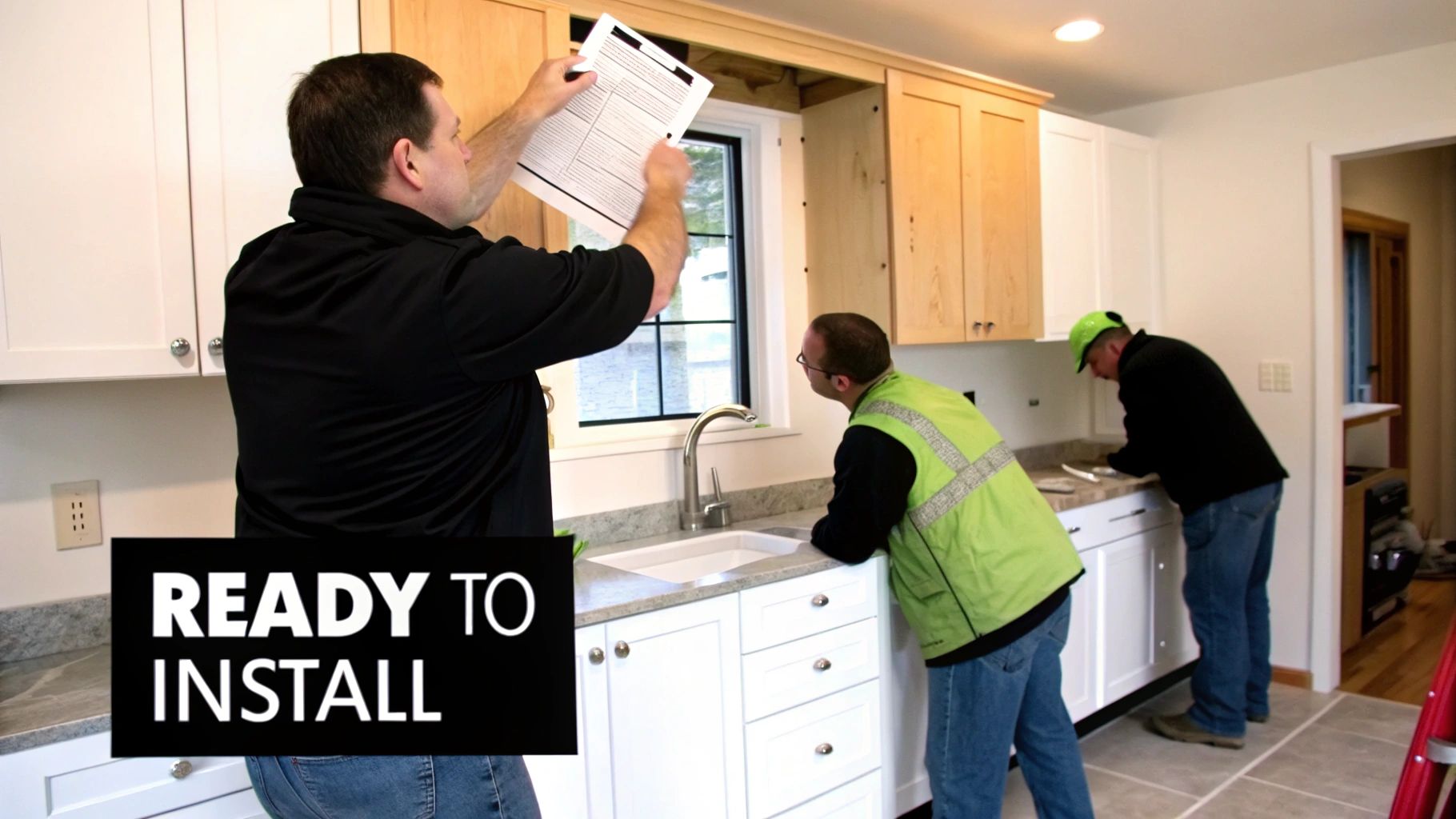
You’ve done the legwork and now you have a small stack of detailed, comparable quotes sitting on your counter. This is the exciting part—picking your partner for this project. While the numbers are obviously a huge factor, the final decision should go well beyond just the bottom line. It's time to trust your gut and think back on the whole experience.
Who really listened to you during the consultation? Which company took the time to explain their process without making you feel rushed? The rapport you've built so far is a pretty solid preview of what the working relationship will be like once the renovation is underway. A project manager who communicates clearly from day one is more likely to keep you in the loop when the inevitable hiccups occur.
Looking Beyond the Price Tag
The best value is rarely the cheapest quote. You need to weigh the overall experience offered by each of the cabinet companies you’ve vetted. A slightly higher price might come with a rock-solid reputation for hitting deadlines, leaving your home spotless every day, and providing fantastic support after the job is done. Those things have real, tangible value that you'll appreciate long after the final invoice is paid.
The cabinet industry, like any other, has its ups and downs. The Kitchen Cabinet Manufacturers Association tracks these trends, but the best companies always focus on long-term stability and customer satisfaction, not just short-term sales. This dedication usually translates into better service and a smoother project for homeowners like you.
Choosing a cabinet company is like hiring a key team member for a major project. You need more than just technical skill; you need a partner you can trust and communicate with effectively through every phase of the job.
Your Final Pre-Signature Checklist
Before you sign that contract, it’s worth running through a few final questions with your top choice. This is your last chance to get everything crystal clear and prevent any misunderstandings later on.
- Who is my direct point of contact? You need to know exactly who to call or text with questions and for updates.
- What does the payment schedule look like? Get clarity on the deposit, any milestone payments, and the final amount due upon completion.
- Can you walk me through the installation process? Ask how long it typically takes, what time the crew usually arrives, and how they’ll protect your floors and walls.
- How are design changes or unforeseen issues handled? A professional outfit will have a clear change-order process already in place.
Getting these final details confirmed in writing gives you an extra layer of security and makes sure everyone is on the same page.
Preparing Your Home for a Smooth Installation
Okay, the contract is signed and the deposit is paid! Now the focus shifts to getting your space ready. While your cabinet company will do all the heavy lifting, a little prep work from you can make the whole process faster and way less disruptive for your family.
First thing's first: clear out the entire kitchen. Empty every cabinet and drawer, clear off all countertops, and take down any pictures or decor from the walls. It’s a good idea to set up a temporary “kitchenette” in another room with your coffee maker, microwave, and a few essential dishes.
Next, think about protecting your home. The installation crew should absolutely be using their own drop cloths and floor protection, but it never hurts to add your own in high-traffic areas. Make sure there’s a clear, wide path from your front door to the kitchen so the team can carry in those big cabinet boxes without dodging furniture or tripping over rugs. A bit of prep makes for a much smoother installation day. To get a better feel for the process, you can explore what's involved in professional cabinet installation services.
Answering Your Final Questions About Cabinet Companies
You've done the research, narrowed down your list, and are on the verge of choosing a partner for your renovation. This is the stage where a few last-minute questions usually pop up. Getting clear, honest answers is what separates a good decision from a great one, giving you the confidence to sign on the dotted line.
Let's walk through some of the most common questions we hear from homeowners right here in Toronto and Markham.
What’s a Realistic Budget for Kitchen Cabinets in Toronto?
The cost of new cabinets in the GTA can swing pretty dramatically, so setting a realistic budget from the get-go is crucial to avoid sticker shock later. The final price tag really boils down to three things: the size of your kitchen, the materials you choose, and just how custom you want to go.
For a typical 10×10 foot kitchen, here’s a ballpark to get you started:
- Stock Cabinets: If you're on a tight budget, these are your most accessible option, usually running between $3,000 and $5,000. The trade-off is limited styles and sizes.
- Semi-Custom Cabinets: This is the sweet spot for many homeowners, balancing personalization with cost. Expect to budget somewhere in the $7,000 to $15,000 range.
- Fully Custom Cabinets: For a kitchen that's uniquely yours, custom work is the way to go. Prices typically start at $15,000 and can climb significantly depending on the materials and design complexity.
A pro tip: always ask for an itemized quote. A transparent company will have no problem breaking down the costs for materials, hardware, labour, and installation. It’s a huge green flag.
What's the Real Difference Between Custom and Semi-Custom?
This is a big one, and knowing the distinction is key to matching your vision with your wallet. Both are a step up from basic stock cabinets, but they’re built for different needs and budgets.
Think of semi-custom cabinets as a popular middle ground. They start with standard factory sizes but let you make important modifications. You can often tweak the depth, pick from a much wider selection of finishes and stains, and choose from an array of door styles. It gives you that personalized feel without the price tag of a completely bespoke build.
Full custom cabinets, on the other hand, are exactly what they sound like—built from scratch, just for you. Every single detail, from the height and width to the specific type of wood and finish, is tailored to fit your space like a glove. This is the perfect solution for old Toronto homes with quirky layouts, kitchens with unique architectural features, or when you have a specific design you just can't find anywhere else.
How Long Until My New Cabinets Are Actually Installed?
In any renovation, good things take time, and cabinets are no exception. The timeline from when you place your order to installation day is almost entirely dictated by the type of cabinets you choose. Be wary of anyone promising an unusually fast turnaround—it can sometimes be a red flag for quality.
Here’s a general idea of what to expect:
- Stock Cabinets: These are the quickest, often ready for delivery within 1-3 weeks.
- Semi-Custom Cabinets: Since they involve some modifications, the manufacturing time is longer. A 4-8 week lead time is pretty standard.
- Custom Cabinets: These take the longest because they are literally being built just for you. Expect to wait anywhere from 8 to 16 weeks, sometimes more for very intricate projects.
Before you sign anything, get that estimated timeline in writing. A true professional will give you a realistic delivery window and keep you in the loop as your order progresses.
Should I Let the Cabinet Company Handle the Installation?
My answer to this is a firm and emphatic yes. I know it can be tempting to hire your own installer to maybe save a bit of money, but having the company that made the cabinets install them is always the smartest move.
Think about it: their team knows the product inside and out. They understand every nuance of the construction, the specific hardware used, and the finishing process. This expertise leads to a flawless, precise fit.
Even more importantly, it creates a single point of accountability. If a door doesn't hang quite right or a drawer sticks, there’s no back-and-forth between the manufacturer and a third-party installer. The company you hired is responsible for the job from start to finish. It protects your investment and saves you a massive headache.
Ready to transform your kitchen with cabinetry that's built to last? The team at MapleKing Kitchen Cabinets provides expert guidance and factory-direct pricing to homeowners across Toronto and Markham. Get your free, no-obligation quote today!



