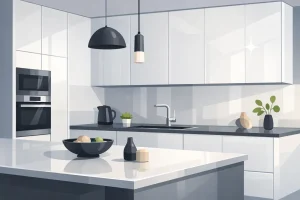

Think of built-in cabinetry like the difference between a custom-tailored suit and one bought off the rack. One is crafted to fit you perfectly, accentuating every detail and feeling like a natural extension of your style. The other just… fits. This is what integrated storage does for your home—it's not just furniture, it's a permanent architectural upgrade.
Understanding the Value of Integrated Storage
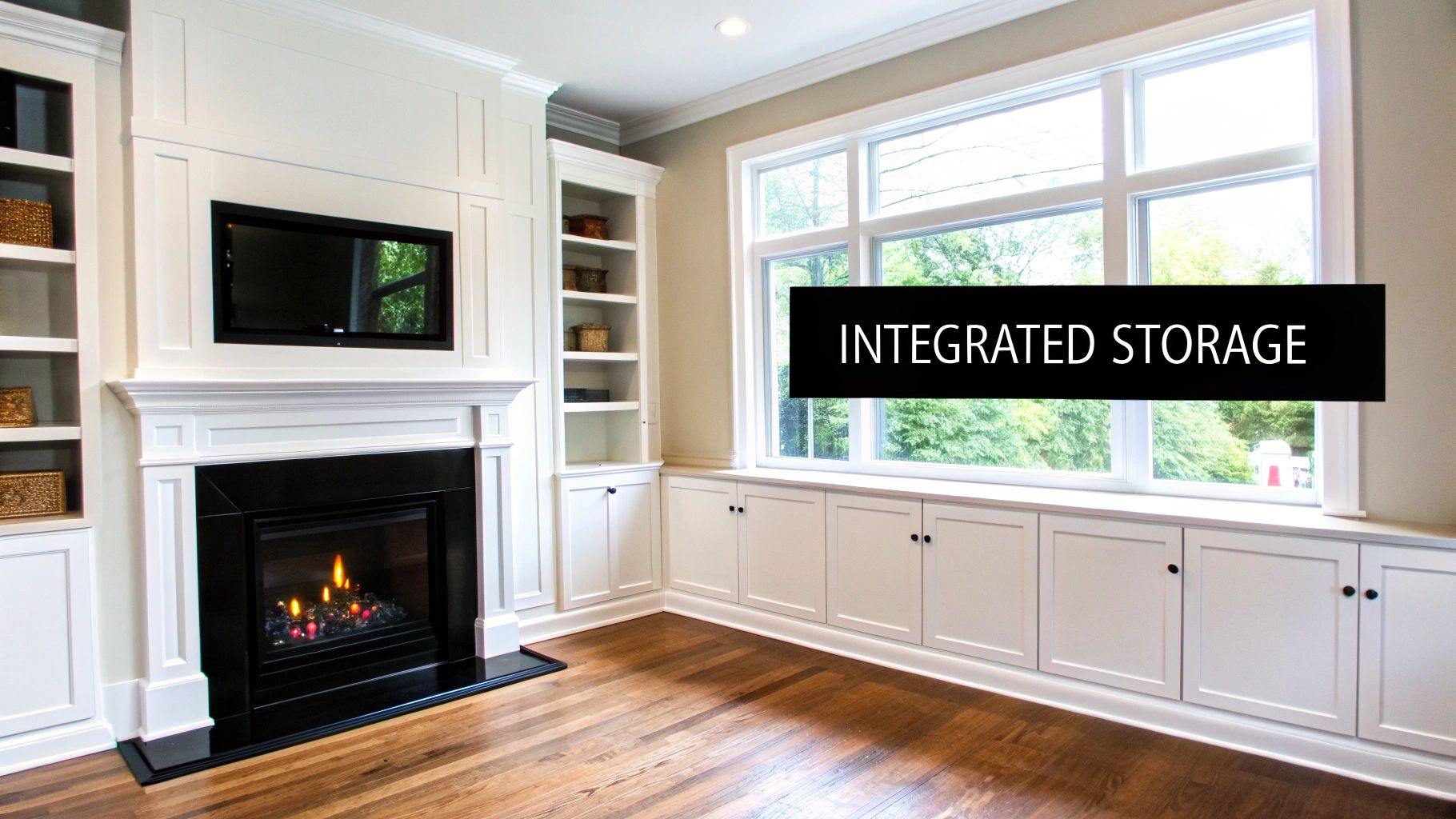
Built-in cabinetry is designed from the ground up to fit a specific space in your home, merging seamlessly with the walls, floor, and ceiling. Unlike freestanding pieces you can shift around, built-ins become a true part of the room’s architecture. This creates a cohesive, high-end look that standalone furniture just can't match.
The real magic is in how it makes the most of every last centimetre. In a city like Toronto, where space is a precious commodity, that kind of efficiency is a game-changer. Awkward nooks, angled ceilings, and the empty walls flanking a fireplace are no longer wasted space; they're transformed into beautiful, functional storage or display areas. This isn't just about adding shelves—it's about making a smart investment in how your home works for you.
Solving Unique Storage Challenges
Every home has those tricky spots. Maybe it's a living room cluttered with electronics and no good way to hide the wires, or an entryway that's a jumble of coats and shoes. Built-in cabinetry provides a bespoke solution for these very problems.
Just think about the possibilities:
- Living Room Media Centres: A unit designed to perfectly frame your TV, house your sound system, and tuck all those messy cables out of sight, with plenty of room for books and decor.
- Home Office Workstations: An integrated desk with custom shelving and file drawers can turn any spare corner into a streamlined and productive workspace.
- Mudroom and Entryway Organizers: Imagine custom cubbies, a built-in bench, and closets designed to give every family member’s gear a proper home. No more tripping over boots.
- Window Seats with Storage: You can add charming seating to a bedroom or bay window while gaining deep drawers or lift-top storage for blankets and seasonal items.
By designing storage around your lifestyle and your home’s specific layout, built-in cabinetry solves problems that generic furniture can't touch. The solution adapts to you, not the other way around.
A Long-Term Investment in Your Property
Looking past the immediate benefits of organization and aesthetics, custom built-ins genuinely increase your home's long-term value. When potential buyers tour your home, they don't see furniture that's leaving with you; they see permanent, high-quality upgrades that boost the property's appeal and functionality.
It’s an investment that pays you back every day in convenience and again when it’s time to sell. You’re not just adding storage; you’re laying the foundation for a smarter, more beautiful, and more organized home.
Choosing the Right Materials for Lasting Quality
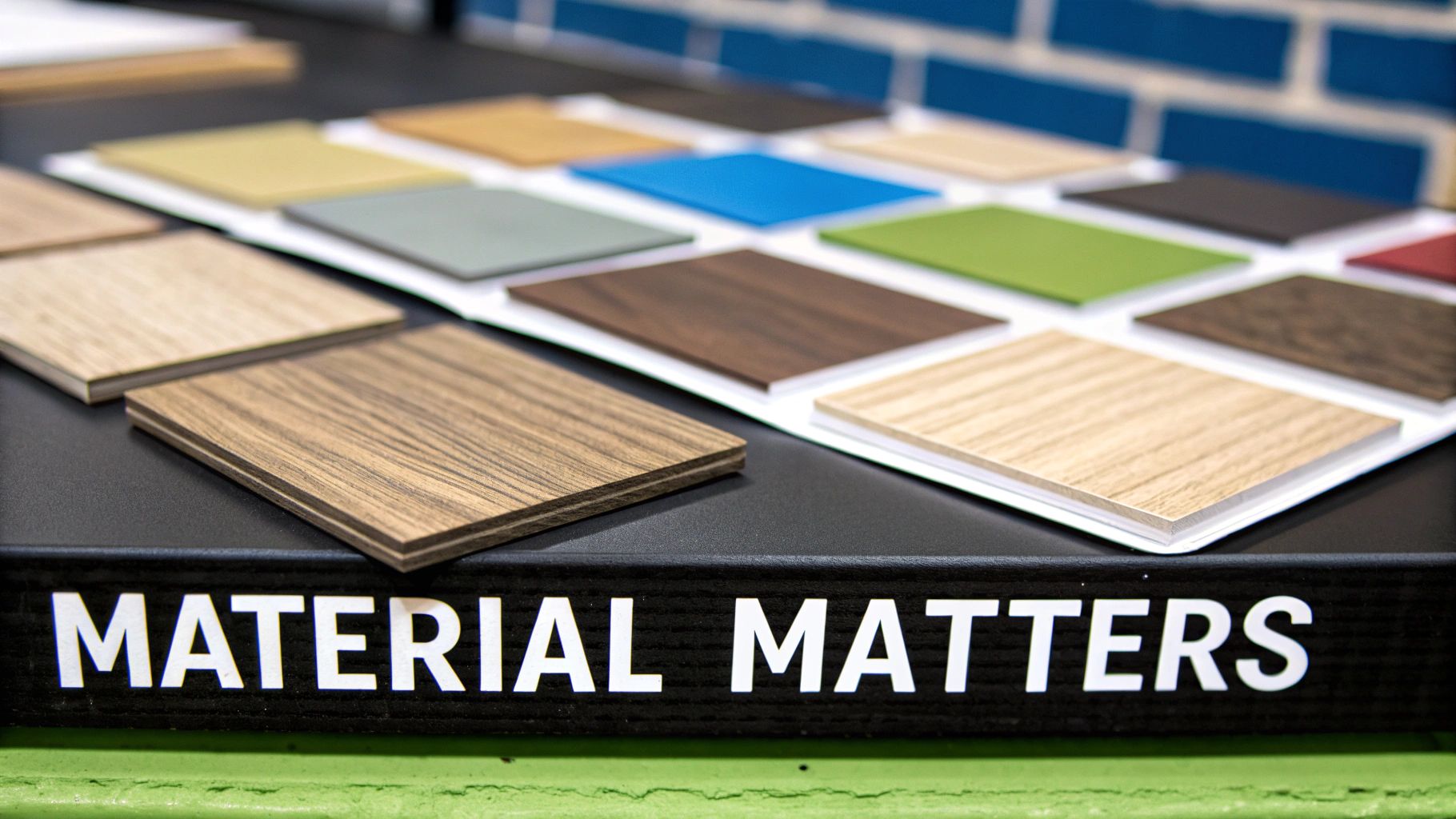
The foundation of truly exceptional built-in cabinetry is the material you choose. This decision goes so much further than just looks; it’s what determines how your investment will handle daily life, Toronto’s temperature swings, and the simple passage of time.
Think of it like choosing fabric for a custom suit. You wouldn't use delicate silk for an everyday garment, just as you wouldn't use rugged denim for formal wear. It's all about finding that perfect balance between beauty and real-world performance. From the classic warmth of natural wood to the sleek perfection of modern engineered products, each option has its own story and strengths.
The Timeless Appeal of Natural Wood
For many homeowners, there’s simply no substitute for the authentic character of real wood. Every species, whether it's the rich, subtle tones of maple or the bold grain of oak, brings a unique personality to your space. Solid wood is prized for its durability and the organic, one-of-a-kind patterns that ensure no two cabinet doors are ever exactly alike.
But it's important to remember that natural wood is "alive" in a sense—it can expand and contract with the humidity fluctuations so common in our climate. While this is part of its charm, it’s a crucial factor to consider, especially if you’re planning on a painted finish where tiny joint lines might appear over time.
The Modern Precision of HDF
If a flawless, uniform painted finish is what you’re after, then High-Density Fibreboard (HDF) is the undisputed industry standard. HDF is an engineered product made by compressing wood fibres with resin under extreme pressure. This process creates a material that is incredibly dense, stable, and resistant to the warping or cracking that can sometimes affect solid wood.
Because of its superior stability, HDF provides the perfect canvas for paint. It allows for a smooth, consistent colour application without the risk of expansion lines, ensuring a pristine look that lasts for years.
This stability makes HDF the ideal choice for anyone wanting the crisp, clean look of painted cabinetry, whether it's a timeless white, a sophisticated grey, or a bold custom colour.
- High-Gloss HDF: This option offers a reflective, mirror-like finish that bounces light around a room, creating a contemporary and luxurious feel.
- Matte HDF: For a softer, more understated elegance, matte finishes are fantastic. They are also highly resistant to showing fingerprints and smudges, making them a very practical choice for busy families.
Durable and Practical Alternatives
Beyond wood and HDF, other engineered materials are designed specifically for the high-traffic zones of your home, like kitchens and mudrooms. They offer incredible resilience without forcing you to compromise on style.
Laminates and Thermofoil are excellent choices for homeowners who put a premium on durability and low-maintenance living.
- Laminate: Created by fusing multiple layers of paper and resin, laminate surfaces are highly resistant to scratches, stains, and moisture. They are available in a massive range of colours and patterns, including some impressively convincing wood grains.
- Thermofoil: This material consists of a vinyl film applied to an HDF core using heat and pressure. The result is a seamless, non-porous surface that is exceptionally easy to wipe clean—perfect for messy kitchens or humid bathrooms.
To help you visualize the trade-offs, here’s a quick comparison of the materials we work with at MapleKing, tailored for the needs of Toronto homeowners.
Cabinet Material Comparison for Toronto Homeowners
| Material Type | Key Benefit | Ideal Application | Durability | Maintenance Level |
|---|---|---|---|---|
| Solid Wood | Authentic, unique beauty & grain | Stained finishes, traditional designs | Very High | Moderate; requires care |
| HDF | Perfectly smooth, stable surface | Painted finishes, modern/transitional styles | High | Low; easy to clean |
| Laminate | Scratch & stain resistance | High-traffic areas, budget-conscious projects | Very High | Very Low |
| Thermofoil | Seamless, easy-to-clean surface | Kitchens, bathrooms, laundry rooms | High | Very Low |
Ultimately, the best material is the one that fits your lifestyle, aesthetic preferences, and the specific demands of the room.
A Focus on Healthy and Sustainable Materials
As we all become more conscious of our indoor environment, the demand for healthy, eco-friendly materials has skyrocketed. This is especially true in quality-focused markets like Toronto and Markham, where homeowners are increasingly prioritizing low-emission products for a safer home.
Leading regulations, like the standards set by the California Air Resources Board (CARB), have pushed the industry to adopt materials with minimal environmental impact by setting strict limits on formaldehyde emissions. This has led to the widespread use of no-added-formaldehyde (NAF) adhesives and water-borne lacquers.
In fact, the market for sustainable materials like bamboo, recycled composites, and ultra-low-emitting particleboard is growing at a compound annual rate of about 5.72%. This shows a clear shift toward healthier homes, a trend you can learn more about in this full report on kitchen cabinet materials.
The Custom Cabinetry Design and Planning Process
A successful built-in cabinetry project starts long before the first piece of wood is ever cut. It all begins with a clear vision and a practical plan. Think of this stage as creating the architectural blueprint for your home's future; the more thought you put in now, the smoother the entire process will be.
This is where your ideas transform from a simple wish—like "I need more storage"—into a detailed, buildable design. It's a methodical process of figuring out exactly what you need, taking precise measurements, and working with professionals to make sure the final result is exactly what you imagined. With a solid plan, you can move forward with confidence, knowing every detail has been considered.
Defining Your Functional Needs
Before you even think about colours or handles, let's talk about function. The whole point of custom built-ins is to solve a real-world problem in your home. After all, a beautiful unit that doesn't actually hold what you need it to is a missed opportunity.
Ask yourself a few honest questions to get to the heart of it:
- What will you store here? Be specific. Is this for bulky serving platters, a tangle of small electronics, a precious vinyl collection, or a mountain of kids' toys? The inside of the cabinet is dictated entirely by the answer.
- How will you use this space every day? Will it be a high-traffic media centre, a quiet home office, or a library wall that’s mostly for show? This helps determine the best materials and layout.
- What drives you crazy right now? Is it the mess of cables behind the TV, the lack of counter space, or having nowhere to hide seasonal decor? Your new design should be the solution to these pain points.
As you start dreaming up your ideal storage, the principles behind designing a custom closet system can offer some fantastic ideas for maximizing every square inch, even in a living room or office.
Taking Accurate Measurements
Accurate measurements are the non-negotiable foundation of any built-in project. Because these units are designed to fit like a glove, even a tiny error can create major headaches during installation. While your cabinet maker will take their own professional measurements later, having a good set of your own is crucial for initial talks and budgeting.
Here’s a quick checklist to get you started:
- Measure the Core Space: Get the total height, width, and depth of the nook or wall. Make sure to measure in three different spots (e.g., left, centre, right) for both height and width—walls and ceilings are almost never perfectly straight.
- Locate Obstructions: Note the exact position of every outlet, light switch, vent, and window. Measure their distance from the floor, ceiling, and the nearest corners.
- Check for Uneven Surfaces: Use a level to see if your floor or walls have any slopes. Don't forget to account for baseboards, crown moulding, or chair rails that might need to be removed or worked into the design.
The Professional Consultation Process
This is where your vision meets real-world expertise. A consultation with a designer turns your functional needs and rough measurements into a workable plan. It’s an essential collaborative step to get on the same page about budget, timelines, and style.
The custom cabinet market is growing, with an expected growth rate of 6.2% from 2024 to 2030, as more homeowners want personalized solutions. In Canada, cabinetry can often eat up 30-40% of a major renovation budget, so getting professional guidance is key to making that investment pay off.
A great designer doesn’t just draw what you ask for. They offer solutions you might not have considered, like clever ways to optimize drawer depth or suggesting a more durable finish for a high-use area.
During this process, you'll discuss your budget, look at material samples, and fine-tune the layout until it perfectly balances what you want with what's practical. You'll walk away with a detailed blueprint and a clear quote, giving you the full picture before any work begins. This ensures there are no surprises down the line and that your new built-ins will serve you beautifully for years to come.
Budgeting for Built-In Cabinetry and Maximizing Value
Trying to figure out the cost of custom built-in cabinetry can feel a bit like aiming at a moving target. But once you understand what goes into the price, it's much easier to plan a project that fits your home and your budget perfectly.
The two biggest factors that will shape the final number are your material choice and the complexity of the design. A simple, clean-lined bookcase made from a high-quality laminate will always be more budget-friendly than a sprawling media centre built from solid walnut, complete with intricate trim and built-in lighting. Every extra drawer, glass door, or specialized nook adds to both the material and labour costs, so it really pays to be clear on your must-haves from the start.
Breaking Down the Key Cost Factors
Think of your project’s total cost as a recipe—each ingredient contributes to the final flavour. By knowing where to spend a little more and where you can save, you can get that high-end, custom look without breaking the bank.
Here’s a look at the main elements that influence the budget for built-ins:
- Materials: Like we touched on earlier, solid wood sits at the premium end of the spectrum. High-Density Fibreboard (HDF) is fantastic for those perfect, smooth painted finishes. On the other hand, modern laminates and thermofoil offer amazing durability and style at a more accessible price point.
- Finishes: A professionally sprayed, multi-coat paint finish is a labour-intensive process that requires a controlled environment and specialized skills, which is reflected in the cost compared to a standard laminate or thermofoil.
- Hardware: These days, soft-close hinges and full-extension drawer glides are pretty much standard for any quality build. But if you start adding specialized hardware—think pull-out pantries, interior lighting systems, or premium designer handles—those costs can add up.
- Complexity and Size: It’s simple math: the bigger the unit, the more it will cost. More linear feet of cabinetry, tricky corners, and custom-fitted interior organizers will naturally increase both the material and labour time needed to get it just right.
Maximizing Your Return on Investment
Investing in built-in cabinetry isn't just another purchase; it's a genuine upgrade to your home's functionality and overall value. To get the most out of that investment, it's wise to focus on long-term quality rather than just short-term savings. This is where professional installation becomes non-negotiable. It guarantees a flawless fit, proper support, and a polished look that’s nearly impossible to achieve with a DIY approach.
The true value of custom built-ins is that they become part of your home’s architecture. This isn’t just a piece of furniture you’ll take with you when you move; it’s an upgrade that improves your daily life right now and adds serious appeal to potential buyers down the road.
This diagram shows the simple, three-step approach to planning your custom cabinetry, moving from your initial idea to a professional consultation.
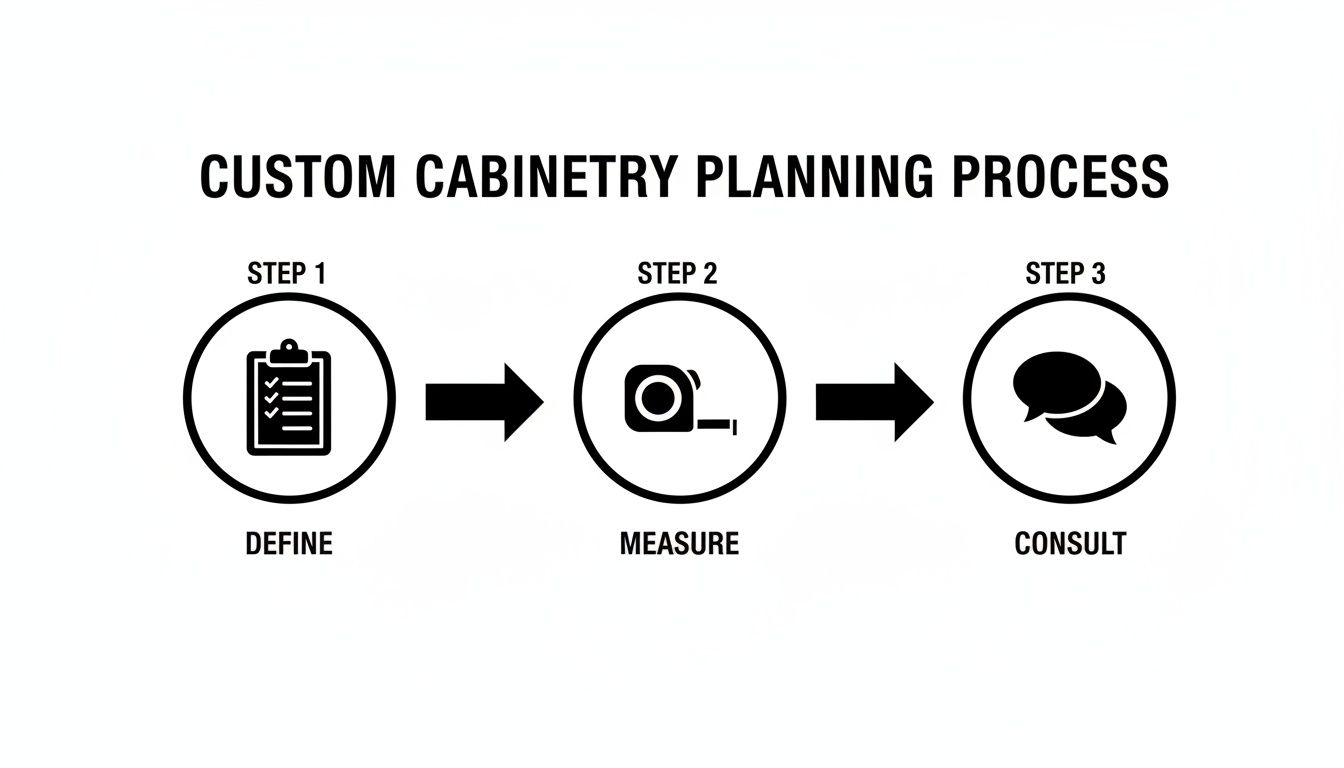
Following a clear process like this ensures every detail is considered—from how you’ll use the space to getting the measurements spot-on—before a single piece of wood is cut.
Another savvy way to maximize your budget is to work with a company that has a factory-direct model. When you cut out the middleman (the retail showroom), you’re no longer paying for that extra layer of markup. This means more of your money goes directly into better materials and craftsmanship. It can easily be the difference between settling for a standard finish and getting the premium one you really wanted. Checking out options for kitchen cabinets in Toronto from a factory-direct supplier is a great way to see this value in action.
The financial impact of this kind of home improvement is significant. In a mature housing market like ours, residential projects are the engine of the industry, accounting for 82.35% of all cabinet revenue. It’s a clear sign that homeowners see cabinetry upgrades as a core investment in their property’s value.
How to Choose the Right Cabinetry Partner in Toronto
Picking the right team for your built in cabinetry is every bit as important as the design itself. This is the partner who will bring your ideas to life, so finding a company with the right skills, transparent practices, and local know-how is the key to a stress-free project and a stunning result.
In a bustling market like Toronto, the number of options can be overwhelming. The trick is to look past the slick websites and focus on real, tangible proof of quality and reliability. A truly professional outfit will be an open book, making it easy for you to see their work and understand their process firsthand.
Look for a Physical Showroom
Online galleries are great for inspiration, but nothing beats seeing and touching the product in person. A physical showroom lets you feel the quality of the materials, test how smoothly the drawers glide, and see the fine details of the finishes up close.
When you visit a showroom, you get to:
- Assess Craftsmanship: You can compare different materials like HDF and solid wood side-by-side and feel the real difference between a high-gloss and a matte finish.
- Discuss Your Project: It’s the perfect chance for a face-to-face chat with designers who can give you immediate feedback and bounce ideas around.
- See Real-World Applications: A well-planned showroom will display cabinetry in realistic kitchen and living room setups, helping you picture how different styles could work in your own space.
Verify Their Track Record
A company that’s proud of its work will be eager to show it off. Ask to see a full portfolio of completed projects—not just a handful of hero shots, but a broad range of styles and types of installations. This is the best evidence of their experience and versatility.
And don’t be shy about asking for client references. Talking to past customers gives you the real story on their experience, from the first design meeting all the way through to installation and any follow-up service. A confident partner will always have a list of happy clients ready to share.
A detailed, itemized quotation is a sign of a transparent and professional partner. Vague, one-line estimates can hide unexpected costs, so insist on a breakdown of materials, labour, hardware, and finishing costs before signing any contracts.
Prioritize Factory-Direct Specialists
There are huge advantages to working with a local, factory-direct specialist. Because they manage the entire process in-house—from design and manufacturing right through to installation—they have total control over quality and timelines. This all-in-one approach cuts out the middleman, which means no extra markups and fewer chances for communication breakdowns.
This model doesn't just offer better value; it gives you a single point of contact. If a problem comes up, you know exactly who to call. For homeowners in the GTA, partnering with local experts means they understand the city’s home styles and building codes. You can explore how our integrated approach helps deliver exceptional custom kitchen cabinets and renovations in Toronto.
Investing in quality built-ins is also a smart financial move. A major kitchen remodel can deliver a return on investment (ROI) of around 50-60% at resale, which is a big deal in a hot market like Toronto. High-quality cabinetry is a standout feature that makes a home more attractive to buyers. You can find more insights on the value of home remodeling projects. In the end, choosing the right partner ensures your investment is protected by a solid warranty and a real commitment to craftsmanship that lasts.
Design Inspiration for Every Room in Your Home
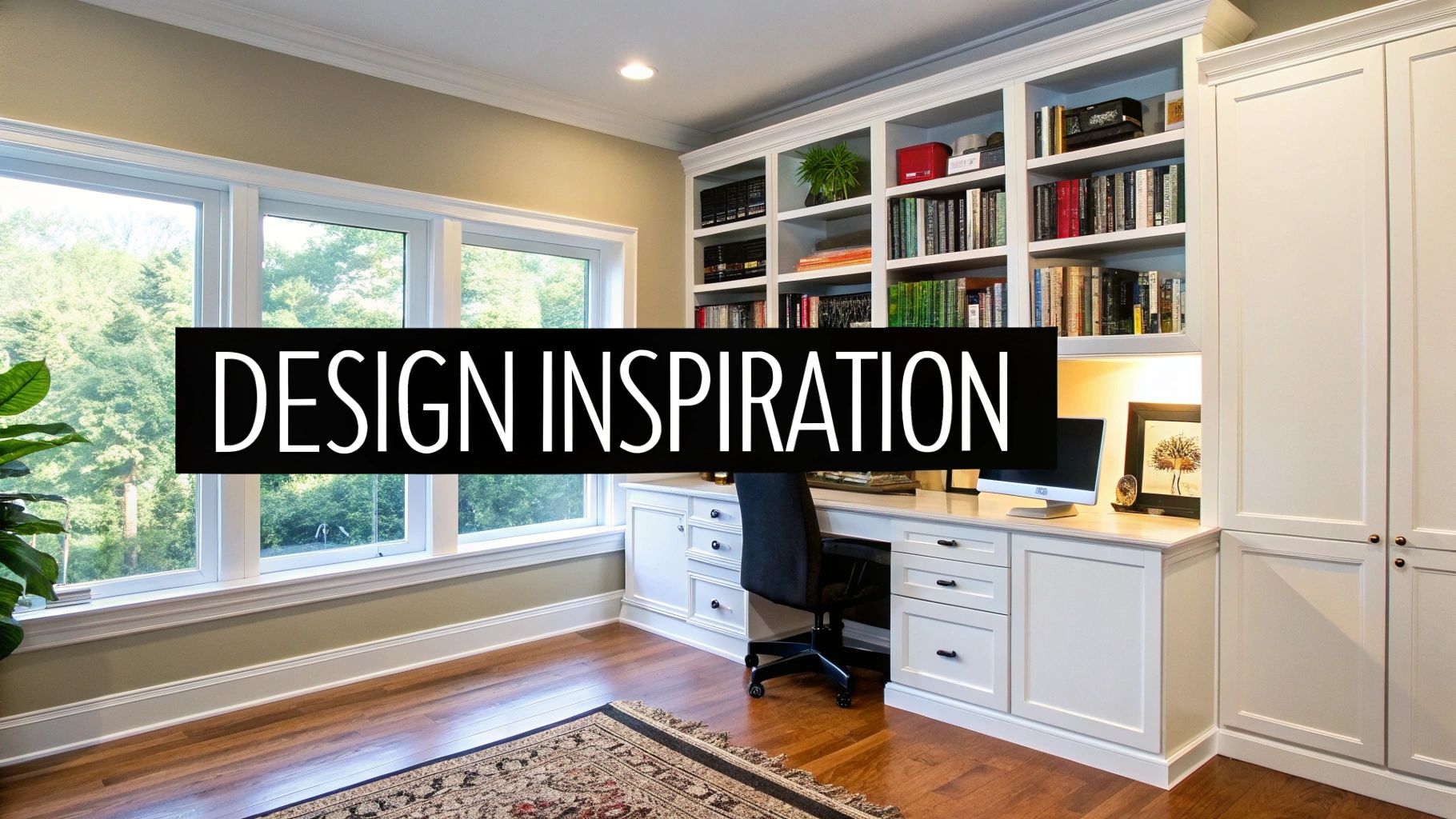
The real magic of built-in cabinetry is how it can be molded to fit any room, solving those unique, nagging problems while adding a touch of intentional design. It’s more than just storage; it becomes a piece of your home's architecture and character. Let’s look at how these custom solutions can completely elevate different spaces in your home.
For most Toronto homeowners, the kitchen is command central. This is where built-ins shine, creating a seamless, high-end look, especially when paired with panel-ready appliances that disappear into the cabinetry. This move toward cohesive design isn't just a local trend; the global built-in kitchen appliance market was valued at USD 18.78 billion and is expected to grow by 6.5% each year. It’s clear that homeowners everywhere are investing in streamlined, custom-feeling spaces. You can learn more about this growing market trend on grandviewresearch.com.
Living Rooms and Home Offices
In living rooms, a built-in media centre is a game-changer. It gives your TV and sound system a sophisticated home, with shelving for books or art, all while neatly hiding that messy tangle of wires. Think of classic library walls with handsome crown moulding—it can turn an ordinary room into a truly refined retreat.
Home offices are another area that benefits hugely from this custom touch. An integrated desk flanked by floor-to-ceiling shelving and file drawers can turn a spare corner into a powerhouse of productivity and organization. It’s a solution that adds serious function without compromising on style.
Built-in cabinetry is about creating harmony between form and function. It addresses the practical need for storage while simultaneously enhancing the architectural beauty of the room itself.
Mudrooms and Personal Spaces
Let's be honest, entryways and mudrooms can quickly become zones of chaos. Custom built-ins restore order with dedicated cubbies for each family member, a comfortable bench with hidden storage underneath, and closets perfectly sized for coats and boots.
The same idea works beautifully in personal spaces like walk-in closets and bedrooms. A well-designed closet with custom dividers, drawers, and shelving makes getting organized feel effortless. In the kitchen, where every inch counts, you can even find creative solutions for maximizing small kitchen pantry space that make your built-ins incredibly efficient.
Each of these examples shows how a specific design can solve a common household headache. To see how this plays out in real homes, feel free to browse our gallery of completed projects and start gathering ideas for your own transformation.
Got Questions About Built-in Cabinetry? We’ve Got Answers.
As you move closer to making a decision about new built-in cabinetry, it's completely normal to have a few questions swirling around. This is a big, exciting investment in your home, and you should feel confident, not confused. To help with that, we've pulled together some of the most common questions we hear from homeowners just like you.
Think of this as your personal FAQ. We're tackling everything from how long it all takes to cost comparisons, clearing up any final uncertainties so you can move forward knowing you've made the right choice.
How Long Does a Custom Built-in Cabinetry Project Take?
The timeline for a custom built-in project can shift a bit depending on how big or complex your design is, but a good rule of thumb is 6 to 12 weeks from the moment you approve the design to the final, finished installation.
The journey usually breaks down into three main stages:
- Design and Consultation (1-2 weeks): This is the fun part! We nail down the design, pick out materials, and double-check every single measurement.
- Manufacturing (4-8 weeks): Once you give the green light, your custom cabinets are brought to life in our factory.
- Installation (2-5 days): Our expert crew arrives to install the cabinetry, fitting it perfectly into your space.
The good news? Working with a factory-direct company like MapleKing helps keep things moving smoothly. We control the whole process, so we aren't waiting on third-party suppliers. We’ll always give you a clear, detailed timeline with your quote, so there are no surprises.
Is Built-in Cabinetry More Expensive Than Freestanding Furniture?
It's true that the initial price tag for custom built-ins is usually higher than what you'd pay for a freestanding piece of furniture. But it's better to think of it as a permanent upgrade to your home, not just a purchase. A freestanding bookcase can be moved or replaced; built-ins become part of your home's architecture.
Built-in cabinetry is made to fit your space like a glove, which means every centimetre is used for storage and you’ll never have those awkward, dust-collecting gaps. That perfect fit, combined with better materials and lasting durability, adds real, tangible value that can actually boost your home's resale price.
When you add up the bespoke design, the incredible functionality, and the impact on your property value, the long-term return you get from built-ins is in a completely different league than an off-the-shelf media unit.
What Is the Difference Between HDF and Solid Wood for Cabinets?
Both solid wood and High-Density Fibreboard (HDF) are fantastic materials, but they shine in different ways. Everyone loves solid wood for its natural character—the grain patterns are unique, making every cabinet a one-of-a-kind piece. The only thing to watch for is that it can expand and contract with changes in humidity.
HDF, on the other hand, is an engineered wood product known for being incredibly dense and stable. It won’t warp or crack, which makes it the absolute best surface for a perfectly smooth, flawless painted finish that lasts.
- Choose solid wood when you want that classic, warm look where the natural grain is the star of the show.
- Choose HDF when you want a crisp, durable painted colour that will look pristine for years to come.
Can I Install Built-in Cabinetry Myself?
We get it—the idea of a DIY installation to save a bit of money is tempting. For custom built-ins, though, we always recommend leaving it to the professionals. Getting that seamless, fully integrated look isn't easy. It takes specialized tools and a lot of experience, especially when it comes to fitting cabinets perfectly against walls that are never truly straight.
A small mistake during a DIY job can end up being costly to fix, and it might affect the final look and even the structural integrity of your beautiful new cabinetry. A professional installation guarantees that perfect fit, protects your warranty, and ensures you get the stunning, long-lasting result you're investing in.
Ready to get answers for your specific project? The team at MapleKing Kitchen Cabinets is here to help. Visit our showroom or schedule a free consultation today to get started.