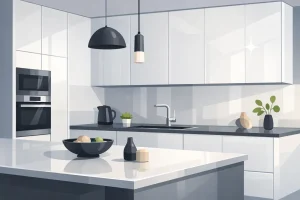

You're probably in one of two situations right now. Either you've started collecting kitchen quotes in Toronto or Markham and the numbers are coming in higher than expected, or you already know your kitchen needs help but you're worried “budget” means settling for something flimsy, dated, or obviously cheap.
It doesn't.
A budget kitchen works when you spend with discipline. The homeowners who get into trouble aren't always the ones with the smallest budgets. They're the ones who spend in the wrong places, chase custom details they don't need, or buy low-grade materials that look fine for a few months and then start showing wear fast.
Planning Your Dream Kitchen on a Real-World Budget
A lot of GTA homeowners want the same thing. Clean lines. Better storage. Doors and drawers that close properly. Finishes that look current without turning the whole renovation into a money pit.
That's hard in a market where every decision feels expensive. In Canada, a 2025 Statista survey reported average spending of about C$55,000 for major kitchen renovations and about C$20,000 for minor renovations, which is exactly why cabinetry has to be treated as part of a larger renovation strategy, not a random line item on its own (Statista kitchen renovation spending data).

What budget should mean
Budget kitchen cupboards should mean smart, not stripped down. In Toronto and Markham, that usually means keeping the layout sensible, choosing durable materials over trendy gimmicks, and avoiding unnecessary custom work.
I see the same pattern all the time:
- Condo owners want a fresher look but need to work around elevators, delivery windows, and tight access.
- Townhouse owners need better storage without overbuilding for the neighbourhood.
- Detached-home owners want resale-friendly upgrades but don't want to overspend on decorative features buyers won't pay extra for.
The answer isn't cutting corners. It's cutting waste.
Practical rule: If a feature doesn't improve storage, durability, or the overall look in a visible way, it's usually the first thing to trim.
Start with decisions, not dream boards
You do need inspiration. But you need filters first. Decide what matters most:
- Function first. More drawers, better pantry access, easier cleaning.
- Durability second. Materials that can handle daily use and kitchen moisture.
- Style third. Keep it simple enough that it still looks current years from now.
If you want a broad homeowner-friendly read on controlling renovation costs before you start choosing finishes, Turning Point Ventures, LLC has a useful overview of budget remodel thinking. Then come back and apply those ideas to cabinetry with a stricter GTA lens.
The point is simple. You can absolutely build a kitchen that looks polished and functions well on a controlled budget. But you need to treat every cabinet choice like it affects the full project, because in this market, it does.
Decoding Budget Kitchen Cupboard Costs in Toronto
Most homeowners get confused because cabinet pricing is rarely presented in a clean way. One supplier talks about door styles. Another talks about “custom packages.” A contractor gives you a lump sum with no real breakdown. That's how people lose control of the budget.
The first number you need to understand is linear foot pricing. That means the run of cabinets measured across the wall, not the square footage of your kitchen. It's a rough planning tool, but it's still useful when you're comparing quotes.

What the pricing tiers usually look like
A practical benchmark for Canada is straightforward. Stock cabinets commonly run around C$100 to C$300 per linear foot, while semi-custom cabinets generally run C$150 to C$650 per linear foot according to this cabinet pricing guide from Dupont Design Center.
That matters because “budget kitchen cupboards” in Toronto usually means one of these two paths:
- Stock cabinets for the lowest upfront cost
- Simplified semi-custom cabinets when stock sizing won't solve the layout cleanly
Fully custom has its place, but it stops being “budget” quickly.
Why Toronto pricing climbs fast
Cabinets are only part of the bill. In the GTA, installed cost gets pushed up by the messy parts of the project:
- Labour pressure from busy trades and tighter schedules
- Delivery and access issues in condos and dense neighbourhoods
- Wall irregularities in older homes that create fitting headaches
- Add-ons like panels, fillers, trim, and hardware upgrades
That's why one quote can look reasonable at first and then balloon once the extras show up.
If you want a broader look at where cabinet spending fits into the full renovation bill, this kitchen renovation cost breakdown is useful for framing expectations before you sign anything.
Here's the hard truth. The cheapest quote is often cheap because it's vague.
Ask every supplier what is included in the number. Boxes, doors, panels, fillers, hardware, delivery, installation, and site adjustments should all be discussed plainly.
How to read a quote without getting burned
A solid quote should let you separate cabinet cost from everything around it. If it doesn't, slow the process down.
Look for these specifics:
- Cabinet category. Stock or semi-custom should be stated clearly.
- Box and door material. If the supplier is fuzzy here, that's a problem.
- Hardware scope. Soft-close, drawer runners, and hinges affect value.
- Installation detail. Confirm who handles levelling, fillers, and final fitting.
For a more cabinet-specific local reference point, review kitchen cabinet costs in the GTA.
A short explainer can also help if you're still getting familiar with pricing language and installation realities:
My advice is blunt. If your budget is tight, don't pretend it's a custom-cabinet budget. Build around stock logic first, then spend selectively where the upgrade is visible or useful.
Choosing the Best Materials for Your Budget and Style
Most budget mistakes happen at the material stage. Homeowners focus on colour and door style, then ignore what the surface will do after a few Toronto summers and winters. That's backwards.
For budget kitchen cupboards in Ontario, moisture resistance matters. Seasonal humidity swings can make finish stability a bigger issue, which can lead to warping, edge swelling, or refinishing costs on lower-quality materials (Ontario humidity and cabinet finish discussion). If the kitchen gets heavy daily use, a cheap-looking material isn't the only risk. An unstable one is worse.
My blunt take on the main material options
Real wood painted doors look excellent when done properly. They have character, and the grain gives them warmth that many homeowners still prefer. The trade-off is that natural material movement is real. If you want painted wood on a budget, make sure you want that look and accept that it's not the lowest-maintenance path.
HDF painted doors are one of the smartest middle-ground choices. They give you a smoother, more consistent painted finish than many wood options. For homeowners who want a clean shaker or modern flat-panel style without paying for unnecessary complexity, this is often the practical answer.
High-gloss HDF suits contemporary condos and modern townhouses. It gives a sleek surface and a sharper visual effect, but you need to be honest about your lifestyle. If fingerprints annoy you, don't choose a finish that puts them on display all day.
Matte HDF is easier to live with visually. It has a calm, modern look and tends to hide day-to-day handling better. For a lot of Markham and Toronto households, it's a more forgiving finish than gloss.
Laminate is often underrated. For many budget projects, it's a strong choice because it balances cost control with practical durability. If your priority is easy cleaning, moisture resistance, and a straightforward modern appearance, laminate deserves serious consideration.
Thermofoil can work when the product quality is good and the design is simple. It gives a smooth, easy-clean face, which is appealing in busy kitchens. But I'd be more selective with it near higher-heat areas and in projects where the absolute lowest upfront cost is the only reason it's being chosen.
Budget Kitchen Cupboard Material Comparison
| Material | Cost Index ($-$$$) | Durability | Style Options | Maintenance |
|---|---|---|---|---|
| Real wood painted | $$$ | Good, but natural movement needs consideration | Strong for classic and transitional looks | Moderate |
| HDF painted | $$ | Strong for everyday use | Very versatile | Easy |
| High-gloss HDF | $$-$$$ | Good | Best for sleek contemporary kitchens | Moderate |
| Matte HDF | $$ | Good | Modern and understated | Easy |
| Laminate | $-$$ | Strong for practical family use | Good range, especially modern styles | Easy |
| Thermofoil | $-$$ | Varies by build quality and placement | Clean, simple profiles | Easy |
What I'd choose for different households
If you want the shortest version, here it is.
- Busy family kitchen. Go with laminate or HDF painted.
- Modern condo kitchen. Choose matte HDF or high-gloss HDF if you like a sharper finish.
- Warmer traditional look on a controlled budget. Consider real wood painted doors, but only if you're not expecting bargain pricing with zero upkeep.
Cheap finishes can cost more later if they don't handle moisture, cleaning, and everyday impact.
Material choice should match the room, not your Pinterest board. A dark matte finish in a downtown condo can look great. That same finish in a cramped kitchen with poor lighting might feel heavy. A painted wood door can be beautiful. In a household with rough daily use, a durable laminate may be the smarter call.
If you want a more focused look at the finish and substrate options available for different cabinet styles, this guide to the best materials for kitchen cabinets is a helpful reference.
Where I tell people not to cheap out
Don't cheap out on the parts you touch every day. Hinges, drawer runners, edge finishing, and door construction matter more than trendy profile details.
Save on ornament. Spend on performance.
Smart Design and Layout Tips for Budget Kitchens
A budget kitchen can look expensive if the layout is disciplined. It can also look clumsy fast if the design keeps fighting the room. In Toronto and Markham, where many kitchens sit inside condos, semis, and older homes with awkward walls, layout discipline saves real money.
The most cost-sensitive technical move is simple. Use standard stock cabinet modules. Common base cabinets are 34.5 inches high and 9 to 36 inches wide, while wall cabinets are typically 30, 36, or 42 inches high. Sticking to those 3-inch increments reduces labour and material waste (standard kitchen cabinet dimensions guide).
Design around standard sizes
If you force everything to be custom, your costs rise in all the invisible places. More cutting. More fillers. More site adjustment. More installation time.
Do this instead:
- Keep cabinet runs clean. Long uninterrupted runs are cheaper and usually look better.
- Use standard widths first. Fit the kitchen to the modules where possible, not the other way around.
- Limit odd fillers. Tiny patch pieces make a kitchen look pieced together.
Spend where the eye goes
You don't need premium everything. You need a few choices that pull the room together.
Good places to invest:
Drawer function
Deep drawers for pots, dishes, and pantry storage improve daily use immediately.Hardware finish
Simple modern pulls can lift the whole kitchen if the door style is restrained.One standout element
That might be a cleaner panel detail, a nicer sink area, or a more polished island face.
The mistake is spreading money thinly across too many upgrades. Pick a few visible wins.
A simple flat-panel or shaker door in the right finish almost always looks better than an overdesigned door on a tight budget.
GTA-specific layout realities
Condo kitchens need cleaner planning than detached homes. You're often dealing with tighter clearances, appliance constraints, and less forgiveness in delivery and installation. Older Toronto homes bring a different issue. Walls are rarely perfectly straight, so every unnecessary custom detail creates another fitting problem.
That's why practical layout planning matters more than decorative ambition.
For homeowners collecting ideas before they commit to a floor plan, these kitchen cabinet layout ideas can help you narrow down what fits your room and your budget.
My strongest design advice is this. Keep the door style simple, keep the sizing standard, and make the kitchen feel organised. People read “expensive” as calm, functional, and cohesive. They don't read it as busy.
Your Step-by-Step Kitchen Cupboard Planning Checklist
Most kitchen projects go sideways before demolition starts. The problem isn't taste. It's poor planning, unclear scope, and rushed decisions.
Use this checklist before you order anything.

The sequence that keeps budgets under control
Set your real budget
Not your optimistic one. Your real one. Include room for delivery, installation, and small adjustments that always show up.List must-haves
More drawers, better pantry access, easy-clean surfaces, room for larger cookware. If you can't name your priorities, you'll overspend on cosmetic choices.Measure properly
Basic wall lengths aren't enough. Note windows, bulkheads, soffits, outlets, appliance locations, and any problem corners.Choose your material before your colour
A finish only matters if the material underneath suits the way you live.
How to compare suppliers properly
Many homeowners often get lazy, and it costs them.
- Ask for itemised quotes. Lump sums hide weak value.
- Confirm what's included. Panels, fillers, hardware, delivery, and installation should not be mystery items.
- Check who handles site issues. Older GTA homes often need on-site adjustments.
- Review access logistics. Condo moves and narrow entries can affect timing and cost.
Before installation day
Don't wait until the truck arrives to think about logistics.
Make sure you've confirmed:
- Appliance sizes so cabinet openings are correct
- Final swing clearances for doors, drawers, and nearby walls
- Finish selections under proper lighting, not just showroom lighting
- Delivery path for condos, townhouses, and tighter urban properties
If you change door styles, appliance sizes, or layout details after ordering, your “budget kitchen” can stop being budget very quickly.
A well-run cabinet project is boring in the best way. Everyone knows the scope. The measurements are right. The finish is chosen for the household. The installation isn't left to improvisation.
That's what you want.
The MapleKing Advantage for GTA Homeowners
If you've read this far, you already know what matters. You need pricing that makes sense, materials that can handle real use, and a layout that fits Toronto or Markham realities instead of some generic showroom fantasy.
That's where a factory-direct model makes practical sense. It cuts out retail layers and gives homeowners a clearer path to balancing cost, finish, and fit. If you're comparing options, MapleKing Kitchen Cabinets offers factory-direct cabinetry with product lines that fit the exact categories discussed above, including real wood painted doors, HDF painted finishes, high-gloss HDF, matte HDF, laminate, and thermofoil.
Why that matters on a budget
Factory-direct sourcing won't magically fix bad planning. But it can help if you want:
- More control over material choices
- Customised sizing without defaulting to ultra-premium pricing
- A better match between budget and finish level
- A local Markham point of contact instead of a vague online order
For GTA homeowners, that local piece matters. Measurements, access constraints, and finish selection are easier to manage when the supplier understands condo delivery issues, townhouse dimensions, and the resale expectations buyers have in this market.
If you want budget kitchen cupboards that still look organised, current, and durable, the right supplier should help you simplify decisions, not bury you in jargon.
FAQs for Toronto & Markham Kitchen Renovations
Do I need a permit just to replace kitchen cupboards
Usually, simple cabinet replacement is treated differently from bigger renovation work. The issue changes when the project involves structural changes, plumbing relocation, electrical changes, or major layout shifts. If your kitchen upgrade stays within the existing footprint, the process is usually much simpler. If walls, services, or major building systems are involved, check local requirements before work starts.
Are budget kitchen cupboards bad for resale
Bad cabinets are bad for resale. Budget cabinets aren't automatically bad.
In the Toronto and Markham market, buyers pay attention to kitchen finish quality. Clean, modern, functional cabinets from a factory-direct source often support perceived value better than either dated high-end cabinetry or cheap off-the-shelf replacements, as noted in this Houzz discussion on kitchen design and perceived value. Buyers respond to condition, usability, and appearance. They don't reward overspending on details that aren't obvious.
What matters more for value than fancy door profiles
Three things usually matter more:
- A clean layout
- Good box and hardware quality
- A finish that still looks fresh and stable
That's why I tell homeowners to stop obsessing over intricate styling. If the kitchen looks current, works well, and feels solid, that does more for perceived value.
Should condo owners approach budget cabinetry differently
Yes. Condo projects need tighter planning. Delivery access, elevator booking, narrow entries, and stricter installation windows all affect execution. That doesn't mean the cabinets need to be more expensive. It means the plan needs to be cleaner.
Is stock always the right answer for a budget kitchen
No. Stock is often the first place to look, but not always the final answer. If a stock layout creates awkward gaps, wasted corners, or ugly fillers everywhere, a simplified semi-custom approach can be the smarter spend. Cheap upfront isn't the same as good value.
What should I upgrade first if I can't upgrade everything
Upgrade the things you use and notice daily. Better drawers. Better hinges. A finish that handles moisture and cleaning properly. Then make the visible design choices as simple and cohesive as possible.
If you're planning a kitchen in Toronto or Markham and want clear advice on layout, materials, and realistic pricing, MapleKing Kitchen Cabinets is a practical place to start. You can explore cabinet options, compare finishes, and request a quote based on your space instead of guessing from generic online pricing.