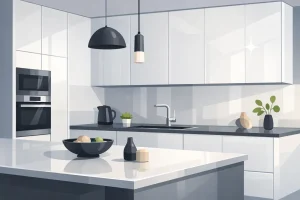

Picking the right material for your kitchen cabinets is arguably the single most important decision you’ll make during a renovation. It sets the tone for everything—style, durability, and of course, your budget. The best materials for kitchen cabinets are all about finding that perfect balance between looks and performance. And sometimes, the best choice isn’t what you’d expect; engineered options like High-Density Fibreboard (HDF) often outperform traditional solid wood for painted cabinets because they’re just more stable.
Ultimately, the perfect material for you comes down to your home, your lifestyle, and the look you’re trying to create.
Your Guide to Selecting Kitchen Cabinet Materials
Choosing a cabinet material is about so much more than just what looks good on day one. It’s a foundational decision that impacts your daily routine, from cleaning spills to how well your kitchen holds up over time. This guide will walk you through the most popular choices out there, from the timeless appeal of solid wood to modern workhorses like HDF and Thermofoil.
Let’s break down the key factors that should steer your choice, ensuring your new kitchen is not only stunning but truly built for your life.
- Lifestyle Considerations: Is your kitchen the chaotic heart of a busy family home? If so, you’ll want materials that can handle scratches and wipe clean in seconds. On the other hand, a kitchen that sees less action might be the perfect place for a more delicate, high-end finish.
- Budgetary Alignment: Your budget is a practical starting point, but think about long-term value, not just the initial price tag. A cheaper material might save you money upfront, but could end up costing you more in repairs and replacements down the road.
- Aesthetic Goals: The material you choose is the canvas for your entire kitchen’s design. Solid wood brings natural warmth and character, while a high-gloss HDF can create that sleek, ultra-modern look.
Here in Canada, wood-based materials still reign supreme. You’ll find solid wood in about 45% of high-end kitchens, where its premium feel is a major draw. But with our climate’s humidity swings, engineered woods like HDF and MDF have become incredibly popular because they resist warping and cracking. In fact, MDF is a go-to for painted cabinet doors, holding roughly 30% of the market share thanks to its perfectly smooth finish and great value. You can dive deeper into these trends with some great insights on cabinet materials.
Our goal here is simple: to cut through the noise and give you the confidence to pick the absolute best cabinets for your home.
Comparing Popular Kitchen Cabinet Materials
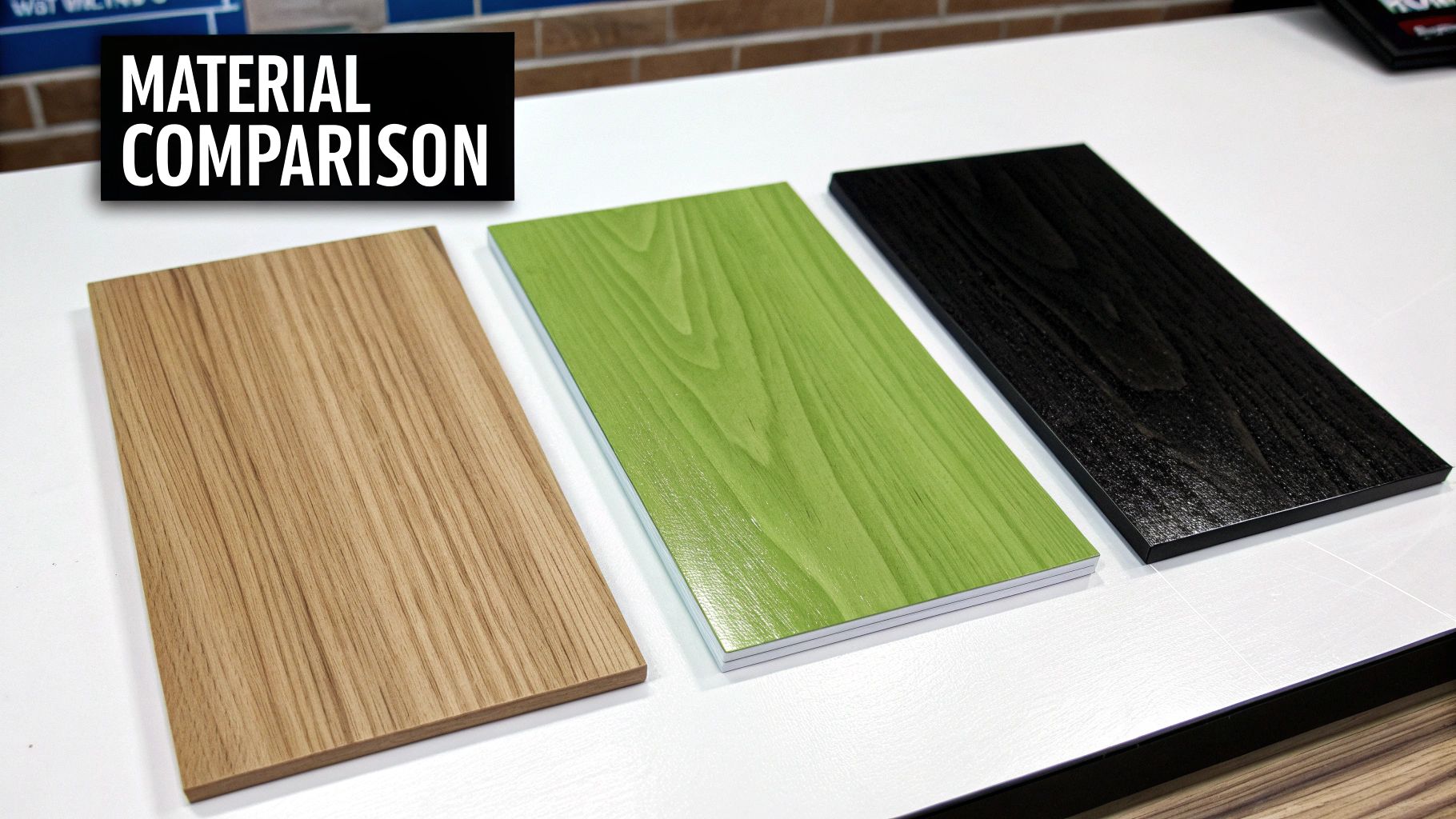
Choosing the right material for your kitchen cabinets goes far beyond what looks good in a showroom. It’s about understanding how a material will actually live in your home. You need to think about durability, style, and how it will handle the day-to-day realities of your kitchen.
This isn’t just a simple list of pros and cons. We’re going to dive into a real-world analysis of the most common options—solid wood, High-Density Fibreboard (HDF), and Thermofoil—so you can see the practical differences and make a choice that balances beautiful design with long-term performance.
Solid Wood: A Timeless Classic
There’s an undeniable appeal to solid wood cabinets. They bring a natural warmth and character to a kitchen that’s hard to replicate. Whether it’s maple, oak, or cherry, each piece has a unique grain, meaning your kitchen will be truly one-of-a-kind.
But the very thing that makes wood beautiful is also its biggest challenge: it’s an organic material. Wood expands and contracts with changes in temperature and humidity. For anyone living in the Greater Toronto Area, with our hot, humid summers and cold, dry winters, this is a serious consideration.
The big takeaway with solid wood? It’s a premium material that can last a lifetime and be refinished again and again. But because it moves with humidity, you’ll almost inevitably see fine hairline cracks develop at the joints on painted cabinet doors. It’s a cosmetic quirk, but an important one to know about.
This natural movement is why stains often work better than paint on solid wood, as they allow the grain to show through and make those joint lines far less noticeable.
High-Density Fibreboard: An Engineered Powerhouse
Don’t let the name fool you. High-Density Fibreboard (HDF) isn’t your average particleboard. It’s a high-performance engineered product made by compressing wood fibres with resin and wax, resulting in a material that is incredibly dense, strong, and stable. It’s a step up from the more common Medium-Density Fibreboard (MDF) and an ideal base for cabinetry.
The standout feature of HDF is its dimensional stability. Unlike solid wood, HDF simply doesn’t react to humidity. It won’t swell, shrink, or warp. This makes it, without a doubt, the best choice for painted cabinets, giving you a perfect, seamless finish that won’t crack over time.
Painted HDF vs. Solid Wood
When you’re set on a painted finish, the choice between HDF and solid wood becomes very clear. A painted HDF door provides a smooth, monolithic look that stays that way. A painted solid wood door, on the other hand, will eventually show stress lines at the joints.
Here’s how they stack up:
- Stability: HDF is completely inert, so your paint finish remains flawless. Solid wood moves, which leads to hairline cracks at the seams.
- Surface: HDF gives you a perfectly flat, uniform canvas for paint. With wood, the natural grain can sometimes subtly show through the finish.
- Moisture Resistance: While neither is truly waterproof, a properly sealed and painted HDF cabinet offers fantastic protection against everyday kitchen humidity.
Exploring HDF Finishes: High-Gloss and Matte
HDF’s stability also makes it the perfect foundation for some of the most popular contemporary finishes.
High-Gloss HDF: This is the go-to for that ultra-modern, European-inspired kitchen. A layer of lacquer or acrylic is applied over the HDF and cured to a reflective, mirror-like shine. It’s a brilliant way to make a space feel bigger and brighter by bouncing light around the room. The trade-off? You’ll be wiping away fingerprints to keep it looking pristine.
Matte HDF: For a more understated and sophisticated look, matte is the answer. It has a soft, velvety texture that absorbs light, creating a calm and elegant feel. The huge practical advantage here is its resistance to smudges and fingerprints, making it a dream for busy families or anyone who hates constant cleaning.
Thermofoil: A Budget-Friendly Alternative
Thermofoil isn’t actually a foil. It’s a thin layer of vinyl that’s heat-sealed and vacuum-pressed onto an HDF or MDF core. This process wraps the cabinet door in a seamless, smooth layer, making it very easy to clean and quite resistant to moisture on its surface.
It’s a popular choice for achieving a clean, uniform look—especially in simple Shaker or slab styles—without a high price tag. The major drawback, however, is its vulnerability to heat. If installed too close to an oven, toaster, or even a high-heat dishwasher cycle, the vinyl can delaminate and start to peel away from the core.
Proper installation with heat shields is absolutely essential for thermofoil to last, but it remains a material to be cautious with around your kitchen’s high-heat zones.
Kitchen Cabinet Material Feature Comparison
To help you visualize the trade-offs, here’s a straightforward comparison of the key materials. This table cuts through the noise and helps you match your priorities—be it durability, aesthetics, or budget—with the right option for your project.
| Material | Durability Rating (1-5) | Moisture Resistance | Best For (Aesthetics) | Average Cost per Linear Foot |
|---|---|---|---|---|
| Solid Wood | 4.5 | Moderate | Traditional, Farmhouse | High |
| Painted HDF | 5 | High | Modern, Transitional, Shaker | Mid-High |
| High-Gloss HDF | 4 | High | Ultra-Modern, Contemporary | High |
| Matte HDF | 4.5 | High | Minimalist, Contemporary | Mid-High |
| Thermofoil | 3.5 | High (on face) | Budget-conscious, Rental | Low-Mid |
As you can see, HDF has emerged as a leader in modern cabinetry for good reason. It solves the stability issues inherent in solid wood, especially for painted kitchens, while offering a wide spectrum of styles. For homeowners in Markham and Toronto who want a kitchen that looks great and is built to last, HDF is often the smartest choice.
How Materials Shape Your Kitchen’s Style
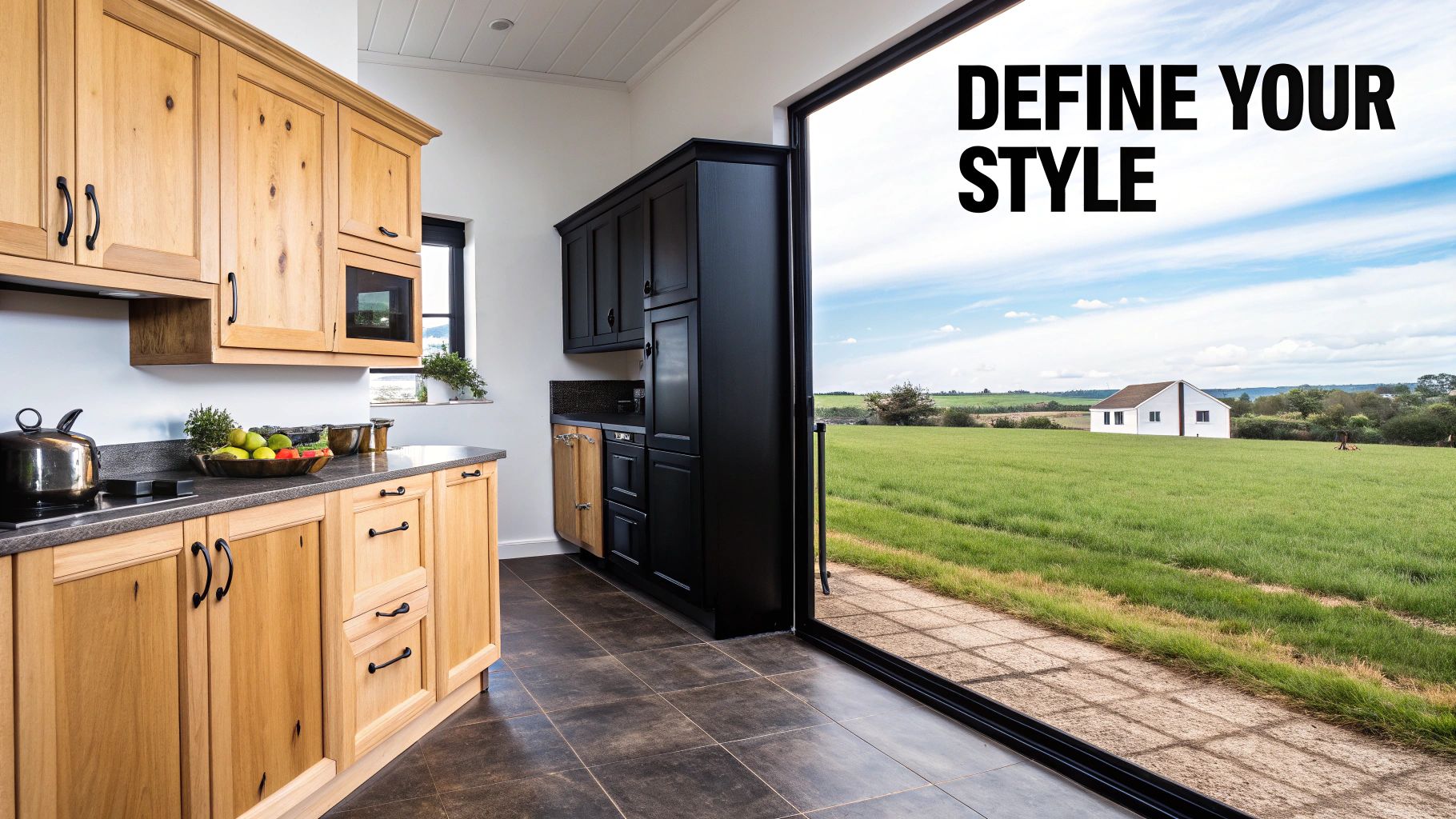
Think of your cabinet material as the foundation of your kitchen’s entire personality. It’s the single biggest decision you’ll make, setting the tone for everything else. More than just a practical choice, it establishes the visual language of the room.
From the warm, authentic grain of real wood to the sleek, reflective sheen of high-gloss HDF, each material brings a unique feel to the space. This choice dominoes into your decisions for countertops, backsplash, and even hardware, ultimately pulling the whole look together into something that feels deliberate and thoughtfully designed.
Creating a Traditional and Farmhouse Look
When you’re chasing that timeless, warm, and inviting kitchen vibe, nothing beats solid wood. It’s the go-to for a reason. The natural grain patterns you see in woods like maple or oak give a room an organic texture and a sense of heritage that’s essential for traditional, rustic, or farmhouse styles. A classic stain finish really brings out these details, creating a rich, layered look.
Painted solid wood is another fantastic route, especially in soft whites and creams, which is the cornerstone of the modern farmhouse aesthetic. Just remember that wood is a natural material that breathes and moves with the seasons. You’ll likely see tiny hairline cracks appear at the joints over time—a detail many homeowners feel just adds to its authentic charm.
Key Insight: The true beauty of solid wood is in its character and subtle imperfections. If you want a kitchen that feels welcoming and lived-in from the moment you install it, the rich grain and substantial feel of solid wood are simply unmatched.
Achieving a Modern and Minimalist Aesthetic
If your vision is a sleek, clean, and uncluttered kitchen, then engineered materials like HDF (High-Density Fibreboard) are hands-down the better option. Their perfectly uniform and stable composition creates the flawless canvas needed for contemporary, modern, and minimalist designs.
- High-Gloss HDF: This finish gives you a seamless, almost mirror-like surface that bounces light around the room, making any kitchen feel brighter and larger. It’s the signature look for ultra-modern, European-inspired designs where clean lines are everything.
- Matte HDF: For a more understated and sophisticated take on modern, matte HDF is ideal. Its soft, non-reflective surface hides fingerprints and creates a sense of calm elegance, perfect for minimalist and transitional spaces.
Both of these sleek finishes rely on the absolute stability of HDF to maintain their flawless look—something solid wood, with its natural movement, just can’t promise. For a better sense of how these styles play out in real homes, take a look through a gallery of completed kitchen projects for inspiration.
The Role of Hardware in Defining Style
Never underestimate the power of hardware. Your choice of knobs, pulls, and handles is the final touch that can either cement your kitchen’s style or completely change its direction. For example, the exact same white Shaker-style HDF cabinet can feel worlds apart depending on what you pair it with.
Match it with long, black bar pulls, and you’ve got a distinctly modern or transitional look. Swap those out for brushed nickel knobs or classic cup pulls, and the same cabinet door suddenly feels more traditional or farmhouse-inspired. This is where you can really inject your own personality into the design.
It’s clear homeowners are embracing this level of personalization. The North American kitchen cabinetry market, valued at around USD 70.59 billion in 2024, is shifting significantly. Semi-custom and custom solutions now account for about 40% of new cabinet sales, showing a strong demand for kitchens that are anything but cookie-cutter.
Getting a Grip on Your Cabinet Budget
Let’s talk numbers. A successful kitchen reno starts with a realistic budget, and cabinets are a huge part of that puzzle. It’s easy to get fixated on the initial price tag, but the real cost of your cabinets unfolds over years of use. Think of it less as a purchase and more as an investment in your home.
We’ll break down the financial side of things, from wallet-friendly choices to top-of-the-line materials. This way, you can see how each option stacks up not just today, but a decade from now.
Investment Tiers for Cabinet Materials
Cabinet materials generally fall into three price brackets. Each one strikes a different balance between durability, style, and long-term performance, so you can find a perfect match for your budget and your vision.
- Budget-Conscious (Thermofoil): If you’re looking for the most accessible price point, Thermofoil is it. You’re looking at a vinyl-wrapped HDF core that’s a breeze to clean—a solid, practical choice for a rental property or a quick cosmetic refresh. Expect to pay around $100 to $250 per linear foot.
- Mid-Range (Painted HDF): This is the sweet spot for so many homeowners here in Toronto and Markham. Painted HDF gives you that high-end, custom look without the hefty price tag, usually running between $250 and $450 per linear foot. It’s incredibly stable, gives you a flawless finish, and delivers serious bang for your buck.
- Premium (Solid Wood): For those who want unparalleled quality and a classic, timeless feel, solid wood is the ultimate choice. Costs typically start at $500 per linear foot and can go up from there, making it a significant investment in your home’s future.
Weighing Upfront Cost vs. Long-Term Value
A higher price tag at the start doesn’t always mean you’re spending more in the long run. The real test is how a material holds up to a decade of spills, dings, and daily life.
Solid wood’s premium cost, for instance, is backed by its incredible lifespan. You can sand it down and refinish it completely, which means you could have a brand-new looking kitchen in 15 years without tearing out a single cabinet. That’s a massive saving down the road.
On the other hand, HDF offers a tough, crack-resistant painted finish that looks fantastic for years with very little effort. You get that luxury aesthetic without the premium cost or the upkeep headaches that can come with wood. From that perspective, it’s a really smart long-term play.
Key Takeaway: The “true cost” of your cabinets has to include future repairs, refinishing, and eventual replacement. Spending a bit more upfront on a durable material like HDF can save you from a costly, full-scale replacement later on.
The Advantage of Factory-Direct Pricing
Want one of the best ways to keep your cabinet budget in check? Go straight to the source. The typical retail journey for cabinets involves a lot of middlemen—distributors, wholesalers, showrooms—and every single one adds a markup. That can easily inflate the final price you pay by 30-50%, sometimes even more.
When you work with a factory-direct supplier, you cut out all those extra layers. This simple move gives you access to premium materials and custom designs without the bloated retail price. You get far more control over the final product and can explore a wider range of custom cabinet services and options that might otherwise be out of budget, ensuring every dollar you spend is going directly into the quality of your kitchen.
Durability, Maintenance, and Local Climate Factors
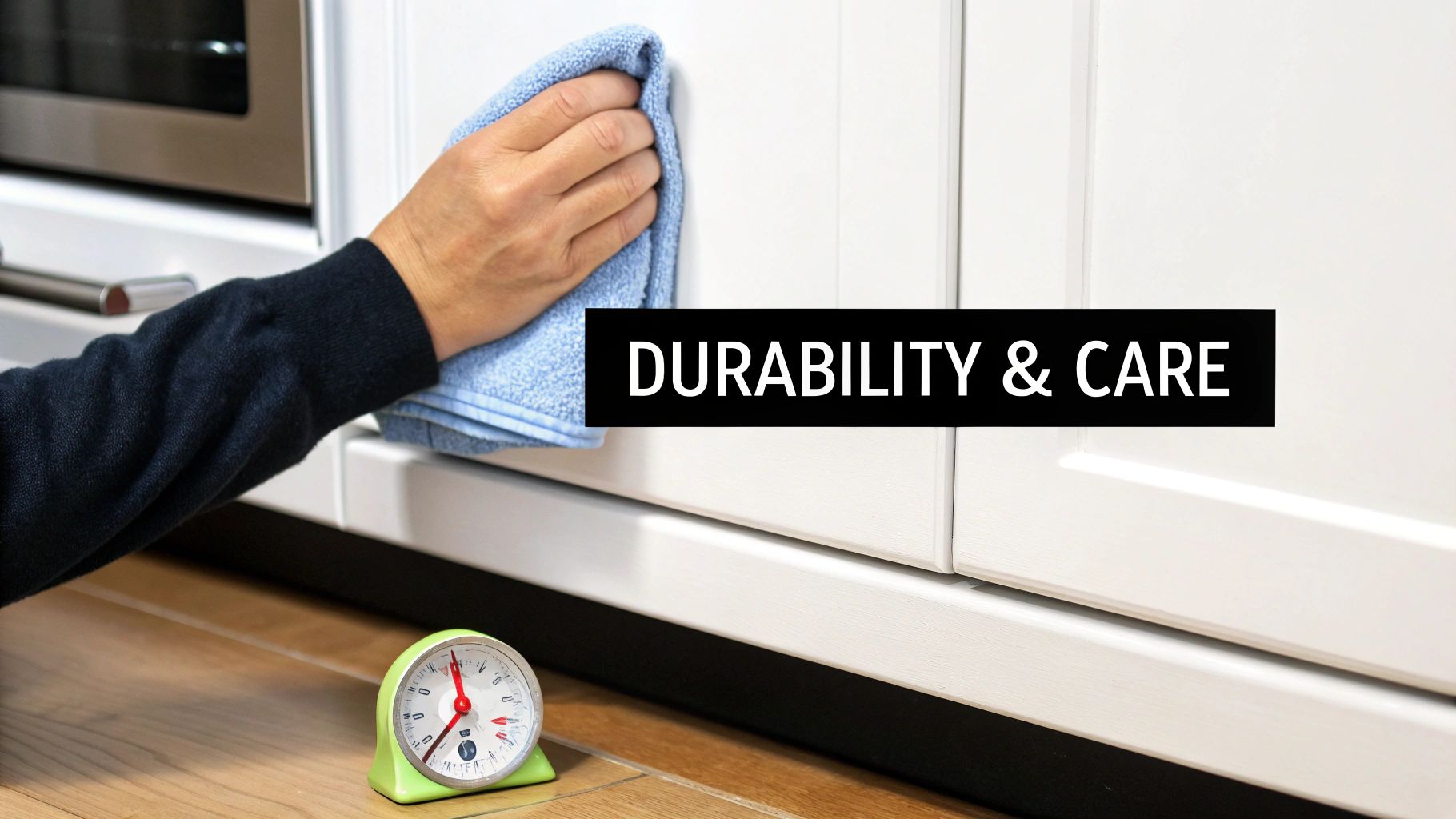
Kitchen cabinets are a major investment. To keep them looking and functioning beautifully for years, you need to think beyond day one. The daily grind of cooking splatters, fingerprints, and general wear and tear takes a toll, but so does something many people overlook: the local climate.
This is a big deal for homeowners across Southern Ontario, from Toronto to Markham. Our seasons are distinct, swinging from humid, sticky summers to bone-dry winters. These dramatic shifts in humidity can be surprisingly tough on certain cabinet materials, making your choice here critical for long-term satisfaction.
How Toronto’s Climate Can Affect Your Cabinets
The real issue with our fluctuating humidity comes down to natural wood. Solid wood is an organic material, and it “breathes” by absorbing moisture from the air when it’s humid and releasing it when it’s dry. It’s a natural process, but it causes the wood to expand and contract.
Over many seasons, this constant movement can create cosmetic problems, especially on painted wood cabinets. You might start to see hairline cracks developing right at the joints where the pieces of the cabinet door meet. While this doesn’t mean the door is falling apart, it can be an eyesore if you’re after a perfect, seamless finish.
This is exactly why engineered materials like High-Density Fibreboard (HDF) are so often recommended for the Toronto climate. HDF is created under extreme pressure, making it incredibly dense and stable. It simply doesn’t react to humidity changes—it won’t swell, shrink, or warp, which means a painted finish stays flawless and crack-free for the long haul.
A Practical Guide to Cabinet Maintenance
No matter what material you choose, proper care is what will truly protect your investment. The trick is knowing that different materials need different kinds of care. Using the wrong cleaner can cause permanent damage.
Maintaining Painted HDF and Thermofoil:
- Cleaning Routine: Keep it simple. A soft, lint-free cloth with a bit of warm water and a drop of mild dish soap is all you need. Gently wipe the surfaces, then immediately follow with a dry cloth to make sure no moisture is left behind.
- What to Avoid: Stay far away from abrasive cleaners, scouring pads, and harsh chemicals like bleach or ammonia. These will quickly dull, scratch, or even strip the finish right off.
- Minor Repairs: For little nicks or scratches on a painted HDF door, your best bet is a touch-up paint kit directly from the manufacturer.
Maintaining Solid Wood Cabinets:
- Cleaning Routine: The same gentle soap and water method works great here. Just be sure to always wipe in the direction of the wood grain.
- What to Avoid: Never let water sit on the surface. It can seep in and cause swelling. Also, skip any silicone-based polishes; they create a film that builds up over time and makes future refinishing a nightmare.
- Climate Control: To minimize the natural expansion and contraction, try to keep your home’s humidity level consistent. Aim for a range between 40-50% by using a humidifier in the winter and a dehumidifier or A/C in the summer. This one step can dramatically reduce the stress on solid wood.
Ultimately, the longevity of your kitchen hinges on a smart material choice backed by a consistent, gentle care routine. By understanding how our local climate affects your options, you can ensure your cabinets remain the beautiful, functional heart of your home for decades.
Making Your Final Decision with a Buyer’s Checklist
Choosing the right material for your kitchen cabinets is a balancing act—it’s where your personal style, daily life, and budget all meet. To help you pull it all together, let’s look at a couple of real-world scenarios before jumping into a checklist that will have you asking all the right questions.
If you’ve got a busy family home in Markham, you know the kitchen sees a lot of action. In this case, painted HDF is a fantastic choice. Its surface is non-porous and a breeze to wipe clean, while the tough engineered core stands up to the inevitable bumps and dings from kids. Plus, HDF is stable, meaning Southern Ontario’s humidity swings won’t cause the paint to crack over time.
Now, imagine you’re a first-time homebuyer aiming for a sleek, modern kitchen without breaking the bank. Matte HDF delivers that sophisticated look and is incredibly forgiving. It hides fingerprints and smudges, so it always looks clean and elegant with very little effort. It’s the perfect way to get a high-end feel without the solid wood price tag.
Your Essential Buyer’s Checklist
Walking into a showroom or talking to a supplier can be overwhelming, but being prepared makes all the difference. Even when you’re getting great value from a factory-direct provider, you need to know exactly what you’re buying. Arm yourself with these key questions to make a smart investment.
- Material Composition and Origin: Get the details. What grade of HDF or species of wood is it? Is it CARB Phase 2 compliant for low emissions? Where is it sourced from?
- Finish and Durability: Don’t just ask about the colour. What kind of paint or lacquer do they use? How many coats are applied? Is there a protective top coat, and how is it cured for hardness?
- Construction Details: The inside matters just as much as the outside. Are the cabinet boxes built from plywood or particleboard? How thick are they? How are the drawers joined—are they sturdy dovetail joints?
- Warranty and Support: What, exactly, does the warranty cover, and for how long? Does it protect the finish from defects, the hardware from failing, and the cabinet’s structural integrity?
Here’s something people often forget to ask about: the environmental and health impact of their new cabinets. Asking upfront about low-VOC finishes and formaldehyde-free materials helps ensure your home’s air quality is safe for your family.
Thanks to regulations like CARB Phase 2, there has been a 50% reduction in cabinetry-related indoor air pollutants. This has pushed manufacturers toward ultra-low-emitting formaldehyde (ULEF) boards and healthier waterborne lacquers. You can learn more about how healthy materials are shaping the industry.
This checklist will give you the confidence to compare your options like a pro. And for guidance tailored to your home, talking it over with custom kitchen renovation experts in Toronto can help you match the perfect materials to your space, ensuring you’ll love your decision for years to come.
A Few More Questions We Hear All the Time
Even with all the details laid out, you might still be weighing your options. That’s perfectly normal. Let’s tackle some of the most frequent questions we get from homeowners in Toronto and Markham as they zero in on the perfect cabinet material.
What Is the Most Durable Material for Painted Cabinets?
When it comes to a painted finish, High-Density Fibreboard (HDF) is, without a doubt, the champion of durability. Because it’s an engineered product, HDF is incredibly stable and won’t expand or contract with the humidity swings we get here in Southern Ontario.
That stability is the secret sauce. It prevents those annoying hairline cracks that often appear at the joints of painted solid wood cabinets, keeping your finish looking smooth and flawless for years.
Is Solid Wood Always Better Than HDF?
Not always—it really depends on the look you’re after. Solid wood has a natural beauty and character that’s hard to beat, and you can always sand and refinish it down the road. But, it’s a living material that breathes with the seasons, making it a tricky partner for paint.
HDF’s dimensional stability makes it the clear winner for large, seamless cabinet doors and any painted style. The “best” material truly depends on your specific goals—whether you prioritize the natural grain of wood or the flawless finish of painted HDF.
How Does Toronto’s Climate Affect My Choice?
The GTA’s climate is a big factor. Our humid summers and bone-dry winters put a lot of stress on natural materials. This seasonal rollercoaster causes solid wood to swell and then shrink, which can lead to warped doors or cracked paint over time.
Engineered materials like HDF are built to be completely immune to these shifts. They offer a reliable, “set it and forget it” solution that’s perfectly suited for our local climate, ensuring your investment looks great through every season.