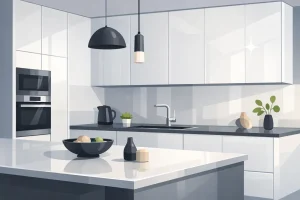

When it comes to kitchen cabinets, the "best" material is always a balancing act between durability, style, and your budget. For most homeowners in Toronto, High-Density Fibreboard (HDF) hits the sweet spot, offering incredible stability and a perfect canvas for a flawless painted finish. But if you’re after timeless appeal and long-term value, nothing beats the premium standard of solid wood like classic maple.
Your Guide To Choosing Kitchen Cabinet Materials
Picking the right material for your cabinets is arguably the most important decision you'll make during a kitchen renovation. It sets the tone for the entire space, dictates how well it will stand up to daily life, and ultimately affects its value. Here in the Greater Toronto Area, we also have to think about how materials will handle our distinct seasonal humidity shifts.
Your lifestyle is a huge factor. Do you cook every night? Do you have kids and pets? Are you planning to stay in your home for the long haul? The answers will point you toward the right choice.
This guide cuts through the noise and gives you a straight-up comparison of the most popular cabinet materials out there today, from traditional solid wood to sleek, high-gloss HDF. We'll get into the real differences in performance, cost, and upkeep to help you make a choice you’ll be happy with for years. Remember, it's not just about the core material; the finish is just as crucial for durability and appearance. To learn more, check out this resource on the best paint for kitchen surfaces.
A smart choice now pays off later. It's well-known that quality hardwood cabinets can easily last 20-30 years, while laminates often need replacing in 10-15 years. That difference can cut your long-term replacement costs by as much as 40%.
Kitchen Cabinet Material At-A-Glance Comparison
To get you started, here's a quick overview of the most popular cabinet materials we work with. Think of this as a cheat sheet to help you narrow down your options based on what matters most to you.
| Material Type | Best For | Durability Score | Cost Range | Maintenance Level |
|---|---|---|---|---|
| Solid Wood | Timeless look, high resale value, and natural warmth. | 9/10 | $$$$ | Moderate |
| HDF (Painted) | Flawless painted finishes and superior stability. | 8/10 | $$$ | Low |
| High-Gloss HDF | Ultra-modern, light-reflective contemporary kitchens. | 7/10 | $$$ | Moderate |
| Laminate/Thermofoil | Budget-conscious projects needing high durability. | 7/10 | $$ | Very Low |
| MDF | Cost-effective substrate for various finishes. | 6/10 | $$ | Low |
This table gives you a high-level view, but the best material is the one that fits your specific project. In the sections that follow, we’ll dive deeper into each of these options to give you the full picture.
Solid Wood: The Timeless Standard for Quality
When you picture a truly high-end kitchen, what comes to mind? For most of us, it’s the unmistakable warmth and authenticity of solid wood. Engineered materials have their place, but they can't quite capture the luxurious feel and unique character of the real thing. Each species, whether it's classic maple or rich oak, tells a story through its distinct grain, texture, and natural colour variations. This is what makes solid wood the go-to choice for a timeless, upscale kitchen.
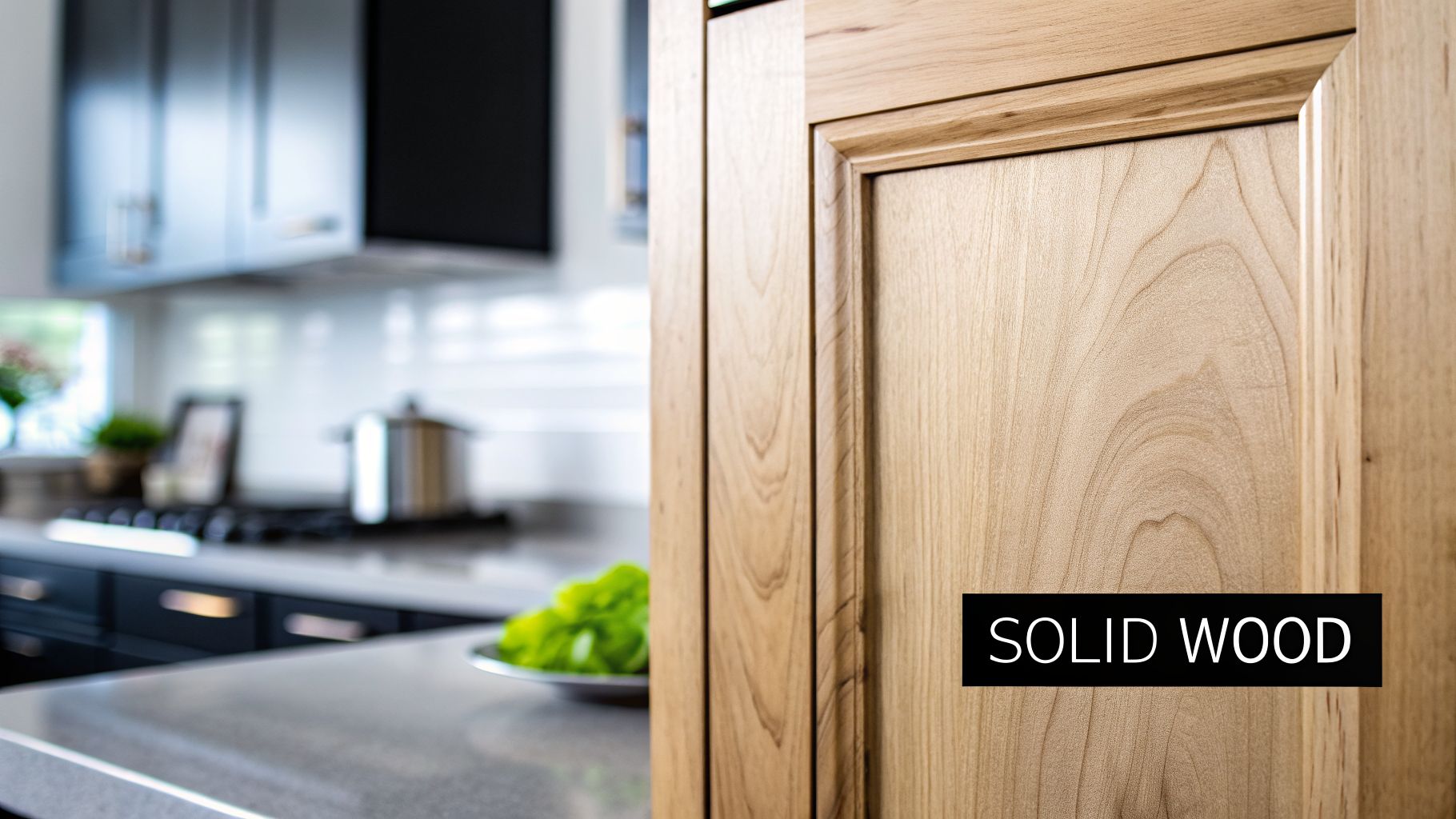
But it’s not just about looks. Solid wood is legendary for its strength and longevity. With the right care, these cabinets can easily last for decades—often for the entire life of the house. That kind of durability isn't just a feature; it's a solid investment that boosts your property's resale value, a huge plus for any homeowner in the competitive Toronto real estate market.
How Wood Handles the Toronto Climate
For any home in Toronto or Markham, we have to consider how materials stand up to our wild swings in humidity. Wood is a natural product, and that means it "breathes"—it expands a bit in our humid summers and contracts in the dry winter air. While this is totally normal, it highlights just how crucial professional craftsmanship is.
To prevent issues like warping or cracking, solid wood cabinets need to be built and sealed by experts. A high-quality, factory-applied finish is key. It acts as a protective barrier, minimizing moisture absorption and keeping your cabinetry stable for the long haul. This professional finishing isn't just a nice-to-have; it's essential for protecting your investment.
A Quick Word of Advice: Don't let the idea of wood movement scare you away. While engineered materials are inherently stable, modern finishing techniques make solid wood a perfectly durable option for our climate. The trick is to partner with pros who know exactly how to treat and seal wood for lasting performance right here in Ontario.
Style Versatility: From Natural Grains to Painted Finishes
Solid wood is incredibly versatile. If you're someone who appreciates its natural beauty, a simple clear stain can make the grain pop, bringing a real warmth to traditional, rustic, or transitional kitchens. This look is a favourite in older homes where you want to honour the original character.
At the same time, solid wood is a fantastic canvas for painted finishes. Unlike the perfectly flat surface of an engineered board, a painted wood door still has a subtle texture from the grain underneath. This adds a layer of depth and character you just can't fake, creating a look that feels both custom and classic. You can dive deeper into the different qualities of wood kitchen cabinet doors in our detailed guide.
So, which is right for you? It really comes down to your personal style.
- Stained Wood: This is your best bet for creating a warm, inviting, and traditional vibe. It’s perfect for designs that celebrate natural textures.
- Painted Wood: This choice opens up a world of colour possibilities for a more contemporary or transitional feel, all while keeping the authentic quality of real wood.
Ultimately, choosing solid wood is an investment in lasting quality. The higher upfront cost is balanced by its incredible lifespan and the undeniable value it adds to your home. For a kitchen that's truly the heart of the home or a luxury renovation demanding the best, solid wood remains the gold standard.
HDF & MDF: The Go-To Choice for Modern Kitchens
While nothing beats the classic charm of solid wood, engineered materials often steal the show in a modern kitchen. Let’s talk about High-Density Fibreboard (HDF) and Medium-Density Fibreboard (MDF)—the backbone of many of today's most sought-after cabinet styles. Both are made by breaking down wood fibres, binding them with resin, and compressing them into solid panels using intense heat and pressure.
This process creates something solid wood can’t offer: a perfectly uniform and flawlessly smooth surface. Free of any grain, knots, or natural blemishes, HDF and MDF are the ideal canvas for paint, thermofoil, or laminate. It’s this consistency that makes them the top choice for contemporary designs where clean lines and a pristine finish are everything.
What's the Real Difference Between HDF and MDF?
People often use the terms interchangeably, but HDF and MDF aren’t the same thing. The key distinction is density, and that one factor makes a huge difference in how they'll perform in your kitchen.
- MDF (Medium-Density Fibreboard): A versatile and budget-friendly option. It's much denser and more stable than particleboard, making it a solid workhorse for all sorts of applications.
- HDF (High-Density Fibreboard): Just as the name implies, HDF is far more compressed. That extra density translates to superior strength, better moisture resistance, and the durability to shrug off dents and dings—all must-haves for cabinets that need to last.
For homeowners in Toronto and Markham, HDF is almost always the smarter investment. Its ability to stand up to our humid summers gives you peace of mind, and its sheer toughness means it can handle the chaos of a busy family kitchen for years to come.
The Perfect Canvas for a Flawless Finish
The real magic of HDF is how it creates a seamless, monolithic look once finished. A traditional five-piece wood door has joints where the panels meet, but a door routered from a single HDF slab has none. This is a game-changer for painted cabinets.
Solid wood naturally expands and contracts with humidity, which can cause tiny hairline cracks to appear in the paint along the joints. Because HDF is so much more stable, this problem vanishes completely. Your painted finish stays perfect and unblemished year after year. This makes HDF, without a doubt, the best material for kitchen cabinets if you want a durable, immaculate painted look.
Of course, some investors lean towards the timeless appeal of wood to boost property value. For real estate flippers, choosing maple often means a higher ROI—data shows kitchens with solid wood cabinets can sell 25% faster in hot markets like Toronto. You can dig deeper into these industry trends in this detailed cabinet manufacturing report.
Ultimately, if your dream kitchen features a smooth, consistent colour—whether it’s a classic white or a dramatic navy—HDF is the best foundation you can build on. It’s stable, flawless, and delivers a high-end look that’s made to last.
Comparing High-Gloss And Matte HDF Finishes
Once you've settled on HDF as your cabinet's core, the next big decision is the finish. This is where your kitchen's personality really comes to life. For modern designs, the choice usually boils down to two very different looks: the brilliant shine of high-gloss or the soft, muted appeal of matte.
It all comes down to how each finish plays with light. A high-gloss finish is like a mirror, bouncing light all over the place. This makes it a fantastic choice for smaller kitchens, especially in Toronto condos where maximizing every square foot is key. That reflective quality can make a tight space feel brighter, bigger, and more open.
Matte, on the other hand, absorbs light. It creates a smooth, almost velvety surface that feels both contemporary and wonderfully understated. Its non-reflective nature brings a sense of calm and sophistication, making it perfect for minimalist or Scandi-inspired designs.
Durability And Daily Maintenance
Both finishes are tough and built for the daily grind of a busy kitchen. But how you live with them day-to-day is a different story, and this is often the deciding factor for homeowners.
High-gloss cabinets are incredibly easy to wipe down. Spills and splatters come right off their slick, non-porous surface with a simple microfibre cloth. The trade-off? That same reflective sheen shows everything—fingerprints, smudges, and minor scratches become much more noticeable, especially in direct light.
Matte finishes are the clear winner when it comes to hiding life’s little messes.
Their soft-touch surface is remarkably forgiving with fingerprints and smudges, making matte a go-to for families with kids or anyone who doesn't want to be constantly wiping down their cabinets. While cleaning is still simple, oily marks can sometimes take a little more elbow grease to fully remove compared to a gloss surface.
At the end of the day, a high-quality HDF core is what allows for a flawless finish in either style. Its incredible stability and smoothness are the perfect canvas for these specialized coatings.
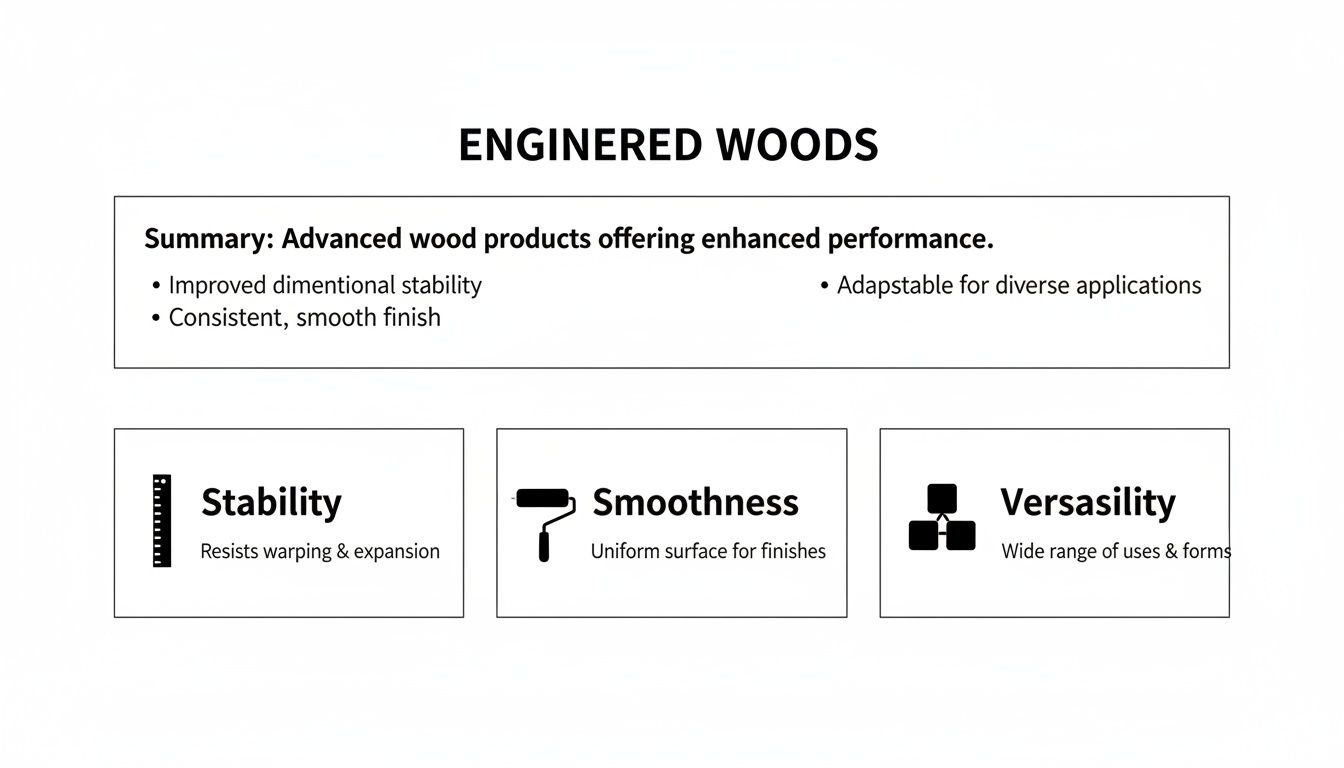
As you can see, the inherent qualities of engineered wood make it the ideal foundation, ensuring both high-gloss and matte finishes look perfect and last.
Making The Right Choice For Your Space
So, which one is for you? There's no single "best" answer—it's all about what fits your lifestyle and the look you're going for.
Think about your home and how you use your kitchen:
- Go for High-Gloss if: You want a sleek, high-impact look that makes a statement. Your kitchen is on the smaller side or lacks natural light, and you need to brighten things up. You're okay with frequent wipe-downs to keep that perfect shine.
- Go for Matte if: You prefer a sophisticated, understated vibe. Your kitchen is a high-traffic hub, and you need a finish that hides fingerprints well. You love a soft, luxurious feel and want to create a calm, modern space.
A popular design trend right now is actually mixing the two. You can use durable matte cabinets for the lower, high-touch areas and reserve the beautiful high-gloss for the uppers, where it can reflect light and add a pop of visual contrast. You can see some incredible examples in our guide to high-gloss kitchen cabinets.
Whether you choose the bold energy of gloss or the quiet confidence of matte, starting with a quality HDF base ensures your cabinets will not only look fantastic but also perform beautifully for years.
5. Laminate And Thermofoil: The Unsung Heroes of Durability
If your renovation mantra is all about durability, easy maintenance, and getting the most bang for your buck, then laminate and thermofoil cabinets deserve a serious look. These engineered finishes have come a long, long way from the dated looks you might remember. Today, they offer stylish, tough, and incredibly practical solutions for any modern home, especially for a busy family kitchen that sees its fair share of action.
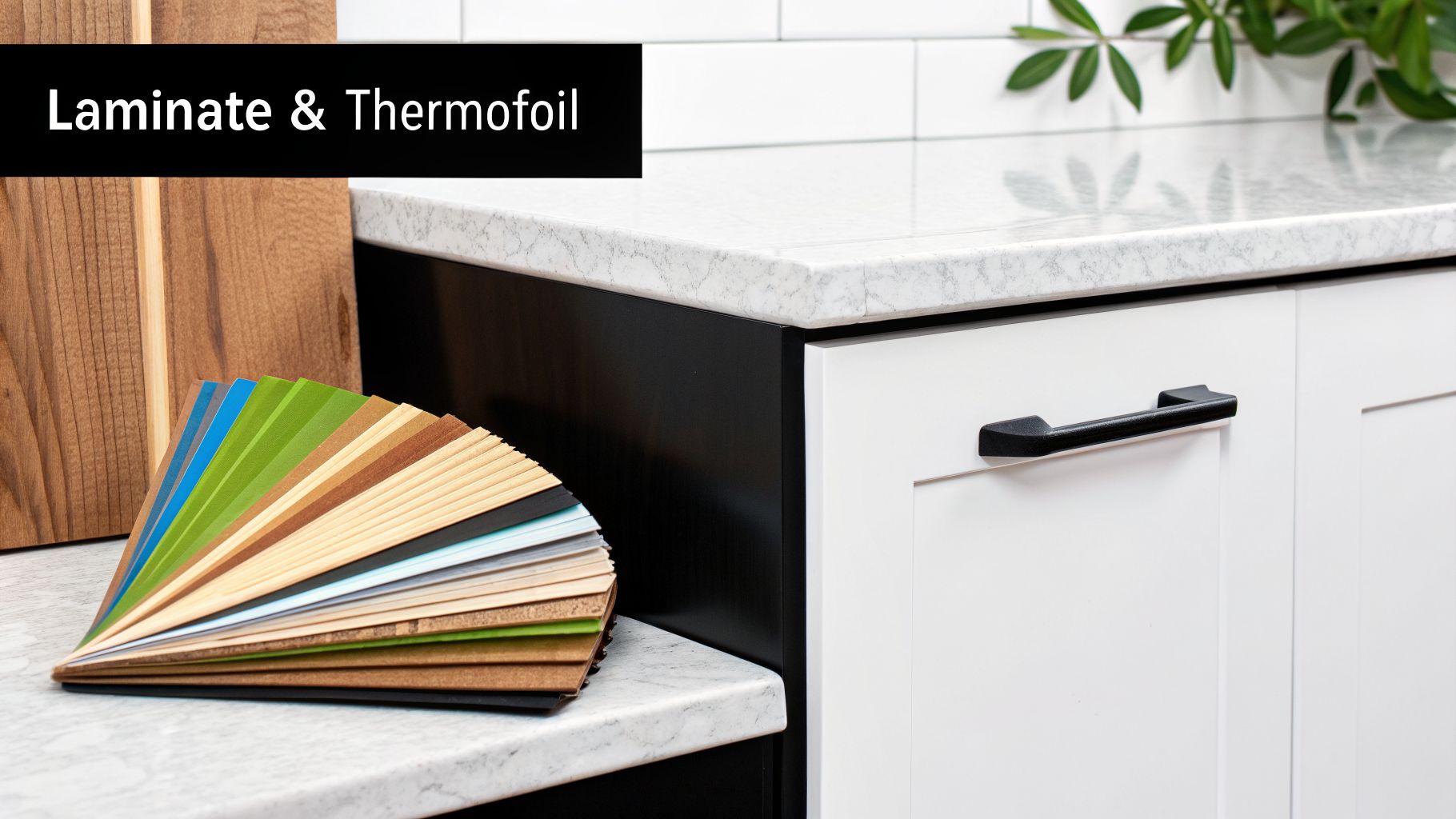
At their heart, both materials are built on a stable HDF core, but it's the surface that sets them apart. Laminate is made by fusing multiple layers of resin-soaked paper under intense pressure, topped with a clear protective layer that's tough as nails. Thermofoil, on the other hand, is a thin layer of vinyl that’s vacuum-sealed with heat right onto the HDF, creating a perfectly seamless surface.
What to Know About Laminate Cabinets
Let's be clear: modern high-pressure laminates (HPL) are a different beast entirely from what you saw in your grandmother's kitchen. The technology now creates an almost limitless range of colours, patterns, and shockingly realistic wood grain textures. This versatility means you can get a very specific look without the price tag or upkeep of natural materials. Its layered construction is its secret weapon, making it exceptionally resistant to scratches, stains, and daily impacts.
For a rental property in Markham or a chaotic family kitchen in Toronto, laminate is just a smart, pragmatic choice. Its non-porous surface shrugs off moisture, preventing the kind of water damage that can be a death sentence for other materials. It’s a real workhorse.
The Clean Appeal of Thermofoil
The defining feature of thermofoil is its smooth, seamless finish. Since the vinyl is wrapped completely around the door and drawer fronts, there are no joints or edge-banding lines where grime and moisture can sneak in. This makes thermofoil cabinets incredibly easy to wipe down—a top contender for kitchens where hygiene is paramount.
It really shines when you want a uniform, consistent colour, making it perfect for sleek, contemporary designs. One thing to keep in mind, though, is its relationship with heat. Thermofoil is more susceptible to high temperatures than laminate. That’s why we always recommend installing heat shields next to ovens or dishwashers to prevent the vinyl from peeling or bubbling over time.
If you’re weighing a full replacement against a smaller update, it helps to understand the numbers. Our guide on the costs of refacing cabinets breaks down the financial side of things.
Our Expert Take: Laminate’s strength is its superior scratch resistance and huge range of designs, making it a go-to for high-traffic areas. Thermofoil’s biggest advantage is its seamless, easy-to-clean surface, which is ideal for achieving that pristine, uniform look in a modern kitchen.
Making the Call: Laminate vs. Thermofoil
So, how do you choose? It really comes down to your specific needs and priorities. While some homeowners will always prefer natural wood, the practical advantages of these modern engineered finishes are impossible to ignore. For context, regional reports show 68% of renovators still opt for full hardwood replacements due to their moisture resistance in the humid GTA climate, seeing failure rates under 2% compared to 10% for older particleboard options.
Here’s a quick cheat sheet to help you decide:
- Go with Laminate for: High-traffic kitchens, homes with kids and pets, rental properties, or if you want a convincing wood-grain look without the real-wood maintenance.
- Go with Thermofoil for: Minimalist and contemporary designs, kitchens where effortless cleaning is a top priority, and any project that calls for a perfectly smooth, solid-colour finish.
In the end, both laminate and thermofoil offer durable, stylish, and budget-friendly cabinetry that’s more than ready to handle the demands of modern life here in the GTA.
How to Choose the Right Cabinet Material
Diving into the world of cabinet materials can feel overwhelming, but the right choice always boils down to a mix of your budget, your lifestyle, and the look you're after. What works for a high-end custom build in Rosedale isn't necessarily the best fit for a busy family kitchen in Markham. Let's break it down with some real-world scenarios to make the decision easier.
The key is to balance aesthetics with everyday practicality. It’s a lot like comparing different flooring options like vinyl, laminate, and hardwood; you're weighing how a material looks against how it performs over time. Let's apply that same thinking to your cabinets.
For Families with Young Children
When you’ve got kids, durability and easy cleanup are your top priorities. Period. The best material for kitchen cabinets in this situation is almost always a high-quality laminate or thermofoil built on an HDF core. These surfaces are the undisputed champs at fending off scratches, stains, and those ever-present sticky fingerprints.
Because they're non-porous, a quick wipe is usually all it takes to clean them. They’re built to withstand the chaos of family life—from rogue toys to bumped chairs—without showing battle scars. It’s about peace of mind.
For the Luxury Custom Home
Here, it's all about making a statement and building lasting value. When your goal is a truly premium feel, solid wood is still the gold standard. There's an authenticity to its natural warmth and unique grain patterns that engineered products just can't quite match.
If your vision is more sleek and modern, a professionally painted HDF door is an equally stunning choice. It provides that perfectly smooth, uniform finish that screams sophistication. Both materials tell a story of quality craftsmanship and are a smart investment for a home you plan to love for years.
MapleKing Pro Tip: Think about a hybrid approach to get the best of both worlds. We often recommend a durable matte HDF for the lower cabinets—the ones that take the most abuse—and then use elegant painted solid wood for the uppers to create a focal point with tons of character.
For the Savvy Property Investor
Whether you're flipping a house or outfitting a rental property in the GTA, your mission is to find that sweet spot: modern appeal, rock-solid durability, and a great price point. This is where a painted HDF cabinet really shines. It delivers that high-end, contemporary look that potential buyers and tenants are searching for, and its inherent stability means it won’t cause you headaches down the road.
This is also where buying factory-direct can be a game-changer. At MapleKing, for example, our model can cut costs by up to 50%, putting premium-looking materials well within reach. We've seen projects where a simple upgrade to maple cabinets in a Toronto condo boosted its resale value by 15%. Choosing the right material isn't just about designing a kitchen; it's about making a powerful financial decision.
Your Top Cabinet Material Questions, Answered
Picking the right cabinet material brings up a lot of questions. As experts who work with Toronto and Markham homeowners every day, we've heard them all. Here are our straightforward answers to the most common ones we get.
What's The Toughest, Easiest-To-Clean Cabinet Material?
If you're looking for something that can handle the chaos of a busy family kitchen with minimal fuss, you can't beat high-quality laminates and thermofoil. Both are built on a sturdy HDF core and designed for real-world wear and tear.
Laminates are champions when it comes to shrugging off scratches, stains, and spills, which is why they're perfect for high-traffic zones. Thermofoil is right there with it, offering a smooth, sealed surface that makes cleanup a breeze. Solid wood is undeniably strong, but it needs a bit more mindfulness to keep it safe from moisture and dings over the years.
How Does The Toronto Climate Affect My Cabinet Choice?
Toronto’s climate swings from humid summers to dry, heated winters, and that means material stability is key. This is where engineered materials like HDF really prove their worth. They just don't expand, contract, and warp the way solid wood can.
That doesn't mean solid wood is off the table! It's a fantastic choice, but a professional factory finish is an absolute must. A proper seal is crucial to protect it from moisture shifts and keep your cabinets looking great. We generally steer clear of materials like particleboard for GTA kitchens because they just can't stand up to the moisture.
We saw a huge jump in demand for hardwood during the renovation wave of 2020-2025, proving its classic appeal never fades. At MapleKing, we meet this demand responsibly by using sustainable processes that have cut our manufacturing waste by 30%. It’s about giving you a beautiful kitchen you can feel good about. You can learn more about these industry trends and sustainability efforts.
Should I Choose Painted HDF Or Painted Solid Wood?
This really boils down to the look you're going for. If your goal is a flawless, glass-smooth painted finish, HDF is the clear winner. Its perfectly stable surface means you'll never see the faint hairline cracks that can sometimes form at the joints of solid wood doors as they breathe with the seasons.
On the other hand, if you love seeing the subtle grain of the wood peeking through the paint, then a real wood door provides a warmth and character HDF just can't mimic. Both are great, durable choices—it just depends on whether you prefer perfect consistency or authentic texture.
Which Cabinet Material Gives Me The Best Resale Value?
Time and time again, solid wood cabinets have proven to offer the best return on investment. In competitive markets like Toronto, potential buyers see species like maple as a premium feature, thanks to their timeless look and proven durability.
While the upfront cost is higher, solid wood is widely seen as a smart investment that boosts a home's value. However, don't discount a well-made HDF cabinet with a modern, professional finish. For contemporary homes, its clean aesthetic is a huge draw and a very close second in adding value.
Ready to find the perfect material for your dream kitchen? The experts at MapleKing Kitchen Cabinets are here to guide you through every option, offering factory-direct pricing on premium, customized cabinetry. Explore our collection and get your free quote today.