

For many Canadian homeowners, finding the right gas range isn't just about buying an appliance; it's the first real step toward building a dream kitchen. It’s a choice that marries the precision serious cooks crave with a timeless style that anchors the whole room. The best models deliver robust performance, day-in and day-out reliability, and features that work for both weeknight dinners and ambitious weekend feasts.
Why Gas Cooking Is Still the Top Choice in Canadian Kitchens
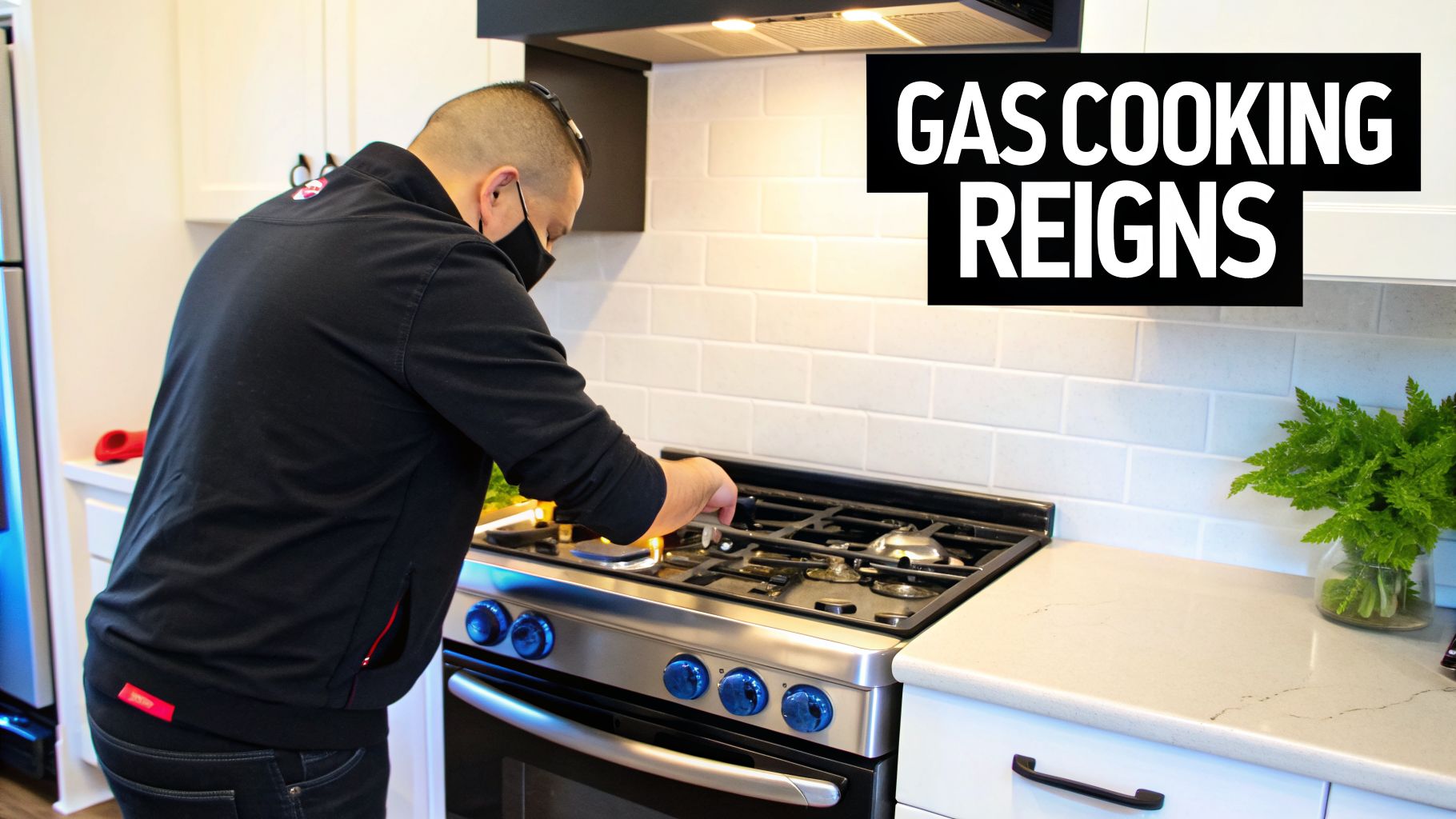
Step into a thoughtfully designed kitchen anywhere from Toronto to Vancouver, and you’ll often find a gas range sitting proudly at its centre. It’s more than just a piece of equipment. For many people, it’s the heart of the home—a symbol of a passion for good food and a commitment to quality. But what is it about gas that continues to capture our hearts, especially when we’re planning a kitchen renovation?
The appeal comes down to real, practical benefits that you can feel every time you cook. Gas provides a direct, almost primal connection to the cooking process that other methods just can't match.
The Power of Immediate, Intuitive Control
Think about it: you turn a knob, and a flame instantly grows or shrinks. There's no lag time, no waiting for a coil to heat up or cool down. This immediate, visual feedback is exactly why professional chefs have sworn by gas for generations.
That same level of precision translates directly to better results in your own kitchen. You can bring a big pot of water to a rolling boil in minutes, then instantly drop the flame to a bare flicker to hold a delicate sauce without it catching. This responsiveness makes cooking feel more intuitive, taking the guesswork out of getting the temperature just right.
Performance That Builds Confidence
Beyond that fine-tuned control, gas ranges are known for their powerful and consistent performance. They heat the bottom of your pots and pans evenly, which is critical for everything from getting the perfect sear on a steak to frying an egg without burnt edges. It’s this reliability that encourages you to step out of your comfort zone and try new recipes.
A few key performance perks stand out:
- Faster Meals: With instant heat, water boils faster and pans get hot in a flash. On a busy weeknight, those saved minutes really add up.
- Even Baking and Roasting: Many modern gas ranges include convection ovens, which use a fan to circulate hot air. This eliminates frustrating hot spots and ensures everything from cookies to roasts cooks evenly.
- Works When the Power Is Out: During an outage, you can usually still light a gas cooktop with a match. Having a reliable way to make a hot meal is a huge plus.
A gas range is more than an appliance—it's a cornerstone of a functional, stylish, and efficient kitchen. Selecting the right model is a crucial first step in any renovation, setting the stage for a cohesive design where every element works in harmony.
Ultimately, choosing the best gas range Canada has to offer is an investment in your daily cooking experience. It's about turning meal prep from a chore into a pleasure and creating a kitchen that’s not only beautiful but also works brilliantly. As you plan your renovation, you’ll see how the right range can anchor the entire space, influencing your cabinetry choices and defining the kitchen’s workflow.
Understanding Gas Range Power and Performance
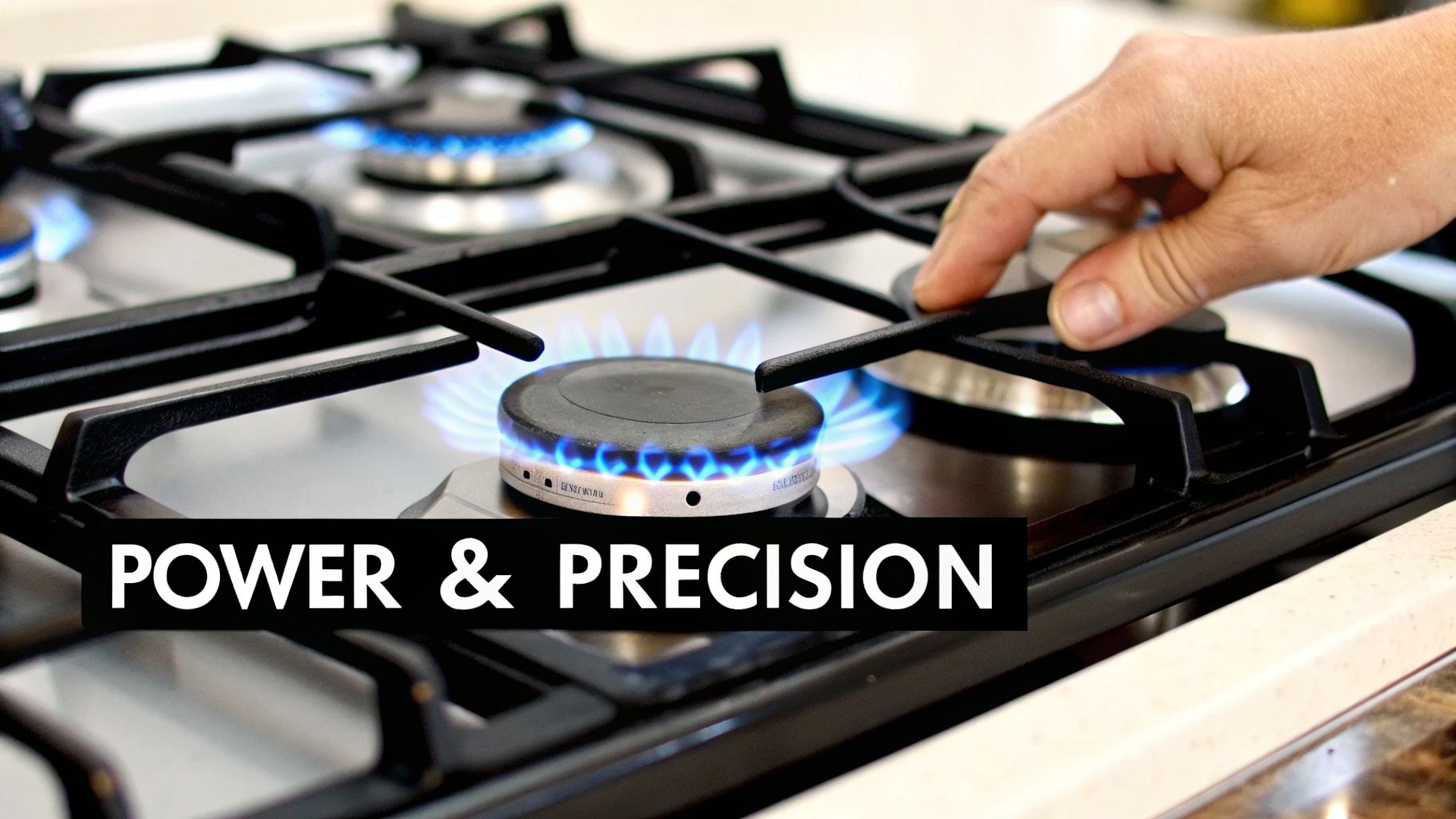
When you're trying to find the best gas range Canada has to offer, the technical specs can feel a bit overwhelming. You'll see terms like BTUs, dual-ring burners, and cubic feet thrown around, but what do they actually mean for your cooking? Getting a handle on these features is what will elevate your kitchen game.
Let's start with BTUs (British Thermal Units). The simplest way to think of BTUs is as the horsepower for your cooktop. It’s a direct measure of heat output—the higher the number, the more powerful the flame. A range that offers a broad spectrum of BTU outputs gives you the versatility to go from a delicate simmer to a roaring boil in seconds.
This kind of power and efficiency is especially important here in Canada. It's no surprise the gas stove market is growing at a remarkable 8.89% compound annual growth rate. Our colder climate makes appliances that heat up quickly and run efficiently a smart investment, which is why so many homeowners in cities like Toronto and Markham are making the switch. You can explore more data on this market trend and see why gas precision is replacing older electric models.
Decoding Burner Power and Types
The real magic of a gas range lies in its burners, and not all are created equal. A great stove will have a thoughtful mix of burner types, giving you precise control for any task. The key is to find a configuration that genuinely matches how you cook day-to-day.
So, what should you look for on the cooktop?
- High-Power Burners (15,000+ BTUs): These are the workhorses. They're built for searing steaks, stir-frying in a wok, or getting a huge pot of water to a rolling boil for pasta night. They deliver that intense, immediate heat you need.
- Simmer Burners (Under 5,000 BTUs): On the opposite end, these low-and-slow burners are your secret weapon for delicate jobs. Think melting chocolate without a double boiler, holding a sauce at the perfect temperature, or simmering a stew for hours without it catching.
- All-Purpose Burners (9,000-12,000 BTUs): This is your everyday go-to. It’s perfectly balanced for sautéing vegetables, frying an egg, or cooking a pot of rice. Most of your daily cooking will happen here.
The best gas ranges in Canada often include specialty burners for even more flexibility. A dual-ring burner, for instance, gives you two flame rings in one; use the tiny inner ring for a gentle simmer or ignite both for a blast of heat. Another handy feature is an oval-shaped bridge burner, which is designed to heat long cookware like a griddle perfectly from end to end.
When you're in the showroom, don't just fixate on the maximum BTU number. A range’s true quality is revealed in its ability to hold a very low, consistent flame. Turn the knobs. Do they feel smooth and responsive, allowing for tiny adjustments? That's the kind of precision that separates a basic appliance from a real culinary partner.
BTU Power Levels and What They Mean for Your Cooking
To help visualize how BTUs translate to your kitchen, this table breaks down the common power levels and what they're best used for.
| BTU Range | Burner Type | Best For | Kitchen Example |
|---|---|---|---|
| 500 – 5,000 | Simmer Burner | Delicate heating, melting, and keeping food warm. | Melting butter or chocolate; holding a sauce. |
| 9,000 – 12,000 | All-Purpose Burner | Everyday cooking tasks like frying, sautéing, and simmering. | Frying eggs; sautéing onions and garlic. |
| 15,000 – 18,000 | High-Power Burner | Rapid boiling, searing, and high-heat cooking. | Boiling a large pot of water; searing a steak. |
| 20,000+ | Pro-Style Power Burner | Intense heat for wok cooking and restaurant-style searing. | Achieving a perfect crust on a cast-iron skillet. |
Matching the BTU range to your cooking style is the secret to getting a range you’ll love using every single day.
Finding the Right Oven Capacity
While the cooktop often steals the show, the oven is the heart of the appliance. Oven capacity is measured in cubic feet (cu. ft.), and the right size for you depends entirely on your lifestyle. A bigger oven isn't automatically better—it takes more time and energy to preheat.
Think about how you and your family cook:
- Compact Ovens (Under 4.0 cu. ft.): These are great for singles, couples, or anyone living in a smaller space who typically cooks for one or two.
- Standard Ovens (4.5 – 5.8 cu. ft.): This is the sweet spot for most households. It provides plenty of room for a roast chicken, a couple of trays of cookies, or several casserole dishes.
- Large-Capacity Ovens (6.0+ cu. ft.): If you love to entertain or have a big family, this is for you. These ovens are built to handle a massive holiday turkey and all the sides at once.
Here’s a pro tip: before you commit, grab a tape measure and check the dimensions of your favourite roasting pan and baking sheets. Make sure they’ll fit inside with enough room for air to circulate properly. It’s a simple step that can save you a world of frustration down the road.
Integrating Your Gas Range with Kitchen Cabinetry
A new gas range shouldn't look like an afterthought—it should feel like it was born there. Getting that seamless, truly integrated aesthetic is all about the conversation between your appliance and the cabinetry around it. It’s a dance of design and safety, and when you get it right, your range becomes a stunning centrepiece.
It all starts with a tape measure. Here in Canada, most gas ranges for homes come in standard widths. You’ll typically see 30-inch models in city homes and condos, while larger kitchens often accommodate the more professional-grade 36-inch ranges. But here’s the key: you’re not just measuring the appliance. You’re measuring the space it will live in.
Sizing and Safety Clearances
Before you even dream about cabinet colours, you have to think about clearances. Gas ranges throw off a lot of heat, and not just from the burners. The oven vents and even the side panels get hot, and without proper airflow, that heat can scorch, warp, or create a serious fire hazard for your cabinets.
Every single range comes with an installation manual that spells out the minimum clearances. These aren't suggestions—they're rules.
- Side Clearances: You’ll need a specific gap between the sides of the range and any vertical surface, like a pantry cabinet or the wall. It might seem like a small detail, but this space is absolutely critical for letting heat escape.
- Rear Clearance: There’s usually a small gap required at the back to protect the wall and make room for the gas hookup.
- Overhead Clearance: Pay close attention to the distance from your cooktop to the bottom of the upper cabinets or range hood. The standard minimum is 30 inches, but you might need even more for a high-BTU, pro-style range.
Always, always check the manufacturer's spec sheet before you finalize your cabinet order. The secret to a perfect fit is designing your kitchen around the appliance, not trying to shoehorn an appliance into a layout you've already built.
Skipping this step is a costly mistake. I've seen it happen: beautiful high-gloss cabinets turn yellow, or durable matte panels start to peel away simply because they were installed too close to the heat. A little planning upfront prevents a ton of heartache later.
Creating a Custom Built-In Look
One of the best ways to elevate your kitchen design is to make a standard freestanding range look like a high-end built-in unit. This is where your cabinet choices really get to shine. By working with your cabinet provider, you can design a layout that perfectly frames the appliance.
A fantastic trick is to have the countertop extend just a hair over the edges of the range. Combine this with thin decorative filler strips or finished panels on the cabinets on either side. This simple move completely closes those awkward dust-collecting gaps, creating a clean, continuous line. It's a small detail that makes the entire kitchen feel more custom and intentional.
Matching Cabinetry Styles and Finishes
The style of your cabinets can either clash with your gas range or make it sing. The goal is to create a cohesive look that feels deliberate. For instance, a modern stainless steel range is a natural fit for minimalist cabinet doors.
Think about these popular combinations:
- Sleek and Modern: A stainless steel range looks incredible next to high-gloss HDF cabinets. The way the reflective surfaces play off each other creates a bright, contemporary vibe that’s popular in homes across Toronto and Markham.
- Elegant and Timeless: For a softer, more transitional kitchen, try pairing your range with matte HDF painted finishes. These surfaces are great at resisting fingerprints and provide a quiet elegance that allows the appliance to be a focal point without shouting.
- Warm and Natural: If you've chosen a range with beautiful bronze or copper details, think about pairing it with real wood painted doors. The subtle grain of the wood adds a layer of warmth and texture that perfectly balances the industrial feel of the appliance.
Ultimately, fitting your new range is about more than just slotting it into a space. It’s about making smart choices that create a kitchen that is safe, functional, and beautiful. The right cabinetry doesn't just prevent hazards; it turns your appliance into a true design statement. To see how these pairings work in real kitchens, explore different kitchen cabinet layout ideas and gather some inspiration. By focusing on the details of fit, safety, and finish, you'll get that polished, professionally designed look you're after.
Getting Your New Gas Range Installed The Right Way
You’ve found the perfect gas range—great! But the job is only half done. Getting it installed correctly is where safety and performance really come together. This part can feel technical, but understanding the basics will help you plan your kitchen project properly and sidestep any expensive headaches.
Before you get too far, it's essential to plan for a professional setup, which includes permits and safety checks. For a safe and compliant connection, it's best to review some practical guidance on gas appliance installation from qualified experts. Trust me, this is one step you can't afford to skip.
Confirming Your Fuel Source
First things first: what kind of gas does your home have? In Canada, homes are supplied with either natural gas or propane (LP), and you absolutely cannot mix and match them. A range built for natural gas won't work safely with a propane line, and the reverse is also true.
- Natural Gas: This is what you’ll find in most cities and suburbs, piped directly to your home by a utility company.
- Propane (LP): Common in rural areas where gas is stored in a large tank on your property.
Before you even start shopping, confirm your fuel type. Most gas ranges are shipped ready for natural gas, but many come with a kit to convert them to propane. Double-check this with the retailer. If a conversion is needed, make sure your licensed gas fitter is the one who does it.
Why You Must Hire a Licensed Gas Fitter
Connecting a gas appliance is not a DIY project. In Canada, this work must be done by a licensed and certified gas technician. It's a legal requirement in provinces like Ontario and strictly enforced in municipalities from Toronto to Markham for one simple reason: safety.
An amateur gas hookup can lead to disastrous leaks, creating a serious risk of fire or carbon monoxide poisoning. A certified pro will make sure every connection is tight, pressure-tested, and meets local building codes. It's the only way to get total peace of mind.
This professional step is non-negotiable. Gas ranges are a huge part of Canadian kitchens and are a major driver of the kitchen appliance market. In fact, they dominate the USD 431.92 million range cooker market as of 2024. This is especially true in places like the Greater Toronto Area, as Ontario accounts for 38% of all national appliance sales.
Let’s Talk About Ventilation and Range Hoods
Proper ventilation is just as critical as the gas connection. The job of a range hood is to pull smoke, grease, strong odours, and combustion gases out of your kitchen. Its muscle is measured in CFM (Cubic Feet per Minute)—a number that tells you how much air it can move.
There’s a simple rule of thumb for figuring out how much CFM you need for your gas range: just divide your cooktop’s total BTU output by 100.
Here’s an example:
Imagine your range has four burners that add up to 60,000 BTUs.
60,000 BTUs / 100 = 600 CFM
In this case, you’d need a range hood rated for at least 600 CFM. If you want to dive deeper into choosing the right model, check out our guide on range hoods in Canada.
This process all comes together in three simple steps for a perfect fit.
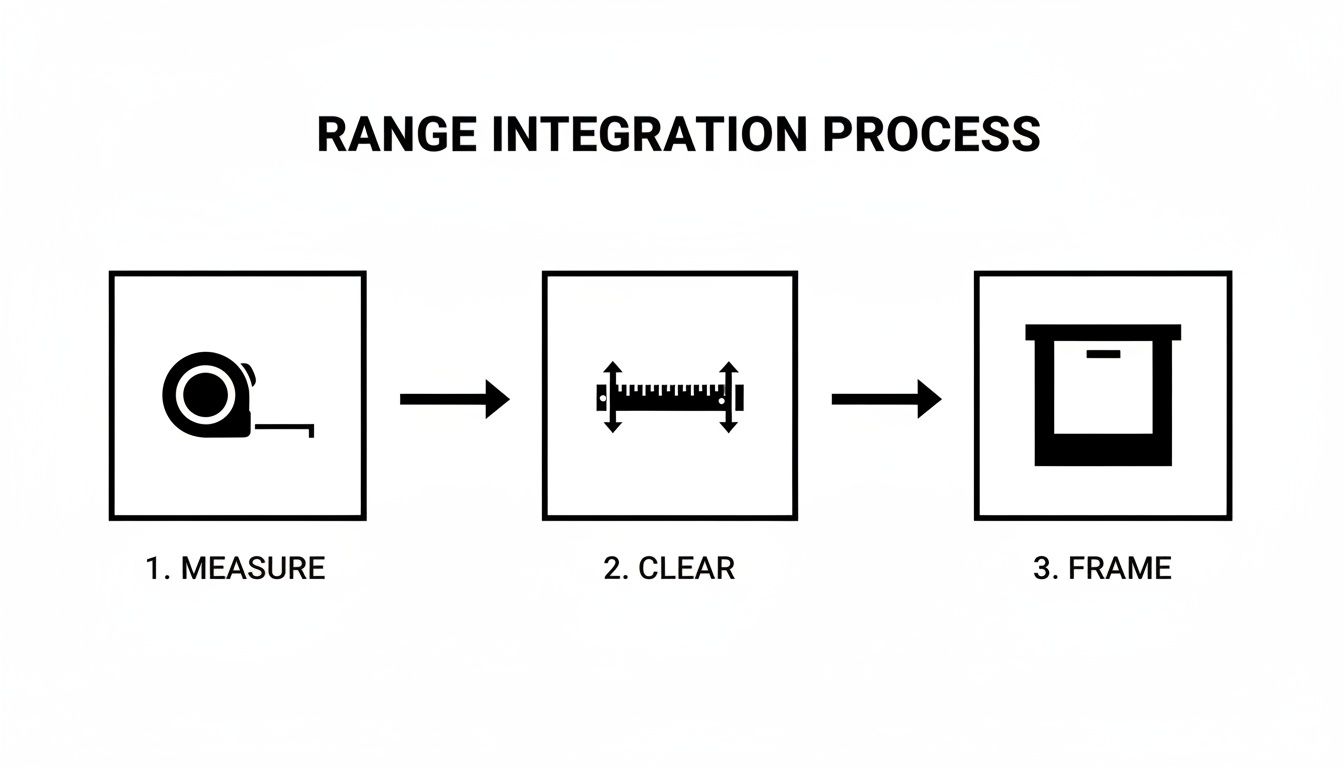
As you can see, a flawless installation starts with precise measuring. From there, you ensure the space has the right clearances before framing it in with your cabinetry. Following this sequence is the key to getting that clean, built-in look while making sure your new range operates safely.
Making a Smart Investment in Your Gas Range
Buying a new gas range is a big deal. It's easy to get caught up in the features and shiny finishes, but it's important to remember this isn't just another purchase—it's a long-term investment in your home and your daily life. When you stop thinking of it as an expense and start seeing it as an investment, your focus naturally shifts to what really matters: lasting value, durability, and the simple joy of cooking on a great appliance.
It seems a lot of Canadians are thinking the same way. In 2024, the Canadian market for range cookers hit USD 431.92 million, with gas models really driving that growth. Experts are even forecasting that number to climb to an incredible USD 850.24 million by 2033, largely thanks to a boom in home renovations from Markham townhouses to Toronto condos. You can see the data behind these market trends on deepmarketinsights.com to get a sense of why so many homeowners are putting their money into reliable cooking performance.
How Much Should You Budget for a Gas Range?
In Canada, gas ranges fall into a few different price categories. Knowing what to expect in each tier helps you line up your budget with your cooking ambitions and find that perfect balance.
- Entry-Level Ranges ($800 – $1,500): Think of these as the dependable workhorses of the kitchen. They deliver the core benefits of gas cooking—quick heat and reliable performance—without any fancy extras. You'll get standard burners, a good-sized oven, and basic finishes.
- Mid-Range Ranges ($1,500 – $3,500): For most families, this is the sweet spot. Here, you'll start seeing features that make a real difference, like convection ovens for perfectly even baking, more powerful burners for a great sear, and better overall build quality. Continuous grates and self-cleaning functions are also common in this range.
- High-End and Pro-Style Ranges ($3,500+): Welcome to the big leagues. These ranges are built for those who are truly passionate about cooking, offering professional-grade power, ultra-high-BTU burners, and premium materials. They're designed to be the stunning centrepiece of your kitchen.
Don't forget to factor installation and ventilation into your budget. A licensed gas fitter and a proper range hood aren't just nice-to-haves; they are absolutely essential for the safety and performance of your new range.
Decoding the Warranty Details
A solid warranty is more than just a piece of paper; it’s a manufacturer's promise that they stand behind their product. It's tempting to just glance at the duration, but you need to dig into the fine print to understand what’s actually covered. A good warranty can be a real lifesaver, protecting you from surprise costs down the line.
Key Questions to Ask About Your Warranty:
- How long is the coverage? A full one-year warranty is standard, but premium brands often offer longer terms on specific parts.
- Does it cover both parts and labour? A parts-only warranty can be misleading, as you’ll still be on the hook for a technician's expensive visit.
- Are critical components covered longer? Look for extended coverage on things like the oven igniter or electronic control board—these can be costly to replace.
A smart investment also means thinking about the future. Beyond the warranty period, consider the availability of professional stove repair services. Knowing that qualified help is available for maintenance and repairs offers real peace of mind for years to come.
Where to Buy Your Gas Range in Canada
When it’s time to shop, you’ve got two main paths: big-box retailers or independent appliance stores. Each has its own set of advantages. The big chains often have very competitive pricing and run frequent sales, making them a great starting point for your search.
On the other hand, independent stores often deliver a more personalized shopping experience. Their staff usually have much deeper product knowledge and can give you advice that’s genuinely tailored to your kitchen and cooking style. They might also carry niche or high-end brands that the larger stores don't stock. The best strategy? Shop around, compare your options, and go with the retailer that makes you feel most confident in your decision.
Common Questions About Buying a Gas Range in Canada
Even after you've done your homework, it’s normal for a few last-minute questions to pop up right before you make a decision. Choosing the right appliance is a big commitment, and you want to be sure you've covered all your bases.
We've put together answers to some of the most common questions we hear from homeowners in Canada. Think of this as a final sanity check to clear up any lingering doubts about performance, installation, and long-term ownership, so you can feel completely confident in your choice.
Is a Gas Range Better Than an Induction Cooktop?
This is the big showdown in modern kitchens, and the honest answer is that there's no single "better" option—it all comes down to what you value as a cook. Each technology has its own distinct strengths, so the right choice really depends on your cooking style and priorities.
Gas offers a classic, hands-on cooking experience. There’s an undeniable connection you get from seeing the flame respond instantly to your touch. This is why so many passionate home chefs are loyal to gas; it gives you that raw, immediate control for everything from a low simmer to charring vegetables right on the grate. It just feels like cooking.
Induction, on the other hand, is the undisputed champion of speed, safety, and efficiency. It uses magnetic fields to heat the pan directly, meaning water boils astonishingly fast while the cooktop itself remains cool—a massive advantage for families with curious little ones. The catch? Your cookware must be magnetic, so you might need to budget for new pots and pans made of cast iron or compatible stainless steel.
Ultimately, it's a personal call. If you crave that visual feedback and the traditional feel of an open flame, a gas range is your winner. If your priorities are lightning-fast performance, easy cleanup, and a safer surface, induction is a very compelling alternative.
Do I Need Special Cabinets for a Pro-Style Gas Range?
Yes, and this is something you absolutely need to plan for. While you don't need to order "special" cabinets, you must account for the serious heat these high-performance ranges produce. A pro-style gas range puts out far more ambient heat than a standard model, which can scorch or damage your cabinetry if you don't follow the rules.
Here's what you need to focus on with your cabinetmaker or kitchen designer:
- Increased Clearances: Professional ranges demand more breathing room. The manufacturer's specifications will outline the minimum gaps required between the appliance and any adjacent cabinets to prevent heat damage.
- Heat Shields: For some installations, you might need to install a stainless steel heat shield on the wall behind the range or on the sides of nearby cabinets. This acts as a barrier, reflecting heat away from your cabinet finishes.
- Cabinet Material: Most quality cabinet materials will work just fine, but the key is respecting those clearance requirements. This is especially true for finishes like thermofoil, which can be more sensitive to sustained high temperatures.
Planning your kitchen layout is about so much more than just looks; it's about making sure every piece works together safely and effectively. While you’re thinking about your range, it’s a good time to consider how your other appliances will fit. You can learn more by reading about the standard fridge width in Canada and how it shapes your overall design.
What Are the Ongoing Maintenance Costs for a Gas Range?
One of the best things about gas ranges is their reputation for durability and low maintenance costs. Their mechanics are relatively straightforward compared to appliances packed with complex electronics, which often translates to a longer, more reliable service life.
For the most part, your main "cost" will be your time. Keeping the burners clean is the number one thing you can do to ensure top performance. Clogged burner ports from food spills will lead to an uneven flame and poor efficiency. With sealed burners, a simple wipe-down is usually enough. For open burners, you may need to pop off the burner caps and give them a more thorough cleaning now and then.
Beyond your own routine cleaning, it’s a good idea to have a licensed gas technician give your range a professional check-up every few years. They can inspect the connections for slow leaks and ensure the appliance is burning gas cleanly and safely. It's a small investment that offers huge peace of mind and helps protect your appliance for years to come.
Ready to create a kitchen that perfectly balances style and function? MapleKing Kitchen Cabinets offers custom, factory-direct cabinetry in Toronto and Markham, designed to integrate seamlessly with your dream appliances. Explore our collection and get a free quote today!