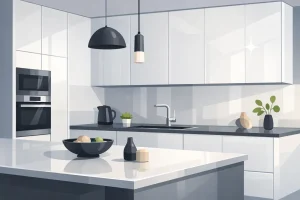

You're probably doing what most Toronto homeowners do at this stage of a renovation. You've saved a dozen kitchen photos, compared shaker against slab, looked at painted finishes, then landed on alder because it has a softer, richer look than many standard cabinet woods.
Then the second thought hits. Is alder a good idea in a real kitchen, or does it only look good in showroom photos?
That's the right question. Alder can make a kitchen feel warm, refined, and expensive without looking harsh. It can also dent more easily than harder species, which matters if your kitchen is the busiest room in the house. The value in alder isn't just the look. It's choosing it for the right application, finishing it properly, and knowing where it works best in a Toronto home.
Why Choose Alder Cabinets for Your Kitchen Renovation
A lot of homeowners come in after narrowing their choices to maple, oak, and alder. Maple feels safe. Oak feels durable. Alder is the one they're drawn to emotionally. It has a calmer grain, a more relaxed character, and it doesn't fight the rest of the kitchen.

A typical situation looks like this. A couple in the GTA wants a kitchen that feels custom, but not overly formal. They like natural wood, don't want heavy grain, and want a finish that can lean modern, transitional, or farmhouse depending on the door style and hardware. Alder often enters the conversation right there because it offers warmth without the strong visual movement of oak.
What makes alder attractive in practice is not just its colour. It's how adaptable it is. One industry source notes that alder has a Janka hardness of about 590, which helps explain why it machines smoothly and finishes consistently for stained cabinetry in custom and semi-custom work according to this cabinetry reference. That matters when you want a kitchen to look refined rather than busy.
Why homeowners keep circling back to alder
- It feels welcoming: Alder has a natural softness in appearance that suits family kitchens better than some sharper-looking woods.
- It works across styles: Clear alder can look refined and clean, while knotty alder can go more rustic.
- It responds well to finishing: If you want a stain rather than a paint-heavy kitchen, alder gives you room to shape the final look.
Alder appeals to homeowners who want character without chaos.
In Toronto, that balance matters. Homes range from downtown condos to Markham detached houses, and not every kitchen needs the same material strategy. Alder is strongest when the homeowner wants a wood-forward kitchen with a custom look, but also understands that beauty and toughness aren't always the same thing.
Understanding Alder Wood Characteristics
Alder gets called a hardwood, and technically that's correct because it comes from a deciduous tree. In day-to-day cabinet work, though, it behaves more like a soft hardwood. That distinction matters because it tells you two things at once. Alder is workable and cabinet-friendly, but it isn't the species I'd choose for someone who expects it to shrug off abuse.

What alder looks like in real life
Raw alder usually has a fine, straight grain and a fairly uniform texture. That's one reason cabinet shops like working with it. It doesn't throw a lot of visual surprises at you unless you choose a knotty grade on purpose.
You'll also see two very different personalities in alder:
- Clear alder: More controlled, more consistent, and easier to use in transitional or contemporary kitchens.
- Knotty alder: More rustic, more casual, and better when you want visible character.
If you're still selecting cabinet wood, alder is the species people often misunderstand. They assume it's either rustic-only or too soft to be worth considering. Neither view is complete.
Why cabinet makers like working with it
Alder has a Janka hardness rating of about 590, which puts it below harder woods like maple and oak. That same relative softness is part of why it is popular for cabinetry that needs smooth machining and even stain absorption as noted in this alder wood guide.
That doesn't mean “soft” equals “bad.” It means alder cuts, shapes, and finishes in a very cooperative way. When you're building door profiles, matching finish tones, or trying to create a clean stained result, that workability helps.
How to think about alder before you buy
Use this quick lens when judging whether alder fits your project:
| Characteristic | What it means for your kitchen |
|---|---|
| Fine, straight grain | A quieter look than oak |
| Uniform texture | More predictable stain results |
| Softer hardwood | More vulnerable to dents |
| Available in clear or knotty selections | You can push the design cleaner or more rustic |
Practical rule: Don't judge alder from one showroom door sample. Ask to see both clear and knotty material, and ask to see it in the stain colour you're actually considering.
Alder is a material with a clear personality. It's easy to shape, pleasant to finish, and visually flexible. But it only makes sense when you like what it naturally is, not when you expect it to perform like a harder wood.
Styling and Finishing Your Alder Kitchen Cabinets
Alder's best design feature is that it behaves like a canvas. The grain is present, but it doesn't dominate. That gives you more control over the final look than you get with woods that insist on showing a strong pattern no matter what stain or paint you apply.
Where alder looks best
In a farmhouse kitchen, knotty alder can bring warmth without needing ornate door profiles. In a transitional kitchen, clear alder with a medium stain gives you a polished wood look that still feels current. In a more modern room, alder can work when the door style is simple and the finish is controlled.
That flexibility is why alder keeps showing up in kitchens that don't want to feel cold. A lighter stain can keep the room bright. A darker stain can make the cabinetry feel more grounded and architectural. Painted alder can also work, especially when the goal is a softer painted finish with a bit of wood character underneath.
Finish choice matters more in Toronto
Regional climate changes how I think about alder finishing. In places with meaningful humidity swings, including Toronto summers, the finish system and cabinet construction matter because proper sealing and engineered core options can help with dimensional stability as discussed in this regional alder cabinet piece.
That affects practical decisions such as:
- Natural and light stains: Good for showing alder's warmth, but the topcoat needs to be solid because wear will be easier to see on exposed edges.
- Medium and dark stains: Often the sweet spot. They highlight alder's depth while keeping the grain controlled.
- Painted alder: Best when you want a softer painted aesthetic, though many projects may be better served by other paint-grade materials if absolute surface consistency is the priority.
In Toronto, I'd rather see alder finished thoughtfully than chosen casually. The finish does a lot of the long-term work.
Match the finish to the house, not just the trend
If resale is part of your thinking, look at your kitchen the way a future buyer will. A heavy rustic stain in a sleek urban condo can feel out of place. A cleaner stain or restrained painted finish usually travels better across different tastes. If you're trying to understand how presentation affects buyer perception, this guide on staging a kitchen to sell is useful because it shows how finish, light, and visual simplicity shape first impressions.
Alder rewards restraint. The nicest alder kitchens usually aren't the ones trying to prove they used real wood. They're the ones where the stain, door style, hardware, and lighting all support the same mood.
The Reality of Alder Cabinet Durability and Maintenance
This is the part many articles soften too much. Alder is not the best choice if your only goal is maximum impact resistance. It is a softer cabinet wood, and in a busy kitchen it will show that reality over time.

KraftMaid lists alder at a Janka hardness of 590, confirming that it is significantly softer than common alternatives and will show wear more easily. For high-traffic kitchens, protective measures such as durable topcoats and soft-close hardware become part of a practical alder plan in KraftMaid's alder wood characteristics overview.
That doesn't make alder a mistake. It means you should buy it with open eyes.
Where alder tends to get marked up
The most common wear points are predictable:
- Base cabinet corners: People brush past them with bags, hips, and vacuum handles.
- Drawer fronts near the sink and prep zone: Repeated contact adds up.
- End panels on islands: These take more hits than homeowners expect.
- Lower doors in family kitchens: Kids and pets increase contact.
Here's the practical issue. Most damage on alder isn't catastrophic. It's small dents, edge wear, and finish scuffs that become visible sooner than they would on harder woods.
How to make alder hold up better
If you want alder kitchen cabinets in a busy Toronto home, don't stop at the wood choice. Build a protection plan into the order.
- Choose a durable topcoat: The finish should do real work, not just provide sheen.
- Use soft-close hardware: Slamming doors and drawers shortens the life of both the finish and the cabinet.
- Think about edge exposure: Areas that get bumped often deserve extra attention in design and finish.
- Place alder strategically: Sometimes alder is ideal for visible feature areas, while tougher materials make more sense in rougher zones.
This video gives a useful visual reference for cabinet durability and wood discussion in everyday use:
A dent in alder usually doesn't ruin the cabinet. But if you know your household is hard on surfaces, you should treat alder as a design choice, not an all-purpose default.
Basic maintenance that actually helps
Alder doesn't need complicated care. It needs consistent, gentle care.
- Wipe spills promptly. Don't let water sit around joints, edges, or sink cabinets.
- Use a soft cloth and mild cleaner. Harsh scrubbing wears the finish faster.
- Watch hardware alignment. A sagging door or misaligned drawer creates unnecessary rubbing.
- Address small marks early. Minor touch-ups are easier when damage is fresh and local.
When alder is the wrong choice
Some kitchens ask too much of it. If you have young kids who treat drawer fronts like steps, large dogs that crash corners, or a rental property with constant turnover, alder may not give you the best long-term value. In those cases, a harder wood or a durable painted material often makes more sense.
That's the trade-off. Alder gives you a beautiful stained look and a more refined grain. In return, you need to accept that it won't wear like oak.
How Alder Compares to Maple and Oak Cabinets
Alder only makes sense when you compare it against the two woods many Toronto homeowners also consider. Maple usually enters the conversation for its cleaner, harder surface. Oak shows up because it has a reputation for durability and a very familiar wood look.
Here's the practical side-by-side view.
Alder vs. Maple vs. Oak Cabinet Comparison
| Feature | Alder | Maple | Oak |
|---|---|---|---|
| Hardness and wear | Softer and more likely to show dents in busy kitchens | Harder-wearing than alder | Hard-wearing and generally better at handling impact |
| Grain pattern | Fine and subtle | Smooth and controlled | More visible and pronounced |
| Best visual use | Warm stained finishes, rustic to transitional looks | Clean contemporary or transitional looks | Traditional, textured, or more visibly natural kitchens |
| Stain behaviour | Accepts stain evenly and predictably | Can be a good fit for paint or stain depending on the look desired | Stain highlights the grain strongly |
| Painted look | Can be painted, though some projects may suit other paint-grade materials better | Common choice when a smooth painted look is wanted | Grain tends to remain more visible under paint |
| Trade-off | Great appearance, lower dent resistance | Strong balance of clean look and durability | Strong durability, bolder visual texture |
Who should choose alder instead of maple
Choose alder if you want a warmer, more relaxed wood appearance and don't want the kitchen to feel too sharp or too uniform. Alder often wins on mood. It can make a kitchen feel custom without feeling formal.
Maple is usually the safer call when the household is hard on surfaces. If the homeowner wants less maintenance anxiety, maple tends to be the easier recommendation.
Who should choose alder instead of oak
Choose alder over oak when grain control matters. Oak brings a lot of texture. That's a strength in some homes and a drawback in others.
If your goal is a smoother visual field, alder has the edge. If your goal is a tougher wood that celebrates grain, oak often makes more sense.
The best wood isn't the “highest quality” in the abstract. It's the one that matches how your kitchen gets used and how you want it to look after years of daily life.
In real projects, this comparison usually settles the decision. Homeowners who love alder tend to value finish quality and atmosphere over maximum hardness. Homeowners who back away from alder usually do so because they realise their kitchen needs more abuse tolerance than alder naturally offers.
Budgeting for Your Alder Kitchen Cabinets
Alder sits in an interesting place on price. It isn't commodity-grade cabinetry, and it usually isn't chosen by homeowners who want the absolute cheapest route. It tends to appeal to people who want a premium-looking wood kitchen but still care where the money goes.
Homewyse tracks alder kitchen cabinets as a distinct category and notes in its 2026 update that costs are shaped heavily by local labour wages and material pricing. It also indicates that estimates should be adjusted by location, which is a useful reminder for Toronto and Markham homeowners trying to budget accurately through local kitchen cabinet cost planning.
What usually moves the price up
The wood species is only one line item. Final cabinet cost is often pushed more by choices around it.
- Wood selection: Clear alder generally requires a more controlled look than knotty alder.
- Finish complexity: A simple finish and a layered custom stain are not priced the same way.
- Door profile: Flat fronts, shaker doors, and more decorative profiles all change labour.
- Customisation level: Fillers, appliance panels, storage accessories, and non-standard sizing add work.
- Installation conditions: Condo access, older walls, and site corrections affect labour.
Where it makes sense to spend more
I'd spend carefully on the parts you touch and see every day. Good finishing, proper hardware, and clean installation matter more than chasing visual extras that won't improve the life of the kitchen.
Alder especially rewards disciplined budgeting. If the finish is poor, the whole species gets blamed unfairly. If the finish is good, alder can look far more expensive than many people expect.
A better way to ask for quotes
Don't ask only for a price “per foot.” Ask what construction, finish process, and installation scope are included. Alder pricing is shaped by labour and finishing detail, not just by the raw material category.
That's how you compare quotes properly. One proposal may look cheaper until you realise the topcoat, door construction, or installation scope isn't equivalent.
Your Guide to Buying Alder Cabinets in Toronto and Markham
By the time you're visiting showrooms, the question usually isn't “Do I like alder?” It's “Can this supplier build alder cabinets that make sense for my house?” That's a different conversation, and it's the one that protects your budget.

For family homes, rentals, or properties with pets, the long view matters. The more useful question is whether alder will be cost-effective over a 5 to 10 year lifecycle in your household, or whether higher-use areas should use harder-wearing alternatives like painted HDF or laminates as discussed in this homeowner-focused video reference.
Questions worth asking in the showroom
Some questions immediately separate a polished presentation from a serious cabinet supplier:
- Can I see clear alder and knotty alder side by side?
- What topcoat system do you use on stained alder?
- How do you build doors for local humidity changes?
- Can you combine alder feature areas with more durable materials elsewhere?
- What does the warranty cover on both material and finish?
What to inspect with your hands, not just your eyes
Touch matters. Open the doors. Feel the edge profile. Look at the finish around corners and joints. Check whether stain coverage looks intentional and even.
Also inspect the sample the way your family will use it:
- rub a finger along the edge,
- look at the sheen in direct light,
- check how visible the grain is from standing height,
- ask where wear would show first.
If a supplier can't explain where alder works well and where it doesn't, they probably don't work with it often enough.
A smart Toronto buying strategy
In Toronto and Markham, a good alder purchase usually follows a simple pattern. View samples in person. Compare at least a few quotes. Ask how the cabinets are finished and installed, not just how they look under showroom lighting.
A supplier with factory experience should also be able to discuss mixed-material solutions without pushing you into a single answer. In many kitchens, the smartest plan isn't all alder. It's alder where you want warmth and visibility, paired with more forgiving materials where the kitchen takes the most punishment.
That's how alder becomes a smart purchase rather than a risky one.
If you're comparing alder against maple, oak, HDF, or laminates and want practical guidance before you commit, MapleKing Kitchen Cabinets can help you review finishes, construction options, and factory-direct choices for Toronto and Markham kitchens. Bring your layout, your inspiration photos, and your questions about durability. The right cabinet plan usually starts with honest trade-offs, not a sales pitch.